How to build a strong and sustainable business for the long term | Mark Joyner | TNS - 76
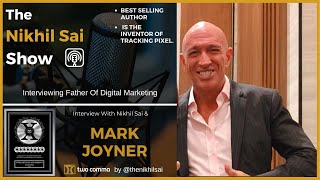
Mark Joyner, who created the first ebook and online ad-tracking company, explains why most online businesses fail and how to build ones that last. He argues that rapid technological change requires "lifeboat" businesses and three essential hedges. Fitness, he says, is non-negotiable for entrepreneurs.
Chapters
What's going on? What's going on, everyone who's actually listening to this podcast right now? First of all, guys, welcome to The Nikhil Sai Show, which is hosted by me, The Nikhil Sai. And guess what's going on today? We are back with another amazing two-comma quest. I mean, this is going to be crazy, guys, because we're talking about first mentor of Russell Brunson. This is going to be a crazy, crazy, crazy story, guys. So just make sure to stick around and we talk about someone who is referred as the father of digital marketing. This is a crazy, crazy, crazy podcast. So if you are someone who is into online marketing and who wants to learn the modern marketing techniques from someone who's an OG who's been in industry for a long time, stick to this podcast, guys, right? And this dude has been crazy throughout his journey. He created over 30 startups. We're talking about 30 different startups. This is crazy, guys, right? And he done so many different things for the first time ever in the online space, like creating the first ebook Like every online business has an ebook right now, but that was discovered by him. This is crazy. He created the first online ad tracking company, which is crazy. He created the first pixel. He created the second PPC company while Google boys were still in college. This is crazy, crazy journey, guys. And he created a website back then, which is StartBlaze, which is the top 36 website back then within just 6 weeks of launching. With $0 ad budget. So we're talking about OG here who understands online marketing, digital marketing very well, with a great insight here. And he's been an author of dozens of books which are published in 25 languages. Multiple of them are bestsellers, and his marketing books were used as textbooks in different universities across the world. So this is going to be a crazy journey, guys. So again, let's not waste any time let's welcome the founder and CEO of Simplology, Mark Joyner. Hey Mark.
Hey Nikhil.
I'm good to have you, brother. Thank you so much for joining us today.
Thank you for having me, man. Appreciate it.
Absolutely, Mark. And Mark, this is so, so, so crazy. I mean, you started digital marketing when I wasn't even born. Like, this is crazy, crazy times, right? I would love to hear like I'm actually 20 right now, so. Wow. Yeah, I'm pretty, pretty young, but I would love to hear like a backstory, like how was the situation back then? How did you got into online marketing?
Well, for me, digital marketing was, you know, man, there's so many things to say about this. I'm gonna try to give you the very short version 'cause I know we don't have too much time. You know, when I was very young, I had some interesting interactions that planted the seeds for this, right? So my, My uncle was sort of a legit rocket scientist. He did consulting for NASA and he got access to something that was the predecessor to the internet. So, a lot of people don't know that the internet was created by the Department of Defense by a group called DARPA. That's where all of the really advanced black projects are done and whatnot. They invented something called the DARPA Net to create uninterruptible communications for the purpose of the military. Now, back then, my uncle actually had a DARPA machine in his house where I was living at the time, and it was this teletype machine, and you could only connect it to the, you know, the DARPA net by these big earmuff phones. And I played this, you know, mostly games, you know, on that when I was a kid. Very slow, but engrossing. And that planted a seed into my mind, you know, when I was very young. And then also He was an entrepreneur. I got to see him typesetting ads. And then I got involved in a lot of different entrepreneurial endeavors when I was quite young, not all of them legal, I'll just say. And then over time, I went through— I never went to school hardly. My parents never forced me to go, so I didn't go. I'm very self-educated. I ended up getting a university degree through independent study while I was in the military. Early on in my military career, this is where it really started getting interesting. Around 1990, I was getting on the early version of the actual internet and then also these things that we had called bulletin board systems. Now, bulletin board systems were sort of a pre-internet thing where you could call into one computer at a time and people would share, but it wasn't the networking thing that it is now. So, I started marketing back in those early, early days on bulletin board systems and on the early internet. And I wasn't really interested in becoming a digital marketer per se. I didn't even know anything about marketing or digital marketing. I was an entrepreneur and I just experimented with stuff. I never read a book about business or about marketing. I was just an experimenter. So when I was getting involved in the early digital marketing, I was creating a playbook based on what I had learned about military strategy and tactics and what I had learned about psychological principles. I codified all of that later in a book called Mind Control Marketing, which is sort of more or less the playbook I still use today in a larger strategic sense. Over time, people started seeing what I was doing and they're like, "Dude, how are you getting these results on the internet? Tell me what kind of marketing you're doing." So, I started— kind of ended up becoming the digital marketing guy just accidentally. And then as that was happening, I started meeting a lot of the old school direct marketing guys who were teaching me things to fill up holes in my game and whatnot. But that's more or less the foundation of the early days.
Wow, that's absolutely insane, Mark. Like, I'm anticipating that you are one of those people who got early access to the internet, like while it was still in like the beta phase as we speak. That was really, really awesome, Mark. And the transformation you took, actually someone who's getting into business to actually helping people build sustainable business. So my next question is, now we see like, Mark, as the internet is exploding, everyone is getting into like online business, creating businesses, coaching, consulting, whatnot, right? And like everyone is a coach these days. So like, but as you're someone who's seen everything, yeah, like everything, like you have seen from starting of the internet to where it is right now, you know what it takes to build like a sustainable online business, like which is going to stay in the game. So I would love to hear from you, like the OG, like what is your, you know, vision, like when it comes to like building a sustainable business for long term? What is your advice for most people who are building quick businesses? Like they're running for 3 months, they're gone the next month. So like how someone can actually build a long-term business?
It's a really good question. And it's, um, so I'm going to give you a short answer, and then if I, if I may give you a link to a longer answer, I shall. Um, So this is something that you— we have to go a little bit deeper than most people will go. Some people tell me, ah, you know, you've got to do this in your business to make it last a long time, you've got to do that. All that advice can be useful, but there is a larger context that's really critical here that we need to understand. We have to understand the larger context of what's happening in the technological landscape, the technological battlefield, before we can understand how to properly structure a business. Because while a lot of people are giving very good advice, if they don't take into consideration what I'm about to explain to you, they're building a castle made of sand, okay? Or to give another metaphor, they're building a beautiful building on a foundation of sand, okay? So this context is that there are technological trends going on in the world right now that are happening at an extremely fast pace. That are happening so rapidly, and the, the changes that they imply are so profound that if you don't take them into consideration, you're, you're really, really not doing the right thing. Okay, so this context is that, to put it in the very simplest terms, I'm going to give you a few different ways to describe the same phenomenon. One way to say it is that the pace of technological change is doubling. That means if you were to put this on a growth curve, you would see a slope like this, and then suddenly it's going to go boom like this. This is what exponents behave like. Now, a linear growth curve goes like this. An exponential growth curve starts out slowly and then boom. Shoots up. We're kind of at the little, the little turning point where that thing is about to just explode. Now, another way to put this is that the period of time in between a paradigm shift, the paradigm-shifting discovery or invention, has been halving itself throughout history. Okay, so to— I'm going to give you some BS numbers here, right, because nobody really knows the numbers, but imagine that the period of time in between the discovery of fire And then, the Stone Age was like 250,000 years. And then, the period of time between the Stone Age and the Bronze Age is 125,000. And then, it cuts in half again and cuts in half again and cuts in half again. And again, if you plot it out, it looks like this, right? It's a very, very long, slow thing and then, boom, shoots up. So, where's the point now? Now, let me give you an idea of— so, when we talk about paradigm shifts, now, this is I got to be a little slightly long-winded here. I'm going to try to be as brief as I can, but I really want people to understand. Okay, so yep, when we say the word paradigm shift, people hear that and they go, oh yeah, paradigm shift means big change, right? Let me put this in context. What a paradigm shift is. Historians will tell you that the discovery or invention of agriculture was the fundamental catalyst for civilization itself. Itself. No agriculture, no civilization. Okay, so imagine one technological advancement took us from being hunter-gatherers to being people who reside in cities. Okay, now this— if you look at the etymology of the word civilization, it comes from the Latin word civis, which means city. Okay, no cities and no civilization, no technological advancement the way we're seeing it right now, because remember, we used to spend all of our time hunting, hunting and gathering, more or less. And then we were freed in a sense. We were enslaved in one sense and then freed in another. We're enslaved because we're now tied to a specific geographic location. We have agriculture. It means we can, you know, we can grow our own animals, we can grow our own food. We have to be tied to the land. But when we're tied to the land, things start to develop in advance. That's a paradigm shift. That's how freaking huge a paradigm shift is, okay? We are at a point now where we're experiencing a paradigm shift every single day, at least in one field or another, okay? Now, uh, people might think, well, I, you know, is that really true? Like, I don't see that, okay? Well, let me tell you this. Let me give you another vector that you need to factor in. I'm going to tell you that it can be happening and you cannot know about it. Here's why. So in 2003, Eric Schmidt very famously said that the period of time— my apologies, I'm turning off my, my sound here, had an alarm going off— the period of time, um, or let's just say this, the, the amount of data that we were entering into the stream by the end of 2003, okay, was 5 exabytes of data every day. Okay, now to put this in context, if you were to take all of the information that had been amassed from the dawn of recorded history to the beginning of 2003, that was about 5 exabytes of data. By the end of 2003, we were putting 5 exabytes of data into the stream every single day. Okay, now Let's plot that out. Boom. Okay. It's a exponential growth curve. Now, this is referring to a phenomenon that I've written about that I call the complexity gap. Okay. The world is getting more and more complex. The amount of information that we're dumping into the stream is increasing at a radically fast rate. The human mind can only process in conscious working memory about 7 bits of data plus or minus 2. There's a very famous paper written about that. But the amount of data available, boom. This is constant, the amount of data we can handle. The amount of data available is exploding. Yeah. So, the implications of that are that your ability to manage information is gone, right? You need to have very, very specific strategies for managing that. Now, that's why 17 years ago I started the company Simpleology because I knew that this was going to be a problem and that solves that problem for people. Now, here's— okay, so here's where it's gonna get— so if you think it's been interesting so far, here's where— holy F moments. Okay, so let me ask you this. Have you ever heard of something called graphene?
Graphene?
No. Yeah. Okay, graphene is one of the most important discoveries in all of human history, and it happened over 20 years ago. Okay, it was resulted in the Nobel Prize in physics. It is going to fundamentally change the way we interact with the world, and it's becoming more and more known. It's becoming more and more available, but even really intelligent guys like you are not even aware that this exists. Okay. Now, there has been a massive patent war going on about graphene over the last 15 years.
Mm-hmm.
Okay. And there have been pushes to make graphene more easily manufactured. So, what is graphene? So, here's what gets really interesting, okay? There's one level of this and there's another level of it where you're going to go like, "Whoa." Okay. So, graphene in itself is mind-blowing, but the larger phenomenon that it implies is 10 times, a million times more mind-blowing. Graphene is nothing more than carbon, okay? It's just carbon. If you take a pencil, what we call pencil lead is not lead. It's just carbon, okay? All right. So, that's, you know, I believe it's, what is it, number 8 on the periodic table, okay? So, carbon has certain behavioral properties, okay? We know that in the open world, it behaves certain ways. What graphene is, is it's one single atomic layer of carbon, a single atomic layer of carbon. So, what's special about that? Well, when you strip it down to a single atomic layer, the behavioral properties of this new substance that we call graphene are totally different from carbon. It's 100 times the tensile strength of steel. It is 1/10 the weight of steel, okay? It has the potential to be a room-temperature superconductor of electricity. We're eventually going to be able to have— what this implies is that electronics, everything is going to be radically changed because of this substance. We're no longer going to be carrying around these ridiculous phones the way we are now. We might have foldable devices where you can have the circuitry and the monitor itself on the same device, and it's flexible. You can fold it up and put it in your pocket.
Wow.
There's a larger conversation about the way technology is going to change as a result of this. But this— so this one phenomenon should let people know, like, most people don't know about it. Even some of the smartest people I know have not been clocking this particular trend. The fact that some of the smartest people in the world, in fact, most of the smartest people in the world, are not even remotely aware of this should make people go, whoa, this is, this is major. That means that the amount of what's going on in the technological world right now is so enormous and so vast that even the smartest people in the world can't keep up with one of the most profoundly, you know, fundamentally, you know, world-changing inventions. Now, here's where it gets interesting. Graphene is only one example of a larger phenomenon that we call the nanomaterial revolution. So graphene isn't the only substance that does this. It's every atom Every molecule, every composite, everything that we know of, we're discovering that when you strip it down to different layers, different atomic layers, they have different behavioral properties. So one way of describing is like if you look at the periodic table of elements, I'm sure you've seen this, right? Hydrogen, and then all the way down to the radioactive isotopes and all that at the bottom. So imagine the periodic table. We thought, that's it. We figured out all chemistry, right? And the only, the only frontier is that we might find more, you know, elements with, you know, with more neutrons, right? Guess what we discovered? We discovered that you can peel back the periodic table and there's another one, and you can peel it back and there's another one and another one and another one. This is crazy. This is crazy, right? This, this is how complex we're discovering the universe is. And how complex our state of technological advancement is. Now, let's simplify this in a way that everybody can understand. I'm going to give you a simplification, then I'm going to give you something scary, and then I'm going to tell you what we have to do. Okay? So the simplest way of looking at this is that everything is adhering to what I call the Big Five Phenomena, right? Everything is getting faster, smaller, more powerful, more available, cheaper. Okay, faster, smaller, more powerful, more available, and cheaper. Everything, everything.
Wow.
Including weapons technology. Now sit with that for a second and think about that. That happens to weapons technology, and you won't, you won't understand the full implications of that right now in the context of this conversation. It's impossible. But I want you and your listeners to meditate on that for a while because the implications of that for humanity are enormous, and we need to face it, or we're, we're effed in, in a big way. Okay, seriously, we really need to think about the implications of this. So, you know, one thing to consider is we have 3D printable automatic weapons now. Okay, now the governments of the world are saying, well, all we have to do is outlaw 3D printable automatic weapons, right? Okay, so they did that for the distribution of digital downloads, of illegal digital downloads. How did that work out? Not too well. You know, people are down— I mean, everybody downloads illegal stuff every day. Okay.
Yeah.
All right. I mean, it's everybody. All right. So, you know, the government's outlawing something is not going to stem the tide of technological advancement. What happens if we get 3D printable weapons of mass destruction?
Oh my goodness. That would be so, so bad situation to live in.
It's scary as hell.
Okay.
We need to factor that. And that's— I want to let everybody think about that because I think all of the world needs to be pondering the implications. Implications of this. I think that what we need is we need a shift in consciousness, otherwise we're going to destroy ourselves. Period.
Hands down.
Yeah, hands down. Now, let's tie this back into entrepreneurship. What we need as entrepreneurs is we need to develop businesses that are pivotable with all of these changes. It's what I call a lifeboat business. It's one of what I call the 3 essential hedges. There are 3 hedges that you need to build in your life to be able to survive what's coming right now. Now, that's a very short answer of something that I describe in more detail in a book called Your Roadmap to Money in the 2020s. If I could give a URL, I shall. It's up to you if I can do that.
Absolutely. Absolutely. Please go ahead.
Yourroadmaptomoney.com is the URL. Now, that book is a very easy read. It's 300-some-odd pages, but it's big type, lots of images. I make it very easy to understand. Most people read it in 1 or 2 sittings. But I'm telling you right now, if you don't understand what I have in that book, you're lost because that, that shows you the landscape of what's going on in the world. And what I've just told you is just a taste of what's happening. Okay. So there are, there are things happening. There are events unfolding right now that you must know to survive as an entrepreneur. And it's all in that book.
Absolutely, Mark. Thank you so much for mentioning that. So, guys, I mean, like, like, the conversation seems so intelligent that this is something you should be getting updated on, or else you know what's gonna happen. You'll be completely lost in the platform of internet, and you'll be that tiny little part who has no clue what's going on in your business. So thank you, Mark. And let's get to the next question, brother. This would be so interesting to answer, right? And this is something I'm very excited to ask as well. So you started your careers like in the 1990s when internet was like still the fad thing. People didn't believe in that, right? So if you would start right now, how would you do it differently?
Interesting. Okay, so there's one of several ways that I would go about doing this. Okay, one is I, you know, probably the first thing I would do is I would become what I call an integration marketing deal broker. Now that URL I gave talks a little bit more about that and what, you know, things that you can do. And I also talk about different, uh, you know, opportunities that are available now because there are certain trends that are going to happen for sure, right? An integration marketing deal broker is a guy who puts two businesses together so that they can behave in ways that are going to be mutually profitable. Brokering deals like that does not take a lot of effort if you're intelligent enough and you have the wisdom to do it. It's a very easy business to run because you don't have to run any business. You just have to put deals together and then put yourself between it in a way that you will get a slice of the deal. Okay. That's the simplest thing I would do for sure. Now, if I were to lose everything and start over right now, I would do that because I've got so many connections and I could see all of these different opportunities. I could make millions easily just by doing that. The next thing I would do is I would look at some of the trends I was talking about in that book. For example, one of the phenomena that I talk about are what I call mutant middlemen. Okay, so a lot of people say that the middleman is dead now because the internet has democratized everything. It's not really true. It's not really true at all. It's a very simplistic view of a much larger phenomenon. Okay, so, um, the middleman had a rise and a fall and a new rise. Okay, so yes, the internet did remove, uh, the necessity of certain middlemen from certain transactions. Okay, so by the way, you see the sun coming up from in Phuket here off my face, so the light's going to change a little bit. Um, right now we have an opportunity for new breeds of middlemen to rise up. Let me give you one example that I find very interesting that I wish someone would do, and hopefully somebody watching might take advantage of this, you know, business opportunity.
Yep.
Because we have the complexity gap and there is this enormous sea of information we're swimming in, and it's so difficult to navigate it. Getting accurate information is very hard. It's even harder when news organizations, all of them, doesn't matter what political leanings they, they have, all of them are propaganda machines. Okay, now I'm a veteran of the, you know, U.S. Army intelligence community. Um, I've studied this phenomenon very deeply. I can tell you unequivocally that, you know, largely journalism is dead today, okay? Most, I mean, there are real journalists out there, but if you watch, you know, the mainstream corporate news, you're getting mostly propaganda, all right? And if anybody disputes that, I mean, I would love to have a conversation with anyone who disputes that because it's very, very easy to prove, very easy to prove, okay? It's not even a debatable thing. Thing at this point, but I would love to have the debate because there are a lot of people walking around with the misperception that what they are getting through standard journalism in the corporate media sphere is real and it's genuine. It's not real. It's beholden to corporate interests. It's beholden to the interests of interest groups. It's beholden to the interests of governments. I mean, it's very, very clear, extremely well documented. I have seen it from the inside. It's there, and governments are manipulating media all around the world, okay? And this is super well documented, all right? So when you see news, news, all right, you need to take a very, very critical eye when you look at that, all right? Because a lot of it is very alarmist and is getting us alarmed about things that we don't have to be alarmed about, and it's failing to tell us about things that are far more important. For example, everything that we have talked about, the from the beginning of this conversation until this moment right now is 1,000 times more important than everything that they talk about on the damn news.
100%.
Why are they not talking about that? Because they don't care about your interests. Right now, I'm a little bit passionate about this because this is a problem for our survival as a species. So what business opportunity is implied here? We need to have people who are what I call mutant middlemen. This is one way that a mutant middleman can manifest. Who is somebody who develops relationships of trust with people, gleans information from many sources, and then gives people an actual landscape of what's happening in the moment. We don't have that right now. There are people that profess to be aggregators of information. Like if you look at Google News, for example, that's supposed to be that. It's supposed to be like, hey, we look at all the different news sources and we show you the ones that are the most important. Well, all it is is an aggregation of all of the propagandistic corporate media sources. So we need something far, far better than that. And I hope that somebody watching right now does this because I will become your customer, right? We need many people doing this and being involved in this.
Yeah, absolutely, Mark. I think that was like, which crap do you want to hear? Here we go with all the different craps. This is a compiled crap, watch it, right? So that's what's really happening, right?
That's what we have. And the people compiling the crap and the, the fact-checkers, by the way, are just as corrupt for the most part. So we need real people doing this.
Yep, absolutely, Mark. Yeah, I mean, we were talking about world's real problem, Mark. Like, appreciate that, that was very, very insightful, brother. Let's get to the next question, brother. I mean, like, you've been this enormous person who've been involved in 30+ startups and now talking about like technology, graphite and graphene, like whatnot. Like, you've been so insightful on what's going on around you and what's going on in the world, even in this paradigmic situation. So I would love to hear more about like, how do you get stuff done? We would love to hear like a quick intro on Symbolology. How does that work for you?
Well, thank you for that opportunity to talk about that. So Symbolology is a way of managing chaos, more or less, right? So it— what it does is it allows you to in the simplest sense, take the information that you believe is important, go through a series of decisions about that, and then at the end of that process, you realize, "Oh, actually, only a tiny handful of things are really important for me to do right now." That's the simplest way. I mean, there are many, many things that Simpleology does. We've been evolving it for 17 years. I mean, we're constantly iterating it up, but that's the core foundation of the most important thing. And by the way, when people go use it, they, uh, you know, we have this training, you know, we have a training that goes from white belt all the way to black belt. The white belt training gets you to master some habits that help you do just that, okay, that help you manage that information. That's the most potent thing you can do to start getting more productive. Now, the people who start using it and use it correctly, and we train people correctly, if you just follow the instructions you can use it correctly, within about 48 hours, you're getting done in about 2 hours what takes you normally about a week or a day depending on how dysfunctional your productivity is right now. How is that possible? It's not necessarily that— you do become more productive in that you do more because our brains don't function as well when we're constantly confused and bombarded. Really, it's all about meaningful productivity. When you can understand what that meaningful productivity is and you knock those things out, you start to see progress happen. Exponentially faster rate. And then subsequently what happens is that your well-being improves, the well-being of your team improves because they're no longer running around like, oh my God, what's happening? I'm confused, I'm lost. Most of us are running around confused and lost because we're overwhelmed. This solves that so that you can get far more done and it unleashes a lot more human potential, which is it's been just so wonderful watching this happen to people in real time.
Wow, wow, Mark, thank you so much for the amazing opportunity. I mean, guys, go check out Simplology. You will definitely love it. I mean, we're talking about entrepreneurs who are busy who can get back extra time. Extra time, that means much worth than real money. So go get it, guys. This is going to be amazing, amazing. And Mark, let's get to the next question. This would be so interesting. You know, as someone who's been into very deep into marketing, you're someone who is a real fitness enthusiast. And we wonder, like, what do you think, like, fitness role as an entrepreneur, like, how, how big it is for you and how it could impact other people?
Well, it's— to me, in my mind, it's non-negotiable. Now, I, I've gone through, uh, you know, being very fit to being not very fit, and I will tell you right now, um, I, I would never give up being fit for any amount of food or anything. Nothing. Nothing compares to it, okay, in terms of your general sense of well-being, your productivity, your health, your longevity, all of that. It is a non-negotiable thing that you must do as an entrepreneur if you want to live up to your full potential, all right? Now, I went through phases where I had a lot of early success when I was younger and allowed myself to be influenced by people who were telling me to you know, eat lots of fancy foods and drink lots of booze and stuff like that. And I got fat and sick. Shouldn't be a shocker. Okay. We know that the science is pretty clear about this now.
Yeah.
The decisions that you make about these things are going to determine your, your overall health, your fitness, all of those things that we're talking about. Okay. Now, if I can show you, I used to be, you know, very obese and I am, I am like shredded and fit now. I do MMA fighting at 52 years of age. All right, so I, you know, I take my health and my fitness very, very seriously. Very seriously. Um, what I will tell you is this: you— a lot of people have— you were really good at coming up with excuses for avoiding fitness. I don't have the time. Bullshit. Okay, you don't have the time not to do it. You— this needs to be your job. Okay, so, you know, people tell me, oh man, I've got all these things to do, and I'm like No, no, I'm not even gonna— I'm not gonna entertain that nonsense for a second. Because if you tell yourself that between this hour and this hour every day, I need to be fit, I need to work on my fitness, and you know that that is a duty, that you must show up there with the same level of seriousness that you would show up for the birth of your child, right? You show up there every single time, you will become fit, and you will find the time to do it. Now here's what will happen. Your productivity will go up so much more that any, you know, hour or two that you lose every day working on your fitness is going to be repaid to you in enormous dividends in increased productivity. There's just no question about it. Now, is it easy? No. All right, there's going— there are going to be challenges that you're going— it's going to be difficult in the beginning, and there are— there's all sorts of Nonsense advice out there. There's lots of bad advice, and there's a lot of dogma out there. People will tell you, you know, you have to do this diet, no other diet works. We don't know enough about diet to have dogmatic opinions about diet yet. It's far too complex. You've got to figure out what works for you. I can tell you what works for me. If you want to get into specifics, I can, but what I will tell people is that they need to experiment and be very careful of dogma, not just in diet and fitness, but in everything. By the way, okay, be very, very cautious when people are speaking to you dogmatically because it can derail your entire life in some very serious ways. So there will be an adaptation phase where you get used to becoming fit. You will have ups and downs. There are days where it's going to be difficult. You may get really fit and you may get injured. Okay, I've experienced, uh, you know broken ribs several times. It took me out of, you know, fighting for a long time. And, you know, I am at a point now where I realize, okay, the Stoicists have a saying in Latin which is amor fati, which means the love of fate. It means that whatever happens to you, you love it. You love it. Now, who knows if fate always deals to you whatever, you know, hand that you need to advance as a human being. But if you look at your life through that lens, It's always going to be useful. It's way better than being fatalistic and saying, "Oh, no. My life is over. This happened to me. It's terrible." No. Look at everything that happened to you as a gift, even the ugly things. If you love the fate of what happens to you, if you're getting fit and then you suffer an injury, you're like, "Okay. There's something I can learn from this. I can learn how to adapt. Maybe I can get a business idea from this. Maybe this shows me that in every area of my life, I've got to overcome barriers, and it's my ability to overcome these barriers." that really makes the difference between success and failure. Okay, if you, if you look at the world through that lens, you're far more likely to succeed. All right, so that's the shotgun blast of, of what I believe about fitness. We can talk more about that if you want, but this is your—
yeah, we have a follow-up question regarding that. We would love to get into details, Mark, for sure. But yeah, like, the one word really tells all of it: non-negotiable, guys. So just make sure that you are getting fit and fit every single day. It's completely non-negotiable. Absolutely, Mark. Thank you so much. Let's get to another question, brother. And this is something more interesting. What do you see like most common marketing mistakes made by business owners, you know, uh, in, in 2021 so far?
Well, the biggest mistake is not a marketing mistake. It's— and we'll, we'll talk about marketing, but let me just say something. I would be remiss if I didn't say this. You know what, I first built Simpleology, I was sort of getting out of the digital marketing space for a while there. I was sort of saying, "Hey, look, I don't want to be the guru of this anymore. I'm just going to go do something else." Anyway, long story behind that, but people kept coming to me asking for marketing advice. What I realized was that they didn't need marketing advice. What they really needed was to unscrew their productivity, right? You know, they had all sorts of really great ideas, they just weren't implementing anything. They were too slow.
That was on point, right?
So now let's get to marketing. All right, so there are many very, very common mistakes that people make about marketing. Perhaps the most common, you know, my good friend Dr. Joe Vitale says, get out of your head and get into your customer's head. And that is a very simple statement on the surface, but a deeply profound statement when you really think about it. And getting out of your head and getting into your customer's head really means many things. So when you're writing your ad copy, if you write your ad copy from the perspective of, oh hey, I spent all this time building this great product and me, me, me, me, me, me, right? Nobody cares. Nobody wants to hear that, right? What they want to hear about is how you can solve their problems. Now, this requires a deeper fundamental shift inside of you. Right? Yes, there are going to be internal motivations, I hope, for building your business, right? That's fine to have those internal motivations, and you don't have to be shy about that. You need to be real about that and get deeply in touch with those motivations, because the more in touch you are with your deeper drives, and if you can connect those with your entrepreneurial wishes, you will become far more successful, because that desire is, is a superpower. It's to be harnessed Right? But if all you care about is your individual ends, your marketing is going to be pitchy and solicitous, and people will smell it on you. So you be okay about your individual desires, but be very, very empathetic about what other people need and genuinely care about that. And when you do start genuinely caring about it, you know, there are boundaries that you should not be crossed here. But when you genuinely do care about it, what happens is you start to understand those people more. And then what happens ultimately when you really deeply peer into that and you start solving those problems for those people, you get more conviction as a business owner. Like, oh man, I had— I helped this person experience this win. That felt so good because there is a wonderful feeling that we get when one human goes to another human and helps them. There's something that— that's, it's something that we can't compare to anything else. Yeah, it's beautiful. It's a beautiful experience. And you, as a podcaster, you've probably seen this, that, you know, the, the people that you're bringing forward to your audience are helping a lot of people. You are helping a lot of people, and I'm sure that feels wonderful. Absolutely.
One of the greatest feelings ever.
Right? It's really, it's extraordinary. And when you start to feel that more and more, you start getting positive reinforcement for the behaviors that are going to make your business succeed. So that's ultimately what it means when you get out of your head and into your customer's head. Now, don't get completely out of your head because you need to be in touch with your deepest desires. So there is sort of a balance. There's a yin and yang. That we must manage here.
Absolutely, Mark, beautifully articulated. Appreciate that complete insight on actually doing that. And Mark, as you're talking a lot about like technology and how disruptive the industry is being on, like, are you like someone who is on blockchain technology? Because I would love to know your thoughts on blockchain technology. Like, how do you think this is gonna transform the world?
Okay, so I have deeper thoughts about this that I get into in yourroadmaptomoney.com. So what I'll say is, So, I'm going to give you the positive and the negative side of blockchain. Okay, so, the positive side of blockchain is perhaps one of the greatest hopes for humanity that has ever existed. I mean, the marketing pitch, the sales pitch for it is, hey, we want to democratize finance, which is in desperate need of democratization. If you understand anything about Keynesian economics and what's going on with the central banking systems in the world, we desperately need democratization of finance, okay? Because it is one of the biggest problems we have in the world right now. It could democratize government, it could democratize everything, right? Because we have everything open on, you know, the blockchain, transparent, right? You know, uncorruptible. If— I mean, if it really lives up to that, and there are people, you know, genuinely endeavoring to make the blockchain do that, to be a force for freedom and decentralization, something I've been talking about for decades, and thank God everybody's talking about it now, right? It can be a force for that. It can be a force for that. That's the positive side. The, the potential pitfall, the biggest one— and there are other, you know, conspiracy theories about it and all that, I don't want to go down that rabbit hole— but the one thing that is unequivocal, if you look at what is known as the Satoshi white paper, this was the thing that invented Bitcoin and the blockchain. The abstract of the Satoshi white paper itself It tells you very plainly what the biggest gaping hole in the blockchain is. It said, and I'm paraphrasing here, it says that as long as the majority of the nodes on the blockchain are putting out the right information and not trying to corrupt the information, the blockchain will remain integrous. Okay. So here's the problem. And I get into great debates about this, but I have some very, very firm opinions about it. Quantum computing is an enormous threat to all cryptography, including blockchain. Okay, why? Because quantum computing represents not just an exponential shift, it's a radical, off-the-charts shift in technology. We recently, a couple years ago, passed one of the really important road marks in quantum computing called the quantum supremacy test. Now, Google put out a paper saying that they had passed the quantum supremacy test, and then they took the paper down. Who knows, perhaps for national security reasons, nobody knows. But what is the quantum supremacy test? It is to tell you that we want a proof of concept that quantum computing works. Now, by the way, computing normally works with binary, okay, ones and zeros. Quantum computing uses what are known as qubits, which has 8 different quantum states, which makes it far, far richer and far more computational power. Plus, it's so much smaller and faster that— so I'll tell you how enormous the change is here. With if what Google said is true, when they pass the quantum supremacy test, which is to do one function on not a fully functional quantum computer that behaves the way computers do now, it's a quantum computer that can only perform one function, but it has to perform it at a state that is radically faster than the fastest supercomputers that exist. You know, think about that. The fastest supercomputers in existence. This computer, if what Google told us is true, could do within seconds— and I may not have the numbers exactly right here, but you'll get the magnitude approximately right— it could perform This computation in seconds what would take today's fastest supercomputers millions of years.
Holy moly, that was, that was crazy to hear.
Okay, now here's what the, the naysayers go, but Mark, that's just one function, it's one algorithm, it's not a fully functional computer. Totally true, but if you think that a fully functional quantum computer is not around the corner, you don't understand exponentiality.
Okay.
Exponentiality is telling us that this, you know, fully functional quantum computer is very close. Here's what would happen. Let me tell you, if we have a fully functional quantum computer that could run OS X or Windows or Linux or whatever, okay, you could on one single quantum computer create millions and millions and millions of virtual machines, and with one computer, one quantum computer, own every blockchain, crack every crypto. All right, so think about that.
Oh my goodness.
Now, there are people out there that say, oh, we're building quantum-resistant cryptography, don't worry about it. To that I say, how the F do you know that your hypothetical quantum resistant cryptography is actually going to work because you haven't tested it against real quantum computers yet. So don't tell me that you've solved this problem, right? That is a very hubristic statement to make. So that's my deep concern about crypto. Now, this is a very complex and very rich and deep conversation that we can have here about this, but that's sort of the broad strokes of the real—
Yeah, absolutely. I mean, I wonder how would people who are holding millions of dollars in crypto react to this. Oh my goodness, that would be crazy to see. Absolutely.
Let me tell you really quick, okay? You need to diversify your assets, okay? That's the really important thing. Don't put all of your eggs in— I mean, this is, you know, classic finance advice, but diversification of assets is critical here.
Absolutely true, Mark. Yeah, and anything could happen. So guys, just make sure to understand the trend on what's going on. So Mark, we have a couple of questions here. Let's go quickly over them. Let's get to the next question, Mark. Tools you use to manage your projects and clients for productivity other than Simpleology, because you already spoke about that.
You know, I mean, we do like 90% of everything on Simpleology. We have project management on there, like everything, right?
Wow.
Yeah, so, but on top of that, you know, we also use some of the common tools. I'm a fan of the ecosystem that Google built. As much as I don't trust Google as an organization, you know, and I hate to say it, I just don't, I don't trust any of the big tech platforms right now. I think they're, there's a lot of collusion between, you know, big tech, big media, big government, all of that, you know, and I think the evidence for that is pretty unequivocal and clear. Whole other conversation, but, you know, Google's ecosystem technologically is wonderful. You know, I love using Gmail and Google Drive. I love the way, you know, their calendar and all that stuff interacts very well. And Simpleology, you know, integrates with a lot of that stuff very well. I like for day-to-day productivity, I like Apple products. I would say hands down, it's the best in terms of ease of use. If I wanted to build a system, and I won't say too much about this, but if one were inclined to build a more secure and hack-proof system that was also government-snooping-proof and whatnot, I would build something on a flavor of Linux. Anyway, there's a whole deeper conversation that we can have about that. I'll just leave some breadcrumbs there for people to follow on their own. And I would say it would be worthwhile to build some platforms like that. I'm a fan of hard storage of cryptocurrency. I don't put cryptocurrency on the exchanges like that, or any of those, the companies that have that, because I mean, it removes one of the most important facets of cryptocurrency, which is, you know, the ability to do things, you know, anonymously, right? I don't want, you know, these companies now to take that right away from me. So when I do crypto transactions, I go from one wallet to another, and I'm not gonna say how much crypto I have or, you know, or how I use it, but I'm just gonna throw that out there for people to factor into their own decision. Anyway, this, we can talk about many, many other tools, but there's a few of the ones that I like.
Yep, absolutely, Mark, appreciate that. So guys, you know what to do, use hardcore wallets. That's how you can, keep your crypto safe. And Mark, let's get to the next question. This would be wonderful to answer. Your daily routine for the success. So how does your routine look like?
Great. Okay, so, um, it starts with my night. Okay, I sleep very early. This morning I woke up at 3 AM. Okay, the quality of your sleep is going to determine the quality of your day, right? Before you and I met at 6 AM my time, all right, um, I had already been up for 3 hours and I got a whole lot done. I did some things for my fitness, made some coffee and other things that I do for health. Then also, I got lots and lots of work done. Now, I've got several hours of podcasts and live interaction with people and meetings and whatnot, and then I'm going to have other blocks of productivity. In Simpleology, we have a tool called Start My Day, which allows you to determine what are the most important things for you to do on a particular day. Day. So, you know, I use that every single day so that I know, hey, these are the most what I call HIME tasks every day. So HIME is an acronym, the Simpleology neologism that we invented that stands for High Impact Minimal Effort. All right, so if you can find the combination of tasks that are the best combination of impact and ease, it's going to be more often than not the most intelligent decision, the best way for you to to spend your time. You're right. It's exponential, right? We have a little tool inside Simpleology where we allow you to make HIME analysis of your tasks. You rate them by impact and ease. You multiply the scores together. Whatever has the highest HIME score, we do that for you automatically, is the most intelligent thing for you to do 9 times out of 10. By the way, in business and in life, you're never going to make the right decision all of the time, but if you can tend to make better decisions more often, that's the best we can do. That makes a huge difference, a huge difference in your life if you can just be more right more often. That's all you have to be. Throughout the day, there are certain things I do. I keep myself hydrated. If I'm drinking coffee, I definitely need to drink more water. I usually have 1 to 2 meals a day later on in the day after my workout. There are certain movement things that I do in my body. I don't like to be bound to a chair all day. I have different places where I can work. I have a standing desk. I have something called a Perfect Chair that I sit back in where I do some work like that. If I'm going to do long writing, I'll do that. I make sure that I get up and move throughout the day. I do little things like this. I use a tool that we built in— to prevent you from getting engaged in negative habits. One little thing I'll do is every time I go to the bathroom, I have a pull-up bar. I will do properly executed pull-ups. It makes sure that I'm constantly getting that good input into my body. I do a properly executed pull-up where you're squeezing your glutes, squeezing your core, moving your body in the right way. It's great because it realigns your body in some really profoundly powerful ways. There are movement patterns that I go through. I do animal flows throughout the day and things like that. To keep my body more in tune with the way it needs to be. Because if you keep your body static for too long, those static patterns start to hold, and it doesn't take very long. So you need to make sure that you're constantly flooding your body and your mind with the right inputs. Now, I meet trainers, okay? So I train, you know, extra MMA fighting 6 days a week. 4 days a week I do Muay Thai and strength and conditioning training. 2 days a week I do Brazilian jiu-jitsu. Now, I see those guys around the same time every day. Before I see them, I usually get some sun. Sun is very important. And I make sure that I see those guys because I want to make sure that I have a hard-coded appointment with somebody who's going to give me a hard time if I don't show up and who is there focused on making sure that I work my best. Last week I had one really bad day when I was working with my Muay Thai/strength and conditioning coach, Shamrock, right? Great, great guy. He trains a lot of MMA fighters here in Phuket, very, very famous trainer. Sham saw me about 20 minutes into it. I was ready to quit. I normally am not ready to quit my workouts. 20 minutes into it, he saw that and he He did not let me quit. I came this close to throwing up. Okay. Now, he— and I have done that before. I've straight puked in workouts before and kept going. The Army kind of gave me a little of that sensibility.
That's a great mindset.
He saw me and kept pushing me, and I was so grateful that he was there. So, I think it's very, very useful to have appointments like that. Later on in the evening, I will tend to wind down a little bit more. Depends on what I have going on. Yesterday, I was sunup to sundown, constant go. Um, but I like to have some, you know, recreational stuff, you know, in my, in my evenings. And I like to have one day at least where I have nothing but relaxation. So there's a lot more we can say about that, but that's the, the broad strokes.
Yep, absolutely, Mark. Appreciate that. And brother, just to confirm, like, we have 8 minutes. Can we—
you—
can we go like a little longer because we have like 4 more questions? Will that work for you?
Okay, yeah, we'll blaze through it. Yeah, I'll, I'll go late to another meeting I've got here.
Awesome, thank you. I appreciate that, Mark. I really, really appreciate that. Let's get to the next question, Mark. This would be awesome to hear as well. I mean, you are one of those people who got hands-on internet very quickly, right? So if there is a suggestion which you could give to a 20-year-old yourself or someone who's just getting started in business, what would be the number one suggestion you'll give?
Okay, I'm just gonna give you a blast of things, okay? Um, believe in yourself, don't let people get in your head, okay? Don't listen to the negative feedback or the positive feedback. I mean, listen to it, but don't take any of it seriously. You want to remain humble, you want to remain empathetic with people, but you want to remain true to yourself. As Thelonious said to Horatio in the great speech in Hamlet, At the end, "This above all, above all, to thine own self be true." There was a reason why he said, "This above all, to thine own self be true," in that great speech in Hamlet. I recommend everybody read Shakespeare, by the way. That would be another piece of advice for young people. Read Shakespeare if you're a native English speaker. Tremendous wisdom in Shakespeare. Take your productivity very seriously. Take your health very seriously. Take your compassion for other people very seriously. Take your compassion for yourself very seriously. Understand that you are part of a very complex ecosystem that we do not fully understand. Okay. Also understand that nobody has a monopoly on truth. Reject dogma. Okay. Instead, look at points of view of life and philosophies as lenses that you can put on and take off at will. When I was in the military, there were situations where using night vision goggles were very, very useful. If I were to use night vision goggles at high noon, it would blind me. Okay, true. So There are points in life where certain points of view are useful and certain points in life where they are not. Be willing to take them on and put them off. And when you do that, it frees you intellectually.
True.
Now, um, there's a lot more that I would love to say, but that— those are some of the high points.
Yeah, absolutely, Mark. I really love the perspective you have on, you know, getting, getting the real mindset, which requires to actually become a Purposeful entrepreneur. Appreciate that, brother. Let's get to the next question. Your life's biggest achievement so far and any next bigger goals. How do you like to change the world?
Wow. Um, I, I don't want to say any one of these things are bigger than another, but I would say the degree to which I have mastered myself is, is probably above all the most important thing. You know, you know, people can say, well, you invented this, you invented that. Okay, fine. Maybe someday those inventions will be irrelevant, but my capacity, my ability to invent more things, to make greater contributions is going to be dependent on my mastery of myself. I have lost mastery of myself and regained it multiple times. The times where I've had higher levels of mastery— right now I'm in a state where I have a much higher level of mastery than most other states of my life. I would say that's the biggest thing. Next biggest goal, I have many, constantly improving myself, constantly having better and better impact on the world. I would like to have Simpleology out there in the hands of more and more people. It's already in the hands of many people, but I know that it can help people so much that that's something that I'm very deeply engaged in. Another thing is helping business owners navigate these very, very tumultuous times right now. That's why another, you know, initiative that we have is stuff related to that, your roadmap to money. So, you know, I think it's very, very important for entrepreneurs to be able to do that. And I would like to— perhaps, you know, more important than all of that is help, you know, people come to an awareness that there are forces in the world right now that are— that seem to be trying to take away our freedoms. You know, whatever you think of their, uh, motives Well, I will tell you is that historically, the centralization of power has almost always ended in mass murder. In fact, I can't think of a single example of mass centralization of power that did not end that way. We have some that we have seen, but some of the ones that exist right now resulted in that in the past. No offense to the people of China, I love the people of China, but I'm not a fan of their government. This is the same government that, I'm sorry, hosted the greatest mass murderer in history, arguably. You know, Chairman Mao, 80 million deaths, 80 to 100 million deaths at the hands of Mao. Okay, that's the same government in place now. Okay, and they're committing— and all governments are doing this. I don't mean to point out China, you know, and to say the US is— but the US has done some atrocities too, for sure, right? All the— the more power is centralized, the more of that potential is there.
True.
So we as individuals need to be a bastion against that tendency, otherwise our freedoms will be taken away from us. We all need to have that awareness.
Yeah, Mark, I mean, like, the perspective you have on everything which I hear from you, like, that's insane. Like, I feel so stupid while I'm on this podcast, but I'm really enjoying, you know, being on this conversation. I'm glad. Absolutely, brother. Let's get to the next question. Like, What was the biggest mistake in your life so far, especially in terms of business?
Ooh, letting go of my fitness at different times certainly has been an enormous mistake. Business partnerships where I did not listen to my gut, where there were people that I knew had moral failings, that I knew did not have, you know, the right mix for me to be associating with, associating with people that I knew had tendencies that were going to push my tendencies in the wrong direction. Those tend to be the biggest mistakes. Another one is getting wrapped up in dogmatic points of view. That almost always leads to disaster because it's impossible for a limited human mind in this seemingly infinite universe to understand everything and to assume that we do understand everything, that our point of view is is infallible is just a form of extreme madness, I would say.
Yeah, yeah. That's really awesome, Mark. I think thinking about first principles in everything you actually approach will actually help to break those real mind blockers you have, absolutely. And brother, we would love to learn more about your main inspiration for the success you've achieved, like what keeps you moving, and keep people involved in your journey.
My main inspiration for success is understanding that stagnation is death and that I am at a point now where I have trained my consciousness to be ever more and more aware of the fact that I must be constantly moving towards something and constantly improving. The moment I stop that, that is when the forces of entropy, the inevitable forces of entropy kick in in your life and in some surprisingly disastrous ways. Being more and more aware of that, that's the most important thing. Yes, there are certain things I want to attain. All of those ends-based goals are wonderful, but it's the consciousness that's far more important, I would say. That particular consciousness is a lens that I like to keep on at all times as much as possible because it's been enormously instrumental for me. Key people involved have been various friends and authors and entrepreneurs. There was a very interesting writer that I read when I was young, a gentleman named Robert Anton Wilson, who became a friend later on in life. He taught me a lot of the philosophical foundations of things that made me more flexible. There are certain direct marketing experts that I was very fortunate to become very good friends with. Ted Nicholas, who sadly passed away. Gary Halbert also passed away recently. Greatly influential for me in different ways. Joe Sugarman, Joe Vitale, guys like this, some of these really great, great, great minds in the marketing world who all became good friends were enormously instrumental. Different fitness coaches that I've had have been greatly instrumental. I'll name some of them. I don't know— I never worked with Paul Chek as a fitness coach, but reading his stuff has been greatly useful for me. Greg Payne is one of my great trainers. Michelle Owen was another great trainer. Thomas Engbert, Osmar Jr. de Lima, a great MMA fighter, the guy who first started me fighting. Shamrock, my current trainer, Ben Royal, my current Brazilian jiu-jitsu coach, all of these guys. Oh, Benjamin Barone, my trainer in the Philippines. All of these guys have been enormously useful. Michael Arce in the Philippines as well taught me to overcome my fear of the gymnastic rings. All of these people, yeah, I don't know what my life would be like without their influences.
Yeah, yeah, yeah, absolutely, Mark. I mean, this is what it really takes to become who you are, like surrounding with right people around you. Like, appreciate that, Mark. Thank you for mentioning a big list, guys. So, and Mark, like such an amazing person, very big perspective on what's going on, what's gonna happen and what has happened as well. Like, I mean, you feel like eternity here. I really appreciate that. So where can our audience find your mentoring?
So the one place I would recommend people go, which will sort of be an entryway to everything, is to go to that URL, yourroadmaptomoney.com, and read that book. It's free. You can print it out. You can read it on your screen, but I would recommend printing it. It's gonna be a lot of pages to print, but again, most people read it in one sitting or two. Okay, it's long, okay, like in pages, but there are many, many images and the type is big I wrote it very, very specifically to make it easy to understand because the ideas are big ideas. There are— some of them are difficult to understand, but something I pride myself on is my ability to take things that are complex and hard to understand and make it easy for you to understand. So there are metaphors and pictures and ways to help you get that big picture. That is the entry point, because if you don't understand that, you don't see what's going on in the world right now. And that's the base foundation. And that there are some next steps in it which will tell you what to do as an entrepreneur, which I think are essential.
Yeah, absolutely, Mark. Guys, so if you're not getting hands on this free book, you will regret it later. So make sure to check out yourroadmaptomoney.com and you will have good time reading that book. Absolutely. And Mark, that was absolutely an amazing session, brother. Any last word before we conclude the total podcast for today?
You have a largely younger audience, yes?
Yep, particularly ClickFunnels users.
Yeah, so a lot of young people today are being, their heads are being filled with a lot of dangerous philosophical untruths, I would say, okay? And things that are demonstrably untrue, okay? So for example, you know, when people are told, oh, you shouldn't work hard, Don't stress out. I'll give you one specific example. People will tell you, "If you're fat, it's okay. It's okay. Don't let people fat shame you. That's your body. You should love your body." Yes, you should love your body, but it's not okay to be fat. I'm sorry. It's not okay. Anybody who tells you that is not your friend. Why? Because there are proven ways to change obesity, to fix obesity. We have a— we have very, very good information about this now, okay? And obesity is so tied in with so many different disease conditions that are reversible with lifestyle. And when people are telling you not to change your lifestyle because, you know, they fill your head with all of these, you know, BS ideas, they are facilitating decay in your life. That is one manifestation of what I see as a larger form of corruption in the world right now. And a lot of young folks, probably not most of your audience, but they're exposed to these ideas. And I will tell you, forcibly reject those ideas. Take command of your own body, your own life, your own mind, your own spirituality. Don't let anybody tell you that any view of the world is correct. See things with your own eyes. If you can do that, you'll be far ahead of 10,000 people.
Yeah, absolutely, Mark. I think this real analogy could be even attached to business. Like, don't let someone else's, you know, assumptions stop you in your business or get to conclusions in your business that, oh, you're capped out, that's how big you could do, it fails, and all of that jazz. But yeah, guys, I mean, that was an amazing perspective. So the goal is having your own lens which you could remove and add and change perspective as you could pivot, you know, to build a real sustainable business in this constantly quickly changing world, Mark. And again, Mark, by the way, I would love to hear.
Okay, hold that thought, hold that, 'cause I wanna hear what you had to say, but I wanna interject very briefly. It's okay to fail. In fact, it's essential to fail. That's how you learn. If you rewire your brain so that you must fail to get ahead because it's a hypothesis and you're testing it, Of course not every hypothesis proves true. You have to fail to succeed, okay? So a lot of people are like, oh, I failed, that's it, and they get all emotional. Get over it and keep moving. It's the only way. It's the only way.
Yeah, yeah, I mean, yeah, absolutely, brother. I think that was absolutely insanely mentioned. Like, if you ask Thomas Edison, like, what happened? Why did you fail 10,000 times? He would say like the same reason. Hey, I didn't fail, I found 10,000 ways which couldn't work, and I found one way to lead the world. Absolutely. And again, Mark, thank you so much for this amazing opportunity. It was absolutely insane having you on for over 70 minutes here. It was amazingly brainstorming, brother. The ideas you lit up, the perspective you have was absolutely insane. I think this gave like a brief perspective on how they should look at business in the constantly changing world. Again, guys, hopefully you enjoyed the podcast session so far. Make sure to check out Simpleology as well as your roadmap money.com. I'll link the, uh, I'll link the links in the actual podcast description. I mean, you'll miss out if you don't check out, so you should be checking that out. And health is non-negotiable, guys. Just to write, you know, quickly wrap up and stay tuned for the next interview, guys. I will be coming back with another amazing guest. And this is me, the Nikhil Sai, and Mark Joiner signing off for today. Peace, Mark.
Take care, everybody.
More from Nikhil










BURNED $1.5M in his 17years online #digitalmarketing #entrepreneur #onlinebusiness
