How to build and scale your business to 7+ figures successfully | Mark Stern | The Nikhil Sai Sho...
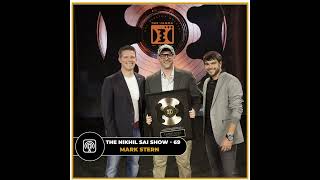
Mark Stern built Custom Box Agency to 7-figure revenue in under a year by combining physical boxes with digital experiences. His five-component box framework (welcome note, support piece, engagement piece, take-action piece, story piece) delivered 4x backend ROI and doubled front-end conversions for clients.
Chapters
What's going on? What's going on, everyone who's actually listening to this podcast right now? Guys, first of all, welcome to the Dheenik Gilsai Show, which is hosted by me, Dheenik Gilsai. And guess what's going on today? We are back with another amazing 2 Comma Club interview, so make sure to stick around, guys. This is going to be crazy. So like, think about this, guys. Everyone who's actually trying to get that, create that customer experience, want to stand out, like create that beautiful experience where your customer remember you even if they wake up at 2 AM. right? If you want to create that experience, you should be trying a different marketing angle, right? You should be focusing on creating a real experience where they can get something in the hands, right? So today, the guy who is actually joining us is expert when it comes to creating custom boxes which will be delivered to your customers. He's been helping dozens of 2 Comma Club Award winners to scale their businesses by creating a custom box transformation to create this experience for their customers, which is going to transform the brand value to a different level. So guys, let's not waste any time and actually let's welcome Mark Stern, founder at Custom Box Agency. Hey Mark.
Awesome. Hey, how's it going?
It's going great, Mark. How about you?
Good. I'm excited to be here, Nikhil. So thank you. Really, really, this is going to be fun.
So 100%.
I'm all yours.
Absolutely, Mark. We are pretty excited. Thanks for joining us today, brother. So Mark, we would love to start with your backstory. Like, how did all of this crazy journey started? How did you get into this custom box transformation programs?
It's really funny because it was never the intention to have a custom box agency in a million years. So I was like, I would joke with people to say I grew up in Alabama and I was like the poster child for corporate America. I had the dream job after college and then went back and got my MBA at Duke and had like the big corporate job for a big corporate consulting firm and, you know, was told that like, this is the pathway to happiness. And I found myself, it was 2012, I graduated, um, with my MBA and I was $165,000 in student loan debt. And like a year or two later was exposed to, um, the digital marketing realm by going to a conference that was an accident of why I went there, but it kind of made the world that I lived in, like my bubble burst. Because everyone I knew at that point was just like me. And when I was exposed to all these like digital nomads, digital marketers, people living life on their own terms, it just was such a disruption from the traditional corporate American path that, um, you know, it was one of those of like, it was years of battling like, how do I make this transition out of corporate America? And is it an irresponsible thing for me to do to like be so far in student loan debt and also you know, have a good paying job to go all in on something that I didn't know what to expect. Um, but it took me literally 6 years and it— a lot of this is mindset because I actually paid off my student loans faster as an entrepreneur than I ever did when I was having a corporate job. Um, but I started the game in the virtual event space. The virtual event model, like pre-COVID, um, was already starting to evolve pretty heavily. And if you've ever done a virtual event, it's a pretty intense process. You learn how to do like build a funnel, draft email sequences, nurture a community, upsell them. Like, you, once you learn that process, you know, for me it was like, how do I create a better experience? And, um, that's when we started introducing boxes to complement virtual events specifically, and using that as a vehicle to give people tools they need to have a better engagement with like the physical to the digital. And, um, people just started asking me, how are you doing this? And all of a sudden I'm starting this business on boxes and then this other business on virtual events and then COVID happened. And my mentor Bart Miller, you know, like I cannot say enough about Bart. He challenged me and he said, you know, I came from a world in corporate America that they celebrate you being a generalist, but in the digital marketing space, you're not celebrated for being good at everything. You're celebrated being good at and known for something. And he was like, are you the box guy or are you the virtual event guy? And really thought about it, but the market for virtual events when COVID hit was so bloody red. It was such a red ocean so fast. Every local events expert became an expert at virtual events like that. And nobody was— and I was like, I'm not as excited about events as the opportunity that boxes unlock. And I've seen it for events, but that's just scratching the surface. And That's it. Went all in on boxes and we went from nothing to 2 Comma in less than a year, all word of mouth with, you know, with boxes and our perspective of boxes. Wow, wow, wow.
That was transformational, right? Like having a student loan, coming from a background of corporate America to making it to the top with a new brand new business in less than a year. Freaking amazing story.
Been, it's been, it's been a ride, but it's funny how like, like what you did in the past all of a sudden complements what you're doing. So it's amazing how things collide, you know, but having fun.
Yeah, absolutely, Mark. And yeah, I think, I think it comes down to the passion you have around this box thing, right? Like because you've seen these boxes can really transform your business and you're kind of helping other business owners like your friends and word of mouth clients actually blowing it up, right? So Mark, let's get to the next question. This would be fun to answer. How can a box can really transform a business? Like you've been doing this for your own business and you help multiple of your clients and you're helping 2 ComClub owners with this. So I would love to know more about how can this box thing can transform anyone's business?
Yeah, and where I wanna start is, I mean, it's such a good question, but where I wanna start is everyone just instantly assumes swag box, that you're sending me a swag box and I'm not in the business of swag. To us, when we talk about swag, swag is stuff without a goal. That's what swag is. It's stuff. So when people work with us, you know, you have to think about a couple different things. First and foremost, when someone sends you a box, it is better than sending like an email because what's gonna happen, you have their undivided attention. They're going to open it and they're going to go through the content. So you have to think about in terms of grabbing people's attention, Online, the barriers to entry are so low that everyone is competing for people's attention and people have started to put up blinders. But if I send you something, it's going to grab your attention. And how we think about boxes is it's not stuff. Everything has intention and it's all about right now, really the new opportunity is what people are calling D+P, digital plus physical. How are we thinking about the digital experience that we're creating and tying something physical to complement the digital experience? And when we work with clients, we look at it as your customer lifecycle. You start off by acquiring, and then you fulfill when you've acquired the customer, you fulfill with your products and services, and then you want to retain and ascend them. There's different ways to leverage boxes at the point of customer acquisition or delivering— they bought your virtual event, delivering a better quality experience. But so much of the spirit of this is activating people, reducing barriers to their success. So if you're a course creator, as an example of reducing a barrier to success, If you require me to print out worksheets to go through your course, you just put up a barrier to inhibit my success because you're assuming I have a printer, I have paper, I have ink in my printer, it's connected to my computer, and I'm organized when I print out all these pages. If I send you a workbook, I just remove that barrier so you don't have that excuse as to why you've not gotten started. So when we think about experience inside a box, part of it is How do I give you what you need to be successful? How do I make it easy for you to have the outcome? If I know as a trusted mentor, I've given you everything you need to have the transformation as to why you bought my program, then my conversation turns, it's no longer about go get these things, it's a conversation about mindset. How do I rewire your mindset to get you to take the action as to why you bought my program? 'Cause I know I gave you what you needed. So that's kind of how we start to think about boxes. People want to be celebrated. People want to be recognized. People want to have fun. A box experience can do all of that in a way that a digital-only product can't. You don't unbox a digital product.
100%. I mean, like, we know the ratio of people buying digital courses and completing them. It's not right. But when it comes to actually a physical product getting delivered, like, you can see 99% of them try to at least open and have a hands-on experience with a physical box. But because they're curious on what's inside it. Absolutely. Yeah, I mean, it's up the digital one for sure.
And trust me when I say, like, I think a lot of people assume with a box experience they think big box. It's like a larger size box. Some people in the ClickFunnels community know of like the One Funnel Away box. We probably sell more and deliver more small boxes, almost like the size of a book, um, because there's so much that you can do with that. And You know, a small box may average $15 to $25 hard cost. If you're selling a $1,000 program, I would trade you $15 to $25 any day of the week for $1,000 and higher completion rates and giving people what they need than a product that, you know, typical right now we're seeing completion rates at about 3%, which to me shows you that how do you make a better course? Have a 3.1% completion rate, have a 3.5% completion rate. But at the end of the day, To me, it says the system's not working anymore. We need a new opportunity to— because to me, I don't build my products and services and serve my people for 3% of them to have a result. I want all of them. If you're gonna buy my products, I want all of them to get the what they hope for as a result. I want to be your trusted mentor, because when I ascend you and I can serve you at a higher level, I know you're going to continue to invest in, in our movement. That's it.
Yeah, brother, 100%. Yeah. And that hands-on experience with the actual you know, creator of the product to the consumer, right? That, that builds to a next level once they have this product in hands. Absolutely. And Mark, one of the things you have done is you kind of pivoted from actually trying virtual events to trying boxes to actually getting going all into the boxes agency space and scaling it through the roof to 7-figure level. So can you talk a little bit about like, how was the journey? Like, how did you manage to pivot being this virtual guy to transforming to become the box guy? And how did you make that transition? And manage the scale.
It's, it's so funny because, um, I, I don't know, we've been having so much fun with boxes with our clients that most of the clients who work with us, you know, I— it's not about one box build out. I think once they get it and how we think about it, they're launching multiple boxes. Um, and that's kind of what we want because it's about how they serve their customers. So like, if you see behind me, there's a bunch of tiles. The reason we've turned all of our boxes and started to take over our office with different box tops is because every box represents a transformation of how they're serving their customers. Why I got 2 Comma Club Award and why, why it's behind me is that I got it because of the transformation they're having. So each of these, they've generated millions in their business, and that as a result has translated to us getting to that 7-figure journey in our own business. But it started with helping them better serve and better deliver to who they serve. So for me, it's been interesting to see because I've just been nerding out to the outcomes of what our clients are doing. We've seen clients double conversion when they introduce the box on the front end and then double their conversion rates on the back end, which 4x'd the value of the funnel. We've seen some crazy things, all because they created a differentiated experience. For us, in my own path, the thing that's cool about it is we did do it via word of mouth. We've never invested in paid traffic or paid ads. Um, but with a physical component, the second a box drops people start to ask, who did this box? Because we really pride ourselves on that experience. So we've been able to grow via word of mouth because every time we launch a new box, our calendar fills up with more discovery calls of other people. And the people we work with, because of how we serve them, they become our greatest advocates to grow our business. Because when others are saying, like, who did this, we don't even have to sell our product anymore. If people see what we do then for them, they're already all in before I even get on the call with them, which is great. And that's, it's just to me, I think it's a good lesson for all of us around the importance of, you know, taking pride in what you do. Um, because the more pride you take, my clients know that like they mean everything to me and how they can better deliver and serve their people is everything for our business. They make it so easy for us to grow and so easy for us to share what we're doing. So especially You know, now it's about how do we get to the 8-figure and the 9-figure with this business because we see the impact of it. It's the bigger we can scale this business, the more people we can serve. That's it.
100%, Mark. Yeah, like that was hands-on. Absolutely love it. Like the way you're actually taking care of your clients and the way you're actually managing your scale is absolutely amazing, brother. And like this nuance thing, which may not sound that much exciting from the business client perspective, but you should really understand how much impact these little boxes can make because 4x backend ROI on a funnel, like that's nuts. Like crazy, crazy ROI, brother. Let's get to the next question, brother. Let's say if an entrepreneur or a business owner or a coach consultant, someone is trying to consider creating boxes, right? One of the first questions they ask is, hey, like I'm this digital coach, completely remote coach, I'm teaching people all of this stuff. Even if I want to create a box, like, what should I add? Like, this is the main question everyone kind of comes down to. Like, what— like, how do I know what should I add? Like, how do you answer that question?
Yeah, so it's so funny because, um, at the end of the day, one of the things you have to remember is that you are the trusted mentor, and you need to position yourself as the trusted mentor to those you serve. So lots of people teach the same topic. What's unique about the way you teach it is, is that you are the one teaching it. So A couple things I like to see in a box. I have, we'll go through my framework that I take all my clients, I'm happy to share the framework of what I take all my clients through. But the first thing to note is that the box has got to reek you. People say you need to like engage your clients and pull some and figure out what they want and deliver upon what they want. And I agree with that, but you need to do it through the lens of you because that's what makes your program so unique. So when I create a box experience, first and foremost, it needs to stink, it needs to reek. You as an attractive character, because when I buy your program, I'm also buying you. So how you do things, things that you like, like those need to come to life in the box the way you do it. I have clients that when they do strategic planning, they may use a lot of Post-it notes and they may have their own system for how they lay out their own programs or products and services or high-ticket coaching programs. Well, guess what? We're going to package that same experience and put it inside a box because that's how you do it and that's how you've gotten success. And people are going to be looking to you for that. So that's kind of like one area I want to anchor on is that the box has got— it has to stink you because that's what makes your program more unique than anyone else's who's teaching the same thing. 5 items, 5 types of items that every box should have. A welcome note. The reason the welcome note is important is it augments the what and the why of the box. Do not send out a box that doesn't have a simple welcome note. It's an easy piece, very inexpensive. but it is a very powerful way to set the tone as to the experience they're about to have. The second type, a support piece. A support piece or pieces is things that support your customer's success. So when we say that, what are the things you can give them to reduce those barriers to success? It's just like the example of the course creator and a workbook. Me giving you the workbook is a support piece. It's supporting your success. It's reducing the barriers. If you're someone who does strategic planning with Post-it notes, if there's things that you like, Give them the tools they need to be successful. Put it in the box. The third piece is what we call an engagement piece. Engagement piece is about the here and now, something that I can physically engage with what's going on digitally. So some things that we see, if it's a virtual event, I've seen people do wine glasses or coffee mugs. Part of it is let's have this experience together. Let's have a, let's have a virtual, let's have a virtual coffee hour where everyone in the community has the same glass. It's a piece to connect us all. It's not just putting a mug in there for the sake of putting a mug. It's a mug with intent. You're creating an experience you want them to be a part of. Or we do a lot of rip and reveals. Do not open this envelope until you hit a certain milestone. Then the act of ripping it open is part of engaging the physical to the digital. Engagement pieces are really powerful. And you see a lot of people do these with virtual events. And we have a lot of clients who also do it with a lot of the courses or coaching programs they're doing. But you want to create those experiences that blend physical and digital together. Fourth type is what we call a take action piece. Take action is asking people to take an action. Unbox this video and do an unboxing video on Facebook. Take a picture with your box and upload it to Instagram. Join our high ticket program. Join our referral program. Here's a coupon. Like, ask them for the action. Take action pieces, one of the things we love to do is things that are habit building. What I want you to do is every day, I want you to write down what you're grateful for. You give them a pad, you give them a tool to do that, but you're asking them to take the action. And a lot of us think that they're going to assume to take the action. No, be explicit. Like, we need to be told, I want you to do this or do this. And by doing that, people will start to take the action you ask them to take. And the last piece, which I think is the most powerful piece, is what I call a story piece. A story piece is something you stick in a box. It's insignificant when you see it. But once you know the story behind it, you are more connected to the individual. And part of it is one of the programs we're about to launch. I'll show you one of our story pieces that we're releasing, but we're about to launch this whole campaign that is called Start Here, which is an acquisition play with boxes. But one of the things that we put in there is a tin of mints. And part of why we do this is when I talk about experience, you experience through the senses. But this one tin of mints, why this is also a powerful story piece is the image on it is a picture of me and my dog. And this is the first memory. The day I put in my notice of leaving corporate America was the day that my dream dog— and you can also see, I think there's like a pillow version of her back there that a client sent me. But it was the dream dog. I always dreamed of having a dog came into my life. So when you hear me tell the story of transitioning out of corporate America, It's all about connection. And I can turn the story as to why, you know, making the decision to bet on me is one that also allowed me to serve more people and really get into me. But you don't know it until you know the story. This looks just like an image. But until you know the story, I can show the juxtaposition of me wearing this outfit and my dog wearing that bow the day I picked her up and the day that I matter for the first time. So story pieces come in many different ways. It's again insignificant when you see in the box. Once you know the story, you are more connected to that influencer than ever. So 5 pieces— where are they? There you go. 5: welcome, support, engagement, take action, story. Those are the things that I usually look at. And notice that none of these are swag. And the reason for that is it's okay to put swag in a box, but I want stuff with intention. Like, there we can turn any of those elements into a piece with intention by fitting it into one of those 5 categories.
Yep, absolutely, Mark. I think that was on point. And now guys who are actually listening to this podcast right now, you know what to add in your own box, right? And you need to think about how you can convert your usual swag into intended piece of physical product which can build more relationship with your customers. That was absolutely brilliant, Mark. Thank you so much for giving away your framework here. And Mark, can we talk a little bit more about like What kind of outcomes delivering the boxes bring to the customers? Like how does that look like once you start giving away the boxes? How does that look like in the customer standpoint?
Yeah, it's so funny because, and I don't think I like, sometimes I don't hear from our clients' customers 'cause I hear it directly from our clients. I just went to an event for one of our clients and we've been delivering boxes for her community for months now. And especially during the age of COVID this is a community, it's very tight knit that would see each other in person once a quarter. Order. And they, like, the amount of, um, gratitude and appreciation this community set— like, they all came up to me, and this is what, for me, reminded me of why I do what I do. But for them, they were so— felt so disconnected from the world and so disconnected from the things they loved as a result of COVID that when they started to receive these boxes, they started feeling connected back to the community. And for them, it was the piece that they needed to feel more centered into like the things that they were missing in their life at that time. And then to see them interact digitally, all of their friends in the community, when they'd all come together for different experiences to bring them together, were playing with and interacting with the tools and the stories that we created with the box. So they can have different types of memories and still feel connected because the box was the unifying mechanism that when we're all over the world, this one box is the thing that can unify us all because we are the only ones who have this experience. So like the outcome of delivering, it's, it's so, it's so powerful. You can't do that with a digital only product. Um, and then there's the organic nature of it that you get your audience to start selling your product for you because when people get a cool experience, the first thing they're going to do is unboxing. Unboxings, Russell Brunson talks about like the 7 different types of box, uh, videos that you can do. Unboxing videos is one of the most powerful forms of videos out there, and people love to sit there and talk about— I have videos of people talking 4 to 8 minutes about one box of mine, selling to everyone else why they need this box. And that is a powerful outcome of delivering that experience. You can't get that with a Facebook course, you know, you can't get that with a product.
Yeah, absolutely, Mark. That was transformational. I think people— I mean, business owners really need to admit the fact that a digital-only experience has less retention. If you just bump that with a small digital physical product, like adding a box, that can exponentially increase the relationship between and create the customer experience to the next level. That was absolutely amazing, Mark. Love it. And Mark, let's get to the next question. This would be so much fun to answer. Like, you've been actually managing so many clients, helping them to fulfill these boxes, you have like, you know, delivery systems and people who manufacture this and all of this jazz, right? Your clients, your customers and everything, tickets, support tickets and all. So I would love to know more about like what kind of tools you use to manage your projects and clients for productivity.
Yeah, so there's a couple tools that we love to use in our business. First and foremost, for communication between team and clients, love Slack. Slack is something that we integrate daily. It just allows for fast response. So all of our clients, will be on our Slack channel. They have direct access to us. One of the most powerful tools for communication. For project management, we love ClickUp. ClickUp is just a very powerful tool to understand who's doing what at any given point in time and having that transparency. So as we start to grow, all of these systems are ones that we're constantly reevaluating to say, how do we provide more automation and streamline more of our processes? So that's, I would say, hands down, so much of our business is reliant on, you know, those two tools alone. Email to me is just this dumping ground that I'd say good luck if you send me something via email. But I feel like those are like the biggest tools we use. Of course, we use, you know, G Suite or we have our own file structuring system for clients. We have a lot of accelerators that we put in place. But I would say from a— to manage projects, ClickUp and Slack are probably our two most powerful tools.
Awesome, awesome, Mark. Thank you so much for giving away the access to your tool world. Let's get to the next question, brother. So like when you pivot your business from virtually to this box business, right? It's interesting. Like I would love to know more about like what kind of routines do you follow right now as you go along with your business in a different style?
Yeah, what a great question. You know, I am not someone who likes to pull all-nighters by any means. I love to work, which is probably not a good thing. 'cause I just love what we do. But for me, I have learned that, I don't know, I used to joke that my subconscious is smarter than me. And so anytime I'm like, I know I'm on the verge of a breakthrough, one of my favorite things to do is to take a nap. And it sounds crazy, but like a 20-minute nap, for whatever reason, anytime I'm like, I don't know the answer and I don't know how to solve this problem, If I close my eyes and slow my brain down for just a few minutes, I always wake up with the answer. So napping is just something I love to do. And I just know that it's a trigger that my subconscious is like 10 times smarter than I will ever be. So I just let him tell me, you know, exactly what I need to know. Aside from that, I think that it's important to have some type of meditation, reflection exercise that you do. So the first thing in the morning, or when you feel overwhelmed, to be able to go outside and just breathe in fresh air, uh, drink some water. Those I think are just critical practices that every entrepreneur should do. But I would probably say that, um, napping is just like, I don't know if I had a secret weapon, it's not that exciting, but napping for whatever reason, if you, I don't know, I find if you ask yourself the question, like, what, what am I trying to figure out? For whatever reason, you know, I've named programs, I've built products, I've solved crazy things that when I thought that the world was coming to an end, I'd nap and then boom, I have the solution and then rocking and rolling.
Absolutely. Yeah, that is real, Mark. Absolutely. Having a quick 20 to 30 minutes nap, that's going to hit that refresh button. As an entrepreneur, you are always buying to this business and you need that refreshment once in a while to make sure that you're popping up with those ideas. Love it, Mark. Love it. So Mark, You've been starting, you know, as corporate America and you transition into this freedom lifestyle of getting into this abundance and generational wealth, kind of building your own business and stuff like that, right? So if there is an option or if there is a chance to go and talk to a 20-year-old you, the young you, or someone who's just getting started, what will be your number one suggestion for them?
Yeah, I think that the greatest thing I've ever learned is, um, and you know, for me it's the one thing that you second-guess because I, I think we have the tendency to use our brains more than our hearts. And I came from corporate America. I come from a world that is as black and white and as objective as you can get. We are not in the space of woo, um, by any means. But I will tell you that, um, anytime I make a decision with my head, um, you know, sometimes it may not have the best outcome that I was anticipating. But when I make it with my heart, it has never led me astray. So even scenarios that in my life I can't explain, like I couldn't explain why I left corporate America when I did. It didn't make sense. I was literally on the verge of, um, uh, promotion. I was on the verge of becoming a junior partner in the firm. Um, it's a dream to have that title. I didn't care. Like I had a voice and this is kind of it. Like I had a voice that told me, you know, something was pulling me away and something was giving me this eerie feeling of, why I should not stay and that now is the time. And part of me just went like, big promotion, big title, but something is pulling me away and I can't explain it. And I've never felt this feeling. Like 6 years in a corporate consulting role, I like, every time my head said leave, leave, leave, my heart kept on saying, no, there's something, there's something big about to happen. And it was always right. And the second it pulled me away, I was like, I don't know what— I literally, I had no plan. I had no idea what I would do. All I knew was that I was so like, things were just so crazy in my corporate world that, um, like I didn't have the mental capacity to even think about what type of business I wanted to start. And, um, you know, to leave with no plan except something was pulling me away, what I would tell my 20-year-old self is just stop challenging it. Just like, it may make no sense, you may have student loan debt, you know, you may have these things in your life, but you'll figure it out. Just listen to your heart and let it follow you. And I mean, I think that that's something that, um, you know, everyone should listen to. Um, you know, so that's it. If my gut says it's off, it's off. If my gut says it's on, never steers me around.
Yeah, yeah, absolutely, Mark. I think that's brilliant. Like, a lot of people still have this fear of judgment and kind of what other people think and all of that jazz, but you kind of— yeah, that, that right decision. Like, logically, if you think, like, when you're in a comfortable job making multi 6 figures or 5 figures, right? You, you feel like, okay, I'm in a good position, why do I need to take a risk and build a business? But that's where the real life meaning is, right? And we are glad that you actually took that leap of faith following your heart. And hopefully all of the entrepreneurs, there is the light in the end of the tunnel. Make sure to be consistent in what you're doing. So Mark, let's get to the next question. Your life's biggest achievement so far and any next bigger goals.
Life's biggest achievement so far Um, that's a good question. What is my life's biggest achievement? I don't, I don't know. Maybe I'll, maybe I'll figure it out one day. Um, things that I, um, and any bigger goal next. Um, it's such a good question because I think about who I was when I was in corporate America versus who I am now, and they're such different worlds. But there's like everything I did even though I couldn't see it at the time. People ask me, would you go back and get your MBA again? Like, I get that question a lot, um, because there was so much debt associated to it, but there were so many good memories and good experiences that came out of that. So everything I know has happened in my life for a reason, to get me to where I am and to be able to serve the way I'm able to serve today. Um, so I mean, there— I guess it's relative how you would define biggest achievement, but I think that what what we're producing now, I'm really proud of, you know. I'm really proud to have landed in a spot that to me kind of brings together my story into, you know, I never would have thought boxes would be the pathway that, um, I would have pursued. But what I've always known in my life is my superpower is visualizing business strategy. So how do you take business strategy and visualize it in a way, um, to win people over. And that's what I— that's what made me unique before business school. That's what made me stand out during business school. That's what made me a top strategy consultant at Deloitte, was because of how I saw things and can translate that visually. Most people don't know how to visualize something and then translate it to paper. And so to me, the coolest thing about Boxes is that we get on the call, we are never talking with a client of What else you want to put in your box? One, one water bottle, one hat, you know? No, it's literally saying, what is it you're trying to do? And to help them visualize it, it's cool to create a business that really allows me to step into my superpower and serve and see the impacts it has on others. So, you know, I, I've done some pretty awesome things. I've met some incredible mentors and launched some really cool programs, done some big transformations. I was in the retail space for retailers. I don't think anything is as fulfilling is what I'm doing right now. And I've done some really cool things. But to the other part of this, any bigger goal next, um, what we're doing, I believe, is a new opportunity for everyone. And I say that in a way that, um, we have grown this at 7 figures by word of mouth. You know, we're ready to take it to 8 and beyond, um, and change the world with it. Like, I know the power of what we do. So the bigger goal right now is the larger we can grow this, the more people we can serve. That's it. The more people we can help serve business owners and how they serve those that they're, you know, so there's just so much power in what we do. That's it.
Absolutely, Mark. And I love the level of impact you're actually creating. Like you're making that positive dent in everyone's business by actually being that contributor in everyone's business, Mark. I personally love it. Absolutely, brother. And this would be fun to answer, Mark, for sure. So what was the biggest mistake so far, especially in terms of business?
What was my biggest? I'm sure I have plenty. Uh, biggest mistake, huh? Um, I'm sure I have plenty too. What has been my biggest mistake? Um, You know, it's interesting because I would have said part of me always tells myself I wish I would have left corporate America earlier than I did. But at the end of the day, I had the experiences I had because I stayed and I would not have had— the last 2 years were a dream come true. So as much as I would love to have said I would have started this journey earlier, I think, okay, I do have one and I'll use this one because this is a little bit of a regret that I did have. So for those of you who are listening who are in corporate America, And for people like me, like if you work for private equity, big corporate consulting firm, one of your top tech companies, when you join those established businesses, excuse me, you sign away everything that you produce is owned by the company you work for. When I worked at Deloitte, doing corporate consulting, I have to sign away that anything I produce in and outside the firm is owned by the firm. And part of that is like having an entrepreneurial spirit. Like, a lot of people talk about the power of a side hustle. Um, uh, I couldn't have a side hustle because if I created my own community— and a lot of people are like, build your little nest egg of a business before leaving and going all in on entrepreneurship— that wasn't an option for me. I didn't have the option to create something small that is mine. And do I think Deloitte would've come after me? No, I don't think the consulting firm would've come after me at all, but the fact they could was enough for me not to take action on building. So I was joining coaching programs, uh, in the digital marketing space. I was buying courses, but I couldn't take action on them because of the risk of knowing, um, that I could lose that aspect of my business. So when I left corporate America, I literally had nothing, no plan. I had no idea what I was gonna do. Um, the biggest mistake that I think I did make is I wish I had known, uh, I wish I had been taking affiliate marketing more seriously because I could have, while in corporate America, built a side hustle that was about selling other people's products and leveraging that and those insights to accelerate my own business growth. So I remember, like, for instance, ClickFunnels. I remember seeing Russell in 2015 at Traffic and Conversion in one of the breakout rooms. And I remember buying ClickFunnels like the first year it came out. I think about like, had I really just— not knowing years later I'd be in, you know, 2 Comma Club X and then Inner Circle— had I known that, um, you know, I could have done affiliate and sold someone else's product, that's not something that in those environments could have been taken away from me because it wasn't my business. It was just me putting in systems to help grow someone else's business. I wish that I had, you know, invested the time to really understand the power of affiliate marketing and gone all in on that as a side hustle while still in my corporate job, because that would have been just fine. So that would be probably my, my, one of my biggest mistakes as an entrepreneur. If people ask me what would I do differently, I would have played the affiliate game a lot harder and grown, because there are so many people who are building, you know, $5,000, $10,000, $20,000 plus per month recurring revenue passive income and not— they don't even have a product.
Yeah, they don't have a product. Absolutely, Mark. And yeah, I believe that's, that's really awesome. And I think like, just like what you have seen, like a logical analysis of what you can do even when you're in a job is something you should completely understand. Because as you're in a job, you shouldn't kind of get into that mindset like job is the only thing I can do. You should really think outside the box and see like what are the legal terms what are the things you can work on even when you're in the job, right? And yeah, like, I think there's a lot of opportunity for other people who are listening to this podcast. So in case, guys, if you're in corporate America and if you're trying to create a hustle, a side income, see what you can do and get to the work. Don't, don't, don't, don't procrastinate on it, okay? So let's get to the next question. But this would be so much fun to answer. Your main inspiration for the success and key people involved in the journey.
Oh my gosh, there's, there's tons. Um, I think that, uh, Russell Brunson was huge for me. Um, getting my head wrapped around the digital marketing game, I think one of the best lessons I ever learned, and this was kind of like, like I had to mentally get there, um, was the corporate versus entrepreneurship. It's two different games, so you have to know the game you're playing because wearing a corporate cap in and playing entrepreneurship, like the best way I can, the best analogy I can give you is corporate versus entrepreneurship is like checkers versus chess. The game board looks the same, it's the same game board, The rules are completely different. If you play checkers with chess rules, you will lose. If you play chess with checkers rules, you will lose. And entrepreneurship versus corporate America is the same way. Like, I could crush it in corporate America, and so I was like, I got this entrepreneur game, you know, down. I'm gonna be awesome. No, I fell flat on my face because I kept on approaching things with a corporate lens, and it was a different game. I wasn't learning how to play a new game. The second I learned how to play a new game, the cool thing is then I can layer on the strategies I've learned from corporate, and that became a differentiator for me. And that's true for anyone. Um, Bart Miller, um, is my mentor. Bart has been astronomical, um, in terms of augmenting my mindset and challenging me and calling me out the ways I need it. I think everyone needs a mentor and everyone needs to find a mentor, because when you have a good mentor, it is a game changer. So for me, he has been, um, in the last year, year plus, like such a great gift. Both Bart and Sunny, um, they are just two incredible people. Um, and I look at so much of my business success from a coaching standpoint. And then on the other end of the spectrum, I love, love everything that Paul and Stacy Martino are doing. I think that they have been such big believers in our mission. Um, that, you know, to, to see on both sides of the equation, those are two mentors that I look at that, um, I'm eternally grateful for. But more importantly, the legacies that both of those people have left, um, you know, they're changing lives. And for me to find mentors that have the right heart and are, you know, having the impact they are having and surrounding myself with that, I more grateful than you can ever imagine. So that's one thing, anyone, everyone needs a mentor, and you need a mentor that can rewire your mindset and get you to take action in the way that you should for your business.
Yep, yep, yep, absolutely, Mark. And yeah, that was transformational for sure. And a lot of people should realize that if you are stuck, that means you need to find someone who was in a similar position like you and who successfully kind of accomplished what you want to accomplish and get their mentorship, right? And Mark, I believe there are probably a bunch of people who are listening to this podcast right now who might need your help. So where can our audience find your mentoring? How can they get into your mentorship?
Yeah, so a couple things. Um, you can always, uh, join my Facebook group that it's called Custom Box Central, and it's all about monetizing experience by design. Um, uh, you can check out our website at www.customboxagency.com. We try and keep our naming very simple. But that's where you can find out more about our services. And always feel free to look me up via Voxer or Facebook Messenger. You can message me on Facebook if Facebook's working. You can message me on Facebook.
Yeah, we hope, fingers crossed. Let's see what's gonna happen. But yeah, thank you so much, Mark. You know, and guys, I'll add the links which Mark just mentioned in the description. So make sure to join the Facebook group Custom Box Central as well as check out customboxagency.com. His website. And Mark, it was tremendous having you, brother. All the stories you mentioned, the journey, the kind of learning curves you had, and kind of ups and downs, and all of the, all of the like perspective you had over the business was absolutely tremendous. Any last word before we conclude the entire podcast session for today?
Yeah, oh, so I, by the way, thank you, um, and thank you for having me on. This was a blast, so I really do appreciate it, Nikhil. Um, I think the only thing I, I would leave with is, um, Uh, so many people in this game, you know, I feel like they build a business where they lock themselves in a room and, um, you know, create a bunch of content, put it out there, and then just hope that, you know, some people will like it. Um, I feel like I see that a lot, but the one thing I will say is building content and building products together is one of the easiest things to do. So don't be afraid. Like right now, We are building content, we are building products. For me, if I am building a product suite or a new offering, I'm going to reach out to my friends to see like, would you be open to doing a workshop on a special topic that we know can deliver value? So I know I could deliver it in one way, but it's going to be so much better when I bring in another mind into that experience. So don't be afraid to reach out because creating content with someone else, one, it's easier in my opinion, to usually get better quality output. So even with physical to digital, whether it's boxes or not, Even if it's a digital-only product, you know, people struggle to think about how to create content. The easiest way to create content is do it with someone else, just like this interview, podcast, panel, um, uh, workshop that you do together. So don't be afraid to do that. So that's what I would just say to anyone, whether you're getting started or whether you're established, don't forget the power of doing that. And when you connect with someone else, your sphere of influence extends far beyond you. If I make a product by myself, the sphere of influence is just my sphere. If I co-create with one or multiple people, all of a sudden my sphere of influence goes not only from my realm, but their realm as well, and it just expands. So it's just such a powerful way to really start to grow and scale.
Yeah, yeah, absolutely, Mark. Thank you so much for mentioning that. Like, I mean, like these entrepreneurs who are just getting started in the business, they have this kind of scarcity thing, like, hey, I should build my own tribe, like I never let anyone come in, but they should have a vision of expanding this reach. And they could only do that with strategic partnerships and kind of, you know, partnering with people differently, you know, co-creating products and services. That was absolutely insane, brother. And again, Mark, thank you so much for this amazing opportunity. It was really great having you on. And guys who listen to this podcast, so hopefully you enjoyed the entire journey of how Mark started as a corporate America job with a student loan of $160,000 to actually making his own way to getting into this business, failing to making the way to the 2K Club, and now serving dozens of 2K Club winners with creating custom box experience. So try to embed this custom box experience in your business as well, because that's going to 4x in the back end of your funnel. So this is well worth it. That $20 is well spent, guys. So make sure to do that. So if you need any more help, make sure to check out customboxagency.com for any more help. So yeah, I think that's it for today, guys. Stay tuned for the next interview. It is me, the Nikhil Sai, And Mark Stern signing off for today. Peace.
More from Nikhil










BURNED $1.5M in his 17years online #digitalmarketing #entrepreneur #onlinebusiness
