How to Build Recurring Revenue Using AI Tools (Without Coding or Ads)
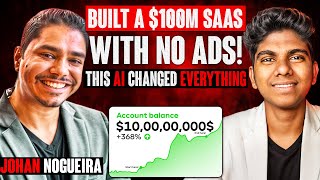
Johan, CEO of White Label Suite, built a lead-generation platform that uses AI to automate outreach for agencies. He exited a $20M SaaS and now helps agencies shift from project work to recurring revenue through hyper-personalized AI-powered outreach and relationship-based growth.
Chapters
What's going on? What's going on, everybody who's actually listening to this podcast right now? First of all, guys, welcome back to another episode of The Nikhil Sai Show, which is hosted by me, The Nikhil Sai. And guess what's going on today? We're back with another special guest, amazing guest. And these guys are like the giants in the HighLevel space, and everybody knows them. But when I was at the HighLevel Summit for a speaking engagement, this booth was so full, I couldn't even believe, like, there was just a gazillion amount of people running around at that one corner at the summit. And it was so fun to see. And bringing one of my friends and we had so many chats and shared life experiences and had a lot of business discussions. And I'm excited to bring a prolific entrepreneur, had variety of experience in his life and now he's building a SaaS company and he's founder and CEO at White Label Suite. And it's a powerful AI-driven lead generation platform that transforms how marketing agencies attract qualify and convert prospects at scale and also keep and retain their clients by creating done-for-you lead generation systems. I'm excited to get deep in the weeds about how somebody can build a successful AI lead generation business. Let's not waste any time and actually let's welcome the CEO and founder of White Label Seed once again, Johan. Hi, Johan.
Hey, buddy, how you doing? Thank you for having me here.
I'm doing great. Thank you so much for tuning in from Australia, most of all. I know it's early in the morning for you, most likely.
It's all good, man. I'm up at 5 every day, so it's all good.
Yeah. First of all, guys, whoever is listening in, if you don't know, Johan, he's like the GOAT in lead generation in high-level space. And Johan, you just hopped off a 300-people webinar and here you are on a podcast again. You're built like a machine, bro. How do you function like this?
It's relationships. Relationships all day, every day. The webinar that we've just come off with 300 people, that's not an overnight thing. That's a relationship that's taken 10 years to build.
Right. Yeah.
Business is about relationships. Relationships make everything work. If you know, like, and trust someone, it's easy to do business with them. So the person whose webinar we just jumped off from, they're a joint venture partner of ours. They did a webinar for us. They over-delivered. We were like, honestly, we were expecting about 50 people and then they just went the extra mile and he said, hey, I've done promos, I've done this, he posted all and 300 people. And so what does that do? That's the law of reciprocity. So now we are doing a promo for him in a couple of weeks and we now have to match that energy, right? And so it's all about relationships, businesses, value that you're adding to each other and what happens when each person is bringing bringing their A-game, everything, everybody wins, everybody levels up.
100%, brother. I love that. You're such a giver. I mean, I haven't seen a lot of networkers have that approach of how can I help you, right? Like, you really have that serving mentality, which is quite unique, and I really love that, uh, you know, coming from you and helping other people understand as well. I would love to get into the weeds and technical questions on AI lead generation, cool tools, and, you know, everything which is happening in your company and the growth of it and whatnot. Before that, yeah, I would love— your microphone changed a bit.
I put the volume up. I realized I had it down. Is that better?
Yeah, it's better.
Perfect.
It's a little bit louder, but that's fine. So, uh, would love to understand who you are as a person. Talk us through your backstory. Like, how did you end up building White Label Suite? What was your journey like before this company? Give us a quick entrepreneur background, a crash film on your life.
Cool. So I started in 2004, so 21 years ago. So a long time ago when you think about it. I'm like, damn. Yeah, it's a, it's, I didn't even know it was that long until somebody said, wow, you've been in business for 2 decades. I'm like, oh wow, it didn't feel like that. Um, I started off, I was, I was doing the, I'm Indian origin, right? So my parents always wanted me to be a doctor. So I went down and started doing my PhD in secondary biofuels and climate change. So absolutely nothing to do with what I do right now. So that's agriculture, right? Back when I started my university degree, I wanted to terraform Mars. That was my, that was my dream. My dream was to be able to go to Mars and help terraform it. Anyway, soon I realized that scientists don't get paid much. So I started, so I went into business. I went into business and back in 2004, eBay was the big thing. So I built my business on eBay. It's the exact same. You can use the same strategies now with Amazon. Amazon and eBay, same thing, different mediums, right? And so I built it on eBay from eBay. Then I moved into lead generation. So I've moved into affiliate marketing. So I did affiliate marketing for a couple of years. And I got all the awards to say, you know, I'm a great marketer, all that kind of stuff. From there, affiliate marketing evolved into cost per acquisition marketing. So cost per acquisition is where you're generating leads and getting paid for the leads. Affiliate marketing is where you're generating sales. So lead generation, like qualified leads, was so much easier than generating sales. It's a different psychology, right? So when we went down and we were doing stuff for all the banks, etc., if you went in and typed in, you know, Westpac Bank credit card application into Google, like, I'd be paying $6 a click. Now, this is back in the day, right? $6 a click, and everyone who clicked on it and filled out, we'd get paid $200. So you can understand how quickly we can scale that thing up. There were 1,800 searches just for that one key phrase. Anyway, from there, I had— I met this gentleman who said, hey, I've organized this amazing event. I've spent 6 months building this event. but I have zero people signed up. Can you help me? I said, yeah, sure. Lead generation, that's what I do. So we filled the room. So I set up a campaign and the campaign was on LinkedIn. We filled the room with 80 CEOs and directors in a couple of days. So this man was so blown away. He's like, dude, you got CEOs and directors to my event. My room is full. Thank you. What else can I give you other than the money? I said, can you give me 15 minutes to speak? Now I'm this young punk. I remember I had a leather jacket on, I had torn jeans, that was the style back then, right? And I might have had blonde tips in my hair, that's why I say young punk. So this young punk standing in front of these CEOs and directors telling them about how the internet has changed everything and now how I got them there in 24 hours to fill the room. So then all these other companies started coming up to me saying, hey, can you do lead generation for us? And so that began my digital agency. So I started my digital agency back then. When I think about it, it was, It was one of the hardest decisions I ever made because digital agencies are super, super freaking hard to run because I didn't have one boss. I had like 40 bosses. I had 40 clients who were very demanding. We had, so our team in the first couple of months, we had 40 clients, which was amazing. But our team in 6 months, we had 100 team members. Jeez.
Let that sink in. 100 members.
Team of 100 people. It was nuts because now I had to manage my team. I had to manage my projects. Managers. I had to manage my clients. I had to manage all of this stuff. You know, it was just, I just remember those days going, wow, what was I even thinking? I couldn't sleep. I literally had to have a shot of whiskey to go to sleep because the brain—
agency struggles, right?
Yeah. The brain wouldn't shut off. And basically people are renting your brain because you can't stop thinking about their business. And we were doing pretty high-end consulting and stuff. So they are actually running or renting your brain anyway. So digital agency My team ended up evolving because I was hiring these amazing people into guys who could have— they had the most amazing skill sets. So we started building the hard systems, the hard like platforms. So now we're at about 2012. So when you go through the airport and you scan your passport and it opens up the gates, make sure you're not a terrorist, all that kind of stuff. So we built that back in 2012. We built things to run power plants. We built— and I moved into this building in Melbourne, and when I moved in they said, this is the best building in Melbourne. I went, great. And So I moved in and I get a piece of paper come under my door and the piece of paper said, your windows will get cleaned tonight. Okay, that's interesting. And then that night I get another piece of paper which says the pool is out of order for tomorrow. And then another piece of paper the next morning saying the trees are getting pruned. Either way, it was just one sentence on a big piece of paper. And I said, okay, something's wrong here. A month goes by and an inch thick of paper is sitting on my table next to my door. I take it and it's just got one sentence on it. Take it, I go to the building manager and I said, dude, I said, how much is this costing me? He said, it's a dollar per sheet, a dollar per sheet, 500 apartments twice a day. That's $1,000 per day. Plus some poor person is walking around putting these things under their doors. I said, dude, why don't we build a mobile app for the building? And he said, what do you mean? What's a mobile app? He's 70 years old. It's 2012, right? Mobile apps were just coming out. And so I said, let me show you. So I went to Dubai and I looked at their systems because Dubai just leads. Like you look at the city of Dubai, what they built, the building technology is just absolutely amazing. So we come back. We build this amazing building management platform, show it to him, he loves it. He goes, we need to have this. So we were licensing this, this is our first SaaS, right? We were licensed, licensing this at $50,000 per year and making between $300,000 to $500,000 on the backend of this platform. If you want me to go into that, I can go into that. We grew it to a $20 million company in 4 years and then we exited in 2019. So that was that whole story.
Do you mind sharing the valuation?
Like, or is it It's a $20 million valuation. What we sold for that, I can't share.
That's dope. Wow. So like agency to actually building SaaS and actually selling it. 2019, how did you stumble upon HighLevel and why did you build what you have built right now?
Yeah, for sure. 2018, I built another company called Business Authorities. Now Business Authorities was about getting people who are in business at the front of the stage. Not trained speakers who are there to extract money from the audience, but people who would come and just deliver value and show people how to grow and scale their companies. And so Business Authorities, we started off with 150 members and it grew to 3,000 members in 2 years. So that's, that's Business Authorities. And then COVID came and COVID shut everything down.
Hmm.
I'm in Melbourne, Australia. Melbourne, Australia. We were locked down for 9 months. So that's a whole nother story.
The longest. Yeah.
Australia was Yeah, so while we're locked down, we had one week off where the, the premier of the thing said, hey guys, we're having a break from lockdowns. So I said, grab my family, we went to the Gold Coast. And that's, um, I met on a podcast this gentleman, his name is Walt, and he had interviewed me I think 2 years prior to that, so probably around 2020 or something. And every 3 months he'd be messaging me going, hey, can we do something? Hey, can we do something? Because we had a great podcast, and that podcast really, like, we really gelled. So I approached him. I'm in his city. I said, dude, I'm finally in your city. Do you want to catch up? So we catch up for breakfast at 6 in the morning. And we sat down and I'm like, show me what you got. And he shows me what he's got. And he is the, he is the founder of the lead generation software. So we're co-founders, right? So he built this thing 13 years ago. He used to sell this on CDs at trade shows. Most people don't know what CDs are now, right? So he used to be selling this at Hunt CD at trade shows. So he shows this to me. I go, wow, this is absolutely incredible. He's spent millions and millions of dollars building this software, right? So I've gone, he goes, hey, do you want to be business partners? I go, I can't take, you know, something that you have created. I go, let me do this. I gave him in writing, said it's April 20th, it's April, yeah, around to April 21st, 2021. I go, I'll give it to you in writing. I will work with you until December at the end of the year and you can kick me out of the company. And I don't want anything. So I'll prove to you how I work. And so that was 4 years ago, and here we are, and we're just the best. We're the best of friends. Our wives are like, dude, it's been 3 minutes, you haven't talked to Walter. Like, we're on the phone every, you know, every 3 to 5 minutes. It's the best business relationship I've ever, ever had because I never met somebody who could work as much as I can and have so much fun. Like, the last 3 days he was here, we just strategized and grew our company. All of these cool things. So having a business partner that is, um, that can match your intensity, your, your energy, and has the same vision as you is just incredible to have. So yeah, that, that's the story to where we are right now. Continue.
That's so funny. I mean, I met your co-founder at the summit too, and I mean, his passion for the product is insane. Like, he's like the guy when it comes to like the product, which was really, really refreshing I see like many founders don't have like that insane passion just on the product. I kind of see like how you guys blend in, like where you're like the face and trying to like keep selling as many units as possible while he's building the ultimate machine. So walk us through, like if you're open to it, like give us a rough estimate, like where were you before you got in? Like I'm assuming it was just like his little baby that he's been building and where are you guys right now with White Label Suite?
So White Label Suite is growing. Every day, every day. I think we've onboarded about 30 new clients today and it's 9 AM. It's pretty good. So in the last, we've put on our website, 2,500 agencies have been with us. We are now, we realized agencies are great. Agencies will get 30 to 50 clients, but then for our software, like it's a scalable software, we can have infinite. So all of a sudden we started seeing these influencers come through and they were getting 200 to 300 accounts every week. So we went, hey, this is incredible. Let's, let's target, like, we have a great foothold with digital agencies, the ones who know us, who use us. They are making tons of money from what they do. But then for us to now increase our valuation, it's like, hey, influencers are amazing, especially like all the, all the GoHighLevel influencers. They can drive numbers very quickly. Now these influencers, so we built a new brand called influencerempires.com. and we're interviewing influencers. What happens when you— Thanks, man. What happens when you interview the influencers? They're like, dude, I can use your software with my audience because our whole thing is return on influence. We'll give you an ROI. And so we had somebody start with us a couple of weeks ago. And so they, he pays us $1,000 a month and he's making $30,000 a month recurring. And it compounds. It's not, it's never going to stop. It's a fixed cost to us. He only pays us $1,000, but His company pretty much keeps growing and growing and growing. So we're also building the companies for them so that they can sell the company, right? So that's, that's the way we're working with our influencers. So it's just, it's just such a beautiful period in time right now because we've got access to anyone and everyone, you know, in the, in the, in the day and in the day and age of the internet. Literally, I will read a book. I read this book. It's called Overdeliver by Bryan Kurtz. I jump, I message Brian. We're now friends. We jump on Zoom. We talk. I know his thinking. So now we have similar values. When has there been the possibility to jump on with the author of a book, have a conversation, right? And become best friends with them. So it's, it's just an amazing time to be alive. That, then we'll move into AI. Now, AI, it's moving at the speed of lightning right now. The other day I was sitting down at my computer. I had ChatGPT open on this computer. I had another ChatGPT open on this computer. I had Manus open, and I was literally doing 3 different things. But the amount of work that I achieved in that one day was the equivalent of 3 weeks of work. So just what a time to be alive, my friend.
It is. Yeah, I mean, totally. I could just see you like taking exponential leap of growth at your company, and it's so refreshing to see. I mean, we talked about the plans and It's so fun to see you guys aiming for big, you know, hopefully some new fun things for the company and whatnot. But if somebody is listening to this, right, and they might be having a little bit of idea about what they're doing with their agency, you know, they might not have figured it all out, got a bunch of clients, couldn't really get them leads and whatnot, struggling. When you've been there, you know, as an agency owner, everybody goes through that phase. What do they do to be making a predictable amount of revenue and actually grow their business sustainably like you're saying?
My advice to agency owners is simple. Own the room. So what does that mean? If the agency owner invites in a mastermind of 10 people, of 20 people, and says, hey Nick, I'm running an event. It's called the AI Summit. I'm only going to have the most powerful people and smartest people in the room. I know who you are. You belong with us. Would you like to join us at that room? Nick, I've also invited other people like Walt, liked-vocalise, liked-vocalise Matt, liked-vocalise James, liked-vocalise whoever, right? And then you know those names, you're like, dude, I want to go just to network with these people, right? And so what happens is you go, you network, you build bonds, you build friendships, and then automatically you attribute that to the person who invited you, which is that agency owner. They put that whole event together, they now own the room. The karma, the kudos from that comes back to them. And now, are they happy are people happy to do business with that person? The answer is yes, because they now know them, like them, and trust them. As long as you come with a good heart and you actually are there to add value and not just to— because I think in this day and age, people, you know, if somebody's pitching them and they just want to get— nobody wants to be pitched. They don't care about that. If somebody genuinely cares about you and they actually want to see you grow and help you, and you said my first sentence to everyone is, how can I help you? I will always send people tons of referrals and money before I ever asked them of anything. The other day, this guy came to me. He's in our community. You might know him. He said, dude, you changed my life. I was in, you know, my agency was struggling. He goes, you have sent me $65,000 worth of referrals in the last month. I said, oh, did I? I had no idea. I was like, cool, man. I'm glad I could help. But he does great work, right? So it's not, I didn't refer him. I referred him because of the quality of work that he does and the great person that he is. So always add value to people, send them referrals, send them good people. Don't send them bad people, by the way, send them good people. Allow them to build, allow them to be great, and you watch them shine. And what happens, they'll never forget that. They'll never forget that you were the person who was there with them at their lowest, and forever they will continue to be your cheerleader and send you more business 10 times over than you ever sent them. That's one strategy of how to get out there. So if I was a digital agency starting off or with few clients, I would organize an event for my niche market. So let's, let's pick another one. So if I'm a digital agency targeting financial planners, actually, Nick, you can talk me through, you can give me examples and I can talk you through pretty much any example. So if you've got anything specific in mind, go for it.
Yeah, for sure. I mean, there's a lot of people using some sort of AI in like any and every industry possible. So maybe we could talk a little bit about real estate and lead generation using AI as an example.
I did. So real estate, this is one of my favorite stories. So this guy calls up and he goes, Johan, you've changed my life. I want to send you a bottle of champagne for Christmas. This is the 21st of December. So I said, okay, but thank you. Who are you? I wasn't being, you know, I genuinely didn't know who this person is. 8 in the morning, they called me, you know, on my phone. So I said, who are you? He said, I signed up for your software 3 months ago. And in the last, in the last 2 months, I have made on average $80,000. So I said, come on, man, you don't have to bullshit me. Going from $0 to $80,000 is a big thing. How can you do that? He said, well, I went into your software and I looked for all the CEOs in the rich area of town. Now he has a list of 1,000 CEOs in that area. It's like fish in a barrel, right? And then he found all the real estate agents who service that area. And then he sent an email to the real estate agents and said, hey, I'm a buyer's agent for high net worth individuals. I have too many leads. Would you like some of these leads? Real estate agents, hell yeah, I want that. So he goes, I don't want any of your commission. I charge $2,000 for the lead. Now the real estate agents over here, they make between $30,000 to $50,000 when they sell a house, just to give you an example. So him asking for $2,000 is not much. And in fact, it's an irresistible offer because he tells them, I guarantee you I will send you a lead until it converts. So if you pay me $2,000 and that lead does not convert, I will keep sending you leads until one converts because he's got a tracking system. What do they have to lose? They have nothing to lose, right? Yeah. Then he comes back into the system and he goes, hey, all those CEOs that he found, he sends him an email. Hey Nick, I know you run XYZ company and that you invest in property. We've got 3 properties that have a high return on investment. Are you interested in checking these 3 properties out? What does Nick say? Sure, send me the deal. One sentence back, sure, send me the deal because Nick says, hey, in 2 minutes I can understand the deal and whether it's a good deal or not.
Right?
That's the way, that's the way the investor brain works. So, so out of the 1,000 people he emailed, 400 replied and said, send me the deal. Now with GHL's automation, as soon as they said, yes, send me the deal, trigger comes back to them saying, hey, great. I'll get you that. I'll get you those deals in a second. Can you answer 3 quick questions for me? Those 3 quick questions are radio buttons. Question number 1 is I have $0 to $500, $500 to $1 million, $1 million plus ready to deploy. Question number 2, I'm gonna buy it in 2 to 3 months, 3 to 6 months, 6 to 12 months. Question number 3, seaside, countryside, or cityside? Click, click, click. 5 seconds of work, right? Click, click, click. As soon as that click, click, click is done, an automation goes out to the real estate agents. Brand new lead, his name's Nick, he's got $1 million left to deploy, and he's looking for a seaside property. Do you want this lead? Buy the lead for $2,000. So out of the 400 CEOs, he sold 40 of them at $2,000 a pop. That's how he made $80 grand.
Geez, wow, what a case study. I think this would really, really give a completely different perspective on how we could monetize lead generation right now. This wouldn't happen in 2015, like it didn't exist. And now this new opportunity exists that could actually do this. That is so wonderful. Appreciate you sharing that. If somebody is— I mean, I would love to first of all see For somebody who's just getting to know you and they might have heard White Label Suite, but they didn't completely get the business model, right? Walk us through what it is, how can it actually help people, what's White Label Suite is all about?
Yeah, man, for sure. And thank you for the opportunity to share. So White Label Suite is a lead generation tool. So what it does, there's 4 different ways to search. The first one is you say, I'm looking for these exact types of people. I'm looking for all the CEOs who are tech investors who make more than $50 million in New York City. It'll now go through and find those exact people, right? You cannot get this through any other AI. Once it finds them, this is where the AI kicks in. It'll go and learn everything about them. And then it'll say, hey Nick, these are your ideal clients. It'll tell you. And then it'll reach out and say, hey, I don't know, pick a name. Hey Max, my name's Nick. The reason I want to reach out is because I know you're the CEO of this company that's doing above $50 million. This is how I can add value to you. Here's a 2-minute video of how we can do that. They click, they watch. They're only going to give you 10 seconds to see if they like you, right? They click, and within 10 seconds, you capture their attention. They watch the rest of the 2-minute video. They click, they book in with you. But you've reached out to 50 of those guys, right? That's how this thing works. And everyone is hyper-personalized. Each outreach is— it knows everything about them. So in the custom fields, I'm getting a bit geeky now, but it'll insert your achievements. It'll insert, hey, I saw on LinkedIn that you did ABC, whatever it is. So that's the people search. The second one is the location search. And so you go in and say, I'm looking for all the real estate agents in Miami. And it's gonna go and find all the real estate agent companies plus everyone who works for them. And now that's super powerful, right? So I'll give you an example in a second. And then the third one is you can go in and put the domain name of any domain like nike.com and it'll find everyone who works there. And then the fourth one is the influencer search. So if you've got a product that you want to get it out to the world, You go in and you say, I'm looking for fitness influencers to get my new tea product out, right? And then it'll go, it'll find them, it'll understand their followers. It knows everything about their followers and will tell you their credibility. It'll tell you how many of their followers are fake. It'll show you where their followers are from. So now you know what deal to make with them. So those are the 4 ways to search for them. Now here's my story. I started going to the gym, but my kids are now 9 and 7. I can't use them as an excuse to have a dad body anymore. So I said, all right, I'm gonna start, I'm gonna start working out, right? So I started going to this gym. Next to this gym gym. So in Australia, gyms are everywhere. More— I think there's more gyms than McDonald's. Anyway, I don't know. So where this gym is, within 4 minutes of it, there's 5 other gyms. Now this gym costs $100 a week. The other gyms cost $20 a week. Massive difference. I'm there, and I've been there for 6 weeks, and I said to the guys, I said, hey, what makes you 5 times more valuable? You're charging me 5 times more than everybody else. How, how are you planning to grow? And they said, hey, we're going to do up our website. We're going to run some Facebook ads. We're going to do a leaflet drop. I'm like, okay, cool. Or who comes to your gym? They go, all business owners. There's lawyers, accountants, and business owners. Their entire clientele is that. I said, okay, let's go into my software. We went into the software, typed in lawyers, accountants, business owners, and it finds all the people within their radius, within their 5-kilometer radius. And then they send them an email saying, hey, I know we specialize in fitness for busy individuals, which are business owners. We specialize in fitness for accountants. We specialize in fitness for lawyers. So it's personalized. I know you work at blah, blah, blah, blah. Here's a free 2-week trial. Now people are coming in. They're ideal clients. The next one is we identified all the businesses in that area and said to those businesses, hey, we've got a 2-week coupon for free to all of your staff. Our gift to you for you to gift to your staff. Your people will be more energized. They'll be more focused, more confident. Do you want them to come in, give them this free gift and watch them come in and be more productive, right? So now all the, all the business owners are like, hey, here's a, go, go down to the gym and, you know, get pumped some weights, come back energized. That's what happened. And then they found all the big companies there and they went and put the domains into the, into the, and now they have everybody who works at the big companies. And so that's how they filled the gym. Now, second thing, every day we have agencies signing up, right? So agency, agency, agency, restaurant. So a restaurant signed up. So I called up the guy, I'm like, hey man, I saw that you signed up an account. I don't want to waste your time and I don't want you to spend time, energy, money. I'm just going to refund you. I'm going to give you your money back. He goes, no, no, no. I watched your YouTube video. This is going to work. Okay, cool. Tell me a bit about your business. He goes, I'm a restaurant in San Diego opening up in 2 weeks. I said, oh wow, okay, congratulations. I go, where are you? He goes, middle of the city. I go, oh, fantastic. I go, what do you see when you go around? He goes, I see buildings. I go, can you get into the building? Can you take a photo of the directory board? Because then we know which companies are there. He goes, yeah, sure. Goes in, takes a photo, comes back, calls me up. He goes, got the details. So we put it into the domain search. Now, every company that works in those buildings, he has the list of everybody who works there. He sends them an email saying, hey neighbor, we're doing a grand opening. I just wanted to invite you. We're doing a special deal just for your company. And so if you come down, I'm going to give you a free bottle of wine when you order your dinner. I'm going to give you 20% off your meal. I'm going to give you a free muffin with breakfast. His restaurant was full. So yeah, those are my stories.
Oh my God. Isn't that so funny to see how a restaurant guy can actually take advantage of AI lead generation tool right now and fill his restaurant at a launch time? That's so cool to even realize that it's even possible. That's so fun. Now walk me through, you're big on MRR. This is something we had as a fireside chat. Behind the scenes, but I'm kind of curious. You've sold those big consulting gigs, you've sold those huge projects, getting paid $10,000, $20,000, $50,000 to build stuff. And now all you're building is software. What's your thesis and ideology around building companies that have recurring revenue and why is it important?
It's an easy thing because when you're an agency, so I was an agency for a long, long time, 15-something years. Agency is hard. It's hard because depends what type of agency, obviously, but still an agency, you have a client, you service the client. If you do a good job, guess what? The client fires you because they've got enough business. If you do a bad job, they blame you for everything. They never have money for advertising. They're always like, they don't pay you invoices. They delay the invoices, right? Hey, your bill's due on the 30th. Can I please have until the middle of next month? Can I have another 13 days? Can I have like, that's agency life, right?
Yeah.
Happens all the time. And every, every job that you're doing is custom. So you have to keep— you get to sharpen, you actually get to be very skillful, but you're doing new things all day. It's not a business, it's actually a hobby. So until you have a business where you have a sausage factory, that's, that's the definition of a business. You know, a car line that's pumping out cars all day, every day, that Tesla factory, that's a business. If something is repeatable and 10— you can keep pumping the same thing out day in, day out and keep serving those customers, that's a business. Most people have a hobby business, a lifestyle business, right?
Yeah.
And there's nothing wrong with that. I had that until I realized, hang on, I don't— well, actually came from my wife. When we started dating, she rocked up to my house on a Monday. Monday, like, my whole team is at my house. This is when we were working out of my house. So this is 2000, and this is about 2012, around there. My team is working from my house. There's laptops. One of the guys slept over on the couch. My, my Girlfriend at the time walks in and she's like, hey, do you want to go for a picnic? It's Monday morning, 10 o'clock. I've got team. What do you think this is? And she goes, okay, I'll go by myself. She leaves. She comes back on the Wednesday, right? And she goes, hey, do you want to go for a drive down the beautiful coast and go to a winery? I said, what do you think this is? I'm a business owner. I've got stuff to do. I've got phone calls to make. I'm important. And she's like, oh, I thought— and I said, aren't you a business owner? She goes, yeah. I have people working. I don't have to do anything. It's a business. It runs by itself. I can go in and do some stuff and increase the value of the business. I went, oh my God, I built myself a job. That was, that was 13 years ago, right? And so 13 years ago, I made that shift going, I'm going to build a business. So you asked me, why do I build SaaS businesses, MRR? Because once you close the client, once the client is on board, once you have the systems so that the client is getting value out of the service that you're giving them, they don't cancel. They're going to keep using it. But do we have to continually talk to them? No. Do they have support questions? Yes. Is there a team to handle that? Yes. If we give them enough training, they will continue to use it without any hiccups. If they need someone, they can pick up the phone and speak to my support, no problems. But it's not me anymore. I can just work on the business. And so by me just working on the business, I can continually evolve and grow the business. Most people get stuck working in the business and they're taking phone calls, they're doing stuff in the business, not on the business.
Love that. Johan, I'm so curious if you have to separate the tasks, right? Which you define as, okay, things that compound, and these are like on the business, grow the business type of tasks versus in the business, managing it and keeping you stuck and keeping you technically in that job situation. How would you define it? How would you separate these tasks?
Easy. When I started my agency, the first thing I would do, I would go sell a website for $5,000. This is 2008, websites were $5,000. Now you can build a website in 10 minutes, right? Hopefully different. Every time I sold a website, I would come back and go to onlinejobs.ph and see who can I buy to come on my team, right? Every deal that I made, all I did was work on my team. And so it wasn't about taking money and driving Ferraris and all of that. I didn't care about any of that. All I cared about was how can I build a team? How can I build a system? Because once you have that team in the system, they're working for you. Now you have freedom. That's how—
yeah, love that. And what are the tasks that you still do that you don't delegate that are driving the business? Like you did the webinar before you jumped on the podcast, right? What else are you like deeply involved in which keeps you on the business instead of in the business?
So there's two different types— there's actually three different types of people. So there is the artist. So the artist is the person who creates things. In our business, the artist is Walt. Walt is the artist. He's building, he's in the technology. He comes up with the craziest stuff and he'll be like, hey, and I'll log in. I'll be like, what is this button? He's like, press it. And I'll press it. And I'm like, holy shit, do you know what this thing could do? He's like, yeah, I know. I built it. I go, man, this is incredible. I'm going to tell everybody. He goes, don't tell anyone. I want to, I want to, I want to tweak it. No, I'm going to go tell everyone. Artist just wants to create and is never ready to sell. Because they're like, no, no, no, not yet, not yet. The entrepreneur, the deal maker, that's me. When you have salespeople, right, they're deal makers. All they want to do is tell everybody about how amazing this thing is, and so they just want to sell. So you've got the artist who creates, you've got the entrepreneur, the deal maker, who wants to sell, and then in between them you need a manager. When you have the manager, he has to manage— he, she has to manage the relationship between the artist and the salesperson. Also has to manage the relationships between all the customers and the business. So that's the manager. When you have these 3 pieces in place, now you have a business that can grow because artists will keep creating, the business development manager will keep selling, the manager makes sure everything is good, and now you build a team under those 3, and that's how you can grow and scale the business.
Makes sense. That's a beautiful explanation. I think that's very thoughtful. Appreciate you sharing that. Everybody loves MRR. They always want to build— everybody wants to build a software business. Everybody and their mom, honestly. The biggest problem is traffic conversions. Again, there's definitely onboarding and retention. That's a different problem. But now with HighLevel and tools like White Label Suite, like that's becoming a little bit easier. Everybody's still struggling in the front end of like, okay, how do I get new customers? I don't have budget for ads and stuff like that. And you, I'm assuming, have cracked a really powerful flywheel of relationships that are compounding to add new users and new agencies to come and try your software, especially the Influencer Empires. I was like, like, this is, this is it, right? I'm curious. So if you, if somebody has to learn acquisition, right, and a playbook that you recommend for people to follow, what would that be to grow a SaaS company?
Playbook to grow a SaaS company? Well, I'm writing a book, so that'll be out soon. Um, the playbook for a SaaS company is very simple. Traffic. Where are my clients hanging out? What is their problem? Copywriting, articulate their issues when you can articulate. So our thing is this one sentence literally changed the entire business. The one sentence that is, Nick, can I give you 1,000 leads for $300 a month? What's your answer to that? Hell yeah. Yeah, right. It's the one sentence that changed everything. So our first 6 months in GoHighLevel was horrible. We closed 12 clients in 6 months. 12 clients is, is, and we were, and we were working 18-hour days. Because of all the support that, you know, every client that we signed up, hey, Johan, how do I do email campaigns? Hey Johan, how do I do SMS? Oh my God, Johan, it's Friday night. It's 10 o'clock on a Friday night. Johan, there's a wrong thing on my website. Can you help me? Can you fix it? I'm like, oh my God, what am I doing with my life? This is nuts. And so that's when we were like, we were struggling, but we needed those clients, but we didn't have the training. We didn't have the support, we didn't have the systems in place. That's when we started. And so from there, we just— the thing that the playbook is, once you nail that offer, then you systemize it. So first thing you have to do is to nail the offer. Second, delivery. Make sure that the client and journey— so I would map out on a piece of paper, get Post-it notes, whatever you need, and say the client logs in. What happens when they log in? What are they going to see? What's the training that they need? And write that down. What happens after that? How do you stop them from churn? They have 29 days until they're going to cancel. So we always assume as soon as someone signs up is the day they start to think about canceling, right?
That's actually true. Yeah, that's the right mindset to think about building a product.
So how can we stop them from canceling? What value can we add? And so when you add so much value to them every day, every week, every month, people don't cancel right now in our— like, we did a survey. We have a percentage of people who don't log into the software. So we asked them, like, it's a scary thing to ask them. We asked them, if you're not logging into the software, why are you still paying us?
Right?
It's a scary thing to ask them.
You don't want them to cancel.
Yeah, because they'll be like, yeah, you're right, why am I paying you? They came back with, we love your training, we love the weekly training, we love the support that you guys give, we love the education you guys give us. Education is worth more than the software to them. Makes sense.
Makes sense.
Because in our software, if you can generate 1,000 leads in a month, why do you need us anymore? Right?
Yeah.
But we show them how to grow and scale, and 1,000 leads is not enough. Now you need more, you need more, you need more, and you keep adding them in. And so we're a business growth company. We're showing you how to grow and scale your business.
Sure. Love that. Love that. Johan, how are you using AI right now? You kind of already talked a little bit, teased a little bit. About how you're getting 3 weeks stuff done in an hour. So give us a playbook on how you're becoming a superhuman with the power of AI in 2025.
So I've been using ChatGPT for 2 years now. I think most of us have. So ChatGPT knows us very well. When you get ChatGPT to then articulate, hey, I want to write a book. I want to write the playbook on how to build, grow, and scale a SaaS company. What is the table of contents? What is the index? It gives you that. And then interview me, make sure I know everything about these topics, or tell me what I need to learn or add into this that's going to make the end user, you know, have a great experience. And from the book, it's not just about the book, it's about the ecosystem. So I started off writing this book. It ended up being a whole 30-day challenge. It ended up becoming a community. From there, it became an event, a seminar, and then a 10,000-person mega event. Jeez. I just started, I just wanted to write a book, and this thing took me through this entire journey. And now my whole team's building everything out because 'cause they're like, yeah, let's make it happen.
Isn't that fun? That's so fun.
So when I say getting 3 weeks' worth of work done, so I use ChatGPT for the ideation. So I was telling somebody this morning, ChatGPT is like the everyday car that you can drive around and it's just there, it's all the time. Your everyday car is just the everyday car. It's nothing fancy, but it's there and it does the job. Then you have the Ferrari, which you take out on the weekends, which is Manus. So right now it's Manus. It might change next week, who knows? AI changes all the time. But right now what I can do with Manus is absolutely mind-blowing because it's going in and it'll hire like 5 other agents to go and do all this other work, which ChatGPT cannot do. So when you plug in the input, the output from ChatGPT into Manus, Manus then magnifies that by 10. So only someone who's driven a Toyota and then they get to drive a Ferrari, they go, holy moly, this is insane. So that's my tech stack right now. I'll give you another quick example. So I caught up with a friend. You know, we catch up once every 6 months. And we're at dinner and he says, Johan, dinner's on me. I was like, okay, cool. All right, cool. What are we celebrating? So he wanted to make a point. Dinner's on me, which means I've done something great. I said, okay, cool. Tell me what's going on. So last time we caught up, he was selling to restaurants at $3,000 a year SaaS loyalty rewards program thing. So I go, so what's changed? He goes, now I'm selling million-dollar contracts to the top 500 companies in Australia. He goes, I've got Jack Daniel's, I've got— anyway, he's got some of the biggest names over here on his books. I was like, that is a massive change. Did you change your entire product? He goes, I didn't change my product. I changed my pitch. So he went into perplexity. He spent a weekend with perplexity. He said, I want to be selling my company for $100 million. How do I do that with this product? And then perplexity after— this is, I don't know, like 12 hours of talking to it. It came back with, hey, did you know you can reposition your product and pitch it this way? And you should pitch it to these people. And this is how to pitch it. And here's a slide deck for it. And here's the website. And it's the same product that he was selling for $3,000. He's selling the same thing to big corporates for a million dollars a year. He is going to do an exit of $50 million in December.
Incredible.
I mean, in one year, like, this is a transition from selling $3,000 restaurant loyalty to— he's now got 10 of the million-dollar contracts, so he's going to sell it for a 5x, right?
Yeah.
I'm like, dude, I was like, dude, you can go and get 20 and then sell it for 100. He's like, I've already got an idea of what I want to build next, so I'm going to do the exit. All right, cool, fair enough. That's, that's awesome. but no one's gonna turn down 50 million for sure.
Yeah.
But what was the catalyst? The catalyst was sitting down with AI, articulating your offer, articulating your end goal, and then it helping you build a bridge in between. And then you realizing, can I or can't I do that? Why can't I do it? And being able to know, cuz let's all fa— let's face it, AI hallucinates sometimes, right? Yeah. And it just makes stuff and it makes it up so that it can give you a pat on the back and say, Nick, this is the best idea ever. You're like, really? Selling luxury homes to homeless people. That's the best idea ever. It just, it's there to give you a pat on the back. So you have to make sure that you can interrogate it and make sure that the data is accurate. Otherwise it can send you down the wrong pathway. Yeah.
Yeah. I love that. I think it's important if anybody's listening and you might experience that with AI, make sure to add in a keyword saying brutally honest and be skeptic about my ideas. And you know, Like make me see all the loopholes, add this into your prompts to make sure the AI just doesn't agree with you to sell luxury real estate to homeless people like Johan is saying. That's really helpful. So you're using Manus, ChatGPT, and ideally FlexiRock, everything and anything possible to get things done. That's awesome. How are you guys incorporating AI into white label suite? I mean, I've seen the product roadmap. The product I've seen at HighLevel Summit 2024 was completely different from the first time version when I saw it on YouTube and you and Walt were doing a webinar, I think in 2022 or something.
It changed.
Oh, fuck. Like, how did you guys pull this off was my question. And yeah, I'm curious where all the AI is used in the platform right now.
Yeah, man. As soon as you research someone, it knows everything about that person. So that's where the hyper-personalization comes in. When you plug that hyper-personalization into GHL. Now imagine these 300 people that were on the webinar just now with me, they're all going to get a message and it's going to say, hey James, you're on the webinar, do you have any questions? By the way, James, I know you run a coaching business and that you have, you specialize in coaching for manufacturing. Do you want to know how our tool can help you with that? Every person is getting a hyper-personalized message. Do you understand how powerful that is? and then the AI is talking to them and having a conversation with them and convincing them to sign up.
That's incredible. Yeah, that's, that's so cool.
You don't need a, you don't need a salesperson. You don't have staff on there trying to type and reply to messages. The AI already knows everything about that person before it reaches out. When it reaches out, it'll help convince them to make, to buy the product if it's a fit for them. And if it's not a fit for them, guess what? It'll recommend other products. It's not there just to make a sale. It's there to help. Yeah, man. Dude, AI is built throughout that entire thing. So our platform, you know, you've described it. Everyone who knows us describes us as a lead generation platform. In another couple of months, we're no longer going to be a lead generation platform. We are going to be a market intelligence platform.
Hmm. Interesting. Market intelligence. Okay. That's interesting. That's a good positioning as well. So cool. I'm excited for the evolution of of what you guys are building and I'm so stoked to be a part of the growth as well. Yoan, walk us through like an average day. You're doing like 7 webinars with 7 million people or what? Like walk us through like an average day or how does your day look like right now?
Yeah, man, for sure. So I'm up at 5 and from 5 to 6 it's my time. So nothing will interrupt that time. I plan and visualize the whole day. I'll do some exercise. It's just my time. 6 o'clock, I'm on the laptop, I'm on the phone and it's deal-making time. So 6 till 12, deal-making time. After 12 o'clock, it's whatever I want.
That's it. 7 hours a day and freedom. Right. Love that. And break us your deal generation activities because people might be doing activities which they are hallucinating themselves that it's deal-making or it's going to make them money. But I believe like the power you could pull in by doing the right activity could really change the trajectory of your business and the inflow of revenue could change, could be life-changing, right? And if you mind walking us through like what would define deal generation activities? Like, where do you think the most power comes in in your life right now to bring the most value to the company?
Yeah, for sure. So once you have the foundations, the foundations means I can go and I can sign up 5 clients. I can sign up 1 client, I can sign up 2 clients, I can sign up 5 clients in a day, and it doesn't impact my business. That's when I know I've got the right foundations. Those 5 clients that I signed up, they don't cancel in 30 days. I've got the right system in place to make sure that there's no churn. Or to reduce churn. You can't, you can't eliminate churn, unfortunately. It's just the way it is. The world, economies, different circumstances, etc. Churn is always going to be there. So once I have that, then it's okay, now let me grow the company. How do I grow the company? Relationships, partnerships, marketing, advertising, sales teams. So we have sales teams who are closing. We have advertising that's generating leads, sending it to the sales team. We have our system generating leads, putting them through a funnel, then coming into the opportunity board and our sales team closing those guys. We have evergreen webinars happening all the time. We have partnerships with some of the biggest people, you know, in our ecosystem where every 30 days or 90 days the webinar is running as a replay in their systems. So all of their database is now seeing it and signing up to our system. It's a joint venture. Then it's what other deal-making activities? Affiliates. You know, we're recruiting affiliates all day, every day. Affiliates are driving webinars, driving traffic. They're getting very handsomely paid for sending out 4 emails. They send out 4 emails, we're sending them $30,000, $40,000, $50,000 checks. They're super happy. And we do that monthly, right? So that's, that's the dealmaker activities.
Love that. And this is the best part. Like everything you've said, right? It just doesn't apply only for your business. It applies for like, even an agency can do that. Even an agency can create referral incentive structures, they can do the JVs, they can make the trainings about their services and, you know, run them as webinars and whatnot. So it's beautiful that you walked us through the power plays that you're playing to bring the most amount of revenue to the company. If you can— I mean, you've done all sort of businesses, brother, like, you know, from the funny businesses to, you know, building serious software companies to scaling and selling. If you could go back and talk to that 20-year-old yourself, the young guy who has all this potential, what would be the number one advice you would give yourself?
Use your time better. In, in my, my 20s— so there's, there's a thing, I can speak for men, I can't speak for women. So there's a saying about, about men. Men in their 20s to 30s, they're discovering the world. So 20 to 30, they're like, oh my God, wow, shiny, wow. And most of the time it's, wow, girls, wow, right? That's just the way it is for men. 30 to 40, they've found a woman, they've got married, they've got a family, they've set up the foundations. When the man reaches 40, he has a mental shift. Most people call it a midlife crisis. Now, depending on who you are, you might be an employee, you might be a business owner. If you're a business owner, this is the mental shift you have. Holy shit, I only have 20 more years left. I need to maximize this thing. So between 40 to 50 is when men have an exponential growth curve.
Yeah, that's incredible. I don't think many people understand, uh, the, the power of just doing more and not wasting time. And many people regret the time once it's lost. And I think that's the one resource you want to protect. Wonderful advice.
You can always make more money. You will never make back that time.
Yeah, wonderful. What are your life's biggest achievements, Johan, and what are the next big goals?
My biggest achievements are my kids. So when I was 25, I had 3 mentors, and these 3 mentors, they were all 10 years older than me. So I got to see what life would be like. So seeing them allowed me to design my life. So my father was always working, and he always was working to provide food for the table so that we could have a good life. So I had never— I don't hold anything against him. He did what he had to do. But I said, I want to be there for my kids. I never saw my dad, actually, until last year. I didn't really spend much time with him. So it was the first time in my life I got to spend 2 months with my dad every day. We went on a trip. We went trekking across Spain. That's a whole different story. That, well, the reason is he was on the ships. He used to work on the ships. So we were in India, he used to work on the ships. He'd be traveling 9 months of the year. He'd come back for 3 months, you know, but I never really knew him.
Yeah, the fishing thing. Yeah, it's insane. Like how hard these guys work and how little time they could spend with their family. And in this economy, 2025, AI allows us to make money on laptops, right? Isn't that insane? And we could stay with families and have fun and travel.
Exactly. So, so he was an engineer on the ships, on the oil tankers. Um, and so when he came, when we came to Australia in 1991, all he was doing was studying. So he was studying, working. He'd be out of the house at 5 in the morning. He'd come home at 7. He'd study until 10. We had school. And then once you hit teenagers, your teenage years, you're just out with your friends. Once you hit university, you're out doing what you do at university. And then found a girl, got married, moved out. So that's why I said I didn't get to spend much time with my dad. Until last year where we went walking across Spain. So, um, what was the question? I've forgotten. You've taken me down memory lane.
What's the next bigger goal?
What's the next big goal? Building life with my kids is one of the biggest things. The next goal for my family is that more family time, more experience, and we have that already. So it's great. Goals for the company, probably do, maybe do an exit in the next couple of years. We want to, we want to hit $100 mil. Once we do that, and we'll do that exit, there's tons of new ideas and stuff that we want to build, but we won't entertain any of those things until we grow and scale one company. So the lesson there is a man who chases two rabbits catches none, right? So we can't, we can't split focus. We have to focus on what we're doing. Um, everyone in the company is dedicated to that goal, and that's what we're making happen.
How big is the— like, how many people do you guys have right now in working in the company?
Probably about 30. Wow.
Like lean team, high scale. I'm excited for you, bro. I'm excited to hear the story of how you sold the $100 million exit, you know, and I would love to interview you once again about the whole shebang on how you actually packaged and sold the company as well. We'll do that. We'll do that.
Yeah, man, for sure.
If somebody is listening and you want to save them one big mistake that you don't want other people to do that you've done already, what would that be?
Don't think that you are the only one who can do it. I spent many years thinking I was the only one who could do it. And so I would do it.
So delegation, you didn't delegate enough.
It is the hardest thing to ever do. I'm the only one who can do it. No one can do it like me. Guess what? There are. Just give them the books that you read and let them upgrade. That way they'll start learning to think like you. I'm training my AI to have people think like me so that I can say, hey, this is how to talk to customers. This is how to close some deals. This is how to build joint ventures, affiliates. Et cetera.
So love that. Love that. Yeah, you, you might be going like, don't text me, text my AI. If it can't respond, then that's not so far. What inspires you, Johan? What inspires you to wake up and get to work? And who are the key people involved in your journey of success?
Sure. So what inspires me? Where we live right now in the timeline. We live at the advent of AI. My grandchildren will be thanking me for what I'm doing today. So that they can be like, grandpa did that. Oh my God. Remember when AI was just coming out? It's like, I missed the dot-com boom because I was out partying. That was in the late 1990s, right? Our revolution came out in like the 2008s around there where everybody got smartphones. But then I didn't have the brainpower to, I was starting my agency. I was just focused on websites. I should have focused on mobile, but anyway, it doesn't matter.
Yeah.
So we got into the app game and the app game changed, changed our lives. But AI, man, it's incredible. So where was I? Yeah, so that's, that's, that's what's happening there. Ask me the next question. I've forgotten. You've got me thinking about some stuff. Sure.
The key people involved in your journey.
The biggest influences in my life. My mentor is Chet Holmes. So if anybody wants to learn, go research Chet Holmes. Unfortunately, he died about 11 years ago now. The Ultimate Sales Machine. Go read that book. It'll change your life. He is one of the most brilliant men in the planet, on the planet.
Yeah, the Dream 100.
Exactly, Dream 100. And that's all you should be doing, Dream 100, all day, every day. So Chenna Holmes, Tony Robbins, his Get the Edge program back in 1998 made a big shift in my mindset and my thinking. So yeah, those are the two. That's all you need.
Love that. And if somebody's listening to this podcast till now and they're like curious, I want to do some business with Johan, where do they find you? How do they sign up for the platform and whatnot?
Yeah, for sure. Jump onto whitelabelsuite.com/nik, N-I-K, and we will, we will make sure that that link is up there. Yeah. So that's, that's if you want to jump into the platform, do that over there. If you want to connect with me, do it on Facebook. That's my platform of choice. Facebook, Instagram, one of those. And yeah, just look up my name.
For sure. Appreciate that. Any last words for you, for the audience who are listening to conclude the whole podcast, you know?
Dude, I, I have some last words for you. You are an inspiration. Thank you for doing what you're doing. You know, as I said, most, most men in their 20s, what they're doing is they're out partying, they're chasing girls. Here you are interviewing some amazing people and learning and hoping to never make the mistakes that those people made, which means your success is going to be accelerated. So where you are in the next 2, 3, 5 years, I am looking forward to being part of that journey, to learning from you and just watching a young man, you know, build and grow empire. So kudos to you, man. You're doing some amazing things.
Appreciate that, brother. I mean, this is so fun to have you on and thank you so much for sharing wise wisdom and really breaking down actionable steps anybody could actually be doing in their business. I mean, we did cover a lot for somebody who's listening till now. I mean, we learned how to acquire clients without spending a lot of money by doing JV and the whole playbook, the power tasks that you could be pulling, how can you work 6 hours a day, still build a massive company. We talked about that and many more things. Thank you so much for tuning in once again, uh, whoever is listening to this. And please share this with your friends, whoever you think this would be helpful for. Maybe they're an influencer, they want to go and check out Influencer Empires, or maybe they are, you know, an agency who wants to start additional value, you know, into their services. Check out whitelabelsuite.com/nikh, by the way, don't forget. So guys, I'll be back with another amazing guest Thank you so much for tuning in once again and subscribe. And if you need help, check us out. Thank you so much once again. Bye for now. I hope we didn't go over schedule. I know we are 8 minutes over the schedule. That was fun.
Thanks, man. That was fun. That was, that was one of the great interviews.
I'm glad you enjoyed it, brother. I mean, I'm sure you do a lot of this, so that's great coming from you. Oh my god, that was such a, such a fun time. Learned so much from you every time. How do you come up with
More from Nikhil










BURNED $1.5M in his 17years online #digitalmarketing #entrepreneur #onlinebusiness
