How to Turn Your Passion into a Booming Online Business As A Trombonist | ft.Paul Nowell | The Ni...
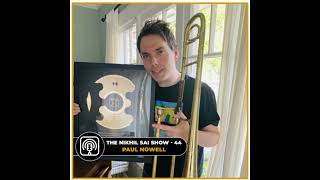
Paul Nowell, a trombonist who built multiple seven-figure businesses, explains how to turn music into income. He sells outcomes, not features, keeps paid traffic costs below subscriber lifetime value, and repackages the same material across a value ladder from free content to one-on-one coaching.
Chapters
What's going on? What's going on, everyone who is watching this right now? First of all, welcome to The Nikhil Sai Show, which is hosted by me, The Nikhil Sai. And guess what's going on today? We're back with another amazing 2K Club Award winner, and this is something very different from what we usually do. Now we have an artist on this podcast who has made over 7 figures teaching people how they can improvise their instruments, which is freaking awesome. And guess who is the podcast guest today? This guy's been crazy. Started in school band and helping a lot of people to improvise their instruments and how they can actually get more passionate around music and monetizing that passion, which is freaking amazing. So again, this guy's story is freaking amazing. You will love his journey and how he went from basic level to actually now running multiple 7-figure businesses and impacting tens of thousands of people's lives, teaching them huge, huge stuff about music instruments and stuff like that. So let's welcome Paul Novell, CEO at Paul the Trombonist. Hey Paul!
Nikhil, honored to be here, man.
Absolutely, brother. We are glad that you joined on time. Thank you so much for your time today.
My pleasure.
Absolutely. Paul, you built a crazy following on Facebook. I was just blown away with you, with your instrument, the music stuff which you post, which is freaking amazing. Like, you have 250,000 followers. Like, that's whooping big. Thanks, man. That's That's amazing, Paul. And Paul, like, our visitors, our listeners are super excited to learn more about you. Like, would you mind starting with your backstory? Like, how did all of this craziness started?
Well, ever since I was a little child, I knew I was going to be a musician professionally. It's just the only path that I could envision. So I went on that journey and, you know, I was on the cusp of technology and social media as I was developing my career as an artist. So it just kind of was a natural fit, right? And I always thought it was about followers and how many followers you have. And, and I would create content and I was always like, okay, the next viral video, my career will finally take off, finally take off, right? And it's really fascinating, Nikhil, I discovered that the following is cool and all, but it's not what determines your income. I know people that have no followers who are multimillionaires, as you may know, and I know people that have huge followings that are struggling. So I was always fascinated by this whole concept of how people are really monetizing what they do online. And then I dug deep into that journey and kind of discovered a way to adapt it to what I had already been doing.
Wow, that's, that's beautiful. And honestly, bro, like, that's what you really mentioned, like, a lot of people It's really true, like, especially in different industries, right? They have a lot of following, but there is no way of monetizing, or these guys have built brands which cannot be monetized. Like, that's a sad truth. They need to be turned around and flip their business in a way they can actually consistently monetize. Because if you cannot provide for yourself, how can you really create an impact, positive impact in other people's life? It's really hard, right? So that's, that's amazing, Paul. Thank you for a quick introduction. We would love to hear, like, this is one of my personal questions anyway, like Can anyone learn using instruments? Like, that's something which hits me really hard when I think about music and other passions in life.
Sure. So not everyone could be a world-class musician. It takes a lot of discipline, so that's not for everybody. But if you do put in the work, yes, you can reach that. But there's another avenue too. And let's say you're passionate about something. Let's say you're passionate about golf. You don't have to be a world-class golfer, but what you can do is gather a community of everything about golf, right? And then you become the hub of information. And yes, you can interview other golfers, you can have other types of endorsements from golf brands. Once you build that community and build your distribution, and the best way is through a newsletter. And yes, you can go that path, for something you love, even if you're not technically a world-class performer. Does that make sense?
Yeah, it is. It absolutely makes sense. And I think that that's really like a shortcut roadmap on how someone can actually monetize their passion or really drive their business into a way where they can actually capitalize it and actually start making money, which is freaking awesome. And, uh, Paul, I've seen so many 2 Comma Club Award winners, honestly seeing hundreds of offers day in, day out, because we are marketers, right? And what we really see is like whenever someone starts a business or whenever someone starts like try to monetize their, uh, the solution, the problem is they don't have a great offer. And you've been killing it in a different niche, which is music, creating irresistible offers and scaling them through the roof to 7 figures and beyond, right? So I would love to take your input on like how did you actually create an irresistible offer? Would you like to talk about that in a second?
Yeah, so there's a, there's a lot to that. So Basically, we want to create a situation where they can only get this irresistible offer through you. There is no competition. So you create an offer that they can only get it through you, right? There's a lot of different ways to do that, but here's the real secret of it all. We first want to sell our audience not on our offer. We want to sell our audience on a path. So everyone has their current situation. They have a desired situation. And when people buy, they're not buying our products and services, they're buying a desired future situation. So what we must do first is figure out what path can we take them on to get to their desired future situation. And once we figure that out, we sell them on the path. Once they're sold on the path, then we position ourselves as, hey, they make the decision. Oh, this person must have the best vehicle to take me on the path. They got all these results. It looks like they know what they're doing. And they make the decision. That way it never comes across as you're pitching yourself too salesy or everything, because we sell them on a path first. Once they're sold on the path, they make the decision that we have the best offer to take them there. Does that make sense?
Ooh, like that's the real beauty, Paul. Like that's really amazing, right? And I think that should clear up a lot of people who are actually listening to this podcast right now. Don't try to, create an irresistible offer by adding more features, adding more bonuses, modules, this, that crazy jazz. Don't do that, right? Paul, that's, that's beautiful, man. Like, you just really nailed it with the point that, hey, first of all, sell them on the pathway on how they can achieve the success and show them that you got the real vehicle which can actually help them to achieve that faster with you. And then that really becomes an irresistible offer, no matter how many modules you got in your course or how many coaching calls you offer them or shit like that. That doesn't really matter when when you're selling them on the pathway, which is freaking amazing, Paul. Thank you so much for that input. Of course. So yeah, I'm pretty excited for the next question, Paul. We see a lot of people who are trying to sell their courses, programs online, especially in ClickFunnels community and stuff like that, right? But scaling to the roof, like in a different niche, like scaling to a real level where you're actually hitting a 2 Comma Club or scaling beyond 7 figures profitably is a real deal, right? And you have done that. So we would love to hear your input on scaling your offer to 7 figures and beyond profitably?
Beautiful, beautiful question. All right, so it all comes down to numbers. So when you know your numbers, you can make bigger risks to get to where you want to go faster. So the way we do it is we want to build our own distribution. So we really want to build that newsletter. The bigger your newsletter, the bigger your business, right? Once you know that, let's say for example you get 1,000, or let's say you get 100 emails, okay? And we give away something cool for free of value. People opt into the newsletter, and then we make an offer for those who want to take it to the next level. You get 100 emails. Let's say you make $1,000, just to keep this simple, okay? You make $1,000, right? So then we just do some simple math, and then we discover, oh well, every email now is worth $10 to us, right? We just do simple division. So if we know every email's worth $10 to us, when we run paid traffic, all we gotta keep in mind is let's keep the lead cost, the email cost under $10. And the lower we can keep that, then that's how we get to where we want to go because you're always going to be profitable in that situation once you discover how to master that art.
Yeah, that's beautiful. Like whenever you find out, like, you know, your math of what is your average lead cost, what is your average order value, then you you can really simplify your math down and keep a track on numbers and your metrics on how much is it costing you to acquire a lead. And that really gives the answer to you if you should add in more budget or tweak your campaigns and stuff like that, or tweak your offer, for a sense, which is freaking amazing. That's beautiful. That's beautiful, Paul. You really literally mentioned how someone can take and start running ads and see if their offer is converting. If yes, what is the average cost, and see the math if they should be putting in more budget to scale it or not. Beautiful.
And then there is no advertising budget. The advertising budget is how much can I spend?
Absolutely. Like, if you show them a trade like, hey, put in $1, make $2 back, who wouldn't trade a million dollars, right? Everyone would, right? So that's pretty amazing, Paul. And I believe like it's about creating a real funnel which has all these nuanced elements which can actually show them the metrics which they need to scale up their business, which is Freaking awesome.
Yeah.
And Paul, this is one of the serious problems we see, especially in, in the online course or community where someone is trying to monetize on their passion, which is creating a course profitably, right? So one of the main things which they lack is, let's say they have the $7 offer, but they really lack to sell what they have to sell next, creating a value ladder. And I believe you have done that so beautifully that you actually increased the order value of every customer and took them like from a value ladder to actually help them achieve a higher level of success while you're achieving higher level of order value at the same time. So I would love to take your input on how you're actually creating a value ladder in your business and how someone else can replicate it in their business?
[Speaker] Great question. So whenever I have an offer, I don't like to really hold anything back from the beginning. I always want to wow the audience and give them the farm, right? So there's just different levels of that. It's all the same information, the experience just changes. For example, I may put out a free video, right? They say, "Oh, that's cool," or a webinar, "Oh, that's cool." Well, if you would like to take it to the next level, here's a book, right? Okay, cool, so that's a book. It's a different experience, same kind of information. Okay, would you like to take it to the next level? Maybe some people learn from a course, right? That's another way of absorbing the content. And obviously the price would go up with each experience. Maybe there's a live event, same information, it's just a different type of a vibe, different type of experience. They're getting a little different insight and dimension into it, but it's really the same material, right? Maybe they want to be in an inner circle where it's just like a few groups of people, right? That's a little different because it's a little more hand-holding for each person. And then maybe it's just, hey, this one-on-one connection with you. And every time they get a little bit closer to you, you can up the price. But the, the information is not changed. You don't really hold anything back. That's how I like to think of it.
Wow. Wow. This is, this is one of the key things people who are failing should admit. I really mean that. Like, people who are trying to create a value ladder, they'd be like, hey, how about me giving 50% information with my basic course? Then guess what? Nobody comes back if you give 50% information for your next upsell. Nobody cares, right? And wow, like giving up everything and actually creating the experience where they can actually spend more to be and have that experience in their life. I think that's really important. I think it comes down to what Russell Brunson said, which is like people pay for the same stuff packaged in a different way. So you're trying to create a different experience where you can actually charge more and deliver more for them, which is freaking amazing. That's, that's awesome, Paul. And Paul, we would love to hear the opportunities which are happening in 2021, specifically in music industry, because you've been there, you're watching the industry from a long time, helping thousands of people get into the industry and, you know, start having their passion and turn that into their expertise. So we would love to hear that input.
It's a great question. So we can do so much without depending on people like we used to in the past. In the past, we had to depend on publishers, labels, all kinds of other people to dictate what we could do in our career. Nowadays, if you understand the art of paid advertising, you know how to build your own distribution through a newsletter and get to the right audience with the right message and have the right offer, you can really take it as far as you want without depending on anyone. For example, I'm about to do a show this weekend. I'm doing a residency down in San Diego. I have a huge newsletter, and what you can do beautifully that not many people know you can do with your newsletter is you can segment it by geographic location in the world. So you can only send an email to your list of people that are in the radius of where you may be performing. All of a sudden, let's say you pack the place. Oh, you got a case study then. Hey, and then you go to a different venue. Hey, I was able to pack the place. Look what I can do. Look what power I have. Let's, let's set up a date. And then all of a sudden you have leverage. So that's kind of how I like to see where the future of things are going.
Wow, that's, that's really beautiful. And the segmenting geographically and looking at the opportunity to create shows in specific location, categorizing your list. I think that's really, really beautiful. I think this can really add a lot of cash to existing business owners. They can put out a mastermind or an offline program or just like a webinar or seminar kind of thing, and they can really capitalize on it, which is freaking amazing, Paul. That's, that's beautiful. And I would love to hear your input on how can actually people who are into music can start monetizing other than just like creating show. Like virtually, because a lot of people don't have the capital to invest in a set or a show or a big stage to create stuff like that.
Great question. So what I like to think about with this is people are very desensitized from buying music because they can just stream it on Spotify for free or YouTube. So how do we compete with the streaming platforms? It's very challenging. And that's where it comes to creating an experience that the streaming platforms can't compete with. So we don't get limited on what our offer is. We think about what our offer can be and go from there to create an offer, an experience that the streaming platforms can't get. Once we have that dialed in, it may be like one-of-a-kind signed vinyl, only like 10 or 20 copies. You can charge a good amount because they're so rare, they'll never be printed again. And maybe behind-the-scenes streams and you put it to with the experience. It's like an experience with the project. And now here's the beauty of it. You sell it before it's created. That way it validates the offer, you get a nice cash injection, then you can use those funds to hire your dream team to create the project.
Wow, there you go. It's a real action plan for every broke people who are actually trying to monetize in their passion, actually get into a level where actually collecting cash. And the beauty you mentioned, Paul, which is selling before you're creating, I think that's going to turn around their game because everyone has this excuse that, hey, I don't have the capital to create a product. But you know what to do? Sell it first, get the cash, then create it, right?
That's what I did with my last one. You know, I sold it, I reached my goal, and then I hired Grammy Award-winning engineers and mixers and masters and, and created that project because I sold it before I created it.
Amazing, amazing. I think that's gonna also give us a leverage to actually a higher level budget where we can actually hire higher level engineers or people who are expert in the existing industry. Because see, there is no point of creating music with people who have no experience or people don't have the expertise you want. And of course, when you're trying to hire someone who has an expertise, they are premium, right? You should be paying the price. If you don't have the capital, sell it first so that you have the capital. Freaking amazing, Paul. That's, that's beautiful. And Paul, I wonder how you're managing everything on your plate. You have your music going on, you sell your programs, you have a different business where you're helping other people to build their own online six-figure business, stuff like that. And you have so many things which goes on, shows and newsletters and everything. So we would love to hear what kind of tools and systems you use in your business to manage your clients' projects for productivity.
Great question. So I love Trello. Trello is pretty cool. You can create a workflow, flow of like things you need to do, things in progress, things that are scheduled, things that you finished and completed, and you just move them down the pipeline, right? So I love Trello. Trello is awesome.
That's freaking amazing. I'm a Trello guy as well at the same time, so we can relate at that part. That's freaking amazing. Yeah, I'm trying to simplify it so that we can have more flowability without friction. Awesome, awesome, Paul. Thank you so much for that. So, and Paul, you've been doing music for— since a long time, right? We would love to hear, like, do you have any kind of daily routine for everything you do, especially for yourself?
Yeah, so every morning when I wake up, the first thing I do is I, I play the trombone, I do long tones, it helps me kind of wake up. It's also very meditative. It helps me get centered for the day. And just, it really is just, I've been doing it for, oh my gosh, I've been doing that for like 20-some years, 25 years every morning. So it's just what I'm used to. It's my routine, you know, and then I kind of feel like I'm ready for the day. I got to drink some coffee, and then, then I'm good. At least I get it in the morning. I feel good about the day, right? If I can play in the morning, at least I feel like I got that done and I won't feel guilty if I don't get to it later on.
Wow, that's beautiful. I think this should really apply for every business owner, right? Like, your business is definitely Trumbo, right? So you're doing it day in, day out, every day, and that's like a sense of meditation for you, which is freaking awesome. And I think every business owner should look at their business the same way you're doing, which is going and touching in the passion and see what they can really do with it every day morning. I think that's going to really give them the sense of their business. Freaking awesome, Paul. That's, that's amazing. Let's get into the next week question, Paul. There is a lot of 20-year-olds who are actually trying to get into music industry, and especially even you, when you're actually starting young, you have so many things to talk to yourself right, right now because you had so many learning curves, right? So what would be a suggestion to a 20-year-old you or someone who's just getting started in music?
All right, so you can be the best musician in the world, but if people don't know you exist, it's going to be very hard to get called for work. Okay, so we need to put yourself in a situation where there's awareness of your ability. First, you got to have an ability. You got to put the time in. You got to be a great musician. But we also need to have awareness of that so people know you're at where you're at. So you go everywhere, you meet with all types of people, and you, you just allowed that to be in a situation where they hear you, right? And if you took care of business, it's going to lead to things.
Wow, that's, that's really beautiful. And I think especially in industries like music, like, your network is what really going to determine the level of success you're going to achieve, right? So would you mind to give like 5 tips for the people about creating more network where they can actually resonate and have more business opportunities?
Yeah, so the way I did it was I didn't make— so this is a— this— here's a little nugget for you guys. I didn't make my career about me. I made it about my love of the trombone, and I gather people that love the sound of the trombone. And as a result, since I created that community, my performing abilities naturally was associated with it because I created that community. Does that make sense?
Yeah, it is. It is. Absolutely. So you need to look at the things in a different perspective. It's not about you because it's just going to happen when you're actually trying to help someone else, especially with a passion. That's freaking amazing, Paul. Amazing. Beautiful. Excited. And let's get to the next quick question, Paul. What are your life's biggest achievements so far and any next bigger goals?
Well, I'm always shooting for more. I always like to— like, it's funny, you set a goal, right? And then you hit it and you're like, okay, that was cool, but now what's next, right? So yeah, I want to have a Grammy, right? I want to get a Grammy. I want to achieve that. I want to grow other projects. I want to be in a position where I can produce records for other artists. And kind of be like the figurehead of creating beautiful records with all different genres and, uh, that kind of thing.
Wow, that's, that's beautiful. Amazing, brother. And we definitely are looking forward to see higher level success you're going to be achieving. I'm pretty excited to see that for sure. And Paul, we would love to hear, like, there is so many things which will be happening in, in especially in music industry. You'll be doing so many things wrong sometimes at the point of time. You're missing on opportunities. Missing on business and you're missing on cash which you could receive while you're running your business successfully, right? We would love to hear what was the biggest mistake in your life, especially.
Not understanding how compound interest works when I took out a student loan.
That's a trap.
Yeah. And that's— that, yeah, that put me in a crazy situation. And it wasn't until I learned what we're talking about here where I was able to dig out of that hole. And the way I did it was I understood how to create an offer. I sold the Trombone Method book and it paid off that debt, the student loan. And I understood how to run traffic to it, build funnels for that. And that put me on this journey actually was that situation. But it was pretty traumatizing dealing with that, the debt and not understanding. I didn't know anything about compound interest. I was like, I just, all I knew, me want to play trombone, do whatever it takes to study with the best people. Go to an expensive music school, get into debt. And, uh, I didn't really know how the, the whole thing worked.
So what would be your number one suggestion to the people? Because everyone who's actually getting into the music, right, they almost have like the same flow, like the same journey, trying to hire expensive coaches, expensive programs, and trying to get into the network and spending a lot of money while they're trying to do it, right? There needs to be a lot of investment putting in place just to learn this skill, right? Which you did go through. So what would be your number one suggestion to the people who are in the similar journey like you did?
Yeah, so it is an investment to study with people, but sometimes your bank account has to go down a little bit before it goes up. So we do want to surround ourselves with people that have already achieved where we want to be at. It is really important. And I didn't get here alone. I had a lot of different mentors like Russell, you know, and they really just helped me on the path. So yes, we, we need to be aware of that, but we want to study with the right people. We want to be in the surroundings with the right people. Now what you can do is you can do a lot organically first before you really invest too much, right? And that allows there to be some validation of some offers. You pay for it with your time. You don't pay with it for your dollars. You pay for it with your time. But once you know things are working and you have a pretty good idea that it may work if If you throw paid traffic on it, you're in a much better situation. Does that make sense?
Yeah, absolutely, Paul. And I think that's a beautiful message. Like, people really need to admit who they are actually approaching before they actually sign— like, assign them with someone, right? Especially when you're getting into coaching, you really need to think about like, hey, is this who I want to become? If no, don't learn from them. Simple as that, right? That's, that's, that's pretty beautiful, Paul. And I believe you keep it as a thumb rule and you're following it, which is freaking awesome. And Paul, this is a beautiful journey of your business where you actually monetize on your passion and scaling it to roof. Would you like to mention like any key people involved in your journey and any key people who inspire you throughout your journey?
Herb Alpert, Quincy Jones, uh, I just always admired them of what they have achieved personally as a musician and then also business-wise. So that fascinates me. Because I like both.
That's, that's pretty amazing. Those are beautiful people who are actually impacting and creating people like you. And we are glad that you're actually creating other Pauls coming down the line, right? You're creating thousands of them, which is, which is beautiful, Paul. That's, that's beautiful and amazing. And Paul, you're an awesome human being, giving away golden nuggets on how someone can actually turn their passion into a profitable business easily without having a lot of frictions in between, right? Which is freaking amazing. So where can our audience find you mentoring, brother?
Let's go to paulthetrombonist.com. I got a free class up there on how to turn your passion into a profitable online business. I think it's like the third button down or something. I will just say free class on how to take your passion and turn into profitable online business. Click it and it will take you there.
That's, that's amazing, Paul. Thank you so much. And guys, go check out paulthetrombonist.com and you'll definitely learn how you can monetize on your passion about music and actually turn it into a profitable business, just how Paul did. And Paul, that was beautiful interacting with you, brother. It was freaking amazing. Any last words before we conclude the entire session today?
Whatever the mind can conceive, the body can achieve. Napoleon Hill.
Oh wow, that's, that's beautiful and on spot. This is something really business— business owners needs to hear. Right? And they think too small whether actually trying to build a business, right? And you should conceive it first so that you can definitely achieve it. It was freaking amazing, man.
You're doing great work. I, I love what you're doing. I really appreciate it.
Absolutely, Paul. We are glad that we actually connected on this podcast, and this is not the end. We're definitely going to have you once again once we hit the 2 comma X for sure, right?
Oh nice.
It's going to be like an amazing, amazing journey. And again, Paul, Thank you so much for this amazing opportunity to have your valuable time on this podcast today and giving away so many golden nuggets for the viewers and the podcast listeners today. And I hope they actually learned a lot of stuff today. And again, guys, make sure to check out paulthetrombonist.com so that you can actually go and get in contact and watch the free masterclass and get into his program if you like it. And again, rewatch this podcast so that you have so many learnings in a very short period, right? You need to take notes before, before you actually skip this through, which is freaking amazing.
More from Nikhil










BURNED $1.5M in his 17years online #digitalmarketing #entrepreneur #onlinebusiness
