How to write a book in a week & become One Week Author, art of dream100 - ft. Dana Derricks | TNS 16
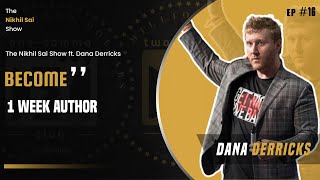
Dana Derricks, a 2-Comma Club marketer and author of 14 books, explains how he writes a book in one week by dictating instead of typing, which he found three to four times faster. His Dream 100 framework targets specific people and provides unconditional value. He works 4.5 hours a day and credits goat farming as stress relief.
Chapters
We are live, we are live, internet entrepreneurs, we are live. Hey guys, this is Nikhil Sai. Welcome back to another episode of Internet Entrepreneur's Freedom, which is hosted by me, the Nikhil Sai. And guess what? We are interviewing another 2 Comma Club Award winner, one of the craziest guys, well-known guy in the marketing industry, been into this industry for almost 14 years and author of 14 books, well-known goat farmer, master of the Dream 100 concept. And let's welcome Dana, world's fastest book writer, Derek Sivers, CEO at Derrick's Group. Hi, Dana.
Hey, what's going on, everybody?
Everyone is super excited to have you on the show and pretty much waiting and really understand that there were some technical issues, but we finally got it fixed and we are live here. So Dana is going to be with us for at least 30 minutes from now. So if you have any questions about Dream 100 concept, how to start your marketing business, scaling your business, and how to write your first book, or you being skeptical about having that idea and everything, just make sure to comment down and Dana will be answering that. And everyone who joined this, thanks for joining and please make sure to comment #live if you're watching it live and #replay if you're watching replay. Let's not waste any time and Dana, can you please explain your journey in a few sentences? Like how did you grow to that level of success?
A lot of persistence. So it really, it's like 3 things. It's educating yourself, it's Putting in the work and then it's surrounding yourself with the right people.
Absolutely. Yeah, that's really interesting. That's really interesting. And then I like, if you are the guy, like almost you've written like 14 books, like honestly, like people struggle to read a book in a week and you're writing a book in a week, which is crazy. Like I definitely mean that, like, like how anyone can become like a one-week author. Like how do you think that's possible for any human being right now?
Yeah. So if you asked me if this was possible, like, a couple of years ago, I would have said no way. So it's totally cool if you guys are thinking that. Don't worry. But basically the backstory on it is I was doing a cross-country road trip and I was going to a business conference and it was a 34-hour drive. I prefer to drive over to— over flying usually. And so I hired a driver and we were driving and I'm like, all right, how do I justify this 34-hour trip? I said to myself, well, I'm gonna write a book. I've got my next book outlined. I'm gonna get it done in this trip, and it's gonna be worth the whole thing and then some. And then 2 hours into the trip, I started getting carsick. I was typing on my computer, and then I had to shut my computer, and I was like, okay, this isn't good. Um, so then I thought to myself, well, what, what else can I do? And I realized I could talk, and I had my, you know, my, uh, book outline done. So I'm like, well, why don't I just try and talk it? So I did, and 6 hours later, uh, I had the content of my book done. And I look over at my driver and I said, oh my gosh, I just wrote a book in 6 hours. And he was like, oh, that's cool, and kept driving. And he didn't know how awesome that was. But it's really, it's based on, it's honestly, it's based on science though. I did some research on it. And, you know, your average professional typist can type about 50 words a minute. And your average human being that speaks can speak about 3 times at about 150 words a minute. So it's just science. You can talk 3 to 4 times faster than you can type. So I've been doing that ever since.
Wow, that's awesome. So who is still struggling or just, you know, being skeptical to start out to type out all the words and worrying about grammar, just do it on a voice talk as Dana mentioned. That's awesome, Dana. And like, I see like a lot of people are, you know, like super excited about this one concept, which is the Dream 100, and I don't think anyone else can explain about Dream 100 better than you, right? Like, Dana, can you, can you explain a few sentences, like, what is the perfect way to Dream 100? Because we see a lot of people doing it in the wrong way. So what do you think is the perfect path line to do the Dream 100?
Sure. So there's a few foundational principles that you need to follow in order to Dream 100 the right way. So the first is you have to make sure that it's individuals that are going to help you attain your goals that you're trying to Dream 100. Okay, so that's first thing is you got to get right on who you're targeting with it. The second thing is you have to create a, uh, never-ending value exchange with those human beings. Okay, so what that looks like is you start with value, okay? And even more so, like, you can't put a condition on the value. So if you give a gift, you send something in the mail to them, or you offer to do something for free for them, or, uh, you do whatever it is, like, you can't expect them to do something for you in return. Otherwise you're going to get disappointed and you're going to become exhausted and burnt out and frustrated. So don't put an expectation or a condition on it and then just keep doing it. Okay. So like, I like, I'll get to a couple examples of what I've done, but just make sure you have the right people, you're doing a value exchange and you're continuing to nurture that and you're doing that from—
Lost you.
Am I back?
Yeah, you're back. You're back.
Sorry.
So yeah, that's awesome. Like one of the fastest, very easiest way to understand the Dream 100 concept, right? That's interesting. So then I like, even I really struggle, or, you know, I have this idea of, you know, writing my own book and keep publishing it and, you know, having all that cool stuff. Like, but the real, the real hurdle everyone has inside their head, I know it's a mindset issue though, but like how to start the book, like how to start the first book, like where to exactly start. They know they want to write it, they know it's gonna, the outcome will be cool enough, but how to start, like where to exactly start.
So, uh, the first thing is like giving yourself permission to write a book and to be an author. So a lot of people, it's hard for them them to get past the mental, like, imposter syndrome or whatever it is. So first of all, like, you can be an author. There are so many authors out there that should not be authors. It's like, I'm like, please be an author to like drown some of them out, you know. So give yourself permission. If you are truly an expert in whatever it is, the subject, you have an obligation to write a book on it. So that's the first thing. And then the next thing is, you have to go about it like with a clear sort of systematic approach. So the first like few books I wrote, it was a nightmare. It took me 6 months or longer. And I stared at a blank, you know, Word document with the cursor blinking. And that is just such a, such a terrible feeling and way to go about it. So I didn't know that, like how to go about it. I didn't want to use a publisher. I certainly don't recommend doing that unless you're already famous and rich, then it's an easier way to do it, I guess. But You don't need— you also don't need a ghostwriter. You don't need to spend a ton of money on it. Just know that you have pretty much everything you need. You just need to go about it the right way with, with the system. And I talk about a lot of that in my One Week Author book. Um, but, uh, make sure that you have all, like, everything thought through before you just dive in and you just start writing.
Wow, that's one of the best answers. Then it was like, whoever is still having a plan or even being skeptical to start your own book, like, why don't you just grab the One Week Author? Like, Dana is exactly laying out the whole system of how you can write a book in a week. And no matter if it's a week or two, but still it's well worth it writing a book in a week or two. That sounds really cool. And the best part is you don't need to be relying on publishers. You don't need to be relying on these ghostwriters and all the crazy high-ticket stuff. No, you don't need to invest a lot of money. You can do it yourself, right? That's the number one key here. Absolutely, Dana. That really encourages a lot of entrepreneurs who have this idea of putting out their message in a formal way by having a book, right? And like, I'm super inspired by your book and all the messaging you have. I'm going to write a book myself really soon with all the systems you have in the One Week Author. Again, I saw RJ's story. I'm definitely going to give it to you, a copy for sure. That's the right way to Dream 100 U especially, right? I love it.
Awesome, man. Well, you're living proof. Look at this. You're doing awesome.
Absolutely. Yeah. This level of impact, like it really makes sense to be an entrepreneur and, you know, live that life and really makes sense what you do. Right. Absolutely. But, and then like, I'm really curious. I'm seeing all this good things around you. And I know that you're one of the well-known good performers. Like, like everyone is curious, especially in the marketing industry, like you being a multimillionaire, in her business and having multiple 2 Comma Clubs on your book and, you know, like written almost 14 books and still continuing to do your farming business. Like, can you tell us more about your goat farming business? Like, how does that go in your day-to-day life?
So I will say that my goat farming business is not quite as successful or as large as my marketing business, but basically, you know, it's a fun, kind of escape for me from the monotony and the day-to-day, uh, stuff that goes on. So I grew up on a dairy farm in Wisconsin, um, and I hated the hard work. I hated baling hay. I hated all the stuff growing up, uh, getting up in the morning, all that. And so, uh, when I got to college and then I started my own company and stuff, I sort of missed the animals. And I got like, you know, I don't know if you got— if you guys can relate, just, you know, sitting in front of computer for 16 hours a day, like after a while it's like, geez, I gotta like, you know, I need something to escape to. So yeah, yeah, so I got a herd of goats several years ago and now those are, those are kind of the mascot for my business. I mean, I've got on the side of my office building, I've got a giant goat mural and, you know, you, I'm sure you've seen tons of goat stuff and that's why I like to incorporate the goats in it because it's different and it's wacky and unique and people can relate to it.
So, wow, wow, that really sounds interesting. And like, you know, like I'm also trying to implement some plants in my house just to bring that life into our own space. And like having goats, like I think that's a great stress buster. And like it's a great way to detach ourselves from the whole business and have some of that peace where we can be more productive and think of the, like, you know, the passion or the purpose where we are, right? It really makes sense to be that way. That's amazing. And let's get into the next question, Dana. Like, what do you think are the 3 mistakes businesses make in 2021 and how to avoid them?
Oh, good question. So I would say what comes to mind right away is number 1, I think people have, like, in our space especially, I think people are so overwhelmed with content and different opportunities and chasing things and buying the next thing. I think they have— they're just sitting on so much stuff that they're just not producing. So the number one mistake is I talk about this a lot. It's like, is your 80/20 backwards? So most people that aren't having results in what they're doing, that's because they're consuming 80% and they're producing only 20%. If you like, that's a mistake. Flip that. Produce 80, consume 20. When I started doing that years ago, lots of things changed. So that's the first thing. Second thing is I don't think people should assume that everything that worked last year is gonna work this year. So I think there's a lot of innovating that's gonna go on. The world is changing very quickly. So I think we all need to be on the cutting edge of that. And if you've been resisting a change of some sort, that is a huge mistake. So make— just go through with the change. Rip the band-aid off. You don't have to reinvent everything, but there's probably something that you're not doing that, you know, you need to be doing. And don't be, you know, the the Blockbuster Video that gets, you know, taken out by Netflix. And then the third thing is I think that people, because there's so much— going back to like the first mistake I said, I think there's so much content out there and it's so easily, you know, accessible. People think that they don't need, they don't need to hire coaches or they don't need to hire mentors or they can kind of skirt around that or they don't need to spend money and to be successful. And it's just not true. If you look at almost everybody. Like, for example, like almost every single successful person in our space or even anywhere, what do they all have in common? They all wrote a book, right? So don't take a shortcut. They have all had a mentor. They've all joined a program and they've completed the program. So like, you know, I'm not telling you to go out and do anything crazy, but just if you've been doing this on your own or you think you don't need, um, some of that stuff, just look around. Success leaves clues, right? Like Who are you hanging around? Are they successful? Well, uh, if they're not, maybe it's time to upgrade and invest in yourself and someone else to surround yourself with, um, people that'll level you up.
Absolutely. Yeah, that's golden nuggets in a nutshell, guys. Like, whoever is watching, 3 amazing tricks. You just need to follow them right now and implement that tricks into your business so that you make sure that your business don't get busted out and just be on that cutting edge of scaling it to the next level following the Dana thing. And just as you mentioned, like, people have this broke mindset of not investing into everything, and they say that, you know, these coaches try to make money out of it, but it's not true. Like, there are some couple of people who do that, but as you said, like, hanging out with the right people, like, that really fixed this thing. And when we win here, I think we can win in real life as well. And we definitely don't have a winner's mindset, because if we have that, we would be at a different level, right? So it's better to hang out with guys who already at that level so that we can attract or manifest that position and be there very soon, right? Absolutely, absolutely. Then I'm loving it. Absolutely, the value you're providing, it's amazing. And then I'm just curious, like, as you're at this big level in your business and having all this cool stuff going around, multiple clients, doing big revenues, having your farming thing around, like, you have a lot of tasks to do. Like, like, what are the tools you— like, how do you manage your day-to-day tasks for productivity? Like, how do you get a lot of things done in a quick time?
That's a great question. And that's something that I've struggled with. And I have not, like, I wasn't blessed with being very organized. So I've had to work on this a lot. So one of the top, so before I say what I do, I want you guys to know that more important than finding tools or strategies to be productive is creating a schedule for yourself. That you not only can live with, but you— that, that you enjoy. Okay, so like the days of— I should add this to the last question about mistakes— the days of like working 16 hours and then seeing your kids for 20 minutes and then not even seeing your spouse, like those need to stop. Like we have to stop. Like less is more. 2021 should be the year of less is more. Okay, so, um, what I mean by that is make sure you design your schedule and all of this stuff in a way that serves you and your family. All right. So don't have it be set up like to maximize your like revenue for your business and then there's nothing left for yourself or your family. Does that make sense? So with that being said, the number one productivity tool that I personally use every single day is a Trello checklist that I've created that has basically blocks. So it's like certain specific times for certain specific tasks.
Mm-hmm.
It's set for about 4.5 hours a day. So I work— I really work part-time, which is awesome. But sometimes I work longer than that, and that's because I want to, but I don't have to work more than 4.5 hours a day. So What is cool about it, the way I've set it up though, is that I get more done in 4.5 hours than probably most people do in an entire week. So with that being said, there's no reason you shouldn't go create your own schedule. And I'm telling you, like, it's very imperative to have this stuff like blocked out if you're having problems getting productive, because that will keep you online or in— it'll keep you in a straight line moving forward toward, toward your goals, and it won't let other things get in the way.
Yep, absolutely. I definitely agree. And Trello is the tool Dana uses to manage all of his pretty basic tasks. And I think like super, super like simple, right? Nothing like magical science or— right? So like everyone really be in that situation to thrive and make a lot of money and be that like jazzy guy who does everything 24/7 working on multiple things at a time. But as you said, it takes them nowhere, right? Like you see people who have done a lot of big things they mastered the art of managing their tasks in the right way, and they don't do multiple tasks at one time. They only take 3 to 5 decisions, as you said. They work part-time, they just detach themselves from the business to see with a bird's eye view of what's exactly happening and how to optimize it, and then just give the instruction to the rest, the representatives and the team, right? Absolutely. And you're doing it like, you know, like, like, like when I hear that, you know, like you're saying that 4.5 hours of work a day, like That really seems like a dream to me. And absolutely, like, you know, like having time with the family and like being able to thrive with the community and enjoy your time, like have your own things going around farming and all the cool stuff and just working for 4 hours. That's amazing, Dana. Like we really love the way you're doing it and everyone should get probably inspired by this. Yeah, absolutely.
It wasn't always this way though. Don't worry. It wasn't always this way. I used to put in, you know, the 16 hours a day thing. So. So don't worry, you'll get there, everybody. Keep working.
Absolutely, absolutely. It's just looking at what they want to be and they just get that done, right? Awesome, awesome, Dana. And like, I'm just curious, like, how does your daily routine look like as you're getting a lot of things done in a quick day? Like, how does your daily routine look like? And when you say like it's just 4 hours a day, it really seems much more interesting to me. So yeah, how does your daily routine look like?
Yeah, I mean, so There have to— so like, where do you spend the other hours, Dana? Like, okay, that sounds cool, but like, what are you doing with the rest of the day? And like I said, I do work a lot of times more than 4 hours a day, but it, it just depends on if I'm enjoying the task or if I have stuff that I want to keep doing or not. But daily routine, I have like, you always have to have a non-negotiable. And for me, that's working out. Like, if every morning I have to work out for at least an hour, and if I don't get my workout in, aside from like, you know, weekends or something like I will not be productive that day. Like, I won't feel good about it. Like, it's just— so that's a non-negotiable. If you have something like that, whether it's reading, meditating, working out, going for a walk, um, whatever, spending time with family, making a call, whatever. So that's something that I always do to start the day. And then, um, as far as daily routine, I like to try and, you know, uh, stick to a similar schedule when it comes to like what time I get to the office and what time I leave. That does fluctuate sometimes depending on, but that's very helpful. It helps with the family unit as well so that their expectations are pretty, pretty, you know, met. And then I also make sure to spend some quality time every day with the family at the end of the day because I like to end the day on a good, on a good way as much as possible. So I know that these don't sound like anything crazy, like new discovery or any of that, but it's the boring stuff that really works. And I recommend doing that. And also another thing, a little bit of a tactic that I've developed is like, I don't wake up with an alarm clock. I used to do that for a long time. Yeah. And then I let my body naturally wake up. Up, and it is so much better. And sometimes you might sleep a little bit longer, or maybe you'll get up even earlier than you would with an alarm. But if you can give yourself that flexibility of a little bit of cushion in the morning so that you don't have to wake up groggy and start your day, you know, in a way that your body's, you know, unnatural, I highly recommend that as well. That can set your— set the stage for a really good day.
Wow, that sounds interesting. I want to definitely try that out. And I'm not sure how long I'm going to go, but yeah, it sounds interesting. Like we're conditioning our brain to work with an attentive mode. Like it's being like more accountable for ourselves to wake up and be there in time. Because, you know, when we have an alarm off and we want to get up, like we all have that thing inside sleep. Like you'll be thinking like, oh, I should wake up and it's time, you know. That's amazing. Then I'm like, yeah, I really love your daily routine. It's pretty basic. And like, I think that's what really works. Like every single person who's doing amazing in their lives, they have pretty basic rules. They're not complicating it. I think the more complicated we get, the shittier it gets along the way, right? So absolutely, but absolutely done. I really love it, like enjoying this show, and you're absolutely giving amazing answers to all of the questions. And let's get into the next question really quick. Like, as you said, like now you're at a different level, different mindset. Like, what will be your suggestion to a 20-year-old you or someone who is just getting started right now?
So first of all, I would say get away from the other 20-year-olds that aren't like you. That will set you back several years. And then give yourself permission to not have to please everybody. So specifically your family members, like there are going to be family members that do not get what you do. They're not entrepreneurial like you, and they will in their own way try to protect you from making a mistake. And in turn, what they're doing is they're actually hurting you and they're holding you back. So give yourself permission to be different, to go out there, to go do it, prove people wrong. Uh, and then I would say, um, and, and that doesn't necessarily just mean a 20-year-old. That can be anybody that's looking to, you know, uh, leave their job or what have you, start their own business. So, um, then the other thing is you have to educate yourself. That's what I said earlier, is like the key to success, like you have to educate yourself. And what that means is you have to find and discern where the really good information is coming from For me, and I know for you as well, a lot of my information comes from books. Books are one of the best, cheapest education you can ever get. And, you know, you go on Amazon right now and you can get a PhD in any topic for hundreds of dollars, like pretty much, right? So that's, that's something. Yeah, you can't fake that. And then the, the last piece is the, the way people become experts and in any field or any skill is by doing the thing a lot, right? So I became a world-class copywriter, and I say that humbly, but I earned it because I put my 10,000+ hours in and I worked in the trenches for a decade writing copy for thousands of clients. So, uh, there's no skipping that, there's no faking that. Um, but if you can pick— so get away from the bad influences or influences, or at least like give yourself permission to, to get through it and then get an education through books, through a program, through a coach, through this or that, somebody that's done what you're trying to do. And then make sure to go and do the thing a lot of like keep doing it, develop a skill. Like, like for me, like I was given a gift of being a good writer, but I didn't know what that meant until I started reading books and I realized, oh well, I should do this copywriting thing, it's going to pay really well. So then, like, if you can figure out what you're naturally good at and then to hone in on that skill and then niche down as much as possible, you're going to do extremely well if you keep doing that over and over.
Absolutely. Yeah, that really— that's absolutely amazing. That it was like right on shot, you know what I mean? Like, every single person who is 20-year-old, the problem, number one mistake they are doing is hanging out with broke people, at least in the mindset terms, right? It's not just about money, but in the mindset. And so we just, we just need to be detaching ourselves. And like, it really makes sense, like, when someone is creating rockets with their private company by reading books, people like Elon Musk, like, why can't someone just learn a new skill from books, right? So yeah, like, I think books are the number one way to go to learn a new skill or acquire new knowledge or be a knowledgeable person and understand like his own circumstances on how to behave. And like, like my life completely turned out. I was a student at college who doesn't know anything, who's just dreaming of having a job when I get older and older. But right now I'm an entrepreneur and the transformation is only possible. Absolutely. I give the whole thing just to the book itself. I started reading the Rich Dad Poor Dad and I was like, nah, if I really do a job, that's not my dream life. I should be an entrepreneur. I should be in the BI index. So that's when I started my own business and probably become an investor early on. But yeah, thanks for that. I really appreciate it. Yeah, definitely, I appreciate that. And it really makes a lot of sense, whatever you're saying. It's amazing, mind-boggling. I really love it. I really— first of all, I love the vibe hanging out with you. So let's get to the next question. Let's get into the next question. Then I like— already you are at this amazing level, so I would like to ask you, like, what's your life's biggest achievements and any next bigger goals?
Uh, so definitely, like, personal life-wise, like, getting married, becoming a dad. That it's unreal. I, I would never— I wasn't like the person growing up that's like, oh, I can't wait to be a dad and like, like a family man. Like that never was really on my radar until it happened. And then it was like, wow, this is like, it's pretty sweet. But as far as like business-wise, obviously I've won a lot of awards. I've done some really cool things. I can quantify like a one of some of the biggest achievements right here. I'm going to drop them but I'll just grab like the top of the stack. This is about like 10% of the pile but these are all books that like students of mine that went through my author challenge wrote. So that makes me really, really proud. Yeah, yeah and that's not all of them. That's just like the ones I have handy but That's one of the coolest things looking back I've been able to do. There have been moments when I am at a live event and someone will come up to me and ask for my autograph or tell me how I've changed their life. And it's like, I'm like, are you serious? Like, I'm not famous at all. Like, come on. And I think back to like when I was that 19-year-old kid living in my apartment broken and wanting to give up. And like, something just told me to keep going. I didn't know why. And it sucked a lot along the way. And then finally, you know, you have those moments and you realize, wow, this was worth it. That like, you're actually doing something. So those are some of my proudest, biggest— I mean, proudest achievements or moments. And then big goal next coming up. Yeah, I'm trying to take over the world.
No, I'm just kidding.
I mean, as far as bigger goals, I want to— I've written a lot of books, and now I think it's time to get more people to read them. And we've sold thousands of books in 74 countries and counting. But I know that I can impact more people by selling more, you know, getting more readers throughout the world. So my goal is to get a lot more people to read my books. In the next year and help transform a lot more lives. Because even if all they ever do is buy a book from me and it, you know, changes their life and it changes their family's life and their little circle they're in, books are a way that it really adds up. And because I can't be everywhere, I can't coach everyone, but my books can, right? So that's my goal, big goal.
Absolutely. And you'll definitely achieve that. Like, we see the potential in you, Dana. Like, you can really do it. And And I really, like, I still admire that thing, like you've written 14 books and all the great books, including the one which you have written right now, One Big Author, and changing people's lives, like helping them to become an author and just putting out themselves, like they're messaging the right way with them in just a week. I think that's amazing. And hope you'll achieve all the big achievements which you want to. And let's take over the world as soon as possible as well. So let's get into the next question then. As you already done all of these things, like from 9-year-old who was just struggling to try something new, and now where you are at a different level, I believe you have done multiple mistakes along the way. Like, what was your biggest mistake in life so that we can take good learning out of it? Wow.
Uh, so that is one heck of a question. Uh, by the way, guys, um, I, I think that's a brilliant question. You're a very good interviewer. I I really am enjoying this. And, uh, one of the things that— yeah, one of the things that, um, I recognized early on in college is like when I started reading books, not textbooks but books I would buy, right, business books, is learning— learning what people do wrong is almost sometimes more valuable than trying to figure out what they did right. So, um, one of the biggest mistakes in— in I've made in my business is trying to build something huge and massive that I didn't really actually want. So what I mean by that is like, I had aspirations to be a billionaire growing up. I'm like, I want to be a billionaire, it'd be sweet. And then I got in. Yeah, right.
Yeah.
But then I started researching what it would be like to actually be a billionaire and then like meeting some and like like, you know, getting into those tables and discussions, and I realized that doesn't look that great, uh, you know. So, um, with that being said, like, for a while I was running a company and trying to grow it as big as possible, and I would go around saying, well, I got 8 full-time employees in my office, and like, but I also was miserable for a lot of it. And I, you know, and so I didn't design my business in a way that it served me and my family. I designed it in a way that I was trying to compete with everybody else and trying to go for the biggest. Like, my measuring stick was wrong, right? So I've come to terms with and reflected on it, and I do not want to be a billionaire. If anybody out there wants to be, go for it, be my guest. I know, um, some people that are going to be very close friends of mine, and I support them fully, but I don't want that. It's not my— I, I want to be the dad that's there at the game. Um, so to me, that's, that's one of the biggest mistakes I made in my business, is just not, uh, structuring it in a way that was going to make myself myself and my family happy, um, instead of chasing, uh, money.
Yeah, yeah, but yeah, that really makes sense, Dana. Like, a lot of people still want that tag, and it really sounds cool either. Like, every— like, who don't want to become a billionaire? Everyone want to. But when you really understood, like, what will be, like, your life when you be a billionaire, you didn't like it, and you didn't love the outcome. So why try it, right? And you love what you're doing right now, just working 4 hours a day, which is cool enough, and having time with your family, doing your own things, it's much more purposeful than becoming a billionaire and doing nothing or not being happy, right? That really makes a lot of sense.
Exactly.
So then I like— would you like to mention any key inspirational people inside your success, like key people involved in your success?
Yes, absolutely. So you have to have a supportive person that is very close to you, whether it's a family member or a friend. So and they don't even have to really get what you do, they just have to support you. So some, some people talk about their grandma, or, you know, that person that you have that always just believes in you. And they may not understand everything you're doing, but they just believe in you. So for me, that's my mom. She's my biggest supporter, has always been. Doesn't always understand what I'm doing, but supports me nonetheless, which is awesome. So if you can find that person— it doesn't have to be a blood relative either, it could be you know, a coach or a teacher or somebody else and, um, surround yourself with those people, as many of them as you can, or a pastor or something, uh, and, and be able to lean on them for advice or just to be a sounding board. Um, that is going to be a huge foundation for you.
Absolutely. I definitely agree. Like, when we have some kind of, you know, like difficulties to take a decision, when we have people around us saying like, you can do it, No matter what, they get it or not, they still say you can do it. And that really pushes us to a next level where we can achieve anything. Like, you know what I mean? Like, that's definitely doable. And like, I really believe, like, in entrepreneurial journey, like, moms play a key role. And all credit to them, right? That's, that's awesome. And like, Dana, let's get into the, like, pretty sweet question. Like, everyone would like to know about this. Like, where can our audience find your mentoring? Like, what kind of offers do you have? Because you are amazing guy. A lot of people who are watching it may need to contact your start working with you or be an author with your help? Like, how does that go?
Well, thank you. I appreciate the kind words. And anybody that wants to join, you know, get into my world, I've got a number of different ways to do it. Uh, if you go over to d100.com, that's d100.com, there's a bunch of free resources. Uh, there's a Dream 100 podcast, uh, Dream 100 book, uh, challenges, launch program. There's all sorts of cool stuff. Otherwise, um, you could also head over to danadericks.com. D-A-N-A-D-E-R-R-I-C-K-S.com. You can see all of the things I offer, jump into my world, consume some of the stuff, and get more nuggets, I guess, over there.
Awesome. Yeah, these are pure golden nuggets. And I would love to mention all the links in the comments after this session ends. So hopefully people who need help with or want to become One Week Author, just go for it. Just visit OneWeekAuthor.com and grab the book. You'll never regret it for sure. So make sure to give a copy to Dana as well. He'll love it and he'll just I would on the wall for sure. So that's awesome, Dan. I like— before we conclude, any last words?
Uh, so I think anybody watching this, like, like I said, success leaves clues, and you've done a phenomenal job of putting this show together. Um, I can tell you as a guest, it's been great. And anybody that's watching, just follow what— follow what you're doing, what you, you know, what you've put together here. Um, you've put yourself out there, you've you know, obviously you've probably tried a bunch of things that didn't work, right? Um, and I did. Yeah, like, that's— we all have that in common. So flip your 80/20, start producing. If 10% of what you do works, that's a win, okay? So think about it this way: professional baseball players, when they go up to bat, they— the best of the best, like, 3 times out of 10 might get a hit or a double or something, right? What does that mean? That means like 7 times out of 10, they're not getting a good result. Does that mean they quit? No, that means they have to go to the bat more. So, you know, we're living proof right here. You're seeing it. We're just a little bit further up the road than you maybe. Just keep doing more stuff and good things are going to happen. And put yourself out there like, like you have. And I think everybody's going to do really well eventually.
Absolutely, Dan. I really love it. And thanks for the kind words about this show. We really love it. And yeah, it's about like, again, like everyone just flip your 80/20, just start producing, just start putting your message out there because everyone is just trying to shout out loud, but it's all about standing out, right? So when you put your message, when you don't even put out your message and just, you know, blaming other people of not buying your product or service, that doesn't make any sense. You should be putting out your message as mentioned. So 80% workout, 20% just listen to other people. And again, Dana, thanks for this amazing opportunity. It was absolutely one of the best interviews I've ever done, and I'll definitely remember this. Love it. Thanks for the amazing opportunity again, and hope everyone enjoyed it. And anyone who wants to read book, just go to one— sorry, oneweekauthor.com and just grab the book and connect with Diana Derex for sure. We're gonna help you. And please stay connected for the next interview, and hopefully when you get to that X level, we'll hop on another interview with you, Diana. Looking forward. Thanks for the opportunity again. Cheers.
More from Nikhil










BURNED $1.5M in his 17years online #digitalmarketing #entrepreneur #onlinebusiness
