How Tom Shipley sold over $2 Billion through Direct to Consumer Marketing ft Tom Shipley | TNS 55
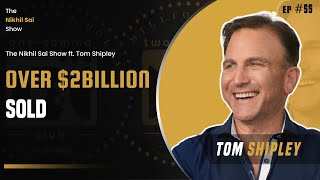
Tom Shipley, a former Special Forces officer, built multiple direct-to-consumer brands generating over $2 billion in revenue. He bootstrapped a $1.2 billion beauty brand using seller financing and SBA loans, focused on a single niche to dominate the market, and survived a near-collapse when three term sheets fell apart by executing a rapid crisis plan.
Chapters
How would you like to learn the secrets of two Kama Club Award winners on how they have built successful online businesses from almost nowhere to now running multiple 7 and 8-figure businesses by following the simple fundamentals of life? And let's see how they have used the powerful funnel systems, processes, automation, and social media to help their business grow at a different pace. Let's dive into their journey to grasp the strategy, mindset, action plan of how they have done it from almost nowhere to the way up to 7 figures. We are going to uncover and pick their brains of the top performing entrepreneurs on this show, how they have done it and how you can do it too. You are listening to D Nikhil Sai, the host, and welcome to The Nikhil Sai Show. What's going on? What's going on everyone who's listening to this podcast right now? First of all, welcome back to The Nikhil Sai Show, which is hosted by me, The Nikhil Sai. And guess what's going on today? We are back with another amazing 2Kama Club interview. Actually, this is not just about 2Kama Club, but this is way bigger than what you can assume. This dude who is actually joining the podcast today has done over $2 billion in revenue for himself, which is just crazy. His companies have crushed it. They have over $10 million— sorry, 10 million customers, which is amazing, right? And he has been helping a lot of businesses scale, and they have been going aggressive with the new company they have recently started called Foundry. So let's not waste any time and actually welcome Tom Shipley, president at Foundry. Hey Tom.
Hey, how you doing? Absolutely great to be here.
Absolutely, Tommy. My pleasure to have you on this podcast today. This is, this is amazing. And Tom, like, your journey is so much crazy. Like, you know, starting in Army and actually going back, coming back from the Army to starting your own business, to building it to over 9 figures, 10 figures, like multiple 10 figures, which is crazy. So Tom, can you please start with the backstory? Like, how did all of this crazy journey started?
No, absolutely. You know, some— so the question is, first of all, is how are you wired? And some people are just wired to be entrepreneurs. There's an entrepreneurial archetype which is in our heart and our soul, and it's— there's this— we see problems and we have to solve it. That's really it. And we can't sleep until we do. And our problem as entrepreneurs is there's so many opportunities out there, our problems to solve. How do you pick one? And a lot of times entrepreneurs run into trouble and we're never ever satisfied with the status quo. And, um, the more we work, the more we get energy from us because the more we're living in our passion. But how did it, uh— so I always knew that, but how did it really get started is, um, you're right, when I grew— um, I'm a kid who grew up from in Cleveland, Ohio, and Orlando, Florida. I was at Florida State University when I decided that it was time to have this massive impact on my world and decided to moved to Israel and didn't know the language, but I decided that I was going to go and serve in the Army there and in combat services. And my, uh, my father, when I broke my news to my dad, he said, Tom, if you join the Army, you know, you're never going to do anything more than pushing papers. You weren't born there, you don't know, and you don't speak the language. You tell that to any 20-year-old and what they— what are they going to do? I'll show you, right? So that's exactly what happened. And, and what's interesting is It was— you learned so many valuable lessons when you're in Special Forces, you know. And first of all, the— you know, there's so many lessons that appropriate for— I'm going to say it's my entrepreneurial boot camp. Let's start with numbers, okay? The probability of any business surviving for 1 year is small. The probability of any business ever breaking over $1 million is extremely small. A business survive getting to $10 million and survive and lasting for 5 years We're talking about very small. If you're talking about companies that will do over $10 million and last for 10 years, you're talking about less than 1%. It's just, again, so the, this, the odds are stacked. And I really think it's not really 1%. I think it goes down to a 0.3%. So again, it's from a numbers game, it's almost impossible where most people won't even take the odds of flipping a coin one way or the other and gambling a lot of money. So we're seeing here But in my— to get in my unit, there's— the Israeli Army is 170,000 soldiers in the, in the army. There are 60,000 in combat roles, of which there are approximately 15,000 people that try to get into one of the 4 elite units. Uh, out of the, you know, they end up picking, um, 7,000 to go in for a day of test. Out of that, they pick 1,000 people to go through Hell Week. Out of that Hell Week, which they try to break you and try to break you, try to assess you Everything from your, um, your ability to learn fast, how you respond under pressure, your integrity. There's a lot of things they measure you for. And at the end of it, they picked 20— they picked 23 people to go through an 18-month course. And at the end of that, there were 13 of us.
Oh my God.
So again, that, that is it. And so what my first lesson was is that the person who decided to leave university to, to go on that course was not the person who was ready to be one of those 13 people. I became the person along the way, but it started with having that clear vision, and that clear vision that nothing was going to stop me. And I knew who I needed to be when I got there and what the goal was, and nothing was going to stop me. And I saw it clear as day. And in anything I've done in business where I was successful, it was I had that clear vision And it was so crisp to me that I built a plan to get there and nothing was going to stop me. Because if you don't think that I had significant adversity during my service and in life, but in businesses I've had significant adversity. And ultimately what really measures an entrepreneur is their tenacity. Do they have the focus? Are they resourceful? And do they have tenacity? I'm sure you've heard this expression over and over again, that in every business you're going to get to a point where you're out of money, you're out of time, and everyone says you're done. I remember once I had a very challenging situation, one of my businesses, and I went to my board of directors. And this is the T. Shipley catalog. It was my first e-commerce business, and it was a nice $10 million a year business. And my— I went to a board of directors and there's a lot of bad things that were just going on during the world at that, at that period of time that impacted the e-commerce business. And what I met with my board, and one of the most prominent members of the board said, Tom, you know, I love you, you've gone all in, you have nothing to be ashamed of, but you're done. You're done. That's it. And a lot of people would probably follow that. I mean, these are esteemed guys. I mean, they're, they're successful businessmen. I've sort of put in my board for a reason. And many people would have followed that. But from my perspective is, is you don't quit ever. You might pivot, you look for the right answer, and you just go. And so having that clear focus and that tenacity that nothing will, will, um, will stop you. So I'm going a little bit— so let me just bring you back. Is served in the Army Special Forces, got out, incredible period of time. The men that I went um, that I actually served with are doing incredible, uh, things in general, including one of them who's one of the 13's company went public and has a $3 billion evaluation, uh, 4 weeks ago. So, um, so again, incredible, incredible man. Went off, identified an opportunity in Israel, started my first business because I had nothing to lose. I had $100 in my pocket. What'd I have to lose? Started my first business, which it validated my skills in marketing and merchandising, product development. What it clearly brought up is I knew nothing about the operations of business. Again, it was this mystery— how, how businesses work, how accounting systems, how computer systems, how ordering inventory. Again, all those logistics and statistics and quantitative approach, I didn't understand. And as an entrepreneur, you get passionate about what you— and you get obsessed by what you don't know. And I didn't know this, so I ended up getting a bachelor's and master's degree in industrial engineering. Wow. Now ultimately, you don't know why you're going on this journey, where you're going to go to, but it turns out that that background between marketing and merchandising and that, uh, industrial engineering degrees, the process systems orientation turned out to be the perfect foundation for my background in direct marketing, which is about science, analytics, and art, and systems and processes and data, data, data, data. So again, that's my, uh, that's, that's my journey. I, um, started the first business, but it was a 2-year business. It was a one-product business. Um, spent 3 years in Corporate America, which I hated, and I realized it wasn't— I wasn't cut out for it. Um, and then I, and then I started my entrepreneurial path. I started my first— I'm going to say my first real business, the T-Shirt League catalog. I, I know you're not familiar with SkyMall, which was the in-flight magazine that sold products. But we had 14 pages in it. We mailed out millions of catalogs every month. We did full-page ads in a number of national magazines. And oh my God, and our e-commerce business— it was the early days. We're talking late '90s. We're talking beginning of email marketing, the beginning of, of, of Google, of Google AdWords. Okay, it was, it was a wild west. It was a spectacular period of time. I did some acquisitions, sold that business off, and then in 2005, the question is, is I was doing some consulting again, but the question came in is, what is that next massive opportunity? How can I take the playbook of what I just did and disrupt an industry? What is that blue ocean opportunity? And, and, and so identified, and, um, identified that that blue ocean opportunity is the beauty industry. Here you have Procter Gamble, Johnson Johnson, L'Oréal, Estée Lauder spending $200 million to launch a beauty brand where I said I can use consumer spending to do it. I can do this off of a fraction of this. So, uh, with that, uh, we two of us, myself and my partner, started the business in an attic in, in Richmond, Virginia, overlooking a horse farm. And it took us a year to get to $1 million with that first brand. And everyone laughed at us. What do two former Special Forces guys know about beauty products? And I knew I was just taking my direct response, uh, uh, playbook, but we got a lot of debts. But took us a year to get to a million, 2 years to get to— second year we did $35 million, year 3 we did, we did $120 million. Okay, that first brand we did did about $1.2 billion over its life. So again, that was just— and what do we— and again Everything was creating the foundation. You can't— you know, in, in the military, you learn that you can't win a war or even a battle by taking all the hills at once. You really go, go for the, um, force multiplier where you can put your resources to one hill at a time, focus, and then go the next and go the next. Same thing as businesses. Okay, what are we going to win? Well, let's develop the products. Now what are we going to do with it? Let's launch it as quickly as we can. Let's do a couple print ads driving them to our website. Let's launch this, grow through the web. Now let's test radio. Now let's test TV. And what happened is we started winning very significantly online, and we became the second largest print advertiser in the United States. And then we became the third largest short-form radio advertiser in the United States. Then we became the 10th largest short-form TV advertiser in the United States. Again, we went for underpriced attention where we can communicate hook, story, offer. Hook, story, offer was everything that we did. And we just— and we watched the numbers. We built systems, the processes. Growing a business from $0 to $150 million in 2.5 years is very painful because now it's easier. You have a lot of SaaS models and platform that you can plug into. Then you built everything yourselves. So again, it was, it was a crazy ride. But then the question is, is, okay, now you got a template model. How do you take a framework— and I'm passionate about framework— to the next thing? So it was, let's launch a partnership with a celebrity and do Christie Brinkley skincare. Okay, great, got that business partner. What's next? Well, we identified a great blue ocean. Now let's just talk the difference— well, let me— before I'll just end it and then we'll go back. Um, and I started— we identified a big niche market that was untapped was women's hair regrowth. And we started the same exact playbook across multi-channels and built the category leader for women's hair regrowth products. Business does about $70 million a year, great business, and sold that business off over the whole Atlanticus Brands over the last year. And ergo, that's where I'm doing now is a new business over next year, which is a platform to become the next CPG, consumer goods products company, like a L'Oréal, Johnson Johnson, Procter Gamble, Church Dwight. But we don't care really about retail. What we care about is online, online customers. To be omnidigital, and that's the focus. So that's how we're going to ultimately win and build this multi-billion dollar platform.
Wow, wow, Tom, that was an exciting journey. And looking at the numbers, and thank you so much for giving us very insightful, uh, you know, story on the journey you had. It was really tremendous looking at the journey, man, like the rapid growth you were actually building. And the core foundation was, again, coming back to the fundamentally strong business plan, was just amazing, brother. And Tom, let's get into this question. This is— this will be so Amazing. You know, like, when you look at these bigger brands like, you know, Johnson Johnson, all of that stuff, they at least need multiple 9-figure, you know, to actually launch a brand and, you know, start getting their attention and start bringing their revenue. But as you just mentioned, you completely bootstrapped it with a very low revenue. Maybe you raised capital. We would love to hear, like, as you have seen a lot of businesses grow dramatically in your life's journey, we would love to hear the perfect way to actually do bootstrapping.
Well, ideally you do bootstrapping with very little capital. And so, uh, and, and, um, said this earlier, is it's never a question of lack of resources, it's a question of resourcefulness.
100%.
Because right now I'm—
I—
the business that we're building right now is, well, I put a little bit of my, my own money into a little bit, but right now our war chest we have to buy businesses is $100 million. And because it's equity, it means that I really have access to a half a billion dollars to buy businesses. It's not out of my pocket. I was resourceful, I was smart in the way I went after getting capital and getting capital in place. And again, ideally, you know, you don't do it through, through debt, and you don't do it through giving your business away until it makes sense. So the question is, what are some smart strategies? You know, one of my— you know, one of the programs that I love is, uh, Roland Frazier. If you know Roland Frazier, digital marketer, um, here in Austin. So, um, Roland built a program on how to buy, um, how to buy a business with no money out of pocket. He has a 5-day challenge, great, cheap. If you haven't done it, go online. It's the Epic Challenge where he gives— I think it is up to $350 different ways to have money to buy businesses. Because again, there are different ways to, of getting access to capital to close it. And not only, uh, negotiating seller financing. Again, there's so many different options. There's SBA, there's credit cards, there are lien, there's, there's taking assets and, and, and using the assets place. There's so many ways to doing it. Um, so it all depends the type of businesses. The, you know, I know that a lot of your people are, you know, your, your followers are own agencies. Agencies are fantastic. Why your agency is fantastic is you already have the resources in place, you know, if you have that. So going in and then negotiating to, uh, to earn into— because when you say buy businesses, that mean 100% of business? That means 70%? Does that mean 15 or 20%? Because you can always go on, if you have an agency, if you're really good at what you do and you can present value of negotiating, um, based on performance, pieces of people's businesses, which is brilliant, as well as buyouts, a way of doing it with no cash out of pocket, with a clear buyout stream of how you can buy it over the rest over time. So again, there's different structures to do it. So I love starting with agencies, digital agencies, and leveraging that to grow businesses, or identifying businesses to buy along the way. But you already have your platform in place, so you don't have a lot of overhead. You could take break-even businesses because you, you had the platform in place and immediately turn them profitable.
So yeah, that's, that's amazing. I think that's a clear pathway for a lot of entrepreneurs to kind of understand on how they can actually get access to the cash which requires for the bootstrapping, which is amazing. So now, Tom, you built multiple companies to over 8 figures, 9 figures, just like that, right? So we would love to hear like how to actually launch a brand and how did the scaling phase look like. And the best part is you have made amazing exits, right? Like, this is not a lot of people— like, this is not something which is an expertise for a lot of people, but you are masterful when it comes to it. So we'd love to hear your inputs on it.
And what's really interesting, you have a lot of platforms now that where it's really inexpensive to build businesses. Let's start where businesses where they do all the work for you— Amazon. Again, if I was bootstrapping, I'd say, okay, what am I, you know, what products do I want to do? How can I inexpensively— and how can I get it listed on Amazon? And if you're smart on Amazon marketing, and you— there's so much online content about how you can get ranked and rated at velocity. And again, I think that my grandfather told my father, who told me, he said, you know, a lot of times you have something that nothing's going on. So what do you do when nothing's going on? So my grandfather pulled out— to my father, he pulled out a metal pin. He said, watch this. What's going on with this pin? Feel it. And he went like this. He said, it's cold, nothing. He said, now watch this. He took a stone and he started going against with the flint, and then suddenly he said, and now you have heat. And it kept on going. He said, and then you get a spark and then you get a fire. So sometimes momentum is everything. How do you get that momentum going? I didn't start with my current business Foundry with suddenly the idea. I had an idea that got me to an idea that created momentum that got me to the where I am now. So same thing with buying a business. If you can create momentum and you get a product off the ground with Amazon where they do most the work for you, and you have to— you can focus on great products and, and, and the marketing piece on that. Then after that, then you say, okay, great, I have a foundation, I have revenue coming in, it's profitable. Now let me start and invest in a Shopify store. Again, we're talking e-com here. And then how do I— how do I, you know, then, then how do I get income? Now again, everyone has access to the greatest, um, uh, platforms for visibility for zero cost, right? Which is absolutely which is what you're doing. It's your podcast, it's your social, it's your, it's your Facebook, it's your Instagram. Publish your face off. Tell about your products, tell the story, get other people thinking about the story. And basically it is, it's what— now you get this, um, traffic coming in that's organic, and now you test paid traffic again to your site and watch the analytics. Know your, know your data, know your data, know your data, and you're growing the business. But again, that's how you start from just an idea with bootstrapping very little money to really build this business. So, uh, that's just really starting. And we're talking about e-com, which is a tough business. You're talking about, you know, you're talking about a course in a coaching business. Again, this is about, again, publishing your face off. And I, I say that is if you have a publishing business and you're not using— well, first of all, if your Facebook is your person— is using your Facebook and your Instagram for just personal use, you missed the boat. Okay, it is the greatest platform you have, and you should— and there's no such thing as too much content. Well, unless you're doing 30 times a day, that's a little obnoxious. But, you know, every day you should be going with a Facebook Live story. Every day you should be posting on Facebook story. You should be doing a Facebook post and also Instagram. And if you're, if you're good at creating cute, uh, videos, then, then use TikTok. It's brilliant. If you have great content, use YouTube, okay? And pick your platform, be focused and be good at it. Don't do everything at once. But again, that's the way to get visibility in and get traffic and developing authentic relationships. But then you really need to have a tight point with whatever you're selling if it's your coaching business. And that's really core with everything is, is that whatever I do is I make sure that it has a clear brand definition. You need to be able to answer why are you here, who do you serve, why do you do it, and what makes you unique, what makes you better than anything else. And you have to have your unique selling proposition and tell it in a unique way. And if you can, it doesn't matter whether you're selling a product, you're building a product brand, or you're building a coaching brand, training brand, agency. I think having a point— and I'm going to say that in most niches, most niches are large But if you try to do be everything to everyone, means you're nothing to anyone. Anyone. It's the biggest failure. It's the biggest point of failure ever had. We were— we launched Karenic for Women's Hair Regrowth. Everyone told us, everyone, when I said with this we're gonna do, they said, why wouldn't you go for men and women? Men's business is larger. I said, why? One out of every 3 women suffer from hair loss, and it's a massive untapped market versus it is a red bloody ocean for men's hair regrowth. And then we were told that, yeah, but you can do both. Well, again, if you try to do both, you know, again, if you pick, if you pick a niche and you dominate it and you breathe it day and night— it was the first advice I was given in business— was, Tom, pick your focus for your business, and by focusing in on it and laser focusing, you'll be better than anyone else. And you can be, and you can beat your competition. We're trying to do too many things.
True, 100%. I think this is the number one mistake a lot of business owners do, which is they try to serve 100 different trades initially in their phase. They're not even doing like 7, 8 figures, they still try to expand to like 100 different offerings and different services. And that's amazing. And Tom, like, I really love the vibe you're actually creating on this podcast. It's like this 10-figure stuff, talking about data-driven analytics, you know, to actually scale businesses with amazing strategies. That's really exciting, Tom. And Tom, like, one of the things I actually observed observed when it comes to your journey along the way is like you are always— like every business has the setbacks, but you're one of those persons I've seen who, who did a great job when it comes to turning the adversity into opportunity, which is your core behavior. We would love to hear about how to act, how actually can any entrepreneur take the— and create an opportunity like you did.
Let me be very open and vulnerable for a minute. Um, it was the end of, uh, I remember I was at a, uh, going on the ClickFunnels cruise and I was hanging out with members of Russell's inner circle and it was, you're going for this walk around Miami and, and, you know, I met several of them, we're talking and I, I was, you know, it was a great period of time. I had 3 term sheets, um, to, uh, 3 term sheets to buy our business between $55 and $75 million. It's a question of 60, you know, after, you know, 60 days, maybe 90 days before we close. The business was doing great, life was great. And so what— thinking what's next. Um, 3 bad adverse events happened in my business within 60 days. It took our business from generating us almost $1 million a month in profit to actually not even making $0 before overhead, and we had a $600,000 a month overhead. We, uh, our bank said they're pulling our line, and basically we were done like this. So I remember I was at the— I was at Russell Brunson's Inner Circle meeting up in Boise, Idaho, and I went with my wife, and, um, I was taking a run along the Boise River with her, and I, I, uh, said, Pam, can we go there? She said, go where? I said, I want to go somewhere really, really dark. In what could happen to us. She said, let's go for it. I said, if this doesn't— I said, things are dark and people say we're done. And she said, okay, we've been there before, so what? Go on. And I said, okay, let's just talk about— she said, what's going to happen if, if we don't make it? She said— and, and I said, well, first of all, um, means that, um, we lose everything. All our assets are gone. It means that the car, the house, the cars, the house, everything is gone. The girls, you know, the girls' college funds, everything's gone. And we're— she said, so what does that mean?
She said—
I said, we're living in an apartment. She said, so? And I said, so we're starting again. She said, and then what? And she said, and where will we be 5 years from now? I said, right back where we are now. She said, so what's the concern? So, um, you know, and then with that, with that, and again, these are weak at the knees moment when you're facing that reality. And she said, so what if you— she said, what's the worst that's going to happen? I said, I'm gonna go all in, and guess what? I get to learn so much. This is like the coolest thing because I, I'm no longer afraid because let's just, you know, nothing can happen. Yeah, so rolled up my sleeves and just basically start rebuilding in massive imperfect action. Massive— put together a plan as a medic with the thing you learn in, in, in Special Forces. We went through a medic course, and there was a 6-month course, and the thing that we learned is, is you start with— when you get to a patient, soldier in the field bleeding, what do you do? The first thing is, is make sure their airway's open. It's basically airway, breathing, circulation, ABC, okay? So quickly. So it's the first thing we do. So, um, with the plan I put together is put together a plan. Highest impact, highest lowest resource, highest probability of success. Rank stack, you brainstorm everything, talk to everyone you know quickly about the different things you do, prioritize them, and then massive and perfect action and get your team focused on this and execute your face off. And that's what happened. Some things worked, some things different, and it took a while, but we turned around the company again. We communicated to everyone and actually my team were energized from the mission we were on. They weren't focused on the danger of the business going out again. They were on this mission with us, and it was the best, most exciting period and the best period for learning in my life. Because, oh my God, what we— what we— the things we did and everything from Facebook to email to cold— I mean, across the way, YouTube, testing out various channels that we hadn't done before. It was just a blast. So that was it. That's turning adversity and opportunity, which turned out to be— we were— and towards our customers had a better experience with their brands when we got— when all said and done, we were better marketers, our better platforms, our reporting, our analytics, everything was better. And that helped create the foundation for the exit last year.
Wow, Tom, I think that's a real story a lot of business owners needs to hear, right? Like everyone in the business, they get into this situation, and like they really need to learn the way you actually turn the situation into a great opportunity. And now there is almost like nothing to lose and so much to make more, right? Which is freaking amazing.
So I will share this one piece of advice to you is, um, if you've ever followed Brené Brown and she talks about vulnerability, um, when you're— when you're— when you are embarrassed and you keep everything inside and you don't share um, there's a lot you have to lose and a lot— you're not operating at your best. The minute you, um, you share your, share your scars and share your problems, it's amazing how many people would be there to help you. So again, the first thing with me is I was very private. No one should know my business, and especially going through my challenges. And I shared it with people around me, whether it was Russell from Russell Brunson, whether it was the Inner Circle, whether it was— I was also at that time in— I am in War Room Mastermind with Roland Frazier, Perry Belcher again, um, uh, Ryan Dice. And I shared the problems. I said, okay, what would you do? And they are the ones to help me again. They came up with their ideas. I said, okay, I need to hire this person. I need to hire a contractor agency that this and this. If your life depended on it, who would be your first call? And they gave me who that was. Again, they went all in, and then I executed, and then I reported back to them saying, guys, thank you, this worked. Again, when I validate behavior— but because I was vulnerable enough to say— again, one thing is they thought I was here, and I— it's great to think that, but the reality is, is if I didn't open up and I didn't ask for help, we wouldn't have had the outcome. And my relationships with those people I opened up with changed like this.
Yeah, yeah, I think this is so crucial. And Tom, I love the way you're actually so grounded because a lot of entrepreneurs who already kind of make million dollars, they believe that they know everything in the world which is happening around them. That, that's just not true. And you know, like, here we have the man on the podcast today who made 10 figures in revenue, still seeks advices from people around him to grow because, you know, you should always be learning. Never let that ego let you down. I think that's That's amazing learning curve, Tom. And Tom, I really wonder, like, you're doing amazing in business. You're building companies just like that. You're acquiring 8-figure companies just like that, which is amazing. So we would love to know more about, like, what kind of tools do you use to manage your clients' productivity and projects you manage?
Uh, well, it's interesting things. Um, well, I don't have any clients, so again, these have always been my businesses, so I don't— but overall, so Over time, use different tools from Trello, Asana, Basecamp. Uh, right now we're, uh, for the new company, we're all in with ClickUp, and it's working really great for us as a tool. Again, you can do, um, Kanban on it, you can do Gantt charts, you can do again task management, build your SOPs, you can do, um, overall annual goal plannings and, you know, um, OKRs, objective and key results planning. So it's a really great tool for that, but that's the key tool we use internally with the company.
Awesome. Awesome. Good to know, brother. And Tom, we would love to know your daily routine for all the success you're achieving. Do you follow any routine?
The answer is of course. So, and I wish I had always followed the routine, but you know, sometimes breakdown is the context for breakthrough. So, um, about, uh, 4 years ago I was cycling, and from too much— I was disrespectful to my body during the military, and then like running 13 marathons, and then just, just not really taking care of it. I was just obsessed, and it caught up to me about 4, a little over 4 years ago, and suddenly my back started locking up. So I went and had back surgery and got 3 of my discs fused together. And again, arrogancy, going out, coming back really hard, very hard because I felt so great. And then I had complications and 6 months later I could barely, I could barely walk. My, um, uh, I was suffering from brain fog. It was from the painkillers that I was on. I didn't know that's why, but again, I wasn't myself. And then I again found a pathway and I started doing 5 o'clock mornings. Get, um, uh, getting up, doing my exercise routine. Basically, it originally was just weights and what I could do, and now it's riding a bike. You know that I'm fully back cycling. But again, it's that— it is, um, after I'm done with that, I do, um, always jump in the water. I love it in the winter because it's a cold plunge. If it's 40 degrees, I'm in my happy zone. And basically doing a cold plunge and a new breathing exercise, do 15 minutes of meditation. I do right now, attitude. I added on a gratitude journal, a small short one. I try to keep it short, but at least grounding myself. I wish the best and I wish positive things for people in my life. Um, and the biggest thing, and the biggest gift you're going to give, is make sure— is forgiveness and let it go. So again, that's my own— of course, green juice every morning. So again, that's my daily routine. At one time, I felt I didn't have the time to invest in myself to do it. But now the only way I can get into state and focus and accomplish what I do is through doing that.
Yeah, absolutely, Tom. I really, I really, really love it, Tom. And Tom, you had a crazy journey of actually, you know, flying to Israel to join the army, to actually building multiple businesses here in the US, which is crazy, right? So if there is an opportunity to talk to a 20-year-old you or someone who's just getting started in business, what would be your number one suggestion for them?
Um, well, there's a couple. First of all is, um, find mentors. Find mentors and just ask people that have been there, done there, and people are willing to share their knowledge. And, you know, now there's so much content out there that's for free to learn and follow people, and sometimes you have to pay for access to them. But a lot of times it is just the tenacity and just the openness to follow people. So you're not— there's, there's an ex— The expression that I use, that is, um, um, I will find the way, I'll create the way. Um, it's basically I'm going to find the path that's already other people have taken. If not, well, you know, something, I'll create my own. But first of all, find the path. So finding, uh, finding a memory, uh, um, finding someone to mentor you. And the other thing is, is just go for it. You know, what you want to do is create a lot of opportunities. And when you're creating opportunities, don't take too many at once. But every time you get to a fork in the road, stop for a minute, think, and just take one. A lot of times people vacillate at these forks and almost are paralyzed and just don't do it. But you just have to go. I was having, um, I had a mastermind event this week where I had— I don't know if you know, uh, Joshua Litsche from Snow Oral Care. So Josh was over the house and had about 25 people here and about 70 people by Zoom. And it was just— I do this every couple months, and it's my way of giving back. And so, you know, Josh is, you know, he's 28, he's had, you know, this $100 million business, he's on a, on the reality show Going Public. He is and has had multiple businesses. And, um, he's— and I'm going to say something as you— the beginning is he's humble, he's open, he's one of the nicest, humble, open guys, and always willing to give. And is always giving. The other thing that his success is, is I see him create opportunities, opening doors all the time. And when he finds it, he stops for many things, and if it makes sense, he goes for it. He doesn't vacillate too long. And I think that is the thing that holds most people back, is they don't do it, and then when they go through the door and they create the path, they don't have the tenacity to stick with it. And therefore, you heard me talking about tenacity. It is the biggest difference between successful entrepreneur or not. And the other thing for young entrepreneurs I'll say is that, um, have patience. It may— you basically is, is people always are overly aggressive of what they can accomplish in one day, one week, one year, and they underestimate what they can do if they put 5— you can do anything. You can change your path in life. You can do anything in 5 years, absolutely, 10 years. And basically, and those 5 years are going to pass. If you think that I'm going to become successful overnight and I'll have a great exit within 30 days or 1 year, okay, it could happen, but why would you swing for the fences when you can build something that lasts and that you can sell?
So yeah, absolutely, Tom. I think, I think that's a beautiful answer. So yeah, can you please tell us more about like your life's biggest achievement so far and any next bigger goals?
Oh, that's easy. My biggest life achievement is my wife and my daughters.
Awesome.
Because basically, if you talk about what's legacy, it's the biggest legacy you're going to have. And so for anyone who's an entrepreneur who's obsessed like I am, because it's part of our DNA, making sure you have the right balance there. And you remember, if you want to see when someone says they have the priority in check, see where they're spending their dollars and see where they're spending their time by looking at their calendar. And if you can't see that you're spending your dollar and your time and you're not investing into your, your, your family every single day, then the question is why. And most important is you always have to have the why. So for right now, I have this new business, Findery. We're buying e-commerce brands. Again, we're looking for— we're acquiring brands between $1 million and $40 million in top-line revenue. Hopefully they have an Amazon presence. And so we're, we're— again, our goal right now, we're acquiring one business a month, and our goal to get up to 10 businesses a month that we're acquiring. And that's, and that's the foundation. So this is a, this is an amazing platform. And then the next thing is, is my next business is— what is it going to be? Is it going to be a roll-up business? What is— and but the question is why behind it. How can I make society better? Whose lives can I impact? Because if you ask me what is the purpose of all this, I always feel that the person that impacted the most lives in a positive way wins. And when all said and done, that's really the goal. And so what is the next opportunity I have in life that has the greatest ability to impact people's lives? So that's it.
Yeah, yeah, absolutely, Tom. Awesome, awesome, brother. So any last words before we conclude, like a one-liner for everyone who listened to the podcast so far?
Follow your passion. Awesome. And just go all in. You know, the question is, is most people Life is about going all in, whatever it is, whether you're following your heart or whether it's building a business or building a nonprofit, pulling back and holding, you know, holding back versus going all in. And there's, you know, you, you find the real you when you go all in.
So 100%, 100%. Yeah. Thank you so much again, Tom. Thank you so much for opportunity for hopping on this podcast today. Hopefully everyone who listened to this podcast enjoyed so far, so make sure to stick around to the next podcast, guys. This is Medini Gilsai and Tom Shipley signing off for today. Bye, Tom.
Bye.
More from Nikhil










BURNED $1.5M in his 17years online #digitalmarketing #entrepreneur #onlinebusiness
