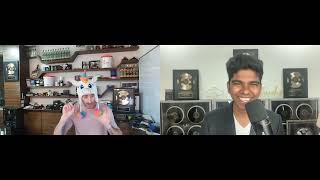
John Wan, founder of Tier5, built a white-label SaaS company to 2-Comma Club status after dropping out of college and working Upwork jobs. He credits homelessness, jail, and drug abuse with shaping his philosophy that meaning is arbitrary and happiness comes from rejecting external validation, not from purpose-driven narratives.
Chapters
What's going on? What's going on, everybody who's actually listening to this podcast right now? First of all, guys, welcome back to The Nikhil Sai Show, which is hosted by me, The Nikhil Sai. And guess what's going on today? I'm back with another amazing 2Kama Club winning guest, and this guest is a little crazy, I would say, and outrageous. And you will love this guy because you know, he just doesn't care so much on what other people think. And when I feel like I am limiting myself by other people's opinion, I go, I scroll through his profile, and I just feel motivated to, to get it, come back and care less. And anyways, coming back, uh, he's a very driven entrepreneur and he doesn't like to waste time, and he helps other entrepreneurs to build continuity offers, uh, you know, and sell software without actually owning a software company or building one, and that's what he specializes in. He is a 2 Comma Club winner, 2 Comma Club X winner, 2 Comma Club C winner, and he's gonna share a lot of stuff with us today on the Nikhil Sai Show. So let's not waste any time and actually let's welcome the Chief Hug Officer, technically the Chief Execution Officer of Tire5, John Wan. Hey John!
Hey, hey Nick, how you doing?
Great to see you. I'm doing great, how are you?
Yeah, I'm great. Actually, my dog may come over here and jump on me during this interview, so, but I'm great.
Okay, so you're making it up overall for what I just introduced you about, which is something I love, John. So it's fun to have you, man. So let's talk about what is that hat on your head and why do you wear it?
So just a hat. There's no, Actually, when I went to Funnel Hacking Live this year and I got several awards this year, I wore this hat on stage and I had so many people come up and ask me the same, no offense, but I'm just gonna call it what it is, stupid fucking question. I had so many people come up and ask me, John, what's the story of this hat? Why do you wear this hat? And my response was kind of like, well, what's the story with your underwear? Why do you wear your underwear? There's no— so, but, you know, this is actually— I think this encapsulates a lot of my, a lot of my beliefs and, and view system on, on everything in the world, specifically, specifically whenever it comes to being an entrepreneur, that, you know, I don't believe myself in purpose. I don't believe in purpose. I don't believe in, in why. Now, I am a big Russell Brunson fan. You know, he's helped me He's helped me learn a lot about marketing and a lot about making funnels. But one thing I really severely disagree with him on is he's always preaching this, you have to have your why, you need to find your why, your why is important. And for me, I think that's nonsense myself. So I don't believe, I don't personally believe in purpose and I don't personally believe in and why. So have you— do you know who Alan Watts is?
Sounds familiar.
Okay, so Alan Watts is— he's dead, unfortunately, but he's an old-school philosopher, and he was really big into, like, Hinduism and Taoism and Buddhism. And in his philosophy, he would tell you that there is no why, there is no should, there is no should not, there, there is no real meaning. There's just things that people either do or don't. So, uh, I, I don't believe that a purpose is necessary or a why is necessary. So to me, my why is why not. So that, that's like when somebody asked me, hey, why are you wearing that hat? Why not? Why not? That's my why. Like, why not?
I love that, John. It's so much fun, uh, to hang around. I mean, this is one of the things which I recently shared, uh, when I was invited to be a speaker at an event, he was asking the same thing like, "Hey, you know, you're 21, you got all these awards, how did you do all of this? What was your why?" And I mean, I kind of, you know, kind of relate to what you said. I was like, why not? Why not be 21 and make a million dollars? I mean, I did that for that reason. There was no specific reason other than, you know, just thinking about if I can, why not do it? So I did. So it's funny, John. So okay, let's roll back a little bit. I want to give a brief, uh, understanding to myself and the audience about who you are as a person. So take us a little bit back. Let's talk about your backstory, your ground roots. Where did you come from? How did you get into software business? How did you got your 7-figure award, 8-figure award, you know, the 2 Comma Club C award? And why are you in India right now? I would love to know about that. And so let's talk about the whole journey, possibly.
For sure. So the, the, the short answer to The very short answer, and I'll elaborate on it, but, but the very short answer to answer who am I, I, I don't know. I'm no, I, I'm no one really. I, I don't fucking know, you know. I, I don't know who I am. I don't, you know, and it's actually something I struggle with on a daily basis is I, I don't know. It's hard for me. Okay, so for me, when I look at things, I could just make up some, and I believe a lot of people do this for, for some reason, but I could just make up some arbitrary information and say, you know, who am I? I could describe, you know, I'm some white guy. I could describe traits. I could describe characters about me. And I could just come up with this arbitrary definition of who I— who am I. But to me, ultimately, that is a very meaningless, arbitrary definition. Because, okay, for me to understand who am I, it seems like I would need to first understand what am I right now. I could again, at a very high level, I could say, okay, well, I'm a human being. Okay, well, what the fuck does that mean? You know, what does that mean to be a human being? I am this, I am this human, I'm this creature with the consciousness that's existing inside what? Like, what is this reality in this world that I actually find myself herein with the consciousness observing? Well, I'm not gonna lie, I don't fucking know. I don't have a clue what— I don't think anybody does. You know, if we look at some of the smartest minds in the world, they can't tell you. They can give you some thoughts and theories on what they believe reality is, but they will tell you concretely, look, we don't fucking know. Okay, so if I don't even know what is this reality and what I exist in. How could I honestly begin to define myself and say, okay, hey, this is who I am? I don't fucking— I don't know. I'm no one. I'm nothing. You know, at the end of the day, at the end of the day, there's not much difference between me and this screwdriver. Okay? If you study us closely enough, right? If you study us closely enough, when we study this and we continue to zoom in and we continue to zoom in and we continue to zoom in on this screwdriver, which is fundamentally made of the same parts that I am, we find out that there's actually nothing there but some vibrations. Okay, so I'm essentially nothing but a vibration of energy in the universe. So I can't begin to tell you who the fuck I am because I don't know. I can't tell you where I was born.
Uh-huh.
Why is it— why can, why can I tell you where I was born? Yeah. No, I can't because I know where I was born, so I can't tell you. Okay, sure.
Share us the story, John. I think that's the best way, uh, to kind of understand the mindset and the conclusion you came to, to live your life the way you want. So help us understand a little bit. Share the story, uh, you know, where were you born, what was your childhood like, and why did you get into business in the first place, and what happened next?
For sure. So I was born in the front seat of a T-top Camaro in a drive-thru liquor store in Polk County, Florida. I was born into a predominantly— I was born into a Christian family. My dad was a Baptist preacher. He was actually— we were missionaries to South America. My mom was like a very— my mom was like a very, very dumb very traditionally dumb, didn't have a lot of brains, Christian brainwashed lady. Okay. My dad was and is actually, in fact, till this day, a very abusive psychopath. So my childhood was, quite frankly, my childhood was really, really fucked up. Okay. And I've actually written about this in my book. But my childhood was really non-typical. Okay. So it was scattered with lots of verbal abuse, lots of mental abuse, and way more physical abuse. So I was terrified of my dad. I was in and out of the hospital my entire childhood with broken bones, concussions, because like I said, my dad was what I would call it. And I know a lot of people won't agree with this, but it's what I would call a typical Christian. Okay, so my dad is what I would call at least a typical preacher. So look, we went— I went all over before we were missionaries to South America. So I lived for 6 years in Cochabamba, Bolivia, which is like right in the middle of South America. And before we went to South America, my dad pulled us out of school and took us all around the United States to Christian churches to basically raise money so that they would give us money and pay us money to go teach those people about Jesus and about Jesus's love and all that. So I've been to, I don't know, 400, 500, maybe 1,000 different Baptist churches. And I've met the preachers there. I've met their children. And I would say— and I say typical because to me, typical So do you know what a standard distribution is? Mm-hmm. A bell curve, okay? So if you know about statistics and you know about math and you know what a standard distribution is and a bell curve, it's a way that most data will plot out on a map. And you can see in a standard distribution, in a bell curve, like 90% of all the data falls inside this curve, all right? And there's only a small amount that's outside the curve, where there's outliers. All right. So, and meeting all of these preachers' kids and deacons' kids and missionaries' kids, they all had similar stories. They were all sexually molested by their parents. They were physically abused. They were mentally abused, more than 50% of them. Okay. So when I'm saying, and that's why I said, I think a lot of people won't agree with me. But when I'm saying, I would say my dad was a typical Baptist preacher. It's because out of all the ones I've talked to in my life, most of them, they beat their children, they abuse their children, they physically, sexually, mentally abuse their children. So to me, it just— so to me, if 50% of the people that I meet are giving me this story, to me that becomes typical, right? It's okay, well, that's a typical— it's a typical thing. So, so anyways, that's kind of like how my childhood was. It was very dark, very, very, very dark. Uh, but looking back at it, looking back at it now, I would say that it was— I would say that's probably one of the biggest assets that I have is looking back at—
why would you say that?
Oh, you must have friends, right?
Oh yeah, not many, but yeah.
Okay. But you— okay, so let's go back whenever you were— whenever you were younger and you weren't as successful as you are now. You must have had some really stupid fucking friends. Oh yeah. That they were the traditional type of people. They weren't interested in making anything for themselves. They just wanted to go get a bullshit education, get a bullshit job, and get some bullshit money so they could buy some bullshit stuff. Now go back to those people, and most of the time, what do they do? They spend their time complaining. And they spend their time complaining about what? Nothing. Right? And this is most people. If you look at most people, most people will sit and complain Like if some, like, okay, look, why is it that a lot of people can't make it in business? Well, they fear rejection, right? They fear rejection. They fear the hardship whenever it comes time and somebody's going to reject them and say, no, I don't wanna buy your stuff. Then that's like devastating for them. Or whenever it comes down and they have to pay out payroll and they don't have any, they don't have the money, it's devastating. It's devastating for them. Or the thought that a lot of people, they never even get started because they think, like, the, the fear that goes through their mind is, well, what if I make it and what if I lose everything? Then what are people going to think of me? All right, look, I've been homeless. I've lived in a— I've lived in a— I've lived in a, in a cemetery before. I've literally, like, slept inside of a cemetery before, homeless. I've been to jail. I've been stuck in jail before. I've been on like a fucking critical condition, about to die in a hospital because my dad beat the fuck out of me. So I don't really care if I ask you to buy my thing and you say no. That doesn't bother me, you know. It's like I, I've been able to realize— and it's not just my tragedies, okay? Um, when we lived in South America— and I, I live here not with you, but I live in India with you, although you're in Goa, right?
Oh, I'm in Hyderabad.
Okay, so you're in Hyderabad. I'm on the other side in Kolkata. But living in South America and then also being here in India, it's like, go outside in India and look at these fucking kids that fucking sleep on the road. They literally sleep on the road. Now imagine complaining about something in your life knowing that this little bastard is out there just sleeping on the road. A little kid. A little tiny kid.
7 years old. Yeah, crazy.
With no hope. Right. So it's like now when I look at average people and the problems that they have in their life and then I just compare them to the shit that I went through in my life or the shit that these kids are going through right now, it's like there's no problems. I don't actually have— I don't actually have any problems. I don't have anything to complain about. I don't have anything to be unhappy about, really. All right. Every, every problem that I have, everything that I want to be unhappy about, it's just made up. I've just made that shit up in my head. So, but I don't suffer from these things because of all the stuff that I went through. I've been able to realize, you know, like, okay, hey, this isn't going to bother me. So what if I make millions of dollars? What if I start a company, hire, you know, employ 70 people full-time, and then my company goes bankrupt? Is that the end of my life? No. Is it the worst thing that's happened to me? No. Will I be able to live through it and survive? 100%. And I think a lot of people, they haven't went through enough adversity. So I have this philosophy. I have this philosophy of my life that's called eat shit. Okay? And I think everybody should eat some shit because if you ever go eat someplace and you have some food and you're like, oh, hey, this food tastes like shit. Well, guess what? Guess what? I instantly know. I instantly know that you've never eaten shit before, right? I can easily understand that you've actually never eaten any shit. That's why you're saying that that food tastes like shit. But this food that you hate and you think is disgusting and you think tastes like shit, I guarantee you, if you put it down and then you go find some shit, like some actual shit, and you eat it, then you're going to look at that food and you're going to say, wow, this is great. I actually like this food. Please give me that food. Why? Because that shit that you ate has really changed your perspective. And I think what happens in the world, especially whenever it comes to entrepreneurism, is people haven't really went through any shit. They haven't went through a lot of bad experiences and they're scared. They're scared shitless to go through the bad experiences. But those are the things that make all experiences good, right? It's like, hey, if you want to enjoy your life how it is right now, without, without increasing anything, right? Then just take away a lot of the shit that you have in your life and make your life horrible. And guess what? You do that for a week and you'll go back to the life that you have right now and you'll no longer be unsatisfied with it. You'll be happy. You'll be like, oh my God, I'm glad I have this, right? So that's why I said I think it's my biggest asset because, because of those experiences that I've had, there's not a lot that's really going to bother me anymore. There's, when bad things happen, I can easily understand that that's not a real bad thing, right? It's like, it's not the end of the world. It's something I can easily recover from.
It's interesting. I mean, that's a very, I would say, not usual mindset you have, John. And how did you come to that conclusion? How are you kind of, you know, undisrupted or not affected by the people's opinion? Or how did you come to a conclusion that you could like, I mean, I know the experiences and what you have gone through, the shit you've gone through, made most of it. But if you could advise somebody to, I would say, not care much or not be, you know, affected by other people's opinion, what are the first few things they could do to kind of do that, uh, you know, in a starter stage, if I would ask?
Well, I think, uh, personally, okay, my personal belief is I don't really I don't really believe that most people put a lot of weight in other people's opinions in the first place. I think that what really goes down when you evaluate people psychologically, right, whenever you actually look at the root cause of the problem, I don't think the real problem is they care what that fucker thinks or they care what that fucker thinks. I think at the end of the day, the real root cause is people have very little self-worth, and people have very little self-value in themselves. People don't think a lot of themselves, so they don't internally validate themselves, and they don't internally love themselves. So they look on the outside for that validation from others. They look on the outside from that. Okay, so let's take you, for example. You got all those bullshit awards back there for making for making all this money. Now, there must have been some time before you made all that money where you really didn't have a whole lot of money, but you wanted to buy really nice clothes, you wanted to buy a really nice car, you wanted to buy a really nice watch because you didn't have the money, but you wanted other people to think that you had something, right? You wanted people to look at you and be like, okay, hey, yeah, this guy has something. You wanted that external validation from them. Why? Because you didn't have it internally. Now, once you go out and you get all the money, you don't really care about if other people look at you and understand, oh, he's got money. Why? Because that's not near as valuable as the money that you actually have, right? So I think this is actually the root cause. I think the real root cause is that people are putting weight in other people's opinions and other people's thoughts because they don't think very much of themselves. They don't care about themselves very much. They don't love themselves very much. So they look to other people's opinion. And I think the steps to get away from that are— I think the steps to get away from that is you have to really detach yourself from the normal thoughts and philosophies of society, you need to almost— you need to adapt almost a nihilist— you need to adapt almost a nihilist philosophy where you begin to understand that nothing really matters anyways. I mean, if you make $100 million or if you're fucking dirt poor, that doesn't actually really matter. The only value that is there is whatever value that you decide to assign to it. And if you want, you can assign it zero value. You can assign everything a zero value, right? And once you begin to actually understand that, okay, there's nothing that you— okay, so this is how I like to think about it. All right. Do you think it would be important if somebody could cure cancer right now and we just automatically somebody went out and they had like this magic pill and you just took one magic pill and your cancer, no matter what type of cancer that you had, that, that just is magically cured. Is that important? Would you say that's important? It is. Yeah. Okay. So now we've determined that's important. So let's say, let's say you do that. All right, let's say you go out and you spend your whole life or whatever, or even a day, it doesn't matter, however much time you dedicate to it, you come up with the cure for cancer. It's put into this pill. Anybody that has cancer, boom, they just take this pill and they're cured. All right, now let's say you just did that yesterday. When you wake up tomorrow, how many ants do you think will be on your front porch to congratulate you and tell you how good of a job that you did?
Yeah, I mean, ants, I don't think so.
How many butterflies do you think will come and fucking say hey?
They don't care for what I did.
Okay, so then, so then that means what? So then how is it important?
It's—
there's no real importance there.
It's important to people who have cancer, or maybe who have a family member or a loved one who have cancer.
Okay, so this is relative now. So this becomes relative, which means what? It's not really important at all. It may be important to an individual. It may be important to an individual, but that actually doesn't mean anything in the universe. All right? And the universe— not saying that that person doesn't matter, okay? But us as people, we have this grandiose complex where we think that we're so important. We're so magnificent. I think part of this actually stems from, from a lot of the different religions, the organized religions, where in that religion they say there's some almighty deity and that deity specifically created us. And because of that, we feel that we have some importance, that we're really important. All right, so if no ants— or literally, there's more ants than there are people. Okay, so if no ants, no butterflies, no fish, no dogs, no cats, no lions, no elephants, no giraffes, no squirrels, No other organism at all is going to come up and congratulate you for your accomplishments that are so important. Only a person would. So what that really means to me is that it's not really that important. It's only important because some conscious person put it in their mind and they have arbitrarily defined and said, hey, this is important. Hey, this has meaning. So it's all relative. It's all relative, right? This is not to say that you can't consider it important, but In the grand scheme of the universe, it doesn't matter whatsoever in the grand scheme of the universe. Now, you don't have to take from that and you don't have to say, okay, hey, well, look, if I solve cancer, the universe doesn't give a fuck. The ants aren't going to congratulate me. So why do it? This brings you back to again, why not? Right? So this is where it brings you back to. There doesn't need to be a why. Why not? If you want to fucking go cure cancer, go do it. But don't kid yourself to think that this is so important. All right. Now, the reason that I think this is key is because once you adopt this philosophy, then there's no reason for you not to love yourself and not to have a high self-worth. Because why do people not love themselves today? Why do people not have a high self-worth today? Because they feel that they haven't accomplished anything important. They feel that they haven't done anything important. Right? They feel, oh, I haven't made a lot of money. That's important. And because I haven't done that, I'm a loser. Right? But once you realize that none of that shit's important anyways, it's just you that's assigning value to it and you could assign zero value to it. Then you can begin to actually love yourself and care for yourself. And once you do that, once you really love yourself and care for yourself, then it's really hard to give a fuck what somebody else thinks.
Interesting. John, I mean, it's really— I would definitely agree to some extent on what you're actually saying. But if nothing is important overall for any individual on an average, let's look at like the average human being, you know, who is stuck financially, 90% of them, it's just paycheck to paycheck, they could barely make it up, they pay their interest and they're fine for that month kind of situation. If nothing is important to them and they obviously don't have self-worth, that's why they're stuck in that job, they don't like it, they don't enjoy their life and they still do it. Because society pushes them to be that person, because they already created that avatar in front of hundreds of individuals they meet and greet every day. What are— what are— what's important to them then? Like, what is the real truth they need to run after, and how they could create self-worth for themselves to actually become the person they should be? Or, you know, the why not for them, how could they get there?
Well, personally, I don't think that there's a person that anybody should be. I, I don't believe that there's a person that you should be, or a person that I should be, or that there's a person I shouldn't be. There's just the person that I am. For me, there is no I should be this person, I shouldn't be that person. There's just me and this person that I actually am. Um, but to answer your question, I'm, I'm not really sure. I'm not really sure why people don't value themselves or why they value— why they value such arbitrary things.
Let me change the question a little bit. How did you start valuing yourself? I mean, you come from a different family background where, you know, you were beaten up badly enough that you don't like your family so much, if I'm not mistaken. And how did you come up to a conclusion that, okay, I need to value myself? And what was the journey like? And how did you do it successfully for yourself? Because I know you might not be able to speak for everyone, but I believe you can speak for yourself.
Um, well, well, like I said before, I realized that I don't have any I realized that I don't have any real value and nothing has any real value unless me as a conscious being decides consciously to assign some value there. Okay? So that's, and that's all it takes. I don't have any importance. I don't have any value unless of course consciously I decide to say, oh, this is important. That has value. And who gets to make those decisions?
I do.
I get to consciously say whatever I want. I can consciously say, that's valuable to me. That's not valuable to me. This is important to me. That's important. That's not important to me. And I get to make those decisions anytime I want. I can change them anytime that I want. It's easy to like, okay, and I think this is one of the underlying problems is that I don't think people are very connected with their consciousness. I literally, I just don't believe people spend a lot of time in conscious thought and actually thinking. Okay, I think that a lot of people, and this is, it's part of human nature. Okay, it's actually part of human nature. I think if you actually look into neuroscience and you look into psychology and you actually understand the different parts of our brain and the different parts of our consciousness and how it works in general, then you understand, okay, when you get up and walk to the bathroom and go pee, how much conscious thought is there? Are you consciously thinking, okay, I need to move this leg, I need to move this leg? I need to—
not really.
No, most of the time you're looking at your phone and it's a subconscious routine. Okay, your brain naturally does this. Your brain actually naturally takes things and removes them from your conscious into your subconscious. So it becomes robotic, it becomes automatic. And I think a lot of people are really, in reality, most of, most of their reality is actually in the subconscious process. And they don't spend a lot of time in the real conscious part of their brain, thinking about, like, really, really thinking about things consciously to think, okay, hey, does this make sense? And I think that's why people don't realize that, hey, look, just because this person said, said that this is important, and I should do this, it means nothing. It means absolutely nothing. And just because today I made this important, that doesn't mean that tomorrow or just like that, the next, in the next second, I can decide, hey, it's not important, right? I get to, I don't think a lot of people realize that. I don't think a lot of people realize that, look, you're the one that gets to assign value to everything. You're the one that gets to, in your reality, right? Now, outside And that's why I said it doesn't really matter. Nothing has any real value. Nothing has any real importance. It only does from your individual relative consciousness. Outside of your relative consciousness, that value and that importance completely goes away. This is why the ants aren't coming to congratulate you for solving all human problems, okay? Because those problems are only problems relative to human consciousness. They're not problems for the rest of the world. Which means they're not real problems. They're pseudo problems or quasi problems. But a lot of people don't realize that, hey, look, you get to assign whatever arbitrary value you want to anything. You get to assign whatever arbitrary importance you want to anything. And you can change that anytime that you want. And once people realize that, I think they are able to understand, they're able to love themselves a lot more because they know— I think a lot of people out there have this weight on their shoulder that mom and dad— look, especially in your guys's culture, and your guys's culture, your mom and dad put so much fucking expectations on you, and they have such high expectations. They expect you to do this, they expect you to do that. On top of that, you have all of society that's looking at you, that, that's judging you, okay? And I, I think this is where part of the problem comes, because people think Well, my mom expects this, my dad expects this, my friends expect this, my girlfriend wants this, the world's going to judge me based on this. So these things, they must be important. I must accomplish these things, but I haven't. I haven't done any of this. So I'm not that valuable. I'm not that important. Okay? And that's why they have that low self-worth. Well, in my philosophy, even if you do accomplish all that, you're still not that valuable and you're still not that fucking important. You are in your reality, and you may be in some other people's minds, but let's get rid of all those people. Now what? Let's change the terms and conditions of society. Okay, let's change the terms and conditions of society to where money no longer matters at all. The only thing that matters is how many children that you've had. That's it. That's the only— So now how valuable How valuable are you? You're not valuable at all because you ain't had no kids.
You bet.
Yeah.
Okay, John, that's interesting. So in this type of very detached mindset you have, I mean, I know there's a John in everybody. I mean, I could possibly see that it's a percentage, but you're outrageous. You're 100% John, which is interesting. Then why build Tirefy? Why build businesses? Why make millions? And what was your choice and what was your thought process to get into business and how was the journey overall?
Well, again, it kind of boils down to why not? I don't specifically feel I need a reason to do this or I need a reason to do that. I am this conscious being that I don't understand. I do have this consciousness that I don't understand. I am stuck on this planet that I don't understand. I am in this world that I don't understand. I do believe that there's nothing that I should do. There's only things that I do I get to choose what I do. Okay. But the reason that I started Tier 5 was to make a long story short, to make a long story short, I was going to college for computer science, for computer engineering. And I had some personal, I had some personal problems, a lot of baggage. And a lot of— for a long time, I was a very violent, just a very angry, very violent person. I used a lot of drugs. I, I drank a lot of alcohol. And anyways, I ended up in jail several times. So I was in jail for doing some stupid shit. And because, because of that, I was no longer able to get financial aid to finish up my college education and get a degree because of that I wasn't able to get a traditional job as a software engineer at a traditional company. So I turned to freelancing. I turned to places like Upwork and Elance and just became self-employed and started doing freelance work. And when I started doing freelance work, I realized a few things. One, that doing work for somebody else was fucking boring. It was just really boring and I just did not enjoy it whatsoever. Okay. I just realized that, hey, what you want me to build is I can do it, but it's boring and it's not stimulating me mentally. I'm not happy doing it. I feel like this is dumb. I do in this reality, in this society, I do need the money to eat and survive. I mean, I don't really need it. I could go outside and eat bugs if I wanted to, like the yogis. But I don't want to do that. I want to go eat a hamburger and I need money for that unless I want to steal it. If I steal it, I'm going back to jail. So conform with society, I need the money. But I realized to do the work for you to get the money, it's boring to me. But then I also realized that, like, look, hey, if I can do this, then I'm like the perfect person to go interview other people and find somebody else that could also do it and could do it cheaper than me. So I started doing that. So I started actually getting jobs, but then instead of doing the work myself, I would find somebody else to do it and that would do it. Somebody would pay me, let's say, $10,000 to do something for them. I would go find somebody who I could easily understand, 'cause again, I could do the work myself, right? So I could easily understand, can that person do it? And when I'd find that person, I'd find somebody, okay, they can do it just as good as me, but they'll do it for 50% of the price that I'll do it. So this guy will pay me $10,000 to do it. That person will do it for $5,000. I don't actually have to do anything. So once I learned that, once I learned that, look, I don't actually have to do the work at all, I can just hire somebody else to do the work. I decided, okay, hey, well, I'm just not going to do the work. I'm just not going to do the work anymore. I'm just not going to work anymore. I'm just going to pay other people to do all the work for me. So then that's, that's how I started the company.
Interesting. Interesting. And this is at what timeline? What time did you actually start the outsourcing software company you built? And how did you pivot into creating SaaS, which you're allowing other people to white label and resell?
So this was about, this was about 9 years ago. 10 years ago. So for about 2 years, I just kind of did it all by myself. And then I started, ironically, I started, I realized that I was, when I was looking for jobs and getting jobs, the jobs that I wasn't getting, the people, I would always ask them for feedback, right? I would always say, hey, you know, I put in an application or I put in a proposal, you didn't go with me, you know, we had good dialogue, why didn't you choose me? And 100% of the time, the answer would be, oh, we hired these Indians over here because it seemed like they could do just what you said, but they were going to do it for 50% of the cost or for 30% of the cost. So, I mean, honestly, at that time, I didn't know where fucking India was. I had no idea where— I had no idea. Like, I'm American, okay? So at that time, I thought Indians I thought they were talking about like fucking American Indians, like the woo, woo, woo, woo, woo, like those Indians. So I started looking and I realized, okay, hey, there's this whole country called India. And then so I got this ideal. I was like, okay, hey, well, I can hire these people too. So I started outsourcing almost all my work to India. And so I started working with freelancers. I started working with Indian companies. And no offense to Indians, but I realized that through trial and error that working with an Indian company kind of sucks because it's hard to find ones that aren't going to scam you. It's hard to find one where you're going to get what you actually pay for. I wasn't able to control the process, so I ended up meeting my wife who was Indian. She's actually here from Kolkata. Well, she's actually from Burdwan, which is close to Kolkata, like a little village town. So I came home, I came, came over to India to work with several of the companies I was outsourcing to. I had all these problems where I was paying for developers full-time, but, and they were charging me for the full-time developer, but they were only working like 25% on my projects. They were working for 4 different clients at the same time. So I had met my wife on Tinder, actually. So while I was here, I was on Tinder. I met my wife on Tinder. We started dating and stuff. And then we fell in love and we decided, she started working with me, helping me manage the freelancers and the developers and the companies. And we just decided, look, we can't control this process. It's not the developer's fault. That guy doesn't work for me, he works for company XYZ. And when his boss says, hey, look, you have to lie to that person, you're gonna work for these 4 different clients, but don't tell that client, you tell each client you're working only for them. That's his job. That's his livelihood on the line. If he wants to do the right thing and be honest with me, he can't feed his children. And I realize that I can't really blame him. I can. And I can say, you know what? Jesus said lying is bad. You're going to hell. You need to repent from your sins. I could do that. But I could also be practical and I can say, hey, look, if it came— if it was up to me and it was either put food in my kid's mouth or don't lie to this white guy, which one am I going to do? Well, I'm going to lie to the white guy and I'm going to feed my children, okay? Regardless of whether it's ethical or not, I'm going to do what I need to do to feed my child. All right, so we decided, hey, look, since we can't control the process, let's just create our own company, hire the developers in-house, then we control everything. We can control the entire process. So we did that. And for about 3 years, so that was like, now that's 8 years ago that we decided to start our own company. And then for like the first 3, 4 years, we were just building software for other people. And what I realized was the service industry is not scalable. And I think a lot of people, and again, this is why I said, I don't think a lot of people have really, I don't think a lot of people really use their brain and have conscious thought because if you stop and think about it and you use your brain, Think about what you're doing. Okay. You have a paper currency, fiat money that's not backed by anything, has no real intrinsic value. It's the government is constantly printing it off and more and more. The government's constantly just printing more money anytime they want. Okay. It's not a real thing. It's just there's nothing backing it to give it any value. It's inflationary. So your money, if you have $1 today or 1 rupee today and you wait a year or 2 years, it's not as valuable because they keep printing money. Okay, but you only have so much time. You only have so much time, and after you run out of time, you're fucking dead. Okay, so your time is deflationary. Every, every minute that goes by, you have less time left until you die. It's deflationary. And what we're doing as a service is we're trading our most valuable asset. Like, think about it. If you know you only have, um, if you know you only have 7 days to live and you're going to die in 7 days, and you know that for a fact that in 7 days from right now you're going to die, how much time will you sell me? How much of your time will you sell?
No, I would stop the podcast. That's the first thing I'm doing. Then I would go back to, you know, fulfill my real dreams.
You wouldn't, right? You would stop selling me time. But people don't think about this, right? So our time is our most valuable asset that we have, because when we run out of time, we're fucking dead. We don't know what happens after that, but in this life, in this reality, it's over. So we're taking a deflationary asset, the most valuable thing that we have, and we're trading it for what? We're trading it for a fucking fake piece of paper that is constantly losing value. It doesn't make sense. It's not a good business model, actually. Definitely not in the long term. It's not scalable and it's just completely fucking stupid. And so I realized this. I realized like, look, and the way that I realized it is because we are actually doing this. We're taking our time. We're selling it for money. Only it's not my time. It's these other people. I buy their time and I sell their time for money. And the people that I'm selling it to, what they're doing is they're building SaaS software. They're building an asset that they just sell to other people. And those people aren't buying somebody's time, they're buying access to a username and password to use that app. And so I started with our clients, I started actually seeing that, okay, hey, look, they've paid me $150,000 to build the software for them. And I build it for them, I get the $150,000, they go do a launch, they make $500,000 on the launch, and then they have $150,000 recurring coming in every single month without them having to do anything. I got the short end of the stick. Like, I got the bad deal. I thought, wow, like, this is how I thought at first. I thought, oh, fuck yeah, I just made $150K. I didn't have to do any work. I paid these guys $75K. I put $75K in my fucking pocket. I'm a boss. But once I really started thinking of what's happening and I started to think, well, what did they do? Well, they gave me the $150K. I had to go buy people's time and sell their time like they're slaves. They went and sold access to the software for $500K. They're instantly in a $350K profit and they didn't give any time to anybody. They didn't sell any time to anybody and now they have continuity. Now they have recurring revenue of $150K. What I did was stupid. I'm getting a bad deal. So I realized, hey, look, I should just make SaaS software myself because then instead of people buying time from us, they can just buy the software. So we transitioned and we started building our own SaaS software. But then I realized I don't know anything about marketing. I don't know how to do marketing. I don't know how to sell shit. I don't know how to market. So now I've built all this SaaS software. I don't know how to sell it. I don't know how to market it because I'm not a marketer. I'm an engineer. So then I started thinking, well, who does? Okay, well, marketers. Well, how can I get a marketer to market my software for me? Oh, I have to pay them money. I don't want to pay them money. What if they don't do a good job? Okay, well, are they going to market my software for me for free? No. But they'll market their software for free. But they don't have a software. Oh, well, they could pay me money to build them a software. Oh, well, they don't have $150K. Okay, well, I have this software. They're not— it's mine. They're not going to market it for me for free. But if I let them pretend that it's theirs, and now it's their software, they'll market it for themselves for free. Okay, so it was like filling a gap, right? It's like, I, I have the software, I don't know how to sell and market it. They know how to sell and market it, but they don't have the software. Okay, so let's partner up. Uh, so that's how we transitioned into allowing people to white label it and join our partner program, become resellers. It's like a perfect match.
I love that, brother. That's, that's crazy. That's crazy journey overall. So interesting. So how do you monetize it overall? I mean getting the awards you have with the team and the kind of timeline you actually have done this, it's intriguing overall. So help us understand how quickly you monetized it, how was the journey overall, and help us understand behind the scenes.
So basically, once we had products to sell people, I just came— that was about 4 years ago. And I just came to Facebook and I've just started telling people on Facebook, uh, about our offers. Like, hey, what, what do we offer? What do we, what do we have? And started making offers on Facebook. So we do everything pretty much organically. Uh, we do everything pretty much organically and we have software. Part of our software is specifically for organic marketing to help with the organ— like, to identify the types of people that would buy my products and service and start connecting with them and start a conversation with them automatically. So basically used our software to then go in and find people to actually sell the software and/or buy the rights to sell the software from us.
Makes sense. Okay, that's interesting. I mean, I understand the part on like how you're monetizing it. Now the question comes down to, it's an interesting business model. You have the advantage of having the team and technicality, and expertise to build the software, and of course you found a gap in the market where they need the organic tools. But how did you actually hit the 7 and 8 figure and even the 2CCC award? How did you monetize it so well? I mean, people have this misconception which you could break possibly, that organic isn't super scalable. And here we are, you on the stage with the $25 million award, you know, the 2CCC award. How did you get there and how did you break through that? That crazy revenue numbers overall with the software?
Well, uh, I'm not going to say organic is so scalable because organic can take you— or organic can only take you so far if you're, if you're doing organic to find customers. But from, from my approach, okay, from my approach is exponential. I don't look for customers specifically, okay? I look for people who can bring me 100 customers, okay? Most people, what they do when they're doing organic is they're going out looking for, okay, 1 customer, 2 customers, 3 customers. Well, I'm not doing that. I'm going out and I'm looking for the people who can bring me 100 customers or 1,000 customers And then those 100 customers or those 1,000 customers can each bring me 2 or 3 customers. Okay, so that, that's kind of how we were able to do what we've done is because I'm— my, my whole thing is when the offer that I have is intrinsic for the person who purchases that offer is going to then go in and spread my brand's name. Okay, so for example, you must have, you must have some low ticket offer, right? That you sell for a low ticket. Okay, now what's the ideal of that low ticket offer? That the ideal of that low ticket offer is to ascend people up your value ladder, right? So now picture this, instead of you going and find people to buy that low ticket offer, let's say it's $10. Okay, so instead of you going and spending time to find people who's going to buy that $10 offer and then go up your value ladder, what if instead of that you found people who would give you, instead of $10, they would give you $100, but now they can resell your, your low-ticket $10 offer as many times as they want to as many people as they want? Well, now when you get a customer That customer's paid you 10 times as much as your low-ticket customer, so they're already worth more. And what are they incentivized to do? They're incentivized to now go out and sell your $10 product, although they get to keep the money. You're not getting that money, but all they're doing— so now you've got somebody that's paid you money to pull customers for you. So now instead of you going and finding 100 people to buy your low-ticket offer for $10, and you make $1,000, right? You go find 100 people that will pay you $100 to resell your low ticket offer. Now you made $10,000. Now you have 100 people who are bringing people into your low ticket offer every single day for you. So now if they each bring one person into your low ticket offer, now you're getting 100 new people into your low ticket offer. You're not making money on that. But those people are going right up your value ladder. And that's the approach that I took. Instead of going and looking directly for direct customers, I'm gonna go look for people who are going to pay me money to bring me potential customers and essentially fill my value ladder up for me.
Interesting, interesting, John. That's awesome. I do have like a few questions before we sum up the interview. So I would love to start with, what kind of tools do you use to manage yourself, you know, your software and your productivity? Activity on a daily basis?
Well, honestly, I don't use anything to manage myself, or I don't use anything to manage myself for my, or my productivity. I think one of the things that was— I think one of the things that was most interesting to me, and it's still most interesting to me about being a business owner, is just the freedom to do whatever you want whenever you want to. And if you don't feel like being productive, then you're just not productive. If you want to be productive, then you are productive.
Okay.
but the tools I use the most, I would say, okay, there's, there's ClickFunnels that I use for, for building funnels. There's ActiveCampaign that we use for email marketing. Uh, there's one of our tools, which is Chirply, which we use for like, uh, our, our sales process, SMS, SMS and doing phone calls and stuff like that. Uh, then there's Zapier that we actually use. There's Zapier that we use for, for automations. We use Teamwork and Teamwork projects to manage internally. Our internal chat for the company and for our software projects to manage the software projects. And then we use our own organic marketing tools for, to do the outreach and the organic marketing side of stuff.
Makes sense. I mean, John, you're a, I would say, freedom individual. How does your daily routine look like? Do you have one or else if you don't have one, how does your typical day look like? Walk us through your average day.
Um, so I don't have a routine per se. Um, basically I wake up whenever I wake up. So, uh, whenever I wake up, I wake up. I try to— whenever like my eyes open, I try to just say— I don't have an alarm where I get up at a specific time. Like today I woke up at, uh, I don't know, 1 o'clock probably. No, what, 3 o'clock today, Ankita? So like 3 PM. I woke up today at like 3 PM. Yesterday I woke up at like 4:00 PM. The day before that, I probably woke up at 1:00 PM. So no real time whenever I wake up or go to sleep. So I don't really care about that. But once my eyes do open up, I just try to wake up at that time. I try to like, okay, I'll just get up instead of going back to bed. Then I basically take a shower. I basically take a shower, spend some time with my dogs and just pet them. And stuff, um, take it, take a shower. Then I come into my office. Once I come into my office, then I basically drink a little bit of coffee, some avocado coffee that I have imported from, from Bali. Uh, I basically start my day off with this, which is, um, some— this is creatine HCL, so this is creatine hydrochloride. And then this is just like a pre-workout, so it's just basically like caffeine. So I, I drink that with my coffee and then have like a little bit of this stuff up here, which is just like a mass builder. So I have a little bit of protein. And then once I have that, then I go hit the gym. We actually have a— we have a gym. So we have like a 15,000 square foot office here. And on that side of the office, we have like a full gym. So then I go to the gym and spend like an hour or 2 hours in the gym depending on what I'm— what I'm doing. Once I'm done with the— once I'm done with the gym, Then I basically usually come sit down and smoke a cigarette and then drink my protein. And then I deal with chats. So my job is basically I do the sales and marketing. We don't have a sales and marketing team for our company. It's like I do all the sales and marketing myself. So I post stuff on Facebook, message people on Facebook, go comment on people's stuff for Facebook. Maybe build a funnel or write some emails, answer questions that people have in our company chat about software features and functionalities, go check out what they've built. So just basically have a chunk of my day where it's just like whatever needs to be done, I go do that. I go do the hugging, so go around and hug the people that are working here randomly, spend some more time with my dogs. As you can see, one of them is One of them is right over here, just sitting down there. So go outside and play with them because I take them to the office and stuff. Whenever I feel like going home, I go home. Sometimes I go home by 8:00 PM, sometimes 9:00 PM, sometimes 1:00 AM, sometimes 5:00 AM. It's just like whenever I feel like it. If I don't feel like doing anything more, once I get home, usually play Diablo with my wife. Me and my wife play Diablo 4, so we usually like play Diablo for a little bit. And then we eat some food, and then I go to bed and do it all over again.
That's one of the very interesting routines I've ever heard, and it's not even a routine, and that's the crazy part here. You know, you might, you might change it anytime, anywhere you like. That's, that's, that's truly interesting.
Well, routines I think are valuable if you make them valuable. So if you want a routine, have a routine, but you don't need to have one. You don't have to have one. Again, I don't think anybody needs anything or has to have anything. If you want to have one and it makes you feel more disciplined, go for it. If you don't want to have one, then, then don't have one. Your, your success, your— again, your success is arbitrary. But if you want to put success equals X amount of dollars made, it does not depend on your routine at all. If you, if you want a routine and you feel like you need a routine because if you don't have one, you're not going to do this, this and this. Well, what that probably means is you have a fucked up mindset and you're not very disciplined, and that's why you're wanting to put these rules in place. So go for it if it makes you happy. It's not really— look, I didn't start my company because I want to have a schedule of I'm going to do this, this. Look, my routine is I may wake up tomorrow and my wife may say, hey, I feel like going to an island. Let's go away for 2 weeks and go scuba diving. And I don't want to be in a place in my life where I say, no, we can't do that, we have to do this, we have to do this, because that just seems stupid. I could, I could die next month, I don't fucking know. So for me to actually set these boundaries, I must do this, this, and this, doesn't make sense to me. So I'm not going to do that.
Makes sense. So John, if you could go back and give suggestion to 20-year-old yourself or somebody who's just getting started, what would that suggestion be like?
I think I would have made myself realize before that all the hardships in life are where the most valuable lessons are at, and I should embrace them and I should actually search for them instead of— because at 20 years old, I was still doing drugs, I was still drinking, I was still fighting. I still had a chip on my shoulder because I felt like I felt like somebody like you, you probably had a mom and dad that loved you and told you every day that they loved you, whereas I had a dad that would tell me I was a stupid faggot and punch me in the face every single day. And I felt that you had a better life than me and you were probably going to be more successful than me because of that. And I would have envied you at that time and not just envied you, I would have had animosity towards you at that time. And I would have wanted to fight you at that time because you had a good life and I didn't have a good life, and you hadn't went through the pain that I had went through, and I wanted to give you some of that pain because I didn't feel like— I felt like I had too much of the pain and you didn't have enough of it, so I should balance it out and give you some. So I would go back and just make myself understand that, you know, hey, that pain and those hardships, that's actually where you get the most valuable and the greatest lessons in life. So instead of feeling bad about those, and instead of trying to avoid those, you should seek those out because that is one of the accelerators. That's one of the biggest accelerators that, that you can have.
Makes sense, John. Interesting. What do you consider your life's biggest achievement, and what are your next bigger goals?
I, I don't, I, I don't believe that I've accomplished anything important in my life or any big achievements in, in my life. And again, this may sound weird, but I don't have goals personally. I think goals are, I, I think goals are really stupid and arbitrary myself personally. So I don't make goals and I don't have goals because, because they don't, because they don't seem like, goals don't seem like they add any value to me. It only seems like if I have a goal and I don't make the goal that I'm going to somehow feel bad that I didn't do an arbitrary thing that I said I needed to do by this time or something. So personally, I don't personally feel like I've had any big achievements. You could say starting a company, 70 full-time people making multiple millions of dollars, having a net worth in the 8 figures is an achievement, but Again, like I said before, I haven't, I haven't had one single ant come up to me and say, hey, John, good job, good job on everything that you've done. So, um, until that happens, I'm not going to consider that I did any— I mean, I haven't done anything great for humanity, you know. I haven't, haven't figured out reality or, or anything. No, real— I don't think I've done anything great. And like I said, I just don't, I I don't think they're— to me, to me, they're not important. I don't value them. They're not important, so I just don't make them.
Understood, understood. If you could go back in time and be like, okay, that's the biggest mistake I could have avoided, or I could share with other people so that they could avoid that, what would that mistake be?
Um, I, I think the biggest mistakes that I've, I've made in my life is to think that to think that being able to exert physical dominance over another, over an individual was somehow important and somehow justified in some way. There was a long time where I was a violent person and I thought that I had the right to be violent and the right to, to take my violence out on somebody if they did something, if they did me. And I thought it was an accomplishment, right? Like, oh hey, I can beat that guy's ass, I could beat that guy's ass. And I thought, okay, hey, that, that's good and that's valuable. And I, I spent a lot of time locked up in jail like a, like an animal because, because of those philosophies, because thinking that, you know, hey, being able to beat somebody up or not having a peaceful outlook or not being not being peaceful and not looking for ways to be peaceful. I've spent a lot of my life in a situation in which I would never want to be at again because of those beliefs.
So understood. John, in your past few years of you having this very unique mindset, have you ever gone to be that old beast or animal you were to kind of get physically, you know, Yeah, for sure. Hmm, interesting, interesting.
Okay, so I had a monkey, uh, and the first monkey that— the first monkey that we had— the first monkey that we had was like such a monkey.
You had a monkey?
Yeah, I've had 4 of them. So I've had 4 of them in India.
Is it legal?
You know how India is. You know how India is, that every kind of legal, uh, everything's— the legality depends on how much money you're willing to pay for something.
Oh my God, guys, disclaimer, that's not how it works. John has too much money and you don't, so don't do outrageous stuff. Interesting. So you had a monkey and what, did you fight with it or what?
Yeah, yeah. So I kind of feel bad, but at the same time I don't feel bad because I think that was— I think that I don't really believe in God, but if I did believe in God, I would say that God brought that monkey to me to remove the last bit of real impatience and hate and anger that I had inside of me that I wasn't able to get out on my own.
What happened exactly?
He just did monkey shit. If you know how monkeys are, he just was always doing monkey stuff. And I would sometimes get so frustrated with him and I would like punish him. Uh, I would, I would do mean, hateful things to him, like, you know, punch him in the face.
And he punches you back? Or— it's outrageous. I cannot even imagine a monkey in the same house I'm in.
I don't know, he wouldn't punch me back. He would, he would bite me. He would bite me and stuff. Um, I mean, obviously he didn't want to he didn't want to be there. He didn't want to be there being punched and, and stuff, obviously. So he would let me know that, hey, he wasn't happy about that by trying to—
So what did you do in the end? Did you, did you leave them, or did you give it to the forest department, or what happened to those monkeys?
Yeah, and so that one specifically, we, we let go, and close to some, close to some Hanuman temple where they was already worshiping monkeys. So that one specifically we let go, um, in the, in the forest area. And the other ones that, the other ones that we had were, they weren't so monkeyish. They were actually a lot nicer and like a, I mean, they were still monkeys and stuff, but they were like a lot more tame and a lot more friendly. Uh, and but we ended up letting those go to the forest department and giving those to the forest department because where we live, we live in a gated community and those monkeys would like, uh, get outside the house and like get into other people's house and like take their potatoes and stuff like that. So some of our neighbors weren't happy that the monkey would get inside their house and chase them outside and shit, and they were scared of them. So yeah, we got—
what else did you pet, John?
Uh, I, I've had monkeys, I've had snakes, I've had spiders, scorpions. Right now we just have— I've had cats. Right now we just I've had dogs.
All in India?
No, in India I've only had cats, monkeys, and dogs.
It's fun, man. You're having fun time. And what inspires you, John? Why do you wake up? And who are the key people involved in your journey, if you want to name a few?
So again, I don't believe personally in inspiration. So nothing inspires me because I don't believe in inspiration. I think that inspiration is a crutch that people use that's just not needed. So for me, inspiration isn't actually needed anything. Why do I wake up? So again, and I don't want you to feel bad about this, but I just feel like this is such a stupid question that people always like that society expects people— like, why do I wake up? It's fucking biologically programmed inside. There's no— why do I wake up? I don't know. There's some biological program. You, you, you don't not wake up. The only time you don't wake up is if you fucking die. So because I didn't die, that's why I woke up, because I didn't die in my sleep. And there's no other option. Either I, either I go to sleep and then I die and I never wake up, Or I go to sleep and I don't die and I just naturally wake up. There's no inspiration that's required for me to wake up. It's just a natural part of my biology. So that's why I wake up, because biology, I'm just programmed that way. But I would say the biggest part of my life, she's sitting over there.
Where is she?
She's right there. It's my little Indian wife. That's my biggest, that's my biggest, that's the biggest person involved in my life and my partner and everything.
So, okay, what's her name? Anukita? Is that?
Yeah, you are my lesbian.
I mean, I need to interview you. I really want to know how are you dealing with this weird guy right here sitting in front of the computer right now.
He's the best.
Funny, funny. Uh, John, oh my God, uh, I, I could say probably you're one of the most unique personalities I've ever met, John. Uh, it's— I don't know how I want you to think about this.
Look, I want you to think about this, and I want everybody to think about this. You know, most of Most of the world and most people, they live in a box. They live in some constraints. They're scared to be themselves. Most people aren't themselves. They show the world a version of themselves that they're not even happy with, they're not even comfortable with. And they do that for what? Because they think that they can make some money. Well, guess what? Most of those motherfuckers are still broke. Okay, so there's this ideal that I have and it's called the happiness index. Okay, so now consider this. Consider right here is your normal happiness index right now. What most people do is most people, and we're programmed by society for this and we allow ourselves to be programmed, what most people do is they sacrifice their happiness. So they take, they go from being right here naturally happy to going down here in exchange that they think that they're going to get some money. They think that if they sacrifice some of their happiness, that they will in turn get compensated. They'll get paid. They'll go get a job. They'll make some money. Or someone will buy their product and service and they'll make— they sacrifice their happiness in exchange for money, and they think that somehow they're going to take that money and they're going to turn around and somehow get up here with happiness. But I think we all understand that that doesn't— I think we— I think almost all of us can look inside and start to use our brains and think, and we can realize that, hey, I sacrificed my happiness for money. Now I'm only this much happy. I have to spend all of my money. I spend 100% of my money to try to give my happiness back, and I only make it to here. So I'm missing this much happiness. I have this much less happiness than I did when I started. I have no fucking money. And that's the situation that most people are at. They're missing happiness that they gave up in exchange for money to buy more happiness. They don't have any money left over after they try to buy back their happiness. And they didn't make it back to this point. So they're at a happiness deficit. They're still fucking broke. Now, your other option is you can start out at your happiness index. You cannot sacrifice any of your happiness at all for money. Then guess what? You don't have to use that money to buy back any of your happiness. So you're already right there at a normal happiness index. And I promise you, if you do that and you find something that you're passionate about, there's a way that you can monetize that. Okay. I literally come on Facebook like you said. You see what I do on Facebook? I make a shit ton of fucking money. But I do it and I'm happy doing it. Okay. So I never sacrifice my happiness. I'm just me authentically. I'm not going to fucking apologize for it because I'm just me. Okay. I'm not going to be a person that you want me to be or somebody else wants me to be. I don't care what you guys want. I don't care what you guys think. You guys are ants just like me. Now, when I say you're an ant, so am I. I'm, I'm not some special— I'm nothing.
Okay.
Now, I know if I'm nothing, everybody else is fucking nothing too. Nobody understands who they are, what they are, or anything. They've just— they're just making shit up, pretending that they do, when deep down inside we all know that we don't. We may have a belief, but we don't really fucking know anything. Okay, so I don't sacrifice my happiness and I find shit that I'm passionate about, that I enjoy. I can monetize it. Now I make money. I don't have to spend that money to buy back my happiness because I never gave it up. So now I have money. Getting that money itself has given me some additional happiness. So now my happiness is here. So now compare me to the other person. I have additional happiness and I'm not broke versus the other person. They're missing happiness. They're broke. Okay. So I think everybody should really just evaluate their lives and just fucking be themselves and stop worrying about what other people think about them, what, what accomplish, what accomplishments they're going to fucking make, how much money they're going to make. Do be themselves, who they truly are, and find something that they enjoy and they're passionate about, and everything will work itself out.
It's interesting, John. I have one last question. Did you learn Hindi or Bengali when you're in Kolkata?
I'm a Banglajani now. That's about as much as I learned.
That's it?
That's about it. I— well, I had some guy telling me that I was a marichode de America one day. And so that's about— so I know a couple more phrases like, ami toma keku balabasi. I know that. I know ami dim kaboh, ami luchi kaboh, ami dosa kaboh, ami fox kaboh. And that's about it.
Oh, it was fun, John. And if somebody wants your help or if they want to connect with you, uh, where they can find you, how do they connect?
What's that? They could just talk to me. Yeah, they could just stalk me on Facebook. So I spend a good amount of time on Facebook. They could just stalk me on Facebook.
Perfect. Okay, any last words to conclude the whole session for today for all the listeners?
No, I, I really appreciate it, and I'd love to actually— uh, me and my wife would love to have you on our show Millionaires Insiders and find out how a how a young brown guy made so much money.
Sure, sure, we will, we will, John. Uh, we will schedule that, and I would love to interview your wife too. Uh, it's interesting. I want to know how she deals with you, honestly, because it's not, it's not usual, it's not normal. Uh, it's gonna be fun overall.
But John, trust me, she's very far from normal herself. She's also a very weird person herself.
She's very weird, you say? Okay, it's an interesting pair to see, John. Once again, appreciate you jumping on. Thank you so much for this amazing opportunity to spend your limited time with me for, for well over 75 minutes now. And guys, hope you enjoyed the show so far and hope you're a little more outrageous after watching this podcast. Hope you care less of what other people think and hope you try to hit your happiness meter and not chase what other people want you to chase. And I'll be back with another amazing guest on the show once again. This is me, Nikhil Sain, signing off for today. Bye, John. Appreciate your time.
See ya.
More from Nikhil










BURNED $1.5M in his 17years online #digitalmarketing #entrepreneur #onlinebusiness
