Launch a 40K-Sale SUMMIT From Scratch 🚀 | Bob Dietrich’s 6-Figure Playbook
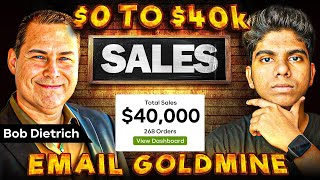
In this episode of The Nikhil Sai Show, host Nikhil Sai interviews Bob Dietrich, a veteran summit creator who has built a repeatable system for launching virtual summits that generate six‑figure revenues. The conversation begins with Bob’s personal journey from a 25‑year Toastmasters member to a summit‑building entrepreneur, highlighting how he turned public‑speaking skills into a scalable business model. They discuss the strategic importance of summit naming and branding, emphasizing clear, benefit‑driven titles and taglines that capture attention in seconds. Bob outlines his guest‑acquisition playbook: targeting speakers with sizable email lists, using YouTube, podcasts, and direct outreach, and leveraging the speakers’ own audiences as the primary traffic source. The production workflow is broken down into a fully‑recorded model first—requiring a host, co‑host, and tech moderator—followed by optional live or hybrid elements, with detailed team role recommendations. Monetization tactics are enumerated, including replay sales (VIP), post‑summit upsells, low‑ticket workshops, high‑ticket programs, and ongoing funnel optimization, noting an average of $30,000 per summit and 40,000 digital products sold over five years. Bob shares mindset advice, warning against delaying action, the value of high‑ticket coaching, and the role of self‑control in entrepreneurial success. The episode also covers the practical tech stack (landing‑page builder Klik, ActiveCampaign email, Calendly, JotForm, Vimeo, Stripe/PayPal, GoHighLevel) and Bob’s daily routine, health considerations, and personal motivations rooted in family legacy. Finally, Bob reveals his long‑term vision of building a laptop‑lifestyle business, traveling, and empowering others, while providing contact details for listeners to join his free 3‑day summit‑building event.
Chapters
What's going on? What's going on, everybody who's actually tuning into this podcast? First of all, guys, welcome back to another episode of The Nikhil Sai Show, which is hosted by me, The Nikhil Sai. And guess what's going on today? Back with another amazing guest. This is going to be a very interesting podcast because I'm not going to talk about the typical challenges, the webinars, the funnels, the VSLs, all that cool stuff that you have seen. I'm talking about something beyond this. Meaning if you want to have a loyal customer base who trust you, they need to see you as an authority. And the best way to build authority is associate yourself with people who are of higher status, who have achieved something incredible. And I found something very interesting when I recently jumped on a summit, that they're running this as a playbook successfully, and they've done it dozens of times. So I was genuinely curious on how they've done it, the formula of actually creating summits and launching them and scaling them at scale and educating a lot of people, like helping thousands of people through these summits. So I'm honored to invite the guest for today's podcast, Bob Dittrich. Hey Bob.
Hi everyone.
Thanks for joining us, Bob. Yeah, we are doing, we are doing great and I'm excited to host you today. Bob, I would love to get super nerdy with you on like all the summit stuff and you know how to host like multi-day online events and get into the weeds of it. But before that, give us a quick context of about, about your journey, who you are as a person. How did you end up in this business model in the first place?
Yeah, well, you know, I have to say that I was in Toastmasters. I'm a Toastmaster. I've been in Toastmasters for 25 years and they're all over the world. If you haven't seen them, you can find one in almost any city. And, and I had an opportunity after being in for about 10 years to create events, right? And I saw something called the Toastmaster Leadership Institute, which was basically officer training for Toastmasters, right? Each club has officers and they would train the officers. And I thought, you know what, they don't have anything where they show you how to implement your Toastmasters skills into your life, right? Like, how do you speak on video? How do you tell stories? How do you sell from the stage? How do you do all these public speaking skills that we're doing now, but that they weren't teaching those in Toastmasters? And I thought, well, what if we created an event that was kind of like this Toastmasters Leadership Institute, but it was bigger? And so I started— I knew it was a skill I wanted to have. Building events, but I didn't know how I was going to use it. And then, and so I just jumped in and I said, I'm going to learn this skill. I'm going to learn how to build these events. And I did. And when I was done, I had this, I had this amazing skill set. And several years later, as I, as I learned about online virtual events and online virtual summits, I was able to take that skill set and really parlay it. So that's really how I got started. But, you know, seeing, seeing the opportunity within that within the hundreds of thousands of Toastmasters worldwide, that there was an opportunity to really kind of connect with these people and allow them to understand that, hey, there are opportunities here for you to start your own business based on the speaking skills you just developed in Toastmasters. And I wanna show you how.
Yeah, incredible. I mean, I believe that's probably the number one skillset anybody should develop, which is using their mouth and having the ability to speak. And once you master that, like, the world becomes a game for you to play on because everything is a playground from there. So that's an incredible story on how you ended up building events. So when did you actually come up with this idea of hosting a lot of amazing people? Did you start there? Like, that's how you started your first event? Or how did you have the— like, what was the playbook for you to launch that first event? Because I believe that's where most people are stuck. They're like, will somebody even show up to my event? Who will even speak at my event? Like, can I even create a summit? That's the basic questions when I hear from people, when somebody wants or have an idea about creating a summit. How did you fix or how did you go about that problem?
[Speaker] You know, it's funny. It reminds me of a story that I heard about Arsenio Hall. He's a late night talk show host from the '90s. And when Arsenio Hall was on TV, it was like he could get a phone call from anyone. He could call and get just about anybody on the line. Why did they get on the line with him? Because he had a show. As soon as his show got canceled, Nobody would return his calls, right? And so having that show gave him access to all these people because they knew through him and his show they could get more exposure. And it works the same way here. It's like when you have a show, people are going to want to come through you. People that you don't even know exist that have huge lists and that are wildly successful, they want to now connect with you. And so as you start to reach out to these people, they're just going to want to connect to you because you're, you're a connector. You connect other people together and you have a show that gets out to the that gets out to your audience and it just becomes an amazing event and amazing way to connect the speakers with the audience.
Makes sense. I mean, I totally agree. And that's one of the reasons I love doing this podcast because this is a way for me to connect with people who I wouldn't connect without my podcast and really learn from them and create partnerships and do affiliate stuff and become lifelong relationship in a way after this podcast, which I love. I'm honored and incredible, it's a great opportunity for me. So I could totally relate to what you're saying. Now if somebody wants to start a summit, right? Like you've named it pretty well, right? Like you talked about like Unleash AI Business Summit, like it was very clear outcome, right? So how much importance like the name of the summit actually plays in the role and how do you think about like a vision for a summit? Like if you have to create like a brand guide playbook for a summit, what goes into it?
Yeah, that's a great question. And it's one of the first things you want to think about when you're creating a summit. You really want to know why are you creating it? What's the purpose of this? And usually the purpose is, is that you want a list of buyers. You want a list of an email list of people. Now, not a Facebook group, not a LinkedIn group. All of those things can be shut down. You can get kicked out of that and your whole group goes poof. And some of you listening out there have already experienced that. So you know what I'm talking about.
Yeah.
With an email list, you own that email list, right? Nobody's taking that away from you, right? Even the government, you throw you in jail, you come back out, you still got your email list, right? So my point is you own that. That's an asset of your business, right? And so, so who is in that email list? What's that target market? Who are you targeting, right? And so you definitely want to create a summit that these people are going to watch, right? And you can ask ChatGPT or any of the other LLMs.
Yeah.
Yeah, LLMs out there that, you know, what exactly would my target market be interested in? Or would they be interested in this? Have it rank it, scale of 1 to 10, how effective is this and what would be a 10 out of 10, etc. And so really connecting your topic first with your audience is super important. Then when you create a name for that audience, you know, I see a lot of people get cute. They try and put their brand name in it or they try and put They try and put like, like, like, you know, Her Passionate Life, right? Let's say, let's say it's a women's summit and they call it Her Passionate Life. It's like, what the heck does that mean? I have no idea. You could do the same, His Passionate Life. It's like, who knows what that means? I have no idea what that summit's about. But if you have, if you have Unleash AI for Business Summit, we kind of know what that's about, right? If you have the ADHD Toolbox, we know it's about ADHD. And if I'm a parent and I need tools, I'm thinking that's for me, right? And then, and then And then from there, we have a tagline that further affirms what that's about. So, you can get clarity on it. Title is super important because people see that title. They, you know, you got 3 seconds. If that title doesn't connect, they're off to the next thing. And so, you want it super obvious in what that title is. And then, with the tagline, get clarity on it and make it a clarifier. The tagline's a clarifier. And so, you made a great point. How important is the top, the title? It's super important because you only got a couple seconds to connect with your audience. If that title doesn't connect, and they got to figure out What does her passionate life mean? Then you lost them. You lost them already, right?
Yeah, 100%. I could totally relate. This is like 80% of efforts when we are creating ads, especially winning ads that we are about to spend millions of dollars on, we put it on the hook. Like what's the hook? What's the big idea here? What are we trying to promote? And I think the summit name, especially when you're doing JVs and promoting through email, I think that name plays the most incredible role. If it doesn't relate to the audience you're trying to attract, then you lost their attention. You won't even have them opting in, which is an incredible loss for the whole event. Imagine getting double the attendance just by having a better name. Like, that would definitely be a good amount of time to spend on it for sure. So let's say once somebody actually finalizes an idea, let's say they want— they're clear about what type of summit they want to create, what type of audience they want to attract, and then they came up with a name. What's the next playbook? I mean, you've done an incredible job in finding amazing guests, like industry leaders in the AI space, and bringing them all together to agree according to the time schedules and put them on this one event, like one day where everybody's showing up on time and everything is organized. What was the research process for like finding the guests or getting them on board and having them come to you?
Well, we go over that in detail in our Summit Profit System. So we show people exactly how to do it, but there's all sorts of different ways. I mean, everything from YouTube channels to podcasts to find guests, right? You gotta be careful though, because some of those ways to find guests, they, you'll pull in a bunch of guests who don't have email lists, right? And so you'll have to sift your way through those people who don't have email, 'cause you don't want them on your summit. They just aren't gonna promote. They're not gonna accomplish your goal of building that email list, which is that asset that's gonna turn your company into cash, right? And so you wanna make sure that, that you, you know, you do your best to pull in people from all over, all sorts of different avenues to be your guests.
Makes sense. Interesting. And what do you see as the best playbook in terms of creating an event and actually running it? Do you see like a live model where it's like, because I've seen you done a hybrid where you have done like live a little bit and also like automated recorded versions a little bit. Like how do you blend that in between and what do you recommend to others who actually are considering run a summit?
Well, when people join our Summit Profit System, what happens is they, they will take them through a recording, a recorded version of the summit first. We'll have them do fully recorded, right? Why? Because some people just aren't technical enough. They don't know Zoom well enough. They can't drop links. If something goes wrong, they don't have somebody that's going to help them. And really, if you're going to be a host of a summit, it'd be nice if you had a co-host, right? Which is one person you need. And so there's you, there's a co-host, and then you need a tech person on there too. Somebody who's dropping links in the chat, somebody who's kicking people out of the chat if they see, you know, angry language or whatever, you know, somebody being a hater or whatever. Or maybe they need to let people in the room, or maybe they need to answer questions or whatever it is. But somebody who's moderating the audience while you are delivering the content and being present with the speaker. So, you know, you kind of need that team in a live scenario. In a prerecord, you don't need any of that. You just need yourself and the speaker, and then you you know, you download the video and you upload it. And in the Summit Profit System, we show you how to do it in one take. So you don't have to do a lot of editing, any editing actually. And most, I can't remember last time I edited a video and I've done hundreds, literally probably thousands actually, if I added it all up. But I mean, just Unleash AI Business Summit alone, we've done almost 500 interviews on AI. You know, and those are just interviews. Those are mini trainings, demonstrations of how AI can work. So yeah, so, so definitely run them through these more simple version first so they get a feel for all the details. Once they get a feel for the details and there's a lot of details, I mean, anybody can produce a summit. When you're done with this podcast, you can go out there and start to produce a summit. But to produce a summit where people show up and to produce a summit where you're making money, I mean, we're making an average of $30,000 per summit. Some people will jump on and they'll make $500 a summit and maybe have 50 people show up. That's not— those aren't great numbers, right? You want a couple thousand with several tens of thousands of dollars. And if you can do that, if you follow the details, and that's why we put together the Summit Profit Systems.
Yeah, that's, that sounds incredible. I mean, that's probably one of the reasons I was curious about like this interesting model because there's one side which is you create a course or a coaching program and you push it on ads and risk your money and then you might or might not make it back and the cost of acquisition is insanely high. And the other way around with your summit is like you're going through JVs and not spending any money on ads, but building IP and people. Also like all the resources, the workshop recordings you're doing are incredibly valuable. Now, once the summit is done, right? Like we kind of talked about the playbook on how to do this. What are all the ways you're actually monetizing a summit? Like, are you like, what are all the ways where you could actually monetize a summit? That's my question.
Yeah. Yeah. So number one, you can monetize the summit by selling the replay. I mean, everybody knows that and it's, it's, common. If you've ever been on a summit, you know that everybody sells the replay and it's called the VIP usually. And it's just recordings plus some bonuses, right? And so number 1, the replay. Number 2, you can do an upsell after the replay, right? And that can look infinite number of ways, right? Number 3, you can hold a workshop afterwards. A workshop could be a free workshop, a paid workshop. Generally, if it's paid, it's going to be low ticket. But it could be, you know, maybe something around $297 even, or $27. Doesn't matter, right? Then when they go in, or it could be free, they go into the work— oftentimes it'll be free and people go into the workshop because what we really want to do is get as big of a crowd as we can to then get them on a call and sell them a higher ticket program. So you sell, you know, the higher ticket in the back end. And, you know, frankly, when you get people into a workshop, you can sell them into a high ticket, uh, phone call, and phone call into a high ticket program, or you could just sell from the stage right there. I mean, it's selling from your on your computer, right? And, and you can sell them in, sell the, sell the entire audience into a, say, a $297, $497, $997 type program. And, and that would be a possibility too. But, you know, the answer is it's endless. I mean, it's endless opportunities, and it's just a matter of testing. And here's the, here's the fact, and it's kind of a, this is kind of a trade secret. I'm sure Nick already knows this and probably does it a dozen times because he's, he's a Russell Brunson fan like I am. It's like, you know, if you just model the people that are successful You don't have to go through and do all these testing and come up with ideas and try and figure out, is this gonna work or not? You just see that Russell Brunson just did it this way, and then you just do it like he did, and then it generally works, right? And you just kind of work the details out to start optimizing just a percent here, percent there, and boom, you're at 30%, you know, sales or whatever. And you know, you're good to go.
Yeah, I, I love that because that's probably one of the reasons I was able to achieve business success so fast because I hear a lot of stories day in, day out, like, hey, I've been running my business for 7 years and we are barely making 6 figures. A year, like I hear all the stories. I'm like, yeah, because you're just trying to figure it out yourself. Now, like I was privileged enough to host people like yourself and learn from all the guys and then create a to-do list off of the podcast and actually do stuff and then go back and report to them and ask for advice or join their mentorships or create partnerships in some way for me to just not make the mistakes they've already made. I think, yeah, you're 100% right. I'm a core funnel hacker and I've done that like a million times. Every time I'm building a funnel or a business strategy or launching anything new, always follow the playbook, which is pretty cool. Now, one question which is running in the back of my mind is when you're trying to do it for the first time, right? Like, let's say if somebody's listening is the first time and they're trying to host their first summit, they might not have a lot of social proof from a summit standpoint. They haven't done 15 summits like you where they can show the proof that, hey, I've hosted all these amazing people. Neil Patel was on one of my summits and this guy was on my summit. Like they don't have that, right? So in that case, how do they handle that resistance of actually booking a good quality guest? Because like you mentioned, if you get bad guests with no list, doing summit is waste of time, right? Then you have good guests who have a big list, but then the question comes in, if you don't have proof, how do you, how do you come up with the resistance, right? Like how you actually make it an easier decision? Do you sponsor them, or like what's a better playbook in terms of getting guests?
So the answer is it's not even an issue. And here's why it's not an issue is that the social proof is in the speakers. So in other words, you don't have speakers that have no list in your summit. You have speakers that have big lists in your summit, 5,000, 10,000, 20,000, 50,000, 100,000, 500,000, right? So you have speakers with big lists in your summit to begin with. Then on your opt-in page, you're listing their pictures. There's your social proof right there. You really don't need anything else. Now, if you have some social proof, some screenshots of some chat, you know, chat conversations or Facebook posts or emails that you got, sure, put those in there below that. But there's nothing that's going to be more social proof than the speakers that you have coming into the summit and then social proof later. So when you're beginning, you're not going to have that. Don't worry about it. The speakers' faces are going to be enough because guess what? Those speakers are going to promote the event and their people on their— the speaker's email list are going to know who they are. They'll see their picture on the page and they'll they'll opt in from there.
Makes sense. So like getting those first few guests or the speakers is probably the toughest point of resistance. But once you get there, you get some faces, then it becomes easier over time and it just creates more relatability.
Well, actually the toughest part of the process is getting over the mindset because what you just said, people think the toughest part is getting the speakers. It's like, no, it's not. That's the easy part, right? Because all you're doing is sending out 200 emails.
Right?
150 emails. I mean, how hard is that? That's not very hard. But yeah, getting in your mind that, that, that's going to be easy and people are going to set up and you're going to actually send those emails, that's where people mess up. And, and so all you're doing is sending emails and then responding, and then you get on a Zoom call and, and you're off to the races. I mean, it's really hard.
Yeah, yeah, totally. I could see how simplified system you're actually walking through, and that's interesting overall to see. And let's get to the next session, part of the session, which is what kind of tools are you using on a daily basis to manage these summits, clients, and productivity for yourself?
Well, all you need is, um, you need a landing page builder, uh, you need an email system, you need a forms builder, and you need a calendar. All of them are part of GoHighLevel, by the way. So yeah, you have Kartra, you're good to go.
Right.
And there's a few other all-in-ones out there. We don't use an all-in-one because all-in-one means good at none sometimes. Right. And so we use the ones that are really, we got a landing page builder called Klik, K-L-I-Q, which we're affiliates of. So if you're interested, I'll give you my affiliate link. We have ActiveCampaign. ActiveCampaign. Why? Because ActiveCampaign has some of the best email deliverability rates in the industry. Right. So use ActiveCampaign. GHL, not so good at delivery rates. Although some people are really good at GHL and they can get the delivery rate rates. People like me that aren't super techie don't get those good rates. And so I'm not getting good rates, so I go to ActiveCampaign. And by the way, MailerLite, a cheaper version, also very high delivery rates. Some people don't know that. We use Calendly and we use JotForms and a couple other small things. We use Vimeo for our videos, uh, and Stripe and PayPal and, you know, a few other minor programs, you know, all the stuff that you guys are already familiar Makes sense.
Makes sense. Makes a lot of sense. Can you walk us through like your daily routine, like from the time you wake up to the time you sleep? Like how does an average day look like in Bob's life?
Okay. With or without the drug abuse? No, I'm kidding.
Just your average business day.
My average business day. And I say that because my dad was a drug addict and I have to grapple with that every day because, you know, the mentality of all the programming going through that. And I liked, and I think one of the secret weapons I have as a speaker is vulnerability. And I, I want to impress upon people, when you're vulnerable as a host with your audience, you're going to get tons of views and tons of followers and tons of people that really connect with you because they went through that too. I mean, I will say there's not a family that I've talked to that doesn't have some kind of alcohol abuse or drug abuse or whatever. So I'm really open about that stuff, and I'll kid around about it, but you know, it's serious stuff. To answer your question, what my days look like is I get up and I'm a diabetic, so I go on a walk and I live at the beach. So I go to walk on a beach for about 45 minutes or an hour. I have a friend who does a coffee cart. We hang out for a little while, 15, 20 minutes. I get some coffee and, and then I go to work sometimes. And all that, I won't even shower. I just get on my laptop and start working. And generally, um, uh, I will really do more of checking on my team and I'll check my calendar first, figure out what appointments I have, check my, how my team, make sure my team is running and, and then kind of go from there. So I'll do my workday. And, you know, when my workday is over, hopefully, hopefully I've got a concert that I'm attending and I'm off to a concert. If not, I love movies and I'll be at the movies. My girlfriend Pamela and I, who are also my co-hosts and business partner, might be in the middle of watching Dexter or some kind of, you know, some kind of show online, you know, trying to— I'll tell you, when we first started together, we were 14, 16 hours a day and it was brutal and it was stressful and I was like, I'm not doing this anymore. And so I really try to pull back. And the reason why I'm being so vague with like my time is because I really do have more time to myself. You know, I'm in an investment program as well where I'm investing money I have in my savings account into different stocks using options and stuff, which has been a game changer. I'm proud to say that, that I started in September. I've already made $70,000 in investment. From that and I'm looking to, to do that, you know, hit $100 grand and then double that next year. So these are, you know, these are, this is like a side project on top of my business that I'm running. And, and so we'll get involved in different things like that. We're really into finding the right coach for us. So we're working with somebody named Christina Jandali right now, and she's been an awesome coach for us. I've worked with Shanda, I've worked with Onyx and Gaul, and I love Russell Brunson and his stuff. And I tend to, um, tend to watch, you know, watch a lot of what other people are doing for fun, just because I like to see, I like to see how they're doing things. And then on the other side of the coin, you know, you have people like Howard Stern out there who's got just multimillion-dollar business. And I'm constantly thinking, how, what do I do, need to do for my mindset to hit numbers like he has, right? What do I have to do for my mindset to, to, to level up my game? If I want to make $10 million a year, I can't be doing what I'm doing now. And how do I shift my business model to create that? And so I, you know, I'm constantly involved in than that, personal development is a lifestyle. It's not a course. And so, yeah. And so I'm into personal development. That's my lifestyle. And so I'm always looking for ways to uplevel my game. And that's what I'll be doing during working hours usually.
Yeah, I love that. I mean, yeah, that's a constant process and you kind of never retire as long as you're learning. You just keep your mind sharp and you get new ideas and you could make what's happening already better. Love that lifestyle you have where balancing the family, fun, and learning at the same time while making money. Sounds pretty fun overall. If you could go back, Bob, and talk to the 20-year-old yourself, you know, the younger version, what would be the number one suggestion you would give yourself?
Gosh, don't sell my Qualcomm stock. It's like I bought Qualcomm stock when I was— when it was at $20, and then, and then it went up to $33, and I thought, oh, I'll sell it at $33, and boom, and then it goes to $900 and splits, and it's like Oh, that's crazy. Yeah. So here's, here's, here's, here's the answer, I would say, because really what you're asking is what do you— what do I want to communicate to younger people watching the show? And the answer is this, is that you don't have to wait till you're an old guy like me to get to set yourself up as an authority on anything. You see people like Nick out there. Nick, how old are you?
24, getting older.
24. Nick. Nick is the guy you should be modeling, not me, because Nick is— is— if he's your age, You should be out there doing what Nick is doing. And all it just takes you to be a couple steps ahead of other people in order to be an authority, really. And so go out there, jump in on the course, get a year under your belt, and now you're 20 years old and now you launch your business. I mean, if I could launch my business at 25, it would have been amazing. Now, keep in mind, you know, I grew up in the— 25, I must have been, you know, 1989, right? Or so, right? 1989. Now, what does that mean? Well, there's no internet, you know. We were— if you want to open a business, you open up a brick-and-mortar business, or you build a product. How do you— and how do you build a product? You need connections with importing, exporting, China, whatever. If you're not in the game, you're not going to get in. So building a business was a lot harder back then. Now it's super easy. You buy a course and you can launch your business. And that's why I love what I do, is because I get to show people how to launch their business. And the only thing I need to get past in order to get them to there is is this, their mindset, right? If I can get them past their mindset, I can get them to launch their business and be successful online, establish them as an authority, as a celebrity, as whatever you want to call it. But you're going to be a leader of your community. You're going to build a community, you're going to lead it, you're going to sell to it, and you're going to sell your first digital product. I calculated the other day, recently, this month, this month for the first time, I was thinking, how many digital products have I sold in the past 5 years? I've sold 40,000 digital products.
40,000!
It's like, I didn't— I had no idea. I go, holy shit, I should be tracking this stuff, right? But I don't. You know what? I tell you, I'm not a numbers guy. I'm not a metrics guy. You are, Nick. I know you are. But I wish I was. I wish I was because it's so valuable. But, um, but 40,000 digital products and in 5 years you guys can do that. It's not hard, you know? Yeah. And so I'll show you how to do that and, um, and more. When you join the Summit Profit System.
Yeah, I love that. I mean, that's so incredible. Like, I love data because the details and the life lives in data. The only reason we were able to scale some campaigns to huge scale is because we understand the data fundamentally and kind of see, we stretch things and see if the data is changing. And if it doesn't, that means it's a standard, and now you could really push hard and the number continues to go up because it's just a math. Business is just a math. Like cost of goods versus what it's costing you to sell that and fulfillment, and it's all margin. I, I'm a big data guy. I was drilling you on a bunch of numbers. You kind of have that fun chat. Uh, love that. Now I'm curious, if you have to look back, I mean, I think 40,000 customers, you know, changing 40,000 people's life and educating many more hundreds of thousands of people is definitely a big accomplishment. But on top of that, if you have to share a big accomplishment in your life, what would that be?
I said earlier that my dad you know, abused drugs, you know, and he had a heroin problem to be specific, right? And which meant he was very, he was very volatile in his moods. And he was very not present, unpresent, I guess maybe is the word, I don't know. And so I had, but it doesn't, didn't mean he was a bad person and didn't mean I didn't love him. He just wasn't present. He wasn't a father. And I had no role model of what a father could look like except for my uncles and a few other people in my life. But really, I had a poor I had a poor, poor idea of what a father was, but I had a great idea of what a mother was. I had the best mother in the world from my perspective. And except, you know, she didn't leave him. That would have been better, but whatever, right? It's a story. So, so my biggest accomplishment is being a great father and now a great-grandfather to my grandchildren. And being present for my grandchildren more than I was for my, my children, right? Because I did wind up getting divorced when my children were young, but I didn't abandon them. I was there constantly for them. And I felt like I was a good father, certainly a better father than what I had. But, and I continue to be better. And right now I'm working with my son. He's doing his first summit. I'm so excited. We're doing it together. I've been helping him through the process.
Oh, wow.
He's launching it right now. And so I'm constantly in contact with them. I'm, you know, a big believer in family and and I love my family. And, and so I think that's my biggest accomplishment is just—
Yeah, that's so cool. And congratulations.
And a great-grandfather when you don't have the role model to be that, I think that's a huge accomplishment.
Yeah. I mean, I believe like the satisfaction you get as a person in bringing peace to the family or being there for it is like second to none compared to anything else. So I could totally agree and relate to what you're saying. Love that. Now, what's your next big goal? What are you aiming towards? Like, 3, 5, 10 years down the line, where do you see yourself? What's, what's the big game you have?
Well, you know, I'm, I'm a big believer in, you know, you, you got people out there that are making hundreds of millions of dollars and, and it's like, do you need that? I mean, are you ever going to spend that? I mean, what are you doing? What are you doing with that money? I mean, really, I mean, that's a real question. Yeah. And, and even some of these bigger players, Anthony Robbins out there and even, even Russell Brunson. Yeah. I love Russell Brunson and, and Russell, you made enough money, get the fuck out and let it give somebody else a chance, right? And that's the way, you know, that's the way I think. And as soon as I hit, you know, some of my numbers, I want to get out. I want to give other people a chance. I want to empower other people, right? This should be like you get lifted up and then you step aside and let other people have a chance. Maybe you start developing something else. But, you know, in 3 to 5 years, I probably will be out of this, or at least in the background allowing other people to step up. And run their business because, you know, I want to travel. I want to see Rome and Italy and Greece and South America. And I love the beaches. You know, I want to take my family on vacations and stuff like that. So I want to enjoy more of that life. And I can see that's where I'm going. And my company is called Laptop Lifestyle for a reason, because that is the end goal for us is working on the beach, managing people who are managing our business. And that's really where we want to get you. And that is one, by the way, because there's a nugget here. If you want to change your game, you need to learn how to find people that will build your team. And once you learn how to build your team, that's going to change the game for you. Of course, you need to learn how to monetize online first, but once you get that and you're, you got monetizing down, now build your team. That's going to take you to the next level. And that's really, really key.
100%. I agree. I think any company, bottom line, is just people running it. So a company's only as good as the people running it. I think having that clear vision of whatever company you want to build can give you clear roles of different people you need to hire. And once you have the monetization piece, like you mentioned, you could really afford to hire the right people and keep them incentivized to grow the business. Pretty cool. Thanks for sharing that.
100%. And if I can rift on that real quick, because I wanted to say something, which was summits. The reason why I'm in summits is because is for very little money you can get started in a summit, right? With Facebook ads— and I did, I did both things— with Facebook ads, if you don't have a product that you know is going to sell, you are really going down a scary road, a dark road.
I agree.
Because you're trying to figure out if your product's going to sell before you, you know, using thousands of dollars in test money, right? If you have a product that you know has sold, right, it's actually sold and you've sold it over and over and over again, it's on autopilot, now you go to Facebook right, with Facebook ads, right? But before that, forget about it. And so summits give you a chance to get started, sell some digital products, ask your audience, get some authority, create all this content and more in one shot. In one summit, you create all of that stuff and more, and then you can start to launch your business. Then you can build that backend program because now you have this audience to give you feedback on what is going to be effective. And so when you're looking at starting your business, if you're not doing summits summits first, you're really taking the long road. I say summits are the only way to build your business online. Why? Because, well, there's a bunch of— it's kind of like saying I'm in San Diego, I'm going to go to New York, how do I get there? It's like planes are the only way to go. Well, I could take a train. Yeah, I could drive, I could take my skateboard. None of those are interesting to me because I don't want to take that long to get there. I want to get there in 4 hours, so I'm going to take an airplane. It's really the only way. Same thing with digital summits. Digital summits are the only way to launch your business online because everything else doesn't make sense. Everything else doesn't create the same amount of assets and benefit that summits do, not to mention profitability. So summits are really the best way to create, the only way to create your business online.
Yeah, totally. I agree. And I think that's a pretty smart way to start as well because like if you are doing a summit, I can see how you have to talk to so many high achievers, get them to promote your list for free and build your own list. And you're learning a lot in this process. You're just learning so many skills. And these skills can compound and let you do summits at scale. But not just that, you could be using the same skills in many other business ventures or whatever you want to do in life later on. The fundamental skill of using your communication ability and building small networks and creating and hosting events I think it's incredibly valuable. Like one-to-many connection building is very powerful, right? Like I'm doing this at one-on-one level with my podcast. Imagine if I've been doing summits for the last 5 years for the time I'm doing podcasts, I would have an incredible list of a million people in my list. Who knows, right? Like that could have been built in the last 5 years. So I could totally see how summits could be a game changer. That's one of the reasons I wanted to bring the people who are doing it the most smartest way, you know, like without going crazy with ads and without spending insane amounts of marketing, but still finding the way into building authority. And that's one of the reasons I'm bringing you and I'm honored you're here. Would love to know if you have to point at one big mistake that you made in your business career and share it so that we can avoid it, what's that one big mistake like?
Well, the one big mistake is not starting sooner, right? So, so here's what I see a lot of. I see a lot of people who want to be coaches, but they don't have a coach or they want to charge $10,000 for their coaching. but they're only paying 2. And so you don't have a coach that you're paying 10 grand for. You don't have, you don't even have the mindset, right? You're not congruent with what you're trying to create. And so you want to go there first, right? I paid Anik Singhal $35,000 to coach me for the year. And so for some people, that's like, oh my God, for other people, it's like, yeah, I just paid $100,000 for the year, right?
Yeah.
So my point is, is that, is that you need to be who you want, who you are first. And, and it's a mindset shift. And the faster you go through, through that mindset shift, the faster you'll get there. Entrepreneurship is the highest form of personal development because it's going to take on everything you've got, right? And so money, money, money, time, relationships, all sorts of different things are going to come up and you're going to have to take them all on. And so doing it, the faster you do that, the faster you do that, the faster you'll get there. And if you can do it at 24 instead of 60, you're going to be much better off.
I love that. I think that's gonna push a lot of people to take that leap of faith and start doing something with their lives. Appreciate you sharing that. What inspires you, Bob? What's the number one reason you wake up in your age to get to work, build these summits? Like, what's the one primary reason you are so motivated to making summits big?
Well, I would say, you know, my family and my granddaughters and my daughter and son specifically, you know, my— because of my my father's situation, right? And, you know, my mom didn't have any— she didn't have a home. She didn't have any assets. She didn't have any savings. She really died with, with, you know, nothing to show for that. And which meant I got, you know, I was— I didn't have an inheritance. She didn't leave me anything to set myself up with. And, and so I had to build it all myself, right? Which is okay. I don't have any resentment about that. It's just, it's just hard, you know, it's harder. It's harder, especially when you see your cousins or your friends out there who do have that type of stuff. And so, I've really been inspired by wanting to leave something for my children, not just assets and not just money, but also an idea, a legacy of who you want to be. I remember when I was 15 years old, my grandfather died. Died. And we were in his funeral procession. I looked back, we were in the front of the line, right, of cars that are going to the cemetery to bury him. And I looked back and it was like you couldn't even see the end of the line. It was like, holy cow, who was this guy, right? He was just my grandpa. But I mean, look at all the stuff, you know, look at all the people that are coming to honor him in his life, right? And that just really touched me. And that was like, I want to be that person. I want to be able to touch that many people. I want to— and so whether or not I have that many people on my funeral, I mean, who cares, right? I'm not going to be there. But do I want to touch that many lives in a positive way? Absolutely. And that really inspires me, especially if I can touch my granddaughter's lives in that way and show them that, look, this is who you can be, and this is what I'm offering this for you. This is, you know, almost like this is in your blood, but it's not. I mean, this is not a blood thing. This is not a race thing. This is not a gender thing. It's not a, you know, sexual preference thing. Uh, it's a mindset thing, right? But can I pass that mindset down to them? I absolutely can. And that's what inspires me is to be able to, you know, be the person that they'd be proud of.
Yeah, that's deep. And I love that. I think, I think the best thing you could do is change their mindset towards their goal. And I think it would be a game changer. I've seen people who take it seriously completely turn around their situation. Now, before we conclude the podcast, I'm curious, do you have any health or fitness advice? Like, you don't sound like that old. You don't look that old. Like, what have you done to maintain your health and wellness very well?
Well, you know, I've got diabetes and diabetes sucks. I'll tell you right now. I mean, you know, I mean, my blood sugar is a little high right now. I need to go on a walk to get it down. I need to eat the right things. I need to drink lots of water. I'm low on water today. And so there's just, you know, I'm older now. When you're older, you have to take care of your body differently. And, and really, you have to take care of your mind differently, too, because you need to be shifting your mindset as you're getting older and to have more discipline. And when I say discipline, discipline is like is that, that word where you're going to get a spanking if you don't do something, right? That was my version of discipline. And we don't hit kids anymore, thank God, but most people don't. But, but really it's not discipline. I saw something called, uh, it's deeper than that. I saw something called the Dunedin study. It's called The Story of Us. It's on Amazon Prime if you get a chance to watch it. It's about a study they did in Dunedin. It's a 40-plus year study on people's success. Why were some people successful and other people weren't? Why did some people build a business in multi-millions of dollars while other people went to prison? What was the difference between the two? And what they found was one thing that was super, super awesome. But we don't have time. I think we're out of time here, right?
No, you're good. I would love that story.
So what it was— Now you really tease me.
So I'm like, okay, I'm peeking in. So let's—
It was self-control.
Self-control, right?
If you can control your actions and what you do, you're going to be fine. And I— and that's where it is. It's like at 60 years old, I need to control what I eat. I need to control how I exercise. If I do, I live longer. If I don't, I'm going to die soon. Right. And that's the fact of the matter. When you get older, those decisions become more and more critical. Right. And that self-control, if that's not in place, sorry, Charlie, you're out. Out, you know.
Yeah.
And so, having that self-control at a young age, which I will tell you, being a business owner, an entrepreneur, requires you to shift a lot of stuff. Yeah. You got to be in front of the computer instead of off at the beach or out at the party. And there's a lot of kids out there, you know, 24 years old, they're out there partying. And guess what? Nick is down in here doing a podcast. Right? Nick, Nick has some money. He could be out there partying. He could be in Cancun right now, you know, whooping it up, right? But he's not. He's here because he has self-control. So the more self-control you have, the better, you know. I called it discipline, but it's not discipline. It, well, it is kind of discipline, but more specifically it's self-control. Control of what you want to do. And here's what, here's another piece on top of that is, okay, so in order to have self-control, you have to know what you want to control. In other words, you have to have a goal before you can have self-control. And so once you have that goal, now you know what to control to get to that goal. Right. And so set that goal first and then control yourself to get to that goal. And Tom Cruise, I saw this meme with Tom Cruise. It was even, it was even better than that. He said, set the goal and then take every step to get there. You just figure out what the steps are. It's not that hard.
It is really not. I mean, it, it, it just, it sounds stupid simple, but it sounds too good to be true. But then that's actually truth. Like, Once you're saying it, it kind of hit me back of my head. You're right. Like every person who is super successful had the control of not looking for instant gratification. Like they were not trying to get fun today or, you know, like eat the craziest stuff today or go to the craziest party today. Like they were okay willing to sacrifice and have that control knowing that they're working for that legacy and knowing that they're working for the long run. Then in the process of working, you realize that those parties and those funds were not even fun anymore. Like that wasn't even your main thing. You were just distracted. And that was the initial, like, you know, itch to just distract you from work. But once you got into momentum, it just completely changed. I'm glad we talked about that. And now if somebody is listening and they are curious, Bob, like they're like, yeah, I think summits are cool and I would like to launch my business with summits. How do they get in touch with you? What's the best place for them to get in contact or sign up for one of your events? Like, please promote yourself.
Yeah. Yeah. So if you want to get ahold of me, you can email me at Bob bobdietrich.com. Now Dietrich is spelled Dietrich. So bobdietrich.com, right? Bob@bobdietrich.com. That's the easiest way to get ahold of me. You can call, you can call my cell phone number if you want to. Can I get the number out here?
Yeah, sure. Yeah.
So, so give me a call. Most people don't. That's why I don't mind giving my number out.
Right.
But text me first because I don't answer the spam, but 619-518-1907. That's in the US. So it's 1-619-518-1907. (519) 1907. And, and I'd be happy to show you how we do it. We'd be happy to get you on to our 3-day event. We do a free 3-day event where we show people how to build their summits and how to build, how to launch your first digital products and how to build the funnel that's going to sell those products while you're sleeping. And so it's really, really a cool event. You haven't launched your business or you never made a penny online. We'll show you how we made $40,000 sales. Now that's not $40,000. It's $40,000 digital products, right? And so that is a lot of a lot of digital products and we'll show you how you can do it too.
Yeah, appreciate that. I think this is the first time a guest ever given their phone number away, but that's like the old school way of business. Like I remember this takes me back to the moment like I was in a room in LA where I was hanging out with all these famous people, like the people we see in Hollywood, and everybody was like, give me your Instagram, give me your Instagram. They were having like 7 million followers while I have 700. It was embarrassing, but you know, we were friends, so it was cool. But then I went into a different event. This was more old school, like mergers and acquisitions, private equity, raising money type of stuff. And average age was like 55, and I was like the youngest guy in the room. And nobody was talking about Instagram. They don't even have the app. They were only like, text me, here's my number, here's my card. I was like, whoa, wow. Like, there is really a difference on how people do business, you know, depending on the level and stage they're in. So that was a fun story. Once again, Bob, thank you so much for jumping on. This was incredible to learn from you and share this with our audience who are on this podcast today. And guys, hopefully you enjoyed a lot on this show today, and we kind of talked about the entire playbook on how you could come up with an idea starting with your name of the summit and finding out guests and getting them on the podcast and many more cool stories from Bob. And if you need some help, make sure to hit him up, and he'll literally give his phone number You can ring him up, text him before you do that, like he mentioned. And stay tuned. Share this with your friends who want to start a business or who might be interested in launching their summits. And I'll be back with another amazing guest just like Bob on the Neil Sai Show. Thanks for tuning in today. Bye for now. Bye, Bob.
More from Nikhil










BURNED $1.5M in his 17years online #digitalmarketing #entrepreneur #onlinebusiness
