Reverse Your Age - 7 Bio hacks That Actually Work | Nikhil X Noah
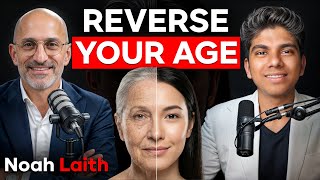
Longevity expert Noah Layth shares seven bio-hacks for reversing age, starting with sleep as the single most powerful lever. He recommends 25 minutes of daily movement, an ancestral diet without processed foods, detoxification, and hormone optimization. Noah argues modern medicine lags in adopting proven interventions and envisions making 70 the new 50 by 2050.
Chapters
But the real number one death cause in the Western world is medical mistakes. Medical mistakes is 200—
only United States, 250,000 people are dying from medical mistakes.
Basically, we don't know, like nobody ever taught us how to live, and this would be definitely a big master—
Like an average, a woman in the Western world is getting 168 toxins per day through makeup, through shampoo, through clothes, through air, through cars. Through you name it.
Is this affecting our body and the way our body responds to life in general?
What he did, he took one thing out of this healthy group of mice and he replaced it with supplements. So you might think, okay, that's good.
Now what happens?
Clever guess. What happens? The average age of the healthy mice went down by 35%.
I'm curious, what should we aim for at a sleep standpoint? Are we aiming for XYZ number of hours of deep That's why the real pandemic is not COVID.
The real pandemic at this moment is an infertility pandemic. Like, there is many studies, we are now 60% down. What's going on?
What's going on, everybody? Actually listening to this podcast right now. First of all, guys, welcome back to another episode of The Nikhil Sai Show, which is hosted by me, The Nikhil Sai. And guess what's going on today? We have a very, very, very interesting guest. Now, typically I give introduction about entrepreneurs and talk about a specific business needs they are expert in so that you could tune in and see if this is a good podcast for you or not. But if you're listening to this and you're an active human being who's alive and who wants to continue to live, this is a podcast you must listen to because we are going to give and share and transfer some amazing knowledge here. Because the guest who's actually jumping on today with us is an industry expert from over 20 years in the longevity space. And we're going to talk to somebody who is into biohacking, and he is the visionary behind the yearly reset. I mean, he combines cutting-edge medical therapies like IV treatments, peptide optimization, and plant medicine to enhance well-being of actual human beings and extend their lifespan. I mean, we know this already. Health is more important than wealth, right? And we are going to talk about the ultimate secrets to actually reverse your age, live longer, and not get sick. And actually enjoy your life. You are on this earth with a chance in trillions to be alive as a human being. Get the fullest out of it by being actively choosing your activities and food you will be taking in. And today we have none other than the, the master himself in the reverse aging space and the biohacking space, Noah Layth, who's going to walk us through his journey and give us the best hacks on biohacking. Hey Noah.
Hello. Thank you for the introduction.
Yeah, absolutely. No, first of all, pleasure having you on and, uh, you know, uh, it's definitely excited. Uh, you know, we are excited to learn more about how to live. Basically, we don't know, like nobody ever taught us how to live. So this would be definitely— so before we get into the nitty-gritty stuff, right? Like the obvious biohacking stuff, you know, and all the other things we, we, we would want to talk about the power loss and whatnot. I'm curious, who are you as a person? What was your childhood like? Why did you end up in the longevity space? And why are you here today?
Uh, it was actually all by accident. When I was a kid, I had asthma and I didn't even sport. I wasn't allowed to sport. And then one day I saw in a book of the Guinness Record Book of 1985, I saw a Chinese young boy run the marathon when he was 12. I was 14 by then. I was like, oh, sugar, I'm 2 years late. So I started to run every day, 1 minute. And a year later, I ran the marathon of Rotterdam as youngest participant.
And I got rid of my asthma.
So then I thought, hey, wait a minute. All these adults told me not to do it.
And not only I did it, but I also got rid of asthma. What else adults, you know, don't know about?
And that's actually how my entrepreneurship journey started because I thought, well, they always told me that, you know, I shouldn't focus on money. Money can be also something bad. And, um, well, I did actually focus it and I started many real estate companies and IT companies. I studied AI when the word was not known. And I graduated from AI at the University of Amsterdam and started an IT company, sold that, went into real estate and had hedge funds and investment funds in Spain and in South Africa. Yeah. And for, for 10 years long, I just bought problems from banks, like whatever the bank didn't want it, I'll buy it from them. So it gave me a good training into mental fitness and into how to deal psychologically and mentally with, uh, with challenges in your life. And to do that also, I discovered that if you want to mentally be strong and fit, you also have to take care of the parts that transport the mental part, which is your body. So I went into biohacking when the word biohacking didn't exist and tried many diets, many tests. Every time I tried a diet, I wanted to see how my body reacted on it. And yeah, I love the saying, you know, you can't manage what you can't measure. So I measured a lot in my life. And for many years, I was a raw vegan on a raw vegan diet. And when I Sold my company in Canada. One of my mentors, Brian, he told me, like, what you gonna do now? And I told him, well, I have no idea. He said, what are you doing for free? And I thought, oh, that's actually a smart question. And I said to him, well, I take twice a year a group of entrepreneurs with me to a remote island and cleanse them. I detox them. I reset them from heavy metals, parasites, you name it. That's, that was something that I was giving back to my community and to my friends. He said to me, well, just do more of that instead of only twice per year the whole year. And that's what I did. And along the way, I met my wife, who's a medical doctor. And I started to buy companies into the longevity sphere. And one of them is the Longevity Clinic. And with a, with a couple of medical doctors that are part of our team. And yeah, we focus like most clinics, they're always focused on healing people and In our case, we focus only on how to prevent, how to make sure you don't get sick, you don't get any type of pathology. And I feel that a lot of people go to the dentist, only go to the doctors when they have a challenge in their life, unless they are a top performer, which they understand that, hey, to become a top performer, you not only want to manage your financials, you not only want to manage your emotions, but you want to also manage your body, your energy. Like, how can I perform from the moment that I wake up until the dawn, my level of energy? Because at the end of the day, if you can work 8 hours, 9 hours, 10 hours a day, 15 hours a day with high energy, it's like cloning yourself. Because most people will, the average, there's a research done, the average person workday is 3.6 hours. So yeah, that's in a nutshell, let's say.
Yeah. Even if you get back to a 10-hour working capacity as an entrepreneur, and let's say you are a million-dollar entrepreneur and you're able to 3x your productivity, that would exponentially increase. I, again, it's, it's not just about the revenue perspective in my opinion. It's just that feeling of sense of accomplishment that, hey, I am capable and I'm living to my fullest potential. And I love that fact.
And.
Noah, like we all are not trained well. You know, I'm confused. Uh, you know, like, why are we on the earth? Why are we alive? What is the point? And then we realize the point is to live and nobody teaches us how to live. And I believe longevity is one of those things where you're technically learning how to live, you know, how to practice what you preach. You technically are making a positive impact in the world. And I'm, I'm bullish ultimately on the concept of longevity and, you know, the longevity concept reaching millions of more people and becoming an abnormal overall in, in, in, in the world overall. So I'm curious on your take. First of all, if you could explain longevity, what is objective? Because a lot of people are like the naysayers. Like when I first got introduced to longevity, I saw this Bryan Johnson guy getting his stomach with 50,000 pushups with a machine. I was like, that's outrageous. He's spending like $4 million to keep him alive. I was like, this is just I don't think like, and then I fought, I got into this media consumption of all the negative, you know, misconceptions and the wrong projections of actually the concept far from the reality. It was portraying as somebody's evil, they live by sucking somebody else's blood, you know, like it's all like portrayed in a negative manner. But then once I saw the message, once I talked to people like you, discover you and understand more other, you know, longevity gurus. And actually understood the concept, that was like one of the most awakening moments. Like, what's the whole point of life? It's to live. And these are the guys who are teaching us how to live. And guess what? We are ignoring it and acting like idiots. So can you help us like define and understand the concept of longevity? What, what do you think it is? And like, how do you introduce it to beginners who are listening to this? Because most people, I don't think they're aware of it yet. Yeah.
Like I, I don't want to say that I have the wisdom to tell you how to live. I do have the knowledge, the evidence-based science That is, to be honest with you, our doctors spend most of their days researching that from literature research and medical studies, like how to at least perform in your optimal self. That doesn't mean on your superhuman self, because that's as unhealthy as being the lowest self energy-wise, but your optimal.
Like, how can we make sure that Nikhil is high energy and take care of his gut, his brain, his body, his skin?
As optimal as possible, right? So, and to do that, you have to, I mean, I, I know you see in the news, Bryan Johnson and other influencers doing all these crazy things that looks crazy from the outside, right?
But you have to put it in context, like the machine that Bryan Johnson used for like the 20,000 pushup machines, or it's actually sit-ups.
It's called the EMS, right?
And it's a device that we definitely advise to some of our patients.
Like some of our patients, they come, they're overweight and they say, look, I have in 4 months my wedding and I want to have a six-pack. Can you get me a six-pack?
Yes, it's possible.
If you are willing to do all the work, then we can add a six-pack package to you. And it's possible if you have the focus and the desire to do it in a healthy way. Right. And adding an EMS machine and adding peptides and adding workout and lifestyles and sleep. And it's a, it's not one thing actually. EMS doesn't work on people who have overweight. It does work if you already have a two-pack and you wanna have a six-pack within 4 weeks. Yes.
Then definitely it works. So, so you always have to put it in, in context, right?
And the reason why there is now more than ever the desire to into longevity, because there is a growing difference between people people who are healthy, the haves, and people who have some type of pathology, which is the have-nots. And nowadays, like one, at least in the United States, each person in the United States and North Canada have a pathology. And it can be from obesity to arthritis to arthrosia or cardiovascular disease. They have a pathology. It's crazy how many percentage of the people have one or more pathologies.
Uh, so there is this like Back in the days, it was the finances.
It was between the haves and the have-nots in the financial terms. Now it's in the health terms. One of the reasons why there is that is because the health system, the healthcare system is actually the sick care system. It has been, like, broken is a big word, but there is definitely something not ideal in it.
And the reason is because, many reasons, I'm going to give you 4 of them.
Number 1 is the half-life of medical knowledge went from 10 years to 4 years to 2 years to 1 year to 7 months. This is a Harvard Medical School research.
It's now 76 days. So you are a student or you are a doctor that just graduated. Every 76 days, you have to read articles in your specialization to upgrade your knowledge. Most doctors have between 12,000 to 20,000 patients per year. You do not have time. Plus, the average consultation of a doctor is between 6.9 and 12.4 minutes. And that's including studying the file of your patient. You do not have time to go very deep.
So that's why a lot of people, like a couple of weeks ago, we spoke at the summit and we asked the people in the room, we told them like, what do you think is the number 1, number 2, and number 3 death cause? In the Western world?
Well, we got the usual suspects, cardiovascular disease, cancer, but the real number one death cause in the Western world is medical mistakes. Medical mistakes is 200, only United States, 250,000 people are dying from medical mistakes. So in the statistics, it's number 3, but only 1 out of 10 gets reported. So per year, 2.5 million people are dying from medical mistakes. So that's the number one cause. And why?
Because of the speed, because people don't have the time to go deep in each patient.
So if you combine the half-life of medical knowledge, if you combine the amount of patients that someone has to take care, and then if you combine that when something gets discovered, before it becomes mainstream, it takes on every 17.2 years before it becomes mainstream. So today there are things that we have discovered gonna only be implemented mainstream in 20, 30 years.
So our task as, as a, as doctors take, as caretakers and as a clinic is to take this evidence-based science that has been proven to be effective and efficient and use them now, not in 20 years, on our patients and, and friends and family. Sure.
Yeah, that makes sense. And this is very insightful, kind of understanding, like a mini masterclass on why it is really important to understand it's not about getting sick and actually curing it. It's about being strong enough that you never get sick in the first place. And that's, that's ideally a capability we have internally, but because of our lifestyle changes and the diet and the sleep schedules and the work schedules, the postures we live our lives with and the mental sickness we go through, we are just messing it up overall. So no, for most of the people, they cannot go through those expensive procedures or, you know, the, the to be, uh, you know, to be reversing their age or to be in the optimal health. Can you talk about the power loss where they could get the most by doing the least?
We love that.
We love What we call it the Pareto principle. What is the minimum that you can do that will give you the highest return on your time investment and energy? And I actually like the double Pareto principle, which is the 20% of the 20%. What is the 4% that you can do that will give you 64% return? So what is that? By far number one, and my wife and I and our family, we changed our life based on this discovery. It's sleep.
Like by 9 PM, we are in bed.
Doesn't—
are there any exceptions? Yes, it happens that, you know, something happened and we arrive at home and it's a bit later, but we don't have dinners anymore because of that. We have lunches, we have with some people in the morning, but we don't have dinners because we want to sleep at 9 o'clock, 8:30, 9 PM. We want to be in bed. So sleep is your number one. And, and there are many studies now, and I can go very deep in that. Where they have tested people, even people that are night owls or that label themselves as night owls, they discovered that no, it does not, that doesn't exist, night owls. Usually night owls are people who don't want to be distracted. That's why they work in the night. They are, they are, uh, and yeah, that's why we, that's number one. So sleep is like hacking your sleep, hacking your blue light exposure by taking during the day, yellow glasses, and then orange, and then reds by not eating at least 6 hours. You know, they say 4 hours, but it's actually minimum 6 hours before sleep. So you have time to digest. And then when you're sleeping, because most people when they're sleeping, they're actually not sleeping. They're actually digesting their food.
So you don't want to go to bed while you're digesting your food.
You want to go to bed with an empty stomach so that you actually rest and then your body is using its power and its energy and its enzymes and the metabolic processes to heal the body when they sleep, right? And you definitely want to fall asleep before 10 PM. Everything after that, your body reacts in a stressful environment and it makes actually inflammation markers to its own, to repair itself if it thinks that it's in a stressful environment. So Sleep is number 1. Number 2, and this is from Hans Kugel, uh, one of our mentors, and he used to be the director of the Anti-Aging Society in the United States, and he did 40, 50 years of research only around how to live longer. And he found out that he took two, uh, two groups of mice and one group, he put them in a closed environment. With a standard American diet, no supplementation, no sports, no running wheel, and toxic air.
And then the other group of mice, he put them in a closed environment with clean air, with clean food, and with a running wheel.
And he found out that the average of the American, of the, of the mice that took the American standard American diet lived 58 years. The other group that was healthy was 112 years.
Makes sense, right? But then what he did, what he did, he took one thing out of this healthy group of mice.
Okay.
And he replaced it with supplements. So you might think, okay, that's good.
Now what happened? Flabbergasted.
What happened? The average age of the healthy mice went down by 35%. You know what he took out? The running wheel. He took out the running wheel. So even if you exchange not doing any activity in your life by supplementation, by IV, by peptide, by stem cell therapy, whatever you want to take extra, if you don't do the basics, which is sleep and sports, it's like you didn't do anything.
So that is the Second part that we always tell to people is do the, the activities, like do weight resistance, VO2 max training.
There are a couple of type of sports and the minimum effective doses, because most of our patients, yeah, but I don't have time to sport 2 hours per day. No, the med minimum effective doses is 25 minutes per day. And come on, if you don't have 25 minutes, you don't have anything, right?
You don't have a life. So yeah, this, this is the, the, the 4% that you can do.
Sleep and working out, and obviously eat as close as possible to your, to the recipes and to the food that your great-grandfather ate.
Means take out all the processed food from your life.
Anything that's processed, get it from your life. Go back to how nature intended to eat. If you do that, to be honest to you, you will be far from 99.9% of the people.
Just food intake. Wow.
Like food intake, sleep, and working out. Okay.
I have one question. I have a lot of digital nomad friends, including myself. We do not sleep in the right time, meaning we are not sleeping when the sun is off and we're not waking up by the time it's on. Like it's, it's almost like, you know, 1:00 AM right now. And I'm doing this podcast episode with you and, and I'm doing this probably for, you know, more than half a decade now. And. I have many of my friends who do this for over a dozen years now. You know, most of them are also my ideal friends are younger than me, but anyway, you get the point, which is healthy. Is that considered as something which is okay? Are you getting your 8 hours of deep, like 8 hours of sleep or how does that look like?
No, no, because it's not the 8 hours. It's not the rapid eye movement phase. It's also your deep sleep phase.
And if you sleep after 10 PM, your deep sleep phase gets disturbed.
And you want to have an optimal deep sleep phase. So if it happens one time that you sleep at 1 AM, it's not the end of the world. If it happens every week, definitely not advisable. It happens every day. I mean, I just had a patient now who had Crohn's disease from a mix of processes between unhealthy and between not taking care of their gut and not sporting, but also She sleeps every day between midnight and 2 AM for the last 10 years.
And a lot of people, you think, oh, but I feel amazing. Yes, you feel amazing because you're 18, 19, 20, 25, 30.
And there is a time that will come, and some people later, some people earlier, that you're going to pay the price.
And why bring yourself to that phase? Why don't be preventive? Because you have to think like this. All our clients are entrepreneurs and top athletes, and you have to think that a top athlete, the difference between number 1 and number 2, it's not that big. It's not like he's outworking the number 2 by 3 times. No, they're all working the maximum and they're all optimizing everything. And for a top athlete to become sick 1 or 2 days, which means he's out of his flow for 2 weeks, that's the difference between becoming number 1 or number 2. That's the difference between winning the fight or losing the fight. So you cannot be half pregnant. You are all pregnant or not pregnant, or you're number one or you're not number one. And CEOs and top executives and entrepreneurs are kind of top athletes. Sometimes they don't, they don't have that mindset that they are top athletes, but if they like it or not, they are top athletes. And it's becoming, I mean, 20 years ago, it was much easier to do business on Facebook than today.
So the competition is becoming more fear.
So you have to be more on top of your game, right? And you're on top of your game means also your energy.
Sure.
So basically what you're saying is you gotta match the circadian rhythm of the place you're living in. So you gotta wake up with the sun, sleep by the time it actually goes down to get the best amount of deep sleep. So what is the minimum amount of deep sleep you wanna keep? Or what's the— like tracking sleep is interesting. At least I'm not super ethical about it. I've tried Whoop. I've tried my Apple Watch. I always have it with me. And I saw Whoop and it was disappointing me because it was showing me shitty sleeping scores. I was scared to death after seeing that. I was like, oh my God, will I die? I look at this and I just threw that away. It is a little bit scary. But I'm curious, what should we aim for at a sleep standpoint? Are we aiming for XYZ number of hours of deep sleep? Or are we looking at what resting heart rate are we looking at? I'm curious.
So yes, as I told you, it's not only the amount. Of sleep is when do you go to bed and how do you go to bed and how do you get out of bed, right? And also, how was your day?
Like, if you work out, you will sleep deeper than if you don't work out.
So true.
If you don't sleep on a full stomach, because for example, melatonin, you have 400 times more melatonin receptors in your gut than in your brain. That's why they call the gut the second brain.
My wife actually calls it the first brain.
The first brain, because 92% of your serotonin is created in the gut. So if you have a full belly and you go to bed, if you just ate 1, 2, 3 hours before going to bed, you're not going to sleep as deep because your melatonin receptors are still not optimal functioning. That's having said that, every person is different. So I function amazingly between 7 and 7.5 hours sleep.
My wife needs at least, and that's general by the way for women, women need more sleep.
Depends on the phase in their month, but in, uh, in their cycle, they need usually between 8 to 9 hours of sleep.
Right?
Whoa.
So, so yeah, women have a different, uh, metabolism, different, uh, um, processes in their body. So that is something that you have also to take into account.
So the average is between 7 to 8. Some of our top athletes, they sleep 9 hours, 9, 9 and a half hours per day, right? They sleep 7, 8 hours. And then sometimes in the middle of the day, another half hour to 1 and a half hour because they just have more, they need more to rest.
Their body needs a, because you have to think like this. There are a lot of, there are a lot of metabolic and hormonal processes when you're sleeping. Your growth hormone, you know, get activated when you're sleeping.
So you're repairing your body when you're sleeping.
So as a top athlete, as a top CEO, you need that time, right?
And whoever tells you I'll sleep, I mean, I'm guilty of that.
I used to say I'll sleep when I'm dead. You know, it doesn't work like this. You need it now and then you'll function way more efficient, way more effective during the day.
Makes sense. I mean, you will die if you don't sleep enough. I can certainly say you can.
Totally.
You know, you know when the most medical mistakes are done in the night shift? Most people die in hospitals during the night because of mistakes.
Yeah.
Why?
Because the brain active, they just—
exactly. Like if, if you, if you have 3, 4 hours consistently of delay in your sleep, your, your function as someone that is drunk.
So there's many research around that.
I'll tell you, I can relate to what you're saying. Um, I ran 2 companies at a very young age. One was a B2C software company while running my digital marketing agency. So it was building a software business while running a media company. And I can remember myself having 16-hour workdays between 8, 8-hour shifts for both of the companies and having 4 hours sleep and living like a zombie. Unfortunately, I was assuming that I was actually doing good working longer hours, but the reality was when I did a review of my performance, I was like, it was close to nothing. It was just low-quality decisions, no strategy, because I exactly felt what you said, like a completely drugged guy. And I just Couldn't even listen to what they're saying. I couldn't digest what they're asking for. I couldn't give a good response, even though I know what should I respond with. Yeah, I completely understand the feeling. And I, for God's sake, recommend none of the entrepreneurs go through that hard stuff and, you know, prioritize sleep well. I bet if I would have prioritized my sleep, I could have done more, you know, with less time, obviously.
Like, totally, totally. And that's why, like what you said about the Whoop or the Oura Ring, whatever. Device you use. Yes, they are not as accurate yet as a medical in a hospital or in a closed environment device, definitely.
But you have to see them as your accountability partner.
They are more an accountability partner than actually great device to measure.
They are not accurate yet, although they are becoming way better than 3, 4 years ago. So yeah, I know it's scary to look at them, but if they tell you, hey, you're on 50, 60%.
Of, uh, the quality of your sleep, maybe you wanna look at it.
Yep. Yep. Totally with you on that. Now, uh, let's go to the next question in terms of, uh, talking about different perspectives overall on the plastic. I know microplastic has been a very interesting topic and, you know, like recently I've seen some studies where, you know, uh, people are discovering microplastics in our veins. Earlier it was considered that microplastic can't enter veins because there is thick walls and all of that stuff. Now it's in every part of the body. Now, is this affecting our body and the way our, you know, body responds to life in general? And how do we like not get into situations where we are create, like where we are, I would say, affected by external environments to live shorter?
So nowadays it's not if you're intoxicated. It's more how much you're intoxicated. And it's not only by microplastic. Microplastic is a big thing, definitely, but you have so many xenoestrogens, which I called the silent killers.
These silent killers, they come in many forms and they enter your body. And when you test for them, when your doctor tests for estrogen disruptors, he will not find them because most tests Most doctors don't know how to test these things, but you're getting like an average, a woman in the Western world is getting 168 toxins per day through makeup, through shampoo, through clothes, through air, through cars, through you name it, right? Through food, through drinks.
It's crazy, right? That's average. So yeah, that's why I say it's, it's like not if you're intoxicated, it's more how much. And knowing that, putting detoxification process, regular detoxification process in your life, and a heavy metal detoxification process, because heavy metals are entering also in your body in left and right. And most people, they don't know how to test. Most doctors, they don't know.
Actually, most doctors don't even test for heavy metals.
And when they test you for heavy metals, they test the hair, which is, you know, it's not the correct way to test it because you don't know if you're testing actually the shampoo. You know, so you, so you have to test very specific way, which is through a way called a challenge test where you test the heavy metals in your bones and soft tissue.
And when they test, they look at the norm and they tell you, oh, you are within the norm. But Nick, let's be honest. What is the real norm of having mercury or aluminum in your soft tissue? It's zero. There is no norm for it. The thing is, the thing is nowadays how they built the norm. Is they take 50,000 people that are living now in this time frame.
Pretty bad.
They take people that are 18, 17, 20, 30, 40, 70, 80 years old. And that becomes a norm.
But you know that everyone that watches your show, no one wants to be, no one wants to be in the norm. You want to be all optimal.
So taking regularly. Taking regularly heavy metals out of your body is just a part of an, uh, an important and foundational hygiene protocol. It's like taking a shower, right? You have to take a shower once in a while.
Hmm. If you like it or not.
I mean, if you wanna keep your friends, at least you have to do that.
So it's the same with the heavy metals.
If you wanna keep your health, you have to take out the heavy metals.
And there are also protocols for taking out microplastics. Microplastic is now everywhere.
It is. Yeah. That's so scary to ask.
That's why, that's why the real pandemic is not COVID. The real pandemic at this moment is an infertility pandemic.
Since there is many studies, one of them is the most important that I like because it's really a long study since 1973 where they have seen that there is a degradation of testosterone, sperm quality, and fertility of 1% per year.
Since 1973, like we are now 60% down. So that means that you and I together have less free testosterone than your grandfather. Your grandfather had more. Why? Because back in the days they didn't have this problem. So, I mean, we've seen in our clinic many people, and in the past they were in their 40s. Now we had the first teen teenager that has So low testosterone that we will start like, okay, like this is really a pandemic, you know?
So yeah, like, uh, the hormone parts is a big—
it is scary actually. Like now, like we are even looking at a very downtrend where we might not even exist. Like if we can't be fertile enough, if you continue like this.
Yes. And that is one of the things that say, when you ask me, okay, what is the Pareto principle at 4%? As I told you, it's sleep, it's working out, but it's also optimizing your hormones and optimizing your toxins, the intake of your toxins that you put in your body every day. And there are things that you can do to stop that influx of toxins and then help your body to take it out.
Interesting. Yeah. So you gotta guard it so you don't eat first, then you gotta flush out just to make sure you are maintaining your optimal health. That's really interesting. Yeah, we got to do both that. Now I'm curious, Noah, what's your perspective on longevity in 2050, you know, 30 years from now, 20 years from now, 25 years from now? What are we looking at? Uh, like how optimistic are you on the future of longevity? How do you see the world moving forward with the principles of longevity and having more, I would say, precautions on things which actually matters most, more than the industrialization. We got to do a human revolution. Like what you're talking about.
Yeah. So, so I am very positive about the human race. I think we are very resourceful and I think we love creating solutions. Hmm. Um, so if you ask my opinion about longevity, like I think that combining and marrying the holistic approach, the natural approach with the groundbreaking conventional approach and bringing these two worlds together, you can go very far.
Like back in the days, you know, when you were 70 and 80, you were old. Nowadays we have patients that are 70 and they have a six-pack. Like that was unhearable of it 20 years ago. Nowadays, like the new 50, the 50 is a new 30, 70 is a new 50. So we are definitely putting not only more years into our life, but we are putting also more life in your years.
Right? So, the reason how, why we're doing this is because we are becoming more aware of the scientific evidence in what are the biomarkers to test, in how to, how to optimize your hormones, how to optimize your energy, how to put less inflammation into your body.
The thing is, there is growing between the people that are doing this and that are aware of it and between people that are not. Obesity is huge pandemic in this world. Like back in the days where countries never had obesity, I see it everywhere. And there's a growing percentage, even in countries where it was non-existing.
It is. Yeah. Like I've seen that ad where, you know, the '90s beaches were like everybody's shirtless. It's back. And now we go and see everybody's fat and ugly. And yeah, it's, I think it's the lifestyle. So like primarily we are definitely like more, I would say, resourceful right now in terms of food consumption. There is one-click button apps which gets you like absolutely amazingly cooked, tasty meal with as many toxins as you want in creative microfabric, or I would say, you know, creative microplastics which you could consume along with it so you could die faster. How do you choose to live? Like, what's like the diet plan? Should we go back to our fundamentals and eat raw? Or can— like, you've tried every diet in the world. Mistake, especially for longevity purpose. Yes. What do you think works best as a power?
So, yeah, so that's a very good question actually. And before answering that question, you have to think for yourself, how do you see being healthy? And why I'm asking you this question is because if you think that taking care of your health is something that you do 3 times per week versus it's my identity, like on an identity level.
Like being an entrepreneur is not that I some parts of the week. It's I do that 24/7, right? Because it's my identity. The same about being taking care of my health is the same as taking care of my mother. I'm not a part-time son. I'm a full-time son. I'm a full-time brother. I'm a full-time husband. So the same as taking care of your health. Are you full-time taking care of your health or is it something that you do whenever you feel like?
Doing it, right?
First, you have to have that awareness. And why? Because you're not doing it for yourself. You're not taking care of your health only for yourself. You're taking care of your health also for your children and their children. Why? Because toxins are transgenerational. If you don't take care of your health, you're going to give that transgenerational toxin load also to your children and their children and their grandchildren. And we have enough now proof where we have seen medical studies where we have implemented some of the toxins in one generation, and then suddenly the second, third, and fourth generation of mice that had no exposure to toxins still had it in them. So you have to stack, you have to stack the reasons in yourself why it's not a should, but it's a must. And then we can start talking about which diets.
And so to answer the second question, the real question why you asked is like, which diet shoots? Like, what is the best diet?
It's the diet that your great-grandfather was eating. It's a diet that has— it's very simple. Like, a lot of people, a lot of media, a lot of marketers, they love complicating things so they can sell it, right? The simple— there is—
I don't know who said that, but the ultimate sophistication in life is simplicity.
And simplicity is to simplify your life.
Is eat organic, eat ecological, eat seasonal, and eat what our great-great-grandfathers ate, which is a bit of everything.
It's plant-based, it's organs, it's organic, no pesticides, no hormones, no antibiotic meats. Because also, even the research, there's a lot of people that say, oh, but the research shows that if you eat meat, if you— and by the way, this is coming from someone who has been 9 years a raw vegan. And the research that I've went down into it, I saw, hey, all the research shows if you eat meat, you get always sicker than if you don't eat. So that's why I'm not going to eat meat. The only but in this, the big but in it, is that all the studies that were done on meat eaters were meat eaters that were non-eating, free of pesticides, free of hormones, and free of antibiotics meats. They were eating meats, the normal meat that everyone eats.
right?
You get sick anyway if you eat it.
And then, yeah.
And then it's biased research. So yeah. And we, we've seen once we incorporate copper, which is our iron balancing mechanism in, in our patients by having, making them eat organs and liver and heart, suddenly many diseases and their energy went up.
So doesn't mean that you have to eat every day. Doesn't mean that you, you have to implement it at least a couple of times in your, in your week or month, definitely.
Makes sense. That's really insightful. I mean, I love the way you are actually converting a concept into an actionable item without being specific, because the specific will depend on the individual who is listening. So he could opt in or he could ignore and die sooner.
Like, exactly, exactly. And look, and sometimes we get people here that, that has very low testosterone level and they have all the symptoms of someone who has low testosterone symptoms.
And sometimes you get people with the same low testosterone and they have zero symptoms.
Why?
Because we are genetically also different and their receptors are more sensitive. So they function very good on low testosterone, right?
But you want to optimize your body.
You don't just want to live and pass through life, right? You want to optimize your body. So when you are 80 and look back, he's saying, holy moly, I lived my life to the fullest.
Yeah.
And I still have 30 years to go.
Exactly. I love that. I love that. And I think that should be the goal of every human being, regardless of the relationship situations, regardless of their wealth situation. If they optimize their health, I think like they've won the first game of life, like, which is to be more durable.
Totally. Because if you don't put oxygen, Tony Robbins, My father always said that if you don't put oxygen first on yourself, you cannot put on your neighbor. And taking care of your own health is the first step because it gives you energy, it gives you decisiveness, it gives you so much power that will vibrate into your— and you're going to inspire other people to be the same because it's not by saying them to them, it's by doing it. When they see you doing this and being consistent, they think, oh, maybe he has— he's always energized. Maybe there is something there. Let me at least— they become curious.
Yep, yep, I love that. I saw it somewhere, you know, like when I was watching something on the internet where it was mentioned, it was mentioned that the fundamental cell inside human body or any living organism, right, it's only two things: be immortal, meaning don't die, just be alive, then reproduce. These are the only two things we are meant to do. Everything else is just fancy. All these laptops, the podcast, true, the, the spectacles, like everything else we're doing is just the fancy, you know, new comfortable way of living, but the only thing we are built to do is—
Yes, true.
—be alive and just reproduce. And as long as we're keeping it raw and doing it the right way, I think we should be able to live longer and do those two things right, hopefully. And I hope this podcast is inspiring other people to do that. Now—
I hope so.
Yeah, let's get to the next question, next set of questions, Noam. We talked a lot about longevity, right? Like, uh, you know, the, the reverse aging stuff, the power loss of living longer. And we could see most Western, like the Americans, the richest people, the entrepreneurs, the sports persons who are gold medalists, like all of these good people who have money, obviously coming into the longevity space and saying, hey, I have enough money to live. I can pay the price. Make me live longer. This makes sense. But most people, like I'm talking about the average human being, they don't have money. And if you think about an average kid in India or Southeast Asia or like Africa, for example, or, you know, a poor, like, like South America, the privilege of having enough cash to pay for all these luxuries doesn't exist. I think wealth building is also an important pillar before you sort out your longevity. I think you can live longer without spending money, but at least to get the resources, you gotta have enough money because we are in a capitalist society. You have done that. You created your wealth, you diversified your portfolio, you built companies, sold companies. So if you could advise people on wealth creation, okay, and looking at your own journey, What would you share as advice for everybody who's actually listening? How can they be financially free so that they could actually not be stressed about the bill for their supplement, but be proactive in it and live their life to the fullest? Because a scared mind can't live fully. Totally. Totally.
And to develop, I mean, it's easy for someone who has abundance to say you should think in abundance, but if so, but to, you definitely want to to build that muscle or train that muscle step by step.
And there are a couple of things that you can do. Number one, be in the right room or try to be in that right room.
The room of the people around you that are curious and that are ambitious. Get a mentor that will save you not years, but decades and pay the mentor. That has always been something that helped me very fast to avoid errors. The third thing is you can never outbid, outrun, outwork someone that have more pleasure in their job.
So find something that you actually like to do and then find something that you like to do, but that also the world needs and is willing to pay, right? So that's something very, very important. Like find a niche market, find a problem that has not been solved enough. Like Every project, every idea that I thought, that's, that's, there is no, no one is doing this. I always failed in it.
So I am, I love to call myself a copy-paster.
I see what is working, but that has not been crystallized everywhere. That has not been abundance of that service, of that product, or that supplements everywhere. And I just copy-paste it and go full power and focus all full power.
And The last thing that my advice that I will tell you, that's actually the most important advice that I will tell anyone, including myself every day, take one idea that is working and focus full power on it and neglect and ignore any other idea.
And once you have some success, that word focus becomes even more important because every person and his brother will want a piece of you.
So focus becomes even more important. Love that.
That's like a mini masterclass on wealth creation and the principles to, to accumulate a lot of wealth in life. Appreciate you sharing that, Noah. Can you walk us through typical tools you use on a daily basis to manage your personal self, your productivity and whatnot? Yes, totally.
So I wake up early and the first couple of hours of my day, use them like as almost holy. And I focus on the most difficult tasks, the most creative tasks. Appointments, I don't do them every day. So appointments, I usually put them in 1 or 2 days through the week. And the rest, which is, I called my management days. And the other of the days are my creative days, right? And I start always every day with working out, like working out. It's like my. My, uh, uh, yeah, my hour of power, right? So I work out and it's between 30 to 90 minutes, depends on the day and how I feel, but I always work out. And then, and then my meetings and my calls are usually in the afternoon. I have one meal a day, which is at 10 PM with the family. Um, that takes one and a half hour. It's a big meal, but it's one meal a day. And, uh, yeah, that's it. One meal a day.
It takes 90 minutes to finish.
Yeah. Yeah. It's a, it's a big meal and I eat slow.
How many calories are we talking about?
To be honest with you, I don't really count calories. If you eat only one meal a day and if you eat less, let's say that like if you don't divide your food around day, you can eat way more, but you will burn also more. And again, the studies we have seen where they divided a group of people in one group that ate. The same amount of calories as the other group. The only difference is that the other group only had a 4-hour window. The group that ate whenever they wanted the same amount of food gained more weight. So you will be able to metabolize insulin and sugar much more efficient if you eat less, let's say in a smaller window. Interesting. I don't advise everyone to eat one meal a day. You know, if they, if they want, they can. And by the way, you, you might think it's difficult. It is.
The first, okay. Okay. It makes sense. Uh, yeah. I mean, I have a habit of eating good portions before I sleep, but once you said about the sleep and how you are not sleeping when you actually had a meal, I actually feel grudges in my stomach if I try to sleep with an empty stomach. And I tried it after listening to like Bryan Johnson and you on different channels and listening to other productivity gurus and, you know, like longevity gurus. I shouldn't be eating, but then personally speaking, after a couple of hours of not able to sleep with the, with the hunger in the stomach, I just give up and go back and have something at least, uh, you know, before I actually can sleep again. So that's like a problem.
So, so the parts in your brain that regulate, uh, food, uh, hunger is very close to that part of the brain that regulates thirst. So whenever you're hungry, you might be thirsty.
So instead of eating, have a glass of water, have 2 glasses of water. Usually 7 out of 10 times you'll be full.
Jeez. Okay. That's a hack. That's real biohacking. Thanks, Noah. That really helps. I actually heard the same problem from multiple entrepreneurs. I wanted to check with you. Now, Noah, if you could go back, okay, and talk to 20-year-old yourself, the young Noah, who still has all the energy and time in the world, what would be the number one suggestion you would give yourself?
Marry earlier. Why? I mean, I never wanted to commit to one woman, to be honest with you. But yeah, that was a big mistake, a big misconception. And again, because I didn't have the right mentor in that part. So definitely marry younger with someone that supports you. Yeah, that's And it's a great actually partnership also in business because someone who supports you in life will definitely make your business life much easier. Right. So, and it's one of the most important decisions actually you take in your life. So that's, um, that's regarding business. What I will, I mean, what I will tell myself is, uh, I was always a fervent reader and I will advise myself to read a lot. How would that? Yeah. The. Definitely that's something that I will tell my younger self, keep reading a lot and hire more mentors. There were some moments and mistakes that I made that were not necessary to make because I did not have the right mentors. Yeah. I mean, so many, like, to be honest with you, I cherish my mistakes at the same time because that's the one that I learned the most.
But I also believe that you can, you can learn from mistakes. They just. They just don't need to have to be all yours.
Exactly. Yeah. That's why we run this podcast so that we can save, uh, you know, like decades of time overall. And I wouldn't be where I am without the podcast and the mentorships and the coaching and the courses and the information I've acquired from the internet and the books and the audiobooks, all the sources, talking to people offline. Uh, and I believe, yeah, you're right. You can learn from your own mistakes, but it's wiser to learn from others and completely avoid it.
Totally. Totally. Totally. Yeah. And the last one that I will say, to be honest with you, is like for the people that love to read and are on the self-development journey and that are addicted to reading and audiobooks, courses, podcasts is read less and do more.
And what do I mean with that? Instead of reading one book a week for the whole year, read three, but then read them all very deep and execute them.
And I learned that from one of my clients who's a, who I told you is world champion of memory, where he says, instead of being on that journey of self-development, learn something and go full power.
Executing what you're— Yeah, I love that. Yeah, without execution, like, the information is worthless and there is no point of acquiring it in the first place.
Exactly. Exactly.
What would you call the biggest mistake you have made in your life, if you could share with us, so that we can avoid it?
Hmm. Wow. So many.
Talk about the first one. The most common, obvious ones which the people who would be listening to will be maybe committing as well.
Okay. Okay. So one of, one of the biggest mistakes I made is once I had some success and when I saw my first million coming in, I thought, hey, let me now go and do something else in another field. Like, let me replicate what I've done here somewhere else.
It's double my competence zone, in my comfort zone. But I think many people, I think, can relate to that. That I'm a dopamine junkie and you want to feel that newness again in something else.
Yeah, that's deep actually. Everybody does that. So, uh, yeah, it's very important for us to keep our sanity into one place and just do what we are supposed to do instead of everything.
Yeah, like, like one of my mentors, he said, you have to— if you want to be successful, you have to fall in love with boredom. Can you fall in love with boredom? Very tough. That's, that's an X factor. That's a, that's a powerful muscle that you have to develop that most people don't want or don't have the awareness of it.
And I was one of them. Agreed. Agreed.
Most entrepreneurs are, especially the visionaries. Curious, what do you believe are your life's biggest achievement and what's the next big goal for you?
My life's biggest achievement is still to come, is the next one. Hmm.
Okay. So what's that next goal?
Helping people maximize their potentials with their health, helping people with their challenges in their health, making them aware, teaching people, educating people about the importance of it, helping family and friends and clients and patients, fighting for the fertility pandemic that there is. Like, it's for me, it's like I, I live, eat, breathe health, and I love, I love that. Space and I'm fully focused on it.
Yeah. I mean, people say like you got to focus on 3 things, like health, wealth, relationships, but you can, if you neglect health and even if you have the best relationships in the world and the best wealth, you could have billions of dollars. You can't enjoy any of that stuff. If you just have your health right, right, you could absolutely have a fruitful time with yourself. What inspires you to wake up from the bed, get to work? What is the thing you're really trying to change here?
Like, I never feel I'm working. Like, I feel I'm really on a mission and helping people. It gives me a lot of gratefulness in my life. It gives me a lot of sense of purpose. So that's, uh, and, and I'm, and I don't know, working also with my wife on something so beautiful as health and helping people.
It's, uh, ticks a lot of boxes. It does. So, so happy for your marriage and the, you know, happy impact you're bringing, the positive impact you're bringing to the world. If somebody is listening to this podcast or watching this episode and they are curious, they want to live longer, they don't want to die fast, how can they get in touch with you? What would be the best place for them to meet you, greet with you, maybe have some, have you help them a little bit?
I mean, they can go to our website, the longevityclinic.net, or they can come to one of our monthly retreats. We have monthly retreats in Spain or in Dubai, which is called the Yearly Reset. And yeah, they can come join, experience it, and ask all the questions that they have to the medical team and kind of taste what's possible. Perfect.
Okay. That's pretty awesome. And Noah, if, if you could conclude your advice before we end the podcast, what would that be? What would be your last words?
I mean, there's so many things we can conclude with, uh, but I think, uh, you can, you can work on your health, like physically. I would have seen that the thing that effects that is in within the health sector is neglected. It's family, like family, having that community, building that community can be one of the top things that you can do for your health. So being part of that community or a family is something very, very beautiful and important.
Yeah. Appreciate that. Once again, Noah, thank you so much for jumping on. This was an amazing opportunity. Thank you very much, Nikki.
It was awesome to have you.
Yeah, thank you. Yeah, absolutely. Like, it was almost like a hacking the biohacker moment to gain most of your power laws and experience and, you know, things you discovered in the last 20 years. And thank you so much for transparently sharing them and inspiring more people to act for what we are meant to do. It's madness if you look at the world, what's happening, the food we're eating, the exercise is not common, and the sleep is like nobody ever about sleep in my childhood, I'm like surprised to realize like, holy crap, we are living the exact opposite compared to what we should be doing. And thank you so much for you coming in. So guys, whoever watch this, what Noah mentioned, you have an information which you haven't executed on, it's basically wasted memory. So use it effectively, meaning sit down, write your health goal, think about how you could optimize it, take actionable steps, meaning get your sleep better, Start working out 25 minutes. Like, what are we talking about if you can't work out for 25 minutes? And eat clean. Yes, there is always an option to eat less boasted food and, uh, you know, less unhealthy food. And, you know, maybe stay a little away from microplastics if possible. But with that being said, I hope you guys enjoyed this episode. This is an episode which you should share with every single human being you know who's alive and who wants to continue to be there overall. So share this as much as possible and, uh, comment on your opinions and questions if there is anything which Nova can respond to, he will. And check out his website if you need more information. And stay tuned for The Nikhil Sai Show. I'll be back with another amazing guest just like Noah on this podcast. And Noah, once again, thank you so much for jumping on. Namaste.
Thank you, my friends. Thank you.
More from Nikhil










BURNED $1.5M in his 17years online #digitalmarketing #entrepreneur #onlinebusiness
