Rise of Digital Marketing Agency, productizing & Scaling To 7 Figure - ft. Breynan Hammons | TNS 1
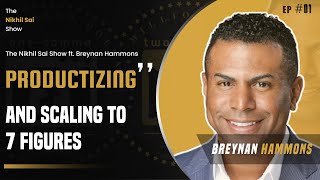
In this live interview, host Nikhil Sai welcomes digital marketing veteran Brennan Hammons, founder and CEO of InView Company Internet Solution and co‑founder of Review Kangaroo. Brennan shares his career journey from playing college football to selling high‑end magazines, working for a Fortune‑500 digital product team, and launching his first agency in 2010—making him an early mover in internet marketing. He explains why he chose the digital space: a desire for location freedom, a lifelong fascination with the internet, and the ability to work from anywhere. The conversation delves into the importance of automation and systems, citing how delegating bookkeeping and building repeatable processes freed him to scale. Brennan outlines his long‑term vision of giving back, inspired by his mother’s perseverance, and his short‑term goal of acquiring additional agencies and SaaS products. He reflects on three key mistakes: trying to go it alone, making hasty decisions without mentorship, and delaying automation. Mentorship, especially from a close friend who taught him financial discipline, is highlighted as crucial. Brennan describes his software offerings: Review Kangaroo, an employee‑focused review management tool that pushes ratings to Google and provides real‑time alerts, and InView, a productized automation suite that turns agency services into turnkey solutions for clients. He discusses funnel versus website strategy—using funnels for paid traffic and websites for organic SEO—and recommends a hybrid approach. For newcomers, he advises stopping information overload, focusing on implementation, leveraging free traffic (SEO, joint ventures), and building one business at a time. He shares his preferred traffic sources (organic SEO, JV partnerships, Facebook and YouTube ads) and stresses that scalability depends on niche. The interview also covers personal branding versus immediate sales, copywriting resources (Funnel Scripts, Jim Edwards), affiliate terms for Review Kangaroo (40% recurring commission paid quarterly), and practical JV outreach tactics. Throughout, Brennan’s tone is conversational and supportive, offering actionable advice for aspiring digital entrepreneurs.
Chapters
Hey guys, welcome to this amazing live session. I'm really excited for this live session. What about you guys? Whoa, whoa, whoa, already 10 people already joined. So today this is my first interview. I've never done interviews before and I got a big whale on this interview. Like one of the biggest, like one of the biggest guy which I admire always. So guys, this is my first interview session here. Uh, thank you guys for joining this live session. Uh, welcome to this group, Internet Entrepreneurs Freedom. This is my first interview and this is hosted by me, Nikhil Sai. So today we have a very, very, very special guest. Like the first interview is done by this like whale, right? I really appreciate that. So we have a very special guest. And, uh, so let me welcome him. His name is Brennan Hammons. He is the founder and CEO of Inview Company Internet Solution and then co-founder of Revu Kangaroo, uh, like software solution, and Forbes contributor, HubSpot and Digital Marketer partner. He had a lot of stuff actually, like no one can achieve that much in this life. But yeah, we will all admire that thing. So let me welcome the guy to the game.
What's going on? Yeah, how you doing? Happy— anybody watching in America, enjoy the Fourth of July weekend. Happy Fourth of July. But, uh, yeah, glad to be here.
Yeah, bro, everyone happy Fourth of July and really excited. Special day, special guest on our first live show. Really excited, brother. Uh, so whether everyone is online, there are already 20 people on this live. Really excited. So, uh, guys, so, uh, I think like Brandon don't need any introduction, but for the sake of people who are just joining live right now who don't know this guy. So, like, brother, I just want to listen to your backstory because I love stories personally. Like, I always listen to people's success stories, failure stories, because that's where I learn a lot. So I feel like if you could share your personal story, like, how did you get started? What was the thing happening back then? It would really help our viewers to learn and inspire from your story.
Yeah, I cut a couple of years off of here since I got 20 years experience working outside of college, but You kind of fast forward, I played football at the University of UNLV in Las Vegas. I got an opportunity to work for a media company, the largest one in Las Vegas, for a number of years right out of college. Did well there selling high-end magazines and then ultimately ended up going to a newspaper when newspapers were still the cool thing. And then ended up going into digital marketing for a Fortune 500 company selling digital products. From there, About 2010, I was actually in the situation where I was one of the top sales producers there and decided to start my own agency with a couple other buddies. We ended up not starting an agency together, but ended up starting two different agencies. And that was in 2010. And then from there, I've kind of catapulted into about 5 years ago, we started a software company, as you mentioned, Review Kangaroo, which is an online reputation and review management software. And, you know, that's kind of the quick version of it, but really I I guess I'll add a little bit in context to it is, you know, when this— when we— when I started the agency back in 2010, it was prior to everybody else having an agency. So it was, it was me, like Network Solutions, AT&T, and ReachLocal were like the only— like we were competing against like big corporations. Like I've seen the dynamic change of people that have started agencies over you know, the last 10 years to where it's, you know, the barrier of entry is so low and anybody who has, you know, a laptop can essentially get in and try to, you know, call people and stuff. So that's been exciting to see. And at the same time, there's been, you know, a lot of things I've learned and I've seen other people make mistakes on and myself made mistakes on through that process as well. So yeah, it's been a journey.
Wow, super cool. So you are one of the very first movers in the industry of internet marketing, right? If I'm not wrong, I have seen, I've read about you like you are one of the killer when it comes to media buying on newspapers, right? So that was amazing. And brother, like I have a special question, like why did you specifically choose internet marketing? Like there are a lot of things where you can do business. Like why did you specifically choose internet marketing or like digital solution? What made you to pick this niche especially?
Yeah, that's a great question. So when I was in print selling high-end magazines, I saw, number one, I was always interested in the internet ever since I was young and as a kid, right after I got outta high school, I got my first computer. That was always an interest for me. And then I went to college and I was a computer science major at first, and then I changed over to MIS major, which was just a little bit more mix and blend of computer science and business. But I saw this change coming within, you know, after I got into school where, you know, I kept reading all, you know, all these guys are making money online, the dot-com era and stuff like that. And I was like, I was like, there's something there. I just don't know how to do it. So my interest was always there. To get into it. And it was just a matter of, um, you know, how do I make a lifestyle? How do I make a living out of this? And one of my goals after— one of the things that drove me out of corporate America was I was tired of people dictating the terms of my life. And what, what that means is, you know, I had a couple situations where, you know, I, I was in relationships where the other person was out of state, the other— the girl was out of state, and, um, you know, I couldn't move there. I had to wake up early to drive back to get to the office. On a Monday morning or, you know, take different flights. And so that always bothered me, is somebody being in control of my life. So one of the goals that I had was being able to work from anywhere in the world and make money. Um, and you know, now that's like the common thing that everybody talks about, but at the time where I was doing it, it was just like this pipe dream that I had to try to figure out. So that was one of the things that motivated me to getting in a digital space, is I realized that I only needed an internet connection and a computer, and if I could figure that other portion out on how to get money, then I had a lot of opportunities that I could do. I love traveling, so that was one of the things that drove my desire to get into digital marketing.
Definitely. That's insane. And I've seen your comment on the corporate lifestyle as well. You don't like it completely. You don't like it, right? So, yeah, internet entrepreneurs have that advantage of living a laptop lifestyle and having their dream or life of dreams, right? And whether I believe everyone who is big right now who are already killing it in any space, I think books impact a lot on their life. Right. So do you have any personal connection with books which you read? Do you have any habit of reading books?
Yeah, actually, this phone probably has a ton of books in here right now. I subscribe to Audible and I probably do probably 3 books a month that I listen to throughout the course of the work week. Yeah, there's just a number of books. The One Thing is a book.
Let me ask you a quick question, brother. I want your top 5 list of books which impacted your life because I love to pick personal bests because from other people which I admire and inspired. I want your top picks so that I can go through and my interviewers, like people who are on this interview, would also love to take a list.
Okay, well, that's actually interesting because like I said, I have a lot in here. But I would say the one thing is probably one of them. I'm just looking through here. Chet Holmes, The Ultimate Sales Machine. That's another one that was really good. Here's a great one that I just recently read, which was Rocket Fuel. That one talks about being able to bring in an integrator or bring in somebody to help you leverage your systems and teams. That's been something that's been crucial for me to get to the point where I am in, in the last few years is being able to understand how to, you know, bring in people to leverage not only your time, but systems and implement automation in there. And Rocket Fuel talks about, you know, being— bringing in that, that person. Um, there's one here that I can't remember the name that I'm looking for specifically because— and hold on one second. Oh, there we go. I don't know why I couldn't remember the name. The E-Myth by Michael Gerber. Um, yeah, that, that's a great one. Um, again, that talks about, you know, systems, processes, how to, you know, build a business that doesn't necessarily rely on you, uh, specifically. Um, let me see, there's a lot here. Um, I have a lot of real estate stuff that applies to— and then maybe not the digital marketing, but yeah, I would, I would go off of those. Uh, um, those are kind of, uh, some of the good ones. Um, Hal Elrod, this is kind of a more mindset one. That was a great one. It's called The Miracle Morning. So yeah, those are just a few that I would recommend. If anybody wants to hit me up afterwards, I'm more than happy to share my library of books with anybody that asks. Oh, I think we got a freeze there.
Uh, I really, I really apologize for that, brother. My network is so bad, like the weather condition is so bad, it's completely raining. I was also like a bit down for this thing, but fortunately it happened. The power is gone.
Yeah, just a couple seconds there, you're good.
Yeah, that's awesome. And yeah, but I appreciate that. And yeah, like one of the best books are like The E-Myth and The 4-Hour Workweek. Very inspiring regarding the entrepreneurship, right? So, and also like, I really admire it. You have one thing which is automation. Like, not a lot of people love automation. Like, why do you think automation is so important in business?
Yeah, it's, um, you know, here's the, here's the biggest problem for most people. Like, we have a certain amount of time that we can allocate towards doing stuff. And I'll give you an example. Like, last night I was working on a project and I tend to work late in the evenings just because a lot of time during the evenings I get like alone and my email's not blowing up. So the reality of it is we have, you know, so much time within a day that we can allocate towards stuff. And it continues to be a lot of stuff that keeps piling up in terms of things that we need to try to get accomplished. Like anybody will sit there and say, hey, I have a list of things to do. And that list will have some things tomorrow that typically you still have to do from yesterday, right? So the reason I'm a big fan of automation is because I try to implement systems and processes within the business that help me eliminate tasks of which I'm doing on a recurring basis. A lot of that is, you know, when you're talking about your sales mechanism, when it's talking about leveraging people to actually be able to handle the things that you should not be doing on a daily basis. You know, there are times where people don't understand, you know, there are some things that you should absolutely not do. One of the first things that I learned as I started the agency was that I didn't need, not need to be doing my books on a regular basis. It was just a lot of time and it wasn't contributing to the growth of the company. So I went out and hired a bookkeeper and I did that and found out that I had made a couple of mistakes internally as well. So, you know, not only was I trying to do something that I wasn't a master of, but, you know, I was making mistakes and it was taking my time. Where I, you know, I try to put in a system where I can now automate it and pay for the automation of it. Now, the automation is not, you know, a system per se or software. It's another person actually executing that task. So anytime that you can, you know, use leverage or automation into your business, it's going to help you scale. And that's why I'm a big fan.
Yeah, that does really make a lot of sense, brother. That makes a lot of sense, actually. That makes a lot of sense. Uh, yeah, I really like that concept of having automation because I think the way to scale any kind of business is having automations, right? One person or like maybe a couple of team, like when they don't do any kind of automation, I don't think they can scale for a longer. They should be having some automation, right? And brother, like I want to know one key thing, like what is your vision for future? Like what is your end goal here? Like, like, and also like with your vision, what keeps you motivated to achieve that vision? That's also my next question.
Yeah, so long-term for me is vision, is, um, you know, being able to give back. And I know that sounds a little cheesy, but I mean, I had a friend, a real good friend of mine, I looked up to him, he's like a brother to me, passed away suddenly a couple years ago. And one of the things that always resonated with me, it was the fact that he told me a story that, that his family, one of his family members had told him, which was the graveyard is one of the richest places on the face of the earth. And I asked him, I said, what do you mean by that? And he goes, well, he's like, you know, in his situation, his father was a big barbecue guy, or his grandfather, but never ended up passing down the recipes to any of the family members. He kind of just knew everything in his head. And then like when he passed away, he took it in the grave. He said, so I remember, he goes, I remember as a kid, you know, what, you know, certain things tasted like. And even to this day, I'm still trying to manufacture to get to that exact taste of what my grandfather, you know, used to serve me as a kid. And he was all— that always, you know, resonated with me. He's like, so one of the things from him that he always taught me was, you know, if you have ideas, concepts, and stuff, um, and skill set, why wouldn't you pass that down to a younger generation? So for me, it's always being able to sit there and say, you know, like in this situation, in this call, like, what can I do for somebody else that's going to help them accelerate their life to get to a point that where maybe I'm at at the age of 42, but yourself, you can get there by the age you're 22. If I can do something like that for other people, then I think not only will you be better off, but the world in general is going to be better off. We'll just be able to accelerate our growth as a united world versus trying to play this game as an independent.
Totally appreciate it, brother. One of the greatest vision I've ever seen, like helping younger people to achieve the success, right? Yeah, that doesn't really make sense. Like people having having all the knowledge and like never sharing it doesn't make any sense. Like when they pass away, that's gone. The business is gone, the ideology is gone. Like the whole knowledge he generated, like had throughout his life, is gone completely, right? And brother, I know you are a very successful entrepreneur and digital marketer here, but I'm very sure, as you mentioned, you had— you did compulsory like at least some mistakes, right? So like, uh, can you just let me know what were your maybe 3 or any certain number of mistakes you did in your life Yeah, I've made a lot of mistakes in my life.
Mistakes. One was trying to go at something by myself. You know, again, there's a great quote I just shared with another, another buddy of mine that I was on a call with right before this. It's, and I might butcher it off the top of my head, but it's, if you want to go fast, go alone. If you want to go far, go together. And so really what that, for me anyway, how I, you know, I interpret that is, You know, if you're going to build any company or any system, you're gonna need a team because again, you're not skilled at everything that you want to do or that you're gonna need to do in order to be successful in business. And that goes with anything in life, right? So always look at, you know, one of the mistakes that I would look at if I had to go back and say, get to mentor faster, you know, reach out to somebody who's at the level of where you want to succeed and ask them how they got there, right? The other thing is being able to just understand and comprehend, you know, people a little bit better. So what I mean by that, one of the mistakes that I could sit there and say, you know, when I was younger, I would, you know, be quick to make decisions. You know, part of that was, you know, emotionally driven. But as I've gotten older, I've been able to understand that, Even in situations where you may not want to, you know, take on a project or, you know, make a decision, like in your mind, you might have already made that decision. It's not necessarily good to sit there and say what that answer is right away. You know, maybe there's a way that you can convey that, say, hey, you know, let me, let me consider this. I'll think back and see, you know, if it's the right time to get back with you on things. So that would be one of the other things. Let me see. I would implement— one of the other mistakes that I would say is I would implement automation a lot faster as well. I would have implemented that a lot sooner in my business because that's been one of the growth drivers in the business.
So those three makes a lot of sense. Makes a lot of sense, brother. Like, let me ask you one thing. When did you get your first mentor? Like, when did you get your first mentor in your life?
When? I mean, I think Yeah, oh, in a certain niche. Ask me again, I'm sorry.
No, no, I was asking you, when did you like got a personal mentor who mentored you one-on-one? At which age? Like, uh, how young you were when you were starting with the mentor?
Yeah, yeah, I would say, um, you know, again, my good buddy Mike, who passed away, he was a mentor to me in a lot of ways because, um, he was, you know, he was about 12 years older than I was Um, so him being able to— he had entrepreneur, started his own business, had went through some struggles. Him telling me like stuff that I was hitting on a regular basis, and, you know, I won't forget it. I mean, one of the, the biggest things that he told me when I was younger, and I made a lot of money when I was younger, um, in my 20s or whatnot, um, I remember getting on the phone with him and telling him how, you know, I was out in Vegas and we just, you know, Memorial Day weekend, me and a couple other buddies that spent X amount of money, you know, on bottle service and what celebrity was at the table next to us. And he said, he said, he said, Brendan, he's like, why are you spending your money like an idiot? And I stopped. I'm like, what are you talking about? He's all, you know, look at me when you first met me, right? He goes, I was super wealthy, right? And I said, yeah. He goes, and look at me now. I don't have that same amount of money. He goes, I used to do all that stuff. He's like, you know, you met me when I was, you know, partying up. And I was like, that's true. And from that point forward, You know, I became ultra conservative and conscious of how I would spend my money because, you know, here's one mistake that I think that, you know, society teaches us is essentially go to school, get an education, go work, and then you make all this active money, right?
Yes.
Your active money should not go to buy purchases of stuff that makes you feel good for a short amount of time. So, you know, buying the new cars, the big houses, all that stuff. Look, you're going to have a little boost in terms of excitement on there, and then it just becomes a liability. Your active income should be passive incomes. You should be buying passive assets. And what I mean by that is, per your active income, should buy things that produces more income for you.
And once you get around— like, you need to build assets.
Exactly. So that was one of the, one of the key things that I can attribute to him as, as a mentor at me at a young age. So it wasn't like you know, I went out and, you know, found a guru or anything else like that. That came from within somebody in my own circle and experiences that were a little bit older. And I think, you know, for most people, if they look internally around who's around them, they will be able to find somebody who can mentor them at least into one thing, whether it be your relationship, finances, um, something internally. You know, they can find somebody around them that can help them, you know, grow as an individual. So, um, yeah, that's one thing that I would say as far as a mentorship. That's, that's probably—
that makes a lot of sense. Yeah, I wish like, uh, your friend was, uh, alive with you, but unfortunately, sorry for that. And also, like, have a quick question for you. Like, do you like any business people who are already killing it? Like, your visionaries or someone like that? Like, like, let me know a number, like any type, 5 entrepreneurs which you like or which maybe you admire, something like that.
Yeah, yeah, yeah. So, um, you know, Russell Brunson obviously is a big one. Um, you can see, obviously we're part of that community as well. So, um, yeah, Russell You know, I appreciate and learned a lot of stuff from him, um, to be able to grow. There's been, you know, a lot of other people that are not well-named or well-known entrepreneurs that, that I can attribute stuff to. And there are other people that, like, I see in Facebook groups that I learn stuff from every other single day. I mean, you know, when we first started talking, you know, I was asking you about your ClickFunnels acquisitions, right? And it's like Um, you know, yeah, would somebody label you as a guru? I don't know. But, you know, it's like, you know, there's always stuff to learn from everybody. We always learn stuff. And, you know, the thing is, like, one thing that I might learn from another entrepreneur that might not be quote-unquote guru, you know, might have exponential response, uh, or results on my business, to whereas, like, if they applied it to their business, there's, there's just micro. So, um, that's, that's when I say learn from everybody. And so part of my answer is Everybody is an entrepreneur that have an influence on me. To name a couple of other ones, I would say Brad Martino at Six Division, Ollie Bilson. He's one that I learned a lot of stuff from as well. Frank Kern, Billy Gene, been in his community for a number of years. I learned some stuff over there as well. So let's just name a couple of the ones that—
Yeah, we learned a lot of people, right? So it's very hard to point out at least 5 or something like that.
But I truly appreciate it.
Hmm, that open thing which you just mentioned. Like, a lot of people will be like, oh, I know everything, I don't need to learn, I'm already doing 6 figures, $100,000, and they will stop learning. And that's where they actually stop. That's the end point. And they start going again, they decrease their revenue, or maybe some problems arise. But you are a genuine learner who always— like, literally, I realized that when you even messaged me, like, how I was making OFS sales. That, that took my attention like something like crazy. And I have another quick question for you, brother. Yeah, like what was your biggest achievements in your life and your achievements and what do you want to achieve in future? These are two quick, real quick questions.
Yeah, yeah. So I would say biggest achievements is being able to, you know, be in business for 10 years. Like I haven't been back to corporate America actually for 11 years.
Very fast mover.
Yeah. So I mean, when you look at that perspective of clients that like last 10 years in general, um, it's very few. And I've not only been able to do it for one company, but I have another, you know, software company that's been in business for 5 years. So huge achievement on that. And I've, uh, you know, I'd like to say I've done it by myself. Um, it wasn't by myself, you know, obviously I had a lot of, you know, friends, coaches, mentors, um, that helped me, you know, education I paid for along the way that's helped me get there. But, um, the reality is you still have to put in the work. So that, that's been a big achievement, uh, for me to be able not to be, you know, back to that, you know, painful set of, you know, working for corporate America. Um, that's something that Knock on wood, I don't ever plan going back to. So that's one. What was the other question?
Sorry?
What was the other? What was the second part of that question?
Yeah, okay, okay. What was the next goal? Like maybe you have another goal to achieve, maybe a short-term goal or a long-term goal, something like that. So you already achieved this thing, you quit your corporate America lifestyle and you're having your internet entrepreneurship very well, like well-established business. So what's your next goal? Maybe something like that.
Yeah, so one of the target goals that we have right now that's on the their horizon is acquisition of more companies. So I'm looking at, you know, potentially buying a Facebook ad agency, a couple more SaaS companies as well. So that's kind of the short-term goal for us within the next, you know, 6 to 12 months is to do as many acquisitions as we can as possible on, you know, things that kind of fit our, our long-term goal.
Super cool, super good. Excitement, excitement, right? So another question for you, bro. Like, like, let's say you are having some suggestions to 20-year-old Brennan or someone who is just starting off. What would be that main suggestion would be?
Yeah, yeah. So, uh, first one would be find a mentor. Um, and the number two would understand the, the element of automation. And I would say that, yeah, those are two big things. And then understand that, you know, again, if you're going to, um have goals. Look at what that long-term goal is. Reverse engineer that goal to whereas you're able to measure the, uh, the metric of moving forward towards that goal on a daily basis. And what I mean by that is, you know, if you're going to do $1 million a year, well, you know, it's $83,000 a month. You know, how are you going to sit there and make that per week, right? What do you need to make per day? What is the product that you're going to sell in order to fulfill that? What is the sales process that that's going to get fulfilled on? So understanding those elements in order to be able to achieve your goals would be the other thing that I would sit there and tell myself is make sure you map out a plan and a process to the point to where if you hit your goal every single day, you don't have to look up and say, where am I headed? Because you know you're on track to reach your goal.
Yes, that mentioned very perfectly. You're mainly saying about revenue projection and have goals, hit them very hard each and every single day. Like have that continuity and consistency while you're achieving your goal so that you never wanted to look back and say like, oh, I was procrastinating. We should be never that guy, right? Yeah, that makes a lot of sense. And brother, like, like, like where you want to be at 60-year-old? Like very curious. I really like to, uh, like ask, ask this question to you. Like where you want to be at 60-year-old?
Yeah, yeah, no, 60-year-old me is playing golf, uh, and traveling a lot. So I'm, I'm, uh, 60-year-old me is playing golf on numerous beach courses around the world. Probably have on a yacht here and there, and I'll probably never see winter. I can tell you that much. I'm probably traveling all the way all around the world between New Zealand, you know, Australia.
Yeah, interesting, interesting. I don't know, like how many countries you already visited in this 42 years?
You know what, somebody asked me that the other day and I don't know the number, but it's been in the last 10 years I've done A lot, a lot of countries. Yeah, I'm off the coast for a couple few weeks. Yeah, I mean, typically I try to take your vacations for out of the country 2 weeks at a time. Unfortunately, this year I'm not doing any kind of travel, you know. I was headed back. Yeah, I was— I mean, it's, you know, it is what it is. Maybe next year.
You've been to India? I think you definitely be right.
Actually, I haven't. I've been invited to India multiple times. My development team's based out there. That is one place I have not been yet, but it's on It's on the list.
Wow, super excited. Just let me know when you're visiting India, I would love to come and meet you. Yeah, brother. So the next question for you is, like, everyone has inspiration, right? Like, we will admire someone and be like, oh, like, I want to become that guy. And also there will be some people who will be pushing us to achieve that goal. So this question for you is, who is your inspiration for success and who are the key people involved in your success?
Yeah, well, I'll kind of use this one. And again, you know, may sound a little corny, but my mother, I mean, she raised 3 kids, you know, essentially by herself. And she, my mother runs a charter school, 2 charter schools in California. But, you know, that's, that's kind of what she does now. Back in the day, like when we were growing up, that wasn't the case. You know, she struggled to raise 3 kids on her own. And, you know, my sister runs a company, my brother works for Amazon, he heads up the AWS system over there. in San Francisco. Um, so, you know, my sister, like I said, my sister does well. I obviously do well. Um, and then she's running two charter schools that are nationally recognized in California. Um, so she's part of my inspiration because, like, I look at what she was able to do, and like, that to me is just like any woman, like, all you moms out there that raise your kids, whether it's alone or with somebody, like, kudos to you. Because I had to babysit my nephew for 3 days, and I'm telling you, that's the craziest, hardest thing that I ever have to do with my my lifetime. So, you know, I can appreciate that. So I have a lot of respect and admiration for, you know, a lot of women that are out there, you know, trying to hold down the household and raise your kids at the same time, because that's very, very difficult. I don't know, did that answer your question? What was the other part of the question on that?
Yes, yes, yes. I like— yeah, you answered in a very well way. Like, your main inspiration was your mother, and that key person involved was also ultimately mother. And any other people, like maybe your team and project manager? Yeah, ultimately they will be there, right?
Yeah.
Yeah.
Yeah. I mean, as far as helping me get to the path that I'm at, I mean, you know, my project manager and I'll name her by, you know, name a lot of people, you know, that work our clients, they know her, Michelle. She, I couldn't have done, you know, a lot of what we have today without her. She's, she's kind of, you know, the quarterback that runs the team. Um, so yeah, I think it's, it's important, like, you know, to have those type of people around because again, if you're, you're only as successful as, you know, your team. So, You know, if we all work together, like if something breaks in the system, then, you know, we're all, you know, being affected. So yeah, it's— those are the key people involved with me on my team. Yeah, super cool.
I feel like I have a quick question for you. Like, how do you hire people who are accountable with you? Like, I see a lot of people who learn and who jump off and maybe join someone, someone else or start their own. Like, how do you keep people accountable to stick with you? For long run? Like, how do you train them in that way?
Yeah, so I think a lot of it has to come with culture, um, being able to recognize that, like, even though I might be looked at as the boss, I'm just one individual that is here to help make them better. Um, and what I mean by that is, you know, my— I know that I am like, if my team fails, I fail. Like, it's— there's been countless situations, um, that we've had a problem, um, where it was a team member who made a mistake and I had to take responsibility for that. And what I mean by that is the only reason that they made a mistake is because I didn't put the systems or processes in place so they couldn't make that mistake. Because if it was so clear that they understood that they just had to do XYZ, there would have been no mistake done. So, um, I look at those type of, you know, things and say, hey, you know, that's, that's for me things that I need to put in, you know, order, um, to make sure that we all operate as a unit.
Hmm, that makes a lot of sense. That makes a lot of sense. And like, can you please explain about your software solution company, uh, Review Kangaroo, something like that?
Yeah, so Review Kangaroo is an online, um, review management software that does employee-based reviews. Um, long story short, we work with a lot of different people who engage with customer service, mainly in the service industry, where, um, you would send like your tech, your plumber, your AC, guy out, your roofer out to do an inspection or servicing another job, or service a job. And then what happens is they are left to review on the employee versus the actual company. What happens is that ultimately gives a little bit better review for your business and they get pushed out to Google. But also it works as an employee management tool on the back end. So now you're able to see, you know, if let's say John versus Barry, you know, how they engage with your customers while they're out.
Customers.
Yeah. So if there's any mistakes being done, what happens is the system will notify you in real time so you can go ahead and rectify that mistake with the client. So it works great in terms of that. And like I said, it works great as an employee management tool because now you get to see who your top producers are when it comes to customer service in your company.
Yes, we can reward them, we can train them if they're not being good. Right. And also we can save the rating directly, not going to Google, right? We can rate them and then we can optimize it perfectly, right? That makes a lot of sense. And how about the InView? I'm really interested about this stuff as well. Yeah.
So traditionally we started off as an SEO agency and we grew into obviously developing websites and then optimizing websites based on speed, based on conversion, and then got into automation. Now over the last about 2 years, we've transitioned into more consulting and basically doing automation. So now Right now we're, we're actually working on taking all of our— and this is what I would recommend to anybody who's in the service industry, like anybody who has an agency that's doing work for clients— we've transitioned into productizing all of our services to be able to just deliver that to our clients at a much lower cost. But that way they can implement it internally for their own internal teams. So if you're— I'm gonna just use a dentist for example. If you're a dentist and you have Um, somebody in your office that, you know, maybe her utilization rate of hours may not be as high as you like. Now you wanted to, you know, focus on social media. Well, here's the exact blueprint that we would execute for our clients, or here's how to optimize your website. So now when you're sending people there, it increases, you know, conversions if you're, you know, trying to book an appointment. So, you know, sell something and so forth like that. So, um, yeah, for Envial, we basically turned into like an automation company over the last few years and now delivering that into products.
That's super cool. That's super cool. I have a question for you. Like, what is your opinion on funnels? Like, I see a lot of people who are small business owners still not much educated about how funnels work. They still use that brand website which doesn't really look good and not optimized with a lot of distractions. What do you think about funnels? Either they should use a website for their credibility or use funnel as their main domain? What's your opinion on this?
Yeah, I think it's a combination of both actually. I think I would never run any promotional sales stuff or anything that I'm running paid ads to my main website. That's number one. I would use my main websites for, you know, anything you're doing SEO or somebody that finds you organic. But when you're paying for somebody to drive traffic to, you know, a certain page, you want them to take action on something. And typically it's like why you need my service, right? So that's where I would implement a funnel. There is, you know, use ClickFunnels for anything on your landing pages. Use your websites. We prefer WordPress, but I have a hybrid of both of those.
That makes a lot of sense. So when you're spending ads or when you're spending money to acquire a customer, better go with funnels, which is more persuading and getting more people into your service or product. But when you're going with organic, have credibility, use a website for more credibility and having that optimization of your website. Right. That makes a lot of sense.
Yep.
Yeah. Uh, and, uh, like any last words, any conclusion for people who are watching? Like, there are already almost 25 people watching currently, and there will be a lot of people who will be also watching replays. So what's like— a lot of people I see mainly in the ClickFunnels community, uh, they're still struggling to make the first buck. They're still struggling to get their first client, first work online. They're going through like courses, scams, and that kind of stuff. Like, what do you suggest to someone who is like going through this bad time? Because I see a lot of people because of this COVID lost their jobs, getting into ClickFunnels community and paying some like courses and buying software, which doesn't really make sense. They're wasting a lot of money, but they're still struggling in the phase without making money. So what do you suggest something to that people, that kind of—
Yeah, yeah. For that person that's just getting started or struggling, I would say stop. Like you probably don't— and this goes to like 95% of you guys— you don't need more information right now. And that's where you're going to get overconsumed, because consuming information doesn't necessarily mean you're implementing anything, right? And when you don't implement anything, you're not going to have any growth. So stop consuming information, because 95% of you guys already know what you need to know in order to make your first couple bucks, right? And so what I mean by that is typically somebody has an idea of what they're good at and how they're going to deliver that solution to somebody else. Um, there's multiple different outlets that you can use that are for free. I mean, LinkedIn, you can do LinkedIn reach out. Um, you can do a cold email reach out. Um, a lot of times you can cherry pick if you're in a service provider and you're trying to like get local clients, you know, great resources to be able to, you know, cherry pick off of Groupon. All those people are great people if you're like building funnels. Why? Because they already have an offer that's typically proven that you can just put online, you know, on ClickFunnels pages and do the same thing with better copy. And guess what? They're not paying, uh, Groupon.
For it.
So, um, you know, stop the consumption, take more action and implementation.
Makes a lot of sense. Like, yeah, this mistake every beginner does make. Like, they consume a lot of information, like a lot, I mean a lot, which is full of head, but they don't even implement single thing. And they brag that they're not making any results, which I don't really personally like, right? That's, that's really interesting, brother. And, uh, uh, So I think this was an amazing session, brother. I really, really appreciate your time hopping on a call. And also considering this is my first ever interview, you are so humble. Like, really thank you for hopping on this interview and giving your valuable time for our people who are watching this live session right now. I hope you guys, you've had a lot of value in this session.
And if you have any quick questions, I was going to say, yeah, we got a couple of minutes, so I'm more than happy to stick around.
Yeah, yes, yes, yes. I was going to that. So people who want to ask quick questions, they can just comment right now. Brennan would be happy to answer you guys. Just let me know, guys. And also, I would be also putting the River Kangaroo link in the comments if anyone wants to have a look. Any business owners, I would definitely recommend you to go, guys. Check it out. You see the guy, right? He's a gangster. So you'll definitely love it.
Yeah, I was going to say, even if you're an agency owner that's looking for a product to sell, we do have an affiliate platform as well. And so we can help you do that. We'll do all the fulfillment, um, obviously. But, uh, yeah, just, just another opportunity there for you guys to sell something if you guys are struggling.
Super cool. Yeah, guys, so anyone have a quick question, just do comment on this session so that Brandon would be answering that. And bro, like, uh, like, I see, I see, like, most of our community are, like, affiliate marketers, as you already know. Like, they're big into ClickFunnels, that kind of stuff. So can you give us an introduction of how Revocanguro affiliate system works? Like, what is the commission percentage? Is the recurring or a one-time payment?
How Yeah, yeah, so it's an ongoing, um, as long as the clients are paying, it's paid out on obviously the, the receivables. But, uh, yeah, it's 40%, very much like ClickFunnels. So if you're familiar with the ClickFunnels platform, um, the only difference really is that we pay out quarterly on that. Um, but yeah, we do a lot of the fulfillment. Um, you know, we have some agencies that are on like a white label platform, but that's a much deeper conversation depending on like how big your agency is and so forth. But yeah. Um, pretty similar to ClickFunnels.
Wow, makes a lot of sense. So you pay every quarter, right? That makes a lot of sense. So here's a quick question, brother, like, is it good idea to start multiple businesses at the same time, right?
No, one thing. Focus on one thing. Here's why, right? Here's— I want you guys to understand this. Let's— I just want you to take a second to imagine what a pizza looks like, right? And now let's look at that pizza and say, okay, hey, we're going to take a slice of this pizza and we're going to focus on You know, actually, let's do this. We're going to take half the pizza and focus on one business. And then we're going to take half the pizza and focus on the other business. Now let me ask you this. When have you ever seen anybody give 50% of anything and have success? You can't give 50% effort and have success.
Yes, it's very hard.
It's very hard. So yeah, focus on— the answer to that is just focus on one business at a time.
One thing. So you should be building one thing, you should automate everything, it should be a sustainable business for long term. Then maybe you should be trying to create multiple businesses and like Tony Robbins does, right? That makes a lot of sense.
I'll give you a better example. Here's an example. When we built out Review Kangaroo, it took me 10 months to build that out with the development team. At that point, my focus was not on Envio as much. I had the team running that. We lost $600,000 by the time we ended up, like, I remember this because it was in January. By the time we ended up launching Review Kangaroo, we had started losing and it came out to $600,000 worth of annual revenue. Because I was not focused in the company.
That's insane, bro. Like, it was a huge loss, but unfortunately, like, so fortunately you built a very good sustainable product, which is Review Kangaroo, which makes sense, right? Even if they— even if you're losing some revenue, but you built a sustainable software product which pays you for life. That makes a lot of sense.
And here's the thing, what the, the, the, the change of that was, it was me taking my time away from Envio and building Review Kangaroo, which is all me. Once I got that done, I had given it to my partners to run, um, and then my focus shifted back on Enviro, right? Yeah, I could never run both companies simultaneously at the same time as trying to get them at launch. Once you start getting systems and process and teams in place, it becomes a lot easier to expand and do either acquisitions or, or, you know, managing multiple companies because you're, you're working above the business at that point, not in the business.
That makes a lot of sense. Everyone says this one thing, always work on your business, not in your business. So make sure guys, hit like button for this very, very important thing. And here's a quick question for you, brother. What paid traffic source do you prefer to drive traffic to any kind of business? People always claim all the sudden Facebook ads. What do you think? What's your opinion on the first part of traffic?
Yeah, I'm a big fan of not paid traffic actually. The reason I say this is I'm a big fan of free traffic because we primarily started in SEO. Um, also I'm a big fan of joint ventures. And what I mean by that is find somebody who has your audience. And this goes for everybody who's struggling right now that doesn't have money for ads. Um, go find somebody with— that has an email list and say, hey, I'm willing to do a JV with you if we do a promotion together, right? Um, you have a list, I have a product, let's both make money, right? Easiest, easiest thing you're going to do, right? I don't care if it's a brick and mortar, like You can be a pest control company and go team up with somebody that does, um, that has a maid service, right? It doesn't matter what your niche is. Find out who has the common, um, the common client that you guys both share and then go reach out to those people. Uh, now if you want to talk about paid sources, yeah, you, you know, obviously Facebook's, uh, you know, they're a juggernaut, you know, that's, that's where everybody's at. The other one is, uh, YouTube as well. Those would be the other two that I would try to leverage. And in some cases, yeah, if you're looking at leads, you might want to leverage something like a Groupon if you're local, but it just depends on the industry.
Yeah, that completely depends on the industry and the business and niche we're targeting on. That makes a lot of sense. And my main question here is I also love organic traffic, but do you think organic traffic is highly scalable? My main question.
Is it highly scalable? Yeah, depending on where you're able to— if you're restricted to like sales in a local area, probably not highly scalable. But if you're somebody that's, you know, e-commerce or you're selling a digital product and you rank for some of the, you know, top ranking keywords that get hundreds of thousands of searches every single month, absolutely.
You know, makes a lot of sense. So you are in love with SEO, right? That makes a lot of sense. And here is a quick question from one of our viewers. They're asking like whether they should be focusing on their personal brand or initial sales. Like whether he should like run for money or like building actual brand. What should the main goal first?
Yeah, yeah, that was a great question, and, uh, and I don't know if I have necessarily the right answer because I'm, you know, traditionally I'm a sales guy. I like being able to sit there and wake up one day and, and, you know, turn a phone call into, you know, money into my bank account. However, I can tell you this, um, if you focus on your personal branding, uh, that will scale over the long term, more sales for you later. It would give you more— so it the sales will be easier the more you put into your personal branding. Um, so it just depends. I think kind of depends on your situation. Like, if you're in dire need of money tomorrow, um, focus on sales because personal branding is going to take a while.
Yeah, so like, personal branding takes a lot of time but it's highly sustainable. When it comes to sales, you can initially bootstrap with money and then you can focus on both together, right? Like sales and the personal brand of the company. That makes a lot of sense. And here's a quick question from one of our viewers. What do you look for copy with your funnels? What do you mean? I think I believe 60% of the funnels game is done by the copy part. Actually more than that. But for instance, with any kind of flat design also, copy does play very important key role inside a funnel. So what do you mainly look at the copy inside any kind of funnel which you are running?
Yeah, this is actually a good one because this is something that I've kind of taken on as a personal project for the last year or so is how to become a better student of copywriting, right? And so we have a couple copywriters that we use internally, and, you know, one of the guys that I'll give a quick shout out to is Jim Edwards from Funnel Scripts. So we, we leverage Funnel Scripts in, you know, some cases, um, you know, some people have different opinions on that, but, you know, Jim is another person that I would jump in his group and reach out to him because, uh, he's definitely one of the experts in, in the field on that.
But yeah, I love Funnel Scripts.
Yeah, I think that's a great tool, especially for somebody to get started. You know, there's a lot of copywriters out there that will sit there and say, you know, I, I charge, you know, this much money, and you look at it, you're like, wow, that's like, you know, so expensive.
Like, yeah, guys, yeah, they charge a lot actually.
Yeah. And here's the reality, I mean, and this is just my humble opinion, like, there's a lot of components to the funnel. Like, not one person is going to make or break your funnel. All right, you'll hear somebody talk about, you know, the offer's right. Some people will sit there and say, is the copy right? I always say, is your business right? You know, there's a lot of components that go into it as well. So, um, yeah, it's just a bunch of little things that can go into, you know, what makes the perfect funnel, what makes the, um, you know, that, that launch, you know, successful and so forth like that. So yeah, just a little, little something.
Excellent. Makes a lot of sense. And here's a quick question from one of our viewers. Like, he's asking you, like, how can they deliver a lot of value in a very small time?
Yeah, so what I would do is, um, I would recommend doing a lot of, like, Facebook Lives or teaming up with somebody. And, you know, again, it just goes back to being able to find who, who has your audience already. And I would just do a lot of, uh, maybe Q&A or, or produce a lot of things that you can offer value to them. That will go back to getting people to ask you more questions and attract essentially people that are struggling and will pay you for your service to help them solve their problem.
That makes a lot of sense. This is one of the best strategy, guys, whoever watching this live. If you're struggling with your first income online or maybe unable to service or get clients, just go search for people who already having audience and get a shout out or get a collaboration with a commission-based business as Ben mentioned. Um, so I think this was a so valuable session, and if anyone have any more questions, we have more 2 minutes, so you can quickly ask, or maybe we can wrap this thing up. So what do you think, Brandon?
Yeah, I mean, see if any other questions pop in real quick. Yeah, yeah, yeah.
Like, guys, if you have any more questions, just do let, uh, just do comment right now. Uh, we have 2 more minutes right now. Like, we need to— yeah, yeah. Where can we find JVs, and should we offer the commission per sale, or like Yeah, it should be definitely open commissions. What do you think?
Yeah, so, so look, for example, and if this person's still on, just, uh, tell me what your niche is, but you can find a lot of Facebook groups that probably have the same audience for you. So let's just say you're a, you know, let's say, say you help freelancers, right? There's a ton of like virtual assistants freelancer groups out there on Facebook, right? You can, you know, go in there, contribute a lot of stuff that helps, answer people's questions, and then with, you know, within a couple weeks, reach out to the, uh, the person that owns the site and say, hey, Hey, I have the solution. I have this product. I would love to team up with you. Obviously, you've seen me helping out some of the community. Let's work together. Let's do a Facebook Live in the group and then let's offer a product if it fits your guidelines and sell something and split commissions.
That makes a lot of sense. So guys, whoever on this side, the guy who asked this question as well, just go analyze your niche and join the similar Facebook groups and start providing value. And when you get that visibility, when people are seeing your name again and again by providing free value, they would be subconsciously trusting you and indirectly having a good preframe about you. And maybe when you pitch, or maybe you give your opportunity to act as a JV, something like that, they would be open for that, right? So this was a very good question. I think, yeah, I think we are done, Brennan. I really, really appreciate your time, brother. Thanks for hopping on this first interview, and I think it was a very, very, very valuable session. And you, you, you made it that hype. I really love your energy, brother. So, uh, so guys, uh, like, thanks everyone who joined on this, uh session. And, uh, like, I personally want to give you a shout out, brother. Like, I, I really thank you so much for hopping on this, my first interview. And, uh, guys, I hope this made sense. Like, stay tuned for the next interview. Like, my brother Brennan gave me opportunity for this, and he's advised me to interview more, couple of more people who are already killing it. So looking forward, guys. Uh, I hope you have amazing day. Brennan, have a good day. Peace.
Take care, guys.
More from Nikhil










BURNED $1.5M in his 17years online #digitalmarketing #entrepreneur #onlinebusiness
