Strategy to Build 9 Figure Business by getting Qualified Appointments - ft. Bobby Stocks | TNS 11
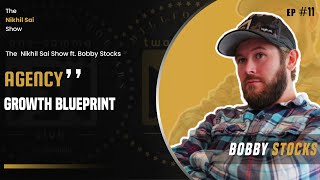
In this live interview, host D Nikhil Sai talks with Bobby Stocks, co‑founder of Contact Smarter and a two‑time Two‑Comma Club winner, about his unconventional path from a restaurant chef to a 9‑figure agency owner. Bobby recounts how he left a culinary career, built a fencing business, discovered Facebook ads, and eventually launched a full‑service local‑marketing agency. He explains why scaling an agency hinges on a sales‑first mindset rather than simply pumping leads, how premium pricing and program‑style offers transform a lead‑generation service into a high‑ticket system, and the importance of hiring people who outperform you. The conversation dives deep into Contact Smarter’s multi‑channel follow‑up engine, survey‑funnel with one‑click booking, and the hybrid automation‑plus‑human approach that drives appointment setting. Bobby shares the tools (Teamwork, ClickFunnels, Kartra, etc.) and organizational structures that let his team handle thousands of clients, and highlights the untapped potential of offline, low‑competition markets. He stresses personal growth, coaching, and mindset as critical growth levers, outlines common agency pitfalls (under‑pricing, micromanagement, lack of retention), and offers concrete advice for 20‑year‑olds starting out. Finally, he outlines future initiatives – a drag‑and‑drop landing‑page builder, The Code training program, and his goal of reaching a 9‑figure revenue run‑rate.
Chapters
We are live, we are live, internet entrepreneurs! Hey guys, welcome back to another interview with me, D Nikhil Sai. We are having another interview today, so hope you're all doing great. So let's not waste any time and and welcome the person who we are interviewing. And this guy is one of the best guys I've known in the ClickFunnels community and one of the craziest guys when it comes to helping agencies and business owners. So he is none other than Bobby Stocks, and he is multiple— he won multiple Two Comma Club Award winners, and he's a big guy building a 9-figure business, and definitely you will rock the show. So let's welcome him without wasting any time. Hi Bobby!
Hey, how you doing?
Yeah, I'm doing great. And first of all, Bobby, thanks for hopping on on time and being here. So just to mention, Bobby is a co-founder at Contact Smarter, which is an AI tool which helps you to nurture your leads and get more clients on automation on your schedule so that you can scale your business and agency. So Bobby, glad that we are connected right now here. Yeah. And everyone who's watching the live, thanks for being on the live. Please make sure to comment down any questions you have because we have Bobby's time right now for 45 minutes. It's completely free. You can ask anything. And please make sure to put #live and #replay if you're watching it on replay, and #live if you're watching it live. And like it, give it a thumbs up. And let's not waste any time, and let's get started with the backstory. Like, Bobby, we're excited to hear your backstory. Like, how did it all start? Like, we would like to hear your story.
Yeah, so I was in the restaurant industry until I was just about 30 years old. I worked in the restaurant industry from the time I was 14. I went to culinary school. I was executive chef at a country club, um, ran a kitchen. And, um, yeah, I started to— I started to play around with, like, you know, I had a side catering company. I started trying to teach myself how to trade, uh, stocks. So that's— my last name isn't actually Stocks, but everybody started calling me Bobby Stocks before I got into Because I used to trade a lot of, uh, stocks. So, you know, so I, I like really was trying to figure out how I could, you know, break out of the 9 to 5, right? Um, especially the restaurant business, you know, it's, it's long hours, you don't make that much money. Um, you know, they, they say like you really have to be passionate about cooking because you're basically, you're choosing to live a harder lifestyle. So I was getting close to 30 and about to get married. And yeah, I just realized now's the opportunity for me if I want to have a life where I'm making more money and I can kind of choose if I want to go somewhere, whatever, you know. I worked nights, holidays, weekends. That's the restaurant industry. So, um, and I saw like that, you know, I was— my life with my new, uh, you know, that I was about to get married with, we just barely ever saw each other. So, um, it was, it was, it was a difficult situation because I, I was making decent money It was a career, it was the only thing I ever done. Um, and, uh, yeah, I mean, my wife really supported me a lot. So in 2012, I decided to quit my job, and I was gonna try to, like, become a financial advisor since I was trading so many stocks. I'm like, well, I can talk about, you know, the markets and things like that. Um, and for me, I, I, I've been so clean and sober 13 years. I used to have an alcohol problem, a drug problem, convicted felon, all that crazy stuff back early in my 20s, uh, my high school years. So, um, when I, I left, you know, there was— it was part of like what made it so hard to leave that job because I knew that, you know, uh, it would be hard for me to get jobs because of my felony. Um, and that's basically what happened. So I quit the job, I got hired as a financial advisor um, and they didn't check my background. Like, I like broke down like convicted felon and all that, um, and they felt like I was such a good candidate they just rushed me through. Ended up checking it and I lost that opportunity because they couldn't get me licensed as a stockbroker. Oh, so, um, yeah, so basically I was left in a position where, you know, I was making you know, $50,000, $60,000 a year as a chef. I had a small little house I owned. Uh, now I had no income. Um, that's what really, like, forced me into entrepreneurship. And I didn't start in the internet marketing world. Um, I, I actually started, you know, I, that I, I bought a dog, I built a fence for the dog, and I started a fencing company. Um, and that's how I, I got into entrepreneurship.
Sounds interesting. So yeah, like, that's a great introduction. And you know, like, that's a great thing, which you are like completely in a negative phase, you know, being addicted to some share and, you know, being in a different situation. Then you realize and actually took the courage to leave your 9 to 5, then hopped on the entrepreneurship journey, and then you never look back, right? That's the main point here. Absolutely.
Yeah, yeah. And you know, I I lost you, Bobby.
Uh, I think something's wrong.
I built a fence for the—
yeah, I lost you. I lost you. There was a network error from your side, maybe.
I can get— yeah, my wife's on a Zoom call too. Um, yeah, so I, uh, I built a fence for my dog and kind of as a joke I put an ad up on Craigslist and somebody responded to it saying they wanted a fence, and that's kind of where it started. So, um, I started— I knew I needed more leads so that I could build more fences. Um, that's— I started learning about marketing on YouTube. Um, I started teaching myself basic stuff. I mean, I didn't know anything, so What's a landing page? So, you know, I started teaching myself WordPress and OptimizePress. And, you know, and then my first Facebook ad I ran was the end of 2012 for that. And that's where I started to get into Facebook ads. So we, you know, I started to get really good at Facebook ads pretty early on when things were super cheap.
Exactly.
Video marketing, I would run ads and you know, have my selfie stick up. Yeah, it was like shooting fish in a barrel back then. And I built that fencing company to where we had multiple crews and trucks and all types of stuff. Um, and, and I, I shut that down in the winter of 2015. That's when I decided I was really clear that, okay, this is great. Like, I started to get a little bit better at business. I've still made a ton of mistakes. I didn't know what I was doing. Started to generate, you know, revenue, positive revenue. But I realized that marketing, like inside that business, marketing was what I was really good at. So, yeah, so I decided to go all in on marketing as an agency in 2016. And basically it's like the story you hear a lot of people say. I got— I became so good at generating leads for my fencing company that other business owners literally started asking me if I could run their ads. Chiropractors, things like that. So yeah, 2016, I shut everything down. I let everybody go. I sold all the equipment, sold all the trucks, and went totally in on creating a local marketing agency.
Wow, that sounds amazing. So, you know, like it's complete shift from brick-and-mortar business to taking it online and then selling it completely and now working completely completely online as a marketing specialist generating leads for local businesses. Like, this is where like a lot of people struggle actually. As you're like agency pro, like you have helped a lot of agencies, like 100+ agencies scale over 6 figures consistent months right now. Like, I don't think someone else can answer way better than you. Like, like how do you think someone can start and scale agency like a pro? Because this is like a burning question. A lot of people still struggle to start their agencies, scale their agency, like they're stuck at that $10,000 mark. Like how do you scale up an agency and start up an agency?
Yeah, I mean, it's really like, and you know, the marketplace is even tougher now than it was back then. There wasn't many, as many people pitching that. For me, like the first 6 months I went like completely broke. You know, I had some clients, but I was trying to do everything. I was trying to do the sales, I was trying to do the, the ads, I was trying to do the client retention, I was like, you name it. The finances, like, I wasn't even doing that. I wasn't tracking anything. I think there was no— it's like, it was just let me go get a deal, let me try to deliver, and let me try to keep them. Um, and it's just, that's not scalable, right? Um, you know, if you want to be totally fine to run an agency like that where you have 4 or 5 clients, uh, you're just gonna have to do it, you know, you're just gonna have to be okay with having a glass ceiling on how big that gets. And, you know, if you can try to maybe deal on some higher ticket, uh, clients, which is totally fine. I mean, you know, I think the internet is— I truly believe the internet is the ultimate equalizer when it comes to the the possibility of making income. Um, you know, you don't necessarily need— I don't have a college education, you know. Sober, I was a crackhead. So, um, you know, obviously I'm, I'm— I have— I'm a hustler, and like, I, you know, I'm good at problem solving and figuring stuff out. Um, and I've just seen so many people over the years, you know, really succeed with the equalizer that is online. So, but for me, it was really like getting to the point where I had to really get honest with myself about what part of the business I was best at, and then start doing whatever I need to do to figure out how to hire or become partners with somebody that was good at the other parts, right? So I really struggled to keep consistency and to scale until I hired a salesperson. So for me, I'm great at marketing, uh, and delivery, right? So if I always look at split business, uh, business up into like different pillars, you have marketing, sales, delivery, client retention or repeat buyers, um, finances, right? So finances, I didn't even bother with that, um, client retention, it was like, I, you know, I fire clients more than I like keeping them. I'm good at delivery for a period of time because, because I'm so, I'm so good at marketing strategy, I need to also deliver in the beginning to, to, you know, justify my strategy, right? So, but if I have to keep doing something over and over and over again, I get you know. So that was the issue. And again, I found myself to a point where I was like, well, maybe this, this marketing business isn't for me because I was doing so many different things. And I just see so many agency owners, you name it, it doesn't matter what business you're in, if you're trying everything or if you're micromanaging the people that you did hire, which means you're basically still doing everything, um, you're going to be miserable and it's not going to scale. And it doesn't scale because of the subconscious. Your subconscious mind won't make it scale because it just means you need to do more work.
Exactly, yeah. That's like a 9 to 5 where you're continuously running and doing everything all yourself, just like being in a job, right? And you don't have any freedom. And it's like when you want to do another service for the same client, like when you're doing, like, let's say Facebook ads and you want to do SEO again, so you need to learn from scratch and, you know, be an expert at that. Make sure that you deliver results what you're promising. So it's like again reinventing the whole wheel and that never lets you run your expertise, which is Facebook ads again, right? So you won't be able to manage anything, right? That's one of the greatest learnings from you, Bobby. Thanks for that. And like, as you were saying that you have managed, you have experienced managing a lot of clients or generating leads continuously, you have a big sales team right now and you also coach business owners and agency owners. To generate leads. And like, what do you think are the best strategies when it comes to lead generation of clients? Like when it comes to lead generation, a lot of agencies look at working with businesses to average at least like the 7-figure mark so that they can actually, you know, pay high ticket for the services. Like what do you think are the best strategies for the lead generation?
I mean, you know, when I think about lead generation and like making it scale, there um, it's like you kind of have to like look at what is your, your particular skill set in that bottleneck of business problems, which are mainly lead gen, sales, delivery, right? So exactly, it's somewhere in there. Like for me, it was sales and then it was delivery that I had to handle, right? Um, how the ability for me to scale, right? First, the first two problems that need to be figured out, and I would say the first problem is actually sales, right? Then leads. And most people try to pour in leads and then fix sales, and it's kind of like, can be like a rock and a hard place. But without like sales being exceptional, it just becomes so hard and such a waste of money to, to try to scale your lead generation. So I've seen, like, with us, because we're so good at marketing, like, our core team, you know, our point was always sales. And as we've dialed sales in more, uh, our return on ad spend just continues to go up, right? Which then allows us to start to branch out. So like, for us, lead generation is— it's really, really holistic. I mean, we've, we've tracked a lot of buyers, um, just over the years, and typically you're, you're paid in fulls. Um, and we do a lot of like— now I do a lot of stuff in the course. I have multiple different courses. I've, from the agency side, I started getting into running ads for other high-ticket coaches, a lot of guys that were in Sam Oven's 7-Figure Mastermind, you know, his top guys, which is where I really got to see how important sales was. Because like for us, you know, I'll give you an example. We had, we had one offer in December where, you know, our cost per call was insanely high. Um, it was, you know, we track every little thing, not just the apps. How much did it cost us to actually get on the phone with somebody? And we were paying about $622 per—
that's looking big—
per call. And we ended that month out with like, uh, doing $220,000 and almost like a 4.9 net ROAS, right? So it's like, if you look at the cost per call, you're like, oh, you're broke, right? But our sales process is so dialed in, and that's on a $5,500 product, right? Our sales process is so dialed in, we get so many paid-in-fulls because our sales process is so dialed in that cash-in— our 30-day cash-in door is so high that it gives us so much flexibility, right? So then we're able to, like, with that marketing system that I'm specifically talking about, that's averaging calls up, and we're running ads all for the same thing on GDN, on YouTube, uh, tons of SEO to support that, brand campaign searches, Facebook, you name it. We're on every single platform which is based off of how we've seen buyers, right? Highest converting is actually people that see or click something on Facebook and then search us, and then we hit them with our brand search campaigns and bring them through something else. So we have a 50% conversion rate on a $5,500 product, and about 65% of people that come through that campaign pay in full. So it's like interesting to see, like, and that's, you know, everybody wants to scale, and the intricacies that come into scaling, it's just like a whole nother thing. I remember when I got into this, I was like, it's all— I'm all about like, let's scale as big as possible. And it's just like, there's so much behind that. And it really, like, it, it doesn't have as much to do with the leads when you first get into it. It really has like, why are people not buying? Why are they not? How can we get as much cash up front? Now I would say that's the biggest problem with that agency owners do, is they either aren't charging enough to be able to scale their campaigns, right? Um, or they don't have a consulting offer to go along with it to also offer to their clients, which is how we ended up scaling, was we had a consulting offer. So that would give us the cash flow to, to acquire more clients on the back end.
Wow, so that's a brilliant idea. Like, you're acquiring clients and they're helping you to acquire more clients on autopilot, right? They're selling you more, like they're paying you more and more on automation. That's interesting. And the thing is, like, this really makes a lot of sense. Like, you, you really pointed out the roots, which is You know, like looking at the numbers, like where are the exact buyers are coming from? You're tracking them exactly. Then now you know that people who are clicking from Facebook ads and then getting back, you know, with the SEO stuff and with your search campaigns, those are the highest paying ones because you know your ideal one. Now you can pay whatever, right? Even if it's $1,000 for a call, you can still make that happen because you're having a long-term grasp.
Yeah, I didn't know all that. And I looked at a $622 cost to actually get on the call, I might say put a plug in it, it's done. Uh, we knew better, right? Because I saw that our cost per acquisition that we're paying, our all-in price to close, was actually $500 less than it was the month before. So yeah, it's just interesting. Um, and that's really like, you know, look, it's taken me years to get there, right? But as I've scaled out, um, you know, my big goal is 9 figures, and, and I utilize the different businesses that I have to really, like— I think there's so many, there's so many opportunities offline, like offline, um, where the competition compared to, like, internet marketing is not even on the same league. Um, it's, it's really easy to dominate offline, and that's what we're starting to leverage a lot of what we're doing online and bringing it— you know, I say offline meaning like, like a, a traditional boring type of business that, you know, some of them might have brick and mortars. It's— but yeah, that's really where we're seeing the possibility for really, really big numbers.
Wow, that's amazing.
Without the immense competition that happens inside the internet marketing world.
Absolutely. I think still there are just 20% business owners are online, 80% are still on this brick-and-mortar thing. Right now, you're just acquiring this 20%. Now you're letting these 20% people do the 80% work, which is acquiring the local people. And that's how it's going big. That's a great strategy. I really appreciate that, Bobby. And thanks for explaining it in a really deep way. Now there is a next question. Like even some people like generate leads, they buy leads or, you know, they scrap from somewhere, you know, they generate leads from Facebook ads, stuff like that, or they get an inbound lead. Like what do you think is the best sequence or like what is the best process to nurture them? To schedule an appointment? Like, how does the conversation should look like? Or how does the platform— like, on which platform you should be communicating? Like, how do you actually get them on a sales appointment?
Yeah, so I mean, um, you know, ContactSmarter— like, we had a software before that. The first— we got into the software game in 2017, specifically not to actually sell software, but we built a 3-channel follow-up system in the middle of 2017, uh, which we called Follow-Up Engine. We added to that and advanced it, which became Contact Smarter, which we're about to roll out a whole new thing called Call Funnels that's even more advanced with that. But yeah, it's the more places you can talk to somebody, the absolute better chance you have at converting them. Right. So, I mean, now what we do is, you know, because you have to be doing voicemail, text, email in this day and age if you want to have any chance of moving somebody over to an appointment. But again, we're using a lot of different things now. So we use that, we use Facebook group, we have appointment setters that DM people and start up conversations with them in Facebook chats, give them lead magnets. It's like every opportunity I can get to reopen a conversation, reopen a discovery about where they're at, um, you know, it gives me another opportunity to give more value, to embed more information into their brain that has them think about us. Um, which it's the ROI. We added a chat person to one of our offers in December, and she, uh, she resulted for 14 additional sales. She booked about another 40 calls. She pre-qualified them in chat, you know, hunted them down, teed them up. Yeah, so, you know, and we— she gets We gave her a bonus on every sale that she did, so she's very motivated, and a base salary. And she brought in $60,000 for us.
So amazing.
So she, she went in and she works, she works the follow-up, the 3-channel follow-up system. She's delivering the lead magnets we gave her. She's having chat conversations. Sometimes she's even jumping on the phone with them because she's incentivized to do that, you know.
Um, exactly.
Makes a close on, on the quality. And she tees them up to the salespeople. So that's the type of like the follow-up that we're doing now. It's really, um, uh, it's really just like a hybrid of automation and real live touches. I think that's the ultimate system. Um, trying to over-automate things, it can— it can— you're never gonna— yeah, you get as many sales as if you can really find a way to automatize it and bring a human into it at the same time.
Makes a lot of sense. Yeah, like I think that's the perfect answer. Like, you know, hybridizing this follow-up system can really get them to— like any business owner or agency owner, they can easily get more appointments because you have simple automations. And when they reply, you're gonna be a personalized person who actually explains the concern, right? That really makes sense. And there is another quick question, Bobby, like, like this is something which a lot of people struggle with. Like, how do you think like people can charge premium? Because they really struggle to charge premium. They're stuck at that one $1,000 level or $2,000 level for the service, and how they can bump up their prices to $5,000, $10,000, or premium offer like you're doing? Like, how do you think that's possible?
I mean, first off, it's, it's, it's repositioning your sales conversation. You know, I always say if you're talking about leads on your sales conversation, you've already lost because at this point you're a commodity. Right? So if I'm, if I'm just selling you leads, then your— the prospect's focus is on what's the price per lead, right? Uh, now, you know, if you're selling leads wholesale, then that's, you know, that's— then it's like, well, my leads are better. And if you can justify why they're better and you have data on that, you know, you're making gigantic, uh, contracts with big, with big, uh, wholesalers, you know, then you're— it's about price and quality, right? Um, but for most, you know, that's like 2% of the lead providers out there are going big wholesalers. So if we talk about everything else, you know, most business owners that you're dealing with have no systems, they don't know how to convert leads, They so barely don't have anything online, right? So if you really make it about— and I like positioning, uh, agency as a program. So you're naming it, so this is what our program looks like. Um, you know, it's a 3-month program, it's a 6-month program, and it's split up into these type of payments. And over this time, what we're going to do is we're going to stress test your business and we're going to see exactly where your sales conversion, your follow-up, and all that is not in place. Because I can tell you right now, if you're on the phone with me, then you— something about your system isn't set up. And we could send you leads and you won't convert them, and you'll blame us. And then you'll go to another provider and you'll do the same thing, and you'll go to another provider and do the same thing. So, Mr. Prospect, this isn't a month-to-month thing with us. If you're looking for that and you feel like you have a system that converts leads and you're just price shopping, happening, then we're not the guy for you. If you want to— if you want to walk away and guarantee— because we're going to work with you until you have a system where it doesn't matter what leads you bring in, you're going to convert it. That's what you're going to do, right? So, so basically, I just position this as a full-on—
thanks for laying out the whole pitch. It's like brainstorming. Amazing.
Yeah, by the time you're done with us, and then if you want to go price shop leads Go ahead. But that's not what you're hiring us for. You're hiring us to set up a sales and marketing system that will convert internet leads because you don't know how to convert them right now.
That's mind-boggling. That's really awesome, right? That's a great straight pitch from Bobby Stock. So whoever is watching, shout out, thanks for that, bud. That really helps the people who really want to position their premium offer, right? That really makes a lot of sense, right? It's not about like claiming that, hey, we generate leads, we make you sales. It's about showing the exact problem and the probable solution which you can put in the marketplace, which really makes sense for them. And when it really makes sense, the value, like the price they pay doesn't matter because they're already paying for it. It's already costing them a lot more for not having the system, right? So the smart move is to get the system, right? That's a great answer, Bobby. Thanks for that. And even if you like look at a lot of agencies out there, this is another quick question. Like most people make a lot of mistakes in agency. As you had a great experience working with agency and you being a big agency right now, What do you think are the most common mistakes agencies or businesses do and how to avoid them especially?
Definitely the biggest mistake would be not charging enough. And assuming like, here's the thing, and this, it's all interconnected, right? So we reposition it as a program, try to get people like, this is a 6-month program. Because if you're not high ticket or if you're not locking in your retention— I know because I sold month to month for years, um, and I was spending ads to acquire the profit that you, you make no profit until like month 2 or 3. And I mean I can't imagine now, like, it's just with it all, you know, prices keep going up. So you need retention. And the problem is, is if they don't have a system set up or if they're not positioned that this is a long-term commitment at fixing their problem, then you're, you're never going to be profitable. And I know plenty of agency owners that have big gross incomes. And if you really dove into their numbers, it's not pretty tiny.
Yeah, pretty tiny margins work in there.
Oh, just 7 days a week. Um, you need that, you need that guarantee or that buffer, that, that money on the front end of the scale. And that exactly means being able to hire people, being able to advertise more, being able to make everything easier on yourself and convert higher. Because if you can't start to saturate the market with your message and with your brand, you're— you're— it's like there's a snowball effect that takes hold. Do that, you know. I mean, my first Two Comma Club award, I had marketed so much to mortgage brokers that when we even offered a Done With You offer on top of it, the second I did, because I had inundated so much marketing to that niche. The first month we did $140,000 with only $10K ad spend, and we did, we did a full million in 5 months. And it was because of all that branding that had happened, right? So they were just buying our, you know, I wasn't— I didn't have to lead a sales team. Like, we— I just threw some guys in there and they were closing. That was because the brand effect had been— wow, forget it.
Yeah.
A good buddy of mine, Tim Schermack, wrote a book on it and he called it The Fuzzy ROI. It's fuzzy because it's hard to track and hard to see. But I've seen it over and over with products that we have. It's always like within a year after running the product, all of a sudden buyers start coming in who were hesitant that whole time.
Exactly. Yeah, that's the snowball effect. It's a golden nugget actually to the people who are actually being consistent in the business. They can get that, you know, that brainstorming area. Like, yeah, like, this really works. I should implement the strategy into this business right now, right? Thanks for dropping that, Bobby. Let's get into the next question. I think, like, you can answer this in a better way right now. Please explain how ContactSmarter works. Like, a lot of people who are watching this will be potentially business owners, agency owners. They want to nurture their leads. Like, can you give us a quick intro of how ContactSmarter works?
Yeah, so, um, When it comes to lead gen, we love, you know, I first started running survey style lead gen forms back in 2015. So I've been running them for years. I love them. They generate the best quality lead that you can get. So we really designed Contact Smarter as a survey funnel with a multichannel follow-up in the back, calendar appointment setting. And now this year we're rolling out like a full drag and drop builder so that you can make beautiful surveys. But for us, that's been— that's like bread and butter when it comes to generating leads. And because I'm more of an ads guy, we've developed it so that you can uniquely fire pixels based off of whatever question they ask. So it's very easy. You don't have to code anything. You just put your ID in. And when you're on a question, you just click and say, fire this event on this question. And that enables us to start to optimize our ad campaigns based off of what type of criteria we're looking for. And the bigger your campaigns are, especially if they're national, it really helps dial things in. And then obviously, the backend, you know, all the messages, the power dialer, all the stuff to just try to convert as many of those leads into appointments. What we also love about our survey is one-click booking. So a lot of people use surveys and they get the name, phone number, they get all the information, and then they redirect them to a calendar system, which then asks them the name, email, and phone number again, right?
Exactly. Yeah, that's a pain in the ass for the clients.
And if you know coding, maybe you can pass the parameters over, and different systems won't do it. So with us, since they're already in the survey, as soon as they put all that information in, we just bring them directly to an internal calendar. They pick the time, click it once, they confirm. They don't have to put any more information in. And then all the follow-up reminders, you know, following up through voicemail drops and all that, it's all automated in there. So we've seen our, our, you know, when we run those especially in the lead gen space, we'll get booked calls, which we're firing the pixel on for 30% cheaper than if we were running it through a redirect to an account. Wow.
That means saving a lot of money.
Yeah. I'm really excited as we roll out the landing page builder in Q1. Really— I'm really going to start bringing that system over, uh, into the high-ticket space.
Um, wow, excited for that. Yeah, congratulations on building out— is it already out? Are you launching it in any specific data? How does that go?
Uh, it's the release date. It's in, it's in beta now. We've been working with a company, uh, we, we got an outside provider to help us with it, so company that built Infusionsoft's landing page builder and send them. Yeah, so it's legit, cost us a ton of money, but yeah, that should be out in February.
Wow, sounds amazing. And congratulations on that part. Hope you'll have great success with your landing page software and the contact center will boom up definitely because it's insane amount of value. Like getting a call scheduled for 30% cheaper Like, like people can put millions on that, right? That really makes a lot of sense. And Bob, I really admire the work you're doing, like where you are just like building out systems and processes, hiring right people, and then just letting the business run on it. And you just be on the business, not in the business. I really love that exact thing which you're doing. Now I really feel that you have a lot of tools which you use to manage all of your tasks and projects and clients for productivity, because I see a lot of people, agencies especially, or business owners, when they have they only have a capacity to certain clients. When they exceed that, they go into burnout. Like, they can manage only 5 clients, 10 clients, that's it. Now you're managing like tens of thousands of clients at a time. Like, how is that possible? Like, what tools and project systems are you using inside your business?
Um, yeah, so we've, we've used Teamwork for a number of years. Uh, Teamwork projects, Teamwork chat, um And then we've gotten really good at actually like just automating and coming up with formulas for Excel spreadsheets. We have a lot of that pulling data from, you know, all the different ad accounts. And I mean, I would say mainly like I'm a heavy human being person. So we have, you know, we have a really large team of VAs. And they really help, they really help to cross-check a lot of the stuff. I've tried to automate things like, and, you know, over-automation can cost you more money in lost revenue.
Yeah.
Yeah, we use— so we use it for like our landing page, like for our like systems or in our funnel, we use We use ClickFunnels, we use Kartra, um, we use— we love Kartra for just like the ease of the, you know, membership and payments and some of that.
Um, exactly.
And we'll send emails from, from our own, from Kartra into memberships, and then we'll send emails from a different asset, you know, a different provider for the, the cold. Um, I'm trying to think what else, but yeah, I mean, it's, it's team members, so We have a couple of account executives that, that kind of help everybody. We have a director of marketing. Uh, yeah, we have a director of marketing, a full-time copywriter, we have a full-time videographer that we fly out to all of our clients. Um, you know, he's made an hour-and-a-half documentary, all types of stuff. Um, and we carry about anywhere from like 10 to 15 sales guys. We have a sales manager those different offers. Uh, we probably have like close to like 40 people on the team when you look at different companies and everything going on. Um, so it's mainly like we, we, we have different divisions. So we have like a financial division, and there's like a CFO, and then we have controllers, and then we have, uh, two payment link people. So one of the things that I found really increased sales was we have two people whose only job is to make up links and contracts. So, uh, this enables our salespeople to close on any kind of deal, right? And that's like one of the problems we saw as we scale. These are the things that happen when you scale, right? It's like these little minute things. So if somebody's working a deal and, you know, it's $5,500 deal and they— person has all these objections, this enables the salesperson to be like, look, if we could get it down to $5,200, would you do that? And if they're like, yeah, okay, boom, then he can go right in, tag one of our payment link people, they go in, they make the link really quick, redo the contract, and then we can get the deal closed. We saw such a huge spike in sales and scalability. Did that, it gave our salespeople more tools. Um, and then you have to stick rigid to like, well, here, here's the links I have, so you have to pay this, that, or the other.
Oh, that really makes a lot of sense. And it's like really, you know, simple, keeping it basic and being more human, managing all the tasks and leveraging teams. Like You're actually leveraging more humans than tools, right? That really makes it interesting, right? That's a super cool idea, Bobby. And like, you're really grateful that you're here right now, but it was not that good in your 20s. What would be your suggestion to a 20-year-old you or someone who is getting started right now? I see that.
Yeah, I would say, like, because, like, the biggest— well, first off, mindset. I've been probably obsessed with personal growth for probably a solid 10 years, um, and that's really been a game changer for me. I've had a coach for the last I think the first time I hired like a mindset coach was 2013, and I've had one ever since. Um, and I've moved, you know, I've gone through a couple of them. I had my first guy I had for 6 years. Uh, that's really helped me because like I could say, you know, it was when I really realized that I needed to stay in my zone of genius and hire more people and become a better leader and and, you know, hire people that are exceptional at what they do. You know, like, I try to hire people that are way smarter than I am at what they do, right? Instead of where I used to think I was like the best at every little part of the business.
Exactly.
Which means subconsciously I hire people not as good, right? Because I want to be in control of everything. I want to feel safe and in control, and that is not scalable. Um, and so like, that was at action that I have implemented more and more over the years that has— is why we continually make more and more and more and more and more and more and haven't gone into the slumps or disappeared like I see so many guys do. And it was a result of always having a coach, as a result of always having somebody pushing me to be a little bit better, investing in ourselves. Yeah. So I could say like, hey, if you're starting out in your 20s, like The faster you can realize that if you want to grow and scale a company, you need to become a leader that is hiring people better than you, and you're, you're getting them enrolled into the plan and the idea, and they feel like they're a part of the company. And like, you know, for us, it's like when we find a super key player, I give them— like, if they're working on a certain division or product, a lot of times I'll give them a percentage. I'll give them 10 or 15%. Of that business because, yeah, they'll be accountable.
Yeah, there'll be a lot more accountable.
I want them to be as excited about growing this as I am, right? Um, and, and I know that, okay, I'll have to give a little bit of that away, but the return on it is massive.
It's gonna be insane. Yeah, like, if it's your business and you're paying a salary, they're not that excited to bring in more revenue But when you're giving it as a percentage, like let's say they're bringing $100,000 per year, the single person, if you give them on a percentage, they can bring in $200,000. That's paying itself, right? You don't even need to worry about paying him, right?
Now you have all these brilliant minds focused on a campaign.
Working for you, yeah.
Yeah.
Absolutely, that's really impressive.
So the big thing is become a constant student of yourself. Because it's what you don't know about yourself that's holding you back all the time, every level, right? It's a blind spot. That's why they call it a blind spot. You can't see it. You don't even know it's there. Other people can see it. You can't, right? So I saw spots. I'm always trying to figure— I'm always trying to learn what— the second I, I can really see that I have a blind spot, it's not a blind spot anymore, which means now I can start to work on it.
Absolutely.
Yeah.
Investing in yourself is the whole key. Like everyone who's starting out or who's still struggling in their business, invest with the right expertise who knows something you want to learn in a much better way, who can teach you, can guide you throughout the steps. That's amazing. And Bobby, like, what do you think are your biggest life achievements and what are your next goals for the future? Like 2021 goals?
I really feel like, um, you know, I— getting my life back together and getting clean and sober was definitely probably the biggest, because I, you know, a lot of the guys that I grew up with are dead now. Um, so, you know, out of anything, like, I'm most grateful for that. Um, I would say this year was like really big for me. Um, you know, with COVID and all that, and we just crushed it.
Like, wow. How many 2 Comma Clubs did you hit in 2020?
2. Yeah, we couldn't get another one. Apparently you can't, like even they wouldn't give me another one for another funnel we got because we got one for it before, but that's awesome. Now we're just, we're working on another one now, but—
That's mind-boggling.
We did great. You know, but the biggest thing is we're, we're doing more and more and I'm working less and less and there's less leverage.
Yeah, yeah.
So like this year was the first time that like I really got, I really like got to an actual place of where I'm not like, I haven't ran a Facebook ad in 4 months.
Wow, you never logged into that?
Yeah, like, I'll go and peek at what they're doing, uh, but I've moved more and more into where my real zone of genius is, which is like the strategy of here's what we're gonna do, here's the pitch, um, okay guys, let's do it, you know. So, but yeah, this year is like I've worked the least, uh, I made the highest profit margin and we've continued to scale. So I wasn't always sure if that was possible, like, is it really possible to work, be more efficient, make more money? And, you know, yeah, apparently it is.
Yeah, it paid off. Like, from when you started, right now, I think you're totally working 24/7 for your company, for your agency, for your old, like, fencing business, stuff like that. But right now you're leveraging people, you're at a point where you can leverage and make more money. Sounds amazing. And like, Bobby, what do you think is like the biggest mistake in your life? Like, what was the biggest mistake in your life?
Yeah, I mean, I think my biggest mistake was definitely avoiding just what I said, like avoiding or not believing that I can work less. It, you know, I really hung on. And look, I think if you want to make it in business, you got to know how to hustle. You're exactly a prerequisite. You know, my wife always says she would have shut my business down more than a dozen times.
Real entrepreneurs are like—
they're— it's like a cockroach. You can't kill them. You know how broke you are, like Man, I was, you know, like, I, I always tell people I would do internet marketing even if you didn't pay me because I did that. That's fine. Um, but yeah, but really, like, not resisting the transition into, um, you know, the next level, uh, and, and realizing that I didn't have to— it doesn't— me working 7 days a week or 6 days a week doesn't mean that, you know, I'm doing right by the company, because as I've laser-focused myself in and working less, the company's doing better. So, um, a lot more sense.
Yeah, it makes a lot more sense. That sounds amazing, Bobby. And like, who do you give a shout out to? Like, who are your main inspiration for success and key persons involved in your success?
I would shout out my wife. You know, she's supportive. She's been a big supporter. Um, you know, she runs operations. She's absolutely great at it. You know, I jump off the cliff without a parachute and I radio her and she gets the parachute.
That's amazing. Um, that's a great bond.
Yeah. Um, you know, we've, we've been working— she quit her job. She was a pharmacist. Uh, she quit her job years ago to help me with this. So, uh, you know, she quit a 6-figure job to help me with this. And, um, so we've been working together in the same house for years, and we've made that work. And, um, on top of that, like, my mentor now that I hired last January when I was like, okay, I need it, I need to like figure out how I can not be working this much, um, absolutely like Probably one of the best mentors I've had. His name's Todd Campbell. He works with 9-figure companies and you name it. A lot of guys been around forever and he's awesome. Yeah. Then we have once or twice a week and he's changed my life.
Amazing. Yeah. Just optimizing the whole stuff which you're following, right? That's amazing. It's great to have mentors and the people who support you. And really interesting question, where can our audience find you mentoring? They love your complete support on this. Interview now, they want to connect with you, or where they can find mentoring?
Yeah, so, um, the, uh, right now we, we've started for the first time teaching people how we promote, uh, high-ticket offers, um, our entire funnel system, from how we do our SEO to how we run our YouTube ads to Facebook ads to our systems. Um, and we call that— yeah, we call it The Code. Um, and, uh, yeah, we just started launching our own internal campaigns for it, um, because the way that, that my business works is I kind of work like a record label where I, uh, I have 50% or more equity ownership of an offer, uh, and my team does everything. Um, I finance it, I do all the sales, I do all the marketing, everything. So the content creators on the front end, he does his part. Um, and that's, you know, that's, that's how we, we operate now. So for the first time, we're like, all right, let's— maybe it's time for us to show what we've been doing over the last few years on that side of the business. Um, but yeah, people can find me on, on Facebook, Bobby Stocks. Or they can look up the Code or the Business Code Institute. That's what we're doing there.
Yeah, I'll also put a link for all of your courses. They are amazing, like from lead generation system to Facebook ads and stuff like that. And that's amazing. Thanks for giving us a route to connect with you, Bob. And like any last words before we conclude the whole interview?
Yeah, I mean, if you're starting out, you got to focus— number one thing to start out, focus on sales. Me, and that's from somebody who's not a salesperson, right? Yeah, it's so easy to get caught up in like, I gotta have the right website, or I have to make sure this, that, and the other.
What am I—
let me go get branding pictures because that's going to be important. No, you got to go with sales. Like, you need to— do you need to start selling some people, um, so that you have revenue and you can, you know, validate that this is an offer? Uh, until you figure that out, you're just wasting time and money on anything else. One of my coaches, uh, said— he said complexity non-confront, and I've used this term for years. And what he means is The more you're afraid to confront something, the more complex your brain becomes. Problem, right? So that's what I— the simpler I can— that's why I like adding in humans and not going too much on automation until you've proven it out. The simpler you— and you just go sell, the more success you're gonna have.
Absolutely. That's amazing conclusion. Thanks for that, Bobby's talks again. So thanks for amazing opportunity, Bobby. I really enjoyed the session. Hope the people who are actually watching this had a ton of value. And again, thanks for being humble and just joining the show. And yeah, guys, hope you enjoyed the session. Please make sure to comment, like, and, you know, contact Bobby if you need any help. And just check his— all of his courses, cool courses. And stay tuned for the next interview. Thanks, guys. Peace out. He's Bobby.
More from Nikhil










BURNED $1.5M in his 17years online #digitalmarketing #entrepreneur #onlinebusiness
