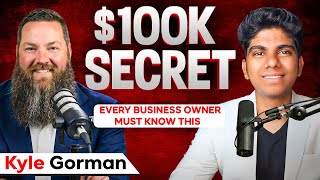
In this episode of The Nikhil Sai Show, host Nikhil Sai interviews business consultant Kyle Gorman. The conversation traces Kyle’s early life in Southern Indiana, his analytical drive toward leadership, and his corporate career that ended after a company acquisition. Leveraging his mother’s small business, Kyle transitioned to entrepreneurship, building a fractional business‑management practice that helps small‑to‑mid‑size companies improve operations and profit. The interview covers (1) the importance of building a strong team culture, defining roles and clear expectations, and the consequences when expectations are vague; (2) Kyle’s framework for great leadership – selflessness, the "Platinum Rule" (treat others as they wish to be treated), and the "leader’s mirror" (modeling the behavior you expect); (3) a systematic profit‑optimization method that scans ~40 business categories, identifies minor 2‑3% adjustments, and prioritizes the highest profit impact with the lowest operational disruption, typically delivering at least $100k additional profit in 12 months; (4) the tools and habits Kyle uses for efficiency – a calendar‑first mindset, Slack, Todoist, Google Suite, and a focus on simplicity over shiny new tech; (5) his daily routine structured around calendar blocks, personal project time, limited meeting windows, and family commitments; (6) lessons learned, especially the mistake of trying to serve everyone instead of niching into professional and financial services; (7) his personal achievement of work‑life balance and the upcoming launch of Goddall Strategies, a C‑suite outsourcing and profit‑optimization service. Throughout, Kyle emphasizes actionable, data‑driven processes, the need for clear communication, and perseverance for entrepreneurs.
Chapters
How did you discover entrepreneurship? Just give us a quick rundown of your entire life to date.
Even at a young age, I think there was some, um, recognition of me like always wanting to step into leadership.
How did you enter entrepreneurship? What was it like in the early days where you were actually working in?
The company I was with had been acquired. It was clear I just didn't fit well with the company culture anymore.
Is it important to build a great team in the first place?
When people recognize that they are working for something greater than themselves, they They're more committed to it.
How do you define the role and expectations within a team?
In the absence of clearly defined expectations, people will create their own and they're going to meet them.
What is a great leader?
And I say to all of them, you screwed up. One of them is going to be mad. Other one's going to break down in tears.
The method for you to find out the profit unlocking method.
We look for minor adjustment. If I can adjust a margin by 3%, I make a huge difference in the profitization.
What's your next big goal?
We are weeks away from launching a new brand.
The biggest mistake you have made in your business?
I wanted to be able to help everybody. I can be great at helping a certain segment.
What's going on, everybody? What's going on, everybody who's actually listening to this podcast right now? First of all, guys, welcome back to another episode of The Nikhil Sai Show, which is hosted by me, The Nikhil Sai, and guests What's going on today? I'm back with another amazing guest. I mean, this time, this is a top business leader and he's one of the most innovators in the business space. He's a seasoned entrepreneur, business consultant with a wealth of experience in leadership, operation, and profit optimization. He has a very unique approach to actually fostering strong teams, building cultures, and optimizing business processes, helping small and mid-sized companies achieve their fullest potential. And that's what I love about this podcast. We'll get into details very, very soon. He's also very passionate about promoting his work-life balance and continuous personal growth. Today we have none other than Mr. Kyle Gorman. Hey, Kyle.
Hey, Nick. Thank you so much, man. I appreciate the opportunity just to be on here and to share with your audience, and it's such a great opportunity. I really, really appreciate it.
We are excited as well, Kyle, and thank you so much for jumping on time. And we are stoked to get into all the unique strategies you have in terms of optimizing the operation, building profitable businesses, creating great culture and team. And this is the boring stuff which makes money that nobody really talks about. There is just the inspiration, woo-woo motivational stuff happening out there in the entrepreneurship industry. But I know for a fact, after running a multi-million-dollar marketing agency and continuing to run a portfolio of companies who are doing similar and much bigger scale, that operations is a backbone of any business. Knowing your numbers, having people do the work required, and making sure your clients are happy and retaining. And this is no joke and nobody talks about this. And I'm glad that Kyle, you're willing to jump on and share a lot of value here. Now we will get into all the juice overall, but before that, I think it would be great to know you as a person, you as a context. You know, there is always, right? Like Spider-Man becomes Spider-Man because of the story he's been through. So we are stoked to get into your journey. So Kyle, walk us through, where did you, you know, like how was your childhood? You know, where were you born? What was the early life like? How did you discover entrepreneurship? Just give us a quick rundown of your entire life till date.
Yeah, no, that's great. I'm happy to talk about it. I'll try not to drag on too long. You know, my upbringing would be considered pretty boring in most circumstances. And grew up in Southern Indiana and, you know, family, I was the youngest of 3 boys and both of my parents were in education. My dad was a school principal, mom was a teacher. And, but for whatever reason, even at a young age, I think there was some recognition of me, like, always wanting to step into leadership. You know, even as a kid, you know, you sort of recognize that in, in certain kids that, that they just always want to be in leadership. And, um, and that was me. And what I later learned, and I didn't realize this obviously in the moment, but I can look back at times, you know, I started working when I was 14 years old, and, and I remember even in that job, I would try to understand What is it about this supervisor that everybody seems to like? And what is it about this supervisor that we don't seem to like? You know, and at the time, I was just trying to understand it and think, well, why can't they be more like this? But, but I was really analyzing this stuff to better understand it. And then when I got into, and I've always been a very analytical person, you know, I wanted to understand the why behind something. And so when I got into university and I was studying organizational communication and, and, but my focus was still always on this sort of leadership and business operations. And, and I'd always do the same thing. I mean, working through college, I'd try to understand, well, why do you all like and respect this person, but we don't all like and respect that person? What is— what are the key characteristics? And so what I ultimately started doing was defining those things and really developed and built my leadership style. So when I got out, my very first job out of college was in a management role, and I took these things that I had learned and tried to analyze and sort of create over the years, and I said, well, I want to implement those. Well, in order to do that, also the way my mind worked was I've got to put some structure around it. And so ultimately sort of put some structure around my leadership style based on what I had seen, the dos and don'ts. And then over the years, tweaked and modified and then researched and studied and better understood it. You know, really, I think so much of my success today was less around a specific upbringing other than I've always had supportive parents. You know, they were never telling me what I couldn't do. I think that always helped a lot. But it wasn't necessarily as much about the upbringing. It was just a hardwiring. And I think those around me never tried to push down my analytical side. They never tried to say, just don't worry about why, just do it. You know, instead, people were encouraging me on that and saying, well, gosh, those are good questions. Yeah, let's think about that. And I think just having good, solid people around me really helped later on because it built the confidence to question the norms and question what was happening around me.
Yeah, I think that definitely helps. And it's good to know that you are actually coming from a very interesting background because Most people do not have that privilege of having sophisticated childhood where they have people around them actually encouraging to ask questions. Like, the most common thing I observe is when I remember myself asking questions in the school or in my family, I was asked to stop asking those questions because they just don't know the answers. But it's great to know. I mean, we are, if I'm not mistaken, pushed into a box which is called so-called life, which is perceived by other people. But it's like a task for us to discover what's outside of the box and realize that life is just much more than what you know. And finding more information, which makes you work more overall, uh, you know, in life and the experiences you gain is what makes life exciting in my opinion. But anyway, Kyle, I'm curious. So after that interesting childhood of you being super analytical, trying to deconstruct and reconstruct what's leadership defined for you, what happened next? What was your career like? How did you enter entrepreneurship? What was it like in the early days where you were actually working in corporate finance and recruiting? Shaped your approach of business consulting?
Yeah, so started my career in the corporate world, worked for some Fortune 100 companies, and, um, and really thought that was my path. I mean, my, you know, if you'd have asked me 25 years ago what I want to do, I want the big, uh, corner office in a large corporation. Like, that's, that's what I wanted— CEO of big company. And in fact, I remember actually one of my very first interviews with a company, the question was asked. I remember I was sitting in the interview with the person that would be my boss, and then it was their boss and their boss all sitting in there. And that question was asked, like, where do you want to be in 5 years? And I said, well, I don't know exactly what job you have, but I want your job. And I pointed to the highest-up person in the room. I don't recommend that. I do not recommend that as an answer to that question in most interviews. And this one, it worked out. She was impressed by that. She was like, man, I like this kid. He's got drive. And so, but that was really it for me. And so I wanted to be in the corporate world. And so started my career there, consistently worked my way up. And, but there was a big shift that happened for me in that the company I was with had been acquired. We were going in a direction I wasn't real comfortable with, and that I've always been very client-focused, client-centric. And, and I felt like we weren't going in that direction. We were creating cookie-cutter models that kind of went against what our clients' needs were and what our clients wanted. And so it was clear I just didn't fit well with the company culture anymore with this acquisition. And in that process, as I started looking for another career, my mom had started a company several years before that, not for the purpose of, you know, some people start a business, some people go into business for themselves so they have a job. And that was her situation. She had an opportunity to have a job that required her to file an LLC effectively. Well, so I'd been talking to her and kind of helping her through business along the way. And as I was looking to leave the corporate world, I said, you know, I think I could come in and help create a succession plan for you, develop a marketing strategy, define your business a little bit better to help you grow while I go look for my next opportunity. And so we agreed. I was like, let's, I'll come in for 6 months. I'll kind of help, you know, almost as a project. I'll come in for 6 months and do this, and then we'll, we'll, you know, part ways from there. Well, as I did that, I started recognizing some needs in the small business community, which I'd never focused on. You know, I'd always been in corporate America. So I started seeing these needs in, in these small businesses and experiencing it myself and helping with my mom's business and, and then building relationships with small business owners. And I was like, man, there's a— small businesses don't get the support they need. And these business owners are on islands by themselves trying to figure things out on everything for themselves. So it initially started with recognizing that, uh, had a unique skillset of finding good people, of just knowing how to analyze, read, you know, develop relationships and bring good people into businesses, which launched a recruiting business. And then from there, from doing recruiting, that landed into working with my clients on business operations and personnel consulting. And, you know, how do I help you not need to hire by making sure that we're developing your existing staff and using these leadership skills that I've developed over years to train others? And so that's what's ultimately built the, the business consulting and kind of business strategy that we, we employ now. And so most of what we do are fractional business management, where we're helping a small business leader that is great in their field, great in their industry. They don't know how to run every aspect of a business. They don't know how to be a CFO. They don't know how to be a COO. They don't know how to be a CMO. Well, that's fine. Like, we can take that off of them and use clearly defined, developed processes to help grow and, and profit, uh, their business even better than it's ever been before. It And it really just came from this passion of I'm seeing, I'm building relationships with small business leaders and small business owners and saying, I think I can help you. Let me come in and help you for a short period of time, you know, get some things established, help get you excelled, and then grow from there. And so that's what ultimately landed into the world that I'm in now. And it's, it's been very good to me and it's been very good for my clients and having opportunities to help them build and grow beyond what they ever dreamed they could.
Yeah, for sure, Carl. And I think this is a very, very crucial part. As a visionary myself, I I don't believe operations is probably the strongest muscle I have. Again, I could stick with it, but it's not the best domain I enjoy being a part of. You know, I'm just the creative guy who tries to accomplish, you know, the unaccomplishable, right? Like, that's like the big thing overall. But I have my supporting team who takes my big goal and try to deconstruct it and actually execute on it. Otherwise, I was— I remember myself very clearly, and especially when I don't have resources like I do right now, just having these crazy ideas and not being able to execute on and knowing how much I'm actually losing. And I believe visionary without an operator is like a handicapped guy, you know, like, like you're not living up to your fullest potential and you feel that feeling of, you know, not living up to your fullest potential, which can almost kill every entrepreneur overall. So yeah, I'm curious overall, can you elaborate on like how fostering a strong team culture contributes to a company's success? Why is it important? To build a great team in the first place?
Yeah, that's a great question. Well, there's, there's probably an endless number of reasons, but I'll give you a couple that I think are critical. So one is when people recognize that they are working for something greater than themselves, which means they're working for that team, they're working for the greater good, they're more committed to it. And if they're committed, they take it personal. If they take it personal, then they're going to, they're going to give you 100%, everything that they really have. And so that's one of the reasons I think it's it's really important is because that's how you're going to get the most out of people, develop a strong team culture. The other is a strong team culture will lead you through tough times, and every business will have tough times at some point. And again, when I'm not coming into work because I want to take care of Kyle, I'm coming into work because I care about the team around me, then I'm much more committed and dedicated to what I'm doing and the impact that I'm making And so the other thing that I think is really important for us to understand, you know, we don't put numbers on people. You know, these are real people with real personalities and real lives. And the reality is we oftentimes spend more time with the people we work with than our family. And, you know, I got to choose my spouse. But I don't necessarily get to choose all of my coworkers if I'm working in a business. And so it's my responsibility as a leader in that organization to create a strong team culture so that we all, we don't have to like each other all the time. We don't all have to agree all the time. We have to be able to get along professionally. And what I never want in any business environment is for someone to be uncomfortable, disgruntled. Don't want them to not want to come to work. Well, that's my responsibility as a leader, is to help establish an environment that gives people that so that they have true satisfaction and they feel success. Because I want them to go home and be happy with what they accomplished today. I want them to be able to enjoy a weekend knowing they really excelled in something. And I don't believe— this is a personal belief— I don't believe that anybody wants to fail in their profession. I think everybody wants to be good at something. And so it's part of my responsibility as a leader to help them understand what that success looks like so they can feel positive about what they're doing. They can feel that success. They can feel that satisfaction. And if I can do that within an entire group of people and bring them together as a team, we can accomplish so much more. And there have been study after study after study that have proven that a strong team culture beats talent all day long. And so that's what we want to do, create those team cultures. I don't need the absolute smartest, brightest, best. I need great personalities, great attitudes that can create a good strong team.
Yeah, I think that's probably— I believe like every company is just as good as the team, which is, you know, running the company overall. So like if I look at huge companies like Apple, I look at a $3 trillion worth team. Which is running a $3 trillion business. And if you remove the team out of it, the business is worth nothing because it's just buildings and some bunch of computers, you know, and manufactured products. But there's no real value in it overall. But I believe you're spot on with, you know, why is it important for teams to be built. Now, most small business owners, including myself, I remember very clearly this distinct feeling of hiring somebody and just hoping that they would solve a burning problem I have and not able to get the feeling that they're actually helping me achieve that result and unable to communicate that and not having boundaries and not having clear expectations. And especially when I was young and I was just hiring my first dozen employees, I was just struggling with that constantly. I would just secretly hope that they would achieve something which I never communicated, which sounds crazy right now if I'm listening back to myself, but I did that. So I'm curious from your perspective, how do you define the role and expectations within a team to ensure clarity and—
Yeah. Yeah. That's great. So what I always do, I say we start at the top. Like we start at the highest level. So to your point, you know, I kind of live on 4 principles in leadership. And the first one is definition, creating clear definition for my employees. And so the way that I do that is I start with why are we here? Now, we often hear this term about mission, you know, and what's our mission and what are our values in a business. But man, it's shocking how many people have never really defined that, or they come up with some nonsense bullcrap statement that really doesn't mean anything. But to really understand mission and values of an organization, it takes some time and it takes some intentionality. But if we really understand that and we understand what our mission is, what do we want to accomplish, and we understand the values in which business operates under, then we can bring people into the business that match well to that. Now, at that point, skill set, I can teach. I can't teach value connection, but I can teach skillset. If I understand what's my main purpose, you know, we're here to help in some fashion or some capacity. When I understand what's our overall purpose, then I need to make sure the people on my team understand that. So I'm looking at, you know, a new employee as an example. I bring that new employee in, they need to understand who we are as a business and what we're here to accomplish, right? So I work with a lot of insurance agencies. That's a big market of mine. And in the insurance space, you know, it's not just about selling insurance, but the greatest ones, the best ones, They are there to protect the greatest assets that their customers have built. Well, that really means something, right? Like, now I'm not just selling homeowner's insurance. I'm selling, I want to protect the home that you worked hard to buy. And so now, if someone that comes in under my employment understands that, now there's meaning behind their position. And then they have to understand, what's your role in this? If what we're doing is protecting our clients' largest assets, what's your role, right? Are you sales? Are you service? Well, You're a service person. So your job is to service the clients, take care of their day-to-day needs, questions, things like that. All right. Now, what are my expectations of you? And that's where we drill this down further and we say, well, my expectation is that these reports are done by the 5th of every month. My expectation is that these calls are answered or returned within 24 hours. My expectation is that these policies are written within 48 hours of coming through the door. My expectation is that these are quoted within 24 hours of us receiving it. If we define it down to that level, and what I typically recommend is like 4 to 5 things that we're saying, these are the metrics in which your success is being evaluated on. Now I know for sure what I need and what my expectations are, which oftentimes leaders know in their head. But even then, it's sort of like, I just want you to work hard and do a good job. Well, that doesn't mean anything. So if I now, now I've taken the time to define this is what I expect. I want to make sure now I can tell my clients. I can say, look, if you've not received your quote within 24 hours, I want to know about it because that's my expectation. That's what we are going to do for you. And then what it does is it allows my employee to know at the end of the day, I succeeded, did the things that, that my employer asked of me. I've accomplished what was asked of me. And so now, whenever you come in every day, you don't have to question, am I doing a good job? How am I doing? You know, I'm hitting these metrics. I'm making these calls. I'm talking to these customers. I'm doing the things that have been asked of me. And so it makes it— that gives you so much more autonomy just to go do your job because now you know as you walk in what's expected. What we never want to have happen, and here's the thing, in the absence of clearly defined expectations, people will create their own. And so what we don't want to do, and this is exactly what will happen, an employee will come in and if we don't tell them what's expected, they're going to create their own definition of expectations and they're going to meet them. They're going to meet those expectations. Then you come to review time. and you say, well, hey, you, you didn't have these quotes done in this amount of time. These reports weren't done in this amount of time. This, and they say, well, yeah, but look at these things that I did do. And they're gonna point out all of the expectations that they created that they did well. Because again, it goes back to my early, no one wants to fail in their job. People wanna be successful. So they hit their own metrics of success cuz you never created it for 'em. That's not their fault. That's your fault as a business leader. So that's how we do it.
I agree.
Like we start at the top level. Why are we here? What's your role in this? And what do I expect of you to help us hit that? And if I can take the time to do that, I've saved myself a ton of agony over the years because now I'm not— that target's not shifting. I know exactly what to hire for. I know how I'm defining it for my employees. And now I can set them free to go do their job.
Yeah, I love that. I think most entrepreneurs who have ever hired anybody in their life can almost feel a punch in the gut when you said that thing where your employees can create their own expectations because I could absolutely relate to what you mentioned because I distinctly remember I've hired somebody, didn't set clear expectations, secretly wished that they would achieve something. End of the month, I was reviewing, you know, again, you, if you're reviewing your employee's performance before you send your salary, that means you have bad operations. You're just, you're just not doing a good job with your business overall. But that's what I was doing as a young business person who had no clue how to hire and manage and train employees. But I clearly remember that these were the things which I was secretly wishing. He never did them. Then I had a conversation, but then he pointed to everything which he has done. But then we were in a conflict that that's not my expectation. But then he told me that I never told my expectation in the first place on what he needs to accomplish. And that was like an eye-opening moment for me. Like, yeah, I secretly wished, but I never communicated it.
I'll give you, and I'm the first to admit, I've made mistakes as well. That's why I've created the systems that I have is because of the mistakes I've made. Years ago, I had a salesperson that, um, we got to the end of the year, and what had happened was I had said— I, I set the expectation that I needed him to sign 35 new contracts this year. Well, I did that because I knew my average contract price was this, and therefore, you know, I kind of had all these metrics, and I was like, let me keep it simple, sign 35 contracts. Because what I knew is that at 35 contracts, what I really needed him to do was generate $500,000 in Revenue. So I said 35 contracts, that would give me the $500,000 in revenue. We get to the end of the year, it only generated $350,000 in revenue. So I get to the end of the year and I'm like, hey, we got a problem. We're gonna have to adjust your comp scale. We're— I mean, I start going through all these things thinking like I was fully prepared. This was no problem for me because we didn't hit the metric. And he said, what are you talking about? I hit 40. You told me to hit 35 contracts. I signed 47 this year. Hit it out of the park. Like, I killed your expectation. I was at 35 in September. I could have stopped working and I didn't. I hit 47. You said 35. Now you're telling me I didn't do my job? And now, you know, the ego part of me would have been like, hold up. The reality was like, he was right. I screwed up. I did not set the proper expectation. And so what I should have done, and this is what I did going into the next year, and I said, look, you know what? You're right. You're right. I did not communicate this well. Let me tell you what I'm actually looking for. What I need is I need this financial, like this is the revenue number I'm looking for. And based on our average price, this should get us there. And so we made, you know, I had to adjust my definition of expectations, but it was through that that I realized that was 100% my fault, not his. As he saw the expectation 35 and he was like, dude, I'm going to kill it. And he did. If I looked at it just from that perspective. He killed it. But what he didn't do was meet my real expectation because I didn't define it for him. And so that's why it's important that we clearly define those things, because otherwise people think they do a great job, and really, we look at it and think that they didn't. Well, that, that oftentimes falls on the leader, not the employee.
Sure. Yeah. This brings me to the next question I have in my mind, which is, I think the process of becoming a great leader is, is what builds the company. You know, again, you start without knowing anything, and then you fail and you learn, and then all the experience you gain and the education you get will make you a better person. If you could summarize, because you've already worked with so many companies and you have been an analyst indirectly for all the behavior patterns of human beings who are exceptional leaders, I'm curious if you can summarize what is a great leader and what are the best traits somebody needs to have to become great at leadership. What would that look like?
So I boil that down to 3 things, 3 key elements, and they're mindsets, right? These are all personal personal characteristics and mindsets of a great leader. I think one of the big mistakes that people make when getting into leadership is they think it's all about, you know, being able to tell other people what to do. And in reality, a great leader is just the opposite. A great leader is looking at what they can do, how they can help. I look for 3 key characteristics, and these are the things that I really speak to when someone is stepping into their very first leadership role. The first is they need to be selfless. And again, this is a mindset, right? So we oftentimes can step into leadership and think, man, now I'm the boss. Now I'm in control. Now I get to make the decisions. And though that's true, all of those decisions need to be based on what's best for the people around me, not what's best for me. And so, a real quick example I often use from the show The Office back in the day, where the manager of the office found out there was a surplus in the budget, and so he could He could either buy, you know, a new printer for the whole office, or if he just kept that, then he could get a 10% bonus. And of course he's like, oh, I'm gonna take my bonus. I'm gonna take my bonus. But really what was best was the team needed a new printer. So, you know, there was this whole, of course it was a, you know, comedy. And so it was this comical approach to this, but it was such a great example to me of what's best. I can make a little extra money or I can provide value and support for the team. Which is going to make them happy and give them something that they need. And we have to take that selfless approach in leadership. So that's number one, selflessness. The second one is what I call the Platinum Rule. So we look at the old Golden Rule, treat others the way you want to be treated. I think in leadership, we have to take that to the next step. So I refer to it as the Platinum Rule, which just simply means now I have to treat others the way that they want to be treated, not treating others the way that I want to be treated. And so, you know, I illustrate this by, like, my communication style is very direct. I'm kind of a just, you know, hit you between the eyes, tell you like it is, no emotion behind it. I'm good. You know, if I screwed up, I'm fine with somebody coming and saying, hey, Kyle, you really messed this thing up. You screwed it up. You gotta fix it. I want it fixed by the end of the week and we're moving on. Right? Like, I'm cool with that. I'm good. I'm not losing any sleep over that. No tears from me. Yeah. But the reality is what I've learned over the years is that if I, if I say that to somebody else, so like, this is, you know, again, example, like if I have 3 people standing right here in front of me, And I say to all of them, you screwed up, you screwed up, you screwed up. I said it the same way to 3 different people. Well, one of them is going to be mad and think that I'm the worst person ever. Another one's going to break down in tears and cry the rest of the day. And another one's going to be like, all right, yeah, whatever. Tell me what I did wrong. Well, so I treated others the way that I want to be treated, but that didn't necessarily communicate well to them. So what I have to do is I have to develop enough relationship and rapport with my team that I'm communicating with others in the way that they want to be treated. Are treating them the way that they want to be treated. So I refer to that as the Platinum Rule, and that helps us make sure that if we are talking to someone that we need to soften our approach, then that's what I have to do. I have to soften my approach. If I'm talking to someone that they want a direct approach, I've got to give them that direct approach. But I have to adjust my style based on that. If someone comes in and they love cats and they've got pictures of their cats, well, I don't care about cats. But if they do, now all of a sudden, I'm going to care about their cats, right? Because it's important to them. So there's that, that's that second component, that Platinum Rule. And then the third is what I call the leader's mirror. And this is a real simple one, and it's basically your team is going to be a reflection of you. So you have to, you have to demonstrate and emulate the characteristics that you want out of your team. You know, if, if your team is bad at follow-up and they're not very punctual, the first place to look is you. You good at follow-up and are you punctual? And if you're not, you've got to find a way to shift that. And so, if I show up to work every day at 8:30 and I expect everybody else to be there at 8:00 and somebody's showing up at 8:10, it's hard for me to get onto them whenever I'm not giving the right example as the leader. So, and it kind of goes back to that selflessness, but there are certain expectations that, there are certain liberties that I'm given as a leader and that's okay. But there are other things that I've got to make sure that I reflect exactly what's expected. In my organization, I cannot expect something of the people around me that I myself am not willing or able to do. And so, so whenever I look at a leader, those are the 3 characteristics that I'm looking at: selflessness, Platinum Rule, and that leader's mirror. And so those are sort of mindsets that I think someone has to go into leadership, which is complete opposite of the traditional mindset of leadership, which is now I'm in control, I'm the boss, I make decisions, and I get all the freedom in the world. It actually, you, good leader has more stress and pressure on them because they now have to put every, they're accountable for everyone else around them, which is a much different approach than we, than we traditionally had taken.
Yeah, I agree. I've never seen lazy leader, very inefficient team. Like that's just not possible. The team is always just exactly copying what the boss does. If the boss is not showing up, guess what? The team doesn't show up. The boss is always not knowing his numbers. None of his team members know their numbers as well. It just works out like that. And that's what we observe in—
and let me, and let me flip that aside cuz we've got some people listening that are hearing this and saying, well, that's why I'm there at 6:30 every morning and I expect this and I never take a day off and I never do. Here's the other thing. We have to emulate both. I did a video on this a few years ago. I was on vacation with my family and I actually, I did a, a, a vlog back whenever I used to do vlogging back in the I don't know, 6, 7 years ago. And I did one specifically from the beach to say, this is part of setting the example. I tell my team I want them to take time off. I tell my team I want them to spend time with their family. I tell my team they need to be doing these things. I can't say that if I don't do it. If I'm not leaving to get to my kids' ballgame, and people are going to expect, oh, then I shouldn't be doing that either. If I'm not going on vacation and I'm not taking time to sharpen the saw, I And I, I can, I preach that to my team. So for those of you that are listening and saying, well, that's why I work 80 hours a week and I'm working my tail off. I'm not saying that's the right example either. There's a balance in there. And if we're gonna build a strong team culture of people that want to be there, part of that is having good balance. And we ourselves as leaders have to have good balance in order to be able to emulate that to and show that to others.
I love that. And, uh, you gotta lead and that's when they fall. Without leading, it won't work. So let me get back to another question here we have. You are decent enough when it comes to profit optimization. And I believe this is a very interesting concept, which not a lot of businesses religiously do. Again, rarely is it done with our portfolio or our own company leadership. Sometimes, you know, once every quarter, maybe, maybe if profit optimization is even a thing. But here's what happens. Every time we do that, we discover absolute mind-boggling things which was costing us a lot. I was like, how can we be so stupid that we were losing this much amount of efficiency and we were losing this from last few months? Why didn't we notice? Right? So I'm curious, when you are analyzing a business, what's the approach? What's the method for you to find out the profit unlocking method? Like where can you spend the least amount of time, still make the most amount of money? Because that's what the goal is for the business, leverage. I'm curious, how do you find those leverage points overall? When you are looking and analyzing your business?
Yeah, so what we try to do is— well, let me, let me start with where I think one of the, the main pitfalls and why we, we don't do it this way. Oftentimes what somebody does is they look at that and they find the one thing and they're like, well, my gosh, if we gotta, we gotta revolutionize this one thing, we're gonna change it completely and we're gonna do this whole thing differently. Well, that creates a massive shift in the business which is difficult to implement, employ, and maintain. And so what we do is we look for minor thing, minor adjustments, right? So if I can adjust my brand strategy by 2 or 3%, if I can adjust a margin by 3%, if I can adjust how I'm grouping products together by 3%, and I can go through and I can do that with 7, 8, 10 things through the course of the next 6 months, I make a huge difference in the profitization of the business without making massive changes to the business. And so what we look for are, we go through about 40 different categories within the business. And some of them are like, no, there's nothing. We're good here. And but we look for those things that we say, you know, what's your, what's your dominating market position? You know, what's your primary, you know, what's your primary lead generation tool? What are the products or services that you have the best margins on? What's your pricing structure compared to your competitors? We're going to go through and we look at all of these different areas. And we may say, well, this is really good. This is really good, but we need to tweak this a little bit. So what we do is we outline, let's say there's 10 things that need to be adjusted. Well, now we're gonna take that 10 and we're gonna say, okay, well then in the next 3 months, we're gonna use these 3 or 4. And these are the things we're just gonna, again, we're just gonna tweak them. We're just gonna adjust. Not, we're not completely revamping everything we're doing, just making a minor adjustment. But when we make those minor adjustments and we make several minor adjustments, Now, all we've really done is we've polished the business up, right? So we didn't change or revolutionize the business. We polished it. We cleaned it up. We streamlined it. We made it more efficient. And so we can do that. And that, you know, we, we look at these things that need to be tweaked, and then we prioritize them. Where's the biggest impact going to be made? And what I mean by what's the biggest impact to profit with the least impact to the business? That's what we want to do. We're going to start there. Biggest impact to profit. Lowest impact to the business. We're going to start there and then we're going to slowly make adjustments as we go along. And, you know, over the course of a 12-month period, you can make massive adjustments and find hundreds of thousands of dollars, even in a small business. You know, we typically look at a minimum of being able to find an additional $100,000 in any business in 12 months. That's profit, not revenue. Profit. Bottom line numbers. It is. It is. But, you know, but it's been proven over and over. I mean, we've done it over and over again. Minor. We're talking minor adjustments that someone could look back and say the business doesn't look any different, but yet we're making a lot more money and we're doing it easier than what we were before. And so, uh, so that's how we sort of set those priorities because it can be, can be overwhelming when you go through and you look and you're like, you know, you're a marketing guy, right? You, you know, like you look at somebody's marketing strategy and you're like, well, you don't have one. Like that's where we gotta, but Most business owners, when you start talking marketing, it's like, it, it, it just eyes glaze over like, oh my God, you know, we're not doing anything. I don't understand it. What are we gonna do? Okay, well let's make some adjustments. Let's just make some adjustments instead of, you know, trying to do one massive thing. Um, and so that's the approach that we take and it, it's worked over and over again. It works really well. It's especially helpful for small businesses under a million. You know, you take a company that's at $750,000 right now, we find 'em another $100,000 in 12 months, you know, that's a, that's massive. And then, then you take a, you know, business that, that's at, yeah, that's $5 million and you find them another million dollars. Again, you know, we're, we're, you're pushing big numbers and we're able, the way that we're able to help these businesses, but it's, we're, we're polishing. That's really the way, the way I like to think about it is we're take, again, like we're taking something that's already good. We're gonna polish it out. We're gonna streamline it. We're gonna make it better.
Sure. Yeah. That totally makes sense. Again, you're talking about the effective output. The reality is If you look at it from the profit standpoint, for a $700,000 business, adding an additional $100,000, it might be even like doubling their profit margins. So meaning technically they just built a $1.5 million yearly business indirectly by just running the same business, the same run rate, with the same cost of goods, which is efficient. So I have a different set of questions ready for you, Kyle. Walk us through different tools you use on a daily basis to manage your projects, your operations, your team, your clients for productivity.
I'm kind of old school when it comes to some of my tools. So I still use my good old-fashioned calendar. Wonder, but I, I like to use simplicity. So for me, simplicity is key. You know, we use things like Slack for internal communication. I use an app, you know, called Todoist, which is a simple to-do list application. But, you know, and then we use Google Suites, you know, to be able to share documents and Dropbox. And so we, we run, again, I think that's part of, that's part of our overall strategy is efficiency and simplicity. I think that sometimes I love technology, so I have to be really careful because like every new little thing that comes out, I'm like, let's do this. Let's implement it. Let's. And what I've learned over the years is in my attempt to become more efficient by using the latest and greatest, I become less efficient because I'm not perfecting the tools that I'm using. And so, and so what we do instead is let's maximize the tools that we're using. Let's get rid of the tools that we aren't, and let's make sure that we are as streamlined and simple and as efficient as we can. And I use that same, that's in all of my companies. and I use that same as I'm consulting with others. So, you know, that is one of the things that we often look at. We go through their, their tech deck and we like, what all are you using and what are the crossovers and what are you not using well and what's not getting the ROI that you need and how can we make those adjustments? Um, how can we streamline? And I'm, I, I hyperfocus on efficiency, um, in kind of everything in my life. Like I, you know, and again, I'm gonna, I'll use that example of the 80-hour business. Like I've never been that guy. I'm, I'm, I'm pretty 40 hours, and I really believe I can get more done in 40 hours than most can in 80. But it's because I'm hyper-focused on efficiency. I want to be the most efficient at everything that I do. And what I've learned is the more I tried to implement the new shiny thing, the less efficient I was. And so when I find something that works, I maximize it and, uh, and I stick with it.
Yeah, I love that. Yeah, I mean, I am really relating to what you're saying. It's so easy to feel that adrenaline of just trying to get on the newer and newer tools. But the reality is the learning curve to get onto a new tool and getting all your team on it and then just being able to use it and then upgrade whenever there's a new tool is just a whole different ballgame. We still stick to the Google Sheet and the most basic communication platforms as well, along with one project management tool we all use. But anyway, Kyle, can you walk us through your typical daily routine? How does it look like from the time you wake up to the time you go to sleep? Uh, how do you manage your efficient day?
My days are, are, uh, generally fairly similar. You know, I get up, get going. I always take a shower first thing. I like to be clean and going for the day. I get my beard in shape, make sure that it's, uh, presentable to the public. But then, uh, you know, at that point I, I start working. So my day starts the night before. I always, uh, if it's not on my calendar, it won't happen. I don't remember anything. Like I have a terrible memory for the past. So, so my calendar runs every second of my day. So, uh, so the night before, I always look at my calendar before I go to bed. I look at my calendar and figure out what do I need to do tomorrow? Meaning like, do I have a 6 o'clock meeting? Maybe I need to get up a little earlier. You know, is my first meeting not till 9? I can have normal routine for the day, whatever it is, but I want to look through and know my day. So in the morning, get up, get going. And, uh, married, I've got 4 kids. So, you know, in the mornings we're trying to get kids, uh, where they need to be for school and all that kind of stuff. And then, you know, and then I start my workday. And so, at that point, I usually like to have a couple hours in the morning just to focus on personal projects. You know, right now, I'm in the final stages of finishing my first book. And so, that may be time. But again, it's calendared. It's blocked. Like, that's what I'm going to do for 30 minutes. You know, that's where I may look at, you know, putting together proposals for somebody or, you know, things like that. So that's my first couple of hours. And then I generally only schedule meetings When possible, I try to only schedule meetings between 9 and 3 every day. And then I also try to either— I do one of two things when it comes to my lunches. I either always, you know, I'll have a meeting where I'm set to meet with someone, or I just work through lunch and kind of use that as part of my planning so that I don't have to do something later in the day. But, and then I tend to be pretty active in the afternoons and evenings. So afternoons, you know, is when I'll get a workout in. I coach football. So, you know, certain times of year, I'm there taking taking care of that. Kids are all involved in sports, so maybe hitting up a ball game or getting a kid to practice. And a lot of times, you know, the evenings, 2 or 3 times a week, we'll get together with friends and socialize a little bit. And then at night, kids go to bed, I check my calendar for the next day, head to sleep. You know, I like to be in bed by 10 o'clock, uh, so I can be up around 5 or 6 in the morning. And, um, uh, that's kind of my typical day. It, it, you know, that there's some variance to that, but very little. But the biggest thing for me is, um, I'm constantly checking that calendar. I've got to know what's going on because, you know, our call today, if it wouldn't have been on my calendar, I wouldn't have made it. I just don't have that memory. So, um, you know, anytime someone says you want to get together, it's got to go on that calendar first thing. And, uh, and so I use that, but I, I just, I generally just look one day ahead. I'm always just looking one day ahead, um, at what I need to get done, and then I check my to-do list throughout the day. And I'll actually put on my calendar to-do list and that, like, that'll let me know, you know, from 10 to 11, I've got free time. That's my reminder. I've gotta check and see what are the 3 things and I prioritize those. So I know this has to get done today. This is for later, whatever. So, um, you know, my, my routine gets a little chaotic because of the family, but, uh, but generally that's how I try to keep it as close as I can.
Makes sense. Yeah. That's pretty straight to the point and simple and efficient. Now, Kyle, if you could go back and give yourself, the 20-year-old yourself, one suggestion, one advice, what would that be?
You know, if I were to go back, there's very few things that I would change because I've been able to learn so much through the course of my career. I think the one thing I would probably do, or I would advise myself to do, is make the leap earlier into entrepreneurship. That was not a path that I'd ever even considered whenever I was 20 years old. And Looking back on it, uh, I should have really pursued that. I should have learned more. I should have put mentors in place. Um, I think I could have been so much more successful on my own than I was even in a corporate, although I did well. I think I could have done better and on my own. And so that's probably the one piece of advice I would have given is pursue entrepreneurship. I didn't have entrepreneurs around me. I didn't have, my parents weren't business owners. I didn't, I didn't have people around me that were business owners. So that just never really crossed my mind. And, uh, I wish I would have really pursued that sooner. And, uh, that, that's the one piece of advice I'd give myself is make that leap, start looking into it, figuring out what it takes, find good ideas.
If you could talk about your life's biggest achievements and what's your next big goal?
Life's— my biggest achievement is not, uh, it's gonna be different than probably most of the people you have on the show. My biggest achievement has been balance. I made a decision about 13 years ago now that my career was going to come second to my family. And when I really made that decision, it changed a lot of things for me. And now I think ultimately it's changed for the better. But I know it's changed for the better. But for me, my biggest achievement is balance because I see a lot of really highly successful business people that don't have the best personal life. And I said, I didn't want to be one of those people. I want to be highly successful professionally, and I want to have a really strong personal life. And so, um, my wife and I have, are going on 20 years. We've got 4 kids. Um, we spend a lot of time together. We've got a place at the lake. We go down and spend a lot of time together. My wife and I go on a date every couple of weeks. Still, still go out and spend time together like that and really enjoy it. So biggest achievement is, is being able to have a successful career that I'm really proud of. While maintaining a strong balance in my life and making sure that that's been a priority. So that, that to me, uh, is a huge key to my success. We are on the, like, just weeks away from launching a new brand and, uh, called Goddall Strategies. And so that's— I'm really excited about it. It's probably more excited about this than I've been in anything in, in 5 or 6 years, and helping with you know, very similar to what we're doing but, but adjusted, um, where I felt like it, it impacts the market even better. But, uh, it's going to be doing business strategies. I've got several coaches that are, um, working, uh, with me on this. And, um, and so we're going to offer full, uh, C-suite outsourcing for small to mid-sized businesses, basically under $5 million companies, uh, business strategies, can do profit optimization, sales management, which is another component that a lot of, you know, small companies don't have good people to manage their sales team. And so I'm really excited about this just because I've seen the need for a long time and I've finally been able to compile the right people that can, that have their area of expertise that, that I can guide into these businesses, develop strategies for the business for the next 3 to 5 years, kind of give them a roadmap for where their business will be in the next 3 to 5 years. And then have the people to actually come in and implement that roadmap to help get them and guide them there. And so, you know, it's just another way to make more people millionaires and help these businesses grow. Our goal is we don't want the business to be the excuse to not live the life they've dreamed of. We want the business to be the resource that lets them live the life they've dreamed of. And oftentimes we see business owners where it's just the opposite. You know, they can't go on vacation because work's too busy. They can't go spend time with their family because work's too busy. They can't go spend time with friends because work's too busy. They can't, they can't, they can't because work, work, work. And that's wrong. I just don't think no one set out to build a business so they couldn't live a dream life. So we don't want, we want the business to be a resource to live the life they've dreamed of instead of the excuse as to why they don't. And, and I'm super excited about Goddall Strategies and what this is going to be able to do to help those businesses.
So Kyle, love that overall. Can you walk us through the biggest mistake you have made in your business us personally so that we can avoid the same and just save some time, energy.
I think the biggest mistake that I've made early on was trying to be everything to everybody instead of focusing on a niche. And so, you know, we've heard, you know, there's all the clichés out there, riches in the niches and all this stuff, and it's true. And so, uh, you know, I think that one of the things that I made the mistake early on is I built my very first company was I wanted to be able to help everybody. And the reality was I can't be great at helping everybody. I can be okay at helping a lot of people. I can be great at helping a certain segment. And so as I was able to focus that in and niche it, it's made a huge difference. And the same holds true today. You know, we, we work with different types of businesses, but we know our primary, you know, where we make the biggest impact is in professional and financial services. So, you know, so we do a lot of work with insurance and, you know, independent insurance agencies. We do a lot of work with financial organizations, wealth management. We do, you know, those are wealth— I'm sorry, wealth management. We do a lot of work with, you know, CPAs and marketing. You know, we work with people that provide professional services, and that's where we make the biggest impact. And so we work with other organizations, but we go into it kind of letting them know these are the areas we're going to be able to help. We may not be as efficient in these other areas. And so that's the biggest mistake that I made early on was trying to be everything to everybody. And that's just not, it just wasn't realistic.
I agree. And I think this mistake is probably done by most entrepreneurs and entrepreneurship is a unique game. So we all try to maybe think too big, a little too big, and then we lose the focus and the vision to ultimately change somebody's life. And if you're not able to do that, then the business won't be successful, but I appreciate you reminding us on that. And I'm curious, Kyle. What inspires you to show up to work? What's the primary motivation? What's the real reason you get excited?
You wake up from your bed and get to work? I truly love hearing the success stories of my clients. Like, there's nothing better for me than someone saying, hey, you know, this idea, this thing that you said, I put it in place and it worked. There's nothing greater than, than, you know, hearing someone put an idea in place or implement a new plan or a new strategy and then hear the relief in their voice because, "My gosh, that worked." Like, "Hey, I had that conversation with that employee and it went great. You know, I would've never been able to do that had you not advised this or that." Like, so that, that's what drives and motivates me. You know, every day I look for those moments of like, what, what did I do that helped someone's day be better because we had a conversation?
I think that's ultimate fulfillment, right, for any consultant overall. You just feel great to see, you know, that your suggestions have made a difference in their life. So if anybody's listening, Kyle, and they would like to do some business with you, maybe they might want to inquire a little bit about your services. How can they connect with you? What's the best way for them to get some help?
The easiest thing is just look at kylegorman.com. You know, we've got sites for all the different companies, but, you know, for this purpose, I just assume people connect with me directly if they have any issues or concerns in business. Personal management, whatever it is, kylegorman.com. It actually kind of has more to do with, you know, some of my speaking and professional stuff, but it's a clear way to be able to connect with me. And, you know, I can share more about what we do and how we do it. And especially over the next few weeks as, as Goodall Strategies gets up and going, obviously we'll have a website ready for that. It's not there yet. It's still under construction, but it'll have all of our C-suite and fractional business management tools and profit optimization and all that stuff. Will be out there here in the next few weeks.
I love that. Any last words for us to conclude the whole show?
One thing that I would say to anybody out there that is in this entrepreneurial stage is just do not give up. I see too many people give up too soon. Keep going, keep working, keep going. Wake up tomorrow and do it all over again. And surround yourself with good quality people that will help guide you and get you to where you need to be. Don't feel like you have to do it all on your own, but don't give up.
Love that, Kyle. That's so, so, so helpful because as entrepreneurs, even the people who feel like, you know, who assume that they made it, they still think about giving up almost a dozen times every day. I myself think about giving up 100 times, but you just shouldn't. And you just got to remember why you are here and what's the purpose and what's the real achievement for you and why you're in it overall. Just constantly reminding yourself on that will keep you on the path. And like Kyle mentioned, entrepreneurship is a very, very, very lonely journey and having the right people around you. Can absolutely boost your confidence and keep you on sanity when you're trying to build a successful business. And think long-term, think 10 years, think 5 years. Don't think about just tomorrow because, you know, the objective is, yes, you could eat some absolute garbage today and survive. You can't do that for the next 10 years. So you got to feed your business with the right incentives as well. Kyle, once again, thank you so much for this opportunity. It was really great learning directly from you about operations, business management, leadership building. And profit optimizations and many more interesting topics which you have shared, which will actually allow small businesses to become big and operationally efficient. So guys, hopefully you enjoyed the podcast so far. And if you have been listening till date, and if you have came to the podcast, you know, this far, this means you are an action taker. Don't let this information just be some woo-woo motivation. Kyle has given so many actionable things, talking about successful traits of leader, and unique ways to do profit optimization, great way to set expectations with teammates and whatnot. Write down 5 things you should be doing by end of the week and start attacking on them. Only if you do, you get the result, not just by thinking. So please take action and stay tuned for another episode on the Eagle's Eye Show. I'll be back with another amazing guest just like Kyle. Thanks, Kyle. Yep. Awesome, brother. Have a good one.
Kyle.
More from Nikhil










BURNED $1.5M in his 17years online #digitalmarketing #entrepreneur #onlinebusiness
