Ultimate Growth Engine helping busy Businesses capture leads and convert them into high paying Cl...
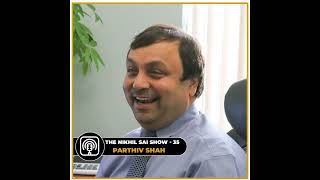
Parthiv Shah, founder of eLaunchers, went from mailing a billion direct-mail pieces to running a high-ticket agency. During COVID, he sent a 20-page sales letter via FedEx to top prospects and raised consulting fees from $7,500 to $12,000, achieving a 5x increase in customer acquisition.
Chapters
What's going on everyone? Welcome back to another episode of The Nikhil Sai Show, which is hosted by me, The Nikhil Sai. And guess what's going on today? We are back with another amazing Two Comma Club interview. Guess what's going on today? Let me repeat that. We are back with another amazing Two Comma Club interview. I'm excited. Hope you are too. And guess who is the actual guest on this podcast? He's one of the craziest guys I personally know when it comes to building automated marketing systems for businesses. You have been helping dozens and dozens of businesses scale at a different pace. And the best part is, the best part is you have been working with marketing legends like the No BS Guy, Dan Kennedy. Just crazy, right? And he's one of the best-selling book authors with the name Business Kamasutra, and also co-author of multiple books. At the same time, he's actually writing a book with the No BS King copy that sells. I'm excited for that copy for sure. And again, let's not waste any time and actually introduce the guy on the podcast today. Let's dive in with Parthiv Shah.
Thank you. Hi, how are you?
Founder of eLaunchers. Hey brother, thank you so much. I'm doing great. How about you? Wonderful.
Thank you. Thank you for inviting me. I see that. Yeah, that is the 2 Comma Club. There you go.
We're back with another 2 Comma Club interview. There you go. You have the 2 Comma Club winner right now. So excited for this podcast, brother. I'm super excited. I think this is going to be one of the most insane valuable sessions. So this is specifically for business owners who wants to build automated business, uh, automated sales systems in their business. So, like, why waste time? Let's get into your story. Like, how did all this craziness started in your life?
Well, I've been in this country since 1989. My, my roots are in direct response marketing. Within direct response marketing, it is direct mail marketing. I'm a big print and mail guy. I have mailed more than a billion pieces of direct mail.
That's crazy.
That is more mail than Dan Kennedy and all of his top tier clients combined. So a billion pieces of direct mail over Tens of thousands of projects in 15, 20 years is a lot of mail. So, you know, see, and for those mails, I didn't lick stamps. I did data. I did data work, right? So buying lists, merge, purge, eliminate duplicates, doing data strategy and stuff like that. So back in 2002, I left my job to start my own business called List Launches, and I was selling direct mail lists, email lists, telemarketing lists to agencies, print shops, mailhouses, and clients. That turned into a full-service agency. I got bought out in 2005. I spent some time with that company. In 2006, I started the current company. ELaunchers, and that's where we are. I met Kennedy in 2009.
Wow, that's freaking awesome. The best part is reaching over a billion people with the print, just freaking awesome, right? And all of this stuff is before the internet craziness. That's the crazy part. You've been doing this for a long time in the industry. That's awesome. And Parthiv, like, you've been seeing this industry from the way up to where internet was not even known, which was like a fad back then. To now where it's only internet, right? So that's the world right now.
It's not only internet. As a matter of fact, offline—
oh, that's interesting.
I mean, right now I send out 5 to 10 FedExes a day.
Wow, that's super old school and that's exciting at the same time. Absolutely. Wow, that's great. And Partha, we have seen almost complete change in the marketing industry from a lot of years, right? Almost double decades. So how do you think the marketing has been changed after corona, specifically when it comes to 2021?
So here's what I'm going to talk about me, and then I'm going to talk about what I believe the market is doing, right? So my business is I'm— I own an agency I work for physicians, dentists, attorneys, financial advisors, coaches, consultants, authors, speakers, people who sell their time, make money by appointment, pain management clinics, chiropractors, physical therapists. So I work for professional services. Yeah. My fee structure is I get an initial consulting fee to blueprint a 3 your business plan, and then a monthly retainer to execute the plan. So $12,000 for the blueprint initial consult takes about 18 hours to do, followed by anywhere from $3,000 to $12,000 a month in monthly paycheck.
Great, great.
When COVID hit, 87% of my monthly revenue shut down in 2.5 days.
Crazy.
We had to recover from that. I got a team of 14 people. And I got everyone together and say, okay, look, guys, this happened. Nobody's going to get laid off. Nobody's getting fired. Nobody's going to get their hours cut. Nobody's getting their hourly wage cut and nobody, no vendor is getting paid late. Hide behind me. Let it rain, I'm the umbrella. And I will take care of all of us. And help me so we can hustle and rebuild this business. So The next call I made was to my chief copywriter, Russell Martino, and, and Dan Kennedy, 6 days later. I'm a private client with Dan Kennedy, so I speak to them every month. And I said, okay, guys, this happened. Now make it rain. So then we worked on identifying what, what is called a Dream 100 list, ideal prospects, right? And then this letter was created.
Wow.
It's a 20-page sales letter that it took Russell about 6 weeks to write. Kennedy critiqued it and Then, uh, so this letter was born. Will you adapt and prosper or risk everything and die online? 20 pages. I have a lift letter from Dan Kennedy pitching you to read this 20-page letter and a testimonial book. Maybe you take this You put it in a clear plastic envelope and you FedEx it to ideal prospect via FedEx. And then when the FedEx is, when the FedEx is arriving, we get a notification that the FedEx arrived. So my staff call me. Just want to make sure you got it.
Yeah.
Can you please put it in your briefcase? You will be reading this tonight. Can we schedule an appointment for you to meet with Parth the day after tomorrow? That's how we recovered from COVID Wow. We stopped, uh, losing money in August. We— October was our first month in revenue where we hit more than what we did in COVID. And we closed the month, we closed the year posting profit.
Amazing stuff.
One letter.
One letter. Yes, that's the power.
Yeah. So here is what I believe to be true, and I, I believe I can prove this based on the data I see. For me personally, I found that my cost per lead went up 3x. My lead to close— my lead to appointment went down in half. Yeah, my appointment to close went down in half, and my primary lead acquisition, uh, methodology where I would go to various events where I'm exhibiting, sponsoring, or speaking and generate a stack of leads Right, that's gone. So the total impact is 5x. So the cost of new customer goes up 5x.
Yeah.
So what am I supposed to do? I cannot 5x my marketing budget.
Right, true.
So here's an important lesson to learn. You see, if you draw a pyramid, there is your 80/20 pyramid, right? Yeah. Now in 80/20, there is 15, 4, and 1%. Would you agree?
100%, yeah.
Right, okay. Um, how do you calculate who goes in 1, 4, and 15 and who goes in bottom 80? Based on a theory called RFM— recency, frequency, and monetary value of a transaction. Well, so based on your own framework as to who is precious, you build a prospect universe and that match and mirror your top 1% and top 4% and prospect to them hard. So what little marketing budget you have Focus on the top of your pyramid when you're— yeah, that's what we did. Second thing, I raised my prices at hard times. Well, I have fewer deals, I have to get X dollars. So X dollars needed divided by fewer people paying Everybody pays for a ticket.
That's awesome.
So I get, uh, I, I used to get $7,500, uh, for a day of consult, um, where we would spend 8-10 hours together and build out a 3-year business plan, 3-year marketing plan. Now it's $12,000. Wow. It worked. Those who wouldn't pay $7,500 wouldn't pay $12,000. Those who would pay $7,500 would pay $12,000. I need fewer deals to make ends meet. I believe that is the classic corona impact. Now, some of the changes post-corona are here to stay, right?
Yeah.
Um, I'll talk about US. Uh, there is, there is inflation, right? Cost of labor is going to go up, cost of goods sold is going to go up. Um, therefore I believe that profits will go up and revenues will go up and everyone will grow. The only thing we will have lots of is dollars, because inflation— you need more dollars to buy things. So that makes dollar less precious. And when dollar is less precious, economy, lot of dollars here. Yeah, you will be able to make more and save more because you have to spend more.
More.
Yeah, so the operating word here is more.
Beautifully articulated. That's, that's really awesome, Pranati. And Like, it really opened a different part in my brain right now because I've never seen this working. I've seen a lot of people doing these Facebook ads, using these funnels, getting appointments, doing retargeting, email marketing, but this is something crazy which I've never seen, and that really amazes me. Everyone who is listening to this podcast right now, you should be picking this thing. And the way you pivoted your business model from being in that down situation, in a hard situation, to actually directly pivoting into a different business model where you're actually charging way more and focusing on the top 4% or the one person, right? Without even spending more, you're acquiring higher ticket clients who pay you more, who value more, and who get more results, which is awesome. I think that's a great learning.
It's not even a pivot. I'm doing exact same thing, fewer clients paying higher fees, because there's fewer deals.
Absolutely. And again, when it comes to agency, it's specifically about serving the quality people. The better the quality is, the easier to scale up. And that's really awesome. It's really awesome. Let's get into the next question. What do you think, like, how do you think businesses can actually create a client marketing machine right now after this post-corona situation?
So Kennedy wrote a book on the subject called Magnetic Marketing. Wow. So you should go to Magnetic Marketing, buy the course, attend a boot camp, and learn how to create your own magnetic marketing. I'm not getting paid to say this. It changed my life. I have made— I've been following Kennedy for a very long time. Other thing I would like you to recommend is go to businesskamasutra.com.
Wow.
Mm-hmm.
That's a book.
Buy this book. Less than 200 pages. It should take you like 3, 4 hours to read it. And it actually is a recipe, a formula for building your magnetic marketing machine.
Interlinking. It's awesome.
The whole idea is, look, you have to share before you sell, give value in advance, show up like no one else. Build, establish, and elevate trust. And do business when they feel they are ready to do business. Yeah, that's what's going to be needed going forward. Why don't you tell me about who are the kind of people who watch your show? Who is watching your podcast?
Maybe more about the ClickFunnels audience. ClickFunnels audience who are actually fond of using funnels and automations and all this cool stuff.
Okay, so let's talk about a problem they all are facing, right?
Yeah.
And there is one thing they all can do to make more money this quarter. Yeah. So Let's draw a funnel.
Brainstorming on the show.
See, simple as that. 3 parts of the funnel. Mhm.
Tofu.
MOFU and BOFU. Have you heard these terms before?
No, I haven't. This is exciting.
Okay, so TOFU is top of the funnel, middle of the funnel, and bottom of the funnel. When you spend money on buying or getting traffic, you're driving traffic to the top of the funnel. A subset of it will travel through the linear funnel workflow and go to Baofu and either buy or not buy.
Right? Yeah.
But a large majority of them will not go through the complete process. Yeah. So he If I told you that you're going to generate X number of leads, $4,000 spent, 1 in 4 lead will book an appointment, and 1 in 3 appointment will buy, that's a pretty good business, right?
Yeah.
Depending on, based on your economics. Well, if that is true, for every new client or patient you are acquiring, there are 11 in the pipeline that did not convert. So one advice I want to give to your audience is don't just focus on cost of traffic. Don't just focus on conversion rate optimization so you can convert more. Have a system that does fail-safe follow-up to those who don't buy, because those who don't buy today is tomorrow's traffic.
Exactly.
So fail-safe follow-up, long-term nurture, phone follow-up, sending a printed shock and awe package. To someone who responded. I'm going to show you my Shakana box, right? So this is the box that goes out.
Wow, that's literally a physical box giving away—
Yes, it's a physical box. It has sales letters, a pocket folder, case studies, letters, etc., right? If I'm competing against a digital marketing agency that is sending a proposal and a PandaDoc, beat that.
It is, it is beating that, honestly, because you're creating an experience around your company, which is freaking awesome, right? You're actually creating a physical connection with the actual prospect, and that really, you know, sorts out with everyone else, they're actually getting pissed off, right? That's really awesome. I think that's really awesome.
Thank you.
That's awesome. Let's get into the next question. Part 2, I think you can really articulate it really well. I'm excited to hear your answer. How do you think copywriting can impact a business right now?
Well, only copy makes money. Everything else is just a vehicle to deliver the right copy to the right person, right? Yeah, so it's important that you have good copy. Now here is the problem in the market. There are so many courses taught on how to write copy. There is no foundational education for CEOs on how to buy copy.
True.
And as a brand CEO or a brand marketing director, you don't want to be a good copywriter, you want to be a good copy buyer.
That's deep.
The only thing I know how to write is a check. When I write a check, I have, I, I have 8 copywriters, they write brilliantly. So my chief copywriter is Russell Martino. Uh, he has studied with, uh, Clayton McPease, Dan Kennedy. Um, he's fantastic. He's not inexpensive, but you know, how do you put a price tag on a 20-page letter that generates multi-six figures post-COVID, that makes sure that the company— I mean, that's it. That is economic stimulus. So copywriters have ink that sells. So you need to have a good copywriter who will write for you.
Wow. Yeah, yeah, really true. I think that's the fundamental of every business to follow. They should be having the right sort of copywriting to sell their business well. That's really awesome. Let's get to the next question. As a marketing agency, you have a lot of stuff on your table. You've got these clients who do retention, you've got team to manage, you need to prospect, set up appointments, close these guys, which is crazy. Like I'm interested to know more about like what tools and systems you use to manage all your projects and clients for productivity.
Sorry, you want to repeat the question please?
Yeah, for sure. I would like to know more about like what tools you use to project manage and client manage with the productivity.
So we, um, I use a human to manage my projects. I have a full dedicated project manager. Mm-hmm. Lisa, she uses monday.com. There is a framework, template, and protocol for everything. There is documentation for everything. You see, client project management requires management of tasks, deliverables, and finances.
Yeah.
So managing money is also a very important part of it. So we measure very specifics of client P&L, how much money we got from client, how much did we spend, how much we have, and what is the anticipated contribution to profit. And are we going under, over, etc.? Time, everything. See, in marketing there are 500 to 700 different things we can do. At a given point in time, we are doing between 3 and 5 things for each client, right?
Yeah.
So you have to know what we are going to do for this quarter, for this client, for this quarter. You can't plan a month. So we plan a quarter. So we work in iterations of 12 weeks. Because in 3 years, it gives me 12 quarters. I get more done in 12 quarters than what I try to accomplish in 1 year.
Yeah.
Because a quarter is long enough to start and finish a project in marketing.
Exactly. I definitely agree on that point because we've seen these people who just get stuff done within weeks' time, but I think that's not right the way, you know, you take on a business. You need to understand the roots and understand the essence of the brand and then build out the right systems, marketing, do a lot of testing to bulletproof it works, and then actually scale it from there. So it really takes time, as you mentioned, at least a quarter to test out?
Well, there are micro projects, there are micro projects, there are things you can do within minutes, within hours, within a day, within a week. But an overarching campaign, a project that takes time. Yeah, I think I mean, if you're going to spend 300 hours on it, And if that 300 hours are assigned to 8 people, do you really want it done in a day? I mean, how good of a job can they do?
Yeah, not really.
So what's the hurry? If you need it this Friday, why didn't you call me 10 Fridays ago?
Simple as that. That's really, that's really fun.
Absolutely, absolutely.
That's so interesting. So let's get into your daily routine on how you actually follow your day-to-day life in your business to manage your work-life balance and all the agency stuff going along.
Sure. So, you know, Agency work is reactive, so a lot of important but not urgent stuff gets neglected. So you go to plan for it, right? So I'm a student of Dan Sullivan, Strategic Coach. So I learned from them the Entrepreneurial Time System, where you can— you Can't plan a week without planning a quarter. Can't plan a quarter without planning the year. Can't plan a year without planning 3 years. Can't plan 3 years without planning a life. So you got to know the plan.
Do you want to be where you want to be?
And what do you want to be? What do you want to be will guide you. What do you want to do? That's one. Second thing to keep in mind is continuing education, right? I spend a third of my awake life learning. I spend more money on Amazon than I do on my vacation, buying between 2 and 4 books a month. I subscribe to Wall Street Journal, Harvard Business Review, a bunch of other trade magazines, journals, of course everything Dan Kennedy stuff. So there is a prolific amount of information thrown at me. And so you should be— you should develop a skill to consume content and education at a high speed. Otherwise, otherwise you will be obsolete. And then there is this whole thing of work addiction, uh, like alcoholism. Workaholism is, is real. And so how do you know if you're a workaholic, right? If you're poor, broke, dying, bleeding, you have payroll to cover and you don't want to let go your people, and you're working 24/7, 7 days a week, and sleeping every 72 hours— God bless you. You are a soldier at the border. You are not workaholic.
No, no.
But when ends are met, there is more money coming in than you need, and you still can't stop because you don't know how to stop, or you don't know how to pull yourself away from work, or you have this fantasy that if I stop working, my business will die— that's when you're a workaholic. A lot of agency owners are at risk of being workaholics. I used to be one. So Strategic Coach, essentially, I sobered up. I now have my scheduled free time. I have, for the day, my scheduled free day for the week. And my rest and my vacation time where I spend time away from work, and business takes care of itself. Yeah, so that's how I operate as an entrepreneur.
That's awesome, and I believe you build crazy systems in your business that everything is already kind of automated with the right team members in place, right? And you can have this balance in your life which actually suits your lifestyle, at the same time, you know, suits your business, which is awesome. I believe that's the number one skill every entrepreneur should actually acquire by learning. And that's one thing which I really admire while you're saying is you should never stop learning. You should always continuously keep up to date with the latest content and understand what's going on in the market, which is amazing. So, Parthiv, let's get to the next question. What do you think will be your suggestion to a 20-year-old you or someone who is just getting started right now?
To a 20-year-old, I would say Money is not a substitute for education. So it doesn't matter what your vocation is, acquire foundational education in the line of your work that will stay with you through the ups and downs of business. If you are starting a business, here's advice that I got that I'm going to pass on.
Mm-hmm.
People spend a lot of energy, effort, money, and time in building a perfect machine before launching and perfecting everything. And that can cause sometimes failure to launch.
100% agree.
As a business owner, what you got to do is launch, prospect, pitch, close, collect, and then deliver.
Yeah.
If you have deal, if you have deal flow, if you have money, If you have deposit on account from client, supply chain will be formed automatically. May not be as optimized, may not be as profitable, but if you want to be somebody, build somebody. Sell first.
Yeah, I think this is a real myth going on in the industry that they build first, then try to sell, but they are doing it completely reverse, which actually works. What actually works is they need to sell first. Once they see that, okay, this is working, this is bulletproof, then they actually need to build according to what is selling. They need to understand the market demand, then actually sell it.
Your clients will tell you what they want.
Absolutely. We just need to fulfill the demand, and it's going to be crazy at the next level. So let's get to the next question, Parthiv. So what are your life's biggest achievements so far? Because you've been on this crazy stages and all. And what are your next bigger goals so far?
You know, my biggest achievement is I'm a man at peace. And a businessman who is at peace is a businessman who can pursue prosperity. And in order to get to peace, you got to be at peace with your body. Your family, your son, your parents, your clients, your prospects, your staff, your vendors, your personal checkbook, your business checkbook, your personal savings account, your business savings account, your investment account, your retirement account. You need peace.
True.
Um, you also need a reservoir of cash. See, every businessman is a mountain, and as a mountain, it is my job to make it rain, because the rain I make feeds my river, right? That's my job number one. My job number two is keep the flatland of my river as long as possible before the river reaches the ocean.
That's a beautiful analogy.
Yeah, let's see, because at ocean money is just expensed out, there is no more river, right? But on flatland, if I can build a dam and create a deep wide and large reservoir of cash. I can then build a network of canals to siphon money to the drought-prone areas of life.
Wow.
You cannot do any of it if you don't— if you're not at peace now. What is my big goal? What am I looking to accomplish between January 2021 and December 2025? So 5-year period. Mm-hmm. I want to generate 16,750 or more new patients for my dentists, physicians, and physical therapy. Clients at the rate of $6,000 or more, creating a $100 million economic impact for my clients. It's not for a client, it's for a portfolio of my clients. Mm-hmm.
And that's so deep. Like, you are very clear with how many patients you need to get, the exact lead cost and revenue and the profits they're gonna get, the number of lines you need to do that, which is freaking awesome. See the clarity of the code.
So how many commas do we need at 100 million? One.
And there are only two commas, I believe, but there is— yeah, yeah, you need a billion to get a three comma club, by the way.
I, I made, uh, a billion pieces of direct mail. So that is my third comma.
You're already a three-comma winner, but not in this space, but in a different direct mailing space, which is freaking awesome. Yeah, and that's so beautiful, Parthiv. And I believe like the exact analogy used to explain the mountain watering dam canal, the whole thing, I think that's exactly what everyone needs to learn when it comes to money management. Not a lot of— they're just letting the rain flood off directly to the oceans without even realizing that there will be some days where there will be no rain.
Yep. Have you ever been to a dry river?
No, actually, personally, never.
Google it. Dry— a dry riverbed. It's not a pretty landscape. It is not a pretty landscape. As a business owner, you can't have a dry river. Because you cannot have civilization on the banks of dry river.
Yeah, so not a good place to be.
So as a business owner, you have to make it rain and build a reservoir so your land gets the cash.
Exactly, exactly. That's awesome, Pardhu. Let's get to the next quick question, brother. So what was your biggest mistake in life so far? You've been into business so far, you've been doing over a billion direct marketing mailings, working with dozens of clients, have a clear goal on all of everything you're doing right now. So what was your biggest mistake in your life so far?
Well, look, no man is perfect, right? There are, there are always errors in judgments. Some cost more than others, right? Yeah. But one thing that they don't teach you is how to judge the character of a person. So when you meet someone, you only meet their diplomat. You only meet someone that they portray themselves to be, but not the real them. So some of my biggest mistakes relates to some people that I have trusted that maybe I shouldn't have. Right. But So it happens. Look, I'm so used to getting screwed, I got a budget for it.
So this is something crazy.
So we hired a copywriter, small project. I gave him $700 in deposit, and the guy didn't finish the work, right?
Mhm.
We were talking to an intern yesterday about that incident, and And Deepa was upset. I'm like, you saw $700 leave. I saw a guy who takes $700 leave and will never come back. I never have to deal with them. There he goes. We don't have to deal with him rest of my life.
Perspective. That's awesome.
So yeah, I do have a fear of getting screwed by someone, and violation of trust is a, is a real and legit fear, right? And as an agency, I'm in the business of buying and selling labor, so I'm entering into new relationships all the time. It's my job to sell time. It's my job buy time. So in the process, you meet people, and not all people are nice people.
True. Yeah. And I believe the skill you just mentioned, which is understanding the opposite guy and his motivations and what he really want to accomplish, I think that's something we never learn traditionally, or not even— we wish someone can hold our hand and teach us how we can actually do that in life. And we see this happens to everyone.
Yeah.
So let's get to the next question part of like your main inspiration for all the success you've achieved and any key people involved in your journey.
I'm blessed to be working in a 1,000 square foot office that has 2,000 books. I believe education is a passport to integrating yourself into society.
Yeah.
So, um, read. Key people who made substantial contribution? Too numerous to count. Dan Kennedy, Dr. Stephen Rulak, Russell Martineau, my wife, James Malenchak, Ryan Dice, Russell Brunson, Clayton Maske. It's a privilege to have met all these people and do one-on-one with them, right? I mean, when they introduced me to Russell Brunson, Someone walked me to the bar where he was sitting alone. 10 o'clock, he was supposed to be speaking next morning. This was at the Kennedy event. And, uh, and, uh, so they walked me to him. Russell, this is one of the sponsors. And this is Russell Brunson. He is our keynote speaker tomorrow. And then we sat down and— honored to know you, sir. So what do you do? He's like, I own a software company. Oh great, what does your software company do? It allows you to build a funnel Hey, um, what is a funnel? Having this conversation with Russell Brunson right before the man itself. Yeah, yeah, the night before he's speaking, and then he's drawing things on back of napkin thing. And then so, so we are having a heart-to-heart conversation, philosophical conversation about data and fun. I said, well, okay, so how is that different than landing page, personalized URL? I've been building, I've been building what you're calling funnel. What, what, what's the, what's the big deal? Yes, he says, when you are done speaking, only you can build funnels. When I am done speaking, everybody can build funnels.
Wow, that's a vision. Yes, that really did, that really did spark my interest.
That's the business he went into. I said, that is fantastic, you are going to teach everybody How to do what I do. It's like, yes. Aren't you mad at me? Aren't you? Don't you think you're screwed? No, you are going to empower everyone to start a project that they're going to pay me to finish. I think you're beautiful.
It's true, actually, that there have been I believe thousands of agencies around this space are building funnels through ClickFunnels itself, which is crazy. He built a great economy around it. Yep.
So somebody asked in ClickFunnels group, how much do you charge to build a funnel? I said, well, I will start a funnel for free. I just get paid to finish them. I don't care who started.
Absolutely. I don't really see— I really see the, the actual drive Russell has. Keeps explaining, you know, uh, even he owns a big software company back then, he was trying to explain on a napkin. His passion is at a different level. And the way you're actually articulating the difference between the landing pages and the funnel and the great analogy which you did, which actually happened with Russell Brunson, is beautiful.
You know, ever since ClickFunnels started, there is nothing— he sold the wagon back. Every book, every course, Funnel University, this training, that just all of it. Only thing I have not done is I have not gone to Idaho. I have never been to a Funnel Hacking Live. Uh, I was supposed to get the trophy, but I— yeah, that's what I sent it to UPS. Um, and, uh, I didn't join his mastermind, but, uh, maybe I should. We'll see. I think I should look at my— I think, I think there is something more I can do with Bronson.
Definitely. Yeah, that's really exciting.
This time I will not ask him, so what's safe for now? I'm just setting up a landing page and thank you page and everything in between. I could do that. You can do that. When I'm done, everybody can do it.
That's really beautiful, right? It's exciting as well. Yeah. So let's get to the next question, brother. Like, you're one of the most mature marketers I've ever seen who are cool. Who understand business in very detail and who understand the essence, fundamentals of businesses, like really strong fundamental. Like that really reveals as everyone listen to this podcast right now. So where can our audience find you mentoring?
Well, go to elaunchers.com/start and, uh, book a 20-minute call, talk to me.
Simple as that. So everyone who is actually a business owner who wants to scale your business, building a predictable marketing system, as just Parthiv mentioned, building a 3-year business plan and actually dividing that into quarterly plans and implementing— that's what he really offers you, a transformation. Sure, he's not offering a service. So definitely check out elaunchers.com. You'll definitely love the time with him. And Parthiv, any last word before we conclude the whole podcast session?
Be grateful. Uh, express gratitude. That's one thing we don't do well. And when you are sincerely, genuinely grateful to your staff, to your clients, to your prospects, um, You will build. You're investing in the next iteration of that relationship. So count your blessing. There is more you have than what you should ever could have gotten. So, uh, peace doesn't come with acquisition of power. Peace comes with acquisition of peace. And that means you got to be content, forgiving, grateful, and then ambitious. See, I was in Indian Air Force for 5 years, right? So the sky you look up is the sky I touched. You did. So you look at the Earth differently when you're in sky. You look at sky differently when you're on Earth. So in business, know that there is another way to look at it. So look for peace. Yeah, hear them out. Take your adversaries aside and try to de-escalate the situation, pacify them. The day nobody wants to throw rocks at you and you don't have a rock is the day of peace in your life. And Prime Minister Atal Bihari Vajpayee of India said this: Peace is necessary for prosperity. In Hindi, he said If you can't have peace, you will not prosper. So I pray for peace.
Absolutely, I think that's a really beautiful message every entrepreneur should hear out. And like, they are all this ambition and everything, their goals and business and all this yada yada things going around. They really forget the peace they need to— they deserve, actually. They need to acquire in their life. And that's so beautiful, by the way. And again, as you just mentioned earlier, perception is what builds the reality. They need to start looking things very differently the way they are doing right now. And again, this is one of the mature conversations I've ever had. I really enjoyed the time with you.
Thank you.
Yeah, it really, really helped me gain a lot more clarity on my business. And I, I wish— I, I believe this is going to help a lot of other people who are listening to this podcast as well. So, Parthi, Thanks for amazing opportunity. We are definitely looking forward to speak to you in detail, and I can try to get you on the next podcast episode once we do it again. And everyone who actually listened to this podcast, check out elaunches.com/start so that you can actually talk to this guy who is on the screen. You would definitely want him to help you in your business. I hope you don't miss the opportunity, and stay tuned for the next interview, guys. Hope you enjoyed the time with me and Parthiv Shah. Have a great day. Thank you, Parthiv.
Peace.
More from Nikhil










BURNED $1.5M in his 17years online #digitalmarketing #entrepreneur #onlinebusiness
