Which is better? Facebook Ads vs Google Ads | Greg Potapenko | The Nikhil Sai Show 89
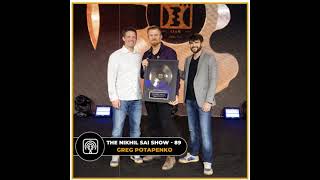
Greg Potapenko, CEO of HR Marketing, explains why Google Ads work better than Facebook for most businesses: Google captures people actively searching, while Facebook interrupts them. He built his agency from scratch in 2011 and now scales by diversifying across multiple platforms and finding untapped customer avatars for existing products.
Chapters
What's going on? What's going on, everyone who's actually listening to this podcast right now? First of all, guys, welcome to the Nikhil Sai Show, which is hosted by me, the Nikhil Sai. And guess what's going on today? We are back with another amazing 2Karma Club interview. I mean, guys, this is a very, very special interview. It's going to be kind of crazy if you really understand overall what, what can really happen throughout the journey of this guy who's actually joining us today. He's a Russian guy who's a street smart guy who built a marketing agency from ground zero. He's actually a veteran, and, uh, you know, pretty crazy on how he have actually scaled and helped multiple brands through different services like performance marketing, e-commerce marketing, and lead generation. And you know, the best part is they are not backed up by any angel investors, so they're like very street smart, like complete, uh, amazing bootstrapping is what they've done to scale their marketing agency. So they have almost spent over $20 million of their own money in digital advertising. They're a certified partner of Google and Facebook marketing. So again, guys, let's not waste any time. If you're someone who is an e-commerce business owner working on lead generation campaigns on how you can scale your business, I think this would be a perfect podcast to listen to. So let's not actually waste any time and welcome Greg Potapenko, CEO at HR Marketing. Hey, Greg.
Hello, Nikhil, and thanks for such a warm and detailed intro. You certainly have done your homework, and, you know, I'm glad be here.
Absolutely, Greg, we are more than happy to have you on. Thanks for joining us today. And Greg, I mean, it's definitely kind of a crazy story to hear about. Like, I would love to dig deep into like your backstory. Can you please tell us a little bit more about like how did you get started?
Yeah, sure. So I started online actually about 1998. So as you mentioned, I was born in the Soviet Union, you know, lived in Russia, and then In the '90s, it was pretty tough. So my family decided to move to Canada. So we arrived to Toronto in '97 and I didn't have a lot of friends at the time. And thankfully my dad bought a computer. So, you know, got the internet connection, the good old dial-up modem. And I, you know, I started hanging out in different forums and bulletin boards and stuff like that. I learned how to make web pages because I just wanted to express myself and just kind of, you know, just put it out there on the internet. So I actually built my first website around '97, '98, and, you know, actually it went viral in Russia, believe it or not, because I know I guess I did something right, and I made a lot of interesting connections through that. And so some of those connections, they were already like doing some sort of online business making money, so we started chatting and basically they taught me how to basically do affiliate marketing. So we would create web pages, then we'll try to rank them. That was before Google, that was before search engines. So we would rank them by basically spamming like different link farms. Wow. Every day to go be in the number one spot and then replace banners from the advertisers who with pay-per-click. So it was a CPC banner, that's kind of like before AdSense, right? And, you know, made a few thousand dollars like that and then, you know, just kind of stopped working for me. And I, at the time, finished high school and got into university. So for 10 years I didn't do anything online at all except, you know, just supporting my Russian website. A little bit. And, um, 2007. So I was working like, you know, after the military, um, after graduating, I, um, I was working, um, for a gold mining firm. And, you know, it was a pretty decent job, you know, as, you know, well compensated. I was flying business class everywhere and, you know, a couple of, uh, you know, corporate jet trips too. So it was cool from that perspective, but it's Toronto is an expensive city, so, you know, we're just starting a family, you know, our first child on the way, and I figured I would need some extra money, you know, obviously trying to get like a bigger salary and stuff like that. I was still pursuing switching careers into more like investment banking. So I don't know if you guys know, but I was going through the CFA program at the time, which is one of the hardest financial hardest courses in the world. Like, um, you know, two-thirds of people fail it. So, but anyway, so yeah, basically I was doing that and then I was still serving in the military part-time in the reserves and working full-time. And then I decided to start a business. So I stumbled upon, you know, again, a bunch of guys who were making money online and They had a forum and basically they were generating leads for financial firms in UK at the time using Google PPC traffic, search traffic to convert those clicks into leads. And I decided to try it out. So I remembered how to make websites, so I built my first lead generation funnel. It was actually kind of like an early precursor to What ClickFunnels is now, in 3 clicks I had to build it in Notepad and HTML. But basically I was like, you know, how much money do you need? You know, is it secured, unsecured? Are you a homeowner? Leading the person through the process, through the funnel, and then giving them different type of a loan recommendation based on the answers. And then I tried to figure out Google Ads and started running traffic, and then I lost $5,000, which is where most people would quit, except I didn't. I was pretty good with data because of my financial training. So I actually went back, looked at the data, and I realized there were pockets of profitability. And that's kind of like your basic optimization of paid traffic campaigns. So I killed everything that wasn't converting and scaled up the stuff that was converting. And then I made millions of dollars. No, because it was 2008 and the financial crisis hit. So that whole thing kind of like took a big hit. So it went from 125 British pounds per lead down to 25 pounds per lead. So obviously I didn't make a lot of money that year, but I made a profit, right? So which gave me confidence to continue. And then, you know, the year after I made like my entire corporate salary on the side part-time. And then, you know, in the next 2 years I basically I started doing other things in the affiliate marketing world, but eventually when I was making my annual salary in like 2 months, I figured that it's time to quit my full-time job and go full-time into digital marketing, which was October of 2011, so just over a decade ago. And that's kind of like the early origin story in 5 minutes.
Wow, that's, that's beautiful, Greg. I mean, you know, it's, it's, it's kind of fascinating to see, like, you started, like, there was, like, it's kind of pre-internet, like, in 1998. And, you know, and I, I'm, and I'm very excited to kind of see, like, how you made through this far. And that's amazing, brother. So now, like, you're actually transitioning to full-fledged marketing agency, obviously helping high-level brands scale up. So we would love to hear, as you are specifically, like, helping e-commerce business and you're, like, experienced into ecom. I would love to hear like your pick on like how to actually kind of find like trending products, because ecom is all about like selling the hot new thing, right? So how can someone actually find the top trending products at the current time?
Uh, well, I am going to challenge you a little bit because the— I believe, again, in my experience, finding top trending products is so 2016. Uh, it's no longer the same, right? So consumers are more educated, there's more They're also more skeptical. There's more competition. There's new entrants into the e-commerce space every day. So it's actually like, I would recommend against thinking like product first. Again, based on my experience, I think right now everything is moving towards branding and you gotta come up with a brand that is going to serve a specific customer avatar, specific customer demographic, and solve their specific problems uniquely, um, using, you know, your own unique methodology. So that's something that's gonna be successful long term. I mean, there are still tactical opportunities where, yes, you jump on a hot trend and you may be able to make a lot of money, but I find a lot of these entrepreneurs end up trying to surf those waves.
If you don't find the hot product, you're done. Yes.
Yeah. So I can give you a specific answer, like finding trending products. Yeah. You got to look at Google Trends and there's tools like WatchCount and there's Jungle Scout and all the paid spy tools. And you can do that. In my experience, can work temporarily, but well, then you, you can either try to turn that into a brand, which is kind of what we've done with one of our, you know, early products, actually the one that they're in the listing. But, uh, I mean, I think right now if you start like with the customer in mind, like people you want to serve, like what Russell teaches, right? Um, then you're going to build a brand overall, then just like trying to hunt and Okay, what's everybody running? Let's do that. That still works and it's very much prevalent in affiliate marketing too. Everyone's spying on each other and ripping each other's funnels. What it does is it fills up the cup, so to speak, to the point where there's a point of diminishing return.
You have no more room, yeah.
Yeah, if you're early on a trend, like, think about, I don't know, masks when COVID just hit. The early entrants, especially those who were able to combat the disapprovals in Facebook and Google, they made it.
Ride the flow.
Like, if you're gonna launch a mask product today, are you gonna be very successful? I don't know. Like, that's kind of what you got to be thinking about, right?
I think that's a beautiful perspective. Appreciate you actually mentioned that. I think this really brings back to the point, like, okay, 2016, as you mentioned, it was a hot ride. Like, who does the fastest, you know, product selection and scale it up? But But now it's more about like brand building and long-term store creation where like you have like a tribe of customers who are loving your brand and buy continuously from you because there is no other way to become profitable other than building like sustainable brand. And one of the main problems is like when you actually— because you want to sell something long-term, right? You need to stick to kind of a product, right? So the problem is obviously it's going to get saturated. So many people see that there's an opportunity and the kind of product gets dead. Like, you know, not a lot of people are like ready to buy because they already purchased it, right? So like you are the master, you know, when it comes to e-com here. So we would love to hear like how to actually revive a dead product. Like what do you think are the strategies which can help me to like sell that, you know, long-term product and revive that where it can actually, you know, be sold once again through our store?
Yeah, so that's an excellent question. And I think, you know, I've actually kind of have it answered in one of the case studies that are posted on my website. Not sure if you went through it or not, but basically There's a couple of ways of doing this. So one is you basically find a new audience for your quote-unquote dead product and just sell the same product to them. So for example, you know, in our case we were selling an inspection device that, you know, you'd normally sell to car mechanics. And we, you know, we were having some sales, but it was not really scaling because it was sold to car mechanics for several years, right? And we almost gave up on it, but then like I've served in the military and then I watched a movie about, you know, how some of the special forces use like under the door cameras to see what, you know, what's going on before they go for the breach. So I was starting to look for some sort of YouTube videos about that, but then I found a video of, people trying to inspect their gun. What if instead of inspecting an engine, we use our thing to inspect a gun? And we basically tried that approach and it blew up because the gun owners have never seen that device before.
Untapped market.
And boom, all of a sudden you started selling the same thing to a new market. Then of course, and this leads me to my next point of how to revive a dead product, Um, so typically it's not my style, but like I heard it from, um, someone famous, I forget who it is, but they're in, in the direct-to-consumer space. And they say normally, even if you come up with a completely new product, like it never existed before, you only have 18 months before somebody moves in and pretty much copies you. Like, they can't copy you outright, but they can create a very similar product or even a better one. So that's your window of opportunity, is a year and a half tops. Then you have to innovate and revive that product. So what you need to be doing is listening to your customer and adding features, changing things that don't work, improving on it to come up with the next iteration. So that's another way how you can revive a dead product. So we listen to customer feedback, and based on that, we released a new version, unique, that actually did not exist at the time. This was 2018. Yeah. And, uh, that kind of created the second wave because the first one was kind of dying down and then we released a new version, changed it, you updated it, and that's the second wave, right? So that's kind of what two ways that you can quickly kind of make a dead product work. Sell it to a new audience or listen to the audience and improve it and make the next version that's better.
That's beautiful, Greg. I think it's about like again using your tactics of being a veteran and applying that into business. Like, really, that was beautiful. Like, you know, understanding like, hey, how can I sell this product to same people who are in need, who are untapped? And just shifting that one gear, you know, that, you know, got you started to blow up. And the second way is also pretty beautiful, brother. And now I think this brings back to, uh, you know, the third question we actually have, which is, okay, now you are reviving the product, and the product is kind of very well known. Let's say like, fidget spinner, or like all of this products which are like already almost, almost everyone know because it kind of marketed heavily right now. And we can't still change the product because you already like built a brand and we need to deal with the saturation at scale and still be profitable. And that's where like I think e-com is really struggling right now. So like how to actually deal with saturation at a real scale, like at a very scale phase, you're having hundreds of competitors copying you every day, 100 users opening. How do you deal with that scale and still, uh, standard of saturation?
So first, a disclaimer. I don't think I have dealt with something at that scale of fidget spinners, so I can't comment on that level of saturation. But basically, the textbook answer is you got to do what others aren't doing. So if everyone is promoting the same phone case on Facebook ads, right? So then you're going to definitely reach saturation at scale simply by the sheer number of merchants But then what are they not doing? Right? So first things first, maybe they're not doing Google Ads or Pinterest or TikTok. You can start, maybe they're not doing affiliate marketing, maybe they're not doing influencer marketing. So there's different things online where you can be where your competitors may not be yet. Right?
Wow. Different pools of traffic. Great.
And then there's a whole offline world and I mean, that's kind of, going into the uncharted territory from e-commerce. But like, to give you an example, so we've been, for example, with our, one of our brands, we've been selling it for, you know, well over 4 years online, tens of thousands of orders and everything. And then I go to a trade show in Las Vegas 2 weeks ago and nobody at the trade show has seen it except for 2 people. You know what I mean? So that means there's a whole ecosystem of people who aren't on Facebook or maybe like, you know, aren't older people, whatever, they shop offline, they go to their favorite store. So that's another thing where you think you're saturated, but actually not. So fidget spinners are actually not a good example of that situation because they were everywhere. They were in every dollar store, they were in every store, even offline. So that's like the next level. But I mean, saturated online on Facebook ads, chances are you're not saturated on on, first of all, other online properties. There's a whole different world offline. So you can start going to trade shows, you can start doing traditional PR. Like we were able to get editorial in magazines in print, and that's excellent. There's brick-and-mortar retail potentially. Like there's all of those venues that are open to push your product in front of people who haven't seen it before.
Yeah, true, true, Greg. I think, I think it's really, again, dialing down to ideal audience and understanding where they are. Now it's like this Facebook Ads plus e-com store is like so hypey that everyone just want to do that thing, leaving the opportunity on the table, which is like different pools of traffic, as you mentioned, which could be like influencer marketing, churning into email list and getting into offline stores and stuff like that, getting into different supply chain. I think that's a beautiful way of looking at how you can deal with saturation because your, your competition is not selling here. So basically there is no saturation at all in this space and you could be the king in all, right? That's awesome, brother. Yeah. And let's get in the next question. This, uh, this would be very interesting to answer as well. I mean, you have been spending heavily on advertising for your own brands and, you know, the clients actually help with and, you know, different people overall. Like when it comes to like running ads and marketing, right? And again, it's gonna be tough to determine, like if you kind of get into like pros and cons of scaling up, you know, uh, what do you think is like the main difference between like running Facebook Ads and AdWords?
Well, that's a whole different topic in itself, but you got to understand the fundamental— if you, again, I don't know the knowledge of, you know, an average listener to your show, but let's assume you, you don't know much about either. So they're different systems, right? So Google Ads and Facebook Ads, they're— first of all, they're very different in terms of the mindset of the person person who is either on Facebook or Instagram or whatnot versus a person who is on Google. And remember, Google Ads is not just AdWords. AdWords actually is no longer a term preferred by Google. They rebranded to Google Ads simply because that notion that everybody thought that Google Ads was just AdWords, which is PPC search ads, which is not true. They also have a huge network banner ads, they have YouTube ads, which is video format, and they have other things like, you know, other different types of traffic, but those are the 3 big ones that a lot of people don't know about the banner ad network and the video YouTube, or they think YouTube is a completely different beast, which is actually not, it's part of Google Ads. So Facebook is more like basically interruption marketing, somebody is, you know, on Facebook socializing, going through content, and then boom, they see your ads. So that's a different mindset versus search where I have a problem, I have a toothache, I'm locked out of my house, or I need a solution now, or I'm trying to buy this, what's the best case for my iPhone, and then I wanna research that. So that's a very different mindset. Google, sorry, YouTube is a little bit more of an interruption because you're on YouTube, you're either searching or you're just enjoying it and then you see the mid-rolls and pre-rolls. So that's more like Facebook ads. And then display, it's also more like interruption where you might be just browsing whatever website and see a banner ad or you could be doing that research, reading a review blog about— phone cases and then there's an ad. So it's kind of hybrid model, hybrid everything. But in essence, if you have the budget and you have the capacity, you want to be on both systems because what happens is people go from one to the other. So let's say somebody sees your ad on Facebook, they may not take any action at that time, but then they may remember and go to Google and say, you know what, I saw Nikhil's podcast, I'm gonna Google it. And if you're not there organically because you—
It's tough.
Then you're missing out or vice versa. Somebody clicked your ad on Google and then they didn't buy. Well, guess what? If you then retarget them on Facebook, they're more highly likely.
More chances, yeah.
To go back and check it out because, oh, well, these guys are omnipresent.
Yeah, I think omnipresence is really important. Brings back to understanding your customer needs to at least see you 7 to 8 times before he pulls the trigger to say yes.
Yeah, I'm going to add one more thing. It's also like, again, let's say in the context of e-commerce or not necessarily. So if people don't know you exist, they are not going to be searching for you. So if you're trying to use Google Search Ads to promote your thing that no one knows that exists, it's a new category or a new brand, they won't find you. I mean, there are ways where they may be looking for something similar and then you put your ads in front of them. Whereas for Facebook, you could actually make yourself known by interrupting people, say, "Hey, we exist," right?
And then they're like, "Okay, cool." You build an awareness slowly and steadily by interruption marketing.
Yeah, so that's another important dynamic that people need to understand, at least when it comes to search. right? You can still inform people about your existence using Facebook— sorry, YouTube ads, and to an extent, display ads.
Yep, awesome, awesome, Craig. Appreciate you actually going into detail on how both of them work. Let's get to the next question about, like, you've been actually helping multiple brands as well to scale to the next level, right? As a marketing agency, you run HR Marketing. So we'd love to learn more about, like, when it comes to acquiring clients as a marketing company or marketing agency, How does that look like for you? How do you, you know, keep on the pipeline?
Okay, actually I thought this was a different question. I thought you meant actually buying businesses, which I did buy a 6-figure business in 2020.
Wow.
But that's a different exciting topic that I'm just actually dipping my toes into. But yeah, as far as acquiring clients as an agency, so I'm gonna be honest, like, 'cause I'm old school, most of my clients I acquired offline. I went to a lot of trade shows and conventions and conferences and made, you know, actually shook hands, on the arm and say, hey man, like, you know, blah blah blah, whatever. Some of them, they're actually ready, ready to do business, right? They're exhibiting and they're, you know, they're open to partnerships. Some you have to do some work. So like a recent example, I went to a show in Ottawa, military and law enforcement show, a bunch of manufacturers. And then I went and basically, you know, struck up the conversation. And after the show, I sent them a little Loom audit of their website, right? And then I said, this is great, but then you're missing this, you're leaving money on the table there. And basically try to add value with no expectation. And one of them said, you know what, we were actually, we wanted to update our website for the longest time. Can you help us? And I'm like, let's go, right? And that's how you, I acquire clients most of the time is either like going to those, you know, trade shows and conventions, conferences, networking, and, you know, trying to add value like that.
That's definitely interesting, Greg.
Yeah. And again, just being fully transparent, I have tested the online client generation methods throughout COVID because I couldn't go to those trade shows and I couldn't make it work, to be honest. Like the cold email, cold DMing, even running ads. You know, it's kind of ironic, you know, an ad agency that cannot generate its own leads online. Well, guess what? I couldn't.
Right?
Like, I mean, we generated leads, but they weren't very high quality. And, you know, some of them weren't ready to buy. So like, basically, for me, it's the old school way.
And, you know, I think everyone finds their own blend of actually acquiring clients, you know? And I think your way of looking at it is just like, you know, the networking thing. And it still works. I mean, that's just, again, you're tapping into a different pool where no one even is, thinking about acquiring them. Everyone is like, I want to keep my ads running for my agency. But guess what? You're not profitable. And now you are like working for free, having fun, meeting new people and still getting clients. I think it comes down to how you're dealing with your saturation in the agency space. That's pretty amazing, brother.
Exactly right. So circles back to what I said earlier about how you can deal with saturation. Agency is a bit of a saturated world too.
Yeah, everybody is a marketing agency owner right now. But yeah, let's get to the next question, brother. You know, we would love to hear more about like the tools you use to manage your clients and projects for productivity and any tools you mainly use for your marketing purposes.
Okay, so I mean, it's probably a pretty standard stack. So we use Slack for team communication and use Asana for task management. One of the things that really helped was the Kanban-style master board where like it's one master board for everybody and they have like swim lanes. Swim lanes, and each swim lane has got a function. So like, you know, copywriting, Facebook ads, video, PPC, web dev. And then like you have cars that like travel from one swim lane to another. So like, you know, we're going to launch a product. So okay, copywriter writes copy, then throws it into, uh, you know, web dev. Web dev, uh, you know, creates wireframes, throws it to the graphics. Graphics designer fills it with graphics. And okay, now it's ready for launch. Facebook team, um, good to go. So that was really a very, very useful thing that I'm really proud of. And as far as other tools, I mean, well, for productivity, just those two. There's then like, you know, time trackers for freelancers, like we use Toggl for that, and Google Suite basically. So like email, Google Docs, Google Spreadsheets for collaboration. For customer service, we use Gorgias. It's integrated with Shopify for sure. I don't know who else, but it's like a very cool helpdesk CRM where they suck in messages from a support inbox, from your Messenger, from your Facebook comments even. And then the agents can answer it close tickets.
It's really intensive, really super cool.
Yeah, it saves a lot of time. You can automate it so like a bot can answer common questions. Where's my order? Boom, here's the tracking number. Uh, really, really powerful.
Um, that's amazing.
Um, what else? Well, I mean, like for, for Google Ads, uh, number one, uh, force multiplier for productivity is the desktop editor. So like if your agency, you ask them how do you use a desktop editor, they're like, what is this? Fire them. Just kidding, but I mean, I've interviewed a lot of people who don't know that it exists, and it's basically super powerful, saves tons of time. It's basically an offline editor for Google campaigns that is like, I mean, I love it. One guy in one of the Google groups said, "If I could marry, I would marry Google Ads Editor," which was hilarious. Wow. I hope something like that existed for Facebook. So yeah, and then it's highly powerful and it makes the time very efficient. Yeah, I want to give a shout out for nolimitcreatives.com. They basically do all of our video editing for us. I used to have a full production team in-house, had like 2 videographers, 1 video editor. We got rid of them. We're basically just outsourcing it to nolimitcreatives.com. So that's another big productivity saver for any sort of video work. True.
Yeah, it's more about like niching down to what you can do best, and you're good at marketing, and if you're getting like production and all that stuff, it's going to create more gears and make the process less efficient. But I believe again, it's coming down to focus on what you can do. That's awesome, Greg. Thank you so much for mentioning the tech stack. Let's get to the next question. I mean, we would love to hear more about like your daily routine. Do you kind of follow any routines every day? How does that look like?
Um, okay, so that's actually the first time somebody asked me that. I listen to a lot of like podcasts and shows and, you know, everybody has a routine. So, you know, I don't have a routine per se that's like, this is the only way I do this because, you know, I have 3 children and, you know, I have, you know, different commitments and I still serve in the military part-time. But I think the military discipline, just, you know, getting, you know, getting shit done basically. That's, So that's my routine, but in general, like, you know, I would wake up, I would do some guided meditation on the Headspace app and basically make sure I hydrate, fuel for the day. Coffee is, you know, pretty standard part of my day, and then I make sure I exercise every day, usually evening. That works for me because I usually do it during the time when my children and I have to drive them to volleyball class or gymnastics or something and just use that time while other parents are there, like, you know, watching their phones in the waiting room, I go to the gym. So that's what works for me is, and what else? Yeah, so basically, yeah, like exercising the body, exercising the mind, and properly fueling and hydrating the body, this is the routine. And then, you know, Work-wise, you know, I try to keep like a to-do list for the day. I need to get better at, you know, pre-planning the day, like the day before, so I'm working on that. That's one of the things I need to improve.
Awesome, awesome. Appreciate you going into detail of how you actually manage your day every day. Let's get to the next question. If there is one suggestion you can give to a 20-year-old yourself, if you can go back and say, hey Greg, this is the thing you should be doing, what would that suggestion look like?
Well, it's, you know, given my backstory, I almost wish I could say, hey, don't stop in 1999, keep doing the online thing. I just found out there was a podcast about a guy who has a very similar situation, also came from Soviet Union, also started online in the '90s, but he didn't stop and he made his He made $30 million by the age he was 19 doing what I started doing in 2007. He started in 2001. Like, he basically— yeah, so I had that like 7-year gap, and if I were not to stop, I would have probably been farther ahead in business. However, you know, like everyone says, like, don't regret nothing. This has made you who you are.
It's a journey.
This is the journey. But yeah, I mean, kind of like a cheater's answer, I would say go back. Like, don't stop, like keep doing it, right?
Yeah, it's gonna take up, right? So let's get to the next question, brother. So your life's biggest achievement so far and any next bigger goals?
Um, well, I mean, I think, you know, I think my family, my children are probably my life's biggest achievements. Uh, it's a lifelong project, but personally, I think, uh, I'm pretty proud of my fitness and health, you know, things like, you know, I just did an Ironman triathlon last year, did a bunch of triathlons, marathons before that, you know. That's kind of, it's pretty exciting getting there from being an unfit, a pack-a-day smoker back in the day. To an Ironman. Like, that's, I think, a pretty remarkable thing that I—
amazing transformation—
everyone, everyone to do to, you know, get, get healthier.
Um, and how about the next big goals? Like, what are— what is like the next thing you want to achieve?
Well, I mean, in business, like, my next big goal is to have that, uh, the 10x, the x thing. So yeah, I, I was working on getting from 7 to 8 figures. That was my next kind of milestone that I want to hit. Um, um, personally, um, I don't know, I think I would be interested in climbing like a mountain, like, you know, um, not Everest, like, uh, K2 or Aconcagua, like one of those that are, that, you know, they're not gonna kill me. Uh, Everest, I don't know.
That's awesome. Yeah, still, that's exciting, Greg. Yeah, I mean, kind of wild ideas, but yeah, love it, love it. The kind spirit you have when it comes to taking Ironman and kind of doing challenges. I think that's really important to have that fun in life. Let's get to the next question, brother. I mean, again, as entrepreneur, you never consider mistakes as mistakes, but if you just look back and say, hey, this is the biggest learning I ever had, like, what was the biggest mistake in your life so far?
That's something that I wish I had more time to prepare for, but, um, I mean, obviously, again, mistake was, you know, not, not pursuing, uh, the internet marketing in that period, you know, early 2000s. That's, I guess, you know, could have been a mistake, but at the same time it made me who I am, so maybe it's not a mistake. Um, you know what, like, I, I can't really think of anything that's like stands out. This is the thing I wish I've never done, this, you know. I don't think, like, I mean, probably shouldn't have started smoking when I was a teenager. Like, that was probably a big sake, probably gonna cost me a few years of my life at the tail end of it. No, I mean, I'm sorry, like, I didn't really prepare for this question, but—
No worries, that was definitely on point. Yeah, I love it. Let's get to the next question, brother. Your main inspiration for success and key people involved in your journey.
Okay, so inspiration for success. Well, first of all, my dad, he was an entrepreneur. Entrepreneur back in the Soviet Union when it was actually, you know, you could actually go to jail for being an entrepreneur. And then, you know, I, as a kid, I actually worked— they, you know, one of the things they did, they had a manufacturing facility making apparel. So actually, as a little kid, I was, I was in there after school every day, like, basically sewing and cutting and helping out, and actually made enough money to buy a car. As a, as a, like, a, you know, 8-year-old, 9-year-old, because my dad would pay me to compensate for my, for my labor.
And wow, that's interesting.
In 1991, well, we couldn't buy a car in the Soviet Union if you weren't in the Communist Party, so all that money was just sitting there in, in government bonds, which in 1991, it was a big default. Soviet Union ceased to exist, so were the bonds. So all that money went to dust. But, uh, that was actually, that was my first kind of quote unquote entrepreneurial foray was in the '80s and the '90s working for my dad. So yeah, he was a huge inspiration. He still hustles to this day, like, and I paid him back because I taught him in his 60s how to run Google Ads and do affiliate marketing. And he got, for a period of time, to 5 figures a month. He was making—
Wow.
$20,000 a month running campaigns. So they were able to buy a house for cash and everything. And so that was my way of paying him back, which means that, yeah, even if you're old, you can do it, by the way.
That's amazing, brother. That's beautiful, right? You know, he's still sticking to it. And, you know, I think entrepreneurship is like a driven, like a force which is internally existing and it cannot go away. Like, you just keep on that grind no matter what age you are. He started at 8 and he's at 60 and he's still making multiple 5 figures. That's an amazing journey.
Yeah. And then of course, after there's different people, you know, kind of like people who were my friends, you know, mentors, and, you know, even like people like Tim Ferriss, whom I never met, but he had a huge influence on me because his book 4-Hour Workweek inspired me to quit my job and do other things like learn to swim. That was actually from his book 4-Hour Body. And then a lot of people I met through those networking events I told you about that became friends or kind of unofficial mentors. And I know a lot of people who who started 7, 8, 9-figure companies, and, you know, kind of the conversations that I had and the privilege of talking to them, I think that kind of helped me along the way as well.
Yeah, it really sets up for success. That's awesome, brother. And Greg, like, what a beautiful podcast, brother. And where can our audience find you mentoring or start working with you?
Oh, well, excellent question. So, um, I, I am mentoring military veterans right now as a kind of on the side. So I'm a member of a local kind of government-backed organization in Canada called Princess Trust. So that's one way. But then I also have a Facebook group for veterans called Enlisted to Entrepreneur, where I focus on teaching army veterans, military veterans, first responders on specifically digital marketing and e-commerce businesses. So like, you know, that's kind of my jam. That's what I'm doing right now in terms of coaching and mentoring people one-on-one. That's not to say that if somebody wants some help or advice, they cannot reach out. By all means, you can reach out to me. So you can find me on Facebook and LinkedIn using my first and last name, right? You know, on this podcast, Instagram, my handle is @hour48, H-H-O-U-R-48. You can find me there. And my agency website is h-our.agency. So check it out if you want to see what we do. That's another way of getting in touch.
That's awesome, Greg. Thank you so much for giving our audience the opportunity to stay in touch with you. So guys, make sure to hit the man. You'll definitely have a good time chatting with him and ask any questions and just network with him. He's a cool guy to obviously network and, you know, have beside you while you're growing yourself up. And that's awesome, brother. So any last word before we conclude the total podcast session today?
Um, you can do it. That was all the inspiration my, uh, officer gave me on one of the toughest military courses that I've ever done in my life. He's just simply said, you can do it, with a face like that.
Yeah, yeah, you can see it, you achieve it, and If you can't believe that you can do it, like, you can't do it at all. So it's just about believing yourself. And that was pretty amazing, brother. Thank you for the beautiful advice in the end. And once again, Greg, thanks for this amazing opportunity. It was definitely amazing experience to have you on, looking at your story, looking at how you grinded till date and the mistakes you have done so far. Like, it definitely added a lot of value to the people who are actually listening to this podcast. So guys, I hope you had amazing value so far. So make sure to hit Greg and check HR Marketing, uh, you know, his agency. Pretty amazing stuff. And make sure to hit him up on Instagram. And, uh, that's it for today, guys. So stay tuned for the next interview. This is me, the Nikhil Sai, and Greg signing off for today. Peace. Thanks really for joining us today.
More from Nikhil










BURNED $1.5M in his 17years online #digitalmarketing #entrepreneur #onlinebusiness
