Your Business Is Stuck Because You're Focused on the Wrong Metrics
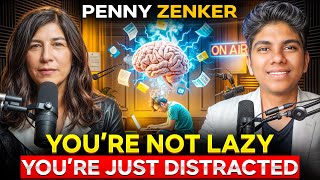
Penny Zenker, an executive coach and "Focusologist," explains why most businesses stagnate: they track the wrong metrics. She teaches the 1-3-5 planning method, the 80/20 principle, and how deepening existing client relationships beats chasing new ones. Focus isn't about doing more. It's about doing fewer things that matter.
Chapters
How did you discover entrepreneurship?
One day I just said, why not me, right?
What was the aha moment for you to become an entrepreneur?
I quit. I left that, that company and I, and I started my own business.
And how do you define focus?
Focus to me is very strategic.
What's the most actionable thing they could be doing?
Step back.
So how do we come back and not follow or fall into the death trap of social media addiction?
To move from a push mechanism to a pull mechanism.
After a certain amount of success, how do entrepreneurs redefine their success, redefine their purpose?
We are driven by something that helps others in some way.
If you could go back and talk to 20-year-old yourself, what would be the number one suggestion you would give yourself?
You know, I want to savor those last moments with her, right?
Inspires you to wake up and get to work?
It's people. It's, it's people. It's the difference that it makes for people.
What's your life's biggest achievement?
It's really my kids.
What's going on? What's going on everybody? Zachary, listening to this podcast right now. First of all guys, welcome back to another episode of The Nikhil Sai Show, which is hosted by me, the Nikhil Sai. And guess what's going on today? I'm back with another amazing guest. Today it's going to be an extraordinary podcast, especially if you're a business owner who's struggling to get yourself in the right direction. I mean, entrepreneurship is a really, really lonely journey, right? And we get distracted, we feel like we're not going in the right direction and we feel like we're overburdening ourselves or sometimes feel like we're not executing enough. And it's definitely a very unique cycle for us to live in. And in this type of situations, we need right direction, somebody, a mentor who could guide us to the right direction. And that's who we actually have today. Today we have an executive coach, international speaker, bestselling author. She has actually founded multimillion-dollar technology companies. She coached for Tony Robbins, delivered a TED Talk that got over a million views. and she's known as none other than the Focusologist. Let's not waste any time and actually let's welcome Penny Zenker. Hey Penny.
Hi Nick, how's it going?
It's going great, Penny. First of all, appreciate you jumping on. I think it's an honor to have you on our podcast and we are excited to dive into different situations, journeys you have gone through to, you know, get to where you are and learn more about your expertise and the, the method you actually use to help entrepreneurs, you know, succeed in their businesses. Now, just to be clear, Penny has been on all the major publications you can imagine. She's an instant Amazon bestseller author with her book, "The Energy of Thought," and getting a million views for a TED Talk is no joke. So I'm stoked. You have a strong message. You've been on all major publications, NBC News, Forbes, Inc., ESPN. I mean, you know, there's not a single— I mean, it's exciting for me. People really want to kind of know. I think it's really the context of who you are as a person. And again, none of that matters, right?
None of that matters. All that matters is that what I'm going to say today works. That's it.
We love that. So I'm stoked to kind of attach and detach your credibility and attach to your personality. So take 20 years, 30 years before, how was your upbringing? What prompted you to become the Focusologist? Take us through your journey. How did you end up where you are building a multimillion-dollar technology company to now speaking on stages and transforming millions of lives?
Where does one start? Well, I was a baby. No, you know what I think is a great place to start is I made an important decision for myself in the college that I chose to go to. And I think that says a lot about who I am and how I continue to further develop. So I went to Drexel University, which was at the time one of the only, there were only 2 co-op schools in the country that really focused on work study. And I think, you know, my motivation and why I wanted to do that is I'm such a hands-on, learn-as-you-go, practical person. And it was— that was why I made that decision, is that I would— it did take 5 years to go through the program, so it was a little bit longer. I knew that it was a commitment in me graduating with 2 years of experience and that I could really test out the different careers. Like, I thought I wanted to be a lawyer. I went in thinking that I might want to be a lawyer. I did my first co-op at a law firm and I was like, no way, I don't want to be a lawyer. So sometimes we have to do some trial and error to see what's a fit and what works for us. And I think, you know, that's why I would start there is to say that the through line through everything that I do, it's, it's really about figuring it out along the way and making sure that you were trying and experimenting and listening so that you can really take in all the feedback that's available to us that very often we skip, we don't listen to, we go too fast, right? And that we really take advantage of that feedback so that we can adapt and adjust quickly. And I, I think that in itself is the secret to my success. It doesn't mean that everything was always easy, but I made the commitment to learn along the way and not to get caught up in any one error or mistake or—
Yeah, for sure. I think that's a very important lesson for any— most business owners, entrepreneurs who get started, they always fumble on the first thing they're trying to do and, you know, just overthink. Again, I can remember myself, you know, almost starting my own business. I was just too scared because there was no guidance, no light in the direction which I was walking through. But I believe, you know, the consistency and learning from, you know, mentors like yourself will always allow you to get that experience, get that direction and clarity. So, okay, interesting journey. 5 years in the college, assumed that you would get into law practice typically, but you realize that isn't the case. How did you discover entrepreneurship? What was the epiphany? What was the aha moment for you to become an entrepreneur? Why did you even choose this pathway overall?
Well, there's a lot of different reasons, and it, it started much younger, but I, I'd say the main thing is, is that when I got out of school And I was actually working in Zurich, Switzerland as a consultant for Arthur Andersen. And, uh, and, you know, I was working like incredible hours. And then I had this, this person who came in as a contractor and he was sitting across from me and I was managing him and he was making 4 to 5 times what I was making. And I was teaching him what to do. I thought, something is wrong here, you know? And I could continue this slog, or I could say, well, at first I was like, well, I can't do that. I don't, I don't, I didn't have an IT degree even though I was in technology. So that's another story in and of itself. But so I had all these reasons, like you said, I was overthinking. And then overthinking stops us from taking action. And he, one day I just said, why not me? Right? If he can do it, I can do it. And so, and I think that's always been something there for me is that If someone else is doing it, then it's possible. And then it's figuring out how it's possible. So that's what really got me into my own business. I quit, I left that company and I started my own business. Started with just me and I built it up to a multimillion dollar business.
Yeah. Isn't that the most important question for anybody? Why not me? Because there's no point of life. It's just a choice you're making to live the way you want to live, you know? I think testing your own potential. And I believe I have a similar mantra, and it, it's, it's not something I created, but I probably have gathered, uh, from talking to several people like you. It's like, do it anyways, even if you're scared, even if you feel you will fail. Yes, anyways, you got to show up to the work, you know, just do your best in execution and let the result come through. And, you know, you're not going to let your action differ because of the potential result, which might be positive or negative. You don't want to change your actions according to it. So Appreciate you sharing that. I'm curious, what were some of the key strategies that you used to scale your technology company to multimillion dollar revenues? It's not pretty easy to get there. So I'm curious on what worked for you. What was the thought process like? What was the journey like to going from, let me quit my job, I'm going to become a consultant because I saw somebody making 5 times more than me, to actually building a big business from that idea?
Yeah. So I guess, let's see what the most important things that I learned, I would say one of the things, and I coach this a lot when I'm working with leaders is that we tend to want to go quickly to acquisition. So if you're already a little bit established, let's say you've already gotten your, your business established. We continue to spend so much time and energy on acquisition, and acquisition is important. Don't get me wrong. But what we fail to do is to do more with what we have. And so one of the lessons that I learned early on, you know, after about maybe a year and two years into my business. Was, you know, is, is to focus on how can I do more with the clients that I have? How can I offer more services and go deeper and wider within the organization? Because I already have a relationship, they trust me. And so it's much easier to get somebody who you're already working with to buy more from you. And so, you know, so, so there's that. And it, the, the other thing that is, is critical is people don't invest in the conversion process. Like our goal, it's important to keep sight of what what the goal is. It's so easy to get lost in the task, especially in the beginning when there's so many things to do. You're working in your business. You probably heard this expression, right? You're, you're in it, you're operative, and you're lost in the task chasing the rabbits, but you lose sight of, um, that the point is to catch the rabbits. So there were times when I just, I was working around the clock on the different projects and, and getting involved in everything and the micromanagement of my people. And all that did was kill my productivity. Because I wasn't working on the most important things. I was just working on everything. That's another huge lesson is to learn how to delegate and delegate effectively so that you're empowering your people to do the work, to make their own decisions. If they know what the end goal is, and that's to convert, to extend, to provide quality, whatever their role is, and they know it well enough, then they can be autonomous in their decision-making. Knowing that that's what they're working towards, and then you can focus on where your zone of genius is, right? For me, it was in sales, but I know for some people in technology, they're the developer, and that's okay too, right? It's to know where your zone of genius is as well.
Yeah, I love that answer. I, and I believe that's on point. Most entrepreneurs do not understand their zone of expertise and they get burned out because they do things which they're not supposed to be doing. It could be accounting, it could be hiring, it could be operations or management, communication, running meetings. We gotta figure out what we hate and we just gotta delegate, like you said, because that's when you could build a team and a culture who could load things off you. Because if you are taking all the load, then the business constraint is literally the founder himself, which is 90% true for most businesses.
Absolutely. That's what kills people's business, right? Is, is that they focus on the wrong things.
Yeah. I love that. So it brings back to the next question I have. You know, you have emphasized very important, like very clearly the importance of having focus and clarity. Can you please explain how do you define focus and what are the steps one needs to take to focus on the right thing and maintain it?
Sure. So yeah, like I said, I was just saying it's a great lead-in that many times we're focused on the wrong things. We're, we're focused on the little things. So it's important to understand most people think that focus is about your attention. Be really attentive to what you're working on. Well, you could be working on the wrong things and then you're quickly running in the wrong direction. So focus to me is very strategic and it's reconnecting and being clear on the higher-level objective is, and then understanding the 20% that makes 80% of the difference, right? So using the 80/20 rule so that you can, uh, engage in what I call a reset practice that you're constantly looking for what's the most valuable thing I can do right now. What's the most valuable thing I can have my team doing, right? And, and really getting everybody thinking on value creation and, and what that means to, to your organization. So I have 3 steps that helps me, and I talk about this in my, in my book, The Reset Mindset, that's coming out in September. It's constantly revisiting these points. Step back when you feel overwhelmed, when you feel frustrated, when you didn't get the result that you wanted. When you did get the result that you wanted and you want to make sure that you, you make, you know, you continue to get that result over and over again, step back, step back away from the emotion, from the way you've always done it, the way you've always looked at it and be objective and look at it. What's, what's really working and what's not working. Right. And get simple questions, but to get clear on that, what's the higher level objective, what's working and what's not working in that step back. And there's other questions you can ask, but let's keep it simple for now. So that's the first step, step back. The second step is to get perspective. What else, you know, to, to just explore and not just take the first thing that might be the easiest accessible answer, but really to explore, well, what else could I do if I was Richard Branson and I was growing my business? What would I see as the most important thing? So it's important to like, You know, if I was in a different industry, what would be the most important things? Because sometimes we just need to light up that circuitry to think differently. And that's where innovation comes from. That's where we can come up with really the multiplier factor is really to understand and check out what our other options are before we decide, OK, we're going to go forward. And then the third step is to realign around the next best step.
Totally. Yep. That makes clear sense. And I think this is very, very crucial. You're right. Most entrepreneurs are just in the hustling, bustling daily mode. Rarely I've seen entrepreneurs who actually take a think day off time where they actually kind of really take a step back and kind of get the perspective like you're talking about and recreate their priorities. You know, it's just that they're following the same strategy they created every weekend and they're not rethinking on it every time they crap it and then recreate another strategy. So it's like starting from scratch again and again and again, over and over. And no wonder why struggle. So that makes sense.
Totally. Or putting a new system in, right? I know so many entrepreneurs that go from system to system to system instead of really rethinking, well, what is it that we're trying to achieve? You probably don't need to change systems. You probably need to change the way you're approaching your business and how you're using the system, or get more experience with the system, or I, You know, can't tell you how many times I've seen people change their CRM system for no good reason, just because the new one came out and everybody's talking about it and I should do that. Not necessarily. So Nick, I wanted to make one more comment to what you said, cuz it's so true. You said something about the think day. And I think sometimes what happens with entrepreneurs is, and many people, is that we get caught in some all or nothing thinking. Mm-hmm. And we think, well, it's gotta be a whole day to think about things and to restrategize. It doesn't have to be. It could be thinking half a day. It could be a thinking hour that's reserved every Friday. It could be, you know, so we can do it in pieces if we don't have a larger block of time. Although I do recommend a little bit larger block of time because it gives you that space to free think. But then I recommend that you have two timeframes that are connected. So what I mean by that is, is that You start with a question, but your brain needs time when you're not working to make different connections. Some of the best ideas that I've had are finding the least likely connections. And I'll, I'll tell you what I mean by that in a little bit, but that happens when we're not working, when we're off riding our bike or taking a shower or walking the dog, out with friends. And then all of a sudden, right, there's like, oh, I've got it. So we need to break up that thinking time. So that we have time to ask the question and initially think about it, but then to come back and to rethink.
That is so true. I mean, we all have the best ideas coming the shower time, at least for me, it relates to what you're mentioning there. And imagine if you're not thinking, uh, you know, like that with, without any pressure on us, the creativeness just wouldn't exist. We're just thinking with boundaries most of the times when we are working and thinking, but if we take that time off, we detach ourselves. From the personality, the situation, the emotions, the, you know, the burning fuck you see in the business, and then keep it in mind. I think, you know, we will have a much better perspective like you mentioned. So let's talk about this. You have created the interesting concept, the reset moments, right? I'm curious, if a business owner is looking to create a reset moment, what's the most actionable thing they could be doing? What are the first few steps, the next few things they could do to create that reset momentum in their business, in their life? To, to walk towards the trajectory they would like to achieve?
So I think, let me explain the whole framework just really high level, right? So the book, the book that's coming out is called The Reset Mindset. Wow. And we build a reset mindset through these trigger points, which are reset moments, and they help us to reconnect, to rethink, and really be intentional.
Mm-hmm.
And what happens intuitively in those reset moments is we do that 3-step practice that I just talked about. It's a reset practice to step back. To get perspective and realign. It's almost intuitive when we label it and call it a reset moment, cuz it's not a pause. It's not an inactive period. It's an active or proactive period. So that's why we call it a reset moment, right? Reset has that action to it, right? It's letting go of the past and, and starting with fresh eyes kind of thing. So, and a reset moment could be, uh, something that can happen in 60 seconds. So it might be a breathing exercise for 60 seconds that you do between one meeting to the next so that you show up at that meeting fresh and clear and intentional about what you want from that meeting, and your head's not still in the previous meeting. But it could be a longer period, 10 minutes, an hour. It could be a short reflection on a conversation that we just had, and I said something that was inappropriate or not in line with my values. What do I do about that? You know, then I, I think about it. What would I rather have said? And then I come to you and I own that. I say, apologize for blah, blah, blah. Right? So, so that could be a reset moment. So they're present every single day and there's different timeframes. Sometimes a reset moment is when the market changes and it takes us 6 months to turn around our business or something, right? It can also be a longer period of time that have multiples in it. So I just wanna make that. Clear to understand, but each time we get present to it, we are engaging in this practice and being more intentional in aligning our goals and our values and our intentions with the actions that we're taking. So it starts, let's just say daily, make your day bookends. Start your day with what I call my 1-3-5 planning method. So I look at one thing that I'm working towards today that's going to bring me towards a long-term strategic goal so that I'm not letting the urgent things crowd out what's important and impactful. So 1 thing, whether it's a phone call, it's an outline, it's an article, whatever that might be. 3 things that are working towards midterm milestones. So important milestones that are already defined. And then 5 things that must be done by me today. That's how I start my day. And then of course there's the, the rest of the to-do list, right? But these are the essentials. These are the most impactful things that, that must be done today in order to achieve my goals and also to deal with chaos that might ensue during the day. And then at the end of the day, on the same sheet is a way for us to review what were my wins today. Instead of looking at your to-do list and looking at all that you didn't do, well, what were my wins? What, what did I accomplish? Let's, let's focus on that before we create what our tomorrow's to-do list is. Let's look at what were our reset moments so that we're more present to them. Where did they show up? What did we miss where we could have had one and should have had one? What were our distractions today so that we can start to own our distractions at a higher level? And then lastly, what are you grateful for? So that we end the day appreciating, you know, what, what we did, what we accomplished, who we interacted with, because that's the kind of energy that keeps us productive, right? And keeps us creating meaning in what we're doing and who we're doing it with.
Yep. I love that. That's super actionable, Penny. And I think the advice you have given really applies to most entrepreneurs who are actually listening. And the best part is it can happen any moment, like the split second, like you're talking about that one idea, that one thought process could be a whole big game changer. And I think getting that intuition and getting habitual to experience those resets every now and then, and Being able to identify them and create momentum around whenever we are experiencing a reset is definitely a great way to look at, you know, the direction we are actually moving forward. Now, I'm curious around, uh, you have been working with a lot of visionaries, entrepreneurs, you've been coaching people on focus and whatnot. Looking at the successful people you have worked with, and obviously the ones who try to be successful, but unfortunately couldn't, what has been your observation working with leaders, you know, especially in terms of leadership and management? And what do you believe are the traits which are serving well for business owners and leaders who are trying to build great products and, you know, and exceptional service?
So the traits that I find with the most successful people is they're not afraid to say no.
Big one.
They also say yes to many opportunities. And then, you know, I mean, there's, there's a mix. I see, see some that, you know, that will identify the opportunities as they come along, leave space for opportunity. So they'll say yes, even if they're not ready for it, they'll say yes, and they'll figure it out. There are those though that are very clear, therefore they'll say no to opportunities that aren't a right fit to where they're, where they're going. So that, that's important too, not to dilute your focus. If it's in that direction, right, being open to those opportunities. They ask better questions, right? And more challenging questions, right? They see that a constraint can be actually an opportunity. It can be a catalyst. And so, you know, instead of saying, why are my customers buying and getting to know more about why customers or marketplace people are buying, they could take a page from Blue Ocean Strategy, if you're familiar with that, that phrase. So I, I love that way of thinking and they ask who's not buying and why. Tap in and open up an entirely new marketplace. Right. That's something like what, what Uber might have done in that process is who's not buying. Let's create a service that's going to handle the people who are not in the cities, but are having trouble getting to where they need to get to or getting their, you know, whatever it is, they want to go out for a drink, but you know, they don't want to drink and drive and there's no taxis out in the suburbs. Right. And so, et cetera. Right. So they approach the problem in multiple perspectives. That's why I come back to that step of get perspective, is they're open and willing to reinvent and start again if they see that there's an opportunity through getting perspective.
Hmm. Yeah, that is wonderful. And yeah, I believe these are the risk-takers who build great businesses. You know, they're not afraid to start again. So appreciate you sharing that. Now I'm curious, leadership, do you think this is everybody's cup of tea? Can a person choose to become a leader? And what do you believe is best practice for somebody to study and learn leadership? What do you believe is like a game plan for them to get there too? I think it's, it's not a destination. I believe leadership is more of a journey. I'm curious on what do you recommend for most entrepreneurs to become a better leader? What practices do you suggest?
Well, I want to, I'm going to come to that question in a minute. You said it's the risk takers. I want to, I want to come back to that point if you don't mind, because I don't think it's just the risk takers. I think when we use it's my experience. I shouldn't say I think. It's my experience that when we have a process and a structure and to follow, that it's not really, it's, it's taking advantage of an opportunity. So, like I said, with asking those questions of who's not in the marketplace, there's an element of risk in everything. There's an element in risk of doing nothing, of becoming obsolete, right? So, you can define where, you know, today's marketplace, I think that's more of a risk than it is to move into innovation. But with the right practice and the right steps, I believe, and from my experience, it gives people the confidence to make better decisions faster with more confidence. So I just wanted to say that, um, real quick. I hope you don't mind.
Yeah, it was really wonderful. So let's get back to the question, which was, okay, how can somebody become a better leader? What's the game plan?
So the, the game plan with leadership is, I mean, what is leadership? Right. Leadership, right, is such a hard thing to define. Leadership is, is being able to have a vision, hold a vision, and inspire the vision in others, inspire people to action, to, to be with that vision. Right. So if that's the case, then building your leadership is some of the things that we were just talking about, right, is how you think and approach challenges. Is part of leadership and how you inspire others and educate them on how they too can solve problems more quickly and easily and not get flustered when there's a problem or something that goes wrong, right? How do you handle it? And when you have a process, like if you, if you teach people as a leader, you learn these 3 steps and some frameworks that go within these steps, and you teach other people how to use it, you're going to be able to navigate change, challenge, and uncertainty in, in a much more effective way. So it's, It's how you build other leaders. And, and then it's also effective communication is working on listening, listening more to what people are sharing with you. Are there challenges? Listening to what skills you, they're telling you they need and listening by, by observing and seeing what skills they need to build that they might not recognize that they need to build, right? So it's listening for what, what's there and, and what's deeper.
Love that. I think there's probably one of the most appropriate descriptions of leadership and the practices one should be doing. And I believe, you know, a true leader is the one who actually upskills the people around him, you know, who— and all towards, you know, put the effort towards one common vision. Appreciate you sharing that. And let's talk about this, Penny. It's an interesting world we're living in, in 2024. Everybody's distracted. There is just so much content out there. People are scrolling on social media every second, you know, they're watching new reels, short-form content. It's a distracted brain, you know, like there was— I'm assuming this— there was never in the time where human beings were watching thousands of pieces of content every hour. Like it just wasn't an option. Like an average commercial was like few minutes at least. But now every 3 seconds there's new satisfying video. In this era, I've seen most productive entrepreneurs who are running multimillion-dollar businesses also fall into the trap of this quick and cheap dopamine of watching things which are irrelevant, which is just giving them that sense of accomplishment, you know, to keep them happy for that moment. So how do we come back and not follow or fall into the death trap of social media addiction and keep the focus on what matters the most? How do we prioritize that? How do we maintain that focus?
Well, I think so first what I say, you're absolutely right that, that we've never been more distracted. And, and technology is only one piece I want to say, because of the uncertain economic situation, right. Or political situation. All of that creates also distraction. Right. And our mind goes to, well, what does that mean for the future? And, you know, are my taxes going to go up? Am I going to be able to afford to feed my family? You know, like all of these things are also distractions. And when it comes to, so we live right now in a state distraction. So it's not just that we're distracted by this or by that. We live in a state of distraction and it's killing not only our productivity, but it's killing our ability to think critically and, uh, and to connect with ourselves and with others. So it's a huge problem. And the way that we address this is number one is we get clear and specific on what's distracting us, because if we want to take back ownership of, of of our focus, right? Take back and own our focus. Then we have to see what's within our control. Most distractions are within our control. So I'm going to tell you, we need to step back, right? So I'm going to go through the 3 steps again. We need to step back and we need to kind of track what's distracting us. So you may have been familiar with something called the Pomodoro effect, Pomodoro technique.
Okay.
So it's, it's, it's a, it's been around for forever. It was invented by an Italian. A gentleman, hence the tomato is the, the Pomodoro tomato is, uh, is the symbol, but it was about chunking your time into digestible chunks, uh, 20 minutes, 30 minutes, 40 minutes, knowing what your amount of attention is and then taking a short break and then going into the next block. So it was about how you plan your blocks, but also one of the things that it did was it had you make a dash every time that you were distracted so that you're now creating your, you kind of, you're in this step back phase. You're becoming a professional noticer is you're noticing what's happening. So when you track what's distracting you, or like I have on my worksheet that at the end of the day, what distracted you that you write it down. I got, you know, I got 3 calls from junk calls that came in and I picked up the phone or my notifications went off 100 times. And, you know, so now you're seeing it in black and white. It's, it's almost like when you go on a diet, they tell you to write down everything that you eat and that you drink so that you have this heightened awareness. You go, oh, I shouldn't, you know, I see how much sugar I actually eat and why I feel like, you know, this all the time, or I had 10 cups of coffee. I didn't even realize, you know, so by doing that, you see the things that are distracting you. And now that you're specific, you can create a plan to block out those distractions and you can say, okay, I really am going to turn off the notifications because I see how it's affecting my, my productivity. And I say we move— the best way to move and get away from those types of social distractions is to move from push mechanism to a pull mechanism. So what happens is, is that all these sites and emails and texts and social media, they're all pushing stuff to us. So when something comes out, it's notifying us and it's pushing that content so that we see it. But really we want to create a designated time. So I'm going to take 15 minutes during my lunch break, I'm going to go for a walk for 15 minutes. And for 15 minutes, I'm going to check social media. Now I'm going to pull, I'm going to go in and I'm going to take what I want. I'm going to go look at certain people. I'm going to scroll a little bit. I'm going to check my email, right? So you can be very specific as to how you're going to consume it when you're pulling it versus when it's being pushed to you. Does that make sense?
It does. Yeah. I think it totally does. And this way, you're, like you said, you're controlling what you can control, which is you're just keeping your sanity in the right place and you're choosing to spend the time that you have decided to instead of mindlessly scrolling on social media and wishing for some magical thing to appear in front of you. That was very, very mindful. Penny, thank you so much. This is very insightful and not just insightful, but actionable. That's what I love about your advice. So yeah, I have one last question before we get into a different set of questions here. I believe the highest achievers have the highest purpose. And you have emphasized that enough overall. And for me, transparently speaking, the reason for me to go from zero to a million was absolutely changing the financial situation of the family. That was the first priority. And then comes the rest of the things, which is, you know, keeping my clients happy and having the lavishness and whatnot. I'm curious, after a certain amount of success, how do entrepreneurs redefine their success, redefine their purpose so that they could actually limit— they could actually not let the limitations of their execution, how they could actually think super big and have a drive inside of them. So what do you believe are best things or best practices to discover a higher purpose and keep that momentum, keep that excitement to show up for work and challenge yourself every day, even after having some basic accomplishments?
There's two pieces to that that I'd like to answer. So the first thing about finding a higher purpose is it's always outside of ourselves. If you're in business to make money for yourself, and that's what it is, is so that I can have this fancy car and this big house and whatever, you might get it, but you're not gonna feel satisfied at the end. And it might drive you to some extent, but you're also gonna get to some point where you're like, okay, you know, yeah, whatever. Right. You know, I've gotten everything I want. What now? Right. And you're gonna, you're gonna just let down, but you're gonna have all these things. And, and probably you sacrifice to get all of those things. You probably sacrifice some relationships in your life. So you're probably not full of meaning. So when we connect to a greater purpose. So when you say greater purpose, to me, that means that we are driven by something that helps others in some way. It could be that it helps others because we went through a terrible situation and we don't want anyone else to have to experience that. It could be like part of, and this gets into the second part of what I wanted to say. Part of why I set really big goals for myself is because my dad died when in an accident, when I was I'm sorry. And I remember thinking like, you know, we don't know what comes next. We have one life to live and I'm here to live it like, you know, boldly and, and I should do everything that I possibly can. So, you know, whatever is possible, you know, I decided at one point I want to make an impact. I love movies and I want to be part of a movie project that really moves people. And as soon as you set that big goal, like that was huge. I didn't know anybody in the movies. I didn't know anything about writing a screenplay or anything. But as soon as you set that big goal in motion, I swear to God, in the first 3 months, I got connected to somebody who was producing a movie with Frank Shankowitz, who was— unfortunately he passed, but he was one of the owners of the Make-A-Wish Foundation. And it was his dream to make a movie about his story. And I thought, that's a story that could impact millions of people. It affects, you know, he did so much other people. This is a movie I want to be part of. And I got— I was an executive producer on that. You know, had the opportunity to do that, to fly out and to be on site and to meet Frank and work with these people. And I was like, whoa, but it happened because I set a big goal. And I was like, why not? Right. And come back to that. Why not me? And so, you know, right now I set a big goal. I want to be on the New York Times bestseller list and it's not for fame. It's because I can get an important message out to so many more people, right. If, if it's at that level. And so. We have to set these big goals for ourselves so that we stretch outside of our comfort zone and that we really can make a big difference for other people.
Yeah. Love that. So two parts is basically setting a big goal and not being selfish about the goal, but seeing the impact it could actually create. And when you always find what you look for, no wonder. Once you think of, think about getting into movies, you know, the opportunity just knocks on us and crazy. Yeah, it is crazy. I think that's, so-called law of attraction, if I'm not mistaken. Yeah.
And I'm sure that happened for you too, right? As you, you set this, you know, you wanted to have something for your family and for your community. And so, you know, that was the juice that got you going. You, and then you found, you know, the right tools and systems and ways to support you in scaling to, you know, to the moon and beyond.
Absolutely. I think, I think human eyes have the capability to find what they're looking for. It's just a decision we make on decide clearly on what we're looking for. So basically, we are— I'm trying to make it actionable for everybody listening, including myself. So if you're feeling purposeless, directionless, and if you're not really motivated to do anything, you just got to decide what we really want to accomplish and write the reasons down on why, and then just instead—
let's say who, who and what does this serve above yourself, right? Is What do you want a mission? If you had to say this is a mission to, you know, to better a group of people's lives, right? So see it more as a mission to, so like right now I talk about people join the Reset Revolution. It's not just a book, it's a revolution that we need to change our thinking. Right. So, so how are we making and who are we impacting? I would say that why, yes, but also ask who, who are we impacting and to make it more actionable for the big thinking, set a goal and then multiply it by 10, you know, the 10X. What, uh, who is it that, uh, Darren Hardy, is that, uh, right? Because sometimes, and I forget, I think this is Benjamin, uh, Benjamin Hardy who says, uh, that 10X is easier than 2X.
Yeah, for sure.
Because we have to think differently in order to achieve it. And that opens up new ways of thinking that we hadn't even thought were possible.
Yeah, 100%. Appreciate that perspective. Yeah, you gotta be selfless and really care for the who, and that's when the intuition comes in. That's when the momentum gets together. Appreciate you sharing that. And so let's get to it. I'm stoked for the next set of questions I have for you, Penny. If you could summarize, what tools do you recommend for people who are trying to focus well, and how do you, you know, use all the tools on a day-to-day basis?
Okay. So tools depend on where you are in your business and what, you know, I hate to give that it depends, but I'll give some of the ones that are my favorites, but it does depend right on where, what's, what's your biggest bottleneck. And then the tool that you need is what's going to lift that bottleneck. So if we talk about technical tools that I use every day, I use something called TextExpander every day. Because I send out a lot of mails with the same content. So it allows me to template it so I can just say hashtag gig and it'll populate that whole email for me. So that's a quick and easy way. And there's lots of other tools that are out there that, but templates really help us to do things faster. I am terrible at spelling and grammar and I'm too fast in the way that I type. So I sometimes have left like a bad quality impression because I'll send something out that has, uh, spelling error or grammatical errors. So get yourself Grammarly and make sure that you're, you know, you're, you're paying attention to that kind of thing because it does set an impression. My favorite automation tool is— I forget, some people call it Zapier, some people call it Zapier. Zapier is absolutely my favorite automation tool because it helps me to link different tools together so that I can create a workflow that seamlessly works, right? So if I need to send out a contract, I have somebody fill in a form, it automatically goes to, you know, sign now and it populates the contract. The contract then goes to the person, it gets signed, comes back, series of email goes out to the accountant to tell him what to do and so forth. So it's all automated, right? So automation is key. Wherever you can automate those simple repeatable processes, those, those tools are gold. And, you know, but you have to define the process. You have to be really clear. On what the process is so that you can either delegate something or you could automate it.
Makes sense. Okay, that's really helpful. If you could go back, Penny, back in time and talk to 20-year-old yourself, you know, the Penny who's just excited and maybe in the college, you know, still thinking about a corporate career, what would be the number one suggestion you would give yourself?
Hmm, what would be the number one question I would ask myself, a 20-year-old me?
Is suggestion.
I'm just, uh, you know, I think, I think I learned this a little bit through, through my father's death, but I would say even remind myself every year is not to take things too personally or seriously is that, you know, we, we get too, too attached. That's where that overthinking comes in or the procrastination or, you know, so, so I would say there's that, you know, I did, I have to say I did a lot of things. What would I say? Be more, I think it's, it would be around relationships. And I would say that to myself today as well. Else, think about a lot of times when you say, go back and ask your, you know, tell your 20-year-old self, sometimes our current self needs to hear it too. Um, oh, I know what, and I know what I would say. My year of the word this year is savor. And I found out that I'm having a problem doing that because it requires certain, really being in the moment with something and allowing it, giving space and time. And I thought that I was doing that. but I realized it, it's going to take a little bit more time. So that's going to have to be my word next year too, so that, so that I can, that you can do both and you can do both. You, you can savor and you can work steadily and, you know, diligently and productively towards something. And so that's, I think the balance is it's not, it's not about the amount of time that you have. It's about the quality of time and creating that quality time. My daughter's graduating this year and, or she just graduated and she's going to college. And so, um, you know, I want to savor those last moments with her, right? I want to savor a great feedback that somebody gives me from an event and so forth and not move on too quickly. Right. And, and I think it's our tendency and I'm still in that where I'm moving on to the next thing. So I want to slow down and, and savor more.
Yeah. I love that. I think that's a beautiful reminder for everybody to, to be in the moment and make those memories. So I appreciate you sharing that advice. Walk us through a typical day, Penny, like from the time you wake up to the time you sleep, how do you usually look at an average day and how do you walk through your routine?
So the first thing I do when I get up, and I want to make note of what I don't do, I do not look at my phone. I do not check any type of social media. So my, I don't look at my phone until probably about 8 o'clock when I start my, my work day. So I get up, uh, I go to the gym. I have a class that I joined so that I go to the gym and I love it. It's a circuit training. Um, and I go with my husband and then, uh, and then I'll come back and I'll have my breakfast and, and then I'll start to take a look and write down what it is that I need to do for today. What are the most important things? So my 1-3-5, uh, if I haven't already done it the day before, but I'll check it and make sure it's still the case. Then, and then I'll open up my email and look at if there's anything. First, I'll scan it to see if there's anything in there that's urgent, which typically from the day before to now isn't going to be anything that's urgent. So I'll start then the thing that is the one, the one thing that's leading towards a strategic long-term goal. And, and I'll work on that. And so, and I'll work my way down unless there's something that one of the urgencies need to be done first thing in the morning, but I'll plan my day based on, on what's in that. And. I would, you know, take a couple of breaks throughout the day to walk my dog, to, you know, go out. And lately I've been overloaded with a lot of different projects. I've said yes, and I'm launching a book and I've— so I'm not taking as many breaks as I would like to. And I'm working a little bit later than I would, but I think we have cycles. If we're entrepreneurs, we have cycles. You may have a cycle where you can take off and you can be off for 3 weeks, or you can only work 2 days a week or whatever. 4 days a week. And there are also cycles where we have to, I don't like the word hustle, but where we have to dig in and we have to, you know, or not have to, we get to put our focus on and be grateful for what we're creating and realize that some things just take more effort and more time. So I'm in that more time phase right now.
Yeah. I mean, we are stoked to, you know, see a grand launch of your book and We wish you very well to hit the New York bestseller list for sure. So you could, you could reach this wonderful message to millions of more people. So appreciate you sharing your routine overall. If you could point out one mistake that you have made, which we all can save ourselves from, what would that be?
You know, I think the biggest mistake that I fall into over and over again, and I think other people do too, is, is the self-talk, is, is really watching the negative self-talk.
That's a big one.
And lately, because I'm, I have so much going on and more stress than normal. You know, I hear that. I hear myself saying things that might be limiting to myself. Like, can you really do this? You know, maybe you should just stop and give it up. And, you know, so you have a little fight with yourself. No, I've done all of this so far. So, but I think it's really just listening to how we are with ourselves and giving ourselves more more, more grace and reframing, hearing the negativity and realizing that, uh, you know, that isn't helping and reframing that or restating that, like I just did. Remember I said, have to, right. And I restated it because I realized that I am a little bit in that mode right now. And I am not the victim of my own life when I say have to. So, so that's, that's what it is, is just recognize and, and, uh, don't, don't get caught down that that bad rabbit hole.
Very crucial. And it's again, coming back to the same thing we talked about, creating that reset moment when you hear that negative talk to break the pattern overall. Appreciate you sharing that. I'm curious, what inspires you to wake up and get to work and write these books and speak on stages and inspire people through these messages? Like, what's the one thing which makes you wake up in the bed, from the bed, and get excited to get to the laptop and get working?
It's people. It's, it's people. It's the difference that it makes for people and the feedback that I'm hearing. With each person who sends me an email and is like, wow, you know, this is exactly what I needed to hear right now. And here's how it's impacted me. I just got from the early readers. So from previous clients, I have a couple of author copies. I sent it out. I just got the most beautiful note from one of my previous clients and friends read the book. She's going through a very difficult time in her life. And she's like, this really helped. You know, it's, it's just giving me the grace to do it more often because I need it more often now. And just, just that feedback that it's making a difference for people, that it's uplifting, that it's helping them be more creative. And that juices me, right? I mean, the human spirit is what juices me and to, and to feel like I'm helping people to make better choices, make better decisions. And it's, that drives me.
100%. Yeah. I think it is so true for any entrepreneur. Like if you see the impact you're creating, it just multiplies the energy you have to do more. One last question overall. What's your life's biggest achievement and what's the next big goal?
My life's biggest achievement. You know, it's such a great question because one might think it's, you know, selling my business or, you know, but it's really my kids. I mean, my greatest, and I'm going to get emotional, is how I've chosen to raise my kids and what beautiful human beings that they, that they are. So that's my greatest accomplishment. And my next goal in that context, let's leave it there, is As they move out of the house is to continue to maintain a fantastic relationship and a close relationship. And it gets harder because they're off into their life. So how can I be very intentional about the experiences that we create together to, to connect as we go forward in our lives?
Yep. I mean, I could sense you have been a wonderful mother and I'm excited to, you know, have your kids, you know, reach up to their fullest potential and maintain a beautiful relationship with you as a family. We are stoked for it overall. And excited to see your book launch as well. And, you know, I'm hoping that it will reach millions of more people. Penny, any last words for us to conclude the whole podcast for today?
I would just say make more reset moments. If there's one thing that you can take away from this that can affect every area of your life, whether it's your business, your relationships, your health, your finances, make more reset moments and be more intentional about the next steps that you're taking in every area.
I think this was definitely a wonderful podcast, guys. Hope you learned a lot. Don't just make this an insightful listening experience, but make it actionable. Penny has given so many actionable steps, starting from how to build a leadership experience to building multiple businesses and how to create reset moments in life and focus and whatnot. There are many things you could do actionable. Write down 5 things you would like to do by end of this week and start attacking that list. It's not the information you get in your head, it's the execution you're going to do which will move you forward. So please keep that in mind. And if you enjoyed the podcast, share it with your friends who are fellow business owners or entrepreneurs or want to become entrepreneurs. And everybody who you feel are distracted, which is most of the world right now, so that the focusologist on the podcast today can actually fix and hopefully get them closer to their goals. And if you have enjoyed this podcast, comment down below, check out Penny's website, and hopefully grab the copy of the new book. By the time this episode should be live, your book should be live as well. So we are stoked for it. Penny, once again, thank you so much. And guys, hope you enjoyed the podcast. I'll be back with another amazing guest just like Penny on the Nikhil Sai Show. Have a good one.
More from Nikhil










BURNED $1.5M in his 17years online #digitalmarketing #entrepreneur #onlinebusiness
