5 Longevity Habits for Women in 2026: What Actually Matters
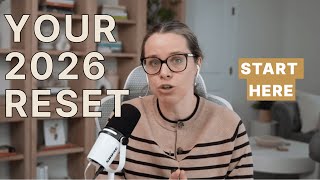
In this instructional YouTube video, functional nutritionist Brigid Titgemeier outlines five evidence‑based habits women should adopt in 2026 to improve longevity, cellular health, and overall well‑being. She begins by urging viewers to move away from quick‑fix diets and focus on core pillars: (1) supporting the gut microbiome by consuming at least 30 different plant foods per week, a recommendation grounded in a recent Nature study linking 100 gut bacterial species to cardiometabolic health. (2) tracking health data annually through direct‑to‑consumer lab panels and wearable devices (e.g., Aura Ring, Dexcom Stello, Mira Health) to obtain actionable biomarkers such as hs‑CRP, homocysteine, glucose, and hormone levels. (3) optimizing nutrient status, especially omega‑3 (EPA/DHA) levels, noting that 76% of the global population is deficient and that therapeutic ranges are rarely achieved without personalized dosing. (4) monitoring muscle mass rather than total weight, using DEXA scans from age 35 onward to detect early muscle and bone loss, which is linked to higher mortality risk. (5) ensuring adequate caloric intake to support the central nervous system, adrenal health, and detox capacity, warning against overly restrictive diets and prolonged fasting that can trigger hormonal disruption and toxin release from shrinking fat cells. Throughout, Brigid promotes her membership program, the Being Collective, as a practical way to implement these habits with personalized meal plans and tracking tools. The video concludes with a call to action for viewers to subscribe, comment on their 2026 health focus, and stay tuned for upcoming expert guests.
Chapters
Let's make 2026 the year that you go all in on optimizing your health. I want you to stop getting distracted by the quick fix diets that over promise and under deliver. And I want you to really focus on what matters. Improving your cellular health, lowering inflammation and building habits that are going to support you for years to come. There is so much changing in nutrition and medicine right now that what you think used to work absolutely does not work. If you are a woman who cares about living a long life, improving your symptoms, having more energy, a stable mood, getting stronger with age. I'm sharing five key habits that I would adopt in 2026 based on the latest research and advances in nutrition, health optimization and longevity. Let's start with habit number one, which is focusing on fueling your gut microbiome. We have known for a long time that nutrition directly impact your gut microbes and that your gut microbes play an enormous role in your overall health. But a brand new huge research study went deeper into confirming this. So this new study that was just published in Nature identified that there's 100 species of gut bacteria that are associated with cardiovascular and metabolic health markers. 50 that are linked to good health and 50 that are linked to more harmful health. Now of course there are way more than 100 microbes that are living inside of you or a hundred species of microbes that are living inside of you. But these are 100 that they have been able to establish in the research, which is a huge breakthrough. So if a person had a cardio metabolic health condition like type 2 diabetes or heart disease, they were more likely to have high numbers of these harmful bacteria and lower numbers of these good or beneficial bacteria than someone that does not have a cardiometabolic condition. They also showed that a person with the more harmful bacteria that's connected to cardiometabolic disease also is more likely to have a higher bmi, which supports what we have been seeing in the evidence for the last decade that the gut microbiome plays a large role in weight. And it might actually be bidirectional that weight carrying excess weight can be detrimental to our gut microbiome ecosystem. So here's the takeaway. The foods that you're eating are directly impacting your gut microbiome, fueling more of those beneficial or harmful bacteria that are increasing your risk of Things like type 2 diabetes, heart disease and higher levels of inflammation. One of the most important things that you can do to support your gut microbial health and ecosystem is eating at least 30 plants per week. This has been shown in the research to fuel more diverse strains of bacteria, more beneficial strains of bacteria that help to work in your favor by decreasing your risk of inflammation in some of these more inflammatory conditions. Habit 2 Track your health data yearly. In 2025, there was an explosion of direct to consumer lab tests that became available where companies are now giving you the ability to order labs without a doctor to get more access to information about your body. I have been running lab tests for the last 11 years on clients to track how their nutrition changes are impacting their biometrics. Because most people think just about nutrit nutrition equals the number on the scale and we have to think so much broader than this because your nutrition, your supplements, your movement, your sleep, your stress reduction, all of your lifestyle habits, they directly impact hundreds of biomarkers in your body that can tell you whether you're on the right track with your protocol or whether you need to course correct. So I have always believed that you should not have to have a doctor in order to get more information about your body. You should not have to go to your doctor and beg them for information about your your own body. This should be accessible to everyone. Everyone deserves access to these biometrics. But unfortunately, that has not been the case where most women go to the doctor, they ask for additional lab markers and their doctors tell them they're not necessary, you're fine, I'm not willing to order them. And so that has completely changed and will continue to change in 2026 and beyond with more of these lab companies coming to the market saying you don't need to beg your doctor in order to get access to these biomarkers that impact your, your term health, your longevity. Show you exactly where you're at as far as how you're doing with the interventions that you've incorporated so that you have more control over your body and your trajectory of disease, being more proactive, being more preventative, and being more personalized. An example of a company like this is Function Health, where you go online, you, you pay them money, and then you schedule the labs through them at Quest, and then they send you your lab data back in three to four weeks. Now, Function Health was one of the first in the market, and now there are many more that have followed that give you this information. And Dr. Hyman was speaking at a summit that I was at, and he said, think about it. Your car has a dashboard. It tells you everything. It tells you your gas levels, it tells you your tire pressure, your oil, your speed. But most of us have no idea what's actually happening inside of our bodies. And our doctors don't know what's happening inside of our bodies when they're not doing a comprehensive lab assessment. And our doctors also don't typically know how to create health from that information guiding us to be able to improve our nutrition, our supplements, our stress management, our sleep in a super dialed in and strategic way, because it's not taught in medical school. What they're typically taught is how to suppress symptoms instead of addressing root causes, instead of looking at personalized data that's more in depth that then allows for you to make targeted interventions. Now, I'm not saying that this is the case for all doctors, but we experience this on a regular basis where our clients will take certain labs to their PCP and ask about their elevated homocysteine or their elevated HSCRP or their imbalances in their thyroid health and they're told it's not a big deal, or I'm not sure what you should do, or maybe you should take this medication. And so we are now living in a time where you will continue to have access to more information about your body so that you can be proactive in the way that you care for it in supporting your overall longevity. But you have to have the data in order to know where you are so that you're not just guessing on what the most important priorities are for your health. Along the same line, we are also seeing a huge surge of more accessible technology that will give us more data and insights into our body. So wearables have been a key one. I've been wearing my aura ring since 2019. There's others on the market like Whoop and Fitbit, and many more that are giving access to important metrics like heart rate variability, heart rate, the depth of your sleep, your number of steps, and so much more. And now we're seeing an increase in others. So for instance, in 2025, Dexcom, the continuous glucose monitor company that we have been using for a number of years to help people dial in their nutrition based on their glucose data, launched a direct to consumer version of their product called Stello, which is essentially the same CGM technology to help to monitor blood sugar. But it's for people that don't necessarily have type 1 diabetes who are interested in better understanding their glucose numbers to make changes to their health. We're also seeing an increase in companies like Mira Health, which is offering urinary tracking of progesterone metabolites and other hormones for you to be able to track exactly where you are in your cycle, especially if you don't have a regular cycle. Mira is one that I started using a few years ago and it is fairly expensive. It's not fully validated in the research, but it's a great example of more and more companies that are offering direct to consumer testing for you to have more information about your body. Another example is at home cortisol testing for you to be able to collect your saliva and better understand your cortisol trends throughout the entire day. So more and more direct to consumer tests are coming to the market. But I think the biggest takeaway from this is to at minimum start with a yearly or biannual full lab panel to be able to better assess what is happening underneath the surface and to be able to proactively monitor your numbers because most doctors will wait until you get into the elevated range in order to intervene. But if you're tracking your labs every single year, this allows for you to recognize patterns in your body so that you can identify susceptibilities that you have and habits or interventions that need to be changed in your protocol in order for you to improve that trajectory. And then it doesn't lead to a cancer or diabetes diagnosis 10 years later because you didn't intervene in a proactive way. Habit number three Optimize your nutrient status. One of the most effective ways to lower inflammation is to optimize minimize your nutrient status. Nutrient deficiencies are so incredibly common. Recent data showed that of 110,000 people that were tested, 67% had at least one measurable nutrient deficiency. Now nutrients are running the show on your body. Your micronutrients are your vitamins and your minerals that impact your metabolism, your cells. They each have at least 1,000 mitochondria that generate the energy that you need in order to burn calories to be able to exercise and do all the things that you love. And they depend on vitamins, minerals and antioxidants. There was a brand new report that was published in 2025 that showed that 76% of people worldwide have a deficiency in EPA and DHA, which are your two primary omega 3 fatty acids. When we think about nutrition just as calorie counting alone and we aren't check checking for specific metrics like omega 3 fatty acid status to understand whether we have a deficiency, we increase our susceptibility to chronic inflammation, which can increase hormonal imbalances, it can increase autoimmune disease, it can increase metabolic dysfunction, it can increase so many skin conditions and irritation. The list of symptoms goes on and on. I have conducted thousands of omega 3 fatty acid nutrient deficiency tests in the last 11 years, and it is extremely rare for someone to fall into the therapeutic reference range, which is 8 to 12%, even when they're supplementing with omega 3 fatty acids or even when they're eating fish two to three times per week. So it's not just there's a generic dose that every single person needs to take in order to reach that therapeutic reference range. The dose that works best for you, that leads to the highest level of omega 3 fatty acids in your blood, will look very different for you compared to other people in your life or in your family. So in 2026, I want you to go deeper into thinking about your nutrient status. Eating in a way that improves your micronutrient intake, your consumption of a variety of vitamins and minerals, your consumption of more phytonutrient and polyphenols that help to counteract inflammation, your consumpt of healthy fats like omega 3 fatty acids that help to lower inflammation and these factors beyond just calories. This is exactly what I focus on in my nutrition program, the Bean Collective, where we create nutrition plans for you every week and then you personalize them to your own needs and then it exports your shopping list so that it helps you not only stay consistent with the habits that you know are moving the needle on your health, but also saving you two to three hours per week, making it extremely efficient. The nutrition plans are created by my team of diet dietitians and I with a focus of 30 or more plants per week, optimal levels of protein, optimal levels of fiber, more phytonutrients and phytochemical variety to help to support all of these aspects of your health that I'm talking about. We've taken my 11 years of experience as a functional nutrition dietitian, helping people transform their health using the power of food as medicine, and broken it down into the most effective strategies and weekly meal plans for you. To be able to lower inflammation, to improve your gut health, and to just stop feeling like crap is honestly one of our main goals. So if you're interested in joining the Being Collective Kickstarter, we have our next rounds that's launching very soon. You can go to being Brigid.com forward/the-being-collective to join us for the next round of the Being Collective Kickstarter. Again, that's being Bridget.com forward/the being-collective to join us for the upcoming round of the Being Collective Kickstarter. Habit number four, track muscle, not total weight. After the age of 30, we lose an average of 3 to 8% of our muscle mass every 10 years. Women that go through, as they're going through menopause, they lose 20% of their bone density in that transition, and that occurs. Menopause happens around the age of 51, and this rate of decline, it increases even more after the age of 60. So what this does is it drastically increases the risk of hormonally driven driven symptoms. It increases the risk of type 2 diabetes, of cancer, of heart disease, of osteoporosis, of excess belly fat accumulation. So many different conditions that are extremely preventable by us focusing on building muscle mass. Women that have low muscle mass are 63 times more likely to die early than their stronger counterparts. That was a statistic that was shared by my guest, Dr. Robin Berzin, who's the founder of Parsley Health Health. I also interviewed personal trainer Lindsey Baumgren, who's a good friend of mine and runs one of the largest Fitness channels on YouTube with a million subscribers, where she's supporting women every day in building muscle. She said the only way to combat muscle loss is with muscle gain. So the focus needs to be on muscle gain. But you can only know that if you're actually tracking the right metrics. So the problem with just using the scale is that muscle truly does weigh more than fat. So if you're losing weight, you could be losing muscle. If you're losing weight, you could be losing fat, especially if you are taking a GLP1 medication. This is even more important for because losing £20 is not successful if 10 or 15 of those pounds are coming from muscle loss. In order to support your longevity, we need to have clear metrics in place to know exactly where you're at and how you're working to build that muscle. So the first place to start is knowing, having the data, having the information on your body. And that is what a DEXA scan does. You can get a DEXA scan on your own. There's that are available if you search for a DEXA scan in your area. When I had Dr. Robin Burzen on, she said that she recommends getting a DEXA scan as early as 35 years old. Unfortunately, in modern medicine, most women are not recommended a full bone density scan until they are 65 years old, which is absolutely missing the mark and way too late to identify anything that's happening in a proactive and preventative manner. So get a full DEXA scan as early as 35 years old. So that you can track your muscle mass and you can also track your bone health. Because what happens with muscle loss is also bone loss, increasing your risk of osteopenia and osteoporosis. Habit number five, eat enough to support your central nervous system. Women are notorious for trying extremely low calorie diets and not thinking about the consequences of that, especially when it comes to central nervous system regulation. Central nervous system is so important in improving our energy, improving our brain health, improving our overall sex hormones, decreasing our risk of autoimmune disease, improving our gut microbiome, and so much more. I believe that more and more trends will come out and important trends. I'm not talking about trendy trends, I'm talking about important evidence based trends focused on central nervous system regulation. Because we know that when we are in a fight or flight response that it increases our susceptibility to nearly all illness. We want to prioritize more of a restorative state, more of this rest and digest state. And eating enough calories, not over exercising on an empty stomach, not over fueling on caffeine on an empty stomach is an important part of those principles. The reason that a lot of New Year's challenges fail is because they are focused on large caloric deficits that lead to large amounts of initial weight loss that create more stress on the body, especially on the female body, that also can impact hunger hormones driving you to want to eat more and then creating shifts in your sex hormones. Another thing that I want to highlight with so many people losing as much weight as we're seeing across the board, with a lot of adoption of various medications, not that there is any shame in that, but I want to highlight an important component to think about which is the impact of detoxification or inability to detox fast enough on our overall health as well. Because we know that as people lose weight, we don't lose fat cells, our fat cells just shri. And unfortunately we carry a lot of environmental toxins in our fat cells. So as our fat cells shrink, it increases the release of more environmental chemicals or compounds that were stored in those fat cells that increases cellular exposure to those which can increase oxidative stress and inflammation. So we want to have a proper detox capacity and we want to also support our central nervous system regulation. This is about eating enough to support your adrenal health. This is about avoiding extremely long fasts. Although I'm a huge proponent of 12 to 14 hour fasts, maybe even 16 hours for some women that that is medically appropriate. But for many Women fasting for too long can create more issues. It will work initially, but in the long run can create more issues. We want to get the nutrients that your body needs by eating enough to get more of those vitamins, minerals, phytonutrients and polyphenols. We want to fuel with diverse compounds for your gut and improve your overall central nervous system regulation, creating more of that place of homeostasis, allowing your body to heal and to thrive. My key takeaway is that in 2026 I want you to focus on evidence based health optimization and not quick fix diet trends. Gone are the days of caring about these quick fix diet trends that used to be so prominent in magazines and in Weight Watchers and other things. We have too much information in 2026 about how the body works, about how you can get more information about your body, about the role that nutrition plays in regulating every single cellular process that's happening underneath the surface. That I want you to stop focusing just on the number on the scale and to focus on these larger metrics as an indicator of your overall success. Because so many metrics for us to keep track of, not in an overwhelming way, but in an empowering way. So I want to recap the top five habits that we talked about today. Number one, fuel your beneficial microbes. Number two, track your health data one time per year at minimum. Three, optimize your nutrient status. Four, track your muscle mass, not just your weight. And number five, eat and not enough to support your central nervous system. I'd love to invite you to join me in the Bean Collective Kickstarter, which is my membership that we launch several times per year to be able to support you in these evidence based strategies that we incorporate and focus on and create the plans in order for you to really be successful with lowering inflammation, supporting your gut microbiome and improving your cellular health. This is why we're able to improve symptoms like energy, mood swings, bloating and GI issues, joint pain and other inflammatory markers by focusing on using food as medicine, on using food as fuel for your cellular health. And you can find out more about joining us at beingbridget.com forward/the-being-collective Again that's being Bridget.com forward slash the-being-collective if you're watching this on YouTube, please subscribe to my channel as we have big plans for supporting you in True Health Optimization 2026. Leave a comment Telling me what you're going to focus on this year. If you're listening on Apple and Spotify, also follow along there. Leave a comment letting me know what you're going to focus on in 2026. I love to hear from you and to have this interactive experience of being able to support thousands of you on your health journey. Thanks so much for tuning in, and I am very excited to share the incredible expert guests that we have coming up in the next few months with leaders in the field of nutrition science, functional medicine and women's health that I have admired for so long that are bringing their expertise to this show. You will be blown away by everything that we have in store for you in 2026. So thank you for tuning into the show and I will see you soon.
More from Brigid








She Used to Crash Every Afternoon — Here's What Fixed It | The Wardrobe Consultant
