How Angie Lost 5 Inches, Reversed Gut Issues & Eliminated Brain Fog in Her 40s | My Food Is Health
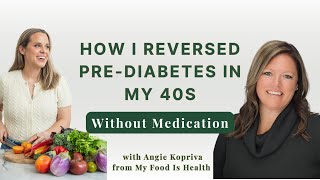
Angie Copreva, 47, completed a 10-week nutrition program and lost 5 inches from her waist, reversed rising A1C and blood pressure, and eliminated bloating and brain fog. She cut gluten and dairy, added targeted supplements, and worked with a dietitian on personalized meal planning without intense exercise.
Chapters
Angie Copreva, thank you so much for being here on the Being Bridget show. I'm so excited to dive into your personal health journey and learn from the improvements that you've made, the hesitations that you have, the barriers that you had to work through so that you can help other women who are in a similar place as you.
Thank you. Thanks so much for having me. I'm excited to share my journey and potentially help some other people.
I'm so excited too. Okay, so let's start out with. Why don't you share. You just finished My Food is health, our signature 10 week program and I'd love for you to share, like, what got you to the point of being like, I need additional help with my nutrition and figuring out all of these pieces when it comes to your health.
Yeah, that, I mean, for me, I am, I'm 47, in my mid-40s, I'll say. And I, I didn't change anything about my lifestyle going into my 40s. You know, I was a social drinker and I had the standard American diet and I didn't change anything about my life. But when I hit my mid-40s, my whole, everything started to change for me. My lab started to get worse, my hair was thinning, I was having terrible gut health. And over the years of following you and others, you know, like, joined Function Health to get like the detailed labs. I did a consult with Dr. Will Cole's office, which was great. But I was really looking for an affordable program where I could get really personalized plan for me based on my labs that was affordable. And I finally just took the leap. I was like, okay, you've been feeling worse and worse. You're in your perimenopause years. It's like, I need some personalized help. So I finally, after following you for a couple of years and following like the blood sugar reset and just having these issues that my primary care doctor, you know, wasn't really getting anywhere. I was like, okay. I finally just pulled the trigger and was like, enough's enough. You know, everything that I read and about the blood sugar balance and hormones and all that stuff, I definitely was just like, I did a discovery call with you and I was like, it's time, it's time to do it. I need the personalized help and I'm so glad that I did it.
So walk us through, through like what the process was like once you signed up for My Food is Health and what you felt like because you had done a number of other things in the past, like with different functional medicine providers. And like you said, you had gotten more in depth lab testing and you had made changes already from your nutrition, like removing gluten and other things. So walk us through what the process for My Food Is Health was like for you and the difference in the approach that we took.
Yeah, I think the biggest difference is in the very beginning, you know, you guys send out the stuff to do our labs from home. And when I did that, you know, the introduction, it was, you know, standard maybe across the board for a lot of people, you know, the optimal plate method and just learning different tools to help all of us. But then once I got my personalized tailored plan back, it was just so eye opening and so, you know, to be able to see where I'm deficient personally, that's where I really feel like the program was, like, worth every single penny. Because, you know, I was working with my own dietitian and she was available 247 via chat, you know, so any questions that came up, you can literally reach out anytime, fire off your questions, and then the dietitian you're working with can get back to you. And that's what I was really looking for, was personalized, you know, a game plan for me that, yeah, the program's only 10 weeks, but these are, like tools that I'm going to be able to live and get healthier and healthier, like, forever with, you know, and I think that's what was lacking with everything else. Everything else I was trying or like, the detailed labs that I got, you know, from being a member of Function Health definitely is awesome. I still join that and participate in that today, but I didn't know what to do with all the information. I had all this information from all these podcasts and all these functional medicine practitioners that I follow, which is great information. I just didn't know what to do with it for me personally. And that's where I think the program, like, helped me drastically because, for example, I struck, like, with my gut health. I would struggle eating too many vegetables. And a lot of people, a lot of plans you follow, it's just like, fiber, fiber, fiber. It's like, I can't eat the fiber. So now what do I do? Oh, my gosh.
And it's so common.
Yes. Yeah.
And I think people don't realize that there's a lot that you can do about it when you pair the nutrition and supplement piece together in order to create that catalyst for the healing and decreasing that inflammation short term.
Yeah. And so, I mean, that was. That is honestly the key for me is the personalization of it at a really affordable price. So that was huge for me. It's stuff I'll take with me, you know, forever for going forward.
That's amazing. And so you are such a good example of how. Because I love Function Health as well, and we have a lot of people who will bring their Function Health labs to us and have us. So when you went through My Food is Health, we reviewed that in addition to then the nutrient deficiency testing that we ran that looks deeper at urinary markers of oxidative stress and various nutrients, all your entire antioxidant panel, your entire B vitamins, vitamin panel, your minerals, your omega 3 fatty acid, so that it actually like expands upon the information so that then we can take both sets of the data, like from Function Health or other labs that maybe you've gotten done with your physician in addition to the nutrient deficiency testing, so that we're like, okay, we have all this information and now let's figure out what exactly works best for you. So I'd love to hear like, what was. Did you try taking the functional health labs to PCP or anything? Because we do hear that a lot from our clients that they try. And there's like, they're not really given a lot of direction.
Yeah. And I'll say, like, I really love my pcp. She does great job. And she kind of dabbles in the functional health space a little bit. You know, she's doing a lot of research and stuff. But I still didn't feel like. I just still kind of felt like I was a number and kind of had to, you know, get in, get out. And she gave me a lot of suggestions, but I still could never get that like one on one support from her where it's like, I want to feel great again. You know, I don't want to just feel okay or feel okay for a couple weeks. And so while she did help me with some supplements, it wasn't nearly as in depth as when I started working with my dietitian and my Food is Health. And, you know, she just did a great job of putting it all in English for me too, because you read, you know, all this stuff and it's like, what does that mean? You know, how do I interpret that? Does that mean I should never eat red meat again? Does that mean I should do this or that? And, you know, I think the dietitians through the program really help break all that down. They make it easy, manageable steps for you or for me. So that was Just invaluable. A lot of my doctors were just, like, I went through some GI health issues, too, where it was just trying to figure out what's going on. And it was the typical exercise more, eat less. Just the standard. What you always hear, like, oh, don't be so stressed, and, okay, well, you can help me figure that out. It'd be great, but, yeah, exactly.
It's just that easy.
Yeah. And I really, you know, I did a discovery call with you before I joined, and really trying to figure out, like, you know, with the cost, it's an investment in yourself. And I was like, I didn't want to throw that money away. You know, I wasn't taking it lightly. And so when I called and we did our talk, I kind of given you all, like, the very quick version, you know, of my story and what I've been going through. And when you had said, like, I think it would be perfect. I think you'll get enough personalized help, and I don't regret it one bit. It was everything I needed. And I'm not, like, perfect yet. I'm not there yet. You know, I'm just shortly out of the program, like, a month. But I am making such great progress. It's really exciting.
The progress that you've made is so impressive. So talk about you. You kind of alluded to the symptoms that you were experiencing or even, like, the changes in some of your labs that you were experiencing before you joined My Food Is Health. Can you walk us through what that was?
Yeah. So I really started having gut health issues in my 40s, where, you know, I'd be bloated or gassy or, you know, having to use the bathroom a lot more, changing my bowels. And it's like, I didn't change anything about my diet, so. And I never been one who's had any health issues my entire life. Been very fortunate. And so when this started happening, I just couldn't figure out what's going on. I thought I had a food allergy. I'm like, I must have a food allergy. And, you know, so I had, like, some gut health issues, like leaky gut. I had had my hair started to thin a lot. I had a lot of fatigue, and I started, like, through function health. I had some autoimmune markers that were starting to kind of, you know, light up on my lab results. And so, yeah, I was definitely. The fatigue and the gut health, I would say, were probably my two biggest, you know, areas where it was like, something's going on here. You Know, it's. I could tell my body was changing and I just really struggled getting the right help for it.
And from a blood marker standpoint, outside of like the autoimmune piece, were you also experiencing changes in, like, your blood pressure and your blood sugar and some of those markers?
My pressure was going up. My A1C was going up. I was in the pre diabetic range. I am right now, but I am like this close to being out of it, which is really exciting.
And you're gonna get there.
Yes, I will. So A1C, my glucose, my fasting insulin, they were all. Everything you guys talk about, like, metabolic health was all starting to go up and look bad on paper. Well, in reality. And, you know, that was scary to me. I was like, I don't, I want to fix this. I don't want to just go on pills. You know, I want to get to the root cause of it, figure out how I can change. And it has been exciting, like, not only just feeling it, I feel so much better, but I'm really excited to see the change in my labs coming up when I, when I redo my lab.
So I'm so excited too. I can't wait to see what that looks like.
Yeah, really exciting.
So it's amazing that you, that you took the, you know, even though that is scary for your labs to be like that, you chose to take the empowered approach to be like, I have control over these markers and I have control over the trajectory, and I'm going to listen to these warning signs that my body is feeding to me so that I'm not waiting 10 years for these to just continue to worsen and worsen because of them being really like some of the first signs of the onset of disease. So the fact that you listened and, like, tuned in and you were so proactive, I think is just really amazing.
Well, thank you. I feel I wasn't always this positive about it, but working with your team, they helped me believe and really feel like, oh, no, you've got this. These are all numbers you can change. You know, you don't have to too. You're not going to have to go on insulin. You're not going to have to take high blood pressure medication the rest of your life. And I mean, it really empowered me to believe, like, you've got this. And now I can feel it too. So that's like, super exciting. Took a little time, but yeah, much better place now.
Oh, my God, it's so amazing. I said, you said, don't make me cry. And I'm like, well, maybe I'll be the one crying too early.
It's too soon.
I just feel so proud of you. So can you speak to the outcomes that you achieved in. Obviously it's a 10 week program and so we're really trying to set you up for better understanding your body so that you can make choices on a long term basis. But now that we're like pretty, you know, recently out of the program, can you speak to the changes like the primary outcomes that you saw?
Well, I'll say I definitely lost some weight and lost some inches. So that was amazing. That was really cool to see.
But consider, I mean you, you lost like 5 inches essentially from your waist in just a time period of time.
Yes. And you know, that wasn't with like crazy exercise, that was with just moving my body more as in walking and taking short walk breaks. But it was mostly all centered around like my nutrition. So yeah, that was pretty exciting. The weight loss and the inches lost was really exciting. One thing I did not expect and I didn't realize was contributing so, so much to my health was just my stress. And that's one of the best outcomes I've had from the program so far is just that Jamie, my dietitian, she really helped me realize that it was really having an impact on my body and my health. And I kind of had a flare up mid program with my gut in at the emergency room, my lost my grandmother. Like really stressful stuff was going on and happening for me and it's frustrating because when I joined the program I wanted to join it and do it perfectly. And it was far from perfect in my mind. But hindsight it was kind of perfect because Jamie was able to help me through it and give me, you know, I've never been a person who meditates or deep breathe, does the deep breathing. And honestly, it has changed my life. It really has changed my life. Like I feel more calm, I feel more centered and just like more focused, less fatigue. So those were huge. And all I did was download an app and do some deep breathing exercises and move my body a little more. You know, I didn't do anything crazy because my job requires a lot from me. And so being able to fit those little things in was pretty cool to see after, you know, the ten week program and being a month out, like what a difference it has made. It's really, really been wonderful.
I think that this is amazing because for many reasons but on the graduation call when you had talked about like all that you had been Going through and we got emotional together. Over speaks to like, so many people feel like they have to wait for that perfect time in their lives when it's not gonna be chaotic and it's not gonna be busy and those so. And it's like, in many ways, when you do something in a situation where it is more chaotic, it's almost better because you have someone that's walking you through that process. So, like, yes, it's not going to look exactly like, textbook like you probably initially had envisioned, but being able to like, navigate those processes and like real life scenarios and have someone by your side through that so that you weren't derailing your health. And then also, like proving to yourself that in the future, these are the things that you can come back to when you do experience more stressful life events. Like, that, to me, is gold.
Yeah, it was, it was. Because I would have never before this program considered myself to be much of a perfectionist at all. And I realized when I was doing the program, I was like, so upset because I couldn't eat perfectly according to how we should be eating, you know, and I was struggling with the vegetables and I was always really upset. I was like, this is ridiculous. Like, I can't believe this bad timing. And all I can eat is protein and I'm so stressed out. And then what I gained from it, that was probably the biggest surprise. I was like, okay, wow, I get it now. I see. I see how the stress was contributing to everything. And that's probably the biggest surprise for me too, was like, the stress impact on my health and just these small little tips. That's it. I didn't do anything crazy. I listened to a meditation app. 10 minutes as I'm falling to sleep and I'm like, deep breathing and if I try to go out and take a five minute walk, you know, here and there, and it's like, wow, this is pretty cool.
So amazing. And I think too that it's kind of like when people talk about how, oh yeah, I've heard the impact that blood sugar can have on a person's health, but it's not until they like put a CGM on or a continuous glucose monitor on where they can like see it, or they're like, like, oh, this is impacting me. Like, you know, I've listened to this on podcasts and I understand that this is like a concept, but now I can like actually see what's happening. And when you pull out, you know, everything that's happening with you from a lab standpoint, where we're looking at your nutrient deficiencies, we're looking at these urinary markers of oxidative stress and your omega 3 fatty acids and other markers that impact inflammation. And then we're also, like, from a coaching standpoint, able to mirror to you, like, things that you may not be seeing in yourself and then helping to walk you through. Like, these are some of the areas that you might feel like aren't an issue, that are opportunities for you to work on. Like, that's where so much of the magic happens. And I think that a lot of people, like in today's age, they think, oh, let me just get like a lot of information about my body from lab testing. And they do not understand that the equally important part is having someone that is trained in the, you know, actual profession to be able to help you realize this. To be able to. Like, I remember on the coaching call that we had done one of our weekly group coaching calls that then, like, I had kind of put you on the spot to talk through some of your barriers and other things that you were like, oh, I think I am a perfectionist. Like, this is such a big takeaway for this program that I didn't ever.
Intend to be so funny. I know, it's so true though. I was like, no, I'm not, I'm not a perfectionist. Never in a million years. I'm like, oh, maybe I am. Because also I'm sure there's a lot of people out there like me. I, you know, I get the list. You know, you start the program and there's all these tips and tricks and whatnot. That's just like a reference point. I'm like, okay, Jamie, should I go buy the cgm? Do I need to buy this? What do I need to do? You know, I wanted to buy all the things, have all the things. And she's like, okay, let's slow down. She's like, can you just go for a five minute walk? And I'm like, yeah, but what else do I need to do? Like, what else? I gotta cram it all in on this 10 weeks. She's like, no. Like, how about you should just go for a walk? Like, that's it. Okay, go do my walk.
It's so funny. I actually was just interviewing someone who was talking about how she would go to her therapist and she kept saying like, okay, let's get into things. Like, I want to go through all my issues. And the therapist is like, I just need you to start walking 30 minutes consistently. And she's like, no, but I want to get into my issues. And she's like, until you can take yourself for a walk for 30 minutes a day and like, symbolize to yourself that you are worth that investment of your time, that you have, like, the self respect to actually set aside that time to, like, care for yourself. We're not gonna get into any of the other stuff. And it's like so often we miss the forest for the trees, right, where we, like, want that, like, big shiny thing. Like, we want the supplements, we want the AG1 powder that everyone's promoting on Instagram and like the colostrum and all these things that we get so many questions around. And it's like, let us. Let's dial things in much deeper for you in the ways that are going to move the needle the most.
Yeah, definitely. And. And you know, for any listeners out there who, like, I'm kind of fussy when it comes to, like, gut health stuff like supplements that you have to, like, drink and if they taste bad, and I'm like. And so that was one thing that I really liked about the program too, was I did have a couple recommendations and I tried it and I'm like, I. I cannot drink this. I don't like it. And there were so many alternatives that I just would have never known what to do. You know, it's like having the dietitian there, and if you're really open with them and just honest and just be you. Like, she helped me so much and gave me so many alternatives and situations that, yes, maybe this was the first choice or the ideal choice, but there's a lot of, you know, other choices and things like that that maybe you can. You. You enjoy, you like it or whatnot. That I thought that was really helpful too.
Love. Love, yes. Because it's not about, like, we are real people and we are always trying to, like, tweak and adapt things in.
Order to make it work for.
For your circumstances.
Yeah.
Okay, so your, Your improvements, you're saying, are the weight loss and the inches that you lost, improvements in your GI health. Right. Less gas and. And nausea that you were experiencing before. You had talked about the stress resilience piece and identifying some of these underlying issues. Are there other strengths?
You know, I think mostly like, the fatigue and focus, too, was a big one. You know, I'm much more focused. I did give up gluten. I've dabbled a little bit here and there, and I just have noticed, like, how much better I feel. And that took some time, you know, that. That really Took some time to feel a difference, which sometimes it's harder to stick with something when it takes a little bit longer like that. But I think that has helped me tremendously. And in conjunction with all the supplements and whatnot, and just my focus is so much better. I'm way less tired now. Like, I come to work, I'd eat my lunch, I'd have the crash, but I was crashing all afternoon, you know, and now I have like sustained energy and you know, when you're busy, professional and whatnot. That's everything.
So true. It's everything. I always say, like, I care more about my brain health than really anything else from a nutrition standpoint. And you were someone who had previously removed gluten from your diet?
Yeah, last year in 24, I had tried removing it and I made it about a couple months and I did feel a lot better. And that was right before the holidays. And then the holidays hit, I started eating it again, eating gluten again. And then I just kept eating it in 2025. And by the summer I was like, man, I just don't feel good again. You know, like having the gut health issues and the nausea. And when I cut it out again this time on the program, it was kind of like, okay, I get it. I see. You know, I'm not celiac. I don't have like, I'm not allergic to gluten, but when I. It builds up in my system, it definitely does. Does nothing for me.
And so this is also a benefit of being able to like, use a targeted approach of identifying the foods that are most important for you to remove. Because in most functional medicine practices, they'll kind of like recommend the same elimination diets. And what we do in my food is health, is we really try to tune it to what it seems like you need based on like the labs data that we have. We're not necessarily running like food allergy testing on you, but to be able to put together like the puzzle pieces to say, I would recommend short term removing something like gluten and then reintroducing it in order to see how you feel so that then we can. So that you could basically leave the program being like, these are my non negotiables. These are the foods that I know are like, not worth eating. And then maybe in some instances, because repairing it with the right supplements to help to heal your gut, then you can actually introduce those foods again and then not have any symptoms.
Yeah. And I, you know, I had to, I didn't have to. I was recommended to remove dairy from my diet as well, because I was having nausea in the mornings and just not feeling great. And I wasn't thrilled about that at all and didn't know if I could do it. I was like, how do I not eat cheese? But. But I did do it for a period of time and I really wanted to add it back into my diet. So we did that. You know, we did that strategically and I seem to tolerate it fairly well. And so that was exciting. But I'm glad I did it, you know, because it's like that, you know, you just don't know what could be contributing to your issues. So it was very important for me to cut that out for a period of time. And I'm still probably not eating as much as I used to as I just continue to work on, you know, my gut health and whatnot. But definitely worth it. Go into it with an open mind, I would say for sure.
Yeah, yeah, that helps a lot. And then can you talk about the reframing of your thoughts around using food and health for the better? Like, what were the mindset shifts or the changes in, like, how you think about food, identify food, those sorts of things that you experienced?
Well, I definitely, the more you learn, the harder it is to eat the foods that are less optimal. So do you like that word there? Not bad for you. But, you know, you learn a lot in the program and you learn about, you know, me especially, who does have blood sugar issues. You know, being pre diabetic, once you kind of learn, you know, what's affecting your blood sugar and the crashes and the dips and the spikes. I had a huge mind shift around that. Like, it wasn't a program where somebody says, okay, Angie, you're pre diabetic, you're not going to eat carbs anymore. Just give up carbs. You're straight, great keto. It wasn't like that. It was like, okay, here's what we recommend to balance your blood sugar more. And this is, you know, we gave you the why behind it and how it would benefit you and just helped you do portion control with the carbs when you're going to eat them and be purposeful, you know, so that's one thing I really like because it's, you know, I get it, some people may have to cut them out this, that carbs get such a bad rap. But, like, that's a big shift for me, is that you don't have to completely cut out your carbs. You just gotta be strategic with them. And so just learning how to eat more balanced meals. And I thought I knew that. You know, I thought, I thought I had that now, but it's like, oh, okay. And not eating carbs alone and pairing it with a protein or a fat and different things. I think that was a big mind shift for me. It's like, oh, I don't have to give up these foods per se. It's just learning when's the most optimal time to eat them, what meals and things like that. That was a big mind shift for me.
And I think that this is a good thing that you pointed out like that you self identified as being a healthy eater going into the program. Correct.
Well, the last couple years, I'd say most of my life, no. But the last couple years I've been really working hard to try to figure out why is my gut health changing and whatnot. So going into it, I would say fairly healthy. Yeah.
Because that's one of the things that we hear from people who are like, I eat pretty healthy and like they kind of don't understand the additional ways that we can really dial in nutrition and personalize it to what's actually going on for you. So that like you were doing the function health labs, you were gluten free at one point, like, you had been working on your health for, like you said, a number of years and so you had worked with, you know, other functional medicine doctors. So I think that that's just like a good testament to how much opportunity there really is when you're able to dial things in further.
Yeah. And, and I can't say enough about like the supplements too. Even today, you know, being November and we, the program finished in early October, being on the right supplements and whatnot. Like, I still have weight to lose, I still have work to do, you know, on my nutrition, but I'm a work in progress. But I mean, I feel totally different now than I did a few months ago. And I attribute a lot of that to not just the nutritional piece of it, but also like the supplements. And I think it's making a big difference.
Pulling it all together.
Yes.
So if you, if there's someone on the fence thinking about joining my Food Is Health, what would your recommendation to them be?
Well, Bridget, I don't know if you always do the discovery calls, but truth be told, do the discovery call if you offer them.
We always offer discovery calls. It's not always typically Michelle, our lead head of community, does them, but they're either with Michelle or myself or sometimes Jamie because it's a considerable purchase. We Want to make sure that we can, like, help you understand the benefit and then also identify if there's an instance, which does sometimes happen, where we're like, oh, this might not be in your best interest.
Yeah. And that's. That's what I. If you're on the fence, I'd say do the discovery call, because that a hundred percent push me over to, like, this is it. I'm doing it. I'm gonna invest in myself. And that's what it is. Like, you know, partying with money. Some of us have to follow a budget and whatnot. And it's like, really, though, isn't your health worth it? I mean, you had said that to me, you know, you had found that more people are successful in your program because they're investing in themselves, you know, And I would say if you're on the fence, just, it's going to help you reach your health goals. It's going to give you tools. Everything that I learned in the program I have access to for life. Like, I have this whole program I can refer back to anytime I need to. If you need a reset, if you need a refresher, it's all laid out so clearly in the program for you. And I would also say, number one, you should join. You know, go for it, make the investment in yourself. But my other biggest recommendation is just show up to the weekly meetings after you sign up. Show up because, you know, I didn't expect to be talking on those weekly meetings and interacting and being vulnerable and crying about the loss of my grandma. It was totally unexpected. But I think if you show up and you open up and just do it and go for it, I feel like you can change your life.
And you're the perfect testament to that. You get what you give. And you gave so much in showing up for yourself throughout the entire program, which I think think speaks to, like, the transformations that you've experienced.
Thank you. And. And I'll just say too, you know, out of the dietitians I worked with, Jamie, you know, one of the ladies on your team, and she was great, you know, and I think from all the people I interacted with that joined the Myfluous Health program, the most recent one, everybody seemed to just gain so much from working with your team. So it's like you are going to get a lot of one on one, which was probably my biggest worry was like, is it just going to be another program where here's the information, you go for it and do it? It's not like that. You really get the one on one personalized interaction. And I mean, who doesn't have their phones with them, you know, 24, seven. And to be able to shoot a message off to your dietitian at any time and then they get back to you, you know, it really makes a big difference, like, especially if you are going through any health struggles, even if it's just normal, like middle age, you know, stuff, it's. It's so worth it. It's very much worth it.
I love to hear that. Thank you so much for being here today, Angie. Thank you for sharing your story, for being so vulnerable and open, and for just letting other women see what's possible when they, when they do invest in themselves, whether it's my food is health or other programs. Because while I do think that my food is health is an amazing way for us to support you and improving your health, and we would love to work with you, I think that it, it also speaks to, like, how much, when you really just are proactive about your health, what can happen on the other side.
Yes. Well, thank you. I mean, I feel like I'm in a much better place now and we're going forward and super glad I made the investment and I just really appreciate it.
Angie, you're the best. Thank you so much.
Thank you.
More from Brigid








She Used to Crash Every Afternoon — Here's What Fixed It | The Wardrobe Consultant
