How My 92-Year-Old Grandpa Defies Aging with Strength, Simplicity, and Purpose
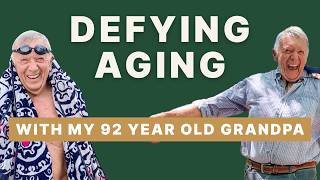
Brigid Titgemeier interviews her 92-year-old grandfather Carl about living with strength and purpose. He credits daily movement like biking and swimming, time in nature, reading, and a plant-rich diet. Carl does counter push-ups every morning and takes fish oil and B12, avoiding unnecessary medications.
Chapters
The very first guest on the Being Bridget show is one of the most influential, inspirational and important people in my life. My grandfather, Carl Tigemire, who lived to the age of 93. And in this interview we are going through all of his key tips for living a long, healthy life. Not just living a long life, but living it with a long health span, meaning living up until your time of death with the greatest health possible. This is an incredibly special episode for me to share with you because my grandpa and I filmed it about a year before he died. He passed away last summer very unexpectedly. He got sick and died about two weeks later. Which honestly was the exact way that he wanted to go out. He was fiercely independent and always noted the fact that he invested in a healthy lifestyle so that he could increase his independence for as long as possible. And his ideal way to die was always stated to just fall off the side of Mount Pisgah. So he took a dramatic turn for the worst last summer and went from being perfectly healthy to very sick in a very quick time period and died two weeks later. But we recorded this episode a year before he died. So it's incredibly special and such an honor to be able to share this. I hope that it serves as an incredible tribute to the life that he lived. It's impossible to sum up what an incredibly huge life he lived and what a giant spirit he had in just this episode. I think that most people were extremely inspired by the way that he lived his life, by the way that he invested in his health, by the fact that he functioned better than most 73 year olds. That was always noted by you in my community. But what was discussed most at his funeral was his smile. Everyone talked about his smile and how he always had a smile on his face. They talked about his love for life and how rare it is to find people who truly love life as much as my grandpa did. And they talked about his love for his family. My grandpa made the most of every single day that he was on this planet. He never took life for granted. He worked hard, he played hard and he loved hard. He worked so hard, always giving 120% to any work endeavor that he was invested in. He played equally as hard. He loved to travel. He traveled all over the world. He loved to dance. He loved to dance with us at weddings and other celebrations or even just in his kitchen.
He.
He loved to bike and he loved to swim laps in the pool and do water aerobics with all of his female neighbors. He loved to hike throughout Asheville when we Would go and visit, we would hike. I think we've hiked to every trail in Asheville because he was always so excited to host us and to take us to different mountains and trails. He kayaked through the mangroves, loved going on these wild kayaking adventures. A lot of times where you're. You had to like, duck through all of the tree branches on a regular basis and then you're, you know, like literally right next to the snakes and other nature that he was obsessed with. He loved to be in trees or in the water. He was always exploring. He was always talking to strangers, reading history books to learn as much as possible and just going on adventures. He always did all of these things with a huge smile on his face. Every moment with him was memorable. Every single moment with him was such a gift. He also loved so hard. And that's something that I want to highlight in just, you know, he's going to give these five tips to the five biggest things that he feels that have made the biggest impact on his health or that did make the biggest impact on his health and the ability to live with incredible health until the age of 95. What I don't think that we highlighted enough is how important relationships were to him and how hard he loved his family and his close friends. Many of his close friends were lifelong friends. He didn't have a million friends, but he went deep with the friends and the relationships that he had. He loved his kids and his grandkids and his great grandkids with everything that he had. He wrote all of his grandkids, birthday cards and Christmas cards every single year. He took the time to know our friends and to know our lives dives into. I mean, he's the reason that I went into functional medicine because when I was sick 20 years ago, he was the person that found the functional medicine doctor that my parents ended up going to. And the neurologist said that, you know, my. My path just looked like medication with progressive symptoms getting worse with age. He played an enormous role in me becoming a dietitian and going into the field of functional medicine and having the desire to help as many people with their health because I was so inspired by him, but also always learning from him and being directed by him. He had such a unique and special relationship with each of my siblings and I. He just really took the time to know us and to have such special relationships that were very different from each other, but so special and unique to each of us. And the relationships that he had with our spouses. He also had Such an incredible relationship with McKinley and James in the short time that he was with them, but in the number of visits that he made to be able to be with McKinley after she was born. Even two months before he died, he drove eight hours to our house to come and meet James, his second great grandchild. And he mentions in the interview how contributing to his health was so important to him in order to be able to be there for those experiences with his grandchildren and with his great grandchildren, which he said he hoped that there would be many more. And while there are more on the way from. From my brother's side of the house, you know he will live on through each of them, even if he's not with them in person. My grandpa, Carl Tigemeyer, obsessively lived by the life mantra. Life is not a dress rehearsal. Make the most of every day. And he regularly encouraged all of us to do that, too. I hope that you enjoyed today's episode, that you are able to learn from him in the unique way that he lived his life and that it serves as a legacy to what an incredible person, what a big spirit, what a gentle giant he truly was with what my dad referred to as in his eulogy, $1 million. Smile. So, Grandpa, thank you for being on the show. Thank you for impacting my life in all the ways that you did and teaching me all of the things that you did and for opening yourself up to my audience. We love you. We love you forever. Grandpa. It's so great to be here with you. You are 92 years old and so many people are very inspired by you because you have better health and are more physically active and are more mentally sharp than most people that are 72 years old. So we're going to talk about some of your secrets today because you often get asked by people that you are around on a daily basis, how are you so healthy, so functional? So we'll get into that. But I want to start with just asking, how do you feel about your health at 92 years old?
I feel very fortunate. Frankly. Most of my friends my age are no longer with us, and so I just feel incredibly blessed to be here, especially to meet my new great granddaughter.
Your first great granddaughter, right?
My very first. And she's so special. I had an opportunity to feed her this morning, as you know, and it's just incredible to watch those little features and see her grow. It's a wonderful experience. I hope there's many more.
We hope so, too.
But anyway, you asked about how I feel. I've always felt That I was fairly strong. And then when you moved the other day, I tried to pick up Johnny's 60 pound weight and I realized age has limitations. Johnny came in the wreck, rescued me in a hurry and tossed that thing around like it was a little baseball or something. But I was having difficulty.
Well, first we appreciated you coming to our rescue because we had a moldy Airbnb that we had to move out of quickly. So not many people would be able to call their 92 year old grandfather and say, we have this situation, we need to move out quickly. Can you please come and help us? You came over, we filled your entire car. You were making so many trips back and forth. We were like, grandpa, don't lift that. That's probably too heavy. And you're like, I got it. He said, we don't want anything to happen to your back. You're like, my back is fine. And so I think that there's something to be said for the way that you continue to challenge yourself. Sometimes that actually can lead to not the greatest outcomes, like when you get in accidents on your bike, because that's frustrating for you that you can't move in the exact same way that you're used to, but you still continue to challenge yourself.
That's what life's all about. What's full of challenges mentally and physically. And if you don't stay active in both regards, you know what the other solution is? You go down backwards. And I never wanted to go backwards. I've always tried to be realistic about where I was in my life, and that came to roost this past winter. I was in Ave Maria, Florida, and they're wonderful bike paths and I've ridden a road bike all my life. And we were returning from about a 15 mile trip and we were crossing an intersection and there were two cars. The guy on the curbside waved me on and I started across behind the person in front of me. She made it, I didn't. And the guy never stopped. And so I did a quick right turn with my handlebar and ended up on the pavement. And fortunately I had my helmet on. But.
But that's not the first time. I mean, you also cracked a few ribs two years ago at the.
I know. Well, I've had enough. But after that experience, I decided maybe it was time to hang up the bike. And so, at least for now, I have that. I was starting to have difficulty hopping off it because I always, you know, I was used to horseback riding and I always swung my leg over the saddle and I did the Same thing with the bike and was starting to have difficulty doing that. And so I.
You also went horseback riding this past year, which many people were amazed that you were keeping up with everyone at 92 years old.
Right. Again, they needed a Derek to get me off. They wouldn't let me get off the way I normally would because of my age and insurance problems, I guess. But it was a little frustrating.
But I think it speaks to the reality of, like, well, your situation, where you have to have the balance of, like, challenging yourself enough, but then also understanding parameters so that you're not creating a scenario where you're extremely. Where you get injured and it's, you know, detrimental to your health.
The problem is if you do get injured, then you can't maintain your regular routine. I love to swim, and if I'm all scraped up from, you know, biking, road rashes, I can't go in the pool. And likewise, if you have an open cut or something, you can't. So I'm careful when I'm cutting things. And my Boy Scout days taught me good, good, good lessons.
Yeah, it's. I mean, it's amazing. And it's amazing to have an inside view of the way that you live your life because you are so motivated to participate in things that help you stay healthy, but in a way that doesn't feel like it's very forced. So a really common question that came in when I polled my audience was, what motivates you to stay healthy?
Well, number one, my father and his father died. Both died within a year at age 55 and 56. And so I was really apprehensive during my 50s of heart.
They both had heart attacks, right?
They did, yes.
Not within the same year that dad was 55 and your grandpa was 56.
You got it. I'm sorry, I should have clarified that, but. So my 50s were a little tenuous. I was always concerned about that and probably worked out a little bit more during that period of time. And that was good, because what you do in your 40s and 50s will carry you through the balance of the later years like I am now. I wouldn't be able to do half the things that I'm able to do if I hadn't had a very physical life most of my life.
Yeah, it's actually. It makes me think of the one day that we were in Costco when I was pregnant and I was having the food erosions and you were trying to convince me to get the mashed potatoes, and I was standing there and you were standing on One side. And then there was someone that was an elderly man that was in a Costco wheelchair with the basket in front of it. And I actually took a picture just for my own personal reference, because I was like, wow. The difference between you running around Costco trying to convince me to eat these Costco mashed potatoes and the other things.
They were good, weren't they?
They served a purpose for the time that I was in oh co. But then to compare that to someone that, of course, you can't always control the way that things end up. But there's so many factors that are in your control that if you take advantage of them, could be the difference between you standing on the right side and that person sitting on the left side wheeling their way through the grocery store.
So true. So many of us are overweight, and I've got a little problem that way, but not nearly as bad as a lot of people. And I attribute that to my diet. I eat everything, as you know, I have a voracious appetite, but I love fruit and vegetables and summertime's my time to really chow down. But it's all healthy, good stuff.
Yeah. And I think, too, that for some people that carry extra weight doesn't necessarily translate to poor metabolic health. And that's why it's so important to look deeper at your labs, because, you know, you are so strong and you have great body composition with more muscle mass. And then you also have, you know, your cardiovascular labs, your blood sugar levels, your blood pressure, that is very much within maybe, like, the upper range of what you would want.
But you sound like my doctor.
I'm saying the upper range of optimal for what you would want to strive for, as in your 90s. I mean, you have fantastic labs, but they're, you know, like, towards the upper range of what you would consider optimal. Now, they've also improved because even when we've been addressing your blood sugar and implementing some of the strategies that I've been talking to you about over the last few years, we tested your blood sugar several years ago, and then you implemented them. And your labs improved drastically with your blood sugar. Your fasting blood sugar levels really looking great.
Now, for the most part, I'm right in the middle. I was down on B12, and I was making light of it, and I said, why is that so important? And my doctor told me, she said, well, I don't want to concern you, but when somebody comes in with early signs of dementia, we check B12, because that's an early indicator of problems ahead. So I immediately Talk to you. And we got that straightened out.
Yeah. Well, and vitamin B12 impacts Neurological health so much. So it's an important measure. I mean, it impacts many things, but Absolutely. Neurological health. And that would be the reason that she talked about that, because as you age, your production of intrinsic factor, which helps to absorb vitamin B12, goes down. So sometimes you actually need more than an oral supplement, like you're doing the injections to help to increase the level of absorption.
Well, I'm happy to say I'm back within average range.
You're in the average range?
Yeah. Not the top range, but average.
So the other thing that many people had asked was how early you adopted these healthy lifestyle choices. So as you said, you eat well, you clearly swim and hike every day, you're always moving. When was it that you started to adopt these habits?
I was very fortunate. I was born in very rural area of Cleveland on the east side. And I think that it was just natural. We had a big garden. I helped in the garden all the time. And I'd go out and pull a carrot and rub the dirt off it and eat it. You still do that today, right? And same way with tomatoes and peppers and whatever, you know, it was all good stuff as far as I was concerned. So I guess. And I was always doing something. I started carrying papers when I was 11 years old and carried them until I was 18. And that meant getting up at quarter six in the morning and delivering 100 and some papers before I went to school. But that was just what you did then. And I always rode my bike everywhere. It was a time of life when crime wasn't a big problem. As long as we were home by dinner time, our parents didn't worry about it, but there were no cell phones, they had no idea where I was. And half the time I was getting into trouble someplace. But normally I was at the baseball yard playing or something like that. We just had a wonderful childhood and I think it just extended from there on.
Yeah, there's definitely. Times are very different. And so you then, as you got into your career, worked in the construction industry, so you didn't have a desk job necessarily. You weren't sitting at your desk all day long like a lot of people.
Now, I was there too much, but I got out whenever I could.
But not as much as.
No.
Working a true desk job where you're sitting for eight hours a day.
No, absolutely.
Because the research now shows that it's not just about how much you're moving, like how much you're actually exercising. It's also about how much you're sitting. And sitting for eight or more hours per day drastically increases your risk of heart disease, diabetes, all of the major killers. So being able to be constantly physically active and even getting in small bursts of walking or push ups or things like that can really help. And for you it was kind of naturally built into your routine.
I pretty much have a daily routine now. I get up in the morning and first thing I do is make my bed. To me, maybe that was my naval air experience, but in the reserves. But it's like leaving dirty dishes in the sink. After a while you say, why should I wash them? I'm going to use them again anyway. So I'll just rinse them out and use them and then throw them back in the sink. And pretty soon you get very. Well, you get very careless about your personal hygiene, the way your place looks, you aren't proud of it anymore. And so it's important discipline to me to make my bed in the morning before I go out into the kitchen. I've got a thing that I lie on, it's an arch on the floor and you lay it on your stomach first and it stretches your back muscles and I do reverse sit ups on it and then I'll lay on my back and I'll do sit ups this way. And I always feel better after I do it. That's why I do it. It's a self fulfilling thing for me. And then I go out to the kitchen and while I'm still old fashioned instead of the fancy coffee makers, well, I drink instant instant coffee. My guests always bring their own coffee when they come to visit.
That's true.
Yeah, I know. Whole foods, here we come. Anyway, so while my, my, my water is warming up and microwave, I go to the counter and I do about 30 push ups. Counter push ups. I, I have both knees replaced about 25 years ago and I have difficulty getting up off the floor now. So I can't do floor pushups. But that doesn't mean you can't do counter pushups. So I just do more counter pushups than I would if I was doing them on the floor. And hopefully I get about the same exercise.
Yeah, it's one of those mindsets that's like truly, if you don't use it, you lose it. Which is even what your doctor said when I came to take care of you after your other, not your knee replacement, but your knee surgery four years ago when I came to visit you and I would wake up and you'd be Moving around the house with your walker and getting dishes and things. And I'd say, grandpa, let me do that for you. And you're like, no, cut it out. I need to do this to expedite my recovery. And when we went to the doctor for your follow up, I said, will you please tell him to sit down and let me take care of him? And your doctor, who was in his 60s and idolized you a little better, was like, no. Don't you understand that this is the secret that he has? The reason that he has such amazing health is because he doesn't just let himself sit there and recover. Which was a little bit hard for.
Me to accept because you were amazing. I felt like you're a good nurse.
Thanks, grandpa.
Not the best, but I remember when you took me to the doctor for my first visit back. I had a brace that went from my ankle up to my hip.
And we just.
And you just stretched me across the rear seat and you just took my.
Jetta, My little Jetta. And then there's like two. Six foot two. Yeah, that was really cool.
We made it.
We made it. So I think that it speaks to that idea that if you don't use it, you lose it.
Absolutely.
And the interesting thing about you is that you have been doing these things for so long before they were ever trendy or popular. Now people are, you know, wearing Fitbits and Apple watches and tracking their steps and they're trying to eat organic. And that was not a popular thing when you were doing it 40 years ago, 30 years ago, 20 years ago. Even. So the fact that you always just use common sense and listened to your body and listened intuitively to what feels best for you. And even, like sometimes when doctors were giving you unnecessary medications, you were always, you know, very quick to push back on it, say, what can I do within my lifestyle? Like, that was not. Not always the most common, but you've always done it, right?
Yeah, they. I had a fight between two doctors one time. And anyway, I was able to reduce my pill.
I don't think I've heard that story.
And I won't even go into it, but it was. I've always had stomach acid problem. And so I was on Nexium, which you've weaned me off of somewhat. But I finally. She wanted me to have two pills a day. And I finally decided that the biggest problem I had was I was drinking maybe two drinks at night instead of just one. And I was drinking too late after, maybe have a drink after dinner, which is really really ridiculous. And so I started eating a little earlier. And I've never liked desserts. I mean, I don't allow myself to have desserts normally. And I follow your rule normally about having a variety of colors in my food. And that gives me a variety of vitamins and minerals. And so that's been my concept basically, of eating and enjoying food.
Yeah, and then you stopped also drinking it. You decreased your alcohol to one drink instead of two, and that helps with the acid reform.
And I drink earlier, I drink before, I have a meal now. And so I'm drinking maybe at 5:00'. Clock. And I'm in a retirement community, as you know, in Asheville, North Carolina, where they take you all the way through the rest of your life. And I'm in.
You have a condo there?
Yeah, I'm independent living in a condo. And it's wonderful because I walk out my door and I'm on an incline of about 10 degrees. There's hills wherever you walk.
Yeah, everywhere.
And the nice thing, I can still go down in the woods. There are lots of paths that are leveled, reasonably leveled with wood chips and things. So I can still walk in the woods anytime I want. And when I feel like really getting exercise, I go to the Mountain to Sea Trail, which again, is close by and right next to the Blue Ridge Parkway, and really get some. Get. Get a workout.
Yeah, I mean, it's amazing the way that you move and always prioritize it. But let's go back to the. I just want to add one additional point. With your doctor trying to increase your nexium and you saying, what can I do in my lifestyle to not require that? We've added supplements that have helped with your acid reflux as well. Because there are side effects to these drugs that you've always thought like, well, there are side effects. What else can I do? And a lot of times people are very quick to just take the pill instead of ask, what is it that I can do? This is the same instance with you and the statin that your doctor's been pushing for the last several decades that you've not taken. And so I think that you're a great testament and have also empowered my parents and then me to always think outside the box and not just say, well, because you're the doctor and you're the expert, I'm just gonna trust you for everything. Like, I need to do my own. I need to listen to you for guidance, but I also need to make my own educated decisions based on what I know about my body. And what is it that I can do in my lifestyle first that helps me decrease the need for this medication?
And listen to your body, your body, you know, you know how you feel. And that's why I work out and do the things I do, because I feel better. If I've been sitting, watching television at night for a couple hours, I say, what the heck's wrong with you? You know, get out and do something. And there's just innate a mile loop around right outside my front door practically. And I can do that in 15 minutes or so and get a mile in and it's all up and down hills again. So it's double mileage actually because of the uphill grades that I go down, up.
And the thing too is that so many people now are becoming more rigid with their health where they're like, I have to get a certain number of steps in. They're like tracking everything and to. I of course tracked plenty of things on my own from time to time. But you're a great example of not being rigid about it. You lean into the things that make you feel good and you truly enjoy it and you don't stress about your lifestyle. Sometimes I think that, you know, biohacking and wearing so many devices and things like that can create more stress, that it actually decreases a person's health. But you don't stress about it, you just incorporate it and you know, love embracing it and listening to your body because you know that it's gonna make you feel your best.
Very true. You know, I wear a Timex watch and they work beautifully for what I need. That tells time, tells time. My, my, my phone tells me everything else. I need to know how many steps and all that kind of stuff.
And yeah, you do have a sub tracker on your iPhone, right? Okay, let's move on to one thing that a lot of people had asked. You started to incorporate your daily routine. I think we might have missed a few steps. So you wake up and you make your bed and then you go and do push ups while your instant coffee's being made. And then you go outside and have your coffee, is that right?
I take it out to the porch, right? I've got a nice beautiful porch and got a bird feeder there. And so I watched the birds come in and the squirrels were always fighting with the birds over how much who's going to get the food. But that's a constant battle. And it's fun, fun to watch, but it's just very calming to be out there in the morning. I read the wall Street Journal out there. I get it online because if you get the paper edition, it's a day old and so I prefer to have current news and it's part of the daily living and being up on things. You know, I love interacting with people. I'm accused of being somewhat of a loner, but really I love people and when I'm on a trail, I'll speak to them and if they want to talk, I'll talk for a while. You know, it's just my nature. I've moved sometimes to a brand new community where I didn't know a soul, but within, you know, between the swimming pool and the workout room and whatever, you make friends. Yeah, I do. And my advice to your younger listeners is when you're exercising, look at the things that you can do lifelong and not only by yourself, but with your partner and your family later on. Because there are some things where you're more apt to get hurt and I would avoid those, but certainly things like swimming, tennis, golf, skiing, you can do those up. I did most of those until I was 75.
And you still do some of them?
Yeah, I still.
You had to retire from skiing after your knee replacements?
Unfortunately, yeah. That's when I could get a free ski pass. They had that all figured out because I really miss skiing. I used to ski a lot and I. And I enjoyed tennis and for a time I owned part of a golf course and could play free anytime I wanted to, but.
Oh, I didn't know that.
Yeah, Chardon lakes. But. The thing is, that will help you in the socialization, in entering a new community and plus, it's good for you.
Yeah.
Excuse me, but go ahead. I chose tennis over golf in particular because golf takes a long time, number one, and I didn't have feel I had that much time to waste during the week and after work you can play a game and few games of tennis and get more work, more of a workout than you're going to ever get on a golf course. So that was my choice.
But Johnny might argue against that.
Well, in later life too, I was sorry that I didn't maintain golf because that's one of the first things they ask you when you live on a golf course. And do you play golf? No. Why not?
Makes it harder to make friends, right? Yeah. Well, then I think too, having an open mind and being open to meeting new people, because even like when we had gone through when we were preparing for the interview and you had said that after you read the Wall Street Journal, you go to the exercise class with the women that live near you that you've become friends with because you're open and you introduced yourself, you bring people, produce, you are very friendly and go out of your way when sometimes it feels uncomfortable to put yourself out there to make new friends. Probably at every age. Because I know that it's hard at the age that I'm at in my 30s, but I can imagine that it continues to feel difficult and something that is good to get in the habit of doing.
Absolutely. And I always used to laugh at the women out there with their styrofoam weights, doing water exercises until I got in the water with styrofoam weights. And I'm one of the few males in the class. But it's a wonderful exercise. And of course, you know, relaxing in so many ways and stretches you. And you're bouncing on your feet for 45 minutes while you're working with your arms in a lot of different positions. And it's not only the styrofoam weights, but then they're rubber bands that you're stretching and actual weights that you're lifting up over your head and you're still bouncing while you're doing it. And I come home at the end of 45 minutes, and I'm ready for a little nap and then prepare lunch and get ready for the afternoon activity, which is. Could also probably be unlocked if something. Right.
Yeah. And then you cook dinner.
Oh, yeah. That's one problem with the place where I'm staying. And I won't mention it, but I. I've always loved vegetables that are al dente, and they overcook all the vegetables, and so they're mush and there's too much gravy on stuff. And they have probably 50 different kinds of desserts, which I don't enjoy. And so I prefer to do my own cooking, which I do.
Right.
And that consumes, you know, a couple hours a day with the prep and then cleaning up and then washing dishes and washing clothes and all those little household things.
Very true. Okay, so let's get into your top five tips for living a long and healthy life. I think that this is something that we actually prepared in advance because we wanted to go through and say, like, these are truly the. If we think about you and the difference between you and your friends, which you don't have many friends your own age. You hang out with people that are 15 years younger than you, but you don't have many friends that are still alive that are your age. And you have zero friends that are still alive, that are your age, that are cognitively with it, that understands who, like where they are. Is that right? Can you think of any that you have still?
There's one or two, but most of them are not able to walk or something. They are impaired in some way or.
They don't recognize you or, you know.
Again, I'm so fortunate. I still. The only glasses I need are when I'm reading. So the readers. I can still drive long distances without.
Yeah, you just drove 8 1/2 hours this past week to get to Cleveland.
And the drive to Florida is 15. And I shouldn't be doing that. I know that, but I get going. Yeah, I get going on that. It just seems natural to be doing. And I've, I've driven long distances.
But you're not a hazard on the road. No, I just need to stop for a nap sometimes.
No, I, I do stop when I'm tired at all. And I've got a good car that has lots of safety features in it and I don't feel that I'm a hazard. No.
Agreed. So let's share your top five tips for living a healthy long life that you have personally embraced and you think has made a big difference in your own health. Why don't you share the first, the.
Most important thing is staying active. Whether it's chopping wood outside or walking or playing a game with your spouse or your family, just do physical things, keep your body healthy.
And I think the strength piece is so big, continuing to add the resistance training and those sorts of things to challenge your body so that you're able to age well, decrease your risk of falls, fractures, those sorts of things. And as you've always pointed out that a motive for you is to live an independent life for as long as possible that you don't want to be taken care of for 20 years. You've always had a strong desire and will to not require that and to incorporate movement decades prior to help to increase your functionality as you age well.
Also, I wanted to live to see my grandchildren too, and great grandchildren and enjoy them. And I have. After my divorce, I built a little a frame out on a small lake. And we had so much fun out there teaching you guys and all your friends how to swim and water ski, how to trapeze.
It was the best. Yeah, it was in the woods and we would spend every weekend, I would bring my friends out to spend even like a week or two weeks when we were at middle school. But yeah, those were really special times and that was something so you got divorced when you were 47?
Yes, 47, 48, something like that.
And so that was also when you really started to increase your physical activity. Because you said last night when we were talking that you started swimming more.
Well, once I moved to the lake, I swam every day. And it was when we'd be out in the boat. The swim into the dock was probably from the lake down this little finger was probably a half mile. And we thought nothing of. I turned the boat over to somebody else to bring it in. My dog and I would swim in. He was a lab, and he loved the water. And he was the hood ornament on my boat. He'd stand up there with his ears flopping back. It was fun. Beckett was his.
Yeah, I have memories of you swimming in from when I was even in high school. Okay, so staying active. Number one, you've listed several examples of how you do that on a daily basis. And that is something that is so just drastically different about you compared to other people that are your age who no longer have the ability to move because they weren't maintaining that physical activity throughout their life. Number two is that you spend time in nature. A lot of time in nature.
I love it. I always have. And I think that, again, the beginnings was in my Boy Scout years. I was in the Scouts for five years, I think, and became a Life Scout. I never quite made Eagle by clothes, but I got too old. And so anyway. But I've always loved nature. We had a wood style at the end of the street, and that was our playground when I was growing up, when I was youngster.
And then you moved to the a frame that you had the woods there. You lived in the woods there. You currently live in the woods in Asheville.
The thing about the woods is it's so peaceful and there's so much going on. If you'll just take the time to look at it. Little plants that are growing and what are they? And how did they get there? And did a squirrel do that? Or was it a bird that came by? Or it just creates lots of questions in your mind. The way trees nurture their young until they die. And then the strongest of the young pets below the. The canopy of the tree sprouts up. It's a race to see who can get to the sun quick enough, who becomes the next mother and of again, the saplings that are down below. And just so many fascinating things about the woods. And it's a good place to get rid of the daily stress that you have. For me, yeah.
That's a huge thing, is that you don't have a lot of stress.
I compartmentalize that. I won't say that I don't have stress or haven't had a lot of stress in my lifetime, but once I've dealt with it, it's done for a while and I go for a walk in the woods or I'll go for a swim or, you know, just whatever. Play with a dog or.
Yeah, activate your parasympathetic nervous system.
Right. You said it better than I did.
I think there's true health benefits that are. You know, more and more research is coming out. They're actually going to consider making a recommendation for 120 minutes spent in nature per week as a health guideline to help to improve people's health because of how nature actually does create that central nervous system regulation and really mental stimulation and all the things that you're mentioning. And it's so interesting going on walks with you in the woods or when we are in nature, because you're able to list, call out every plant, every type of tree. You have an app on your phone so that if you can't, you're continuing to learn about new ones. And so I think that's interesting as well. And as you talked about how you think about this synergy with the trees and nature and how they sustain and support one another through the root system and how you've taught us so much, even just a few years ago, gifting all of your grandchildren the Hidden Life of Trees, which is a fantastic book that I know you've read several times because of how much it's incorporated the things that interest you so much.
Right.
It's amazing. So tip number three is to stay active mentally. This is something that you absolutely do. I'm sure that it's apparent to people that are watching that you continue to learn and grow mentally and stay stimulated.
As I mentioned, I read the Wall Street Journal every morning just to keep up with current events, and I particularly enjoy the editorial pages. I also listen to news, too, at night, normally to see what happened during the day. But yes, it's important to read a variety of things you read a lot. I'm interested in history because that's where we learn our lessons from. And if we don't learn them, shame on us. And that bothers me because a lot of that's going on today in my mind, where we're disregarding the history lessons that are there for you to see plainly, and yet we disregard them. And it bothers me but all I can do is through the voting and try to.
We're not going to get into politics.
All right, Sorry.
But I agree, I think that definitely you are continuing to learn, you know, so much about history and the things that you can go through to teach us, the books that you give us about different wars and those sorts of things, to continue to educate. Because that's something that you do for mental stimulation. You travel a lot of places and you have throughout your life because you're interested in seeing how different people live. You are, you play brain games on a regular basis, crossword puzzles, your wordle that you do every morning, those sorts of things to keep your brain young.
I've been lucky.
You haven't. I don't think that it's just luck.
Well, I've done a lot. I've done. When I'm, when I'm physically active. I've done some risky things too. And that's where the luck came in. I, yeah, I've injured myself a few times, but I've been very fortunate to come out of it and be able to hop back on the horse or the bike and go forward.
And I think that that's really the definition of health. Having resilience. This is something that I think about all the time is being resilient, having a high bounce back ability when you get sick, when you get injured, those sorts of things. And your resilience comes down to mental stimulation, physical stimulation, in order to continue to increase the load, the threshold, so that your resilience is that much stronger when you are bouncing back from a pregnancy, when you're bouncing back from an injury, when you're bouncing back from fertility struggles, when you're bouncing back from, you know, going through some kind of life stage like menopause, that changes your level of health. It's like so much of that comes down to having a strong health foundation so that your resiliency is as high as possible so that you're able to recover in the ways that you have.
There's no question about. And it does slow down, whether you like it or not, as you get older, your ability to recover. So you want to have a spew of these incidents, which you're learning. Yeah, right.
Okay. Item number four, your top five tips. Item number four is to have fun and to not stress the small stuff.
Well, I pretty well covered that. But we tend to clutter our minds sometimes with is it this way or that way? And why is it, why isn't it this way? And we get too much going on in our mind. Our minds are always trying to debate things for us. And so you need to get your mind settled on. When they're debating, say, no, I don't like that. This is what I'm going to believe, and. And shut it off and go on to the next issue. That's what I do. I can't stand that chatter going back and forth. And it's called compartmentalization, and it works for me. And then if it's still going on, I take a walk in the woods and settle myself down.
Yeah. Or a swim or something. Okay. The next thing is eating an abundance of vegetables and fruits, a lot of produce. You eat a lot of real foods. You don't eat a lot of processed foods. That's kind of the foundation of your diet. And that's certainly very different from most people that I know of that are your age or younger that are above the age of 60. I would say you're eating an abundance of produce and you're not eating a lot of processed foods. And you haven't ever really.
No, I haven't. That comes from having a garden as a youngster and then having my own garden at the A frame. Big zucchini plants and things, and they even learn to eat zucchini flowers. You can fry them. I didn't know that, but somebody came out. Yes, somebody came out and said, oh, let's do this. I said, that's going to grow into a big zucchini. Why would I do that? There were so many of them. It didn't make any difference.
But you don't even have to have a garden because right now you don't have a garden. You still go to the farmers market regularly.
Well, that's the other thing I was going to mention. It's just fortunate that I've always lived close to either a vegetable stand or a farmer's market. And right now, rather than go to the store and buy tomatoes, I go to the farmer's market and buy a big box of tomatoes for $12 or $16.
Maybe if you're buying organic, they'd be more expensive than that. Well, that's that.
Well, I don't know.
Okay, maybe that's one area that we're still working on, is trying to get you to decrease your pesticide consumption because you don't always buy organic. But I think that that also, you know, of course, organic is the most optimal to decrease pesticide exposure. And for you, like I've explained, explained that when you were younger, you didn't have the pesticide exposure that we have there was not the level of pesticides and chemicals that were being put in the food system that currently are today that we've grown up with. And so I think that while it's helpful to know that not eating organic isn't the priority, really eating an abundance of fruits and vegetables is step number two. And then if you can have access to the organic non gmo, even some of the regeneratively raised produce, then that's amazing as that next step to help to support your health. But eating the fruits and vegetables is really the foundation because you're getting all those phytochemicals in addition to the phytochemicals that you get from the spices and herbs that help to decrease that inflammation. So that's a huge thing that you have done and have passed down that we just normalize it. Like we don't normalize buying a lot of processed foods and those sorts of things. For people that are trying to make changes to their diet, that don't eat a lot of real foods right now, it's like slowly making progress and changing what you normalize so that the choices that you're making on what you're purchasing, even if it's at the grocery store and you're not going to the farmer's market, are in line with, you know, not a lot of ingredients on the ingredient label, a lot of the fresh stuff that you're gonna get in the refrigerated or even the frozen section of the grocery store so that you're building that into the, the habits that you're creating and how you're stocking your, your kitchen so that you're creating that as the norm in your family so that future generations have an easier time making those choices as the default.
Well, the one thing you have taught me. So you don't think I'm a total non student.
I think I've taught you a lot of things.
I know you have. But as it relates to health, organic, organic stuff, vegetables primarily, is that the thin skins ones are the ones that you definitely should be buying organic. And when I'm in a store, I always do.
Yeah, you have started to do that, which is good.
And grapes are the same way. And berries. Yeah, Watermelons I don't pay much attention to.
Yeah, you love watermelon.
Yeah. And they're thick skinned and they may have been sprayed. But I'm assuming that it's not in the flesh that I'm eating at this point.
Not to the level.
Right.
It's true. And while you eat a lot of produce. You still eat animal products. So you're not a vegetarian. You're not vegan by any means. You have a very balanced diet overall. And I think that so much of it, so much of the health that you have achieved comes down to getting enough protein in your diet, getting enough of the produce into the fiber and the healthy fats that you incorporate with your extra virgin olive oil and your avocados and those sorts of things that round everything out in such a fantastic way. And it doesn't mean that you're perfect with your diet. When I go to your house and I'm going through the refrigerator, I'm constantly asking at least about a few things, like, grandpa, why do you have this? Why are you buying this?
It almost cost me about $500 for the stuff you throw out. I'm kidding. It's not that.
Because you don't care about expiration dates. That's true. But I think that we don't want people to get the impression that you're perfect about your diet because, again, you're not rigid about it.
No, I. I love everything, actually. And somehow if I haven't had popcorn in a while, my body will tell me, hey, it's time for a bowl of popcorn. So that's what I have for dinner. I may not have anything else, just a big bowl of popcorn with that.
You pop in the Whirley Pop on the stove. Yeah. We're not promoting eating popcorn for dinner, but we are promoting the fact that it doesn't need to be so rigid. You don't have to be perfect with every single meal in order to get to this point of being 92 years old and having great health is a game of endurance. I say it all the time. So what can you sustain long term versus trying to focus on being perfect in the short term. Let's get onto your supplements. Another common question that people asked was your supplement routine. We should add the disclaimer that you don't consistently take all of your supplements that I recommend for you, but the ones that you do consistently take and have taken over the years are what?
I take two things for my eyes.
A vision supplement that has certain antioxidants in it, vitamin A and a few other.
And the reason I did that was my ophthalmologist wanted to squeeze my eyelids because my duck glands weren't secreting enough moisture. And I said, boy, that sounds awfully painful. And plus, it was very expensive. And so I talked to my internist about it, and she said, start on.
Fish oil, and so you started fish oil as well. So fish oil is the second one that you're taking, which is not only going to be helpful for your eye health, but will also be helpful for your cognition, which is why I'm consistently reminding you to make sure that you're continuing to take it and your cardiovascular health.
And the third, it would be my.
Heartburn supplement.
Heartburn, yeah.
So we are trying. You've decreased your necium use and you've incorporated certain supplements that help with the heartburn. And then vitamin B12 is something that you take consistently in an injection form as well.
Correct.
I think that covers it.
I think that's it.
I wish you took a few more, but I think that it's.
You've tried.
I won't stop trying. But I think that it's also a testament to the fact that you never want supplements to be the only way that you're getting nutrients. You want a diverse diet that's giving you a lot of the nutrients through the foods that you're eating as well, which I think you do a great job of.
There is one other thing that you help me with. Electrolytes.
Oh, right.
Because I. As I get older, I'm finding I get dehydrated quicker because I do have a good perspiration system.
And sodium is the number one electrolyte that you lose when you sweat.
Correct. And when I'm walking, I'm apt to start getting dizzy, and that's very dangerous. Where if I'm on my bike or whether. If I'm walking in the woods and especially if I'm all by myself, which sometimes I am.
Which my dad does not like.
I know. So I always carry a package of electrolytes in my pocket with me so that I can regenerate myself when I'm.
And prevent passing out.
Oh, right.
Like when you just last. A few months ago when you called me and you said, oh, I was out for a bike ride or swimming, and then you came back and then one of your neighbors had asked you to help hang something, so you got up on a stool to hang something, and then you didn't have the hydration or the electrolytes to replenish what you lost.
I'd been swimming and then fell backwards. I'd been swimming. And then I worked in a garden outside that. We've got a flower garden. And so I helped the neighbor with that and was doing some work and I hadn't. I didn't have any water all the whole time, except from the pool. Then I went to help her, and I knew that I shouldn't be up on that ladder because I was dizzy when I started, and I fell back and hit a note table. And lucky I didn't break. So lucky a zillion bones.
But it goes back to what we were talking about in the beginning, where you're still trying to find the balance of pushing yourself and doing the things that you know are in your regular routine and then recognizing the age that you're in, some of the natural declines that happen so that you're not putting yourself in situations like that, hopefully in the future that you're taking the time to hydrate and add the electrolytes, even though you don't like it, and you are stubborn and you're like, no, I'm fine. I'm fine. Where we have to say, no grip, but you're not fine. And so it's okay that you need to sit down and take a break and drink some water and add some electrolytes instead of acting like you are still 50 years old and pushing through multiple things back to back to back.
There's one other tip for your viewers. I almost had an incident where I fell down a flight of stairs. I was on a second floor that.
Was also recent in the last six.
Months, and I thought it was something on the stair that made me slip my shoes or something was wrong. And then more recently, I was going down a flight of stairs in the middle of the day, and I, again, I didn't have a firm grip on the railing, and I almost went all the way down. But what happened was my heel caught on the front of the step. And of course, that pitches you forward. And so if it hadn't. If I hadn't hit a railing there, I would have really been in trouble. Or if somebody didn't have the strength to hang on to it, you're going to end up at the bottom of the stairs. So my advice is use the railing. Yeah, use the railing and be careful of the stairs. Going up is no problem, but going down, be careful your heels and the way you get down.
Yeah, that's helpful.
And if you have a cane, put it down and step below, of course, and then go down.
Yeah, that's helpful. Okay. The last thing that I'd like to talk about is your life mantra, which is life is not a dress rehearsal.
I knew that was coming.
So this is the mantra that you've included on every card that you've given all of your grandchildren for every birthday and Christmas, and something that you continue to reiterate, so I'd love for you to share. What does that mean to you?
You know, when you have. When you've lived 92 years, or close to it, 91 and a half, you think that life is going to go on forever when you're young. But Even at age 92, you realize how fast those days have gone. And each day is precious, so make the most of it, because it's not going to come back the same way tomorrow. And so whatever you do today also develops your habits for what you're going to be doing lifelong. And so it's extremely important to make the most of each day. Don't waste them, have fun, have some joy in your life and live a long life.
Yeah, I love that. That makes me tear up because I feel like that is the summary of how you've lived and the example that you've provided for us and for so many other people that you don't even know who are inspired by you and in your journey.
Well, I appreciate the opportunity. Thank you.
Love you, Gramps.
Love you, too, sweetheart.
More from Brigid








She Used to Crash Every Afternoon — Here's What Fixed It | The Wardrobe Consultant
