The #1 Silent Killer of Your Fertility (It’s Not Just Age)
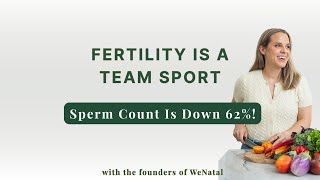
In this hour‑long YouTube conversation, host Brigid Titgemeier interviews Wenatal co‑founders Ronit Manashe and Vida del Reim. The trio explores why stress—both physiological and emotional—is the most overlooked factor undermining fertility, and introduces the concept of “trimester zero,” a 90‑day pre‑conception window where both partners should optimise nutrition, sleep, movement, and toxin exposure. They share personal miscarriage stories that sparked the creation of Wenatal, describe how they built a science‑backed prenatal supplement (including a male‑focused version) by prioritising bioavailable forms of nutrients, clinical dosages, third‑party testing, and a clean, filler‑free formula. Key micronutrients such as choline, vitamin D, iron (Ferric Chelate), folate‑methyl, and antioxidants are highlighted. The discussion expands to systemic drivers of the modern infertility epidemic—environmental toxins, nutrient‑depleted diets, sedentary lifestyles, chronic stress, insulin resistance, inflammation, thyroid dysfunction, and BMI extremes—while emphasizing that egg and sperm quality can be improved through the trimester‑zero protocol. They also address AMH testing, postpartum nutrient depletion, the link between late‑life childbearing and perimenopause, and the importance of community support and empathy. The episode ends with an announcement of a new three‑in‑one Wenadal Protein Plus product (whey, collagen, and prenatal nutrients) designed for those who struggle with pills or nausea, and a call to action for listeners to join Wenatal’s free masterclass and community.
Chapters
I am so excited for today's episode with Ronit Manashe and Vida del Reim, who are pioneers in the fertility space and are the co founders of wenatal, the most incredible prenatal company. I am very excited to pack in all things fertility postpartum. Overall, very supportive of women's health. So can we start out with what's the most common thing that you see women doing on a regular basis that is negatively impacting their fertility that they might not realize?
It's such a great question, Bridget, and it's one that we asked ourselves when we had terrible experiences in our own fertility journeys. And our own pregnancy loss is really what led us to starting this discovery. And we needle because the narrative out there is just that you're too old and there's really nothing you can do. But to answer your question, the biggest thing that we probably tell over 30,000 families that we've helped is fertility is a team sport, and both the male and female partner have to prepare their bodies. And. And that's why we're so passionate about talking about trimester zero. And we're so excited to dig in more about what that means.
And if we try to zero in on the one thing that we're doing, I would probably bucket it under the concept of stress, and we can go into what that means. But really there's so much that's happening in our environment and lifestyle and diet that's in impacting fertility. But stress can be an overarching concept because when we look at fertility disruptors, we're looking at our toxic environment, which is obviously a stressor on the body. We're looking at sleep and stress, which we know that we're all experiencing on a regular basis. We're looking at nutrient depletion and diet, which is also kind of a stressor on the diet. So if we are to zero in on one thing, it's stress, but really it's a combination of many things that's causing the epidemic of infertility that we're looking at today.
Yeah, there's so many stressors that women are faced with, and I think that especially in today's age, the pressure that women are under to, you know, be working but also preparing their bodies for pregnancy and our go, go, go, and never taking a moment to stop. And then you couple that with the women who are experiencing infertility or miscarriages, like all of us know what it's like where you go into that next pregnancy and it's so incredibly stressful. Just like the emotional Stress that women experience throughout, you know, different phases of trying to get pregnant. I feel like it's. The layers are very deep when it comes to the way that stress is impacting women in their fertility. Would you agree?
Completely agree. And in my case, specifically, talking about the emotional stress when I had both of my losses, the emotional stress of thinking it was all me, like, was what ended up killing me because I literally recalibrated on every single thing I did. The stress at work, the workouts, anything I did that could have caused it and yet was completely ignoring the other 50%, which was my husband's health. And so the stress of taking it on alone is also something that we want to empower women to change.
Yeah, it's so true. So I think actually with that, maybe it would be helpful for you to share your story and how that brought you into developing this company and bringing this information to the masses to help to, you know, educate and support other women who are going through this journey.
Totally. Well, I think you know most of the story, but for your, for your community. Brigid, Roni and I met at nike in the LA corporate office around 18 years ago and we became fast friends, establishing our careers and hitting the LA dating scene and becoming really best friends that we are today. While we never imagined was what would happen out of the heartbreak that we both suffered with our pregnancies. And so eight years ago, I was running global events for Nike with impeccable precision. I was literally planning out everything athletes did before, during, after a race, an event, and yet when it came to my own pregnancy, I just treated it like a casual jog. I thought me and my husband are, you know, healthy enough, and we gave it a try. And at my 14 week checkup, I went to the OB GYN for a normal scan. And he delivered the words that no parent to be will ever forget or ever wants to hear. And literally his face dropped and he looked at me and he just said, I'm so sorry, there's no heartbeat. My world shattered. I cried so hard that my jaw ached. I was literally given no answers. They handed me a pamphlet, told me to try again when I felt ready, and I just ushered me back through that waiting room of the glowing bellies. And it was the most trauma I felt in my life. And the words can't describe what I felt in those, like, leading days and even months. And I did what most athletes do, which is dig into the data. But I'm so lucky that my best friend is Ronit, because she dug in and she was working for Dr. Mark Hyman, who, who I know your audience is very familiar with. And she was deep in the functional medicine space. And so where I was getting no answers and they were telling me my labs were quote unquote normal. She encouraged me to look deeper and lo and behold, I found out I have Hashimoto's. And with six months of targeted nutrition and diet and supplementation, I was able to have my healthy daughter dalia, who's turning 8 tomorrow. And I thought the nightmare was really over until people peak of COVID chaos In early 2020, I was pregnant again. We were trying for a second and the same deafening silence at the scan. The thing that was different this time is one week later Ronit called me and also had a miscarriage. And there we were, two best friends, multiple losses, no answers. And in Ronit's case, I can honestly vouch that she had the best prenatal like care and routine. And so we were, we were just baffled.
And in my case, obviously I was shocked. I had Eden at the age of 38, naturally, with no issues whatsoever. And in my case, when I asked my doctor what happened, what can I do for a healthier pregnancy next time around, she said it happens a lot after 40. It's just your age. And she also said there's nothing you could do, just keep trying. And that moment really crushed me. But I didn't take her answer for it. I actually knew better. I was working with Dr. Hyman, as you know, and I had an incredible network of functional medicine doctors, nutritionists, friends like you that I can call and ask what could I do? What's going on? And I discovered a stat that really floored me and it was that 50% of miscarriages are tied to male factor issues. But no one is really talking about sperm health when you're going through things like that.
So I built a time, especially at that time, no one talking about it.
No one. This was five years ago. I think nowadays talking about sperm is definitely more common. And I feel like there's a lot more awareness around sperm quality and its impact on pregnancy, health, baby health, fertility. But back then nobody was talking about it. So what I did is I built an evidence stack for my husband and Vida convinced her husband to do the same. We were committed to three months of trimester, zero high dose antioxidants, sleep, movement, toxin cleanup, acupuncture, and no toxic substances for the boys who are boys, unfortunately like those toxic substances. And. And we live in a day and age where so many things like Smoking and alcohol and even marijuana are normalized and they're toxic and they the end of the day when it comes to fertility. So our husbands did not only improve their sperm quality in this timeframe, but they also started to feel better, have better energy and focus. And nine months later, I delivered Emma at the age of 42. And then Vida welcomed another healthy daughter, Davina, three months after me. So we knew our experiment worked and.
That'S really what led us to meet up. We knew we were onto something. We knew it just wasn't us. We had so many friends and family dealing with infertility and we met up at our local Whole Foods. I'll still remember the day where Ronit and I opened our laptop, we opened a Google Doc named Bestie Co, and we went to work and our first line was really prenatal care for her and for him. That was the game changer. And that afternoon wenatal was born. It wasn't just a supplement, it was a cultural reframe, really. And really talking about the equal biologies for both partners and equal prep for functional doses for egg and sperm quality. Education over fear, which was huge. There was so much fear in our journeys. We want to make sure we provided science backed three month prep and really share community over isolation. Because now we have thousands of couples who are sharing lab wins and heartbeat videos and Wenatal baby stroller pics. And that's our why I love it.
I love it so much. And I can remember the exact moment that Roni called me after she had found out that she had miscarried Emma. And also the phone call where she was like, I feel like there's a, like a male factor to this. I've been doing more research and for anyone that doesn't know, Ronit and Vida are very close friends of mine. This is not a sponsored episode at all. I've been involved in Wenatal since the day that these women are talking about. And Ronit and I became very good friends after working with Dr. Hyman together. And I just believe so much in your mission and everything that you guys work towards. And I'm also a medical advisor for the company. And your stories helped me in so many ways because I then miscarried two years after you. And I remember, maybe it was actually one year after you. And I remember like so many of these things with, you know, having these discussions in advance that I knew that there was such a thing as like a missed miscarriage, which nobody had told me about before. But that was my experience too. Like my exact Experience Vita that you're explaining, like walking into the doctor's office expecting a heartbeat, having no heartbeat at nine weeks and like all of the fear and all of the negative, just like, no, we don't need to do any hormone testing. No, we don't need to look any further into this. Just start trying. This is just by chance that this happens. And I was in my early 30s when that happened. So knowing everything that you guys went through and knowing then, oh, we need to focus on optimization and fertility as a team sport. And getting Johnny on the beta of the Wenatal supplement was such a. An incredible game changer for me and my fertility journey that I know you've now brought to tens of thousands of couples throughout the world.
Yeah. And, I mean, I think Johnny is probably our number one. I would call him our first male advocate, because we also didn't know, are men going to be receptive to this? Are men going to take this, you know, multivitamin that we created for them? And we had a lot. It was a big undertaking to kind of remove those taboos around male fertility. And I think there's a fear of, like, masculinity and things like that. But I would say it was very promising in the early days, before we even launched to have results from people like Johnny, who took the prenatal or the beta prenatal, which is essentially the same prenatal for just different packaging. Different packaging, took it for three months and saw an exponential increase across all of the sperm parameters, count, motility, morphology. So that really gave us, I would say, like, between our own personal stories and some of our beta participants in the early days, it really gave us the confidence that we can make a big difference with our company. And nowadays we've had. We've helped over 30,000 families, and I can't even tell you how gratifying it is to get those DMS and text messages and hear from people who stop us on the street. And, you know, when we think back to our losses, we personally both feel like everything in life happens for a reason. And. Yes. Was it the most devastating thing that I've ever experienced in my life up until that point? Yes. But am I so grateful for that soul that came into my life for that short time frame? Yes. I'm so grateful that that happened to us because. Because without that, we wouldn't have Wenatal. We wouldn't have started that Bestico document at Whole Foods. We wouldn't have had all of these customers that reach out to us, whether it's, you know, all these success stories, whether it's people that were told that they weren't able to conceive, they would need an egg donor, IVF is their only option, or have had multiple failed IVF rounds, but then went on wenatal and had a successful round. So we're, we're so grateful for that loss. And we, I think for us, it's just like the beginning. You know, we launched about three and a half years ago. You know that the formulation process took us over a year because we really geeked out on every single nutrient and dosage.
And the latest research studies that continued to unfold. Exactly.
And it wouldn't have happened without Brigid really analyzing every nutrient, every dosage. And we're forever grateful, Brigid, for also your, all your support.
Well, it wasn't just me. It was definitely a team effort. But yes, the calls where we would just nerd out on all of the research studies and pull up our, our Google Drive with like all of the latest research studies that we had been adding to this long Google Doc in the Google folder. It was definitely like we got very much in the weeds. But it was such an important process because there were no other prenatals on the market that I personally felt comfortable taking. So to me, it was a personal mission as well to try to optimize my nutrient levels in addition to wanting other and couples to have access to something that I personally would feel comfortable like sharing with a friend or family member. And unfortunately, most prenatals on the market like prenatals. I started taking a prenatal in my early 20s because it's such an important aspect of women's health. And I feel like women don't realize how much earlier you should start taking a prenatal than just, you know, when you become pregnant, which we can talk about the exact scientific reasons for why. But there's so many. Prenatals are so incredibly important. But very few prenatals on the market actually have optimal level levels of nutrients. And then when you get into the very few that do, they, you know, they don't have the. You have to take eight capsules. And so that was a huge driver for wenatal as well, is like, how can we fit it into the fewest capsules possible so that we can deliver a product that maximizes the nutrients that are essential for the baby's brain development and the immune system development and so many other factors that are happening underneath the surface. But also supporting the mom getting that adequate level of nutrition that she needs to support her health and improve her postpartum recovery and those various aspects in a way that is accessible for people in three capsules.
Yeah, because you know, from your community base too, Bridget, at the end of the day, if you're not consistent with your health regimen, it's not gonna make a difference. And so consistency was one thing that was a big, big deal for us because here we were, both of us, when we decided to kind of create this at home DIY stack for our husbands and for ourselves. We were taking a prenatal at the time. We were taking metagenics plus one, but we had to add vitamin D, we had to add iron, we had to add folate, and we had to add magnesium. So those are the four things that we added. So here we were taking glycol and. And choline.
Yes, and choline.
So we were taking about 12 pills a day. And honestly, Brigid, for me it was no big deal because I am just like, call me a pill popper. I was able to just like throw them all in and swallow, but I was sitting there and like, literally every hour taking one. And she was like, women deserve better. And, and if we want to make an impact, and truly a mass impact, not just like on a niche, like functional medicine society, but really, if we want to make a global impact, we have to make this sustainable, we have to make this easy. And so that, that's the reason why we even got into this, the business of women's prenatal. And, you know, you and I talk about this a lot, but it is very overwhelming to look at the nutrition facts of a prenatal and kind of decipher what is. You know, there's. There are a lot of ingredients in there. And so just for your audience, I want to just quickly break it down. There are basically five things to look at when you're looking at a prenatal label. First of all, it's the bioavailability of the ingredients. Are the B vitamins bioavailable? Let's talk about folate versus folic acid. Is the. Being bioavailable is important because not everybody can utilize and. And convert a synthetic form of B9 to the bioavailable form. So making sure that your B vitamins say like methylfolate or 5mthf, that sort of thing, then is it do the dosages? Are they clinical dosages? So, for instance, I'm just going to call out two, because there are 24 ingredients in wenatal that. But choline is a critical nutrient for baby brain development. Critical. And wenatal has 400 milligrams. Research shows that when you're pregnant you need 450 milligrams. And when you're lactating you need 550. And women on average take about 150 maybe plus take it in a day right through eggs and through their diet. So. So you kind of need a big amount through supplementation. And many prenatals on the market don't contain choline or have very, very minimal dosage. So making sure that you have the right dosages. Vitamin D is another one. Wenatal has 4000ius of vitamin D. The other one is the third thing is third party testing. We are so transparent with our third party testing. It's listed on our website site. A lot of brands claim they're third party tested and when you ask them for their documentation, they don't share it with you. It's important to know because we want to make sure that what's listed in the nutrition facts are actually in the vitamins. So that's what the third party testing does. It's an external agency that looks at the, the nutrients and also makes sure that there is no heavy metals, there's no contamination. So that's a critical one. You want to make sure fourth that the formula is comprehensive. Wenatal has 24 key nutrients in them. And you know that we wouldn't leave one of those nutrients out. Versus some prenatals on the market have 12 nutrients. So if you don't want to dive into the science, you could just look at the back and count. Does this have at least 24 nutrients in it? And then making sure that not only what's in the formula, but what's not in the formula. Like look at underneath the nutrition facts, a lot of vitamins out there, not, not just prenatals, have a whole paragraph of fillers, food dyes, unnecessary additives. Wenatal doesn't have any of those in their formula. So just making sure that it's essentially clean.
Yeah. And Roni's talking about the other ingredients line. It says other ingredients and then it'll say cellulose or other fillers that help to stabilize the cel. And the reason that Wenatal is able to get away with not having those additional ingredients is because of the small batches that you do. Is that right?
Correct. Yeah. We actually worked so hard to find a manufacturer that would work with us because it is a lot cheaper to make with fillers. It's a lot easier of a process. And so we scoured the US until we found our amazing Manufacturer who was willing to make in small batches and make it completely clean. And our supplements have zero agnostic fillers. That's correct.
Which is great. And I would add to that list of even saying the form of the nutrient because there's so many examples of different nutrients that we were looking at where it's not just that like all iron is created equal. There's different forms of supplemental iron, some that are harder on your digestive system and increase constipation, and others that have, that are easier to digest. So for instance, like the Ferrachel is a specific patented form of iron that we chose to go with because of the, the ease that it has on your digestive system and decreasing the likelihood of constipation. This is something that, you know, like I've been, I had been recommending for years in that specific type of iron form and having so much success with people who had previously said, oh, if I take an iron supplement, I get constipated. And then they're dealing with anemia. And so looking also at the types of vitamins is important as well, which is obviously what we did in the formulation.
Yep. And it's our commitment to continue to do that. As new science and new forms come out, we're always gonna be evolving our.
Formula and it highlights the essential role of nutrients as a whole to help to support our overall body. And I think that so often micronutrients, in particular your vitamins, your minerals, your antioxidants, your polyphenols that you're getting from your diet in addition to your supplements. It's not always emphasized when people are just like counting their macros or counting their calories. But we have to think so much deeper when it comes to fertility preparation, supporting a healthy pregnancy. There was actually a really interesting article that came out in 2021 that show that women who are taking a, that are eating a nutrient dense diet that has more whole foods, that are higher in a lot of these micronutrients, have much lower risks of a number of different pregnancy complications. And so this is possible when you focus on a nutrient dense diet and a high quality supplement to support your overall health. And then also the babies.
Definitely.
Okay, let's talk about primary drivers of infertility, because the number when you started Wenatal, the statistics showed that one in eight couples were struggling with infertility. The statistic just since you founded wenatal has changed to 1 in 6. I know so many family and friends that, and clients of ours that are struggling with either being able to get pregnant or having, you know, recurrent miscarriages. So can you talk about the leading drivers of infertility that we see today?
Yeah, it's a great question. And yeah, the alarming way the stats have increased is quite important for us to all care, no matter what stage of life we're in. So I think it boils down to three main topics. Obviously, it's multifaceted, but there is the global infertility main causes. There is the men's health and the women's health. And we'll go deeper on all three. I think, you know, we're amongst this global fertility crisis. When we first started on work on wenatal, you mentioned the stats and how quickly they have become. Even some. Some CDC is reporting 1 in 5. So it's even worse than 1 in 6. And these numbers aren't just statistics. They represent millions of people facing this heartbreak. And so the first thing we want to be clear on is fertility is not just a women's health issue. I think I've said this countless times, and we really need to see the narrative change. Sperm Counts have dropped 62% since 1973, and men today have 50% less sperm than their grandfathers. So that decline is alarming. And that it went from a 1% drop per year to 2.6 since the year 2000. If that trend continues, sperm could reach zero by 2045. So that's not just alarming, it's existential. And why I say everyone should care, no matter what stage of life we're in. And sometimes people are telling me, like, oh, well, 1% doesn't sound like a lot, like, you know, everything's declining. But, like, think of your own, like, bank account. If you're spending just a tiny bit more than you're saving, just 1% more doesn't sound like a big deal. But fast forward 10, 20, 30 years, that slowly, quickly adds up. And you check one day, you check your balance, and literally it's empty. And suddenly you're not just short on cash, you're short on options. And that's what's happening with our population. If we don't do something now, we're gonna have less and less options. So we're not running out of people overnight, but we're quietly overdrafting our future.
And I think, you know, this 1% effect, that we're seeing, this 1% decline in sperm counts. We're also seeing the same in women's health. We're seeing an increase of miscarriage by 1% per year. We're seeing an increase in testicular cancer, increase in erectile dysfunction. So something systematic is going on. And you know, from my perspective, it feels like whatever is going on with fertility is very similar to what's happening with just overall health. What we're seeing with autoimmune disease, what we're seeing with the mental health crisis. And for me it feels like the drivers are essentially the same drivers of the things that you talk about all the time. There might be a few things that are like maybe a little bit more impactful of fertility, but we can dive into what those three things are. So first, the toxic environment. You know that we are surrounded by plastics. There's research that shows that there are plastic particles in like every part of our body, including testicles and ovary, ovaries, pesticides, endocrine disruptors. They're in our food, water, our home. And you know, from the wenatal perspective, we, we like to talk about these things not to alarm people, but really to educate and empower them. Because there is so much that you could do to kind of tweak your environment and your lifestyle. And fertility is dynamic and we can get into that and why this isn't like a doom and gloom conversation. This is a conversation around hope and empowering people to know that they could do. So number one, the toxic environment, which we can kind of not control everything, but at least within our homes, there's a lot that we could do there. There's a really great book by Dr. Shauna Swan called the Countdown where she talks about plastics and pesticides and how those exposures are one of the links to sperm decline and infertility in men. The second thing is nutrient depleted diet and lack of movement. We know, and you talk about this all the time, Bridget, that 70% of what Americans eat are ultra processed food foods. And so many of us are overfed and undernourished. And when we shift to a nutrient dense, protein rich diet like the Mediterranean diet, there's actually data that shows that fertility improves. And then as far as like movement, we're spending so much time sitting indoors. I think you know, our friend Dr. Casey means talk talks about in her book 92% of our time we're spending indoors sitting. And so just by moving a little bit and taking steps, we're not saying every single person needs to become a crossfitter here. It's like there's research that shows that men who walked over 4,000 steps a day had significantly higher testosterone. That's less than half a mile. And it's Definitely doable. And then the third thing is stress and sleep. We know that chronic stress tells your body that it's not safe to reproduce. When cortisol rises, progesterone drops, your cycles become irregular. And in women, and then in men, stress is also shown to lower sperm quality by prioritizing sleep. And I feel like you even shared once in a, in a webinar that we did together, sleep over exercise too. Like sleep is where when you recover, it's where you kind of detoxify. And I think it's super important to focus on sleep. Like we geek out on sleep all day long. We actually bought aura rings for our entire team. I was it the first or second year after we launched. It's such an important piece. So from a high level thinking about improving fertility is like what are the fertility blockers that we can remove and what are the fertility boosters that we can adopt? So things like clean water and air, those are like easy ways to kind of like detoxify our environment. Investing in an air filter and a water filter, switching to non toxic products, reducing toxic behavior like smoking, drinking, vaping, we talked about those and then adopting those fertility boosters, eating real food like you talked about the, the food with all of these micronutrients that are critical with the macronutrients that we know support fertility, moving your body, prioritizing sleep. And I think, you know, what we're very excited about is that sperm and egg quality can be improved. And that's a big psa because I think the narrative out there oftentimes is that your fertility is fixed. As women, we are born with the eggs that we're born with and there's nothing you could do. This was the hand that you were dealt with, dealt and there's nothing you could do. But eggs mature over about a hundred days and, and then sperm regenerates every 72 days. So what that means is that if you invest in trimester zero, the things that we just talked about, you can completely regenerate new sperm. If you're a man and for a woman, you can improve your egg quality. You're not regenerating your eggs, but you can really improve your egg quality and how it matures. And that investment, those three months can really shape the entire life of your future child. And I feel like that's why we are so passionate about trimester 0 and this moment in time that nobody really talks about.
Yeah. So the trimester 0 is that 90 day window that is so incredibly important for prior to conceiving to Take a prenatal for both him and her to optimize your diet and get more nutrient dense foods to do the movement. All these things that Oni's talking about that the research very clearly shows. You know, when you are like the neural tube defects that we see happen from folate deficiency, that is well before a woman actually becomes pregnant, that contributes to that. And so being able to support yourself, going in and treating it as something that you're actually training your body for makes a lot of sense. And I would say too, that when you're talking about these specific factors, when it comes to, you know, the environmental toxins that our body's exposed to, when you're talking about the lack of physical activity, the lack of nutrient dense foods, the lack of stress and sleep, what it boils down to from a mechanistic level are the key drivers of infertility that we see, which is insulin resistance and insulin resistance impacts. You know, the number one cause of infertility is ovulatory dysfunction. And when we look at one of the causes of ovulatory dysfunction, it's insulin resistance that's driving changes in sperm quality and also hormonal imbalances that can impact ovulatory dysfunction. And then secondly, outside of insulin resistance, we look at chronic inflammation and oxidative stress, oxidative stress being a leading cause, again, changing sperm quality and changing egg quality in our mitochondria that we can talk about in a second. But this increases risk of infertility. And then, you know, on top of that, you have thyroid dysfunction and thyroid disorders and high bmi, because high BMI and low BMI can also. It's a leading cause of infertility when it comes to just trying to optimize your body weight. So there's so many things, like you said, from an actual habit standpoint that can impact these underlying mechanistic drivers that we see as the clear leading causes of infertility that most people aren't learning about when they're in their doctor's office getting an infertility diagnosis, which is the really unfortunate part, because it does make it seem like, oh, it's just this doom and gloom situation and we need to jump to IVF without doing any further testing to look at your fasting insulin levels, to look at your HSCRP levels, to look deeper underneath the hood at even like a full day cortisol pattern to see are you excessively stressed, that's impacting, you know, cortisol is a catabolic hormone. It's going to impact so many other aspects of your overall health. And so looking deeper is such an important part of this entire process, to be able to support your body in the way that it needs to be to have a healthy pregnancy.
We couldn't agree more. And actually, in my own case, my adrenal fatigue was real. I was 20 years in a corporate job. I was literally on fight or flight mode every day. And that's our biggest education point at Wenatal. You know, we find it fascinating that we train sometimes for our wedding day. And you said training for trimester zero. Most people intuitively, if they signed up for a marathon, let's say I used to be a big marathon runner. And you would, you would sign up and you would typically do the things to prepare yourself to have the best experience on race day. I mean, I work with tons of athletes and I saw what they put in. Everything from the right clothing, the right footwear, the right coach, the right nutrition. Everything was so thoughtfully planned so that the outcome on race day is the cleanest best. Like, you know, the difference between gold and silver is one second. And so when we think about the lifelong health of our future children, why are we just jumping to trying? I did it. I didn't know any better. I thought, I'm just healthy, I'm young enough, whatever, let's just go for it. Or the system told us that we're old, so we just need to hurry up and try. Meanwhile, if we took a minute to train for trimester 0 and put both of our best foots forward, the outcomes could be so much greater. No matter which route you take, whether you try naturally, whether you use assisted reproductive technologies, ivf, iui, looking under your hood. Under the hood, to your point, is such a valuable tool to make any outcome better. And it's not just the health of the pregnancy, it's the future DNA. You're giving your child for their lifetime. So that sense of responsibility is one I wish I had with my first child. And what I'm so passionate about, sharing that. Think of this like your wedding day, like a marathon. Think of the time it takes to train and put your best foot forward.
And when you're in that process also I would say like most people are trying to, you know, design the nursery and all the things and putting their attention those places. And the recommendations that I always give to women are like, invest in a breastfeeding class, invest in like a high quality prenatal, invest in a non toxic mattress. Educate yourself on all of the ways that you can minimize your baby's exposure. Exposure to these environmental toxins through the baby soap that you're buying and the laundry detergent that you're buying and the dishwashing detergent that you're using to wash those kinds of things like your pump and that kind of thing that make like a much larger difference on the child's life than the nursery.
Totally. And oh, by the way, for the future moms or the moms. What I didn't realize in my first pregnancy when Wenatal was not incepted yet was when I didn't take care of myself because, as Ronit mentioned, I couldn't down all the supplements. I just wasn't able to. I found out that a couple months into breastfeeding, all my hair was falling out. I found out after my first child I got a root canal. Cause she quite literally took all the nutrients, even from my teeth. And so there's so many things that actually postpartum destroyed me on my first child when I wasn't taking the right supplementation and nourishing myself. And so I'd say I would 100% vouch for that PSA of like, well, the nursery and all that stuff is fun. Investing in your own health is the best gift you can give yourself.
And I. And I'll just add to like, Vida's point. So that's a good point. Also that we hear a lot from our Wenatal community is that when you go get into your first trimester, it's really hard to, you know, take a prenatal sometimes. I know many people that just like, had to switch, like gummies or like, couldn't take a prenatal at all. And so investing in trimester 0 and taking the prenatals in advance in a sense gives you an insurance policy because what you're doing is you're building those nutrient reserves because baby is going to take what it needs out of you and then you as a mom are going to left be left depleted. So I think that's like a big and super important PSA that we have. Yes, it's about having a healthy baby and it's about, you know, obviously getting pregnant, but it's also about being a healthy mom and being healthy postpartum. I can't even tell you how many stories we hear from our community saying, like, now that we're three and a half years in, we have people that are like, on baby number two or even baby number three that maybe didn't have wenatal for baby number one. And we hear from countless people that when they were on Wenatal from preconception through postpartum. They didn't have those postpartum symptoms like postpartum depression and postpartum anxiety and the fatigue that are often linked to nutrient deficiencies and are not necessarily like this mental thing that so many people think that it just is.
It's so true. I mean, just thinking about like nutrient deficiencies for vitamin D and iron and vitamin B6 and vitamin B12, you know, like those four alone can contribute to those symptoms. And so I was just with a woman who is one and a half years postpartum and asked if she should still be taking a prenatal. And I of course said, absolutely, you're in, you're still within your two year window of being postpartum. And she said, oh, I wouldn't even consider myself to be postpartum. Like I'm, you know, my son is one and a half years old. And they said, no, the postpartum window lasts for two years. And it takes your body a long time to recover, to build up those nutrient reserves again and to, to replete those nutrients to come back from the nutrients that you lost. And that also can have a dramatic impact on how you feel on a day to day basis, but then also how you set yourself up moving into perimenopause and menopause because you don't want to go from being nutrient depleted throughout your pregnancies and postpartum directly into perimenopause because that's when you're going to see the symptoms drastically increase. Like in the last 10 years of working with, you know, tens of thousands of people, the number one thing that women report when we ask them the question of when was the last time that you felt good? They say, before I had my baby. And so if you're like experiencing that, then for the next 10, 20, 30 years. Sometimes when I'm working with women who are, you know, have gone through menopause and are experiencing all these symptoms and are getting all these different diagnoses. If we actually take their timeline back to when those symptoms started, it's after they, they gave birth to their children. But their practitioners never addressed it, never gave them the support that they needed. They didn't have the prenatals or the nutrient dense food, education and those sorts of things to know how to come back from it. So then 20, 30 years later, as they continue to like dig this hole for themselves, they're struck with all of these different metabolic imbalances and inflammatory effects of not having that support.
Yeah, I I felt it myself and I've heard in so many friends and family and sometimes also were dismissed as things being postpartum, when in reality it was just nutrient deficiencies that I saw that in my own journey. So being educated, looking deeper in the labs, and also knowing in your gut, you know, what is thriving for you is so important because a lot of times the symptoms will be dismissed and because of what you just went through. And so being your own advocate is such a huge part in your entire health journey.
And I think, Brigid, you bring up an interesting topic that actually we're about to write a blog post about the intersection of postpartum and perimenopause. Because more and more women are having kids later in life. And as a result, a lot of times women can have perimenopause symptoms when they go to the doctor, but the doctor will dismiss them for being in postpartum. And so that's just something that we want your audience and community to be aware of that. As you know, new research came out that more women in their 40s in the US are having kids versus women in their 20s. And so I think it's just something to pay attention to. And then as you go into those pregnancies later in life, it's so important to prepare your body, as you mentioned, and, you know, not only to improve egg quality, but also to improve your resilience as you enter that stage of perimenopause.
Yeah, I completely agree. It couldn't be more important. So another thing that I think women experience a lot is going to, especially with having kids later in life is a lot of women that I've been talking to who are getting their AMH tested and they find that they have low amh, and that's, you know, a measurement of your ovarian reserve. We know that premature ovarian failure can actually be a cause of infertility. So I'd love for you to talk about your experience, Roni, with your AMH story and how it impacted you and how you actually, like, thought about it mentally.
Yeah, AMH is something that's a huge hot topic in fertility. I think it's a number that a lot of people obsess around and what I will say. So AMH stands for anti mullerian hormone. And it's one test and one indicator of fertility, as essentially it's a blood test and it looks at your egg reserve. And so when I was about 34 years old, I didn't meet my husband yet, and I asked my OB gyn Like, I want to know if I'm fertile. How do I know? So she tested my AMH and it was low. It was under 2 is considered low. And mine was 0.5. So it was very, very low. And, you know, at that time in my life, I could have decided to freak out over this number. And again, this was years ago. I didn't know anything about the fertility space, but I. What I did know is that it was just one measure of fertility. And my doctor said it is an indicator of success in ivf, because with ivf, you need a high quantity of eggs, but when you're conceiving naturally, you need quality eggs. You don't need, like a super high quantity. And so back then, I remember thinking, I am living a healthy lifestyle. I eat organic food, I exercise. Back then I was like a big time crossfitter. I, you know, I'm doing all the right things to support my health. And I also remember thinking, my mom had my sister when she was 37 and I'm not gonna think about this number. I'm not gonna obsess about it. And it was just kind of like I tucked it away and I never really thought about that number. And then I met my husband and I had Eden when I was 38 years old. And it's so interesting because years later I did, I guess in some, like, labs I was looking at my AMH and it actually increased. And this was about five or six years later. So we just want to say AMH doesn't define your fertility. It's also dynamic. And you can improve your AMH and you can improve. At the end of the day, like our biggest PSA is like, focus on the egg quality and not the egg quantity. Because you just, just like how you need one person to, like, you know, fall in love with and get married. You just need one egg to have that baby. And so focus on improving your egg quality. And there is just so much that you could do to improve your egg quality. You know that two years after launching WENATAL, we created a product, product called Egg Quality plus, which includes nutrients like CoQ10, NAC, Alpha Lipoic Acid, PQQ, and all of these nutrients help support mitochondria, which in turn improves egg quality. So to anybody listening who, you know were told you have low amh, I feel you. It could be very stressful, but just know that it's not the end all, be all.
Yeah. And I think even in just in this day and age that we're living in, it's so amazing to have the information about fertility and having a healthy pregnancy and all the things that are in our control and coming from a place of empowerment. But I also can see how it can be detrimental to someone's mental and emotional state that, like, you have to be able to guard yourself from all the information because it might always feel like you're not doing enough, that you're not removing enough toxic products, that your AMH isn't high enough, that you don't have, you know, you're never going to have the right diet. And there's. I just think that it's from a, you know, stress standpoint, given that we started out the episode talking about the role that stress plays on fertility and healthy pregnancy, that it's important to be able to guard yourself from that. And even looking back at my own experience, I wish, especially during pregnancy, with all the fear mongering that, you know, happens throughout, you know, with McKinley's pregnancy in particular, we had several soft markers at our 20 week ultrasounds that, you know, increased. She had a choroid plexus cyst and a thickened nuchal fold and a marginal cord insertion and all these things that, like, the doctors go to the worst case scenario saying, like, well, it could increase her risk of this. It could increase her risk of this. And then when I got pregnant with James, when McKinley was only three months postpartum, we went to James's. They needed me to see a fetal medicine doctor, which I only. I said, I'm only gonna see a fetal medicine, maternal fetal medicine doctor one time because I was so stressed during my pregnancy with McKinley and like, knowing all these things wouldn't have changed the outcome in any way. Like, you know, we were keeping her. It, it was just a matter of like, you know, it kind of thought felt like we had more control knowing the information, which we really didn't. But in the only maternal fetal medicine appointment that I went to with my pregnancy with James, I brought McKinley and she was only, you know, five months, four or five months old. And I was telling the doctor about all of her soft markers and the doctor looked at her and pointed to her and said, this baby right here, she's so healthy. She had all those soft markers. And I was like, yes. But then in my pregnancy with James, I chose not to go down the maternal fetal medicine route. Not to say that it's not necessary and very important for some people, but I just needed to, like, protect myself. You know, looking back, I wish I would have protected myself from some of that stress during my pregnancy with McKinley that I really tried to with James. To know, like, that it's gonna be okay. And not always. Is that the case? Of course, my first pregnancy did not end that way. But there has to be a level of us being able to, you know, focus on, like, the manifestation journal that you created for wenatal in our mental, emotional, and spiritual health. That in, like, letting go of control, knowing, like, you've. You've prepared yourself as much as you possibly can. But there's an element of needing to let go of the wheel and say, like, what is meant to be will be. And there's only so much that I can control that's so beautiful.
And we couldn't agree more. And that's why we're trying to give people the tools, but with empowerment. And you have to decide what's too much or too little for you. I know in my first Bridget exactly what you're saying. I was so stressed with my pregnancy with Dalia, and everything the doctors told me just added to my stress. They called me geriatric, which wasn't helpful. I don't know why that term exists, because it's really just mentally toxic. They. You know, I had gestational diabetes.
Every.
Everything was one thing after the another. And I see that. I've also. I feel like I may have passed that on to Dalia. We typically think about passing on our eye color or our hair color, but you see so much of your temperament in your children as well. And with my second, similar to you, I had faith in the process, and I knew I can't control everything, and I'm gonna do everything possible to give the best outcomes. But I also need to let go a little bit. And I see that she can be much more resilient than I ever thought she could be. And so just think about what works for you, whether it is journaling, whether it is getting out in nature. Walking was really, really helpful to me. But it is important to find your own tactics with stress, because stress is not going away in our lives. It's very prevalent, and it's, like, never ending. But if you can find your own powerful, positive ways to cope, it's only gonna make for better outcomes. And I think you've taught us, along with so many people that we respect and admire. It's not about being perfect. I love the 8020 rule. Cause it gave some humanness to the process. A lot of people hear the advice and think they have to liquidate everything in their house and literally be perfect, or else it's downhill. And the reality is the stress of it is probably worse than maybe having a meal outside or, you know, doing something that might not be deemed perfection. So having grace with yourself, ultimately, no matter what you decide, is the most important in, in this process. It's not easy.
So true. Rooney, do you want to share any other lessons? One of the big blog posts that you wrote after the fires happened where Roni lost her house in the Palisades to the fires last year, or actually it's still the same year. It's crazy. In January of this year, when you wrote your learning lessons that relate to fertility and women's health, would you be able to share any of those?
Yeah, so. Well, In January, well, January 7th, to be precise, I lost my house in the Palisades fire and Brigid was actually staying with me at the time. So I'm sorry for hosting you for such a, such a bummer of an experience. Frigid. It was so crazy. But, you know, after experiencing that loss, I, I really felt like, you know, we had people in the Palisades that lost their house, we had people that didn't lose their house, we had people that, you know, maybe had smoke damage, people that had insurance, people that didn't have insurance, people that. But like, ultimately everybody was going through something and nobody had it easy. And even though my house burned down to the ground and I didn't have insurance on my house, I still felt so much empathy for my friend whose house didn't burn down to the ground and had to actually go through every single piece of her furniture and decide what is safe, what she has to toss, what she can keep. And so I think for me going through that, I learned that it's very similar to fertility. It's very easy to kind of like look left and look right and feel like, oh, they got pregnant so easily or, you know, they have three kids, or, you know, their kids are back to back and my kids have a four year age gap or whatever it may be for me that that experience really magnifies that, like within this fertility journey that we're all on, it's not easy for anybody. Everybody is going through something and I think, you know, just have empathy for those around you and realize that you're not alone. Even though, even though sometimes it might seem like you're alone and you're the only one that has struggles, you actually aren't. Everybody around us is struggling with something. And so that's one, one big thing. And I think another thing is, you know, after the fire, I went straight into like Go mode, do mode. You know, doing all of the things that you need to do. And my husband was a little bit, like, paralyzed by the fire. And I think that, to me, was another way to see that everybody's reaction to a stressful experience or to grief can be different. And so for those couples who are going through infertility, if it seems like, you know, sometimes, like, the partner might seem like it's no big deal to them or whatever it may be, everybody has their own grieving process, and you just need to be aware that everybody grieves differently. And so that was another. Another big one. But really, like, my biggest thing, and, you know, what I kind of am drawing from my pregnancy loss to the fire is that things happen for a reason. And I know that I'll be able to fast forward three, four, five years down the road and understand why my house had to burn down to the ground and. And, you know, all of the kind of chess pieces in life and what that resulted in, because if that didn't happen, this wouldn't happen, and that wouldn't happen. And I feel like, you know, going back to my experience with Wenatal, like, if I didn't have that loss, I wouldn't have, you know, an inbox full of messages from couples who thought IVF was their only option. I wouldn't have couples who call me, who tell me that they thought they were too old, and people who tell me their sperm counts were up, or people that were told they had unexplained infertility. And now, Bridget, I don't think I even told you this. People invite us to their baby showers. People send us their wedding invitations. We had one recently. People send us their baby photos and write, without this, we couldn't have done this. So that, to me, is. Was a big learning in life. And I. I hold on to that. And I know that with the fire, things will be revealed. And, you know, I'm excited to see what happens from here on.
You're such a resilient person. So, so crazy. But I do think that there's a lot of takeaways from that. I'm interested just as we're, like, wrapping things up. You two are such an inspiration to me as moms, and I feel like there's a lot of that's recognized in, like, trying to get pregnant and having a healthy pregnancy. But then we live in a world that makes it a little harder to celebrate being a mom, to, you know, prioritize it. When women are so often celebrated for their career wins and not necessarily as much of, like, how they're caring for their kids and how they're prioritizing their household. And just in the times that I obviously stay with both of you, often as you open up your homes to me and then I come and crash with you and hang out with your daughters and your whole families, both your families in la. But I am always so inspired by you two as moms, and I would love to, to hear from you, like, what does being a mom mean to you and how do you feel like as a society we can celebrate moms more and celebrate, you know, the, the fact that this is like our most important obligation when we bring children into this world? Yeah.
Such a great question. And in fact, you know, we were on a podcast when we were in New York last week already, and this amazing, beautiful young woman, we were talking about how so much of society has shifted, right? Like in our parents generation, the success was getting married and having kids. And now we're entering the fork workforce. We are now balancing, I think, as women, so much more than we ever have. And so how do we, how do we define success? And I'd say there's not one way for each family, but for me, knowing, like, the legacy of what we're creating, doing our best with, like, what we're given, there's a lot, oftentimes I have, you know, a lot of guilt with, like, am I spending enough time with them? Am I working too much? But balancing like, the foundation of what we're giving them, knowing we're prioritizing everything we learn for them, to give them the best health, wellness, to show them what I'm working mom, and what like, work can be. So for me, I feel like everything I do is for them in some way or another. Even if I'm not with them 24 7, I'm building the foundation to give them the best life and learn the most I can and be a role model. So for me, that's how I balance it. It's never easy. And I think so much has shifted where we still are very active moms and working a ton to build something big for them.
And I think like, as an entrepreneur, you are working 24 7, but you're also your own boss. So like, for me, I never miss a drop off or a pickup. My husband and I kind of switch out. I am so involved in, like, classes. We go to ballet class, we do things. And of course, like, do I open my laptop after they go to sleep often. Don't tell my Oura ring that I do that, but, you know, it's always a juggle. But I will say, like, I'm so maniacal with my time. Like, I don't waste my time doing things like, random. Like, watch. I mean, I. I would love to, but I just, I feel like you have to be so protective of your time and your energy. So we are actually like also in the process of learning how to say no and how to do less things. Things and how to be able to balance both. And just funny enough, so interesting that you're asking this question because on the way to school, I asked Eden and Emma today. We were playing this game. We do this game like this or that. Like, do you like broccoli or do you like salad? Do you like this or do you like that? So then I. One of the questions I asked was work or play? Do you like work or play? And Emma said, play. And then Eden said, but I. But I think both, because if you didn't work, then we wouldn't have the money to play. And I think it just, it's just great to also know that, like, we're setting an example for our daughters to show them that, yes, you can have it all. Now is it going to be easy? No. Is it going to be a juggle? For sure. But you can have it all. You can have the family time that is super present and you can also have your super laser focused work time. And I think, you know, we're setting a great example of that.
I agree. Yeah, you guys really are.
Thank you. And you are too, by the way. I just want to shout out to Bridget, okay, so I talk to Bridget a lot on the weekends because in the middle of the week we work so much. So I call her one day and I'm like, what are you doing? She's like, I'm at Costco. And I'm like, oh, where are the kids? She's like, like, they're with me. Both of them. Where they just ate a tub of raspberries. And so Brigid, you are the epitome of what you just described. Like, you are such a great mom, but also like, take your kids out, go to the market. You practice what you preach. You meal prep with them on a carrier. You. Or they're like running around in your kitchen playing with like wenatal containers while you're meal prepping for the week. And so I just want to say, hats off to you. You're an inspiration to us as well.
Oh, thank you. Thank you. It's definitely not easy and it's not something that I ever felt like I would care so much about. Just as someone that was, like, more driven by my career and things like that. Like, something. There's just been a noticeable shift within me since having kids that I never expected to have. And I even remember having a conversation with a mutual friend of ours, Merav, many years ago where she said, like, I would encourage you to try to have kids earlier in life than, like, later in life because you're. You're gonna, like, find a way to prioritize both your career and motherhood. And I think back to that advice. And of course, everyone has to do what's best for them. But I'm really grateful for the advice that she gave because I do think that being able to show your kids what it looks like to prioritize both family and having a career is such an incredible gift.
Yeah.
You know, when we.
The time that we worked with Dr. Mark Hyman, he would always say, like, if you want something done, give it to a busy mom. And that is so true for all of us. We get things done.
Yeah, it's really true. It's so true. Okay, now let's shift gears to an exciting announcement.
We are so excited.
We have something very special to share with you and your community. First, before we tell anybody else, I think we talked about it a little bit about how important nutrition is and making it consistent and making it a habit. And so much of our community, like myself, on some days can stomach pills, and on some days maybe cannot. And on some days are maybe more smoothie girls or gals and. Or guys. And on some days, you want it to go. And so we have been working for a very long time on a new product that will hopefully revolutionize taking Wenatal in different ways for our customer base. And we want to share it with you first. So announcing.
This is Wenadle Protein plus.
Oh, it's.
It's a three in. And let's show you the women's. For her and for him.
I love the packaging. It turned out so beautiful.
We're very excited.
Excited. So what this is is a three in one product. It's a full spectrum prenatal, 20 grams of whey protein and collagen. And we're just so excited to give our community the ability to kind of incorporate all of these things to their daily routine without so many steps. I find myself, like, constantly putting so many things into my regimen or my smoothies. So we wanted to make things, like, simple and less is more. And yeah, this is it. We're excited. We're launching in November and I feel like it's one thing that our customers have been asking us, those who can't swallow pills or those who are nauseous in their first trimester and have a hard time getting protein in. And you, Bridget, are the smoothie queen. And I know that you'll be sharing some of your recipes with our community and we'll be using it with our protein powder.
Amazing. And the combination, I mean we know that protein is so important for pregnancy, for optimizing blood sugar, for improving muscle mass, which you know, is so depleted during pregnancy. So being able to have the combination of both grass fed whey, which is my protein powder of choice for anyone that can tolerate whey and dairy combines with the collagen to help to support hair growth and to skin and nails and skin health and all the things that it's able to do on top of those nutrients is like, ah, that's the best of all worlds.
We can't wait. So excited.
And it also keeps it because in talking about different forms of protein powder we, you know, talked about many. But the benefit of the whey and collagen is also that it's very low in heavy metals. Do you want to talk about that?
Yeah. So we just wanted to make sure that our protein powder had low heavy metals because that is one big thing with protein powders out there nowadays. And so we made sure to create a formula that would be low, especially because, you know, during this timeframe when you're pregnant, you want to keep it.
At minimum and postpartum and breastfeeding and yeah, all of the times that that's so important. Since plant proteins, you know the plan, the heavy metals are sequestered in the soil, so that increases heavy metals a lot of times in plant protein powders, which is why you'll often see plant protein powders being higher when it comes to the overall heavy metal levels compared to others that don't have any plant based powder in them at all.
Exactly. And like all of our products, it's clean and third party tested and we can't wait to share it with you. And we're just so excited to give you another way to wenatal in an easy. And in all those things in one scoop is a game changer.
It's a game changer in addition to many other game changers that are on that are slated for wenatal in this upcoming year. The fact that you guys continue to just innovate and expand all the ways that you can support women is so inspiring to me. I'd love to end with just a question that I had asked you last week when we were talking is the two of you are two of the most supportive women that I've ever encountered in my entire life. You are the best friends. You are so supportive. Ronit, for the last eight years that we've been friends is always thinking about me, calling me, thinking about ways to support me. And so since you support so many women on such a large scale, I'm wondering if you have thought of, like, something that has led you to that point of being able to be so supportive of women. Because I feel like there's not a lot of women that I've experienced who are unconditionally supportive of other women in the ways that you are.
That's. You know, I've been thinking about it a lot since we talked about it, and I think part of it is just, you know, who. Who I am. Like, I've always been a giver, and actually Vida also has been. I think that's probably why we bonded and we became such close friends in our late 20s. But I think you realize with life that the more you give, the more you get, but with the caveat of you can't expect to receive when you give. I think we've always been generous people just because that's who we are. But then in retrospect, you're like, oh, wow, like, I did this tiny thing, but I gave. I got back a million times fold. So I think, like, with life and as you get older, you realize that it's actually probably a huge benefit to, like, business and life and to. To be a giver. I don't know. Yeah, I think.
I completely agree. I think putting your heart in it and really having faith, like you said, it's like the fire example. It's like everything in our life, when you're giving with lack or, like, with intention just to receive, there's no real, like, your heart's not in it, right? You're in it to get something. And so our whole life, the way we approach everything, is giving for the greater good, giving because we can help someone struggle a little bit less than we did or learn a little bit faster. Why wouldn't you want to put, you know, that good energy out in the world? And so really, it's. It's the intention of what you do things with and having faith that in the end you're going to win because you're doing things with a pure heart and having faith in the process. And so we really dug deep on this question, and some of it's just who we are and who we were raised to be of abundance and giving. Um, but also really think about your intention in doing things and what energy you're putting into it is really what, in the long run you'll get. And maybe it's not the next minute or the next day, but we believe in, like, you know, kind of having faith in the process.
And I think it's also like, celebrating. I don't know, like, you know, seeing you launch this podcast and seeing how it got to top charts, like, on the first, like, week that you launched it like, that to me, fulfills me. It fulfills me to see my friends and people that I love grow and succeed. And so I think it's also, like, there's so much abundance out there for everyone. Abundance is not limited to just your own. So I think it's just, you know, being happy for those around you and understanding that there's just so much for everybody out there.
I love that. I love that. And I don't know Vida's mom well, but I know Ronit's mom very well, and I feel like a lot of it comes from the example that you were given probably growing up as well.
Definitely. I think, you know, the house that we grew up in. And Vida's mom is also like. When you meet Vida's mom, you'll understand why Vita is the way who she is.
Yeah, that's. Well, that's how I feel about you, so I'm sure that that's how I'll. I'll feel about Vita, too.
And by the way, that's how I felt when I met your mom, so.
Oh, you know, the. The fact that when we were at the baby shower last month in LA and Lillian had everyone introduce themselves as say your name, daughter of and then your mother's name. Just everyone going around the circle and introducing themselves is like Brigid, daughter of Martha. It was such a powerful way to celebrate all of the women that came before us, that created the. The lives and, like, the beings that we are today.
Yeah, I love that.
Which is everything that you're supporting with Wenatal as well. Okay. Roni and Vida, thank you so much for being here to encourage incredibly impactful women in my. My life that I am so excited to be able to share with all of you. If you are interested in looking into Wenatal's products, people can find you@wenatal.com they.
Can find us on social at. We underscore natal. We have a free masterclass, which Brigid was in one of the episodes talking about foods for fertility. Wenatal.commasterclass and then your community can get a free magnesium using your link. Winatal.com Brigid we have a new Rest and Digest magnesium that everybody needs magnesium. And people who follow you, I'm sure, know the benefits of mag. And so yeah, reach out to us. We love responding to DMs. We personally respond to all of them. So if anybody needs anything, we're always here to support your community.
Thank you guys so much.
Thank you.
Brigid.
More from Brigid








She Used to Crash Every Afternoon — Here's What Fixed It | The Wardrobe Consultant
