The #1 Strength Plan for Women's Longevity (3-4 Days)
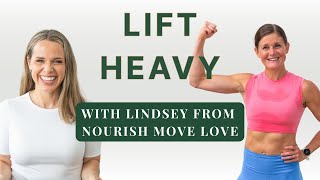
Lindsey Baumgren explains why women need strength training, not just cardio, to preserve muscle and bone after 30 and through menopause. A 3-4 day program with resistance work improves hormone balance, bone density, and cognition. She's launching Athlete25, a free four-week program at 25 minutes daily.
Chapters
Today, I'm joined by Lindsey Baumgren. She is an amazing certified personal trainer and the founder of Nourish Move Love, which is one of the most successful Fitness channels on YouTube. With more than 1 million subscribers. Lindsay helps everyday moms program efficient and effective workouts on a daily basis, helping women all over the globe with improving their muscle fitness and their overall health. Today is going to be a masterclass on strength training where we're going to dive into how women can support building muscle, the most effective ways to do so, the best strength training protocol to follow, and so much more. Lindsay, I'd love to start out with a controversial question for the women who feel like walking and getting enough steps in is the equivalent of getting enough exercise.
I love it. And first and foremost, I would love, love to say that I think walking is the most underrated form of exercise here in America. So if you are walking, I, like, highly encourage that and think that is amazing. I'm a huge fan of movement in any form, but. But I don't think that walking is gonna support your metabolism as you age. We need strength and resistance training. Muscle is literally like your metabolic engine. And we know that as we age, we lose muscle mass and bone density. In fact, women lose like 3 to 8% of muscle per decade after 30. So I'm in my late 30s, and that acceleration increases when we hit menopause. And so walking just doesn't load your muscles enough to prevent that loss. Strength training is the only thing that is going to help you prevent that loss. So while walking is going to keep you moving, it's going to keep your joint healthy. Strength training is what's going to keep you capable. It's what's going to keep your. I mean, I know you talk about this stuff all the time. Bridget. I could go on and on about the benefits of strength training. I'm obviously very passionate about it, but. And I'm sure your audience has heard this from you as well. But strength training just has so many benefits. We know it supports our hormone health, it supports longevity, obviously, it improves insulin sensitivity, stabilizes blood sugar, which I know is something you're very passionate, passionate about. Bridget. Regulates our hormones, protects our bones, our joints, and not to mention, I think has massive mental and cognitive benefits for us as well. But I could go on about strength training forever, but I just think that walking is great, but at the end of the day, if you want to be capable and live a long, healthy life, resistance training has to be in that equation.
And I at one time did think that walking was enough just with looking at like, the research on the benefits of getting 7,000 plus steps per day with the even more benefits after 10,000 in seeing like the longevity benefits, even fat burning benefits and those sorts of things. But you're right in saying that, like, all these other factors need to be put into play in order for us to think comprehensively about truly supporting every aspect of our health, especially for women as we age.
Yes. The only thing that combats muscle loss is muscle gain.
Wow, such a good point. And it's a natural decline that will happen unless you're doing something to offset that decline. Like you said that women are losing muscle every single decade that they're living unless they are incorporating that resistance training to be able to. To build not only the muscle, but the bone. I mean, we are continually talking more and more about bone health because of so many women that are in our programs that have osteopenia and osteoporosis.
Yeah, 100. And honestly, I think it's helpful even to think of it. I work with. We have a lot of prenatal and pregnant women and postpartum women as well coming into our programs because I filmed workouts all throughout my pregnancy, and I like to equate it to pregnancy. I always said when you're pregnant, weight gain is a natural part of pregnancy. Like, it's going to happen. Right? It's a natural part of pregnancy. But if you stop resistance training during pregnancy, you are going to be your heaviest, at your weakest, and then you are set up for back pain, say, like all the aches and pains that come along with that. Right. And I think it's the same thing as you age. Like, muscle loss is a natural part of aging. And if you do not resistance train, you are going to be your weakest at your oldest. And that leaves you just at a, you know, plethora of osteopenia. I mean, you could go on and on joint pain. I mean, orthopedic centers are growing faster than they've ever grown before around us because there's just so many joint injuries. And as we age, it's so true.
And I think that, you know, there was a time that women were motivated by, like, the abs that they would see other women have on, like, Women's Health magazine and other things. But I feel like we're actually, with the education that's coming out, kind of like turning a corner where women are starting to be motivated by, like, not being in a nursing home and frail and completely dependent, dependent on others. When they're 80 and 90 years old. Like being able to maintain your actual own independence for as long as physically possible and being able to think about the fact that what you do in your 30s and in your 40s impacts so much of what ends up happening in your 80s and your 90s.
100%.
Okay, let's talk about cardio versus strength training because there's also a lot of debate around whether cardio or strength training is beneficial. I feel like for a while everyone was very much on the like, on board with like treadmills and cardio and all that. And now it seems like the narrative is just like you only need strength training, don't do too much cardio.
Yeah. I mean it is amazing to see the shift that's happening even in gyms like resistance training areas, strength training areas, free weights are growing. Like you're seeing those areas expand and cardio is slowly shifting down more. So for women, we're seeing more women pick up weight, which I think is a really good thing. I have always lived in the camp that the best workout is one that you are actually going to do. So if you love cardio, then yes, move, do cardio, do swimming, do running, endurance training, train for an ironman, do, do that triathlete. If you love strength training, then do strength training. At the end of the day the best workout is one you are actually going to do. But when you talk about cardio versus strength training, I like to break it down. When people ask like specifically what should I do first? I think it's really important to look at what is your goal? Like are you training for a marathon, are you endurance person, do you want to run your first 5k, then prioritize the cardio training. Right. And then put your strength training. But you need to think about strength training too and vice versa. If you're just, if your goal is maintenance and longevity like we're talking about, then strength training should be your priority. But you can't forget about cardio. So I, they, they need to coexist. Absolutely. In any good, well rounded training plan. But I think at the end of the day I always tell this like the best workout is one you're actually going to do. So if you love bar, do bar. If you love yoga, do yoga. If you love Pilates, do Pilates. If you love strength, do strength. Just find what it is for you. I could tell you as a trainer in my inside my head, what's going to get you the results, what's going to get you the body that you Potentially want. I could tell you that that best workout plan, I could break it down for you, but it might not be something you do or follow. So then it's no good.
Yeah, it's so true. So how would you break that down?
Yeah, I mean, it depends on everyone's goals, right? Like, what is your goal? So, I mean, let's just take you for example, Brigid. Tell me what season of life you're in and what your goal is.
So I'm postpartum, one and a half years postpartum. And I. My goals right now are optimizing my hormone health, building muscle. I still am not at my pre pregnancy weight, so losing fat and supporting my bone health because I have a family history of osteoporosis.
Okay. I love it. And one and a half years, how are you feeling? Like, are you sleeping through the night? Are you getting. Do you feel like you're getting adequate.
Rest sleeping through the night? I feel like completely back to myself for the first time, obviously, because I got pregnant, you know, with James when McKinley was only three months. So it's like the first time that I'm like, oh, wow. It can feel really nice once you're 18, almost 18 months out.
I always say it took me two years after every baby to feel kind of back to myself fully. Okay, how many days are you committed to working out? A week or currently? Like how many days, how long or how much time do you have? And that can vary. I totally get that. And then what equipment do you have access to?
Equipment? We have like all equipment. I don't know if that's a helpful answer, but like, we have a full gym in our garage and then we also have dumbbells. I use the dumbbell sets for your workouts. I've been doing your workouts three days, three to four days per week, depending on the week. And I would say that I have like 20 to 30 minutes is what I'm typically ranging with the three to four workouts that I'm doing of yours, which I love because I, you know, have a lot going on and I'm able to fit that in. I don't have to go to a gym. They're actually like hard at home workouts is the first at home workout program that I found that I'm like, this is really challenging and it goes by so fast. It's so fun. Like, you really nailed the entire formula for the workouts that you have on your YouTube channel. So that's my answer.
I love it. Well, thank you for the kind Words. I am a busy mom of three who runs a business and I. If you're going to give me 20 to 30 minutes of your time, like, I totally respect that. And I think I'm going to try and make that the most valuable I can. And so we're going to work hard in that given amount of time. And so I've been like just such a huge proponent of making workouts quick, effective and relatable for women. And all you really need is a set of dumbbells. Like you've said, that's what you're using. But if you have access to more equipment, awesome. So if you're giving me three to four days a week, I would start to skill you into what I would call a split training routine. If you're gonna, if you can commit three to four days. If you're on the three day a week train. If you're on three days and there's weeks that this is gonna happen, the weeks that are busy, that you have three days to commit. You're gonna give me full body days. So I'm looking at compound days. And sometimes that might be a full body. Like we're talking head to toe type of day where you're hitting every muscle group or I really like full body days that are a little bit split. So you're thinking you're gonna do like legs and chest. I like hitting bigger mus, especially on if you're limited in your amount of time to work out hitting bigger compound muscles. So you're talking chest and back are your two largest upper body muscles. Obviously we have a lot of large muscles in the lower body, but you're talking your glutes, your hamstrings and your quads are your predominant ones. Right. So a day where maybe you're hitting full body or legs and chest. I love legs and back as well. And then maybe a day where it's like legs and accessory muscles. I call my accessory. Your accessory muscles are your biceps, your triceps, your shoulders. Shoulders are usually a little bit more involved in some of those bigger things. When you're hitting chest, you're all hitting shoulders. They're your push muscles. So you can break it up that way or you can just go straight. Three full body days. So if you're giving me three days a week, I'm saying full body, that's where you're going to get the most bang for your buck. If you can commit to four days a week or five days. Four or five. That's when I start to look at Split training days, split training routines. And I love postpartum, honestly, because it's really such a mindset shift for so many women. And I think I came back from every baby so much stronger because you come back smarter, right? I no longer have 60 minutes at the gym. I have to be so quick and effective with my time time. And so postpartum I came back stronger and smarter. It's when I started training smarter, I was like, I have 20 minutes, I'm gonna push harder, I'm going heavier weight, I'm taking the muscles to fatigue. Like, I love how efficient women get after having babies because you're like, I have this amount of time and I'm going to give you the best effort. So I especially am a big fan of going a little bit more full body when you are postpartum three days a week hard. If you can give me even two, you can give me two hard days. And I'm talking like, obviously you're coming back postpartum, but it should be using weights that challenge you in your last two to three reps. Right? And especially coming back postpartum, I really like to get women back onto like getting a proper push up alignment push ups. There's a reason I'm a big fan of pull ups for women is because if you want quick and effective workouts, it is one of the most effective work upper body exercises you can do. Literally today I went to my basement before we filmed this podcast episode. I had 24 minutes to work out. 24 minutes. And you can bet I did pull ups because it they. I did three sets of 10 and I got 30 pull ups in. And that's just like you feel accomplished. You get it done. I hit my back, I hit my core, my shoulders were turned out. Like you're just hitting so many muscle groups. And so whenever I'm trying to band, I did. I've been working on pull ups for a long time and I love them. I do pull ups at least three times a week.
At least three.
Yeah, I do pull ups three times a week. We actually, we have a full. If you want to get your first pull up, we have a full 12 week guide that takes you from how to get your first from zero. I start at zero. Honestly, I was six months post postpartum after my third baby and I completely bucket handle tore my meniscus. And so I had to have knee surgery and was locked out straight and could do no lower body for a long time. And so I put all of my focus into pull ups and I Went from zero pull ups and that's when I became such a huge fan of them. I didn't do cardio, you guys, for six months and in my head, just being a female trained the way I was tr, I was thinking for sure, gonna lose, I'm gonna gain weight, I'm six months, how am I ever gonna get back? I'm a fitness trainer and I didn't know cardio for six months and put all of my effort into pull ups and my body specific, like never looked better.
Wow, that is so impressive. Lindsay, big fan.
But we have a full 12 week guide to get your first pull up. You start with bands and you progressively work your way up. It's a definitely push ups and pull ups are a volume game. They're not something you can do once a week and get better at them.
That makes sense. That makes a lot of sense.
Okay, but to go back and answer your question, so you're doing three full body days and if you can give me four to five, that's when you start to get into the more split training. But honestly, when you're in that postpartum season, you, you get what you got. And when I'm talking like a four day split, I'm talking more like full body leg day, arm day, full body. So.
And that's not even like what split training is, that's what you're referring to.
So there's different splits, right? So you get split training basically just means you're splitting the muscle groups and you're training specific muscle groups. A beginner split would look like an arm day, a leg day, and then I would suggest still having full body days. A beginner split looks like an arm day where I'm just splitting arms, I'm only doing arms and then I'm only doing legs on a different day. That's like a beginner split. And then as you get into more advanced splits, if you're doing like when I was doing my bodybuilding days or when you're training five days a week, then you can look at splitting even more. So you're doing more push, pull muscles. So I'm splitting my upper body into push, which is my chest, shoulders, triceps, sets on one day and then on another day I'm doing my pull muscles, which are my back and biceps and then same for the lower body. If I get into an advanced split, I'm doing my lower body push muscles which are my glutes and quads and potentially your calves if you want to add accessory. And then on doing A lower body pull day where I'm hitting my glutes and hamstrings more. So you can really dissect it as you get more and more advanced. I think most women should have some split training if you want to see real results. Splitting upper body and lower body at some point, that's when I really started to see a difference in my, in my body is when I started splitting upper body and lower body days. But it's hard to find time to do advanced splits. Honestly, as, as a female, you're like, how can I dedicate one full day to just this? But I'll split it into weeks. So for me, if I'm looking at a split, I'll do a full body day. I'll do a push day, upper body push, chest, shoulders, triceps, then I'll do a leg day. And then I like to maybe just get out for a run or like a run with some core mobility, rest day, maybe this, whatever this day is, depending on how much energy I have. And then maybe another full body day and then the next week. Because the week previous previous I hit chest, shoulder, tricep. The following week I would hit back and by I would hit my pole muscles. So you can get into more where you're alternating it weekly. But like I said, I throw pull ups in there.
So when you're planning your workouts for your programs, like let's take athlete 25, Lindsay's coming out with a new program in the new year that is going to be amazing that we're going to talk about. And so for a program like that, that's a two week plan. How are you splitting that up?
So when I do my two week plans, I'm really challenging people to commit to two weeks and I'm asking you to commit to five days a week. So we are into those advanced splits because in those two weeks I want people in. And that's what I'm like, give me your buy in. And what I'm asking for is five days a week, 25 minutes a day. I like to crank that out. I'm a bomb. So I like to do that Monday through Friday and then I'm taking Saturday and Sunday off, rest, hang out with my family, getting outside for a walk, maybe run, playing at the playground, whatever that looks like. But I'm asking people to commit to five days. So I'm asking you to commit to five days and I'm going to give you an advanced split because I think most people have never really tried an advanced split. And, and you're going to see changes you've never seen. So what it's going to look like in Athlete 25 is we're going to start off. I love starting my week like this. This is truly how my husband and I train, like, on a regular basis in our basement. We're taking it out of our basement and bringing it into your home. So on day one, you're going to do legs and back, my favorite muscle groups to train your largest muscle groups. I love starting the week legs and back. And then day two, you're going to hit your upper body push muscles. So you're going to hit upper body push. And then day three, you're going to hit leg legs. And then day four. This is kind of fun and it challenges people because most people don't do this. You're going to go body weight and you're going to do cardio and agility and abs. And I just love training like an athlete. Like, there is a term called use it or lose it. And it's true. Like, you've got to train agility. If you want to keep your nervous system poppy and firing, you have to train those fast twist muscle groups. My husband's a professional athlete. I love training athletically. I played college volleyball, and I think this is the adult playground. We don't play in enough is challenging our agility. And that's where injuries happen. Right? You fall off the curb, you're chasing your kid, you pull a hamstring. And if we don't train it, it's not going to translate to real life. So there's a cardio and agility day, which I think is really fun. And if you don't love running, it's the best way to get your heart and, like, train your heart. Your heart is a muscle, too. And then you're going to finish with a full body day. And then the next week you're going to do legs and chest. Then you're going to do upper body pull. Then you're going to do legs, you're going to do cardio and agility and abs again. And then you're going to hit full body. I love this split. It's one of my favorite splits.
Splits.
I'm so pumped for this program.
I'm so excited. I can't wait to do it. So that's the split that you use. You vary the splits based on the program that you're doing.
Yeah. So we have different programs. If you're looking for, you know, a more accessible beginner program. Strong20 is like our very starter program. And then we have a program that builds off that, that's stronger 25. And that gets you into like an intermediate split where you have an arm day and you have a leg day. And then our programs build off each other. And if you build up into our Overload 30 program, which is one of my favorite programs, it's about progressive overload. You're hitting that advanced split where you're hitting, you know, your push muscles and your pull muscles separately and you're trying an advanced split. And if you never tried an advanced split, especially as a women, a woman, a lot of women have not, I highly encourage it. I have never seen results in my body like I have when I started doing that. And honestly it took out the, the fatigue of over training and the fatigue of feeling like every day has to be all out, sweaty heart pumping. Like that's a lot of times where I was trained. I came from a group fitness background. I taught on stage. It was a 60 minute classes at Lifetime. And it was like every day it's hit day, let's go, grab your 15 pound weights and go. The minute I dropped my 15s and I picked up 25s and like I finished a push, pull, upper body push day, chest, shoulders, triceps, I'm not dripping in sweat, my heart rate didn't get very high. My Garmin's gonna tell me I didn't burn a ton of calories. But let me tell you, my upper body has never looked more defined.
Yeah, it's all about working smarter, not harder. And I think that even like a lot of times in people that are going through our programs and they're doing Orange Theory or extremely intense exercise, where one of the first recommendations that I'll make for supporting their hormones and improving their body composition is stop doing Orange Theory.
I have so many thoughts about this. I could share as well. And I think like being, taking a group fitness class is great, like if that's what motivates you to get moving. But there is this idea of women commonly training in what we call the gray zone.
Right.
Like you're training in this gray zone where it feels like you're working really hard, your heart rate's high, but you're picking up maybe 10 to 15 pound weights and you're not really, you're feeling tired at the end of the workout, but you're not actually exhausting or growing that muscle group. And you're putting this kind of a similar amount of stress on your body over time. And our bodies are, are beautifully Made to adapt to stress. And in order to see changes, you have to increase that stress. And we train in this gray zone where it's like my heart rate's high. So then I go into squat thrusters. I go from squat thrusters to burpees. And when I'm doing that, I can't lift heavy 30 pound weights like I do when I'm doing more controlled strength training. So sometimes slowing down is. It is truly the working smarter and not harder and getting out of this like gray zone where I feel like I'm working really hard all the time. And I like to think of it as like hitting into. I know you can call it the red zone, you can call it whatever you want to, but like a higher intense zone. Strength training three days a week is what I have capacity for. For me, I can give three heavy lift days a week. That's just what I have capacity for personally. And then I still like to move on those other two days, but I can't go as heavy. So I think it's just, it's really finding those days that you can push yourself. And in the last two to three reps, I'm talking challenging. You're not making a grocery list in your head. You're not thinking about kid pickup like you are two to three reps, squinty eyes, trying to get those weights up.
And so this is the benefit of working smarter, not harder. And all of Lindsay's workouts that she's talking about and these programs that she's talking about are completely free on YouTube, which is so impressive. So most people know about you because of your YouTube and then maybe like encounter you in person. It was the opposite for me. I somehow like did not know about nourish move love when we met a few weeks ago. And I am so impressed by the business that you've built. It seems like you're just posting free workouts on YouTube, but you've built such an impressive global brand. And so I'm curious, where did all this start?
Yeah, honestly, it was born. My company started in 2015 out of. What I found was my love for group fitness. So I played college volleyball, graduated college, got really into running marathons, did that for a while, got stress fractures in my feet. And that's when I found strength training and I decided to do like the flex on stage fitness competitions. And I learned a ton through that. And honestly, I did it. I decided to become a personal trainer and take all my training certifications because I didn't want to pay for a trainer And I wanted to educate myself as I was trying to build muscle for these competitions. And so I got into personal training, started taking classes, and then I started doing some nutrition stuff. And I learned a ton by going through the, you know, opportunity of trying to build as much muscle as you can to get on stage. And flexibility, it taught me a lot. But I through that, I was using group fitness as, like, my outlet for cardio at the time. So I'd go take a class at the gym a couple days a week to just get my cardio in on top of my strength training. And I fell in love with the group fitness studio. Like, I was like, I want to be that girl on stage. She has so much energy. I was doing personal training on the side for people, and I had really hard time with it because I'm kind of a control freak. And people be like, I'm not getting results. I'm like, because I see you one or two days a week, and I have no idea what you're doing outside of here. I can't control what you're eating. This is so frustrating me, because you're not seeing results, because you're not doing what I tell you to do. And seeing you once a week isn't helping. But group fitness was totally different. Everyone shows up. No one's got their phone on them. Everyone's there to have a good time. They're working hard because the person next to them is working hard. The music is pumping. Everyone is having fun. And I was like, I love it here. I love this energy. And I grew up in a small town, and so when I talk to my friends back home, they didn't have the opportunity to go take group fitness classes. And I was like, what if I just started filming them and sharing myself doing group fitness classes? Because it's, like, such a fun environment. And so I just, at that point, I was, like, really committed to making fitness accessible to everybody. I was like, everyone should have the opportunity to work out like this. And then as I grew in this journey, I became a mom, and I realized what a luxury it was to go to the gym and take a class. And I was, like, feeling really isolated in those postpartum years. And I just feel like I have this huge privilege to speak life into women in what could be a really isolating postpartum season and give them the opportunity to just encourage them and make them feel good about themselves. And I just realized that fitness, to me, was so much far beyond the. Whatever you can call it, endorphins. Looking a Certain way anything it was. I know that fitness, like, is an integral part of my life and it makes me a better mom, it makes me a better wife, it makes me a better woman, a community member. It makes me better everything. Literally. There'll be days where my husband's like, have you worked out yet today? I think you should. And it just makes me a better person. And I believe that it's such a keystone habit for people. And I think moms are the emotional heads of households and if they can feel good about themselves and feel confident, that's just going to trickle down to the rest of the family. I think fitness has so many more benefits than just obviously how we, how we look and feel.
It's so true. And I would add that, like that aspect that you realize on the way of supporting women who a lot of them find you, I've learned through your postpartum videos since you filmed throughout like pregnancy and then postpartum, and then they continue with you through that postpartum journey to be able to now that they can't go to the gym as easily be able to work out with you from home, which is like such a beautiful thing because even for me, it's like, yeah, the time that I have is so limited that like, do I want to be driving 20 minutes to a gym to then spend the time at the gym to then drive 20 minutes home? Like, that's 40 minutes that I could have otherwise been with my kids?
100%.
Okay, let's talk about the mental shift. How do you recommend that women stop thinking about exercise as it has historically been thought of as just like using it to burn fat or burn calories in order to be as thin as possible and having that real mindset shift of thinking about it to contribute to all these different factors that we've talked about with health and creating a healthy relationship with exercise?
Yeah, I love this question. And I just think personally working with hundreds, thousands of women, what I have seen is that when women tie an aesthetic goal to fitness, so aesthetic being how I look, I want to lose five pounds. I want to fit into my pre baby jeans. When there is an aesthetic goal, like the motivation just runs dry fast. I don't know what it is, but the motivation is not there. Wanting to lose 10 pounds or fit into your pre baby jeans somehow will not get you out of bed at 5am when you said you were going to do that. But if you can tie a pro like we call it a progress goal. If you can tie a progress goal to your fitness Journey. I want to do 10 push ups. I want to get my first pull up. I want to do 10 unassisted pull ups. I want to run my first 5k. Whatever it is for you, right? When you can tie this progress goal, it gives you something to work towards, and it becomes a whole different motivator that pulls you out of bed at 5am or for me, that pulled me through a really dark season when I couldn't work out anymore because I had knee surgery. This, like, new goal of getting pull ups put me on a whole different trajectory. And so I just think that there's so much weight in setting progressive goals versus aesthetic goals. And so not looking at fitness as something as, like, this is what I do because I want to look this way, or this is my punishment for eating this. But really tying it to, like, this is what is going to get me to playing with my grandkids and going hiking and taking them on a hiking trip when I'm 70 years old. Or this is what's going to allow me to play flag football and coach my son's flag football team and look like a really cool mom because I can catch the ball and cut this way and run this way and sprint this way and look agile at age 37. So I just think that there has to be that mind shift. Shift. I don't know what it is, but we've seen just, like, tremendous results among women who change that aesthetic goal to a progressive goal. There's something in that weight of achieving that.
It's so funny because my nutrition philosophy has always been so similar, where I'm like, trying to lose 10 pounds is not going to prevent you from no longer closing the bag of chips when you're halfway through the bag of chips.
Right?
It's like, there has to be the stronger why, which is what you're alluding to. And I think the stronger why as a bigger why of, like, with the playing with your grandkids and other things, and then like, from a nutrition side, even just being able to tie it even to your lab markers, how you want to feel like improving your symptoms, whether you have an autoimmune disease or you have a thyroid issue or whatever it is, knowing that the consistency will help with offsetting the symptoms. And I'm sure that fitness in many ways and even the people that we've worked with can also be similar where in addition to having, like, a progress goal, it's also thinking about, like, how you are starting to feel as you're becoming more consistent where you have More energy where you're sleeping better at night. Like, all the things that come from being able to, like, put these puzzle pieces together 100%.
Yeah. It's like we said, it's a keystone habit that just kind of rises the tide in other areas of life.
And so what is your why?
Oh, yeah, I love this. I mean, I have kind of a personal story, I guess, in the sense of. In 2017, my mom suffered a cardiac arrest. She had an unknown heart condition. I was actually 12 days postpartum with my first brother, Brody, and my mom came over and had come over to make us dinner, and she was carrying a pack of play. It was just me and my baby at home. My husband had gone to work for the first day, and she brought the pack and play up what steps we had and set it down and collapsed and went into cardiac arrest. And we're very fortunate. She is a cardiac arrest survivor. Like, 10% survive outside the hospital. She has an on. She has hypertrophic cardiac neopathy. Through that, we are also able to find my brother has hypertrophic cardiac neopathy. I've done the genetic testing. I fortunately do not have it. But my family has. Is exposed to this heart condition. And through this, I've watched my mom has had a stroke. She's got nine lives. I swear that woman. But I've seen, you know, her health decline and watched her fight for simple things like being able to, you know, take my baby up the stairs and put them to bed because of what she has faced. And, like, I just seeing that has so put into perspective that I have the privilege of having this healthy body and this healthy heart, and I just never want to waste that. And I want to be the grandma who gets to go hiking with my grandkids, and I want to be the mom who still plays basketball and plays football with my kids and. And can coach them through that. And yeah, so it's definitely longevity, as I've seen both my mom and my brother work against these heart conditions they have. I just think, like, how privileged am I to have this healthy body and how much I want to steward it well so that I can use it well, well into my future and not have to have, you know, the things that my mom has to face and that I can hopefully not have to face. Walking up a driveway and being out of breath.
Yes.
Wow.
That is, I mean, obviously a deep. Why? Yeah, it reminds me of the, you know, that Instagram trend that was going around where it was like, you're 80 years old and you wake up in your 35 year old body and for one day and you're like, oh, the kids are, you know, screaming, crying, and I'm like, wow, what a joy it is to be able to listen to the cries in our house and like have babies at home and you know, wow, what a gift it is to wake up in my 35 year old's like strong body and to actually be able to move and not have the joint pain and arthritis and other things where it like really puts it in perspective where the time that we have now is such a valuable way for us to contribute. I mean, one, to be appreciative of what we have now, which is what you're speaking to, and then two, to like work towards being able to maintain it for as long as possible.
Absolutely.
Okay. And then a common trend that's out there as well is this idea that you don't want to work out hard because it can raise your cortisol. I'm interested on your take on that.
Oh man, this DM lands in my inbox several times. Like, I shouldn't be doing your workouts because it's going to raise my cortisol. Your workouts, as you've alluded to, are hard. They're challenging work workouts. And maybe this is an unpopular opinion, but it's something I wanted to debunk for a long time. It's that exercise doesn't cause cortisol problems, Chronic stress and lack of recovery, or maybe a bad training plan, they can cause cortisol problems. But strength training and getting your 10,000 steps in and doing treadmill sprints or doing sprints or raising your heart rate in a hiit training fashion. Those are healthy stressors. Those are really healthy, healthy ways to stress your body. Our body is made to adapt. Cortisol gets this bad reputation, but it actually cortisol is what helps you wake up in the morning. It's what helps you push through a tough workout. It's how your body responds to daily challenges. Like the issue isn't cortisol itself, it's when your cortisol is chronically elevated and it never has a chance to come down. And now that that might be something that women are experiencing. And if you are, then yes, exercise needs to have considerations. Right? Right. But exercise is a healthy stress if recovery is happening on the other end. So I always say this, like, women are really concerned when they start doing our postpartum workout plan that they're going to lose their breast milk supply. And I'm like, well, fitness is A stressor on your body and so is not sleeping and feeding a human and all the things that are coming at you in that postpartum sphere. So like you do have to be cognizant of how much stress you're putting on your body, especially in that sequence season postpartum, right? Because you're not sleeping, you're. There's all these things that are crazy in your life that are happening. But if you're getting good quality sleep and you know you have no autoimmune, you have nothing else fighting against you, right? Like you are a healthy individual. Sprinting, hit training, strength training, all these things are healthy stressors. They do need to be paired with quality sleep, proper fueling and eating, you know, some. So you run into that more. So I would say people, it's. If I'm being brutally honest, if I can be brutally honest, most people aren't working out as hard as they think they are and they're taking some pre workout and crazy stuff. And I'm like, you're doing a 30 minute at home workout, good cup of coffee and you're good to go. Like you don't need anything crazy or not. You know, if you're running an ironman, that is way different than someone who is doing my at home training plans. But most people actually aren't working out as hard as they think they are. And so if you think that you're raising your cortisol by doing a 20 to 30 minute at home workout workout, I have to ask you to rethink that. Now if you're getting a lack of sleep, if you're undereating, if you're overtraining and doing that six, seven days a week and you're trying to get a hit workout in six, seven days a week, then yeah, you're, you might be looking at a cortisol imbalance. But if you're sleeping, you're properly fueling and you're doing 20 to 30 minute at home workouts, I don't think you need to worry about cortisol.
Yeah, I, I actually agree and I think that the way that I think of it is exactly what you're talking about. Where if you are doing a 30 minute strength training and you're walking and then you're adequately feeling yourself, you're getting enough slee sleep, then the likelihood of you increasing your cortisol to an unhealthy place is not very high. And actually exercise does help with lowering cortisol. Right? It helps us regulate our cortisol. When you're initially working out, your blood sugar increases and your cortisol rises, which is a normal process. But overall your long term cortisol response should improve from exercise. As long as you are not over training or under fueling. Combined with over training. We do see a number of women who, like I said, they'll be doing orange theory, they're not eating enough calories like you said, they're not sleepy enough at night. And then it does seem like that's too many horme stressors. You're tipping, you know, your, your bucket too much where then it's becoming not only not beneficial, but then potentially harmful as well from an overall health and symptoms standpoint. But if that isn't the case, then for most women doing, as you said, 20 to 30 minute at home workouts that are primarily focused on strength, obviously you do a great job of combining the cardio with the strength and then you are prioritizing the recovery, then it shouldn't be a problem from a cortisol stand standpoint, 100%. So let's talk about recovery because I know that recovery is a huge part of being able to not only see body composition results, but also not create too much stimulus for yourself where you're not working out seven days a week or two times a day. Or in more extreme examples. Can you talk about how you think about recovery?
Yeah, I think I honestly truly learned recovery. Like I alluded to postpartum, that's when I learned what got me the most results in the shortest amount of time. So I'm really grateful for the postpartum seasons. But I also really learned about recovery from my husband. I alluded to the fact that my husband is a professional athlete, he plays professional beach volleyball. And the way he prioritizes recovery, as important as his training plan, really shifted for me. If professional athletes are prioritizing recovery just as much as they're prioritizing their workouts, like we should be too. And so like I've just really learned from him like how important and critical rest days are. As someone who was in that group fitness space, I was really like in this, like six days a week, like let's go, you know. And so when I started really prioritizing recovery days, I was able to go harder. I talked about this training in the gray zone. Training in the gray zone six days a week is going to get you far less results than training in whatever you want to call it, the red zone, three days a week, week. And so when I started prioritizing rest days, I actually was able to like find that red zone and the ability to go harder on those days and see better results. And so it's really just, it's about getting smarter about how you train. And I also think part of recovery that, that you just, you can't out train sleep. And as an entrepreneur, there's been a lot of seasons where I've tried to out train sleep and you just can't. And so I want, when I like my hrv, it doesn't lie. Like I am someone who needs seven to nine hours of sleep at night and if I'm getting less than seven hours of sleep at night, my training can tank. And so you can't out train sleep. And I think you, you alluded to the fact that common amongst women is under fueling and so prioritizing protein like recovery is not just sleep and rest days, which I think are really important in foam rolling and mobility. I'm a huge fan. I think people also think like rest days day kick it up. I'm not doing anything. Like, I think rest days should really include, you know, so getting your steps in, but also just like foam rolling and mobility. I'm such a proponent of it. I do 15 minutes every day of foam rolling and mobility because I never want to be injured again after my knee injury. So I'm a huge fan of foam rolling and mobility. But just recovery is also includes in my opinion, fueling sleep and then like foam rolling and mobility.
Couldn't agree more. And I do think that it's like something that in most women's early journeys they're not like, like prioritizing a lot of the recovery and tissue health and other things that you're alluding to. And so as you become more knowledgeable, I think that it creates more of an opportunity to think about it more holistically instead of just like, let me work out as hard as I possibly can.
Yeah.
Okay, so let's wrap up with. You are a busy mom of three little kids. You are running a large business. I mean it's a small business, but large business as far as the global brand presence and what you've built at a whole. Tell us how you prioritize your health.
Oh man, this question cuts deep right now. Brigid, you know, I'd be a total, total fraud if I sat up here and was like, this is what I do. I get up at 5, I have this co. I have this perfect ideal like health and wellness routine. I do my red light, I meditate, I do like, I'd be a total fraud to say any of that. And Bridget, in fact, knows I've been sending her some of my labs. I'm actually struggling. I'm going through, like, kind of my own health journey right now. I. I'm learning the importance of prioritizing rest and recovery. And for me, it's. Honestly, it's like. Like I said, I know that I need sleep, and we talk about cortisol, and it's. It is that chronic. You're operating at, this chronic, overachieving, enneagram3pace can really be damaging. And that's a place I've been living in for far too long, trying to run a business, be a mom of three, be the coach, the soccer coach, and, and do it all, quite frankly. And so I have, as someone who sits up here and says, like, it's supposed to be showing everybody how to live really healthy, I've. I've neglected some of my own health buckets. And so I like to think of, like our. Think of your. Your health or your just overall wellness as like a bucket. Right? We all have holes in our buckets. Some have tiny leaks and some have a gaping hole. And so I have my biggest hole right now, or where the most amount of water is running out is in my recovery, or I would say my elevated operating pace. I operate at a very high RPM all the time. And so I need to figure that out right now because I've depleted my body of iron and progesterone and I'm not recovering as well. And that definitely affects how you train. And so right now I'm prioritizing sleep. I'm prioritizing getting my labs drawn and getting those back to optimal levels right now. So prioritizing health is. Looks different. I think everyone thinks that your fitness journey looks like this. Like, once I start strength training, it just goes up and I get stronger and better, better. And really, it's just like this. It's like I was at my peak and then I got a knee injury. And then I came back and was really strong. I felt stronger than I've ever felt. And then my body just kind of crashed on me. It was like, you're doing too much, way too much. Now you need to figure out your hormones because your hormones can't handle this anymore. Apparently, I can't operate like I did at this high pace at 30, at 37, my body's starting to say, like, this isn't working for us anymore. How are you going to change this and how are you going to fuel differently and how are you going to, you know, rest differently and prioritize sleep, sleep. And so I'm really focused on strength training at least three to four days a week. I love strength training. I love pull ups. Getting my steps in and getting some sunlight on my face is a big goal of mine as an entrepreneur who's behind a computer a lot and 30 grams of protein at every meal. And yeah, honestly it's like I think people think I'm a fitness person. So I must, I must do like this crazy workout every day. It was 24 minutes in my basement before I got on this call. And so my motto in this season of life is 10 minutes is better than 0, 0 minutes. And today it was 24 minutes. I lifted heavy and I got the job done. And so yeah, I love that vulnerability.
There's so many like learning pieces. One, health is a journey. And as you're alluding to, like it, you know, continues to. You continue to learn more about your body and sometimes it's through not ideal outcomes that you have to be like, oh, that really is important. And so often I think that when people see people like you where you're a personal trainer, you're extremely fit, you're like doing so many workouts. I cannot believe the number of workouts that you have to film in one day. When you're, when you're filming for certain challenges which like we talked about is just such a large stressor on the body that it's like just because you do have such amazing physical fitness doesn't necessarily mean like for, for other women that we've worked with that have, you know, other issues like inflammatory bowel disease or you know, so many different things, even though they're physically very fit or they look very healthy, doesn't mean that they're, there aren't other things for us to continue to work on when it comes to optimizing our health. And like you said, like everyone has their own unique things that they're, that they're trying to work through, myself included. And sometimes people don't realize like how hard it is to run a business as a mom. Like obviously we both have been able to talk about what the journey looks like together. But when you're in like nutrition and fitness, it seems like, oh, you're just like working out and making meals all the time. And the truth is that you're like running a business. Know there's so much that's involved behind the scenes that does make it very hard to prioritize stress reduction and all the other things that you're talking about.
You're speaking to my soul.
I think you're doing a great job. You are managing a tremendous amount. But I'm excited to keep looking into your labs and identify the ways that we can improve your stress response 100%. Okay. And then tell us about the Athlete25 program because this is a free program, you guys, that is so intentionally designed. Lindsay's workouts are the best workouts on the Internet. She's coming out with a new program that I want you to be able to participate in. So tell us all about it.
Yeah. Athlete25 launches in January. On January 5th, a new workout is going to drop every day for 10 days to keep you motivated. It's a two week program, but it's actually designed to be a four week program because you're supposed to repeat it. You shouldn't do 10 new workouts and then just move on. You should repeat them so you can see your progress. You could actually turn it into a six week program because repetition is the best way that you're going to see see progress. But the program is called Athlete25 because I actually it's the first program I've ever filmed with my husband who I mentioned is a professional athlete. And we get requests all the time, like, can men do your workouts too? And my husband and I work out together in our basement and we want to take those workouts that we do in our basement and bring them to your living room. And the goal is to help men and women who want to train athletically in their homes with just a set of dumbbells. And so I kind of gave you the breakdown, but it's five days of a week, 25 minutes a day. So it's meant to be attainable. We're just asking for 25 minutes, but it is a tough 25 minutes. Every day there is a buyin so you're going to do 25 reps of a big move to buy into the workout. And then you're going to do a solid strength portion. It's mostly strength focused, but there are going to be chances to raise your heart rate. Absolutely. Going to be chances to raise your heart rate. And so I love this program. If you love ch being challenged and and you want to train a little bit differently and think about not just training for longevity in in strength training, but really training for everyday life, moving functionally, chasing after your toddler, running the soccer field with your kid. If you want to translate like life is three dimensional, this program trains you three dimensional to really see that just make every day easier to make you feel more confident in your joints, in your body. So I'm really comfortable with the program. I think it's really fun. It's meant to be something you can grab a friend, whether it's your spouse or someone else, and do together and have an accountability part partner with.
I'm excited too. I'm gonna do it. Johnny's gonna do it. I've actually been recommending our community members, like our TBC members to do your workouts because I feel like your workouts are the perfect combination of our nutrition plans. So being able to pair them is like the best of all worlds.
I love it. That's so awesome.
Lindsay, tell everyone where else they can find you.
Yes. So our website. You can always find everything you need on our website. It is nourishmovelove.com and we are Nourish Move Love across Instagram, across YouTube. Yeah. And I think we're going to give Bridget a. A URL that you can link out to with all the new details about the new program.
I have the URL for the Athlete25. It's nourishmovelove.kit.com forward/athlete25-being Brigid. So we'll include that link in the show notes on YouTube and in the podcast and then we'll also send it out in my new newsletter.
Yeah. So anyone who signs up through that link is going to get a 15 minute preview workout. So like a teaser of what you can expect in the new program and then once the workouts start dropping, you'll be in the know when they start dropping on January 5th. And you can join us for that two, four week challenge, whatever you want to turn it into, to make January. Absolutely. A strong month for you to kick off the new year.
Amazing. Lindsay, thank you so much for being here. I'm so excited to be able to share your workouts and your expertise with my audience. Thank you so much for being here and we'll see you next time.
Thank you.
More from Brigid








She Used to Crash Every Afternoon — Here's What Fixed It | The Wardrobe Consultant
