The Future of Medicine w/ One of the Greatest Healthcare Visionaries of Our Time w/ Dr Toby Cosgrove
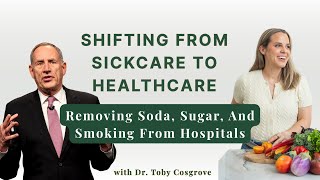
In this interview, host Brigid Titgemeier speaks with Dr. Toby Cosgrove, former CEO and president of the Cleveland Clinic, about his decades‑long effort to shift a large health system from a disease‑focused, “sickness business” to a preventive, health‑focused model. Cosgrove recounts how, as a cardiac surgeon‑turned‑executive, he instituted bold policies such as a campus‑wide smoking ban and a no‑hire‑smokers rule, removed soda, trans‑fat‑laden foods and McDonald’s from the clinic, and launched the Wellness Institute, shared medical appointments, and cooking‑class kitchens to teach patients and staff about nutrition. He describes the creation of the world’s first hospital‑based Center for Functional Medicine in 2014 with Dr. Mark Hyman, the massive patient demand that validated the model, and the resistance he faced from physicians and industry. The conversation moves to broader health policy, including the entrenched sugar subsidies, the parallels between sugar and tobacco lobbying, and the slow cultural shift toward recognizing diet’s role in chronic disease. Cosgrove also shares his views on the future of health care: the transformative potential of generative AI to reduce clinician administrative burden and accelerate knowledge dissemination, the rise of value‑based care that rewards keeping patients well, and the expanding role of dietitians, health coaches, and “food prescriptions.” He closes with a candid stance on the “Health‑at‑Any‑Size” movement, emphasizing that weight does matter for joint health and inflammation. Throughout, he reflects on his personal background—Air Force service, dyslexia‑linked creativity, and a lifelong commitment to risk‑taking for health innovation.
Chapters
Today I'm interviewing one of the biggest visionaries in healthcare, Dr. Toby Cosgrove, who's the former CEO and president of the Cleveland Clinic, one of the greatest visionaries in healthcare and also functional medicine of our time. Before he was CEO of the $8 billion organization, he was a cardiac surgeon at the Cleveland Clinic for 30 years, where he performed 22,000 operations. He pioneered 50 patents. He has published more than 500 research studies, and he's also been sought after by numerous presidents to advise on healthcare in the United States. He is so interesting to me because even though he's a traditionally trained cardiac surgeon, he stands so strongly behind the role of nutrition and lifestyle interventions, which isn't always the most common when a person is trained in surgery. And he has brought so many health initiatives and, and wellness initiatives to the Cleveland Clinic when he was CEO, he was truly so far ahead of his time. I know that there are many conventional doctors who are really starting to recognize the importance of nutrition, but this concept was so much less popular when he was bringing a lot of these departments, the Wellness Institute and other wellness initiatives, employee wellness initiatives, banning smoking on campus and other things that he did that were very progressive in. And it didn't stop him from being progressive and focusing on those things in nutrition and lifestyle. Back in 2009, think about that. He was featured in Time magazine with a quote that was very proactive at the time saying, we are in the sickness business, we need to get in the health business. So under his leadership, he opened the first hospital based functional medicine center in the world. They opened the Wellness Institute in 2007. And then he brought shared medical appointments to the Cleveland Clinic to leverage the power of community for healing. He kicked McDonald's out of the hospital cafeteria, which was extremely controversial. He banned trans fats and deep fryers in 2007 and 2009, he removed soda, made the entire Cleveland Clinic campus smoke free, initiated a huge employee health program where employees were financially incentivized to wear pedometers and to participate in programs that improved their health. And while today that is much more common in many institutions and companies and healthcare institutions as well, it was not at the time. So the reason that I wanted to bring him on is because he played a huge role in my career, given that he took such a big risk in bringing functional medicine to the Cleveland Clinic. The Cleveland Clinic was the first hospital that created a functional medicine department. He brought Dr. Hyman to the Cleveland Clinic, and then obviously I started the nutrition department there under Dr. Mark Hyman. And so to me, I am amazed at the fact that back in. In 2014, it was a huge risk that he took to bring functional medicine. We were in the basement of the Cleveland Clinic, like they gave us such a small space. Cause they had no idea how it was gonna work out. And he got a lot of backlash for doing this. So it's so interesting to me. Cause then obviously, the department took off. We had 2,000 patients on our waitlist at any given point. And it was really like a proof of concept for functional medicine and trying to integrate more of this way of thinking in the entire organization. Because then other doctors that were in other department and started referring patients to the center for Functional Medicine because of seeing patients that were seeing them and also functional medicine noticing improvements, whether it was their autoimmune issues or their GI issues or their cardiac issues or other things. And it created a lot of collaboration between the different departments, which I think was a really big catalyst for the field of functional medicine. So at the end of the interview, I pressed him further, asking him, as a conventionally trained surgeon, how he was so willing to take these risks that he like bringing these nutrition programs and integrative and functional medicine to patients. And he said that there were two specific factors that make him unique. One is that he was a surgeon in the Air Force and he served in the Vietnam War, and he brought a lot of what he learned in the military to the Cleveland Clinic. And then the second thing that he noted that I thought was so interesting is that he has dyslexia and wasn't diagnosed until he was 35. So he said that in brain scans, there is a Yale researcher that has shown that people who have dyslexia actually have been shown to have higher levels of creativity and are able to think out of the box. So with that, welcome Dr. Toby Cosgrove, one of the biggest visionaries in healthcare, to the Being bridget show.
Okay, Dr. Cosgrove, I am so excited to be here with you today. As I was just telling you, you are one of the greatest healthcare visionaries of our time. So it is a huge honor to be here with you and to just pick your brain in all of the changes that you initiated throughout not only the Cleveland Clinic healthcare, but the way that you impacted healthcare across the country and even the world as you expand into London and Abu Dhabi and Canada and other locations. So I want to go back to a 2009 Time magazine article where they featured you and the Cleveland Clinic. And you were quoted saying, we are in the sickness business and we need to get into the health business. As a person that was leading an $8 billion healthcare organization, what did you mean by that quote?
Well, I thought for a long time we had. There was a lot of diseases that we could prevent, and we needed to take a stand in doing some of those things. The perfect example is that is smoking. You know, I had a father who died of emphysema. He was a smoker. And you see cancer of the lung and all kinds of pulmonary diseases related to smoking. And so that's one of the reasons I took a stand on smoking. I just thought it was the right thing to do. And frankly, I think healthcare organizations have to model what good health is and not just preach about it and smoke themselves.
So that was a big initiative that you created. You became CEO in 2004. Then in 2005, you announced that you were going to ban smoking from the Cleveland Clinic campuses. And in 2007, you announced that you weren't going to hire any smokers. Can you explain the backlash that you experienced?
Oh, the backlash was plenty. I think that was smoking on the campus was not nearly as big as the decision not to hire smokers. But, you know, a lot of people that would come were smokers. And we just. And one of the interesting things was one of the highest incidence of smoking is among respiratory therapists. Everybody said, oh, my God, you're not going to be able to hire respiratory therapists anymore. Well, happily, there's a respiratory therapist who wanted to be in a place where they hire smokers. And as a result, the incidence of smoking amongst employees of Cleveland Clinic has gone down to about 5%. 4 or 5% from what?
What percent?
Oh, it was in the 15, 20%.
So Uzukistan saying, as a health care organization, we can't be smoking and then also be taking care of patients and trying to get them well.
Right. I think we needed to stand up and say, this is what. How you ought to live your life and be hypocritical to smoke and tell people they shouldn't smoke.
And you received so much backlash, like it was such an unpopular decision at that time.
It was. But, you know, the other thing we said is, listen, somebody applies and we will help them stop smoking. If they want to reapply, then we'll consider hiring them again if they start smoking.
I was just with a friend the other day who is an allergist. He did his residency at the Cleveland Clinic, and he said, I remember coming here to the Cleveland Clinic. He's from South Africa and getting a nicotine test. And that was something that was unheard of at that time.
That's right. There's only a few states that it's not all states that that's legal to do. But happily, I checked with the lawyers. That's why I made a lot of other mistakes when I didn't check with the lawyers.
So in addition to smoking, you've taken a pretty hard stance on food and nutrition throughout your career. So I'm fascinated by you because I feel like a lot of doctors focus on the treatment side of healthcare. And you were a conventionally trained cardiologist. You've done 22,000 procedures. So you come from that background, but yet you had the vision to think outside of that and think more upstream at preventable causes of disease. Can you explain where that thought process came from? Like, how. How did that belief in nutrition and lifestyle come into your being? And not only that, but like, how did you have the belief in it so strongly that you took as many risks as you did to stand behind it?
Well, again, you know, I thought that. And, you know, you see this tremendous amount of obesity that there is across the United States, and associated with that is a burgeoning epidemic of diabetes, and you have to do something about it. And, you know, certainly I have operated on enough people who had not taken care of themselves, whether they smoked or they were obese or the cholesterol level was out of sight. And so I thought that it was important to try and feed people the right sort of food and to set an example of how this ought to take place. I think it probably got more pushback when I said we're going to take the sugar drinks out of the vending machines of food. And I did anything else along the way.
I remember that. So can you talk about that?
Yeah, well, you know, I got almost as much grief about that as I did painting everything white.
That is true for people that have never been to the Cleveland Clinic. It is all white.
It's very white. And there was a reason for the doll white. Just so I think people come to a place and they want A, clean and B, they want to have it look like it was organized. And finally they wanted to have it look like it's sort of scientific. And I don't think you have a hospital that looks like you're. People don't want to come and think they're sitting in their living rooms. And so that's what. That's what we did. And there's certainly been mixed reviews about it, but it does stand out as and it does, I think convey those sorts of impressions.
Agreed. So when you took soda out, what kind of backlash did you get?
Well, I'm still hearing about it. You're still hearing, oh yeah, people are still upset.
What year did you take it out?
Oh, gosh, I can't remember. But this was probably 10, 2010 or something like that.
And you took a hard stand up, removing soda from the cafeterias, but then in the vetting machines. But then you also, on a policy level have been advocating for changing the way that sugar is subsidized. So can you explain one, how is sugar's up spice and to how that impacts people's health?
Well, you know, there's obviously sugar is in everything in our food.
It's amazing and amazing in a bad way.
It's amazing how much sugar there is in all of our food. And the sugar lobby in the United States is very strong and they get tremendous subsidies for growing the sugar. And if in fact you could do away with those subsidies, you would find that people would find other substitutes for sugar to put in manufacturers to put in the food. And so I advocated for that, but obviously it didn't go very far. And because the political world is not there to make that happen.
Why do you hate.
I think people become addicted to sugar. They like sugar in their donuts and sugar in their cereal and sugar in their drinks. But there are substitutes for that. And I think the food industry would find more ways to do that.
But on a policy level, why do you think that there's not as much interest behind that agenda? Because people are making too much money from it. Yeah, so it's like all of these large organizations that have the political ties are profiting.
So as far as the sugar industry, I just don't think there's enough people who feel strongly about this to make that sort of those sort of changes.
What about a consumer led initiative? I feel like more and more consumers are becoming knowledgeable and aware of the negative impacts of sugar and are making choices that are decreasing sugar in their diet or in their households. Do you feel like that would be a large enough push?
Yeah, I think it will be eventually. But it's got to get to be a lot more groundswell than there is right now. There just isn't enough interest in taking on that industry. And frankly, the politicians have got to be pushed from the out of their current position.
So with the policy work that you've done, you've seen more of a desire of politicians to keep sugar in the food supply?
No, I don't think they're positive about it. I just don't think they got any push to change it.
Do you think that they don't understand the impact that it has on health? Like that? They.
I think they probably understand the impact that it has on health. But you know, there's a lot of things on the politicians that he's going to push and pull a lot in different directions. And I don't think the push to get sugar out of the food is substantial enough to make that happen.
Would you say that? Because in my mind it's. I can't think of many things that are more important and impactful than making some of those changes when it comes to people's health than their productivity, their focus, their ability to show up for work, decrease in sick days. Since we know that sugar also impacts immune health, it seems like it's such an important issue that's not really even being discussed.
You're correct, it is. But the, the popular will has not gone to the Pontia at that point yet. I mean, think about cigarettes. How long it took from the time that we realized it's associated with cancer until such time as we've got labels on the, on the cigarettes and the general populace is accepting of that. I mean, that was 50, 60 years. And there just is not that. It's just not right or enough concern about it yet.
Well, even in the way that it ties into healthcare. Because I remember even seeing something about how some of the largest cigarette companies were actually paying for ads in JAMA in the 50s maybe or a long time ago where they actually had different claims on how cigarettes could help to improve a person's health. From. I can't think of the specifics, but it was something about. Do you remember this?
I remember 9 out of 10 doctors choose camels or something like that. Yeah, those two, you know, but there were all kinds of advertising. But, you know, it. It did take a very long time. And you stop and think about the whole states that raised tobacco. I mean, there's an interest there to continue to raise tobacco because it's a cash crop.
And do you feel like when people say that the sugar companies in the sugar industry are playing by the same playbook as the cigarette companies, do you feel like that's true?
I think probably yes, I think it's true, but probably not as obvious in being detrimental to people do like the taste of sugar.
So actually in 2027, when you announced that you weren't gonna hire smokers, you cited smoking as the number one cause of Preventable death. And since then, because of initiatives like yours, and then other people following suit, cigarettes have. Food has surpassed cigarettes as the number one driver of preventable disease and the number one cause of the leading deaths in the United States.
Right.
So where do you think the role is for. For organizations, for people to change the way that we've seen the changes that happened with cigarettes?
Yeah, I think. Let me just go back to cigarettes for a second and just show you the sort of backlash that there was. I was on the board of my alma mater and I tried to get them to ban smoking on the canvas. They wouldn't do it because professors smoked pipes and they didn't want to rattle the cage of the professors, etc. So fast forward, there's a lot of people, a lot of people who manufacture food, who are involved in Florida preamble, in southern states, and raising sugar and sugar cane. There's a economic incentive to continue to do that until such time. Does that change it? You know, people are upset that you won't get a change in the legislation and the incentives that there is to subsidize sugar.
How long do you think it will take for sugar to be viewed in a similar view as cigarettes?
20, 30 years, you think that long? Yeah. Wow. I'm not optimistic about it.
Wow. And when you think about how misleading a lot of the food system was with focusing more on fats as being the issue, you know, Dr. Hyman talks about this in his books about how, you know, the industry was really focusing on low fat, but then increasing sugar and trying to. There was the articles that came out with the Harvard doctors who are accepting money from the sugar industry to change the research to make it seem like sugar was or that was more explained than sugar from a cardiovascular standpoint. And, I mean, every other aspect of a person's metabolic health, hormonal health, all these things that are interconnected. Do you feel like that was delayed the momentum that people could have because it kind of like, was a distraction from the real issue?
Well, I think all those things contribute to the slow change in people's diet. I mean, I think in sort of in my lifetime, how food has changed. I mean, people didn't use to eat salads and, you know, there's no more fresh foods of all kinds. Things that the people's diet has changed enormously over time.
In a positive way.
Yeah, I think in a positive way. I mean, it used to be that we were steak and potatoes.
Yeah. Someone recently told me that Pizza Hut used to be the number one Purchaser of kale because they used it as their garnishes because no one was eating kale. And now obviously that's changed in the Harmonie purchaser. Right, but it wasn't even because they were putting it in the food. It was because they were just using it as garnishes and then throwing it away. So I agree. I do think that there's a positive change. And another thing that you did that has, you know, probably contributed to some of this momentum is banning trans fats from cafeteria in 2007, I believe.
Yeah, well, I had a little discussion with people that at McDonald's.
And you removed McDonald's from clinic.
Well, that's a long story. Turns out that I decided that McDonald's ought to leave voluntarily. Well, turns out that they had a 10 year contract. And so it began to be fought out in the press, on the front pages of the press. In fact, I became known as the Big Mac attacker.
I remember that.
Yeah. And so I went out. So I called a friend of mine and got introduced to the CEO of McDonald's. And I went out to Hamburger University, which is where in Chicago, sat down with the chairman of the board, the CEO, the head chef, the head of the head nutritionist, et cetera. And we had a fairly serious discussion about the food that they were providing for people at the Cleveland Clinic. And it turns out that there was trans fats in the, in the French fry. They cooked the french fries. And so they said, well, we're really afraid to change it. It's going to change the taste of french fries. The people don't like it. But, you know, interesting, after that discussion, it's now on. So they've taken the trans fats out of how they cook the french fries. And I think prior discussion in part contributed to that. But they did bring in salads and apple slices. They took out the triple cheeseburger, which is a small consolation. But we, we did make some progress. But it was a very interesting discussion.
With that group because you said, no, Donaldson sleep voluntarily. Then legally it ended up being that they were allowed to stay for 10 years. And so you went and had a discussion with them to say, like, if you say, then these are the parameters that I'm going to need you to operate under.
Is that how that's what I want them to do? And they, they did do. They took out the triple cheeseburger. They changed the advertising. They brought, I think, apple slices and salads and stuff. So there was some improvement in the food. But when their 10 year contract was up. They left.
Yeah, I remember that happening. I was in 2000.
Oh, it took forever. Forever. Well, because Dame 16 walk in there.
McDonald's was right down the hall from the center for Functional Medicine when we were in the employee health, you know, when we shared the space with the employee walking clinic. And so I remember so many functional medicine patients fasting for their appointments because you were drawing our labs and then going to the dietitian appointment and being told like, okay, we're going to need you to remove these foods. And how about we remove these foods and then they're like. And then we're smelling McDonald's right down the hall.
Well, McDonald's was right underneath the cardiac ICU.
Oh, my gosh. But it's crazy to me that some doctors don't draw a connection between the two.
Well, yeah, but we're getting there. We made progress.
What progress do you think has been made?
Well, I think, you know, the fact that we've taken the fryers, fried foods out of the clinic.
Oh, I know that you've made a lot of progress. I mean, in terms of how doctors connect something like the food that a person is eating and disease. And not only just from a cardiovascular standpoint, but, you know, I've worked with so many people that have GI issues, that have infertility issues, or are dealing with menopausal symptoms that are out of control from a hormone standpoint, thinking about, you know, autoimmune diseases. I mean, it runs the gamut as far as the way that nutrition impacts disease larger than just the seven leading causes of death.
Okay, well, you got to understand that in medical school, we had no education about non diet zero. And so I don't think. And we're more concentrating on disease than we were concentrating on what was causing the disease. So there was. So basically, docs are smart about this. I mean, I wouldn't really be smart about it because I didn't recognize euthanies.
That's why I think it's so interesting that you had the foresight to initiate all these changes. You're not a functional medicine doctor. You're a cardiologist. That's very mentally.
Oh, wait a minute. I'm a cardiac surgeon.
Not cardiac surgeon.
I apologize. I apologize. There is a big difference.
The cardiac surgeon.
A lot of surgeons dismiss the role of Luther Shirt.
I think it's, you know, it's. It's a changing profession. And as I say, they just didn't immediately recognize the connection. And there was. Nobody was calling their attention to it because it wasn't part of any of our education.
Yeah. And now you've initiated it into medical education. So do you want to talk about some of the changes that you made there?
Yeah, well, you know, there's a couple things that we tried to introduce into the medical school. One, we wanted get some education about diet, and secondly, you wanted some education about genetics. And if you stop and think about those, probably the two most important things that affect a person's health and longevity.
Our diet and genetics, food and. Yeah, and when you say genetics, you're talking about understanding how different drugs are gonna. Like, if.
No, I'm thinking about, you know, you're born with a set of gene genes, and, you know, those are. A lot of those are immutable. And so you take of that the set of genes that you're given and then how you. How you treat those, the body after you're born, those are really the things that are major influencers of health.
As far as, like, when you think about knowing a person's genetics, what types of interventions do you think are the most important to make? In different examples, the use of certain drugs or not to use certain drugs in the instance of, like, psychiatric diseases or like, some people having mutations that don't that decrease their denisostatins. Or are you talking about it in the role of, like, an MTHFR mutation that decreases their absorption of.
Yeah, yeah, there's all those things. But just for example, you know, I know that I can take a. Have a double espresso and go out to sleep. That's James.
Yeah.
I don't think there's anybody could change it. Sure. Yeah. And so I know that the pharmaceuticals are your response to the commerce. So it was changed by your genetic makeup, your anticoagulants, for example. I used to go. And after cardiac surgery, we anticoagulated patient. And as a resident, I'd go by and some people, you give the Coumadin to shovel it in, and nothing would happen. Other people, you just kind of wave a Coumadin pill by the door and they'd be like, oh, I get it. Well, that's genetic. So there are a lot of ways that your genetic makeup influence your health and your response to all kinds of things.
Agreed. So then when it comes to. You said diet and genetics. So you've initiated cooking classes. Cooking kitchens in the medical. The new medical school that was built under your leadership. And you've also initiated cooking classes in the satellite campuses for a lot of patients. Why do you focus so much on cooking?
Because I think people have to understand what they're putting in their mouth, and cooking is part of that.
So when people cook, you feel like they understand more of the ingredients that they're using and what's going into their body.
Absolutely. Perfectly honest with you, I didn't go to kitchens myself. You know, I always let the emphasis on changing what people put in their bowels, and the kitchens came through all of that.
Okay, great. And, I mean, you have initiated them in a lot of the satellite campuses. Another thing that you initiated was shared medical appointments. Why was that a focus?
So it's interesting that I wound up. When I first came here, they had a class that husbands and wives used to go to before cardiac surgery. And 10 or 12 couples would go in and they'd be told all about their cardiac what was going to happen. And as a result, they came out completely calm. And I'd previously been a place where everybody was going off to cardiac surgery all by themselves, and the anxiety bubble was about here. And it's like it was kind of like group therapy. And they sort of had a bond. Like, if I was going to be charging the beaches, I don't want to Normandy, I don't want to be doing it by myself. You know, I'd feel a lot better if a lot of other guys are going with me. And it was exactly the same sort of thing. And so I learned a lot from that. And then when we saw things like people with diabetes, they all learn together. They talk about the symptoms that they had. And so you don't think that you're the only person that's got that sort of problem. Other people have done it, and you learn how they cope with it. You ask, you get the advantage for the person who's instructing them. You don't have to give the instructions 12 times. They give it once to a group, but it's shared learning. It's group experience. And a lot of therapy comes from understanding that you're not the only person going through this, and there are other people doing the same thing, and you can learn from them and share experiences.
And I think a lot of times it takes, because Dr. Hyman always says that people heal in community. And it's along those similar lines where you initiated these shared medical appointments. I witnessed them when I worked at the Wellness Institute, and they were leading them for different lifestyle diseases. And then we initiated them at the Cleveland Clinic. I oversaw the nutrition. The shared nutrition appointments that we initiated for. It started with employees that then rolled out to the entire community of patients. And it became something where it wasn't even just about me sharing the information, but also about what other people were learning from other people that were in that same exact Declan place as the other people. And it was so powerful, very powerful. It's the reason, I mean, now I have a nutrition company where we do group coaching. Because the groove element, I believe, is one of the most important parts of helping people feel empowered and not alone feel like they have. Like you said, the support is so important.
Yep.
Okay, let's switch gears to functional medicine. I feel like it's difficult for people to understand how much you brought functional medicine onto the map by making the decision in 2014 to bring Dr. Hyman to the Cleveland Clinic and to open the first ever hospital based center for functional medicine in the world that never existed before the Cleveland Clinic. You spent millions and millions of dollars to do this.
And at the time, no one knew.
What functional medicine was. I was part of the founding team and I grew the nutrition department. And from the first week that we opened the center, we had an influx of people that were coming on the waiting list. Slowly, over time, thousands of people were on waiting list. When you made the decision to bring Dr. Hyman and to open the center for Functional Medicine, did you expect it to be so popular?
No, I didn't have the idea it would be as popular as it was, but I thought that he was onto something important. And if you really think about functional medicine, it talks about the main things that influence your health is your surroundings and what you do. And a lot of that is related to what you put in your mouth. And all sorts of diseases, as you point out, are related to what you put in your mouth. And so that was another step to try and deal with things from healthy eating standpoint and from making sure that you got the appropriate nutrition and all the sorts of ways.
Yeah, it was interesting because for every patient that saw a doctor, they had to see a dietitian and a health coach. And then we moved to not only that, but in order to see the doctor, you had to go through nutrition showed nutrition appointments. That was a 10 week program or 12 week program that was led by primarily the dietitians and health coaches. And then Dr. Hyman reported that there was a 50% reduction in people that actually need to see the physician because so many of the issues that they were having were nutrition related or nutrition driven. Actually. Did you expect that to be the case?
You know, I didn't, I didn't know when I got into it. I don't Think, you know, when you start down the road, you know exactly where it's going to lead. I thought it was the right road to go down. And it was certainly not popular with the majority of physicians here. And I think if I would have been killed if I wasn't protecting them, but you know, Dr. Hyman and the rest of the social method, the program would have been killed if they had a boat.
Yeah. So I experienced the backlash. I can't imagine the backlash that you experienced from so many physicians. And not even. It was like the leaders of departments here that were very against the idea of functional medicine coming to the same organization that they were also. I know, working at it.
Yeah.
Do you want to elaborate at all?
No, I thought, I mean, there was tremendous backlash and upset that we were doing this.
It was crazy.
But patients were voting with their feet. And we had 3,000 patients on the waiting list.
Patients were voting with their feet. I also think that the center for Functional Medicine opening up the Cleveland Clinic was one of the largest catalysts for functional medicine across the entire world. Not only did it change the minds of patients who were seeing their friends go through the experience, like every appointment that I had, I would say, how do you hear about us? At some point of the conversation? And they would say, oh, my friend came. This person came and lost 20 pounds and reversed his acid reflux with no medication was taken off of his statin. Like all of these things from coming to you. So of course I had to as well. Like it was totally a grassroots movement, a patient telling patients that this is why they were coming. And I feel like it also changed practitioners minds because while they were seeing us, they were also seeing their specialists who were needing to take them off.
Of their medication for their acid reflux.
Or for their autoimmune disease or for their GI issues. And so do you think that it changed the minds of a lot of physicians?
I know they've changed a lot. A lot. But I think they're more accepted.
More accepted. And I also think based on just me telling you that I was with my friend the other night who is an allergist who did his residency and worked at the Cleveland Clinic. He was so open minded to certain things, like in the discussion that we were having at dinner, that traditional allergists who might not have had that exposure would not have been as open minded to like food sensitivities and intolerances, where a lot of times allergists diminish food sensitivities and tolerances because it's like if you don't have an IGE allergy, you don't have to remove anything from your diet. Where he was like, well, if a person's having issues or symptoms, then of course we should remove those foods from their diet. And so much of the eczema and the rashes and things that I'm seeing are diet driven. And I was sitting there in astonishment over probably the impact that being at the Cleveland Clinic has had on the way that he thinks as a young doctor about the role that nutrition plays in certain disease states.
It takes a long time to change the medical profession. They're thinking, you know, just by way of from the time a new therapy is or a new diagnosis is established and proven until its standard of care is 13 years. That's a half life of a doctor. And so if they don't learn in the residency or medical school, they're probably not going to practice it. It's really hard to change.
So what advice do you have for people who are working with a doctor who's dismissing the role of nutrition?
Because we see this all the time.
People that even come through my programs, they're working with a doctor who's not only dismissing it, but also is undermining the role of nutrition. What advice do you have for them?
Well, I think, you know, there are docs who understand the importance of their and so I think that they need to, you know, there's always an opportunity to second be it.
Why do you think that there's such backlash like from a conventionally trained doctor? Why do you think it's so hard to embrace the idea?
Ducks are very risk adverse. Now let's figure out why doctor, how doctor got to be a doctor. They got that, they went to medical, they went to college and they had. The main thing they had to do is get through organic chemistry. Organic chemistry. I was good. Is memorized. Then they went to medical school. Four more years they memorized. Then they went to their five years or more of residency and all they did is to do what they were told to do. And the way they practicing Dr. Gut. So by the time they get to be 40, they have, they've been selected out because they don't have their risk averse and they don't have imagination and they've been trained out, it's been trained on them. So you find very few docs who are interested in change or imagining new things. That's. And so the entire medical profession moves very slow. I'll take, you know what we got right now. We've Got this a tremendous new tool called generative AI which can change the way we practice medicine. Enormous. It's. It's going to happen in a lot of areas faster than it happens in medicine, just because the medicine moves it in slowly.
What role do you think AI plays in the future of health care?
It will be huge. First of all, it is going to take away all the pain points for doctors. It's going to be able to make an appointment for you, it's going to get a bill out for you, it's going to you answer your inbox. It's going to suggest things that you hadn't thought of. It is going to bring the latest knowledge to everybody instantly. It's going to educate people in health care around the world who have not, don't have doctors, who don't have access to doctors. And I think it's going to make physicians increasingly empathetic because it's going to take a lot of the busy work go away, they don't have to do, and they're going to have more time to spend with patients. I mean, I think it's a total game changer.
Interesting. How long do you think that will take?
I think it's going to start with removing the pain points for healthcare providers, and I think once they see that, they're going to be more interested in applying it to the clinical aspects. But I don't think I can predict it. It's going to happen faster than a lot of other things happen simply because it's so.
And I've heard you say in an interview that you did with Dr. Hyman that there's thousands and thousands of research studies that come out every year, and that it's impossible for any physician to read through all of those research studies when they're practicing, when they're either operating or they're seeing patients all day. And so I feel like AI also will allow for maybe even a faster pace in movement of medicine because it creates an easier way to.
Keep abreast.
Yes.
And in fact, I think that, that 13 years is going to gradually control count, so it's not going to say so long to understand and communicate the new therapies.
When thinking about the future of health care, what role do you feel like dietitians and health coaches play?
I think it's going to be very increasingly important area as people begin to appreciate the importance of diet and looking at their people. I mean, you see already hospitals giving food prescriptions, and I think that's just the start of it.
Can you explain more about the food prescriptions for people who are unfamiliar, like who have no idea what that is.
Well, you know, they're saying, look, here's what you need to do. And in many cases supplying the food and what you need to eat. And for example, Geisinger is one of the places that have been very active in that. Several other households around the country are beginning to pick that up, actually supplying the food for people who can't afford the appropriate food to eat.
And so do you think there's a role for health insurers to play in this as well?
Well, hopefully one day they will, but you know, I think that's a long ways away.
There is a shift into more value based care. Can you talk about that?
Yeah. We're now 12 years into the movement towards value based care. It's still a minority of places that are practicing value based care. In fact, if you go south of the Mason Dixon line, they haven't heard of value based care yet.
Can you explain what it is for anyone?
Well, basically value based care is you are paid a certain amount for to take care of a patient and if you keep them well, you do better financially and then if they get sick. So the emphasis is not on treating people who are sick, but rather keeping people well. And that's where diet and reform of how you practice medicine is coming into play.
So I've heard you, in an interview that you did with Dr. Hyman, you talked about there needing to be potentially like tens of thousands of dietitians and health coaches to be able to support patients. I feel like nutrition should be the first line of intervention for pretty much every disease state. Unless there's an absolute need for someone to get on blood pressure medication to bring their blood sugar or their blood pressure into a healthy range where they're not at risk or you know, like their medicine is extremely necessary in many instances. But it's, how can we combine the role of nutrition and medicine to create the best care for patients? What do you feel about that?
I agree. I think in many, many cases. Let's look at the, the epidemic of obesity, which, you know, funds hypertension, it promotes diabetes, you know, that's certainly diet related cancer, hormonal imbalances or problems, the list goes on. So, so yeah, I think, I think clearly that's one of the things that people need to get right first. And now let's go back to my discussion about general AI. Think about the potential for that to begin to teach people. You don't have to have a dietitian in every place. In every case, you could have that sort of prescriptive therapy through chat, through, like behavior coaching.
You think? Interesting. Yeah, I hadn't even thought about that. So when it comes to the role of obc, there's a. It's become very popular, this health at any size movement. Are you familiar with it? Yeah, it's an idea that you can be healthy at any body size. And it's become pretty popular in culture with certain actresses, singers, people in public eye that tell people you can be healthy every size and that weight doesn't matter. How do you feel about that?
I think weight does matter, and I don't think there's a question about that. If nothing else, I mean, just think about this effect on your joints. It's just that easy.
And also, I always think about the way that your fat cells actually release inflammatory cytokines that drive inflammation. That's really at the base of pretty much every single chronic disease and the majority of symptoms that people experience on a daily basis. Okay, great. Thank you so much for being here. Dr. Cosgrove. Thank you for all of the work that you've done to move the field of functional medicine and nutrition and health forward to helping people thinking about nutrit. Nutrition is an integral part of healthcare. I really appreciate all the work that you've done and you being here today.
My pleasure. Thank you.
More from Brigid








She Used to Crash Every Afternoon — Here's What Fixed It | The Wardrobe Consultant
