This is How the Founder of Functional Medicine Says to Eat to Prevent Disease
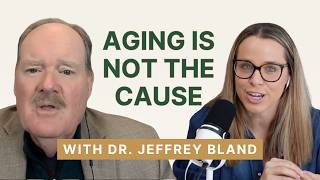
In this extensive interview, host Brigid Titgemeier talks with Dr. Jeffrey Bland, the founder of functional medicine, about the origins, evolution, and core principles of the field. Bland reflects on his personal journey from academic professor to functional‑medicine pioneer, describing the early resistance he faced and the gradual acceptance of functional medicine worldwide. He explains the systems‑biology perspective that views health as an integrated network of physical, cognitive, emotional, and metabolic processes, contrasting it with the traditional disease‑centric model. Central to this view is the "naming‑blaming‑taming" framework, originally coined by Dr. Sidney Baker, which critiques the practice of labeling diseases, assigning a single cause, and merely treating symptoms. Bland expands on how functional medicine seeks to identify upstream root causes rather than downstream symptom management. The conversation delves into specific clinical concepts Bland helped develop: the 4R protocol (Remove, Replace, Reinoculate, Repair) for gut health, the early focus on leaky gut and dysbiosis, the role of liver detoxification (phase 1/2 enzymes activated by nutrients like sulforaphane), and mitochondrial health as a cornerstone of cellular function. He links these mechanisms to chronic conditions such as insulin resistance, autoimmune disease, and inflammation, emphasizing that many diseases are interrelated comorbidities driven by shared upstream disturbances. Bland discusses gender differences in autoimmunity, noting that 80 % of autoimmune diagnoses occur in women and proposing that the female immune system’s evolutionary adaptation for pregnancy makes it more sensitive to environmental stressors. He outlines a detective‑style approach to autoimmune work‑ups, evaluating gut‑derived inflammation, chronic infections, xenobiotics, and metabolic by‑products (e.g., advanced glycation end‑products) that can trigger immune dysregulation. The interview also covers the importance of diet, citing blue‑zone research that attributes 40‑50 % of health and longevity to food quality and diversity. Bland highlights “dark‑matter nutrients” – thousands of polyphenols and phytochemicals that epigenetically modulate immune gene expression. He describes his company Big Bold Health’s focus on food‑based products such as Himalayan tartary buckwheat, rich in immune‑active polyphenols, and the significance of omega‑3 fatty acids, diverse dietary fibers (including D‑chiro‑inositol), and non‑gluten grains. Throughout, Bland stresses the ecological perspective that each bite connects us to planetary cycles and that a varied, whole‑food diet supports the body’s innate detox and immune systems. Key take‑aways include: (1) functional medicine’s shift from disease labels to systems‑level root‑cause analysis; (2) practical tools like the 4R protocol and naming‑blaming‑taming model; (3) the centrality of gut‑immune‑liver‑mitochondria axes; (4) the therapeutic potential of phytochemical‑rich, minimally processed foods; and (5) the need for clinicians and patients to adopt a holistic, evidence‑based, food‑as‑medicine mindset. Listeners are directed to Dr. Bland’s websites (JeffreyBland.com, BigBoldHealth.com) for further resources.
Chapters
Today I'm joined by one of the greatest healthcare visionaries of all time, Dr. Jeffrey Bland. Dr. Bland is the founder of the entire field of functional medicine. In 1991, he founded the Institute for Functional Medicine, which is the largest credentialing organization for functional medicine practitioners. He's an author of more than 120 peer-reviewed papers and his book The Disease Delusion, which is one of the top book recommendations that I always make to people interested in functional medicine. He's currently the CEO of Big BOLD Health, a company that's on a mission to transform the way that people think about one of nature's greatest innovations, which is the immune system. Dr. Blintz, thank you so much for being here. It is such an honor to have you.
Well, I feel the same thing, Brigid, about you. I can't tell you what a privilege it is for me to have this chance to kind of muse about past, present, and future. It's— you're, you're a leader in this field, and I'm really excited about what our conversation may lead us to. So thank you.
Thank you. I'd love to start out with sharing a conversation that we had in Florida a few weeks ago where Julie had said, how does it feel when you see all these people that are really starting to embrace functional medicine? Because you started this in the late '80s and no one understood the concept of functional medicine and these things that you really created and brought to life. And so when you see more people embracing functional medicine today, what, what stands out to you?
Well, thank you. That's something I'm reflecting on more and more as probably a consequence of where I am in my own age profile. I'm turning 80 now in a couple of months, which is even hard to fathom. And so I look back at the last 50 years that I've been in the field and ask, would I have ever anticipated when I was 30 that at 80 this would be the state of where we all are in our understanding of health and and its difference between that and disease care, because those are really two different things. Healthcare and disease care are not the same things. And so I just came back from Las Vegas with the A4M meeting, and there were something like 8,000 people there. And I was thinking about when IFM, the Institute for Functional Medicine, started which was, we had our first meeting in 1991, and how many people showed up there was like something like 250 or 300. And these were the first level of pioneers. These are people that were saying, I don't know what this really means yet, but I wanna see, and let's see if we can't contribute to its evolution. So from that early kind of beginning, in which my wife, who is a principal motivator for starting the whole functional medicine movement and was the one that encouraged me to, to give this a whirl, to today is truly remarkable. To think that now this is a word, a concept that people around the world actually have some understanding of. I, I don't wanna overblow this and say that it's like a standard of identity that everybody on the street understands functional medicine, but to go from this small little fledgling group of pioneers to where you can travel anywhere in the world and you can find medical professionals that are actually understanding it and delivering it. And I've traveled over 6 million miles in my years in doing this. And so I've, I've had the privilege of meeting people all over the world and, and listening to them and hearing their thoughts about healthcare. And now there is this receptivity, be it Asia or be it Europe or be it Australasia and Indonesia. And no matter where I go, people are now starting to talk about functional medicine and what it can deliver in terms of improving patient outcomes. So It's a little overwhelming to think that we started with this little idea in 1988, and now it's starting to gain its maturity.
It is so hard to even comprehend what the experience has probably been like for you going from that place of the opposition and the, you know, the ways that people dismiss you and not only dismiss you, but probably made it seem like you were a quack and not educated and all the things that still happen today. But just I just can't imagine how much more, like how much you were up against at that time.
Well, you know, I think one of the interesting things, Brigid, for me, when I look back, I started as an academic. I was a medical school professor for 12 years, actually 13 years before I kind of made this transition. And that was a wonderful life. I think I was good at it. And I did a lot of research, which I thought was important and had great students, and a lot of them have gone on. Most of them now are retired. I started to believe when I think about it. But the interesting feature for me was that when I started to think this different way about the functional nature of health and how physical, cognitive, emotional, and metabolic health all fit together to define a different aspect other than disease, my mentors and my colleagues in that environment started to wonder what was wrong with me. You know, why was I giving up this great education I had and this wonderful opportunity I had as an academic leader to, you know, move forward with the traditional methods of what I should be doing? And, uh, and, uh, it was very kind of strange to see people that had been my friends and colleagues that suddenly, because I was asking different questions, I was the same guy, but I was asking different questions. And suddenly now I was like, what was wrong? Did I need a brain transplant or of prefrontal lobotomy or what was going on. Now, over the years, and this is to me a measure of, I think, success of the model, is that a lot of these individuals who are very critical early on, that would be, say, the '80s, 1980s, are now individuals saying, Jeff, you really were ahead of the pack. You were using your education in a very effective way. And we didn't understand at the time, but But now we get it. And, you know, it did pioneer a new way of thinking, the systems biology approach to healthcare. And so good on you. So I guess you just have to hang around long enough. That's the key. You know, you have to be able to have the endurance and be present and be willing to accept some of the people that, you know, we don't know what we don't know. So what is the responsibility of someone who has the ability to provide a different perspective. It's their responsibility to say it in a way that people can understand. And, you know, it's the challenge in being a teacher is to try to teach people things that they don't really understand. So I feel that over time, it wasn't just me, it was many, many others who have joined the movement and have created the language that allows us to be, you know, worthwhile for people to fully consider.
Yes. I mean, I have experienced so much opposition just starting in, you know, 2000, 14, uh, in the same way that you're talking about. So I just can't imagine how much greater it was and how, you know, strange some of these concepts really sounded. And what you said to me in Florida is you said initially they'll question you and then they'll make you out to be crazy. And then eventually if you're able to stick it through for long enough and you're really pursuing the truth that you know is the truth, then they'll come around and they'll pretend like they knew it all along. And I think that's a lot of what you're speaking to. You said, you know, that it's not about staying where the puck is, it's about going where the puck is going. And you identified that the, the current healthcare system was failing so many people. And then you, you somehow like knew that underlying— I want you to explain systems biology for people who have never heard it, but to know that like things as such as insulin resistance or chronic inflammation or mitochondrial dysfunction or the gut microbiome or environmental toxins were so intertwined into a person's level of dysfunction. That was— no one was talking about that at that time. And I imagine that most doctors at that time they thought that they knew about the body because they knew how to code and to diagnose like they were trained in medical school, but they truly didn't know the body. Like they didn't understand how the body worked. Is that what you experienced?
Oh, Brigid, you're, um, you're, you're, you're such a good communicator. I'm very impressed. That, that was like a drop the mic. Um, because yes, I, I think what, what happened for me, uh, was I had a sabbatical 2 years in, um, 1981 to '83. And I was invited to be a research leader at the Linus Pauling Institute of Science and Medicine down in Stanford with two-time Nobel Prize winner Dr. Linus Pauling, who invited me to be there. His wife, Eva Helen, and he were remarkable forces in my education as a human being. I think I can say probably impacted hundreds of thousands, he and his wife, of other people. Only person to win two independent Nobel Prizes, one in his case in chemistry and the other in peace. And he thinks that his wife really deserved that second Nobel Prize. They were able to, he, Albert Schweitzer and Albert Einstein, to mobilize over 30,000 scientists, sign a declaration to get atmospheric testing of nuclear weapons prohibited. And it was a big deal. It was a big, this is back in the '50s and the '60s. And you know, there's a lot of, a lot of turmoil. Our political system was undergoing some of the kind of controversy it's undergoing today. And he was banned from actually going to Sweden to get his second Nobel Prize because he was considered to be a communist, believe it or not. And so he fought against really a lot of barriers to get these ideas across because the concept of atmospheric testing was not in and itself the only thing he was talking about. He was talking about the nature of the way that we speak to one another and the way that we allow ideas to rise to the surface and be fully discussed. And so I learned in those 2 years from he and his wife some really powerful lessons about where I wanted to take my life. And actually, as I was leaving the Pauling Institute to go back with my kids and wife back to Washington State to rejoin my faculty position, The last question he asked me as I was leaving with my box and my stuff in my hand coming outta my office, my family was in the car ready to go, is he said, so Jeff, wonderful to have you here. You know, hopefully be able to continue collaborating and work going forward. But I just have one question and that is, do you feel as you go back that your classroom is big enough? And at first I wondered, you know, what was that all about? Why was that question? Then I had 1,100 miles in the car to drive back to think about this. And I recognized that he was really asking a very fundamentally important question about where did I wanna take my life? You know, I was a fairly young man at that point. I was in my late 30s, early 40s. And so by the time I got back to Washington, I had decided to give up my tenured faculty position to start something that was gonna teach physicians how to deploy nutritional medicine in their practice. And that was gonna be my life going forward. And, you know, my parents thought I was crazy, which I probably was when I think back. You know, I had a mortgage and I had a family and all those things, and I had no business plan. I had no real executable plan, but I had the passion. And so I learned a lot about how you make a commitment to an idea. And, you know, it's the old adage of burn the boats, and then you follow your passion and you do everything you can to make it become a, a real thing. So I have so much to be grateful and appreciative of, you know, over those now 40 years since then of really meeting some remarkable people that helped me to evolve this idea, people like Dr. Hyman and many others that really have given this life. And so I think for me, the construct of systems biology was really born out of the systems thinking of the Paulings, 'cause they were always thinking about the broader implications of how things connect one to another. And then I started thinking about, well, the way I was trained actually with my medical school education in the '60s was to think of the body as a series of organs that were all stuck together. So we studied one organ and then we would close the book and we'd take a test. Then we study another organ, we'd close the book and take a test. So we ended up with this differential view of the body as a collection of organ parts, which then is related to the whole theme of specialty medicine. So we have all these ologists. We have the endocrinologist and the cardiologist, the dermatologist, the neurologist, all focusing on one specific part of the body, recognizing that somehow, or assuming somehow, that these parts of the body worked independently. But then we looked at real biology, which was starting to be better understood, the biology of the body in the late 1990s. And it was, no, that's not how the body works. The body works by all these things interacting, interconnecting, intercommunicating. And maybe that's where the answer lies in understanding the intercommunication, not just what's going on in the individual organs. And that leads us into what is the root cause for organs not being, functioning correctly. And then that led me to recognize, and when you look at the way medicine describes this, we have what we call comorbidities. Comorbidities, it's a really interesting term in the language that really for me is a placeholder word that says, I don't really know what's going on. Because if you look at autoimmune disease, cardiovascular disease, and osteoporosis, those three diseases appear very frequently all together, particularly in women. So you might have a female patient that then sees a gastroenterologist or sees a cardiologist or sees a rheumatologist or sees an orthopedist or an endocrinologist, each one of those diseases being treated by a separate panel of drugs. So you have your osteoporotic drugs, you have your cardiovascular drugs, you have your your autoimmune drugs. And the question is, well, hold it, isn't there something that would make these conditions all interrelated? What causes that upstream? But if you actually then ask the traditional back, now I'm talking back in the early 1990s, if you ask the medical body politic how you describe this, they would describe this with the word comorbidities. They just happen to come together. They're comorbid conditions. There's no explanation for them. No, they may be linked mechanistically. No, they just happen to come together. Now, I started talking about, well, hold on, no, just a minute. There's a system that controls the body that just happens to then have all three of these things happening. And let's understand what's going wrong with the system. Now today, these three conditions have a much better understanding upstream. So if you treat the cause, then the effects, which are the diseases, are ameliorated. So where do you want to go? Downstream and treat the, the, the signs and symptoms of these three different conditions, or do you want to go upstream and look for the root cause and try to modulate that, that then treats the cause, not the effect? So that's the whole basis of systems medicine, systems thinking.
And it's not even just in the early '90s that, that would have been the way the doctors thought. They still think that way today. And many, you know, you go into your traditional doctor's office and most of them are still treating the downstream effects and not thinking about the upstream causes, which you've been able to identify. And then also in The Disease Delusion, because I was sharing with you that I actually interviewed you in 2014 when the book came out before you came to the Cleveland Clinic, when I officially had met you in person, when you came to train our staff at the Cleveland Clinic, and you had coined this as the name it, blame it, tame it model. Can you talk about what that means?
Yeah, I owe that concept, Mark and I have used that term a lot, Dr. Hamann and I have used that term a lot. It really was derived from Dr. Sidney Baker. Dr. Baker in Connecticut has really been one of the sages, I believe, in thinking about the medical model in the broadest context. And he had the TAC rule, which I thought was really another interesting metaphor. He's great on finding metaphors. And the TAC rule is if you're sitting on two tacks, taking one out doesn't reduce the pain by 50%. And so the concept is if you don't treat the cause by taking both of the tacks out, you're still gonna be treating the pain of the remaining tack. So this concept of naming, blaming, taming is another one of his metaphors because he said what we developed in the early days of medicine was to be able to very well define specific conditions that clustered around certain symptoms that we call diseases. And we then gave them names. And that became part of a diagnostic book of codes with numbers associated with them that we could then put those numbers in a chart or in an insurance form. And we could reimburse for services that were provided to that name of that disease. But if we looked at, take one example, if we look at type 2 diabetes, now we recognize that type 2 diabetes, this pandemic problem that we've got in our culture that's rising all the time because of insulin resistance, that that condition is not just one problem. There are many, many different ways that we can end up with our body being resistant to insulin and having type 2 diabetes. And it's really why we have more than one drug that's now approved for its treatment. There are over 12 different drugs. That have different efficacies in different people because it's not just one condition. There are many, many things that lead to what we name as type 2 diabetes. So naming and then blaming. Blaming is to say, well, that's because you, and let's name one cause and have one effect, because of your genes. You have a family history of diabetes. Maybe that would be one. And we recognize that almost every condition that we have is a result of multiple intersecting factors. Our genes may be part of it, but there are very few of the chronic illnesses that are principally caused by our genetic heritage. Our genes only play a role in how they pattern our susceptibility to certain things that we do every day in our life. Our relationships, the way we eat, the way we think, the way we move, what we're exposed to, how we sleep. All these things become variables that influence then how our genes are expressed that become then our health or unwellness conditions. So I think that this naming, blaming, taming, it then becomes, when we say taming, often we think in medicine taming means you treat the symptoms. So if you've got a headache, then we find a drug for the headache. If you've got a sore knee or elbow, then we find the drug to treat the pain of the elbow or the knee. But we're not really taming the condition, we're taming the symptom. And so this concept of systems biology goes up to root cause and says, can we find something that we're not concerned of what we name it, what we're concerned about, how's the patient feels and what is the unique way that they got to that problem that we can ameliorate at the cause and not the effect level.
And then circling to the blame it, because I feel like medicine does this so often is that they blame the name for the reason that you still have the symptoms. So if have IBS, and then you go in and you're, you know, they try to tame it, and then you go in, you're still having symptoms. They're like, well, it's because you have IBS, that's the reason. And so then you, you mentally create this, you know, like locked-in identity that people have as patients where they associate themselves so strongly with the actual disease that they normalize the symptoms that they're experiencing because their doctor says, oh yeah, it's just because you have IBS, this is what you should expect, you know, these flares for the rest of your life.
Well, that was brilliant. Absolutely. And you know, there's a part of this blaming that I'm very, very concerned about and have been for a lot of years. Let's use the autoimmune family of diseases. There are 88, I think, 88 different diagnoses of different autoimmune disease from autoimmune thyroiditis to systemic lupus erythematosus, rheumatoid arthritis, multiple sclerosis, inflammatory gluten-sensitive bowel disease. So we, we've got all these different conditions with different names that all cluster around this family of what we call autoimmune disease, autoimmune diseases, as if the body suddenly doesn't like itself and it's actually attacking its own self. It's like suicide mission. When you look at that family of diseases, one characteristic that is really important, and that is that 80% of approximately of that whole family of diseases are in females. And historically, what we learned a little bit in our training about that family of diseases and the female prevalence is that something is different about the woman's immune system that makes her more susceptible. Now, what it implies is that the woman's immune system is weaker. Or it's more, it's damaged or it's broken or it's not as good as a men's immune system. You know, that kind of bias has permeated in the, and so women often who have autoimmune disease feel like guilty, like they got born with a bad immune system and it's their fault or woe is me, you know, gee whiz, you know. And what turns out, that's not correct at all. The immune system in women are actually highly, much more sophisticated than that in men. And the reason for that, I think it's one of the reasons probably, is that a woman, her immune system has to be able to tolerate a foreigner living in her body for 9 months. I mean, you think about that, that foreigner might even be a different sex than she is. And so she's got to be able to be tolerant to that foreigner And so her immune system is unbelievably complex in the way that it can figure out foreigners from friends and to make her body a good place to be in times of exposure to things that are different. Well, there is a double-edged sword to that. And the double-edged sword is that now maybe she becomes more sensitive because of that immune sophistication to things that are changing in the environment. Things that are foreigners, things that are making her body different than they were, things that her immune system recognizes as not friendly. And so maybe the woman's immune system is the yellow canary. It's the immune system that actually first picks up signals that are related to things that are happening around us that are translating themselves into a body's alarm reaction that the body needs to to respond as if this was something trying to cause injury to them. So thyroid is an interesting one, the immune thyroiditis, because we now know that the thyroid gland is the environmental sensing gland. It's very sensitive to the environmental characteristic of things like polynuclear aromatic hydrocarbons and lifetime chemicals and things of that nature that are definitely not friendly for the human body. And so if the thyroid gland is kind of the immune sentinel organ, then why is it that women might have more immune thyroiditis? Maybe it's because their immune system is picking up those messages of exposure at a much earlier level than other individuals. So I think that this concept of placing blame on people for bad genes that causes their disease is another really a negative part of our system. Because quite honestly, very few of our diseases are caused strictly by genes. They're caused by the environment, as we talked about, that interacts with our genes. It gives rise to their function. And I think we need to get away from this stigmatizing of the name. When you have a disease, you own the disease, you become that disease, you follow the trace of that disease, you see the doctor who is an expert in that disease. That's what they talk about. So you start living the disease, you're not living the, the, the trajectory of health.
Yes. Yes. It's so true. And, and then I think a lot of times doctors will then go back to blaming the symptoms on the autoimmune disease like you're talking about. So you can never actually escape it from a part of your identity where you're like, okay, I have constant itching. And this actually just came up with a client this past week who's like, I have constant itching. She was diagnosed with an auto autoimmune disease and then They're like, you just have to take Benadryl every day. And this is, you know, the trajectory of your life. There's nothing that you can really do about these kinds of symptoms sometimes.
Yeah.
Or friends of mine who are even taking their kids because they have eczema or psoriasis or other conditions. And it's like, well, we just don't really know what causes it and we don't really know like how you can fix it, but here's the ointments or other things that you can try to use. Here's the steroids that you can use to try to improve that at the age of 2 or 3 or 4 years old. And there's such a limitation around being able to better understand a lot of these underlying drivers or root causes like you're talking about.
Yeah, I'm reminded as you're speaking of an interesting case history experience in my life. So a number of years ago, I was running a fairly large research group. We saw several thousand patients a year on different research intervention programs and ultimately publish the results of those studies. So there is a patient that comes to mind as you're talking that I think is really an important case history about this concept of how we perceive ourselves. So I won't bore you with the whole story. Just suffice it to say this woman was led to our research facility because she had a very, very serious autoimmune disease called arthromyalgia, which is a very unusual, not common kind of autoimmune disease. And in her case, the symptoms were that her feet and lower legs would become red hot. I mean, literally to your touch, you could feel how hot they would be, like they would have the fever. And she had such pain in her feet and wasn't able to really walk effectively. And so She was only in her late 30s and she had a family, but was unable to really stand up to produce meals. She really couldn't go outside. She couldn't go to her garden any longer. So when we asked her when she came in, what were her— if we gave her a magic wand, what were her 3 wishes? It was, one, that she was able to fix a meal for her family. Number 2 was that she could plant her garden. And number 3, that she could go to the mall with her children. And spend the day. And, you know, those sound like fairly simple objectives, but she knew that that wasn't a thing that she could do. And she was taking literally two handfuls of medications every day. And the reason I know that is that there was a photograph in the front page of our local newspaper of her with her two hands holding her medications, talking about her case history. That's what led her to us actually. And she was being treated by the state-of-the-art autoimmune treatments at the medical school. And so, you know, she was getting good medical care, but she was not getting better. And so here we go. We don't know anything really about arrhythmomyalgia. We're not specialists in autoimmune disease. But one of the docs in my clinic, who's a brilliant guy, he comes in, he's very upset, and he puts that newspaper down on my desk and slaps his hand on it. He says, Jeff, we can help this woman. And I said, well, Jack, you know, we really are not specialists in autoimmune disease. This woman has a really pretty serious situation. And he says, well, no, no, I know she does, but you know, I'm telling you, we have enough experience around here to know we can treat the cause and not the effect, and we can help her. Maybe we can't cure, but we can certainly help her. And so we were able to get permission to do this kind of nutrition lifestyle intervention program while she was continuing on her traditional therapy. And the outcome was that over the course of a year, she continued to just get better and better and better, eventually reducing virtually all of her medications down to just one or two. And finally, this is one of the great moments I can recall. She came in, it was a summer, the next summer. So this would've been a year and a half after she started, she came in and she had a gift to give to our docs and nutrition team, which was a photograph of her at the top of Mount Si, which is a fairly steep mountain outside of Seattle, Washington, with a very— I'd say hiking trail, but it's pretty steep up to about, you know, 3,500 feet from starting at sea level. And she was here. She was— the photograph was her at the top of Mount Si holding up a sign and saying, "Thank you, Dr. Jack," for her therapy. So those kind of things remind me, you know, it only takes a few of those to remind me that if we find the right thing, we can really do remarkable, or the person actually, it's not us, the person can do remarkable things in improving their function.
So can you explain how you start to think about this in cases of autoimmune disease, given that there are, you know, that the percentage of 80% of autoimmune diseases are in women, and a lot of my audience is women. And do you start in thinking about the gut microbiome and the immune connection?
Yeah, I think the first thing I, I think about is, you know, how can we, uh, look at the underlying inflammatory profile that that person is carrying? Because inflammation is a word we use a lot, but it's in— it exists in the body in all sorts of different forms and ways. And so I don't think we, you know, you can treat blanket inflammation by giving a TNF-alpha blocking agent, a drug like Enbrel. And that will put a blanket on all of the processes of your immune system. So if you look at what's on the black box warning of those drugs, it's, gee, you know, be concerned 'cause you might get lymphoma or you might get tuberculosis or because you completely, you know, impeded the immune system's functioning. So I think the first question is to ask what kind of inflammatory state is that person in? And then what are the mitigating factors that might contribute to that type of inflammation? So you mentioned one I think is certainly very important, and that's the gut microbiome. And it's in relationships with the gut mucosal immune system, which is where about 70% of the immune system is clustered around the gut. And then what are the parts of the gut immune system which might be most alarmed by some kind of a dysbiosis and with a bacterial problem that relates to the microbiome? And so you start looking at, are these innate immune system activations where you're getting a lot of activation of inflammation through the relationship to these receptor sites on the gut immune system called the toll-like receptors? And then how does that relate to the signaling to the body of alarm that leads to inflammation and the problems that that person is having symptomatically. So by going upstream and starting to do a little bit of a detective evaluation as to where the origin of this might reside, it might be chronic infection in the mouth. They might have periodontal disease. It might be a chronic Lyme infection. It might be Epstein-Barr. It might be some kinds of viral-related chronic infections that are also triggering immune reaction. So it might be environmental chemicals, it can be xenobiotics, it could be heavy metals like lead or mercury. So we start our detective work of going down the list and seeing what in that individual might be the precipitating factors that their body's immune system is perceiving as a foreigner, that it's doing what it's supposed to do. It's a fight back against foreigners. It's not immune system gone wrong. It's an immune system in a hyperfunctioning state that we need to cool off. So that, that's, that's kind of the detective process that I think systems biology would, would use in that case.
And that's such an important distinction that I think provides more hope for people that are experiencing different issues with their health, is that the immune system is so beautifully designed to help to support us and to protect us from foreign invaders, and that it's not that there's something wrong innately with your immune system, is that there's some kind of an exposure that your immune system is generating that response to that's leading to those symptoms in the way that the body is designed to protect itself.
Yeah, that's beautifully stated. You know, it's interesting, one of the, the laboratory tests that's used for evaluating whether a person has an autoimmune disease like rheumatoid arthritis or SLE is in the blood to look at what is called double-stranded DNA. And so this test for whether you've got this kind of, you know, your book of life, your DNA floating around in your blood is indicative of cells that may be undergoing suicide and releasing then part of their internal contents into the blood. And so that's an illustration of something that might be precipitating autoimmune disease. But when you ask the question, what's the origin of that double-stranded DNA, or what's the origin of these foreign molecules floating around the body, it is very likely that those things that are floating around the body are not the natural things that the body made. They're things that have gotten converted into not friends anymore. That can occur by phosphorylation, glycosylation, by oxidation. There are all these processes that we now know about that take you and make you non-you. And when you become non-you, your immune system then sees you as non-you and starts to try to defend yourself against that process. And so we, a good example would be, why do you see autoimmune disease more frequently in individuals that have insulin resistance and hyperglycemia? Because the sugar in their blood reacts with proteins to create crusty proteins. And these proteins, these glycolated proteins, are not your normal proteins. So your immune system says, "Ooh, here's a foreigner on board. I better react to that." And now you have autoimmune disease in conjunction with your diabetes. So that's the kind of logic tree that we use in the functional medicine model that you're very skilled and adept at that then gives us a different path towards therapy and treatment that's individualized to the patient's own need.
Yes. And you don't even have to have type 2 diabetes in order for that mechanism to be happening underneath the surface.
That's right.
We see so many people that we— I run a program called the Blood Sugar Reset that we've been running for years. And that's something that I say to people that are asking, like, should I try the Blood Sugar Reset? Where I'm like, even for your autoimmune disease, like stabilizing your blood sugar levels, whether it's that or stabilizing your hormones, like blood sugar really has to come first as far as decreasing that downstream effects that, that's happening. And then of course the other layers like, like the gut microbiome. So when I was recently listening to an interview that you did, I, I feel like you're one of those people that like I learn more about these mind-blowing things that you've done just like slowly over time because you've done so many mind-blowing things. But you talked about 3 concepts that you brought into the world that you feel really proud of with was it the concept of the microbiome, liver detoxification, and mitochondria as the three?
Yeah, you know, thank you, Brigid. It's so interesting when I look back. I was recently, well, actually it was last fall, I was at a meeting and a doc who I've known for many, many years came up to me and he said, he said, so Jeff, you know, I was cleaning out my office, I'm retired now, and I found the syllabus from your seminar that I attended in 1985. 1985, and it was entitled The Leaky Gut in Dysbiosis. That was 1985. And it was quite a treat actually to get it from him. It reminded me how long we've been at this. And the construct that led in actually in 1990 us to develop a program that has become kind of well rehearsed and done by many people now. At the time we called the 4R program. It was remove, replace, reinoculate, repair. That was the clinical approach. And we started teaching that at the Institute for Functional Medicine in the early '90s. And it really, it caught on and it was really remove the offending substances, replace digestive enzymes and acid where necessary, reinoculate the bowel and then renew the gut mucosal integrity with specific nutrients. So that 4-hour program. Now it's, I think, expanded its number of hours. But that was the basic first concept that started bringing the microbiome. We, this was before you call it the microbiome. We were just talking about dysbiosis of the bacteria back in that, in the, in those days. And we introduced the concept of leaky gut. That was the first. And then the second that kind of grew outta that was looking at what happens when the stuff comes out of the gut. Where does it go? And it goes into the blood by the portal blood, which is delivered into the first organ, which is the liver. And then we start saying, well, hold up just a minute. The liver is another organ under siege. You know, what do we know that the liver does? And the liver does all these remarkable things, one of which is it's involved with detoxification. And we said, well, how does the liver do its work? How does it get the signal to know to turn on its detoxification machinery? And we found out there were certain nutrients that, like sulforaphane and indole-3-carbinol and so forth, that would activate specific enzymes in the liver to be engaged in what we call phase 1, phase 2 detoxification. So we and developed this concept called metabolic detoxification. That was kind of our second discovery and clinical treatment option. And then from that in the early '90s, I got very, very interested about cellular bioenergetics. And, you know, I found out no one was really talking about the mitochondrion in any of the lectures or the field that I was involved with. And yet the mitochondrion was the energy center of every cell in the body. And so I started saying, gee, maybe we should have a mitochondrial health approach. And so in '82, no, excuse me, '92, in 1992 at the Institute for Functional Medicine, we had a whole module on bioenergetics and the mitochondria, which I now look back and say, wow, that was pretty early actually. And then in 1998, because I was really starting to be very interested in this whole genomic field and how nutrigenomics was starting to evolve, I wrote the book called Genetic Nutritioneering, which I now recognize was actually the first book for consumers around how the genes and nutrition play together to give rise to our function and talk about things like mitochondrial health from a genetic bioenergetic nutrition perspective. So all this has kind of fit together over time for me as it relates to an architecture. And by the way, I don't want to imply that I, quote, invented any of these concepts. I think I assembled this information from many, many other people that were doing work and making contributions and observations. I just put it in kind of a format that we could start testing it with patients in clinical environments.
And now every area of medicine is studying the microbiome. Like doctors will reference dysbiosis, leaky gut, and there isn't as much pushback around the idea that these things are not legitimate. Processes that are happening in the body. It's just the reason that I wanted to go back to that is because of like the work that you're talking about with autoimmune disease and the, the gut, the immune connection, the connection between improper ability to basically like detoxification, poor detoxification, which most doctors will argue that if you have, um, if you have a liver and kidneys that you can detox perfectly fine as long as you pee and poop every day, that you're able to detox appropriately. And you have completely shifted the narrative on all of that over these last few decades to set the tone to say like, no, the gut and the immune system are entirely connected. Dysbiosis and leaky gut can increase the immune system's, you know, reactivity against its own body, which leads to, you know, different manifestations in different organ systems that are— that lead to different names that conventional medicine puts a label on. And then there's this role of, you know, liver detoxification and, and how much increased exposure to heavy metals and environmental toxins that you're talking about can also make like the immune system go haywire, that mitochondrial health is a core component of immune health, and that when you have, you know, slow metabolic health or mitochondrial health or mitochondrial dysfunction, that it can lead to issues within your immune system. It's just like crazy to me that you brought all these concepts to life.
Well, thank you. I, again, I want to make sure that I give, uh, attribution to so many people in our field that were all part of building up this model over the years. I, I I just had the privilege of being on lecture circuits and, you know, a research group that was very actively involved in pursuing these things. But I think that what I've learned now, and this is almost like back to the future because thanks to meeting Dan Buettner a number of years ago, I got really interested in these blue zones and, you know, why are there certain regions around the world where people seem to have, in the absence of a lot of modern medicine, live healthy life long life and active lives, fulfilling lives. And, but it's not all just in their genes because when those individuals who were born in those areas move to the highly developed part of the world, like the United States, their disease patterns fall in line with the other people in that population. So there's more than the genes that is giving rise to their long life and good health. So when we started studying that in much more detail, this is now within the past 10 years, there were certain characteristics. Obviously, Dan, in his Blue Zone books and writings and the Netflix special, talks about these characteristics of community and purposeful rest and spiritual life and all sorts of different aspects. But when looking at diet and food, this is a common theme. And as far as I know, everybody eats sometime. And so it's a common theme. Everybody breathes oxygen sometime. There are certain characteristics of life that are shared around us all. So it turns out that food, if you were to just do a gross marker, how impactful is food on our overall health and on longevity? I would say it's somewhere between 40 and 50% conservatively. How we eat has a 40 to 50% upsize influence on our health trajectory and our longevity. There's nothing else, nothing else that I know of on a gross level that has that same magnitude of upscaled effect. Effect on health. So eating is really important and what we eat, how we eat, when we eat. And so when we start then asking, well, what is it in the characteristics of these individuals that they've eaten that seems to be associated with long life and better health? There are many factors, certainly minimum processing, getting close to the earth, you know, all these things are important. But these diets, no matter if it's Costa Rica or it's Tarahumara or it's the Philippines or it's Sardinia, Or it's Loma Linda, California, are all high. Those were all blue zones, are all high in polyphenols, in the things that give rise to the rainbow diet, the red, orange, blue, yellow coloration, those natural pigments in foods, they're carotenoids and flavonoids. And there are thousands of these, what are called dark matter nutrients that are present in our food that we didn't learn much about in nutrition textbooks. They were kind of like thought of as along for the ride, but not really very important for physiology. Now we're finding they're extraordinarily important for physiology. They actually epigenetically modulate how our genes express themselves and regulate gene expression. In the absence of those in our diet, we have a whole different way that our genes might be marked, particularly the genes of our immune systems, which are constantly turning over. Our immune system turns over every 4 months. So the immune system 4 months from now those cells in your body will not be the same cells. Will they be better, worse, or the same as the ones they're replacing? And how did you prime them by what you're eating? Because your immune system personality is 40% what you ate. So if you start thinking in that way, it leads you to a whole different sense of priority about diet and food and food architecture. And so we started looking at that universally and that's kind of where we landed on this, this Himalayan tartary buckwheat concept. I never thought in the world I'd ever, ever be into farming, but now I own part of regenerative farms in upstate New York that is growing this, this 3,500-year-old food that has over 125 immune-active polyphenols. And it's probably the most dense food with regard to immune activity of any that we've studied. And if people have eaten that for centuries, there are people that have really very resilient immune systems. You don't see all these immune issues that we see in our Western world. So there's so many treasures that are locked into history that we need to relearn, and we can learn them through the new lens of, you know, modern science and how these things affect our cells in specific ways. But in the bottom line, it's how do they affect people's health and what do we do to make them part of our daily living? And we, we're into this biohacking kind of revolution right now. That's everyone's trying to find the magic molecule that is going to create longevity. And, you know, is there some molecule that we should be taking in our diet that really, or in our life, that is going to lead us to 100 years of, or more, of living? And I think that that's a false god. I think that what we need to really understand is that those molecules that are present that can do that are things that have undergone the test of the largest study ever done called natural selection. They're in our foods. They have come from millions of years of evolution, and they come as mixtures of molecules that speak to multiple shots of gold in our body. And we don't then replace them by one heavy-lifting molecule in its place, being NMN or, you know, whatever it might be. So I think that we're into a very, very interesting period, you know, back to the future now. And that's why I'm really excited about what we're doing with Big Bold Health with our Himalayan tartary buckwheat and our fish oils from Dutch Harbor, Alaska, because they go back to the food-based principles of how do you actually architect your and, and design your nutrition such that your immune system gets its full opportunity for, um, for expressing its resilience.
Yes. Oh my gosh. It's— phytonutrients are my obsession because I think that we are even just like scratching the surface at being able to fully understand all, you know, there's thousands that haven't even been discovered yet. And so when you think about it, that's one of the limitations of just taking like one supplement, which I think is the interesting thing in the way that you're approaching the research that you're doing at Big Bold Health. When I was talking to Dr. Austin Perlmutter about it, he was like, we're, we're trying to see, can you take a food-based product like the products that you guys have and actually look at the way that it's impacting people's actual outcomes? Because in some ways we may be limited in not even understanding some of the key regulators for from a phytochemical standpoint that exists in these foods that if you just solely extract them into supplement form, you're missing the synergistic way that nature originally intended it for it to be consumed and absorbed from a cellular standpoint. Can you explain more about what that means?
Yeah, I think you just said it beautifully there, that our body is designed to take, uh, multiple signals from our food, multiple bioactive components like the polyphenols. And those then hit on certain receptors within our body that turn on the symphony of life. Our life is not just one section of the orchestra. We need the brass, percussion, woodwinds, and strings all playing in harmony together. You might have the world's best first violinist, but if you don't have the rest of the orchestra behind her, you're probably not gonna have the same quality. So this concept that I think we're learning First of all, we're relearning that nature is remarkable in terms of the sophistication of how our bodies work in combination with the environments in which we live. And that there are these through lines, these principles that interconnect us to plants, animals, and the planet that are really important if we're really designing personal health program to be aware of. So it turns out that the planet has its own immune system. It's called the various cycles, like the hydrological, phosphorus, carbon, nitrogen cycles. The microbes that live in the soil have their own immune system. Those microbes, or those what, the mycorrhizae, as it's called, that lives in the soil communicates to the plants that live in the soil. The plants have their own immune system. The immune system of plants are then consumed by animals. The animals have their immune system, and we maybe eat animals depending on our diets, and we then pick up the immune system legacy of what we eat. So let me just conclude by saying that this interconnection that we have to all aspects of the immune system is really, really an important thing to consider. And someone asked me, so Jeff, what's the first principle that you would advocate people do when they're trying to achieve good health and maintain longevity? And I say the first thing is to recognize that every time that you eat, before you take that bite, that you are interconnecting yourself to the rest of the planet. And you are signaling and speaking through your body's functions with the legacy of whatever that is that you've eaten. And if you just keep that in your mind, it really kind of directs your choices rather than just eating for satiety or eating for pleasure or eating because it's convenient or eating because you're under pressure to eat that. It puts you into a different decision-making process. It builds you into the system where you're gonna survive along with everything else in the process. It's, it's, it's doing good at, at every level. So that's one of the reasons that I've been very, very excited about, you know, getting more engaged with these traditional parts around the world. Done quite a bit of travel now in places where are blue zones and, and looking at the way people live and how they eat. And, and now we've got this, this group up there in the Aleutian Islands, the Native Alaskans and, and, and look, what are the cultures that lead to survivability of people over many, many thousands of years? And how do they use the natural environment? What are in their foods that give rise to their ability to be survivors, more than survivors, actually living out fairly high health lives in the absence of modern medicine? And it's really this concept that nature will give us the things that we need as long as we take advantage of what's out there and we don't, end up with chemicalization as our way of living. And I think that that's the principle that, you know, it sounds very simplistic, but the more I learn in science, the more I recognize it's a statement of truth as it relates to the survivability of the human species. Wow.
That is so profound. And so any big takeaways that you're finding from these areas that you're studying outside of just the connection between you and your food and the planet?
Well, I think it's just phytochemical. You talked about it earlier when we were speaking about the orchestra that when you've got literally, there are now 139,000 different bioactive things found in foods, the so-called dark matter nutrients, of which a lot of these are the bioflavonoids and the polyphenols. And we're only starting to learn from a scientific perspective how all those things that are in natural foods actually influence the body. We just kind of discounted that. Until recently. And that was actually the reason that I formed this company, Big Bold Health, is I really wanted to look at a deeper level as to how these things influence actually our immune system, knowing that the immune system is being imprinted very, very dramatically epigenetically by the things that we eat, and 40 or 50% of our immune system being determined by what we eat. So I think that these things that we're learning in the deep science of today using gene chip analysis and algorithms that are machine learning or, and it really go back to just reapplying what we observe in cultures that have long health and, and good long lives and good health that have been eating close to the ground.
Yes. And so choosing more of these phytonutrient-rich foods like the Himalayan tartary buckwheat that Dr. Bland's Big Bold Health company has that is so high in these phytochemicals. I would also say just expanding upon the variety of the foods that you're incorporating into your diet. This is something that, you know, in my membership we create weekly meal plans for our members, and I'm constantly reiterating, like, one of the big factors that we put into it is thinking about the variety of the phytochemicals that you're being exposed to, and that that's where the diversity of your nutrition comes into play in such a profound way that I think we are, like you said, just starting to scratch the surface and fully understanding. Are there any other big takeaways that you have of additional foods or things that— or do you want to circle back to Himalayan tartary buckwheat and things that you're finding there?
Well, I think the two other families that are really important for us to consider are the omega-3 fatty acids. I think that these omega-3 members of that family of fats are really important for us, not just EPA and DHA alone. There are many other omega-3 fats, eicosapentaenoic acid and docosapentaenoic acid or DPA. There are many in that family that are really important for our for our neurological health, for our immune health. And we don't get those in a highly processed diet, obviously. And so I think the omega-3 fats, and again, you say, well, how much do you need? The data would say that, you know, a couple of fatty fish meals a week are often enough just to get you onto the right side of the curve. And a lot of people don't eat fatty fish. So then maybe you can take, Proper omega-3 fatty acid supplements that are minimally processed that deliver both the EPA, DHA, and the pro-resolving mediators, these very, very highly anti-inflammatory compounds that come along with minimally processed omega-3 fatty acids. And then lastly, it sounds fairly simplistic, but it's becoming increasingly important, are the types of dietary fiber that we consume in a natural diet, both soluble and insoluble fibers, because they have different effects on the families of microbes that live in our gut. They repair and help to build proper healthy gut microbiome. I'm reminded of one that actually we studied quite a bit from our work with the Himalayan tarry buckwheat called D-chiro-inositol or DCI. D-chiro-inositol, most people would not classify as a, and traditionally it's a fiber, but it actually is a non-digestible carbohydrate. So it's a soluble fiber member and it has very, very important role to play in helping to stimulate the growth a number of friendly bacteria. One is called Akkermansia muciniphila, which helps to preserve the mucous lining of our intestinal tract. It insulates us against toxic exposure from our gut. So here's one of the many fibers in a family of fibers that we would eat with a complex diet that can have very beneficial effects on the structure and function of our microbiome. So those are the, the three areas that I really think about a lot is the polyphenols from, you know, colored foods and diets and fruits and vegetables and, and non-gluten grains and, and cereals. And then secondly are the omega-3 fatty acids and things like fatty fish. And then third is the, the fiber-rich products from the various types of cultivars that have both the soluble and insoluble fiber in them.
Could not agree more. And can we just quickly underscore why non-gluten grains?
Well, I think for a certain group of people, gluten is a marker actually of other things that have come from hybridization of grains and the way that we have been growing grains to make them much more, the yields to be increased. The hybridization of grains over time has not been based upon nutritional quality, it's been based on yields. Where our agricultural system is based upon how many bushels per acre. It's not how many nutrients can you produce per acre. And so the gluten in grain really often comes along as a part of the overall change in the genetic disposition of plants. People have often said to me, you know, it's interesting, I seem to be sensitive to the wheat flours here in the United States, but when I go to Italy, I don't seem to have a problem. Well, it's a different cultivars. The genes of those plants are different than the genes of the highly hybridized plants that we have in the United States. So I think we're just learning about the immune implications of the various constituents that come from the commercialization of our agriculture. And so a lot of people have said it's gluten intolerance. I don't think it's in most cases traditional gluten intolerance. I think it's an intolerance or immune sensitivity to the alteration and the, of the genetic structure of many proteins that are present within our hybridized grains, is my belief.
So helpful, so helpful, and can explain why so many people do, you know, can improve so many different symptoms when they, they do go gluten-free and remove it from their diet. Dr. Jeffrey Bland, thank you so much for being a part of the Being Brigid Show. Can you tell everyone where they can find you and benefit from your genius?
Well, thank you. And first of all, I just once again want to just support and applaud what you're doing, Brigid. It's just absolutely fantastic. It's what we need, raising the visibility and raising the utilizability of these concepts. It's not so good just to have them floating around in our brain. They have to translate into how we act and behave each day, what we put in our mouth, the decisions that we make about the way that we'd like our life to proceed. So People want to find out more about me, it's basically JeffBland.com, JeffreyBland.com, or BigBoldHealth.com.
And we'll include the links that you sent over so that everyone knows where they can find you and benefit from the work that you're doing. Dr. Bland, thank you so much. On behalf of myself, a longstanding functional medicine patient of more than 20 years, I have transformed my own life because of the power of functional medicine. And on behalf of the millions of people who have positively benefited from functional medicine and this entire field that you created. Thank you for continuing to pursue this against all levels of opposition. You're a perfect testament to the importance of sticking with something even when there's a lot of criticism and people who don't, don't understand. And like you said, they'll eventually come around and pretend like they knew it all along. Thank you so much for tuning in to the Being Brigid Show. If you haven't left a rating and a review, please do so. That really helps the show. Please subscribe on YouTube or subscribe on Apple and Spotify, wherever you are listening from. This really helps the show and continue to spread this movement of using food as medicine. Until next time, thanks so much for being here.
More from Brigid








She Used to Crash Every Afternoon — Here's What Fixed It | The Wardrobe Consultant
