Women’s Health, Perimenopause & Functional Medicine Insights with Dr. Julie Foucher
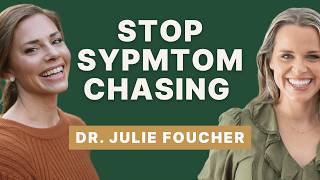
In this episode of the Being Bridget Show, host Brigid Titgemeier interviews Dr. Julie Foucher, a board‑certified family physician with advanced functional‑medicine training and a former CrossFit Games athlete. The conversation covers the fundamental differences between functional and conventional medicine, the shortcomings of the current healthcare system for chronic disease, and why nutrition, lifestyle, and root‑cause thinking are essential, especially for women. Dr. Foucher explains how a woman’s menstrual cycle can be used as a vital sign, outlines the phases of the cycle, and offers practical tracking methods using wearables (Oura, WHOOP, Ava, etc.). They discuss perimenopause, PCOS, endometriosis, and the typical diagnostic delays women face. The dialogue also touches on physician burnout, the cultural resistance of doctors to nutrition, the balance between evidence and clinical action, the role of genetics (e.g., COL5A1 risk for Achilles rupture), and the impact of wearable data on early disease detection and behavior change. Both hosts share personal stories about CrossFit, the importance of community, and how Dr. Foucher’s mother’s optometry practice shaped her view of patient relationships. Finally, they reflect on the purpose of health, the future of AI in medicine, and practical advice for listeners seeking functional‑medicine care.
Chapters
Doctor Julie Fouch, welcome to the Being Bridget Show. I'm so excited to have you.
Thank you. I am so excited for this. I was just saying it's about time you had a podcast. This has been a long time coming.
A long time coming. The first time I was ever interviewed on a podcast was your podcast, the Pursuing health podcast in 2015.
Yes. Oh my gosh. I didn't realize that was your first podcast interview. Yeah, it's crazy. And I think you've been on twice since then and each time we have so much fun. So I'm excited for this.
I cannot wait. There's honestly not a more aligned guest to be starting out with, given that you are one of my very close friends. We've been very close friends for the last 10 years. You're a board certified family medicine doctor with advanced functional medicine training dedicated to women's health and just an enormous pioneer in the entire field. I feel like you've had a huge impact changing doctors minds and how they think about the conventional healthcare system. So I'm very excited to have you today.
Oh, well, thank you. That's very generous of you. I feel. I feel grateful to have been trained in medicine at a time where functional medicine was more accessible and then to have the platform of my podcast to be able to share that with more people. But thank you for saying that.
It's true. So given that you have the conventional training, you were trained at the Cleveland Clinic, you got your undergrad degree in biomedical engineering, you went to the Cleveland Clinic for medical school and for your residency, you also got your master's in nutrition at Case Western Reserve University at the time, and then did your advanced functional medicine training. So I'd love for you to start us out with what is functional medicine and how does it differ from the way that you were conventionally trained to practice?
Such a great question. And you just reminded me of the fact that we were. We first met when we were both at the Cleveland Clinic, but we were also both doing our master's at Case Western. And I don't think we even knew each other, but we were in some of the same classes.
So we were in some of the same classes. And then Julie was a huge advocate for getting more of the medical students to learn about functional medicine when we opened at the Cleveland Clinic center for Functional Medicine, which was how we first met because I was helping her with the medical students being able to facilitate more talks and education around functional medicine.
Absolutely. So yes, you ask a great question. Is what is the difference between functional Medicine and conventional medicine. And I think for me, there's been very few times in life where I have learned about a new concept, and it's a light bulb moment. It's like, okay, once you see something, you recognize truth in it and you can't unsee it and you can't ignore it anymore. And that very much happened for me when I learned about functional medicine, which was when you were part of opening the center for Functional Medicine at the Cleveland Clinic. And so I had been in my training. I was in medical school at the time. I was about halfway through medical school. And I was very naive when I first went into medicine. I think it was just, you know, I was good at math and science. I was fascinated by the human body. I loved the human side of medicine and the relationship between doctor and patient. And so I said, this is what I want to do with my life. And I went into med school. And then you realize that there's a lot of things about the conventional medical system that just don't make a lot of common sense. And at the time, thankfully, I was also training and competing in CrossFit. So I was very much understanding the importance of lifestyle when it comes to health. And I was seeing the gaps in. In my medical training where we just weren't learning about that and where we were seeing. You know, I would go to my primary care clinics to be learning basic skills about how to do a physical exam and how to take a history. And I would see patients there every 3, 6 months, 12 months, and every time they would be getting worse and worse and need more and more medication. But then, flip side, I was in my CrossFit affiliates, and I was seeing people lose weight and come off their medications and become healthier and happier and more fulfilled. And so I already had this understanding that there was something missing in conventional medicine, but I couldn't quite understand the model for how to practice that way, other than, of course, you know, helping people with their lifestyle. And so when the center for Functional Medicine, Cleveland Clinic opened, it started with a talk that Dr. Mark Hyman gave at the Cleveland Clinic. And I remember so vividly, I saw this email come through my inbox, and it said, you know, come to this Wellness Institute talk about functional medicine. Dr. Mark Hyman. I was not really familiar with functional medicine. I think I had heard the term once before, but I just felt so pulled to go to this talk. And I thought, hmm, it'll at least it'll be interesting. Little did I know the talk was not only explaining functional medicine, but it was announcing the opening of this center, which was the first of its kind in an Academic Institution. Dr. Mark Hyman was speaking. You know, Toby Cosgrove was there. All of the heads of the departments of the Clean Clinic were there. It was a big deal. And when I heard Dr. Hyman lay this out for all of us in his presentation, it was one of those moments where I thought, I cannot unsee this. This is how medicine should be practiced, and this is how I want to practice medicine moving forward. And the key part of that is, in functional medicine, you are looking at the body as a system. You are not looking at the body as independent siloed systems or organ systems. So in conventional medicine, you have someone with a heart problem or heart symptoms, you go see a heart doctor or cardiologist, you have a skin rash, and so you go see a skin doctor, a dermatologist, you have GI symptoms, so you go see a gastroenterologist. And each of those specialists are operating in their little silo of their organ system. But actually, the body is connected. It is a dynamic system, and all these organ systems are working together. And functional medicine is taking that understanding. And then it is looking at a symptom as a warning sign that something is out of balance. And it's going to look for the root cause of that symptom instead of in conventional medicine saying, oh, I have a symptom. I have, you know, GI upset. So I'm going to take a pill so that, you know, if I'm having diarrhea, I'm going to take a pill so that I'm not having diarrhea anymore instead of looking for the root cause of that. And so that was really the light bulb for me. It was looking at the root causes of symptoms instead of putting Band aids on problems. And it was looking at the body as this dynamic system where everything is interacting together instead of in silos.
Yeah, I love that. A dynamic system that also has the capacity to heal when it's given the proper inputs, which I feel like is the thing that is missing. And it reminds me of that analogy that Chris Kresser has always used, is that you go to a conventional doctor, you have pain in your foot, and because you have a rock in your shoe, and the doctor gives you ibuprofen or a pain medication, and you go to a functional medicine doctor, you have a rock in your shoe, the doctor helps you take off your shoe and then take the rock out so that then you can keep walking with your shoe on.
Yes, exactly. That's the best analogy. And. And I think that it's a concept that it's a. It's a thread that you see present in other medical practices. You look at, like, Ayurveda, or you look at Chinese medicine, or you look at even osteopathic medicine, which at the root has this principle that the body has this innate capacity to heal. And somehow in our conventional system, we have gone away from that because we, you know, try to find. We want to be the a, you know, system that cures disease ourselves and uses these pills or these surgeries in order to fix the body instead of really supporting its innate capacity to heal.
Exactly. Okay, so you. We glossed over the fact that when you were in medical school and residency, you were also competing as a CrossFit Games athlete. So not only was Julie doing medical school at a prestigious university or Cleveland clinic, one of, you know, the hardest programs to get into in the country, but she was also competing in the CrossFit Games. She competed. Competed for four years and had podium finishes all five of those years. Or all four of those years. Is that right?
I did have. I had three. Did I have three, Emily? I was in the top five for all of those years, but I think I had two podium finishes. Second place and third place.
So top five of more than how many people? A hundred thousand people?
I don't know the exact number, but yes. In terms of the number of women who enter the first stage of competition, the Open, I think it was on the order of a couple hundred thousand people.
And so most people that are CrossFit Games athletes, they. That's their career. They do that around the clock 100% of the time. Julie was going to medical school and also competing for the CrossFit games, which I. I mean, I knew you at the time. I. I still, like, don't understand how that's possible, but I think that it also shines. What you were talking about is this idea that you went into medical school with this appreciation for the ability to create health versus just focusing on preventing disease.
Exactly. And there's this great principle as the part of the foundational methodology of CrossFit that is called the Sickness, Wellness Fitness continuum. And that was another one of the light bulb moments for me. I had learned, you know, a year prior to starting medical school was this understanding that the healthier we become, the more resilience we have against disease. Instead of just being okay with, quote, unquote, being well or, you know, going to your doctor and them saying everything looks good, it's this Idea that if we can be as healthy as possible, then it takes longer for us, you know, to have, you know, different insults that can lead to the disease. So that was already a concept that I was very attuned to, and it was a lens that I looked at all the information that I was learning in medical school through.
Yeah, I love it. And we became obsessed. So we just were obsessed with this idea of, like, functional medicine. How can we tell more people about it? How can we educate more people about it? Julie and I became friends because we would have, like, meetings at her house and at my apartment, strategizing on how to bring this to the masses and, like, teach more people and educate more practitioners, because at the time, not a lot of people knew about functional medicine. It was a completely different world than what we're living in today, where I feel like there is more recognition across the board, although we have a long, long way to go. But we became obsessed because we were like, this makes so much sense. And at the time, I was seeing so many patients day to day that were healing from so many conditions that they had gone from doctor to doctor to doctor trying to figure out. And then the answer stemmed from the nutrition changes that we were making, the supplements that they were on, the hormones that their functional medicine doctor was prescribing, like, all these things that made so much sense. And it was like, how can something so common sense not be just mainstream across the board? Like, an experience that everyone is having when they go into their doctor's office?
Absolutely. It's. It's, you know, like, once you see those truths and you start to see the evidence in front of you and you see people getting better, you just want everyone to be exposed to that also and to see it and for it to be the standard of care. So, yeah, I remember that. I almost. It's funny to think back and think about all the things I think we did. We did, like, movie screenings for medical students to come watch Fed up and learn about functional medicine. We had different seminars for them to learn about it. And, yeah, we were. We were just trying to spread the word as much as we could.
We. We brought in a bunch of residents from your program that we're trying to shadow to get more experience with functional medicine so they could see the difference between their conventional rotations and the functional medicine rotations. You did many rotations with the Cleveland Clinic center for Functional Medicine when you were in your residency?
Yep. And I was able to do the IFM coursework while I was in medical school and residency which was amazing to be able to have that education while I was doing my conventional education too.
Exactly. We were doing it at the same time. And like we would be, I don't know, making dinner together, like talking about the detox pathways.
Totally.
Yeah.
Oh, good times.
Good times, Good times. Okay, so I'd love to talk about. How did you see conventional training failing people when you were in conventional medicine in your training?
Oh, many ways. I mean, I think that the, you know, the zooming out, the big picture is that the majority of healthcare is on chronic disease. So. And it's the majority of the cost in healthcare. So we spend $4.5 trillion in healthcare in the US annually, and 90% of that is for chronic disease. The system, though, was originated and set up for sick care for acute problems. And it started really with the introduction of antibiotics. So a long time ago we did not have antibiotics and people were dying of infections and antibiotics were invented in this little pill that you could take if you had an infection and then you got better. And formerly people were dying from those things, and it was amazing. But then we tried to apply that same model to chronic disease. And so we tried to come up with pills to treat symptoms. So things like high blood pressure, we're treating with pills, high blood sugar, we're treating with pills, high cholesterol. And so now when you go into a conventional doctor's office and. And really the system is set up and incentivized really for pharmaceutical companies and for insurance companies. And so when you go into a conventional doctor's office, you're usually having a very short visit, usually 15 minutes or less. So there's not a lot of time. And honestly, right now it's very rare for someone to have a consistent doctor for you to actually have a relationship with a doctor that you see over the course of many years, most often it's changing because maybe your insurance plan with your workplace changes and you have to switch clinics or because the clinic is so busy, there's a different doctor there each time you go. And so you're in these really quick appointments without the opportunity for a doctor to even hear your full story or history, get to know you and help you make the best decisions for you, or help you apply some of these lifestyle changes that really are. They're not complicated, but they take time and they take the right environment and the right support and the right education, which is just not possible in a 15 minute visit every six months. And so you end up with, you know, people. Not to mention the fact that Our, you know, general lifestyle and culture and food system is just. And like, the fact that we're so sedentary is just all, you know, leaning towards people developing chronic disease. You go to the doctor's office for this 15 minute visit, really all they have time for is to prescribe a pill. And then you end up with more and more pills over time, which then oftentimes you have side effects from those pills, you get more pills. And so ultimately you're putting all these band aids on problems, you're not feeling better, you're continuing to get sicker, and the root causes are not being addressed. And so that's the, you know, unfortunately, the, the way the conventional system is operating right now.
Yeah, 100%. And it has to be so frustrating for a lot of physicians to see that. Like, I remember being in so many different settings, especially going through the IFM training, which most physicians go through, the training that we did and being in the room with people that were just like, I went into medicine because I wanted to help people. And I feel so burnt out seeing 30 patients a day, not ever being able to get to know them, and then them continuing to get sicker over time. Like physician burnout is an enormous problem and I think a lot of it stems from the way that the conventional system is set up.
I completely agree with you. I think you're so right. I think a lot of times people might take their frustration out on the doctors because they say, oh, they didn't even, you know, spend time with me or, you know, it feels like they're not getting the care that they need. But I have so much empathy for the doctors, like having been on that side, having been through the training, seeing my colleagues who have tried to make it work in the conventional system, even people who are the most well intentioned and want to change the system and want to do, you know, their best care for patients. It will just take all the life out of you. And I think unfortunately, the only way to survive in that system is just to completely numb yourself and just look at it as a job and a paycheck and do what you have to do every day to get by, which is so sad. Or, you know, I think a lot of people who go into very subspecialized fields, it's a little bit more rewarding because they can really, you know, there is, there is a need, there are conditions that are very subspecialized and you need someone who really understands that and who can help you navigate it. I'm talking more about primary Care, which is where my, you know, my heart is, or you have to go outside. And I've had so, you know, so many of my colleagues and friends who have gone and opened functional medicine practices or direct primary care practices are feeling fulfilled again. But it's a very scary thing when you've spent, you know, a decade in training, you have hundreds of thousands of dollars of debt to then leave this system that provides security of a paycheck to, you know, help you take care of your family and to go off and do something on your own. It's very scary. And so I have a lot of empathy for the doctors and I think the great majority of doctors truly did go into medicine for the right reasons and they want to help people. And we're all bumping into the limitations of the system that we're in.
Yeah, it's true. One question that I do have though is I do believe there are so many really well intentioned doctors and that the system is failing everyone. But at the same time, I have had so many instances where the doctor completely dismisses the role of nutrition and lifestyle, whether it's for me or for my patients and clients and the people who go through our programs or family members. And it's like, why do you think that so many doctors are still so dismissive of nutrition and lifestyle? It's not even that they aren't suggesting it, it's that they're like upset when a person talks about nutrition and lifestyle or in the case of like a family member that I have, where she started to reverse her osteoporosis and was trying to share the things that she's been doing and her doctor had not only no interest in like learning anything more about it, but was like, oh, that's not evidence based. It's like. But if you're seeing it working in real life in front of you and you have so many other patients on your schedule all day long that have the same issue, why would you not be more inquisitive? Like, what do you think it is? I personally think it's ego, but I'd love to hear from you, like, what you think it is about physicians. We're making a lot of generalizations, of course, because not every physician is like this, but that makes them so resistant to nutrition lifestyle interventions.
Well, I, I completely agree with you. So I think for if you want my real thoughts and real opinions on it, I think that it is people in general become defensive when there's something that they don't understand or they don't have they feel like is that you don't have control over. And I think for many people who just. It's unfortunate. I think that as doctors, like, we should all be extremely curious and extremely humble and always looking for what is working for our patients. How can I understand this? How can I help apply it to more patients? Just in general, unfortunately. And I think there's many things that contribute to this. I think it's part of the type of person who goes into medicine, as I speak to myself, because I have gone, you know, I've done a lot of my own kind of personal reflection and work over the last few years to understand those parts of myself. And I think it's the culture of medicine for so many years, this kind of complex that doctors, you know, hold, quote, unquote, all of the answers, which I think is coming toppling down, especially with AI And I think there's going to be a lot of doctors who really have to face that like no one has all the answers. Like, our job as physicians is to help navigate and help our patients understand the landscape of evidence of what is known and help them apply it to their specific situation and make decisions that are not often clear. They're not often 100%, yes, this is definitely the right decision. You should do it. It's very nuanced and it. It depends on a lot of different factors. And I think that's our role. Like doctor means teacher, it means, you know, help to help your patients understand things that they might not understand about their bodies and help them to make the best decision for them and partner with them on that. And I do think in general that that approach has become much more common in medical education and among doctors. But it wasn't that way for a very long time, and it takes a very long time for culture to change. So I agree with you. I think it's unfortunate. And I think there's probably also an element of, you know, when doctors feel insecure because they don't understand something we didn't. They did not get any education about nutrition in medical school. It's not something they understand. And they're so busy, you know, seeing 30 patients a day and trying to keep up and working 80 hours a week or whatever, that they don't even have time or energy or capacity to go read journals and learn about the latest evidence. So I think it's. It's multifaceted, but at the core it is a lack of humility and curiosity.
I remembered too, that when we were at the CrossFit Games, a few years ago, and I was sitting with one of your colleagues at Wild Health, and it was at dinner one night, and he was, he's also a physician. And he said to me, when physicians wait until something is concrete in the data, when it has to be like, so evidence based, where we have so many randomized controlled trials, to say this is 100% with certainty the way to go when physicians feel the need to wait until that point in order to intervene on a patient that is struggling in front of them. It's cowardly. It's cowardly to think that you need to wait until you have all the evidence, until you're going to make basic nutrition and lifestyle interventions and recommendations or even supplements or different interventions that appear fairly promising. But maybe the research isn't completely consistent on, like, I was even just looking at a research study where they had shown that different people had different glucose responses. Of course we know this, but based on the different bacteria that they have in their Microbiome, there were 10 strains of bacteria that these researchers were looking at and showing that the composition of those bacteria impact the way that a person responds to a high carb versus a low carb meal. And so the. The deficiency with evidence is that it doesn't take into account the n of one person that's sitting in front of you. And I do agree with him. I think it's very cowardly for someone to have to, like, hide behind the evidence where they're like, oh, I'm not willing to take a risk, to be like, I see that you're struggling in front of me, that you have all these symptoms that just came out of nowhere. Especially for women that are going through, like, postpartum or perimenopause, where the research is so incredibly lacking, where it's like, if we were to wait for there to be enough evidence, it'll be 50 years from now and I'll be dead at that time. But, like, I want to be able to live my life to the fullest and not be weighed down by these symptoms. So what can I do in the meantime?
Totally, yes, I agree with you. And I think that that's part of our job is to. Is to just be honest about where the evidence is to say, hey, there's some. There's a, you know, a mechanistic reason why this might work for you. There's some data to suggest it would work. There's some data that's really inconclusive, but the risk is low. I think this is where it also gets really nuanced. Right. It's what's the potential risk for nutrition interventions? Usually that risk is pretty low. And what's the potential benefit? Right. If there's a potential huge benefit and a low risk, then why are we not trying it? What do you have to lose? I think some doctors conventionally do become wary because there is, there's amazing work out there in the field of functional medicine. I do think that, that some conventional doctors are wary of cost as a risk for patients or financial costs. Because I think sometimes patients are so desperate with their symptoms that they're willing to do anything. And I unfortunately think sometimes they end up doing things that are very expensive where the risk is potentially, it's still potentially low, but there's a financial risk like you could end up paying thousands of dollars and not getting better. And I think that's just part of the risk benefit discussion is saying, I had that conversation with a doctor recently. They're like, look, you know, this might work for you. The only downside is the cost. And if you can handle that, then like, go for it. Why not? So I think those are all parts of the conversation that we have to be having with patients. But to say that, you know, that something is definitely gonna work or definitely not gonna work for a patient, you know, it's just, it's just wrong. Like nobody knows that. And it's so much more complicated. I mean, there's so many factors. There are. Now I'm very, very interested in this field of medicine called noetic medicine. There's so much to do with how the doctor presents the information in terms of how the patient responds to it. And so there are so many factors that are, you know, just so unknown. And our job is to try to maximize what we can do to support healing and educate patients in a way that's really, you know, balanced 100%.
And I'd also say weighing the risk of not intervening at all. Right. Because like, had I listened and my parents listened to my doctor 20 years ago who said, nutrition and lifestyle has nothing to do with your condition. You're just gonna need more drugs as you get older, it'll just continue to get worse. You'll continue to have more catapoxies. Who knows if you'll be able to have kids. Like I would be living in my parents basement. So it's also like a, from a risk standpoint, leaving people at the place that they're at without doing anything or with just prescribing a drug in the majority of cases will weigh so much heavier than, than I think a lot of physicians are able to fully come, like, see holistically, totally.
And I think it's not until for a lot of people, I mean, a lot of physicians who practice functional medicine came to it because of their own experience or because of the experience of a family member. And I do think that once you. There's a difference between reading about things in a textbook and in research studies and really the real life experience and application. And oftentimes it isn't until you go through something yourself or with a family member that you start to understand that.
And you understand the deficiencies of the conventional healthcare system. I do think that it takes that experience in order to be able to.
See it for a lot of people, unfortunately. Yeah.
Okay. So from a purpose statement standpoint, I recently learned that your purpose statement that you developed a few years ago was to have the greatest impact on humanity by healing women. So I want to specifically focus on women because more than 70% of women report being medically gaslit by their physician. I feel personally we work with mostly women. I feel that this does, as a pattern standpoint, tend to happen much more to women than men. I'd love to hear your clinical opinion on this and what you have seen from a pattern standpoint or even like from specific individuals. Do you feel like this happens more often to women? And why do you think that is?
I think there are probably so many factors and I don't want to pretend to understand exactly why, but I do see that pattern more often. And I also, you know, I do think, for one, our physiology is just different than men. We do not have even hormones across the month at month after month for the entire course of our lives. We have these monthly fluctuations and then we have these big fluctuations with life milestones like pregnancy and like menopause. And so that makes our physiology much more dynamic and variable than men. And unfortunately, most of the research in medicine has been done on men. And it's not, we can't necessarily apply it all in the same way to women, even though that's what's been done. And so I think that's, that's definitely a big part of it. And I also think that the, the other problem is that when you try to fit these, most of the times the symptoms that women are having, when you try to fit them in a conventional model, they don't often fit neatly into a perfect, you know, diagnosis code. And so then doctors don't know what to do if it doesn't fit into a diagnosis code. Then they say, well, Everything, you know, your blood work looks quote, unquote normal. I don't see anything wrong. And so just, you know, there's nothing you can do. Just continue living with this fatigue or, you know, these GI symptoms or whatever it is that you have. You know, your thyroid looks normal, your vitamin D is normal. Like, there's nothing I have for you. And so I think that women especially benefit from a functional medicine approach where we're looking at their bodies as a much more complex system and especially taking into account these, these changes that happen hormonally throughout the course of the month and throughout the course of our lives.
Yeah, the impact so much. And also it's like a lack of looking underneath the surface because your doctor will say, oh, your thyroid looks normal, but it's because they're only running a tsh. You know, there's like so many examples like that where I feel like it's because we're not looking deeper underneath the hood at what exactly is happening. And then women are just leaving the doctor's office with like a birth control prescription or an anti anxiety medication, or they're being told to eat less and move more. Those are three of the most common things that we hear from our clients of what their physicians have recommended to them when they go in with these symptoms. And I recently heard that especially as a woman is going through perimenopause, that they go through an average of five to seven physicians before they are actually, like, seen. And I know this also happens in the case of women who have PCOS endometriosis, where it takes years in order to get a proper diagnosis, years of struggling with various symptoms, no one looking deep enough underneath the hood. And it almost makes me think that, like, does it seem like women are just being dramatic and exaggerating the symptoms that they have? Like, why isn't it being taken more seriously?
No, I think it's purely a result of the, the system and the understanding. I mean, even if you look back to our medical school education, we do not really get a great education on what happens throughout the month of women's menstrual cycles. Like, we get a basic understanding. But then when you go and talk about, you know, like birth control options, it's basically like, you know, quote unquote for birth control. And it's, you know, pills or it's implants or it's an iud. And there's no conversation about even understanding a woman's cycle as a vital sign, which is so insightful. And there's so much that if women can be educated on this and understand for themselves, what does a normal menstrual cycle look like? What does their, you know, temperature changes look like, their symptoms, then they can start to identify when things are out of balance early. And you can start to really diagnose underlying causes like PCOS or endometriosis or, you know, other things. And so in the conventional system, it's basically like, okay, you have this symptom. We're gonna put you on a birth control pill to basically, you know, override your normal hormones and just put you on this kind of artificial cycle. And so there is no, like, understanding, once again, of what the root cause is or how to help the body restore balance.
Right. Or, like, is exactly is chronic inflammation. The underlying issue is insulin resistance, the underlying issue that's creating these issues. And then 10 years later, you go off of birth control because you're getting ready to have a family, and then you can't get pregnant because you still have the underlying chronic inflammation or insulin resistance that was never addressed. And then you're struggling with infertility, and it's like, that's the first time in your life that you're actually aware that there are so many issues that have been ignored and, like, swept underneath the rug.
Totally. Not to mention the, you know, the side effects that you've picked up from being on a birth control pill for so many years.
So. True. So can you talk a little bit more about your cycle being a vital sign and maybe explain, like, what does a woman's cycle look like? What's the first half, the second half like, what are those changes that are happening and then how a woman. Like, what do you recommend for how women can track that?
Totally. Well, my best resource for all things about women's cycle tracking and. And really for clinicians. So anyone who's working with women is Dr. Marguerite Duane. She started an organization called FACTS, it's fertility awareness Collaborative to teach the science what it stands for. And she started on this mission, you know, many years ago, to educate doctors about women's cycles and how to empower women to use their cycles and cycle tracking to understand their health. And so for anyone looking for more information, it's a wealth of. Of knowledge and resources. But, you know, the basic things to understand are that we have sort of two distinct phases, and we have more than two, but two kind of different phases of our cycle. So we have our period or, you know, when we're menstruating, which is the first few days of our cycle, then we have the follicular phase, which is about the first, you know, 10 days to two weeks. And then you have ovulation, which happens in the middle. And then the last half of your cycle is your luteal phase. And those different phases can be, you know, you can identify those first based on when you're menstruating. But then also you can identify when you're ovulating or after you've ovulated with several different signs. So, you know, you don't have to buy fancy, you know, test strips or LH strips or these things. You can. And that's all more information, and that's great. But you can do it as simply as tracking your temperature. So using a wearable device that tracks your temperature overnight, or even taking your temperature with a thermometer at the same time every morning before you get out of bed. And, you know, for a healthy cycle, there is a clear delineation in your core body temperature between your follicular phase and your luteal phase. So you will see a little increase in your temperature, and that will tell you, okay, I've ovulated and I'm entering my luteal phase, that the temperature increase happens as a result of your progesterone going up. And if you have that, you have a clear, you know, menstrual cycle ovulation every month. And then the progesterone is up, you have your temperature higher, and that luteal phase lasts, you know, more than 10 days. And then you get your period again. That's a healthy cycle. You also want to be aware of any symptoms that you're having. If you're having really severe symptoms in that luteal phase, if you're having a lot of severe cramping or migraines or fatigue, those are all really important signs of things to look at. And then understanding the, you know, the different needs of our body and the capacity of our body during those different phases. So unlike men who have sort of an even hormone throughout the month, we have these two distinct phases. And during the first half, the follicular phase, we have a lot more resilience against stress. You may feel this. You're like, ready to go. You're ready to take on new things. You can push harder in your workouts. That's a good time to, you know, do lots of extra sauna or fasting or cold plunging or whatever it is. But then during the luteal phase, our resilience against stress goes way down. And you may notice this cause you may feel more tired you may feel like you need more sleep. Sleep. Maybe you have, you know, your mood fluctuating a little bit more. You might want. You might crave more carbohydrates. That's all your body telling you, like, hey, I need you to slow down. I need you to take care of yourself. Because I don't have the resilience that I did back in my follicular phase. And so I think even just being aware of that subtle change and adapting your lifestyle as much as you can. Right. It's not. Some things are not possible, unfortunately. Like, the world doesn't operate in that way. But if you can, you know, during your luteal phase, maybe that's a time where you scale back your workouts a little bit and you do more yoga and you do more walking and, you know, maybe strength training instead of really pushing the high intensity, maybe you adjust your nutrition a little bit. I'd love to hear how you, you know, counsel women on that. You, maybe you schedule your massage during that time and. And keep the things like fasting or extra stressors to the follicular phase as much as you can.
And prioritizing sleep more, I would say, too. Yes, yes, definitely some of that stress. But yeah, it's. So you're going through that. And so wearables that someone could use are like an aura, ring, a whoop. Any others?
I mean, there's so many now. Like, when I first started tracking my cycle, there was not very many. And there are infinite different apps and devices now. There's one called ava, which is just a temperature bracelet you can wear at night. It's similar to an aura or whoop. But I think for me, I found it easiest to wear something because if you rely on having to take your temperature every morning, I'm just not reliable. I just forget sometimes. So I find that to be really helpful. Um, and then there are other signs you can track, too. If you really dig into this, I think that's just the most, kind of the easiest and most objective. But there's other signs. Like, even it sounds weird, but like looking at the consistency of your cervical mucus. And once you pay attention to it, it's very clear and obvious that there are different distinct phases of your cycle. And that can be just another way of checking kind of where I'm at so you can dig into it. There's lots of different methods. There's a great group called FEM that does a lot of education around this too, and they have resources for patients to do coaching. So, yeah, highly Recommend checking that out.
If you haven't yet and getting more in tune with your body. I think also when we think these periods of changes that women go through, like the postpartum phase and then into perimenopause and perimenopause symptoms, starting as early as 35 years old, and then knowing that you're in perimenopause, typically for an average of what. What is the exact average? Like 8 years?
I'm not sure the exact average, but that sounds right.
Then into menopause. So if you're tracking these things and you're at a place where you're, like, going through changes postpartum or you're going into perimenopause, it can be a great way to know, like, what your actual baseline is so that then you can look for some of those changes.
Would you agree with Exactly. Yeah. I think we should be teaching girls about this when they're in their teens. Like, when you get your period, you should start to learn about what all of this means because you want to have that baseline and that understanding so that when things are not, you know, or things are changing, you know, ahead of time before it becomes a real problem.
Completely agree. And so while we're talking about wearables, wearables have been something that you have been very much utilizing for a number of years in clinical practice, looking at whoop data, looking at aura data, heart rate variability, and other metrics of our overall health. So I'd love to know the role that you feel like wearables plays in the future of medicine. Will it be something that, like, every doctor is using to screen their patients? Because even, like, when I got Covid, I knew that I got Covid because of the changes that I saw on my aura data before I was even testing positive on that. And I know, like, even with getting pregnant, you can know that you're pregnant before you even do a pregnancy test. Like, there are so many. There's so many clinical insights that can be pulled from this. Often been much more in depth than what, like, your doctor is running when they go through your screening of blood pressure and your weight and checking your ears and nose and throat. So where do you see the future of wearables in clinical practice?
Oh, I think they're so helpful. Like you said, I use them all the time. I find they're incredibly helpful. One for, like you said, having a baseline and understanding when things are off. Oftentimes we can catch, you know, you notice a resting heart rate increase on a wearable before you know anything else that's physically detected or someone feels different, symptom wise. So I think that's a great role for them. I also think they're super helpful for behavior change. I mean, there are so many patients who have been able to really focus on and prioritize their sleep because now they're understanding the data and they're understanding how their behaviors then impact their sleep quality metrics. And same goes for hrv. I mean, I've had more patients really cut back on their alcohol intake or stop drinking alcohol once they see the impact that that has on their HRV than anything else. And I think that's really key, I mean, for all this kind of idea of personalized medicine is that we all now our own data is becoming so much more accessible and it's great to have labs and then to be able to make interventions and recheck those labs. That takes, you know, a few months us. But when you have real time data through a CGM to look at your blood sugar, or through a sleep tracker or looking at your hrv, it just motivates behavior change so much more. Because when it's personal to you and you see the results, you're much more likely to make good decisions versus a blanket statement of like, okay, you need to sleep more or you need to eat, want to go eat less sugar or less carbs. If you, if you don't feel that in your body or you don't see the results right away, it's hard to stick with something long enough to, to really see the impact. So I think they're here to stay. I think that I hope that in the future every patient will have some sort of tracker. I will say though, that there are people in which these trackers cause more stress than benefit. And this is again why we look at each patient as an individual and their situation and how these interventions are helping them and providing risk benefit. So for a lot of my patients, you know, I have some patients who love the CGM and they want to wear it all the time and it just gives them accountability and it helps them to, you know, make sure that they're eating well. But for some patients, that causes so much anxiety and stress that it's actually counteracting the positive benefits. And so for some patients, we say, let's just wear it for a month and let's learn what we need to learn. And then we'll pause, we'll continue eating that way. Maybe we check in like once every six months or once a year and wear it for two More weeks. But I think we also have to be really aware and have those conversations with our patients about realistically how much is it stressing them out. I mean, we've all been there where you wake up and you see your aura data and it's like, oh man, my sleep data was terrible. I'm going to have such a bad day now because you see that number. And so you also have to be able to kind of put this in context of how it's impacting you psychologically too.
So true. I had to take a long time off from wearing my aura like during pregnancy and things like that because I just wanted to focus on like listening to the signs of my body and not being like so focused and consumed with the numbers. And the same is actually true for CGMs that I definitely will go on different phases of wearing and then not wearing a lot of times for recipe testing. But I think you're right, they are such incredible tools for better understanding like what's happening on a moment to moment basis. And then from a lab standpoint, you know, a lot of people will be told by their doctors that they just need the basic panel, like the CBC panel, the CMP panel and like the call it a day. And they aren't proactively looking at all these different biomarkers that can tell them more about what's happening on underneath the surface. I'd love to hear how frequently do you recommend doing a full lab panel and how important do you think that it is compared to maybe just like the basics that a conventional doctor would be running, like you know, your total cholesterol and maybe like your tsh?
Yeah. I think this highlights another important aspect of how the conventional system is set up. So routine labs are really not recommended at all in a conventional system, unless you have symptoms, then you order labs based on those particular symptoms or there are certain age based screening recommendations. So once you reach a certain age it's recommended to check like a fasting glucose or hemoglobin A1C to screen for diabetes, you know, or if you have.
Which is crazy because like we have, right then you're waiting for diabetes epidemic. Like teenagers are full blown in pre diabetes and type 2 diabetes. I think it's like a third. The statistics are wild. So the fact that there's age thresholds to start checking like fasting glucose and insulin is so beyond me. Like I can't even understand it.
It's so crazy. Right. When you talk about risk reward, right. It's like such a low risk thing to do. And if you honestly, if you pay cash for those labs, they're like a couple of dollars versus if you bill your. Yeah. If you bill your insurance, it's like, you know, hundreds of dollars for these lab panels. So there's a lot of.
Because insurance inflates the cost of these labs.
Yes, there's a lot. We could go many directions with this, but long story short, I do think a comprehensive lab panel is helpful to do on a regular basis. And I think that it really depends on the person. So I always start with one, like the first time I see someone. We start with a really comprehensive lab panel. And then depending on, you know, what markers are off and what interventions we're doing, we're gonna follow up usually within two to three months to see if our interventions are working. Once someone has their labs pretty much optimized, then you can go to, you know, every six months or so or even once a year for people who really want, you know, have been stable for a long time. Unless something changes. Of course, if there is a new symptom or there's a big life event or lifestyle change, then you want to check them sooner. But I think that it depends a lot on kind of where a person is, what labs we're following. I think if someone has great optimal labs, then every six months is great. But if we're following things more closely, then at least every three months.
Yeah, that makes sense. That's basically what we recommend with our clients too. So I'm curious about the role that you feel. You already said that 90% of our healthcare costs are attributable to poor nutrition and lifestyle. How important do you think nutrition and lifestyle is in the grand scheme of practicing medicine and improving patients health? Because I've been thinking about this a lot lately. I feel like there's a huge emphasis on hormone replacement therapy, which is of course so important when it's used in a timely manner and when it's improving symptoms. But I feel like we've gotten to the point that right now it seems like there's so much emphasis on things like hormone replacement therapy or even like GLP1s, that nutrition and lifestyle are still such a critical. Like so many other puzzle pieces in my mind as a physician. How do you view that and can you explain the significance that you feel? Nutrition and lifestyle. When we. When I say lifestyle, I mean like stress reduction, sleep, all these. And when I say nutrition, I don't mean just eating, quote unquote healthy. Because most people that are in my audience, they identify with Eating quote, unquote healthy, but they're still experiencing various symptoms. Worsening labs or just not feeling as good as they feel like they could?
Yeah, that's a big question. So, I mean, I think it's all foundational. So the way that I think about health and symptoms and, you know, as you're talking about root causes is I think that there is. The root cause of most of our chronic disease is right this layer of lifestyle, which is your nutrition, it's the way you move your body, it's your sleep, it's the way that you kind of recover and balance your stress. I think actually one of the things that I've become more in tune with over the last several years is that even a layer below that is this layer of our mental health, our emotional health, and our spiritual health. And what I mean by that is, like, the thoughts that we have, are they constantly sending off signals of stress and fight or flight our emotional health? Do we have a way to process our emotions in a healthy way, or are we keeping them all very bottled up inside and our body is absorbing that and instead, you know, producing symptoms? And then our spiritual health, it doesn't have to be like, religious or even a belief in a higher power, but just more of, like, what is my purpose? You know, feeling like you have deep relationships and connection and are part of something bigger than yourself, whether it's your family, whether it's your community, or something bigger than that. And. And I think that, like, a lot of lifestyle is so important and you make a lot of progress there. But if you are still having big. If you're still lacking in those. Those areas of mental, emotional and spiritual health, you can have the perfect lifestyle and still be experiencing symptoms and still experience disease. And I'll use myself as an example for this. So there were two times in my life that I had, like, debilitating GI symptoms. Both of those times were periods of extreme stress. And yes, you know, I feel better when I remove gluten from my diet, when I eat, you know, quote, unquote healthy diet, when I have more time for sleep, more time for rest. But if I had not removed myself from those stressful situations, I don't think my symptoms would have totally resolved. And they did. And so I think there's also this element, and this is part of the, like, the n of 1. Working with someone individually is like, there are certain things within your life that you may or may not be able to control or to change. And so it's all about, you know, mitigating that, like, if there's. If there is. If you're in a very stressful situation, maybe you have, like, a family member who's very sick and you're taking care of them, and that's causing you a lot of stress. You can improve your overall resilience by, you know, eating well and sleeping and doing all the lifestyle things. But as long as that stressor is there, it's still gonna be, you know, pushing on your system and maybe contributing to some of those symptoms. That's just one example. So those. Those things. But I think if you. If you really, like, look at that whole picture of all of those things, I think that's the majority of chronic disease. Now, there are always exceptions, and there's different cases, but I think if someone's really mentally, emotionally and spiritually healthy and they are practicing a healthy lifestyle, then the likelihood of them having symptoms or chronic disease is pretty low.
Yeah, I completely agree with that. We actually, in my dietitian group this morning with the dietitians that are on my team, we're just talking about that because one of the women, one of our clients had told one of my dietitians that when she gets healthy, she's gonna leave her husband. And she's like, my dietitian Jamie was like, this is one of many clients that I hear this from. And then she was like, at the exact same time that I'm saying this, I literally just got a message from one of my clients saying, do you ever feel like you're a therapist sometimes, because there are so many layers. And I love actually, with us talking about this, for you to talk about the patient practitioner relationship in the context of the experience that you had with your mom, because I feel like that has shaped. You are like, such a empathetic human, and you think so specifically about relationships and about, like, this dynamic approach to healthcare. And so I'd love for you to talk about how your mom played a role in that and, like, how you value it as a doctor.
Totally. And I will just before I do that, speak to what you just said, which is so true. And I think the patient. That is the quote that you said. I would question them and say, if that person is in a toxic relationship, then perhaps what they need to do is get out of that relationship in order for them to be healthy. Right. I think it's the same goes with, like, your workplace. If you're in a toxic workplace environment, you can be doing all the right things, but until you remove yourself from that and are in an environment that is where you feel safe and supported. Your body is still going to be in fight or flight and it's still going to be leading to these symptoms. So I think we have to, like, as a, you know, as a team in caring for our patients, we. We can't ignore those things and the impact that they have on our health. Just the same way, you know, you can't ignore somebody who maybe is in a situation of like, food scarcity or they don't have a safe living situation or housing situation. Like all of those things play into their health and their symptoms. But, yeah, talking about, talking about my mom, so my mom is an optometrist and she had her own optometry practice. So growing up, I always saw her, you know, taking care of patients and running her business. And her father actually started that practice and she took it over from him. So many of her patients had been going there for generations. And I decided to spend summer after my senior year of high school working in her office before I went off to college. And it really did shape. It was a. It was a big part of me eventually choosing to go into family medicine because I was able to see just how fulfilling it was for her to be able to care for her community and care for generations of patients. And, you know, I would see people come in and say, oh, I loved your grandfather. Or, you know, my, my mom saw your grandfather and now my kids are seeing your mom. And. And it just was so cool to see the way that she was this kind of staple for them and had these relationships with them over decades. And I even remember one of the other moments was like, someone be waiting in the waiting room and she'd always be running a little bit behind because she, of course, spent time with people and they would be all irritated because they're late and they'd go in the exam room kind of irritated because she was running behind. And then they would come out and they would just be smiling and laughing and like, oh, your mom's so great. And it just really, it was something that stuck with me about how important that relationship is. And I think it makes me so sad to see the way the relationship has been sort of extracted from the field of medicine and. But I also have a lot of excitement and hope because I think with the way that AI is coming in, the relationship is going to be really what we have to offer. And so I really hope that it, it allows us to re. Emphasize the importance of that relationship because we're going to have so much technological support for all the medical things. And AI is going to be able to analyze all the research way better than we could in our own brains. But no one can replace the human relationship. And when you're going through something really difficult with your health, like, you need that, you need someone human to talk to to help ground this information and to help you navigate that situation. And so I really hope that, you know, we see that coming back.
Yeah, I couldn't agree more. The relationship and also the ability to. Of course, AI can take large pieces of data and then kind of like create a roadmap. But I feel like if you were to plug in, like, here's all my health issues, here's my labs, where would you start? It would look very different than what the roadmap would look like if you were working with a practitioner who can think about the pros and cons of each of those things based on the experience that they have. So I would say probably like the relationship, but also the ability to boil down the issues and say, here from my clinical expertise is where I would recommend starting.
Absolutely, yeah.
Amazing. Okay, so one other story that I'd love for you to share is what you learned from your last year competing at the CrossFit Games, when you tore your Achilles in the second to last event and explain what happened and then, like, what your takeaways were from that experience.
Oh, that's a great story. It's funny, though, because now that I now that I do precision medicine and we look at genetics on all of our patients, I found out that I do have this SNP called COL5A1, which puts me at high risk for Achilles tendon rupture. And so I always wonder, not that I wasn't aware of that before, but I always wonder, man, I wish I would have had this information sooner. Maybe I would have done more to prevent that. But at the same time, it was such a defining moment in my life and one that I'm so grateful for. So I was competing like you said. I competed in CrossFit for several years, and I was going into my final season of competition, and I knew that this was my last season because I was gonna finish medical school after that. And I had. Like you said, I had been on the podium twice before. I had gotten third place before, I'd gotten second place before, and I really wanted to win. And most of my learning and development through my years of competing in CrossFit, of course I, you know, developed a lot physically, but it was really mental, and a lot of it was improving my mindset and my belief in myself and my belief that I was capable of winning. And so going into that last season, I felt so good. I felt very confident. I was. I knew I was capable of winning, and I was the fittest I'd ever been. And so I went into the regional competition, which was the qualifying competition for the big CrossFit games. And on the second day, I. And it had always been one of my worst fears of, like, oh, I hope I don't tear my Achilles. And. And I, interestingly, had. Had. Had had issues from time to time. I would have some soreness or some plantar fasciitis issues, but I didn't have really anything leading up to that event, even though it did have a lot of box jumps. And I practiced it for, you know, in the week or two before. And I remember going on a little jog the day before to kind of warm up. And I remember feeling it hu. Little bit, but I didn't think much of it. So, anyways, I get to this event, there's box jumps at the end of the event. I, you know, have this feeling. It feels like somebody dropped a barbell on the back of my leg, which is the classic sign of an Achilles tendon tear. And I turned behind me to see what was there. There was nothing there. And I'm like, oh, gosh. Like, I think this is what just happened. And my, you know, my foot was not working. I wasn't able to move it. And so I go over to the medical tent and they check me out and they confirm that's what it looks like. And, of course, I was devastated because I knew that was going to be the end of my competitive career. And that's obviously not how I wanted it to end. But thankfully, you know, the next event was a handstand walk. And the guy, you know, the competition director, came over and he said, well, are you going to do the next event? And I said, why not? It's a handstand walk. Like, I can do that. And it's so interesting because I had been practicing handstand walks with ankle weights on. Leading up to that, I was working with these gymnastics coaches, Dominique Musciano and her husband, Mike Canales, who were my, you know, idols growing up as a young gymnast, watching Dominique.
They're Olympic coaches, right? Yeah.
So Dominique competed in the 1996 Olympics, and her husband Mike competed at Ohio State. And so they had been helping me for the past year or so with the gymnastics aspect of CrossFit. And one of the things they had me do was all these Hanson walks with. With ankle weights on. And it was so crazy because then I found myself out on the floor wearing this big, you know, medical boot on my ankle. And I felt so prepared to do that because I had been practicing. And so I was able to do this handstand walk. And it was just a very moving experience. And I finished, you know, the handstand. I think it was the handstand walk. There was one other thing right after that, the snatch. And then I was pulled aside to do a little interview right after the event. And then after that, I. They. You know, they were done with the interview, and they said, okay, you know, go back to the athlete area. I turned around and, like, the whole competition floor was empty. No one else was out there. Everyone had already left, but all of the spectators were just, like, they're staring at me. And I. So I had to walk by myself, like, with this boot all the way across the floor. And as I was walking, like, the whole crowd just started applauding and. And it was this moment, like, I started sobbing. I felt this feeling of just so much support and so much love. And it was such a, you know, a defining moment for me of this experience. I was so grateful because in CrossFit, so much of what makes CrossFit unique is the community. And the fact that, you know, when you go in and you struggle through a workout and you're trying to get better and do something you couldn't do before, like, there is a community rallying around you, supporting you, like, wanting you to be your best. And I got to feel that on such a public stage in that moment, at a time that I was at my most vulnerable. And it was just something that I'll never forget. It was so memorable. And so I think, you know, that's always something that also attracted me to medicine is, like, being able to be with people when they're most vulnerable and helping them navigate symptoms that are difficult or maybe they haven't shared with other people. So having that, like, being able to receive that from the community in that moment was really powerful.
So powerful. And T shirts were made with you. Doing the handstand with my husband, Johnny. We met. I met my husband Johnny through Julie. They were doing CrossFit at Hyper Fit together when Julie first started doing CrossFit.
And then I met my husband the first time I started CrossFit. Yeah, Johnny was there the first time. Well, within the first, like, few months. I mean, he was there at the time. And then I think we got to know Each other within the first few months. Yeah.
So they're friends from undergrad. I met him through Julie.
Yeah.
When he came to visit her in Cleveland. And he has a T shirt that he wears that has you doing the handstand with the duo.
He still wears it. That's funny. Yeah, it was, it was, you know, I felt very supported in that. And I think the other, when you asked about, like, the lesson learned, like, that was a big moment, but the other lesson learned was again, this very real expression of the fact that life is about, not about the. The outcome, but it's about the journey that you take to get there and the relationships that you make. And yes, I didn't get to go compete at the cross games one last time or I didn't get the chance to try to get that first place spot. But I grew so much as a person. There were so many things that I accomplished in that year of training that nobody else saw, but that were my own personal milestones or things that I overcame mentally and physically and. And just holding onto that. It's not always about, you know, kind of like the podium or what other people see, but it's about your own process for getting there.
So true. Okay, I have a lot of things that I wanna ask you, but let me, let me dial it down to just two last questions. One, you on your podcast, you've been podcasting since 2015, so for 10 years. You're on your 10 year anniversary, which I'm so excited about.
So crazy.
Of the Pursuing Health podcast, you have interviewed some of the smartest doctors that exist. So many different experts in the field. Of all those interviews, could you like, take away one or two big themes that you hear a lot over and over again?
It's interesting. I've been asking for the whole 10 years of the podcast. I always ask three questions at the end of every guest, and the last question is, what is health? Or what does a healthy life look like to you? And I think that that question is very insightful because there's, there's a lot of variation. I get a lot of interesting responses, but usually the common theme is something about balance or it's something about being able to. To do whatever it is that you want to do in the world, to have healthy relationships and not be limited by your body or symptoms. And so I think that that is one of the most important things to keep coming back to is that we can get so caught up, especially in the world of functional medicine, which is so complex and there's so many Little details we can focus on in the world of, you know, now, like biohacking and all these podcasts, and there's so many different supplements and so many interventions, and, you know, all of them have their place. Right? And that's why I think it's so important, important to work with a practitioner who really understand these. These and understands you. But at the end of the day, like, what are we doing this for? It's for the fact that you can live a fulfilled life and not be, you know, thinking about your health all the time. And it's so hard when you are in it, right? When you're really experiencing severe symptoms. And, like, that's all you can think about because it's so top of mind and you can't really focus on anything else. But keeping that goal in mind, I think is really important. Is like. Like, what's most important to you? How do you want to live your life? What are the relationships that are most important to you? And is your. Is everything that you're doing for your health serving that purpose? Or is it. Are you getting sort of lost or distracted along the way, trying to perfect your health for another reason?
So good. I could not agree more. Okay, last question. What advice would you have to Julie Fouche 10 years ago that you wish that you could have given her that would have changed your own path in a positive way?
Oh, my gosh, that's such a good question. It's so interesting because I think that, you know, we all go through different experiences in life to teach us lessons. And so even some of the things that maybe I wish I would have changed, maybe I wish I would have learned things earlier to bypass some of the hard lessons. But. But I have a lot of gratitude for all of the different, you know, all the different things that have happened over the last 10 years. I think if I could give myself advice, it would be. Not to, like, reiterate again, but I think the most important work that we can do for our health is actually taking care of our hearts. And there are many ways, you know, many ways to interpret that, but I think it's truly peeling back the layers to really love yourself, respect yourself, believe in yourself, and be able to stand up for yourself. I think that there are so many symptoms that people experience that when you really go back and look at root causes that are related to the ways that we don't stand up for ourselves or we put ourselves in environments that aren't quote, unquote, safe or, you know, giving ourselves the respect that we deserve And I think that if I had done that sooner, I might have done a few things differently. I think that when I was, you know, 10 years ago, when I was just graduating medical school or around that time, I. I was like super insecure. And I was, I think, like, for, probably for a lot of people who go into medicine, like, being really good at academics is one way that we find meaning and purpose and significance, when underneath all of that, we're actually very insec. And so I wish I would have been able to recognize that and work on it sooner. But I'm really glad that I have become so much more aware and worked on it, even if it was a little later. And you learned some lessons along the way.
So good. I love that. Can you tell everyone where they can find you if they're interested in diving more into your work?
Sure. Well, the Pursuing Health podcast is on all of your favorite podcast platforms. And my Instagram is Uliefouche. And then currently I'm seeing patients through Wild Health. So if you just search Wild Health, that's where you can find me.
Amazing. Julie, I am so excited for everything coming up with the 10 year anniversary of the Pursuing Health podcast. We have your wedding coming up very soon.
I was gonna say that when you were talking about. So, like, I stopped wearing my whoop because I didn't wanna have a tan line for my wedding. It's almost there. I think we're working on it, but it's been kind of refreshing to not have it on all the time.
That's a good reason. Yeah.
Priorities.
Also, very forward thinking of you.
I know. Well, I just noticed it last summer. I was like, wow, I have a really big tan line here.
I love it. So no tan lines at the wedding. And we'll be celebrating a ton in this next chapter of you diving into motherhood and all of the things that will be coming in the next few years. So I just cannot wait to be alongside that journey.
Well, thank you and thank you for having me. This is so special. I'm so glad that you're starting a podcast. I've been a big fan of you doing that for a long time. And I just, you know, I think you, you are one of the few people who has such a detailed knowledge of nutrition and functional medicine, but also can place it in the context of people. And I know you do that with your groups all the time and the clients that you work. It's. You look at the whole. I just, I value that so much. So keep doing what you're doing.
Thank you, Julie. I feel the same about you.
More from Brigid








She Used to Crash Every Afternoon — Here's What Fixed It | The Wardrobe Consultant
