Jeff Bussgang (Flybridge partner and HBS Entrepreneurship faculty) gives a campus walkthrough (Aug 5, 2020) and explains HBS plans for Fall teaching amid COVID-19: hybrid classrooms reconfigured for roughly 20 in-person students plus remote students, and faculty choice of hybrid or online-only. He describes his Personal Zoom Studio setup, choices for online boards/lighting, and outlines his course "Launching Tech Ventures" (pre-product-market-fit startups) organized into four modules: consumer value-prop/ideation, go-to-market, business-model, and exits/ethics/financing. He notes course logistics (two sections ~80 students each) and his rationale for teaching online-only.
Questions this video answers
Wednesday, August 5, 2020.
Starting on September 1st (2020).
Roughly 20 students.
Two sections of around 80 students each.
Chapters
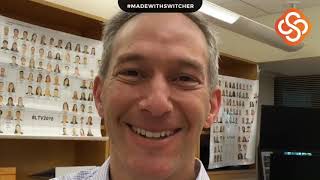
Hey, everybody, this is Jeff Busgang, general partner at Flybridge Capital and faculty member here at Harvard Business School in the Entrepreneurship department. I thought I'd try LinkedIn Live to give you a window inside HBS as we begin to return to the campus and prepare for the upcoming semester. In the midst of this crazy, crazy time, we are preparing to teach starting on September 1st. So just a few weeks away, and for folks who are interested in how faculty are preparing to get back onto campus in an instruction mode, I thought this might be an interesting inside view. So let's begin quickly with a look at the HBS campus, which is just beautiful Today on Wednesday, August 5th, beautiful, beautiful summer morning in New England. This is Baker Library in Bloomberg, one of the centerpieces of the campus and one of the most photographed spots on campus. This here is the Rock Center. We'll go in there in a minute. That's the Entrepreneurship center. And here to the right are the Aldrich classrooms. Aldrich hosts classrooms that are in size of about 90 to 100 students. And this year those classrooms have been reconfigured to allow for in person instruction for up to roughly 20 students. And the plan for these hybrid classrooms is that the 20 students, socially distant and spread out, will all have masks on and will all be with laptops in front of them. The faculty member will be in the pit, not allowed to move up and down as we normally do, but with a mask on, safely at a distance. And we will be teaching with not only the in person instruction, but also the students online. So we'll have 40 to 50 or 60 maybe students online while 20 students are in the physical classroom. That's the hybrid model. The faculty have been given a choice to pursue the hybrid model or online only. I've chosen online only for my class, which is called Launching Tech Ventures, alongside with my three other faculty colleagues as part of our teaching team. And there are a couple reasons why we chose online only. I think the hybrid model is going to be a terrific experience, particularly for the smaller classrooms. But first, we were concerned that for the students, particularly the international students who can't get on campus for personal reasons, that it would create a bit of a have and have not dynamic for those of you who are very familiar with Zoom, as we all are over the last five or six months, what I've experienced, as you have perhaps as well, is that if you're at a level playing field, if everybody is online, it can be a better experience in terms of building community. Secondly, I wanted to really rethink the class for online and deliver a great online experience for all of our students. The class is going to be two sections of around 80 students each. And at that scale, we thought by really rethinking and reinventing the curriculum and the material for the online medium, it would be a better learning experience. So we'll see how things happen and how things play out. But I'm excited that the online and hybrid models are both going to be deployed. So let's take a walk to show what a Personal Zoom Studio looks like. The school has been incredibly generous, well organized, and getting the faculty ready for teaching in just a few weeks. And as part of that, they've set us up with Personal Zoom Studios in the location of our choice. I chose to have mine at my office on campus. The obvious reason being that my connectivity at home is imperfect. My dog barks, my kids interrupt me. And I just thought that would be a better learning experience for everyone, particularly me. A better experience for everyone if we could do it with reliable Internet and a quiet space. So this is the Rock Center. It's very quiet here in August. Most of the faculty have been told to stay off campus unless they had an important reason to be on campus. And here's my office. And so we will be able to see the Personal Zoom Studio that the IT department has so generously set me up with. It's a terrific setup. You can see the big screen, some good lighting here. There's a stand for my iPad. The notion of boards is a very critical notion for any faculty member, but particularly people who teach in the case method. People know that the boards represent a number of important functions or perform a number of important functions. One is it provides a sense of progress through the case discussion. Secondly is it provides intellectual scaffolding. And third, it allows you to reference back points in the conversation to illuminate important points. And so there's a very heated discussion amongst the Harvard Business School faculty members about what's the best way to do boards online. I've experimented, as have many, with PowerPoint and with the iPad. And I'm going to experiment with the iPad. I think at first, maybe do some PowerPoint, but that's the main reason why I have that stand, by the way, if people are wondering what's behind me. These are students from past years. And it's a faculty trick that you configure your poster with large pictures of your students where they sit. It's a wonderful way to get to know students and memorize who they are and their backgrounds to bring that into the conversation. These are some of my past years for launching tech ventures and obviously in the online medium we'll have to make adjustments and do something different. So anyway, so that's the setup which I'm really excited about. And I'm so appreciative of the administration and the IT department and the teaching center, the Christiansen center, who have done such an amazing job of trying to get us ready with materials and training. So now let's talk about the course itself. And what I thought might be useful for folks to know is the general outline of the course, which is comprised of four modules. The course is focused on startups at the pre product market fit stage and those startups are. For some reason my camera is not working working. I apologize for this technical difficulty, but for some reason I'm having a problem with my camera. Oh well, I'll see if I can do it this way. So for the pre for pre product market fit startups, the key is to really run a series of experiments that are powerful experiments that that will allow the entrepreneur to determine the best path forward. And so the course is going to have four modules. As I said, the first module will focus on consumer value prop experiments as well as the ideation process. We're going to use some of the ideo techniques for ideation as well as techniques around customer discovery and MVPs minimum viable products, all to test consumer value prop and to develop that initial idea and test the consumer value prop. The second series of experiments are around go to market experiments. Once you have the product, the idea, once you've determined your market and your focus, how do you think about getting to that market and getting in front of customers in a reliable, repeatable and scalable way. The third module is centered around business model experiments and this is around questions of the pricing, monetization, timing of monetization, how to design a business model that's an attractive business model since not all business models are created equal. So those three modules are sort of the core of the course in the beginning phases. And then underlying those three modules is a module final module which is around exits ethics and financing. That's a new module this year and one that I'm really excited about, particularly around the ethics topic, a topic that is not talked enough about, frankly in the context of entrepreneurship and one that for obvious reasons needs more emphasis. In recent months, certainly we've seen examples of entrepreneurs not putting enough emphasis on ethical dilemmas and issues and really strengthening those muscle muscles is going to be critical. So that's launching Tech ventures. That's the essence of the class. As I said, pre product market fit. We've got a fantastic faculty that's joining me for the class this year. We've got two sections, as I said, of 80 students each. Roughly one section will be taught by myself and Donna Levin. Donna had previously been on the faculty at mit. She runs the Entrepreneurship center at wpi. We used to work together in an entrepreneurial venture called you'd Promise many decades ago. And after that she co founded care.com and then got into academia after care.com's a very successful IPO. So Don and I will be teaching one section and then the second section will be taught by Sam Clemens and Reza Satchuk. Sam is a prolific entrepreneur and a venture capitalist as well at Accomplice, and Reza is a prolific entrepreneur and investor from Toronto. He founded and created an incubator and accelerator program there that's quite similar to Y Combinator. So really looking forward to a terrific semester. I'll try to document some of the things that we're doing over the course of the semester using LinkedIn Live, and we'll have a lot of fun with it. Please feel free to give me feedback as we go and we'll see you soon. Thanks.