Social Media: Strategies for Better Branding
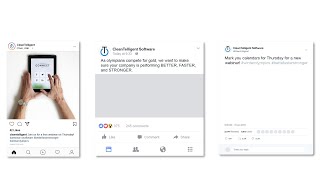
A recorded webinar (YouTube) hosted by Erica Rivas of cleantelligent Software about building stronger brands through social media. The talk defines branding (vs. marketing), explains why branding influences consumer choice (cites conditioning study), gives social-media-specific reasons and statistics for branding, provides a checklist of brand-defining questions (mission, features/benefits, perceptions, desired qualities) with Cleantelligent examples, lists practical branding actions (logo, messaging, voice, tagline, templates, consistency), and offers brief guidance for Facebook, Instagram, Twitter and LinkedIn use. The presenter closes with contact details and a promise of an ebook and archived webinars.
Chapters
Hi and welcome to this month's webinar, Social Media Strategies for Better Branding. I'm so glad you guys could join us today. This webinar is being recorded. I'd like to start by introducing myself. My name is Erica Rivas and I've been at cleantelligence Software for almost a year now. I graduated from Virginia Commonwealth University with a degree in Mass Communications majoring in Broadcast journalism, and now I'm currently wrapping up a master's degree in Mass Communications with an emphasis in Public Relations at Brigham Young University. At cleantelligent, my responsibilities include running our social media accounts, writing for our blog and podcast, collaborating on articles for industry magazines, and putting out any press releases. So, in short, I take care of what you, the public, see and learn about us outside of our website. I honestly, really, really enjoy what I get to do. I get to communicate with new people and other businesses and work on building a stronger presence on social media. So today we're going to talk about building better strategies for branding your business on social media. If you aren't using social media for your business, this is a great opportunity for you to start. And if you are already using social media, I hope this webinar can help you find ways to make it better, stronger, and unique so you'll stand out from your competition. We're going to be talking a lot about what branding is and how it differs from other aspects of marketing and communications. So let's get started. Started. Some of you may be asking what branding really means or what it really is. So according to MarketingSchools.org branding is a concept that extends far beyond the marketing of brand name, like designer jeans or other products. Just to say an example, a company's brand represents their market identity, who they are and what they do, what kind of quality they provide, their reputation of trustworthiness, and much more. Entrepreneur.com simplifies that statement and defines branding as the marketing practice of creating a name, symbol, or design that identifies and differentiates a product from other products. A common question I found is how does branding differ from marketing? The main difference I recognized and understood was that with marketing, it's actively promoting a product or service. It's a push tactic. It's pushing out a message to get sales results. So buy our product because it's better than theirs. This is an oversimplification, but it's marketing in a nutshell. This is not what branding is. Branding should both precede and underlie any marketing effort. Branding is not a push, but a pull. Branding is the expression of the essential truth or value of an organization, product, or service. It's communication of characteristics, values, and attributes that clarify what this particular brand is and what it isn't. A brand will help encourage someone to buy a product, and it directly supports whatever sales or marketing activities are in play. But the brand does not explicitly say buy me. Instead, it says, this is what I am. This is why I exist. If you agree, if you like me, you can buy me, support me, and recommend me to your friends. Branding is also strategic, while marketing is tactical. Marketing may contribute to a brand, but the brand is bigger than any particular marketing effort. The brand is what remains after the marketing has swept through the room. It's what sticks in your mind associated with a product, service, or organization, whether or not at that particular moment you bought or did not buy that said product. Service. The brand is ultimately what determines if you will become a loyal customer or not. For example, marketing may convince you to buy a particular Toyota and maybe it's the first foreign car you've ever owned. But it is the brand that will determine if you will only buy Toyotas for the rest of your life. That just partially answers the next question some of you may be asking. Why is branding important? To answer that question, well, the answer to that question varies from business to business. For instance, some businesses want to ensure long lasting customer satisfaction and loyalty, while others want to be remembered even after their founders have long since moved on. Regardless of what a business is looking for, branding brings a wide variety of benefits that can be crucial to a business's success. Not only can a brand bring competitive advantage to a business, but it ensures customer loyalty and passion. Not only that, but branding also helps a business to create a powerful presence on the market, a strong identity and personality that customers can relate to. Branding forms a high level of trust and communication with customers. This helps in ensuring marketing campaigns, advertisements, promotions, and offers that bring about the best results. If that doesn't convince you of the importance of branding, check this out. Recent research reveals that we make brand purchase decisions based on associations and feelings, as opposed to facts and statistics. This conditioning can happen without us even knowing, and it's a tendency so strong that it can make you purchase products that are actually inferior to the competition. To show this effect, Melanie Dempsey of Ryerson University and Andrew Mitchell of the University of Toronto conducted an experiment that randomly presented several hypothetical brands with hundreds of images and words on a computer screen that were either negative or positive. After presenting them with a bunch of images, they got to see a long series of like the brands and the participants weren't able to remember which associations were connected to which brands, but they developed a preference for the brands that they had been positively emotionally conditioned to. The researchers called it the I like it but I don't know why effect. On any given day, a consumer is repeatedly exposed to brands that are paired with various images in one form or another, from logos on the sides of buildings to televised commercials, write Dempsey and Mitchell. Although the consumer may not be able to recall brand claims or even the brand name itself, the consumer might have been left with a positive feeling when one which he or she may not even be consciously aware. In their further research, these participants were shown rational information to contradict the prior conditioning, logical evidence that indicated that their brand preferences were in fact inferior. But they still chose the brands that they had been conditioned to. They still chose the brands that they had been conditioned to like by pairing the brand with positive imagery. Even those participants that were highly motivated were unable to undo the prior conditioning. The authors of this study concluded, saying choice decisions of consumers are not only determined by evaluations of rational information, but are also driven by forces that are generally outside of rational control. In other words, branding is very powerful and if done correctly, it can help your business succeed. Why Is It Important? Why is Branding Important on Social Media? According to growth gurus, social networks are one of the fastest growing industries in the world. Using social media for your business increases your brand's awareness. 78% of small businesses use social media to attract new customers. 33% of customers have identified social media as the way they identify new brands, products, and services. Social media also helps to validate your brand. A company's social media presence, when done correctly, tells consumers that their brand is active and focused on thriving communication with consumers. 63% of consumers who search for businesses online are more likely to use ones with an informative social media presence. Your social media presence has the power to increase customer loyalty. 71% of consumers who received a quick response on social media said they would recommend the brand to others now onto the part most of you have been waiting for. How can we do this? How can we effectively brand our business specifically on social media? When branding your business, there are a few things you want to check off in the beginning. According to entrepreneur.com you need to be able to answer the following questions. 1. What is your company's mission? 2. What are the benefits and features of your products or services? 3. What do your customers and prospects already think of your company? And 4 what qualities do you want them to associate with your company. I'm going to go through and answer these using our company CleanTelligence software. So with the first question, what is your company's mission? Our company's mission is to provide quality service and create innovative tools that will drive our customers to win new business, increase client retention and promote productivity. What are the benefits and features of your products and services? The benefits and features of our product are that it eliminates paper trails, facilitates communication between you and your employees, detects cleaning issues before your clients notice, and much more. Third question, what do your customers and prospects already think of your company? Our customers and prospects already think our company is a terrific software for the janitorial industry. A real game changer for any company that wants to take their company to the next level. That was actually a quote from a client review on our Facebook page. And then last question. What qualities do you want them to associate with your company? We want our customers to associate the following qualities with our company. We want them to know that we empower people to succeed, that we drive our customers image, that we are open, honest and direct in the spirit of helping that we lead industry best practices, that we protect client data, that we think positively, that we believe in our brand and that we build relationships of trust. So once you've defined your brand, how do you get the word out? Here are a few simple tips. Number one, you want to get a great logo. So create it. Have it created and then you want to make sure you place it everywhere. Number two, you want to write down your brand messaging. What are the key messages you want to communicate about your brand? About your brand. Number three, you want to integrate your brand. Branding extends to every aspect of your business. How you answer your phones, what what you and your salespeople wear on sales calls, your email signature. Everything. Number four. You want to create a voice. You want to create a voice for your company that reflects your brand. This voice should be applied to all written communication and incorporated in the visual imagery of all materials online and off. Is your brand friendly? If it is, be conversational? Is it ritzy? If it is, then be more formal. You get the gist. Number five. You want to develop a tagline. Write a memorable, meaningful and concise statement that captures the essence of your brand. Number six, you want to design templates and create brand standards for your marketing materials. Make sure to use the same color scheme, the same logo placement and the same look and feel throughout. You don't need to be fancy, just consistent. We're going to talk about that later too. You want to be true to your brand. Customers will not return to you or refer you to someone else if you do not deliver on your brand promise. And eight Again, be consistent. This tip involves all of the above and is the most important tip on this list. If you can't do this, your attempts at establishing a brand will fail. All of these tips apply to your branding on social media. And again, the last part about being consistent is very important. According to canva.com you have to be consistent across all social media platforms. Building a brand does not happen overnight. It takes time and dedication. According to Brand channel, it took 15 years for Nike to cement its brand by ensuring it was consistent across all products, advertising, customer service and packaging. So with that in mind, it's important to build a strong and consistent brand across all social media platforms. A brand's profile on Facebook, Twitter, Pinterest, Instagram, your company, blog and everywhere else it has a presence online should be unified and in line with the brand essence. Be consistent again with graphics, color, style and language and even with your posting routine. If you like to post inspirational quotes on Monday, if you like to do throwback photos on Thursday. Whatever the routine, keep it consistent so that your followers know what to expect. And in addition to being consistent, the content should also be tailored to each platform. Let's go through and talk about these different platforms and what they're best suited for, according to growth gurus. Facebook Facebook is the biggest and arguably the most powerful social network in the world with over 1 billion active monthly users. Regardless if you are a startup or a Fortune 500 company, you need to be on Facebook and start positively engaging with your consumers. Companies that post and advertise on Facebook should also be aware that the company's algorithm currently favors video posts and they should use that to their advantage. Next Platform Instagram Instagram is a visual platform designed for customers to post, share, comment and engage through digital media. As the old saying goes, a picture is worth a thousand words. This platform is better suited for responding to customer complaints. Next Platform Twitter Twitter is known as the in the moment platform and has over 200 million active monthly users. Twitter is a perfect online marketing tool for businesses that want to reach out to people and are ready for a reply. The key is to be quick and smart. A brand that's looking to use Twitter to reach its consumer base shouldn't be posting long tweet threads simply because that's not how most people use Twitter. And just like Instagram, this platform is better suited for responding to customer complaints. Next Platform LinkedIn LinkedIn is regarded as the professional social networking site. LinkedIn largely focuses on business to business marketing rather than business to consumer. This platform is great for networking with other businesses and influencers in your industry. There are more social media platforms out there like Pinterest, Snapchat, but these are the ones that we mainly use and that I decided to focus on. If there are other platforms you're interested in, definitely do your research on how to effectively use that platform for your business. So now it's your turn. Social media can be a great tool to increase your online presence, but as more brands jump on the Internet bandwagon, marketing clutter can make it hard to compete. Be sure to not only use social media as a branding tool, but to use it effectively in order to stand out and keep customers engaged and interested. I hope this webinar has been informational and helpful to you. Currently here at cleantelligent we are trying to take this information to heart as we go about creating a branding strategy that works for us. Feel free to follow us on our social media accounts on Facebook, Twitter, Instagram and LinkedIn. We also have YouTube and Google and if you have any questions, please feel free to reach out to me@erica revisleantelligent.com that's erica rivaseleantelligent.com I'd love to hear from you and help in any way I can. Thank you again for registering and tuning in. Keep a lookout for an ebook on how to tailor content specifically to each platform. I'm going to be talking about the platforms I talked about in this webinar, so Facebook, Instagram, Twitter and LinkedIn. And then I'll also be listing examples and learning from brands that we know very well. You can also access this webinar and previous ones@www.cleantelligent.com webinars. That's www.cleantelligent.com webinars. So thank you again for joining us. And until next time.
More from Caden


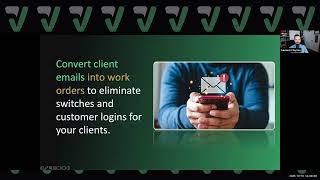



How Otuvy Transformed Controlled Contamination Services' Workflow | Full Story