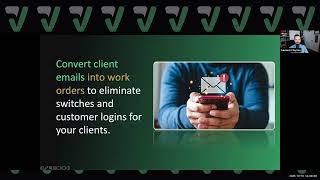
Sam Clayton explains how automation closes workforce gaps caused by miscommunication. The framework triggers work automatically, confirms completion, and feeds back results in real time. OTUV QM and OTUV Frontline convert failed inspections into assigned tasks and closed work orders.
Questions this video answers
Sam Clayton — Chief Operating Officer at Otuvy
About 15 minutes
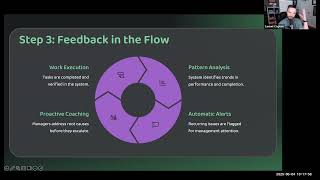
1) Trigger work automatically; 2) Clear completion confirmation (proof, timestamps, geolocation, centralized visibility); 3) Feedback in the flow (trend identification, alerts, proactive coaching)
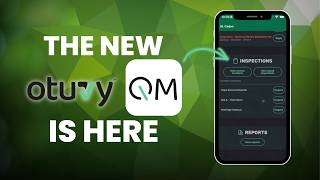
OTUV QM (inspection and work order) and OTUV Frontline (task and proof management)
Chapters
Good morning, everybody. I want to make use of this time, so we're going to get started right away. We're going to jump in. If you or your managers have ever said, I thought I already explained that, or they just don't understand, then this session's for you. In the next 15 minutes, I want to discover with you how automation bridges the gap between expectations and execution in your workforce. So what we're going to cover today, the hidden costs of miscommunication. Closing the loop. Providing you a framework that you can take away today and implement to see some greater success when it comes to closing the loop and then showcasing briefly otuvi's integration, what it does in action, and how it could potentially help your business. My name is Sam Clayton. I'm a chief operating officer here at otuvi. Been here nearly seven years now, but I feel like I've been in the janitorial and facility management industry since I could walk. My dad was a facilities manager and back then, and today, one of the biggest reasons he wasn't home a lot is due to miscommunication. So I want to go over those hidden costs. I want to talk about this automation framework and hopefully you can walk away with something you can implement today. I do always like to say, and you can write this down, real growth needs real systems. Again, real growth needs real systems. So automate it. Okay, let's jump in. So, the hidden costs of miscommunication. Here's the reality. Might sound small, might like, oh, everybody always miscommunicates all the time. But little things stack up and compound over time. Missed tasks, frustrated teams, callbacks, wasted time. You've likely felt that in your own operation. So what happens is you end up with rework, lost hours, and worse, lost trust. Right. And so when you're managing multiple sites, it multiplies even further, faster. And so there's a financial impact, there's trust erosion, and there's scaling problems that may be hidden to you when it comes to the miscommunication that may be happening on your team. So you got to close the loop. So here's the framework, the claf. I don't call it that, we don't call it that. But now I'm calling it that. Closing the loop automation framework. It involves three things. We're going to go over these more in detail here in a second. The first one is triggering work automatically. Let real time events start the chain automatically. Right. The next one is clear completion confirmation done. Should be visible and confirmable. And then number three is Feedback in the flow. Integrate the insights directly into the workflow flow. This is the core of today's session. We're going to go over each one of these. We're going to walk through this three part framework more in depth. So you can close the loop between inspect, inspections, corrective actions and team accountability, which is all the things that we want in our cleaning businesses, right? Yes or yes? Say yes in the chat if, if that's the case. Okay, so step one, trigger work automatically when something fails. You're doing an inspection, it fails the score, you add a note, a photo. What happens to that right now? Think about what happens to it right now in your current process. If it doesn't automatically go somewhere to start being corrected. You are already behind in today's day and age, with what we have for technology today, you can automate that. You can send the corrective work order or task immediately. What it does is it eliminates the bottlenecks. You don't have to rely on the person to get that information over to the correct person to take care of. So the work starts to immediately be done without the manual intervention. That's the beauty of triggering work automatically. And then you can you make it consistent in the process. Every issue follows the same reliable workflow. That's step one, trigger the work automatically. Step number two, clear completion confirmation. Okay, once a task is assigned, how do you know it was actually done right? When you get a scope of work from a contract that you recently won, you assign it to somebody. How do you know it gets done right? Start thinking about that as I start going through this second part, clear completion confirmation. First off, you need proof. Workers submit photos showing completed tasks. That's, that's a pretty common one. It's probably sitting in their phone library. They send a text to you, maybe an email. And that is a form of, of the automation side. But there are better ways. We'll talk about that in a little bit. But first one is getting visual proof. The second one is verifying completion timestamps of when it was done, location data of where it was done. This is a really important piece. With all the technology that that is out there now, you should be able to do this, no problem. And then finally, centralized visibility. All verification data appears in one dashboard. You have to centralize it. If it's not centralized, it's chaotic and you can't scale chaos. Right? You got, you have to put things in order and you have to organize them. And so clear completion confirmation is, is critical here in step two, you're Gonna play the game, he said, she said every single day. If you don't focus on step number two for sure, and if you know me, you know one of my favorite phrases is clarity is king. You have to get clear on the DoD. What is the DoD definition of done right? Understand that. Get your team to know what the DoD is and then make sure you capture it in a way that is visible, verifiable and capable of being consistently analyzed. So that's step number two. The final step in the three step framework is feedback in the flow. This is, this step is actually what really sets the great teams apart from the good ones. Building in feedback. Let's be honest, nobody likes to be told where they could improve or do better. I don't, but I, I accept it because I know it's necessary. So your cleaners, your managers, the people that are doing the work day in and day out, they need feedback. They need to know what needs to happen. And if you put it into your flow right, if you are putting into your flow, tasks are completed and verified in a system and you have a system that you can identify trends in performance and completion and you have automatic alerts flagging recurring issues for management to make attention. And it's not reliant on them to just remember, oh, I got to send that to so and so to get that done. And then if you have proactive coaching inside of that flow because of the data you're capturing, managers get to address that root cause before they even escalate. That is the feedback flow. One final thought before I move on to Showcasing what the O2V integration looks like. Write this down. Good systems get it done. Great systems let you know it's done right. I'll say it again, good systems get it done. Great systems let you know it's done right. So a great system that you can utilize is already out there for you. Actually, Otuvi has two different apps that work side by side, integrate together to automate this workflow for you. OTVV QM is the inspection and work order side of things. And then you have OTUV Frontline, which is designed as a task and proof management solution that gives you the capability to automatically trigger task lists that then can be completed and verified, date and timestamp, geolocated, all in one place, all one workflow. And so how it works. Here's how the O2V integration works in action. The QM system will take the failed inspection that you're performing in O2V QM mobile and it will record the compliance issue, what the score was, what the note was, what the photo was. And if you have it integrated to OTUV Frontline, it will first create a work order in OTUV QM for you to communicate with customers if needed. And then it also will create a frontline task list and assigns gives you the ability to assign the corrective task to the individual who is needing to do the cleaning to actually take care of it. Then once those tasks are completed, it actually completes the work order for the individual that is cleaning or taking care of the deficiencies, which then translates into the closed loop, right? Original issue is marked resolved, which then can be followed up on or shared with the customer who is potentially logged in to O2VQM utilizing that information, submitting work orders on their own. But they can see and communicate on those issues if you want it want them to. But the best part about this flow is it's for your team to systemize this flow, this automation where we talked about steps one, two and three, triggering the work automatically, clear completion, confirmation and putting feedback into that flow. This gives the visibility you need to see greater success in your business. So that concludes our webinar today. If this sparked an idea, let's talk. Right. There's two ways that we would suggest you do this. First off, you actually now have access on OTUV's website to speak to our CEO from an AI perspective. You can get help from what we call AI Caden. Caden's our CEO and you can scan that QR code and you're going to go to this AI caden. And he has the 12 years of knowledge that he has been developing over time working at otuv, working with individuals and businesses just like you, but also has our knowledge base embedded inside of that AI. And so on top of his expertise and knowledge as an industry leader, he also has the background of what our knowledge base does suggest. And so go ask him a question, go talk to our CEO. He can give you some great ideas of how to run your business better from a quality standpoint as well as every other aspect because he's just been in it and so definitely go use that one. If you want to see a demonstration of OTUV live, scan the one on the right. You can book a demo with us and we'd love to show you more about how it works. And if you're already a customer using OTUV, you can email VIP2V.com and you'll get some fast personalized answers to all your operational intelligence questions. Talking about OTUVI and anything else involved in that. So thank you so much for joining us today. I'm Sam. Have a great one, everybody. Thanks for coming.