Filling Up The Funnel With Outbound Prospecting - Data, The Good, The Bad & The Ugly
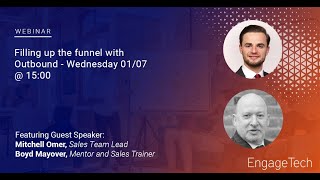
Sales development experts discuss outbound prospecting fundamentals: limit reps to 80 accounts each, get at least a name and phone number before calling, and spend an hour daily on self-coaching through recordings and role-play. They emphasize data quality, personal research across LinkedIn and Twitter, and deliberate practice over multitasking.
Chapters
related to what I do at work, generally in life as well, I guess. So that is making sure that, yeah, I think just being systematic and structured with the way you do it, and I can elaborate on what that means more later on today. Weaknesses, I have a tendency to try and take quite a few different things on when prospecting. So for example, I'll have a list with 20 different industries when sometimes I think It's better to be focused on one specific area instead of focusing on 100 different things. You might as well focus on 2 or 3 and you get a better result. So that's probably a bit of a weakness.
You can't multitask?
Yeah, yeah, basically I can't multitask.
Yeah, same. And I suppose in terms of your prospecting, like last few months, like, have there been any kind of key trends for you that have come out where you've like developed skills or you've found that you've really had to like focus on something slightly different?
No, I think obviously it's been a bit of a patch— it's been a difficult period in terms of prospecting. I think the whole pandemic started, and I'm sure you guys have spoken about this a lot on the past few webinars, but I think there was a period where, when everything was first started happening related to COVID, the lockdowns first started happening, there was a period where I was almost— I didn't want to do any prospecting, and I don't think many people did. They felt it was kind of almost wrong because the world was in so much upheaval. I think things have fortunately calming down a little bit, and I'm finding that actually once you get hold of someone— that getting hold of them may be becoming a bit more difficult— once you get hold of them, it's a bit easier to hold the conversation, just because people tend to be at home, they're less busy in meetings, traveling to and from. So there's pros and cons to it, and hopefully things will get a bit more back to normal in terms of getting hold of people now too.
Sure. And just in terms of the stuff that you've got at TR, what tools do you have at your, your disposal, and why do you think those are the tools that have been selected?
Sure, so it varies from team to team. There's a mixture of good old Excel in a lot of teams, which kills me because we, we sell automation software to tax and finance departments and preach to them they shouldn't be using Excel. And then we track everything on Excel, which just feels ludicrous. But more recently, it's obviously the standard platforms that everyone uses, like LinkedIn, Sales Navigator, some reps that sell into the US use ZoomInfo, and then more recently we've just taken on Outreach as well to try and automate some of the prospecting where we can, and again implement a more structured approach to prospecting. So we're in a phase of testing out and starting out using Outreach at the moment.
That's good. I'm pleased that you're effective having used Excel, despite the fact that that's a little bit hypocritical, because it's good to know that that, that, um, that, that can be effective.
Yeah, and you know, Excel is very good as well, um, because it's flexible. Every sales rep can use it in the way they want, but there are a number of issues which come into play. Primary one, that it's not integrated into Salesforce, so no one has a clue what you're actually doing when you're using it. But yeah, so that they're the key tools: Excel, LinkedIn, outreach.
Thanks, Mitchell.
No problem.
Boyd, welcome back. Hi, how are you?
Good, thank you.
Good man. We kind of had a little bit of like opinion from you maybe like just over 3 months ago now, so I'm not necessarily going to go into who you are because I think quite a fair few people on stage might know that already. I'm quite keen to just get an understanding on how you think that the most recent economic downturn, perhaps having worked for a few of them, affected sales. How do you think it's going to impact things?
I think it's interesting. I think there's certain industries that I deal with— I'll give you two examples— people selling property investment and people selling brand new homes. Who are doing really well. The property investment company who are selling buy-to-lets, it's a, you know, good deal, but they're doing really well. It hasn't impacted them at all. Now there are certain companies out there in certain industries, you know, hospitality is, is obviously a nightmare. What I've noticed is harder to get hold of people, but when you do, you've got to speak to them about you know, the real world, which is in a lot of cases COVID.
Yeah.
And if you speak to them about that, it's quite interesting how easy it is to engage.
Yeah.
There's also quite a few startups coming on, and I anticipate come September there'll be many, many more, many more startups. And that's a good opportunity, isn't it? Yeah.
Why do you anticipate that? We're just out of interest.
Because I think a lot of people who are furloughed at the moment will be let go.
Yeah.
And, and a lot of them will be good people, and it will give them an opportunity to become a startup. And I see startups really booming September, October.
Interesting.
I'd be very, very surprised if they're not. Because I'm seeing a bit of it now.
Yeah, a friend of mine has had even just time working from home, the headspace to think to himself that he wants to, wants to do something like that. So yeah, um, and what makes a successful salesperson, maybe on the sales development front, no matter what the economy looks like? What are some of the key, key things for you, you think?
Well, for me, they've got to be adaptable. Very determined, um, have very clearly defined personal goals.
Yeah.
And also the biggest thing, they've got to be nice people. I know that's cheesy, but that's the biggest thing. I don't care what environment you're in or what the economy looks like, you're not nice people, you're not winning. And someone that practices. I know that is my favorite nag, Callum. You know, if you're not prepared to practice your craft, then you're not going to be as great as you could be. Yeah, great believer in that.
Um, I seem to always default to like football analogies, but I just— I saw something the other day about the fact that Messi and Ronaldo still have to do their passing drills at the, uh, at Juventus and Barcelona training.
They do. And let me tell you, Ronaldo is still practicing free kicks in, in the training ground. So when a salesman says to you, oh, I don't like doing this, this role play, it's not real— well, it isn't real when Ronaldo's taking the free kicks. In the training ground. Yeah, all about practice.
And what do you think, do it enough? What do you think on that practice time versus like call time, for example, for a sales rep? Like how many hours a week do you think they should be thinking like, I'm in a role play scenario, I'm getting coaching, or I'm listening back to some of my previous calls? Like what's the balance on that?
Well, my opinion, I don't know what Mitchell thinks, I think you should give yourself an hour a day Personally, because it's very, very important. You know, a lot of, a lot of salespeople have good structure and they say to me, I've got a great opening statement. And I'll say to them, good, how many opening statements have you got? And they'll say, only one. And I said, but Roger Federer's got 20 different serves. What would happen if he only had one serve? You've got to have more than one serve. I'm sure your serve is very, very good, but you need more than one.
And, and what's the variation on, like, if you've got something that works, to step away from that? Like, there's obviously a bit of risk there. Like, how often should you be trying, trialing something new? You know, if you have 100 calls in a week, like, how many of them should you be experimenting versus doing what you know has worked?
Oh, I think a small percentage. Yeah, I think you should be experimenting, you know, experiment on 10%, but what will happen is you'll realize quickly the type of person answering the phone and the type of business, and you'll appreciate where you can vary that opening statement. Yeah, I don't know what, what you think, Mitchell, about opening statements, but they are vital, and I just think you've got to change them up a bit.
Yeah, absolutely. So it is very important. I think it's one of them things that we, and I include myself into this, that you easily get caught up into just leaving it like you've got your opening statement and that's that. We've actually just got an ongoing training session going on, and the opening statement is something we've been focusing on quite a lot, and we've been trying to create a bit more variation and structure in what we say So we're putting more thought into it, but it is one of those things that very quickly gets forgotten about, I think. You spend a lot of time thinking about the insight you're going to bring to the conversation and how you can then manage objections, and then it tends to get put to the bottom of the pile. But clearly, as you've just explained, it's very important.
Yeah, and then all of a sudden it's not an opening statement, it's a pitch.
Yeah.
And you end up telling them what you do, and they don't care what you do. They only want to know what's in it for them. And you know what happens? And we've all done it, and I've done it. And you think, oh, this is good, he's listening. No, he's not. You're just spouting your mouth off, all the salesman's puke. Yeah, he's bored, going to make tea. Yeah. You know, whenever a salesman says to me, that was a good pitch, I worry, because that's what it absolutely shouldn't be.
Yeah.
I think the headspace of thinking about a prospect's circumstance when they pick up the phone to a number that they don't know and putting yourself in that headspace and thinking about what would you want to hear in that situation. Things like not blurting out words at, you know, 100 miles an hour, speaking at a good pace and tone, making someone feel like warm and comfortable rather than awkward in those early exchanges. Are also as important as exactly kind of what you're, what you're saying. I think it's the way that you make someone feel when you interrupted their day, which is also worth a consideration.
And it's also like the, the, there's so many minute details that make such a big difference. Like the way that the direction your tone goes in when you say hello is one that always comes up in our conversation in training. Like, hello, or hello. It makes it sound a bit silly saying it, but it makes such a big difference because when your tone goes up, you kind of just sound a bit unconfident, and it's like, yeah, it's a cold call.
Um, so yeah, also the, the language we use, the, the one I call automatic default language, you know, where I hear people say, sorry to call you.
Yeah, have you—
Apologetic.
Why? Yeah, why are you apologizing?
Is this a convenient time? You know, it's only Mark. That's the classic.
It's only—
I love that.
Only Mark.
Yeah, only.
Yeah, that's true.
Could I be more subservient if I tried? And it's, it's the language we use. And you're so right, what's the tone of your voice? But again, nag number 579, if you don't practice, you can't do that. You can't just pick the phone up and go, yeah, know what my tone's going to be. Yeah, for sure.
I think the difficulty— so, um, in our type team at the moment, we've got enterprise sales reps who are looking after the, the whole, um, 360 cycle. And there are so many different parts that we ask the sales reps to practice on, and myself try to practice on, that it then becomes a balancing act of, right, I've got maybe an hour a day to do some form of training. Where am I going to put my time? Am I going to do it into prospecting? Am I going to do it into the discovery demo? But then that's just the nature of the role, right? And that's something you've got to think about and prioritise yourself.
Yeah, yeah, for sure. Just to go back to the point about saying sorry on the call, I know that's something that I used to do. And I listened— we're listening to the first 3 appointments that every rep in our team makes at the start every new month as an additional coaching exercise. And listen to a guy yesterday, might be listening, called Gary, and I mean, the call was first class. I couldn't fault a lot about it apart from saying sorry about 6 or 7 times in the first 2 minutes.
Yeah.
And so you've got nothing to be sorry about. This is, you know, caramel listening for the prospect, and they're in a comfortable position. Like, there's nothing to apologize for.
I agree, definitely.
I think we just don't realize we're doing it.
Yeah, I think words like that, because we, um, there was someone in my team, um, who used to always say fantastic instead of sorry. So like the prospect would say, um, yeah, sorry, I can't speak now, and the guy used to respond, say, ah, fantastic. It's like, it's not fantastic. But a lot of these things where these words just crop up, I think, come from— you just need to emphasize it's important to be calm, collected. Some of them are going to go wrong. Don't worry about it, and just, you know, that will tend to iron these little words out. They tend to be from kind of worrying.
And Callum Henderson made a great point in— by listening to your own calls, these are the things you pick up. You might not like what you hear the first time you do it. I mean, the first time I did it, I thought, you know, has— is this boy mentally— or is, or is he a vacuum cleaner? You know, I couldn't believe how bad I was. But I learned a lot.
Absolutely.
And I still listen to my calls and I still cringe sometimes. Yeah, you realize you've all got little vocal tics, you all do things that you shouldn't do or should do. And by listening, it's, it's, it's, it's wonderful to listen.
It is. It can be painful sometimes. Oh, it's like, oh, do I really sound like that? Oh God.
Yeah.
Yeah, but worth doing. Agreed, it definitely is.
Just, uh, just on to the main topic, uh, gents. I think it was good just to cover the, the start of a call there. I think it's valuable insight, uh, and the main thing for me is just to cover the fact that it, it needs to be deliberate, it needs to be thought out, and it needs to be practiced, uh, and overall it doesn't matter if you're not getting it perfect at the, at the moment, um, very few are. Just, just as a starter, Boyd, on the topic of data in sales development, for you, what's the real difference between good data and bad data?
That's a great question. I have a, I have a pretty old-fashioned view on this. For me, good data is the correct phone number, the correct person, the correct company a company that I have an opportunity of doing this business with, therefore a company that is in my target area, that will do. Anything on top of that is a bonus. I'd like more, but as long as I've got the right phone number, I've got the person, yeah, I've got the company in the right area, therefore this— it's for me. To engage, that will do. Now I know that's a pretty old-fashioned view, but isn't that a fantastic starting point? Because I can use LinkedIn now and other pieces of social engineering to get more info.
Yeah, when you say a company that you could have an opportunity with, do you find that that, that could give you a very broad spectrum of companies? So for example, If at the start of the year, if I map the market out that we sell into, there are maybe 2,000 companies in total that we can sell to. So what kind of information do you look for to drill that down? I think when we talk about good and bad data accuracy—
I mean, then I'd want to know, um, you know, their area of business. For me, being in sales training, I'd want to know how many salespeople they have, have they got internal sales, external sales, do they have a customer service team. Etc. So yes, I would like to drill down.
Yeah.
And obviously, as far as good data is concerned, I'd want all that information we just discussed. But I wouldn't call it bad data if I just had your name, your phone number, the name of your company. Yeah, that's not bad data for me.
Yeah, that's fair enough.
It's not good, but it's certainly not bad. Now, I think that's the where I come from on it.
Yeah, that's fair enough. So one, one, I completely agree, by the way, right? Fundamentally, you need a name and a number, right, to, to make calls. But then it's a question of trying to drill down and make sure you're being efficient, because I guess out of 2,000 contacts, there's maybe 10 in there that you could really get a good opportunity with. Yeah, maybe 50 that, you know, you might, and then the rest of them after that, you're just kind of gambling. So what one of the things, one of the challenges we had in our team over the past years, and I've had myself, is that because we have such big territories, again, we end up just doing that, just getting a list of every company in the territory, plowing through. So we've decided to change our territory structure now so that each sales rep has 80 accounts that they look after and no more. So it's like everyone, everyone's adopted their own kind of strategic role. And it's for the idea and the concept behind it is that we're trying to force reps to be more careful with the type of data they look for when they select their accounts. So, you know, what type of company roughly is going to be good, but then there are bits of data underneath that that will be valuable. So if you're selling IT software, typically we look for change in 3 different areas. One of them would be at a personal level, so have they just changed jobs, have they just been promoted? The second one would, might be at a business level. So for example, has this business just acquired a new company, or are they growing rapidly? And then the third one is at an IT level, because we're selling IT software. So if there's like an IT transformation project or something like that. So for us, it's the, yes, absolutely getting the fundamentals right, getting the contact, the name, making sure it's accurate. But then going through and finding those bits of change for each one, that's what's really gonna— for us with what we're selling, that's what's gonna be the hook in your conversation. You know, I just see you've just been promoted, um, as such, would you be interested in reviewing XYZ? And something along those lines. So try to go a little deeper with less accounts.
I think the valuable thing for anyone who perhaps only has company and contact data at their disposal is what you offered there, Mitchell, is 3 different ways that someone could research to try and make their approach more relevant or personalized, which is, let's say you click on the individual's profile on LinkedIn, they're not particularly active, they're, they're not giving much away, yeah, cards are close to their chest, maybe then you go on to the company Twitter and you see that they've launched an IT transformation project recently or they've won an award or something like that and it's just there's not one route to personalization, and the three that you've touched on, um, are, um, are valuable, uh, absolutely different lines to take.
Yeah, I couldn't agree with you more. I mean, I, and I found recently there are some people, and it is an oddity, that aren't very big on LinkedIn but are very big on Facebook about their business. Now that might make them unusual, but so what? We've got to, we've got to be open to doing what I call social engineering everywhere. I think that's great, Mitchell. I think you're 100% right. More ways.
Yeah. The other challenging thing is as well is that in today's day and age, although most people are on social media, you do find that the younger generation tend to be more active on there. So it becomes a lot more difficult to actually, because at the end of the day, who's going to be making the decision on a big IT purchase? Exactly. Thinking IT budgets, because that's what we sell, going to be the CFO, he's probably not going to be scrolling through LinkedIn every day. So you do have to start being a bit more creative in finding ways to get hold of them, which is where social selling side of things may not always directly work with someone like that. It does become a bit more difficult at that point.
I think the good other thing that we've covered right now is just that, that research is absolutely your job if you're an SDR. Yeah, like, it's, it's not something where you can just wave a wand and just expect someone else just to, just to serve that for you. Absolutely.
The, um, I think when— so for our SDR team, getting the meeting was one point, but one of the things we used to always emphasize was actually doing all— so the, the, the way we would measure the quality of our ISRs is not only the types of meetings they get, but the research that they present with it. So, okay, you've got this meeting, you found this out on the phone, but now go online and do as much research and put that as part of the meeting and present it to the, to the sales rep because it provides 10 times more value. We also, we work with, we've worked with other SDR companies in the past who just, I've never worked with EngageTech, so I don't know, but they would just provide a meeting, but it's like, well, what about all of the stuff online? Can you pull all of that together and present me like a real picture and a story of what's going on in this account? It's become very important for us.
For sure. Boyd, you got a little anecdote, I think, about like headspace of sales reps. Oh yeah. Around data. I think you told me this the first time we met, second time we met maybe.
Yeah, well, there's two, but one of them is I was working with a personal injury company and we were buying a lot of data, different sets. So we, we were buying data where someone had filled out a form saying, I've had an injury. We then bought another set where they said, I've had an injury, um, in the last 3 years. And then the last set was someone who had taken a phone call and said, had an injury in the last 3 years, wasn't my fault, got proof of it, was injured 'Other side admitted it was their fault, and I'd like to make a claim.' Obviously, you can imagine the reps all wanted the last set. Yeah. And one weekend we changed the titles on the sets, so the set that was really great was put in as set 1, and the set where they just ticked the box saying they were interested was put in as the best set. The sales reps did incredibly Yeah, absolutely incredibly, because they believed they were wonderful.
So sales reps were prospecting into like your bronze level leads thinking they were gold, gold level leads because you changed the titles on them?
Yeah, and they got gold results. Quite astonishing.
It's very interesting in it because it was like, obviously salespeople love to have a moment at the same time, they always do. I do as well. You always hear salespeople moaning about the quality of their data, always, all the time. So that's very interesting that you said that, because yeah, I can see how it would work.
And I promise you, it did. It was quite astonishing. And also, you know, I was saying to Callum Henderson, salespeople moan about the quality of the data, and I get that. But if you sat down with that sales guy or girl and said, okay, so 'All of these were garbage, these were the good ones.' Yeah, okay. Did you close every single one? Of course they didn't.
Yeah.
So marketing could be saying, 'Oh, these salespeople are garbage, they can't get leads.' It would be just as foolish. And it's just the age-old story of, you know, looking at yourself honestly. Yeah. We'd all like the best leads in the world, why wouldn't we?
And also, if your date— sorry, I'll say, if the data is not great from your perspective as a sales rep, then go find some more yourself. That's exactly probably what I would usually try to do.
Yeah, I think a willingness to do, to do the hard yards, as one of the guys in our sales team calls it, like, is, uh, it's just par for the course, and, and expect that. It's always going to help you if you're willing to find an additional like 10 to 15 companies a month and put some additional calls in and all those kinds of things. Just, we've had a couple of questions come in. One of the first ones, I might come to it, it's a bit more general, but someone's asked about the CFO. I tried this approach, but mostly they say it's handled in IT. How do you handle this objection? I suppose just to make the question a bit more general for everyone is how How would you handle a conversation with a prospect who kind of palms off responsibility to another department? How would you handle that, maybe to convert to a meeting or to help you in a sales process?
Yeah, so there are a couple of things that I might do. So first of all, before calling the CFO, target the people in his team, get conversations going with them. And so we always talk about building internal champions. So if you're selling a product to, I don't know, automate a process, get the people in his team really excited about the product and talking to him, to them, selling to them, demoing to them. He should then hear about it, and then he might come into the conversation. So start as a top-down. If you're going straight to the CFO, then if he's piling it off to IT, then I guess it's about— Boyd, I don't know what you think here, but trying to make sure that your messaging is aligned to what he cares about. So, you know, he might not care day to day about the usability of a piece of software for an executive team, but he's going to care if you're going to make a cost saving or if you're going to drive the team, something like that.
I agree. I think I'd want to be asking him, I'd say, well, that's fair enough. Can I ask you, how do you normally go about deciding on these things? So what's the normal decision-making process? How does it, how does it work here? Yeah, and of course I'll go through to IT, but before I do, what's going to be the most important thing to you, Mr. CFO? Because I want to understand how much he's getting involved. Is he just a rubber stamp? Is he just a bottom line man? I don't know. So in answer to that, I think you've got to understand the decision-making process and you've got to understand what's important to him.
Sure.
You know, is he putting you through to IT with his recommendation, or is he fobbing you off? Yeah, he can't be bothered to speak to you. There's a blooming big difference.
Of course. I mean, the first one is powerful. Oh, recommendation from the CFO. Versus, yeah, leave me alone.
Yeah.
I think one of the interesting things to look at, at least at a cold prospecting level, if you're calling up a particular persona that you know is an ideal customer for you or in that profile, and they're telling you, you know, I mean, for example, sometimes you call up the head of IT security, and if you don't do a good enough job, they'll tell you that they don't look after IT security. And I think if that is happening to you on a consistent basis, learn from that as you are identifying yourself as a cold caller within the first 10 to 15 seconds, maybe even shorter than that when speaking to someone. Go on, Tommy.
I think this again has probably been covered on previous webinars now, but there's the whole thing around— I don't think that given the resource and the number of social platforms we have at our disposal now, I don't think it's acceptable to actually cold call. Everyone should be warned that you're calling, and that should be done through like a series of setting up a sequence, whether that's from Excel outreach, making sure that you've viewed their profile on LinkedIn, connected with them, sent them a marketing email, contacted someone in the team. They should know roughly who you are before you call now because there's so many routes that you can get to them.
Yeah, but if you're starting out and people are telling you they aren't in the job that they clearly are in on LinkedIn or aren't responding, Yeah, because I mean, there will be some people listening today who are perhaps only within their first couple of months of doing something like this. Take that as a reflection point on the thing that we spoke about earlier around your intro and just try and think about how you can shuffle the deck a little bit on, on that. We've got another, another question that, that's come in, which is, how would you go about turning a colder prospect? Have you got any, uh, any tips? Um, let's work on the basis that you're in a conversation, you know, the phone's not going down, we've navigated the first 20 to 30 seconds, but someone is being relatively closed off, one-word answers, what would be your tips for it? How would you open someone up?
Well, I think a couple of things. If I was getting one-word answers, it probably means my questioning wasn't very good. And I hadn't prepared my questions.
Yeah.
But I think when I get someone who's being like that, I usually say something like, 'Look, I've got an idea that I'd love to run by you. I don't know if there's a fit, but I'd really love to gain your thoughts. Can I ask you—
bang—
and then I ask a question?' Yeah. Because now I'm appealing to his ego because he's got a big one, because that's why he's going, yeah, no, maybe, I'm grumpy, I'm this. So I do the idea because it's a tease. It's just one technique. Yeah, got an idea, love to run by you to see if there's a fit. Or I go the other way and say, look, at this stage I don't even know if there's a fit between us. Yeah, I take it away. So can I ask you X? Yeah, two things there. One is a tease and I'm being friendly, and the other one I'm just taking it away from him. Um, yeah, but on both I've got to have a powerful question. And if I haven't prepared and I haven't got my bullet points written down with me on my hand because I'm so useless. But seriously, you know, if you haven't got them written down, don't expect to be fluent in the question.
Yeah, I think there's two more things that you've done there which are really, really good as well. So one of them, you're asking him a question, you're almost kind of asking for his advice on it. And as you've just said, he's got— everyone's got ego to an extent. People, you know, 'Can you help? Can you give me advice?' is better than 'I want to pitch you' or something along those lines.
Correct. It's better than, well, let me explain what we do.
Yeah, no, I don't care.
You know, we get the one-word answer and we all think, oh crap, I've got to do my pitch here. I've got a problem with this guy, he's not talking. I know what I'll do, I'll talk.
Absolutely.
And that's the opposite of what we should do.
And the other good thing I thought you just said there as well, we've had a big emphasis on this really recently is you, you said that if you imagine you're in a customer conversation, I don't know if this is even going to be a good fit, right? I think what that does is it separates you because you're not, you're not assuming that your product is the right fit. I think people want to work with salespeople who are not going to just purely be biased to their tool and not just going to try and force you to buy their tool. They want you to try and take an objective view. So by saying, you know, I don't know if this is going to be the right fit, but would like to try and determine that with I think you set yourself up to be trusted a lot more than someone who just assumes that you've got the right product for them.
I think, Boyd, on your point about the, the questions that you're asking, that's, that's a real good indicator as well, particularly, you know, if you're a sales rep in your first couple of years, outbound, outbound calling is something that you haven't done for too long, it's a great opportunity to build and develop those question skills. You know, are they open? Are they focusing on, you know, the big picture within someone's business? When you ask a question, are you always following up then with just the next one that appears on your list, or are you curious and following up with another question that responds to something that they've actually said that wasn't scripted?
Correct.
All those kind of things are what you should reflect on and improve when you do something like listen back to your calls before you think this prospect was the reason why they were, they were closed down. And so that's certainly, certainly something to consider alongside Boyd's phrasing, you know, I've got an idea, I'd love to run it by you. We had the guys from, one of the guys from Refract on the other day, and they said one of the suggestions from Stuart there who looks after their sales development was the phrase you know, I've got a difficult question to ask you, you know, is it okay if I ask you that question?
I love that.
Similar kind of process. So once someone says yes to that, you've got carte blanche to say what you want almost. So those kinds of things are important. I think Martin's just commented saying, going back to your intros, what have been your most effective pattern interrupts? I think the kind of questions that you're asking, like, the one that Boyd mentioned there, or the one that the guys at Refract told us, both of those are pattern interrupts because people are not expecting that kind of a bold question. And to be frank, if you're looking at a call which you already think is going down a negative route, it's a one-way conversation, you're getting one-word responses, what do you have to lose by asking a question like that? It's going nowhere anyway, you're going to be off the phone probably in the next 15 seconds if you get a negative response. So be it.
Absolutely.
I think the other one, which Boyd, you've already just said, is going in and asking for help or advice. I've found that to be very, very effective because people like, like to help. Um, there's, there's also another question there about social media.
Yeah.
Um, even the best prep is still technically making a cold call. What techniques do you use to not to be blindly obvious? —in terms of a cold call. So, again, for me, that comes down to the research you're doing, and as part of that research, I would always be looking for something to warm it up. So, are they an existing customer? Have they been on a webinar? Have you connected on LinkedIn? Have they used your software in a previous role? Like, there's a long list of things. Is one of their colleagues using our software who they're connected with? Connected with, could be anything, but finding something just to reference at the start of the conversation and make it a little bit warmer. If there's nothing, then maybe move on to the next prospect and find something that is a bit warmer. Boyd, I don't know what you would—
Yeah, I think, you know, have you spoken to anybody else in the company and found out? Have you gone on Google, put a news alert in so that you can say, oh, I noticed you're doing XYZ recently? 'How's that going to impact you over the next 6 months?' Yeah. 'I noticed in the trade magazine'— and you all know what I mean by that— 'that you've just taken on 17 engineers.' Yeah. 'What projects are they going to be working on?' That's still cold, but it's a damn sight warmer, isn't it? And it demonstrates that you showed an interest in them. I mean, even if you say to them, I notice on your website ABC, and then ask a question around that, even that is better than saying, hello, my name's Boyd, I'm ringing from, let me explain what we do, and they're losing the will to live quite reasonably.
Just, just from my input on, on on the question from Emily. For me, I think the headspace that you can get someone in within 1 to 2 seconds of speaking to you is enough to buy you probably the next 30 seconds. And 30 seconds is enough to, to do something which really works for you. But I've typically found if you are doing outbound at scale, one thing that you can do if you're making lots of dials is just to switch off a little bit from actually the person that you're engaging with And one thing that reps typically do when that happens is when the phone answers, they sound surprised or they don't say anything for the first like 3 to 4 seconds of the call. So it sounds like there's a bit of a delay. It's almost like, oh God, like I wasn't expecting that. And so making sure that you are alert when doing it, having breaks, having a mirror in front of you so you can see what you actually look like will keep you focused. And when you do that, you can speak first. It doesn't come across as a cold call because there isn't that lag. And you can bring some energy at the start of the call, which similar to Martin's question about the pattern interrupts, is important. The other trick which I've just found, I had an influencer who's quite vocal and rude sometimes on LinkedIn, but good value, kind of challenged me on it the other day. But my personal opinion is, I think if you say, "Is this Boyd?" at the start of the call, you identify that you don't know who you're calling, whereas real simple switch, high boid and you sound like you know them, it might not be a cold call. And that all you're doing is just using that, uh, to buy a pocket of another 30 seconds. And if someone's in a headspace this isn't a cold call, then like I said, that, that you might be able to, to warm them up appropriately. A technique that would be my input. I'm just conscious of time. That's all.
Technique I use to warm them up a little bit on a, you know, let's call it cold— I like to call them smart calls, but let's call it cold— is When they answer the phone, I'll say, "Hello, Callum Henderson, it's Boyd here, thanks for taking my call," and that definitely cuts a little bit of the ice off. Yeah, no, it does. That's evidence, you know, that's something I do a lot, and I know when I forget to do it, makes a difference. That "thanks for taking my call," I've even had people, "Oh, you're welcome, that's all right," You know, and you think, blimey, where did that come from? But, but certainly it, it makes— and let's be fair, even if it improves my chances by 1%, I'll take that all day long. Agreed. Anything I and we can do to improve our chances, however small the improvement, is worth taking. So that's just a little one I use early on. But Callum Henderson's a million percent right. You must never say, 'Oh, is that Mitchell?' Yeah, it's got to be 'Morning Mitchell.' And I think the other one, on your very first call, don't ask them how they are. It's cheesy and American because they're—
it's all right if you're prospecting into the US.
Yeah, yeah, but you know, they're thinking, who the bloody hell are you? Yeah, you've never spoken to them before, now you're asking them how they are. It's very call center-y. Yeah, one— listen, once you know them, that's different for sure.
Chaps, I'm just, I'm just gonna just wrap up. I think there's a couple of really good points. Um, Mitchell loved, loved the bit where you spoke about, um, like demoing to someone's team, someone knowing about what you do before the decision maker really finds out about it, and there's some excitement in that team. And selling to a committee or a group of people is something that we've got to be a lot more open to as sales development reps, rather than just focusing on the one rep with a mobile number in our CRM, or, you know, the person that just looks the nicest in their LinkedIn profile photo. Like, it's, it's definitely a large group that we want to try and— a couple of other points: an hour a day on yourself for coaching, more than one opening statement really helps for you and experimenting on about 10% of your prospecting calls enables you to improve. I don't think there is a fit, as a way to almost kind of break up with someone on a call which isn't going too well, or I've got an idea, can I run it by you, are questions which you guys should definitely look to be adding. Just as a wrap-up point, we will be posting this on YouTube. Anyone, feel free to contact me on LinkedIn. I can put you in touch with either of these guys. In the tax game, I'm sure Mitchell will want to speak to you. If you're after some sales coaching, I'm sure Boyd will want to have a chat, so get in touch with me and I'll make those introductions. And yeah, we'll see everyone in a couple of weeks.
Thank you very much, everyone. See you later.
Hope you enjoyed it. Cheers.
More from Callum


Outbound Prospecting: Is Calling Still the Best Way to Reach Someone & How Can You Stand Out?
Outbound Prospecting: Closing & Maximising Your Prospecting Efforts (Webinar - Ep 4)
Outbound Prospecting: Building Relationships Vs Building Pipeline (Webinar - Ep 3)
Outbound Prospecting: Running a Remote Sales Development Team (Webinar - Ep 2)
Outbound Prospecting: Sales Development Basics When Prospects Are Working From Home (Webinar - Ep 1)