Filling Up The Funnel With Outbound Prospecting - Cadences & Nurture
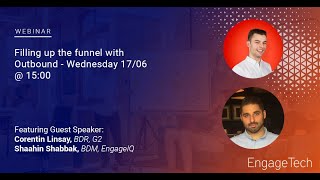
Sales development experts discuss building multi-channel outbound cadences to fill pipelines. A cadence is a structured sequence of calls, emails, LinkedIn messages, and videos designed to be scalable and personalized. The speakers debate email automation risks, share template strategies, and emphasize treating rejection as information rather than failure.
Chapters
We are now in our, I think, 7th or 8th edition of this webinar series about essentially filling up the funnel and a real focus on outbound sales development. Delighted to say it's the webinar first with one of our guests tuning in from the International Space Station, certainly a first for the EngageTech webinar. Just as a brief update on on how things are within our business. I'm more so just as interested if this reflects for you guys as well, but we've seen a return to the office, so we've had about 10% staff in for around a week now, particularly in the tech space. I spoke about it last time with some of the big boys coming up with some funding, but we've seen a substantial tick up in inbound inquiries around lead gen in, in this space. I think it's a really good sign of the opportunity that's out there. We've also turned recruitment back on, that's been on for about 4 weeks now, and we've had some new hires, but I'm also seeing that there are a lot more recruitment firms that are starting back up again, a few more job opportunities out there, and again, I think all of these are just great signs of the fact that the market is picking up. Lastly, we sat back in the last week and just looked at performance over the last quarter around COVID, And from an EngageTech perspective, we've been delivering an average of 350 appointments a month across that, across that quarter, which I was slightly surprised that it was actually that high. I knew we were performing at a good level, but I suppose it's just a kind of good evidence of the fact that with the required skill set, with the efforts to be making 100 to 150 cold calls a day, that certainly does like translate into like valid opportunities. What we're going to get into today is a little bit about the nurturing of pipeline and the fact that there is a sales funnel in sales development as well as in the wider kind of sales cycle and we're also just going to touch a little bit on how cadences can be used to open the door but then also nurture prospects through that process as well. As always, if you could just chuck any kind of interactions in the chat and we would like to get to your questions at some point or another. Please send it to all attendees as well as the wider guests. It would be good to stir up some, some conversation. So first, I'd just like to introduce guest number 1, and we've got Corey here. Corey, what does G2 offer and what do you do there? Just tell us a little bit about the role that you're in at the moment.
Sure, yeah. So hi everyone, Corey here from G2, as Callum Henderson mentioned. So First of all, kind of who is G2? Easiest way to think about it is the TripAdvisor, Trustpilot, Glassdoor, but specifically B2B software services. So again, something we'll probably touch upon in this webinar as well, but the importance of kind of reviews and how they're actually changed by behaviors in this space is obviously an interesting topic. And yeah, that's kind of the company as a whole, and we help predominantly kind of marketing and sales people. Be more efficient and help connect with their, with their buyers more specifically. In terms of my role more specifically, I mean, I'm within the business development arm. There's only 2 of us in the London office, but a wider team more globally as well. And yeah, I'm a mixture of inbound and outbound, but outbound's where the fun really lies, I guess, where cadences come in on a daily basis as well. So glad to be here.
Thanks for the intro, Corey. And, um, What are you seeing in terms of customer reviews and how that drives purchasing behaviour? I think G2 has become a lot more of a familiar name for people. Is it a staple now for a lot of people when they're looking to buy technology? Do they start with you? How does that process work in terms of what you're seeing?
Yeah, so there's a couple of different ways to think about it. And it's not just a top of funnel thing. I mean, people don't just go to look at reviews and then decide who they want to talk to. I think one thing that we've identified a lot in the market is that people just generally do a lot more research. It's a lot more independent rather than necessarily calling up every salesperson you know in a certain type of solution you want and then going through every sales cycle. People kind of want to narrow it down themselves first. And that's typically through platforms like G2, because again, one of the main things in the market today is that issue of trust. And that's where reviews can then compensate. So people trust their peers. Quite simply, more so than sales and marketing people. So I guess we're right at the bottom of the chain in terms of who people trust. So not ideal, makes our jobs a little bit harder, but then again, that then opens the door to use things like reviews. So to answer your question in terms of why are reviews important, it's quite simply because that's what buyers want. That's what they trust. And that's again, they come to platforms like G2 to learn about solutions. That they want to potentially be considering.
I think one of the interesting things about what you said is the fact that people research in their own time. That might be work time, but just because you're a salesperson, or doesn't mean that every interaction that someone has with your company is through you or is something that you know about. And in terms of like mindspace, in terms of sharing content with someone, in terms of making the resources accessible to people that might want to buy. That's like content in your emails, posting content on your LinkedIn. All of those things help someone to do that research in their own time. And you should be aware of that. It's not just like the call or conversation that you have with them that enables them to buy, right?
Yeah, 100%. And actually there's a really cool style. I always forget who this is from. I think it's from a Gartner or Forrester, one of the analyst models out there. But if you can catch a buyer before they've engaged with you, before they put their hand up and said, yes, I wanna talk to your sales team, I think you're 3 times more likely to close that deal yourself. Again, because that period is getting larger and larger in terms of how much time people are spending doing that research before they engage with you, they more often than not have a pretty good idea of who you are as a company before they've even spoken to you. So if you can catch them during that phase and then be able to influence what they look at, what they research and what they know, And again, partly build out that rapport and that trust with your buyer, then again, your chance of actually closing that deal are much more likely.
Sure. And just onto you personally, what do you think your real strengths are when it comes to prospecting, or what are the things that you really like enjoying?
Yeah, so I mean, the thing I enjoy the most, and I think is also one of my biggest strengths, is just authenticity. I think, again, it's a very cliché phrase of saying, don't be the salesperson, be the consultant, but Everyone says it, and I think there's a little transition you've got to make before not focusing too much on selling. I think if you focus more on, I mean, is this actually someone that wants to be helped, recognizes they need to be helped, and uncovering the fact that there is a need to be helped in the first place, building that trust with the prospect to then be able to say, well, okay, yeah, fine, maybe we can do something. And I think the interesting thing with a BDR role is that you don't necessarily have to jump to that conclusion and say, yes, we can help you. Just jump straight to the boat and then give, okay, right, you can do X, Y, Z, we can do with this, it'll cost you this much. The beauty of my role is I can understand, I can basically spend more time understanding the prospect, which I think I'm getting pretty good at. It's one of my kind of my core strengths. And then be able to start to infer kind of a bit more of a vision before again then passing on to the AE and then doing my entire relationship building throughout the process. But I guess that's one of the bits I enjoy the most, kind of uncovering genuine problems and I guess basically making the biggest impact I can on the businesses I talk to.
Sure, thanks for all of that. Onto guest number 2, we've got Shine here from EngageTech/EngageIQ. Shahin, what's the role that you fulfill at the moment, and perhaps you could just give everyone a little bit of an intro into the EngageIQ part of the business?
Yeah, of course. Hi all, Shahin here. So what I do within EngageIQ is essentially the BDM role, so identifying fresh opportunities, 95% of time through cold outreach, developing those opportunities, conducting demos, and then passing them on to my manager. And close. I'm sort of sitting between the BDR and the AE role within EngageIQ. What EngageIQ is, is essentially a software platform, so the software branch of EngageTech, that allows SDRs, AEs, anyone doing outbound prospecting to identify a higher volume of new business opportunities in less time by being able to feed them intelligence on what companies are in the market, what businesses have initiatives in the areas that they cover, so they know who to target and when to target them.
Sure. And I suppose being someone who does the job that you're selling into, like, what do you find helps you with having like data in advance? Why do you like to have data in advance of prospecting? How do you use it?
I think that's like, it's almost like the million-dollar question right now, isn't it? Because all across like the, the tech world, all across sales, everyone's talking about personalization, relevance, and that's really what it helps you to do. But prospects, especially selling to salespeople, for example, they expect you to have a level of sort of prior understanding of their business before reaching out. They're probably getting called by maybe 20, 30, 40 other people that same day trying to sell them similar kind of services or solutions. So allowing them to personalize your approach, personalize your message, resonate with that prospect, and have an idea of where you want the conversation to go before actually reaching out to— I mean, one stat which I always sort of bring out in demos is the HubSpot one. I think I've already told it to you about 10,000 times now, Callum, which is only 2% of calls with no prior intel actually end up in meetings. So it really sort of tells the tale, doesn't it?
Sure.
And I think the other thing about that which is useful, I think, maybe if you're like a sales director or someone looking at like the headspace or mindset of your team, is not only can you use it to make yourself stand out when you prospect, but having that data also, I think, drastically increases like someone's headspace going into a call, which is that I'm actually— to go back to something that Corey said about helping someone— if you know someone's in the market for what you're buying, like, you're so much more likely to feel happy to like cold outreach and be in a headspace that I'm going to help this person. So yeah, absolutely.
Um, almost do that less of a, less of a cold call, doesn't it? It's, it's a lot warmer. Like, you don't feel like you're pestering the prospect. It takes away from that kind of, I'm being that pestering salesperson. So yeah.
And then, so for you in the last quarter, like, a lot's changed, um, for everyone. What do you think, like, are like the main skills that you've picked up in the last quarter? How do you think your prospecting has changed?
I think just to flip that on its head, one thing that hasn't changed is the mindset that I had beforehand and the mindset after, say, coronavirus or COVID. One thing that made me so successful before coronavirus was having that every day, I'm going to come in and smash it. I'm not going to make any excuses no matter what's going on in the world. And keeping that up definitely allowed me to continue as I was before. But I guess in terms of sort of sales development skills is, we'll probably get onto this in a bit more, in a bit more detail in a sec, but really putting a lot more effort into your cadence, into the omnichannel approach, not relying on calls, using LinkedIn, video, email, probably a lot more than I was before, and I was always guilty of not using those channels, but really honing those skills has allowed me to, yeah, keep the numbers up even through these sort of tough times.
Yeah, and I suppose just in terms of, you know, you now have changed that approach, so you're— and you're taking value from it. What do you think was the main, like, factor stopping you prior to this point from maybe stepping away from calling? Like, you find something you're good at, why wouldn't you— why previously did you not vary it?
I think you sort of hit the nail on the head. You find something you're good at, like, if you're really good at something, you become comfortable, you know, you're able to book 20+ meetings just on the phone. Why would you feel to have to, you know, to learn other skills? But that's just the wrong attitude to have. I think the reason why was, yeah, because maybe I tried emailing 2-3% of the time before, it didn't work, and I took that as a reason to just not do it anymore. Only when I needed to do it did I realize, actually, from this.
Yeah, sure. Cheers for the intros, guys. Let's just dive into the main topic. I think it may be worth just one for you, Corey. Like, cadence is a word which I think salespeople throw around a lot. I'm not necessarily sure that everyone always completely understands exactly what it means. So in terms of from your perspective, what is a cadence? Do you use any? Perhaps just a little bit of an introduction.
Yes, I do use cadences a lot. Probably not in the traditional sense, which again I can cover in a second, but I guess to me a cadence is a way that you can automate and scale your workload. So basically put the same amount or slightly more work in to be able to get 10 times more out at the other end. In a nutshell, that's kind of what a cadence is to me. As you kind of touched on a little bit, I mean, just now in fact, Shaheen, in terms of the multi-channel approach. For me, kind of cadences is the best way to kind of monitor your workload and be able to actually have that multi-channel approach. If you've got lists of emails, people to email, lists of people to call, lists of people to connect with on LinkedIn, it then becomes crowded and inefficient and basically don't get as much done as possible. But yeah, in terms of what a cadence is to me, it's a way that you can really kind of upscale your workload with a finite amount of time that us salespeople have.
Yeah, anything from you, Sean, on that? Is any—
yeah, I think you, you, you like smashed it, Quentin. Essentially, that like what one thing I used to tell people, like I've heard myself before it, and I don't like the word, the phrase, but it's almost like idiot-proofing salespeople, idiot-proofing sales development, um, AEs, that kind of thing. Because as you touched on before, Callum, if you're really good at something, you're not going to want to try other things. So it's a way of ensuring that you stay focused on a prospect in terms of using different channels, but also in terms of nurturing as well. It's all too easy to maybe call someone 3, 4 times, don't get through to them, and just put them to the back of the pile and forget about them. With the cadence, you make sure you take them all the way through and maximize the output from that.
And I suppose just, just wider context for anyone, anyone listening, is that you've got like some market-leading tools, likes of Salesloft, Outreach. Corey, you mentioned a new one to me the other day. What was the name?
Yeah, so we've started using using GrooveFunnels.
Okay, have a look around, loads of tools in the market, but the kind of more high-end tools, what they will provide you with is data. So you'll start to understand what kind of open rates you get, who, what kind of prospects reply at what stage in the cadence. Some of them will provide cadences, so like process steps for you, like in advance. But I think if you're in a position where you're not necessarily able to invest in a tool like for it, What this should hopefully like bring to your attention is that like a multi-touch, multi-channel approach is so important for you to be able to get through to prospects, and it's just not to view it like if you've called someone a few times, they're sat there thinking, who's this person? Why are they like still prospecting into me? In fact, quite the opposite. And also, from my perspective, the fact that different people are in different moods depending on the channel that you catch them on. An example is someone might be a lot more open for a chat on something like their LinkedIn Messenger than they would be on email when they've got, you know, perhaps hundreds of emails dropping in per day. And what it does is opens up your ability to catch someone on a platform where they're comfortable for a conversation. And as sales development people, when all you're looking to do is open the door, it's so important that you catch someone like in that in that frame of mind.
Could I just make one point on that as well? One thing that's really like stuck out for me is like I was speaking to my colleague the other day and he's looking through his cadence and he saw that particular companies or particular personas are more likely to respond or open an email than they are on LinkedIn, for example. And then having run a few of these cadences, you can then craft future ones like better essentially by looking at The data. Yeah, the data. So I know that this guy is only ever going to look at my emails, so from now on I'm not going to waste my time trying to call him or LinkedIn him, for example, to drive more efficiency.
Yeah.
And, um, I suppose in terms of— for you, Corey, you said that you're using Groove, like, how, um, how is it actually helping you at the moment? Like, do you provide your own cadences? Do they provide some for you? How do you fit your prospecting?
So, I mean, I've not actually looked into it. I think they probably do provide some sort of structure to kind of go off. Personally, I don't use any of it. I think a lot of it is, again, you've alluded to, kind of both alluded to it just now in terms of the A/B testing side. The beauty of these types of tools is that you can start to get a lot more data on what's working, what's not, and pretty quickly get an understanding of what can be done to make it better. Whether that's messaging, whether that's timing, whether that's channel. So the main thing that kind of Groove or any kind of sales enablement tool really does for me is, is yeah, is to be able to kind of tweak and improve performance. I guess I kind of mentioned about 5 minutes ago that I don't really use these tools in, in the traditional sense, I guess. I mean, by the traditional sense, I mean emails are automated and you just pop up with tasks of who you should call and then who should add your LinkedIn and that kind of stuff. I use it more as like a management tool. So a little bit different. So basically what I use is, so kind of a more like a task for myself. So rather than necessarily automating a lot, which is a bit of a dangerous game to play, especially if you're focused on trying to get people to engage. And again, if they're not going to engage, what's the point of writing in the first place? So yeah, I think using these types of tools is more of a prompt to potentially call, to potentially email, to whatever you have to do with maybe some ideas of messaging. So keeping it a lot vaguer, I think is where you can see the most benefit out of these tools, not necessarily the email automation side, if that makes sense.
And I suppose, what are the risks of email automation?
I mean, the most obvious one is they don't respond because it's not personalised. I mean, I'm not a fan of the word personalised. I prefer the word relevant because if you're offering something, obviously, I think it goes without saying, you've always got to give something to get something in terms of getting more efficient and getting more back from the prospect. If you're always sending the same old email, which is, oh, I wonder what your problems are, please let me know, no one's gonna respond to you. As Cheyne mentioned, I mean, these guys are probably getting 30, 40, 50, sometimes even 60, 70 calls, emails a day, if you're really going towards the enterprise kind of top C-level. If you haven't shown that you've done any research or any background understanding of them, then it's not gonna go anywhere. So that'd be the definite danger of automation, which is, I think, what everyone is trying to avoid. Would you think the same thing, Shaheen?
Yeah, I think you hit the nail on the head there. Lack of relevance. I think, I think automation can, can be used to your advantage, maybe in terms of like MQL generation, like very, very top of the funnel, maybe warming up for a BDR to then put it into a proper cadence, for example, or maybe towards like the end of the cadence when you're sending them content or something like that. It's not too risky. Again, I'd avoid it where you can, depends how many prospects you're putting through a cadence. Um, but yeah, definitely like if you're getting 60, 70 emails a day and it says, you know, something not very good, then it is, you know, response, are you? Realistically, and I think if you start automating too many things in terms of a salesperson's habits, they become a bit lazy. They allow— they think the system should do it all for them, and they kind of take away from the flair of what probably made them a really good salesperson in the first place, which is getting their character over, getting their Persona over via email.
I think, yeah, I think one thing just to quickly add there, I mean, the one time I think it's really good to add automation is when you're able to, to an extent, generalize based on persona. If you have an understanding of what personas typically feel from a pain perspective, then you can, to an extent, assume, obviously not assume what their pains are, but assume what they could be. And then that's when automation can be really powerful.
The other obvious risk with it is if you're prospecting into the same 2, 3 people in the same business and you send the same email, it's not going to be very well received, is it? Especially if they're sitting opposite each other.
Yeah, that's a common one.
Email at 3:30 PM, not ideal.
So in terms of prep or personalization, you can actually do that, like you can bulk it. You can say, here's a persona, here's a particular kind of business, here's something that we know is a relevant topic right now for this kind of industry, and you can personalize, but en masse, in like, with some measure. That's good to know. I think in terms of my input on what you said about the risk of personalization versus automation is just, I think if you entirely automate everything and it's very generic, you're, you're just purely rolling the dice on catching someone at the right time, and there are very few of those people around at any given time, and it is pretty much only the people that are looking in the here and now who will respond to you, whatever platform it is that you try and engage with them. The way that you actually do your job, which is to develop sales, develop business, or actually, actually close a deal is where you earn your money is changing someone's mind or changing someone's direction or altering their strategy. And the only way that you can do that is if you grab enough attention for them to actually want to entertain that dialogue with you. And the only way that you grab their attention is by standing out through personalization, relevance, like whatever phrase that you actually want to use. And so we actually spoke about it the other day, Corey, but there's inevitably a volume play. You have to take enough shots per day to mean that you have an opportunity to see success. But I think you're much better off taking 70 really well-prepared shots or considered shots than 300 random ones. And so there is a balance to find. Go on, Gian. You say something?
Yeah, yeah. I was just going to say what, like, from in terms of different levels of personalization, like, if you have like a key account list of your top 20, 30, 40, like, big, like, whale accounts that you want to get into, then by all means spend half an hour, you know, sort of drafting up an email to them.
Yeah.
But the other ones, like, even if you're like calling through a list, like in your morning calling period or whatever, just by looking at the industry, the you know, the, the job title, you can just on the spot personalize the call anyway, or the email.
One interesting thing that we did on the, on the prep thing though, myself, Cheyne, and two other guys in the team, we, um, we basically put a time limit on the personalization, um, and so we picked 3 prospects each and did it in 15 minutes. So I think it was 5 minutes per one, um, roughly that kind of time, um, and we found that you can get it done in that time. If you want to let it take you 3 hours to personalize, it will take you 3 hours. But if you actually create the deadlines on it, you can do it. You'll surprise yourself, basically. And so it's worth considering those kinds of deadlines. What are the disadvantages of cadences, do you think? You kind of touched on already, you used the phrase idiot-proofing, Shayan. But yeah, what are the disadvantages of having a sales cadence?
Do you think, um, from my perspective, I think it can— to be fair, I used to have more of these in mind before I started using cadences and my sort of preconceptions, but a lot of them are thrown out the window. I think being too sort of rigid, being, you know, not having much flexibility, thinking, oh, just because today isn't a call day, then I'm not going to call this prospect. Can actually lower your chances of engaging that person. I think the danger lies when you have maybe one set cadence for all of your prospecting as well, means that you're not, you're not making the cadence relevant to each sort of job title, to each person you're speaking to as well. And I think sometimes it can also lengthen the cycle from when you first start engaging with someone to when you could possibly close the meeting with them as well. You know, you could get to step number 16 and you could have actually, you know, closed the meeting 2 weeks before if you'd called them 2, 3 extra times. But because they told you not to, you, um, you didn't.
So it can place a little bit of like a glass ceiling on your, on your prospecting. A book I'd recommend anyone who does any cold calling read, um, by a guy called Stefan Schiffmann. It's just about cold calling, but one of the early chapters in that book, he speaks to a graduate salesperson at the end of their first year who performed better than anyone in the company, and he said, what was your secret? And he said, I just made sure I had one extra conversation every day. And something like a cadence could stop you from having that mindset, which is just, there's an unlimited amount of prospecting that I can do as long as it's of a good enough quality. And so you could set up cadences that fix you to certain volumes of prospecting. So yeah, I agree that you want to remove, remove that glass ceiling.
Yeah, just to quickly add to that, there's a cool little tip. Again, I've kind of just started using that this last week to kind of to an extent get around that. Some tools, Groove being one of them, allow you to add individuals to multiple cadences. So what I've done, again, the issue you brought up when you've got an individual in the cadence and just because it's not a call day, you can't call them. That rigidity is kind of very tough to get around from a tool perspective. What I started doing is adding those individuals as well into a second call-only cadence. So that basically I've got a list of people that if I think, okay, I've got, I don't know, 15 minutes now, I wanna rack out a couple of calls, I can just quickly go through that list of who are my key individuals which might need an extra call and then get dialing. So that's, although it, it still is rigid in that sense. You still have kind of cool days with that cadence as well. It does give you that other option of trying to get more dials in that may not necessarily be applicable within the initial cadence. So that could be a cool tip for people to try out as well.
Absolutely. Callum, we spoke the other day about opening doors rather than necessarily closing them and having that headspace. Something that's— the reason why I think this is related is like organizing your pipeline and following up at the right time. Is a transferable skill from managing your cadences effectively and just being aware that it's a multi-touch process. Would you mind just sharing a little bit about like your kind of Headspace philosophy or approach like around, around this topic?
Yeah, definitely. I think just kind of starting things off, I mean, more often than not, it will not be the right time for that prospect to talk to you. I think we just have to accept that. So That doesn't necessarily mean that what you do is not gonna be relevant. Chances are it might be if you've done your prospecting right, you've actually done your research, you know that there's a chance that this, what you're doing will help them. So from my perspective, in terms of my mindset, I mean, I always go through, especially with a cold call, I never go in with a, I wanna close the meeting approach, which I guess is very different to what a lot of sales coaches will tell you in terms of being efficient. But my approach is always to, go in to better understand exactly what is going on in that account. 'Cause again, I'm sure most people have heard of the 55-38-7 rule in terms of 55% is through body language in terms of how much is being communicated, 38 is through tone and 7 is through actual words. Again, body language you can't really do unless you've got a meeting, but when you think about it, there's about 4 times more you can put across in a phone call in terms of information and understanding than in an email. So I use that as an— basically I use calling as an approach to understand quite simply, rather than to necessarily push for a meeting. And again, it helps me then create that kind of personalization down the line. So again, without kind of dragging on, I mean, the main approach I have from this aspect is, yeah, is never to really push for the sales and never close or to avoid closing because closing in my eyes is, is rushing the prospect more often than not. If you open sufficiently and understand that they're the right person, they've got the right problems that you're looking to solve, they should close themselves. Sure.
I think, I think the main thing that I like about that approach, I think closing is an absolutely fine thing to do like on first calls, but is to focus like your approach will only work if you're opening enough doors. And if you open enough doors, then you're fine anyway, because there's enough conversations in the pipeline that that's going to enable you to get there. And I think if there are a lot of people in sales development who focus on how many meetings did I make today rather than how many new conversations did I start today, and what you find when you end up in a position like a role like the one that Shahin is going to transition to soon, whereas if you're opening and closing the full cycle, your performance is going to go up and down and up and down and up and down if you don't always have a focus on opening doors, and it becomes really easy to justify not doing that.
Yeah, I think one thing to really add to that, obviously, yeah, as you mentioned, closing is essential. You've got to close somewhere, right? Otherwise, what is business? But I think kind of leading on to a point you mentioned right at the start of this webinar, in the sense that there's a BDR funnel as well. There's a BDR pipeline. Just because it's a no now is not a no forever. And that's the kind of approach I like to take in a sense, okay, maybe it's not the right time, but then if you take that understanding approach, you then start to understand why it's a no, and then you can then dig deeper into that kind of second, third, fourth, hopefully layer questions of what will be good for them when it is the right time. And then hopefully you bank yourself a meeting in 4 months' time.
For sure. And that pipeline, It's so key. I'm just conscious, we've had a question come in, which is, there's a few in there, so it'd be good to dive into that. So from Andy Thompson, my company doesn't have cadences, so where to start? Do I build up a bunch of email templates and a bunch of in-messages and a call script? How do I go from no omnichannel to having one? So in terms of setting up the cadences, From my perspective, the first step would just be to think about how long your cadence you want it to be. I think I saw something online, like the perfect sales cadence is like 54 steps. I'm not necessarily sure it needs to be that long to start with whilst you're familiarizing yourself with it, but there's a— I know there's a cadence template on the EngageIQ website you could download. It's relatively easy on something like a HubSpot to find some guides. I think a company called Cognism also share some good cadence guides. Do I build up a bunch of email templates? Well, yeah, for you guys, how's that worked?
Hmm, email templates are a funny one, aren't they? We were discussing this earlier actually with a couple of my colleagues, and if we're talking about building out a cadence and you want to keep a level of personalization The only template you should have is what percentage of the email is going to be personalised and what percentage isn't, and then you can template that bit of it, but there should always be that first bit of the, say, the initial email that's completely relevant or personalised to that prospect. I think it really depends what you're trying to achieve with the email. If you're trying to open the first door, then don't use a template. If you're trying to maybe say goodbye to the prospect for now, then template is probably fine.
Yeah, but there definitely is some ramp— sorry, Cory, go on.
No, go for it.
I was gonna say there definitely is some investment time at the start. Like, you, you're gonna need to build out, even if it's not a template, but just something to say, in this slot here goes a personalized email. Yeah, in this slot here goes an email where I'm going to share some content from our blog.
Yeah, go on, Cory. Yeah, similar to that. Yeah, there's definitely Obviously there's a decent amount you can automate, quote unquote, in terms of the probably 50% of the email where it's just a classic kind of hi name, etc. But in terms of building out those templates, I'd say always have that element, which is maybe just a little kind of box, which obviously you'll remove before you send it with little kind of bullet points of if a prospect has mentioned X, then maybe talk about Y, or if they've mentioned one, then talk about two, just some prompts. That give you an idea of, okay, let's try and make this email fully relevant for now to this individual based on what you can find online. Again, that's probably not the story because more often than not, there's so much more you can find out once you talk to the individuals, which again is why I kind of take that more kind of understanding approach over cold calls. But if you can, yeah, if you can make that email as perfect as possible, but then as replicable as possible, So through the use of templates, then definitely. I guess to maybe actually answer your question a bit better there, Andy, who you asked the question, how would you actually create cadences without having a sales enablement tool, if that's what kind of understood from the question? Tough question, tough question to answer. One thing which I still do to this day is kind of schedule myself emails and snooze emails. Again, that's basically what I've been doing before I've had GrooveKart in our case, where you can then— it basically pops up, I know, 4 months down the line saying, oh, I spoke to John Smith about these 5 things over the phone. It was the wrong time because of XYZ. Now is the reasons why it could be a good time. So if you schedule yourself kind of things like that, that's a good way you can then start having that multi-touch approach. With the same individual. So again, not quite a cadence, but still a way you can maintain relationships.
You can do that in your email calendar. You can do that probably— I know Salesforce, for example, have a reminders feature. Yeah, there's tools that you've got that can support it. Shyam, you gonna—
before we got Salesloft in, for example, we just did it on Excel just to try and test the waters, work out a few cadences. All you've got to do, Andy, is just look at maybe 2 or 3 personas, work out, you know, in your experience, what kind of steps they need to go through. Get those steps, get all the names on Excel, get the steps down Excel, and just put it on your diary every day to tick it off.
Tick, tick, tick, tick.
And then even on Excel, you can pull data and try and work out what's worked, what hasn't worked. So it's a lot more of a manual way, but still the same benefit comes from it.
And just on the sort of email templates, in messages, and all that kind of stuff, I think the main tip I'd give anyone starting this is just to not write something that's too long. I think if you can explain what you want on LinkedIn in 20 words, and if you can do that on email in between 40 and 50, like, that's going to be enough. And in fact, anything more than that, I just don't think people actually want to read it. If you think that people are like opening a LinkedIn message on their mobile phone If it stretches more than just the window that's there, I know I would just 100% not read it. If it's from someone that I don't know, it just feels like a sales intro. Over email, I think you've got a license to be a little bit longer. I think the other thing as well is just try not— particularly with emails and LinkedIn messages— is your objective probably isn't to get a reply. And in fact, it's very rare that someone will reply. In terms of the wider percentages of it. What you're really trying to do is just to put your— this is why something like LinkedIn is so good, because your face is there, someone gets familiar with your name and your brand, maybe see some content that you're posting— is when you do call them, it's not a cold call. And, or you might sit somewhere in an inbox for a few months and then they might reach back out to you when the, when the time is right. It's as much an awareness piece as it is a like, let's get a response and, and book a meeting today. Guys, I'm just conscious we've got 5 minutes left. Um, a couple of things I just wanted to ask you was just about, uh, any kind of resources that you found useful. So things like anyone that you follow on LinkedIn, any books that you've read, like those kind of things. So I don't know if you want to dive into that first, Corey.
Yeah, it's funny you mentioned that. I mean, I was actually looking back through— I mean, first of all, I use Blinkist. Blinkist as like an app which basically condenses kind of business books, psychology books, and entrepreneurially related books into little kind of 15, 20-minute blinks, as they call them. And I was flicking back to one book actually, which I'd, I guess, read, listened to a while back called The Charge by Brendan Butchard, which is— it's not typically It's not really a sales-related book. It's a mindset-related book which talks about kind of how you should view negativity, which then is very applicable to sales. And the biggest thing I think I'll take away from that book is negativity is information. It's kind of disconnecting the emotion from it. And then as soon as you start viewing it that way in terms of rejection as an example that we see every day, it then just becomes an additional bit of information in terms of being able to then better prospect next time. Yeah, so that's one book I think I definitely recommend anyone to read, either through the short way that I've done if you're short on time, or even actually buying the book and then reading it in full.
I think it's such a good point about the fact that like if you don't get the outcome that you want, how you conduct yourself in terms of whether that's with the sale or whether that's with like trying to book an appointment in a sales development landscape is if you can take that no and just find out a little bit more information and just disarm someone. Typically, when someone gives you a no in a sales situation, they're expecting you as a salesperson to come back and try and resell them. If you can just disarm them and say, fair enough, um, could I just understand a little bit about, you know, why not now and what I could have done differently or anything like that? Um, like you say, Corey, you're so, so much better placed in 6 months' time to then go back to that individual and re-strike up that that relationship. But yeah, good, good point. I haven't seen that book before. I know I downloaded Blinkist like 4 weeks ago, but I think they do a free 2-week trial.
At least 7 days, either 7 or 14 days. Yeah, so definitely recommend you all to download that, give it a go, and if not, then that's fine.
And I saw something like that it's good to find out about books that and just get like a snap on it. And then if you like the sound of it, then you maybe invest the £10-15, buy it, and maybe the week or so in reading it. But yeah, I agree.
Yeah, I've not done that personally, but it's good to get a good— at least the key messages from all those books that I can clearly understand. If there's a book— I mean, there's only so much you can fit into a 15-minute visit. So if there is a lot more in there, then yeah, I think that's probably a great chance to buy that book.
And what about for you, Shahin? Any, any resources you found useful?
I don't read as much as I should, um, I'd have to say, like, in terms of sales books. Um, I think for me, the key resource was my peers, um, people above me, um, like people on my team. I think when I was first starting out, like, I just learned— like, maybe it's not so possible now, but 90% of what I learned and how I found success was listening to what the best person in the room was doing. So this guy's booking 30 meetings a month, why? What is he doing? Let me have a listen to it, let me try and replicate some bits of it, and then take some bits and craft my own kind of style.
Yeah.
And I think, to be fair, the Jordan Belfort series on YouTube I've found to be really useful, that sort of straight line methodology.
Yeah.
I'm not saying I want to live my life like him, but in terms of The way he teaches about cold calling, about sales dev, has been really useful. Andy Bounds, I think his name is, another guy.
I think tapping into your existing network, whether that's within your company or somewhere else, is very useful. I think the thing about Jordan Belfort's stuff is it's like just completely goal-focused. It's like how ruthless you can be about like what you actually want to achieve, which I think you can take in a literal sense in terms of every action, which is pretty much how he's done it. Or you can look at that in terms of a more subtle play, which is, this is my goal in the next 3 to 6 months. How do I make sure everything kind of organizes itself to align back to that longer-term goal?
Is that a podcast you mentioned? Jordan Belfort?
No. So Jordan Belfort, Wolf of Wall Street, that guy.
Oh, yeah.
He does a lot of sales webinars and he does a lot of sales training. I wouldn't recommend that you start frauding, but maybe take a bit of advice. But yeah, in terms of like the mindset type things that he talks about, and he talks a lot about, you know, you start off a relationship and you've got the end goal, you can deviate from this line, this proverbial line, but as long as you bring yourself back up to that and keep the conversation focused to where you need to be, you're going to get to the close. And when, you know, the place that salespeople fall down is when they go off-piste too much and deviate from the goal, which resonates with me quite a lot, to be fair.
Chaps, I really appreciate you giving up your time today. I suppose in terms of just a wider summary, skills across multi-channel, an ability to sort of stay organized, enough sort of outbound attempts today to keep opening enough doors means that you will be closing enough. Would be some headline points. If there's anyone else similar to Andy who would like some information on how to build out some cadences, feel free to get in touch via LinkedIn. Happy to help you on that front. But yeah, we'll wrap it up there, and once again, thanks to Siobhan and Callum Henderson.
More from Callum
Filling Up The Funnel With Outbound Prospecting - Data, The Good, The Bad & The Ugly

Outbound Prospecting: Is Calling Still the Best Way to Reach Someone & How Can You Stand Out?
Outbound Prospecting: Closing & Maximising Your Prospecting Efforts (Webinar - Ep 4)
Outbound Prospecting: Building Relationships Vs Building Pipeline (Webinar - Ep 3)
Outbound Prospecting: Running a Remote Sales Development Team (Webinar - Ep 2)
Outbound Prospecting: Sales Development Basics When Prospects Are Working From Home (Webinar - Ep 1)