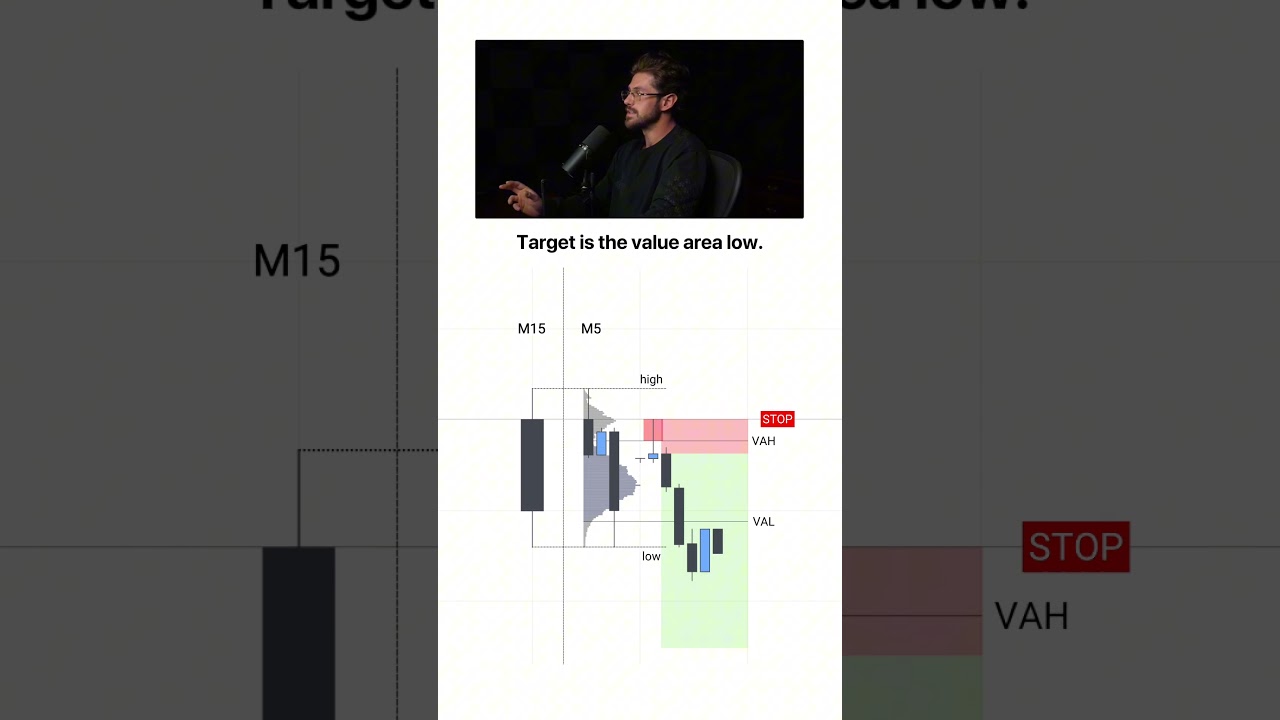
I Traded With The World's #1 Trader

Emery Gams, a 9-figure prop trader, walks through a live NQ futures trade on a Nashville floor, breaking down order-flow analysis, risk management, and why most traders fail. He covers micro-range auctions, tape speed, stop placement, and the psychology of treating trades like coin flips.
Chapters
This is Emery Gams, a top trader at a 9-figure fund. He started his journey as a retail trader 16 years ago but has been an institutional trader for the last decade. Fast forward to today, he has made multiple millions from trading alone. I flew him out to my trading floor here in Nashville to spend the day together and see exactly how he trades. When we sat down at the charts, I had no idea just how insane going to be.
I'll let you do a little introduction, Emery.
Yeah, yeah, thanks, man.
He's super humble, by the way. That's going to be way cooler than what he says.
Um, yeah, I've been trading professionally— when I say professionally, I mean at an institutional level— for over 10 years now. But I started off trading my own money, you know, like I come from retail, um, and then I crossed over to, to the institutional side. I've always worked on the buy side of the industry, so that, that means not like on the bank side, which typically sell products and services to the buy side. So my background is working on a real prop trading desk. I then got headhunted by a Wall Street guy named Andy Krieger. Andy's pretty famous in the forex world. He's responsible for, frankly, some of the biggest forex trades that you have heard about and some even bigger ones that you haven't heard about. And I've been working alongside him for what is it, the last 7, 8 years or so working with his hedge funds. My experience largely is in options, but I trade directionally in futures markets as well. You know, I mean, I've been in this game for a long, long time. And yeah, that's, you know, that's a little bit about me. I recently did the Words of Wisdom podcast, you know, so if you want to check me out there, you can.
Yeah, it was a good episode too. It was a really good episode. That is in your favor, um, if those areas hold and create like another little reversal on any retraces that, you know, gives you that continuation. That's where I look at it's like, okay, cool, now I've got like a new kind of line on the sand. Like, I don't want to get it past there. And that's a lot of times is like finding the directions one thing, and then framing the trade and getting good risk on it is another. Right, so we've got right here, this is where I would start to, um, at least watch. So we've got this, uh, let's see, where is that, 121 or roughly 130, at that 121 to 130 range. I want to say a little bit more before I get into a trade, but I would be watching that area. I want to see if we can dig into it again.
So the way I read this is from the open we had a strong sell-off, right? That to me is, is value migrating. Now the question is, can we accept— are we going to accept that migration lower as being part of a new rotation towards finding fair value? So when we have this range here that we can see on Bookmap, like this sideways range, for me that's a mini auction, and we're now negotiating fair value in that range, right? So where are traders going to get trapped? Probably buyers at the top, probably sellers at the bottom. You know, so the mistake I see a lot of traders make is they're going to go short like right at the bottom of the range, or if they're looking for a reversal, they're going to be buying as the market's trading towards the top of the range and not giving the range enough time to play out. Because now we need to see buyers and sellers exchange inventory. We need to see them agree that this little range is fair value so that value can start migrating again successfully.
Right. That's a good way to put it. I think having that deep understanding is so powerful too, because then you— it makes decision making and patience and like, you know, discipline. A lot of times people have like— think they have discipline problems and it's not that as much as like you just have to have clarity on like why you're having discipline, right? Like why would you be disciplined at this point? That's a great way to put it.
So like right now it's like we're negotiating the upper— like the value area high of this micro range. So if we fail here, that to me, like, that's the ideal place where I'd want to look for a short. On the other hand, if we migrate higher from here, then that new micro— like, the micro range that we broke out from, that's where I want to see price return and start building a thesis for buying the market instead, if we can hold that range on the way back.
Right. So you're saying that basically come down here? Yeah, yeah, yeah. No, I agree. That's, that's kind of like the same, same way that I like to, to look at it, is like, where did the tipping point happen? Yeah. Like, for example, like here I would look at it like really these, you know, kind of this top of this range right here. If you came back down into it and then watch to see if you get that second reaction. And then, you know, or really depends too, like sometimes I'll trade a little bit more aggressive if you have like a large injection of buyers. A lot of it is just like getting clear on what you're waiting for. And then the patience kind of does take care of itself to some degree. It's, you know, still, you know, still trading, right? We gotta, gotta have love for the— or respect for the game. So at this point too, like, I'll start to mark out that because it's just not going to act like it's selecting. Um, mark out this initial range right here and kind of see where we, um, you know, start to pay attention to because now we've got our levels. If we start to push back up and reverse from the bottom of this down here into the upside, that would also give a little bit more confluence as well, just with that first candle setup. So now we're going to see how we— how do these buyers actually hold up?
Yeah, that's, that's the big interesting test for me, because if they don't hold here, we're going to probably fall out the bottom, right?
That's exactly what I'm thinking too. There's not really much. And how do you like look at— because a lot of times I'll notice with, you know, there's so much spoofing and stuff with, with far out limit passive orders, you know, and then there's icebergs too. Um, but I always pay attention to the ones that are more close by. Than like far away.
Yeah, for sure. You're always going to see big limits at like obvious levels, you know, big round numbers. Like, um, if you go down to 25, I guarantee there's going to be a big order there, uh, you know. So do those orders mean anything? Yes and no. Like, what— what the best way to think about spoofing is to see— think of it like bluffing in poker.
I'm gonna, um—
yeah, this is looking—
yeah, I'm gonna get into a sell at— I'm gonna have 160 as a stop. Or actually I'll do $150. Give a little bit of— a little bit of— why does it— trading view just changed that. Don't, don't hit. Okay. I was going to be so sad, dude. I was like, that's happened. And then it just runs and I'm like, bro, no way. It just did that. So I'm just going to keep an open TP on this for now. I want to watch $25K though, and then kind of watch this thing for active management as well. Now, the reason for this is we had that move to the downside. Buyers attempted to step in here. And it just does not seem like they're getting much love overall. Stop, I was just going to place it up here because this market has been a little erratic. Like on Monday, as if you guys were here, that last trade we took would have— I just had to stop too tight on it for this market, I think. So now I'm giving myself a little bit of room, smaller size. That's okay. But that's kind of the logic behind the trade is we had that initial move down, a lot of aggression set in the market. It is being rewarded. So I want to kind of see this held up. If we can get some kind of retracement, a little pop back up and then a second leg down, that's where I would start to de-risk. But not until then, most likely, unless we get a very large injection of more markets or aggressive sellers. Sorry to interrupt.
No, it's all good. So what I love about this type of setup is that the thesis is momentum, right? Like here you're looking at a momentum trade. The one thing from a psychology perspective that you guys need to understand with this type of setup is when you're shorting the break, that is a very logical place to short. Know that the chances of you catching like the perfect entry and the market just running straight to your TP is almost 0%. You are going to get this kind of pop, right? The question is, okay, why would I not wait for a bit of a pop or the retracement? And the answer is straightforward. The whole point of technical analysis is to frame your risk relative to your potential reward. So, so long as the reward relative to the risk makes sense, the entry itself— like, I see a lot of people obsessing about the perfect entry. The perfect entry does not exist. Sometimes you'll top tick the market, sometimes you'll bottom tick the market. That's not the purpose of good trading, in my opinion. The purpose of good trading is to have a thesis and be on side with the market. Who's in control? We saw right now that buyers tried to take control back. They failed to do so, right? Sellers are in control. That's the thesis behind the trade. So, so long as you're on side with who's in control in the market, your risk is tolerable, and the open reward makes sense, you're in a good position. That, that's, that's how I would read it.
Yeah, I love that. That's a really good way to put it because I know that that is a big thing, especially trading props, that people struggle with is that non-instant, you know, real— all we all love when that does happen, right? That's our favorite, favorite day, uh, our favorite days to trade. But It's just not good to expect it or, or look at a challenge to that as bad, because then you start to make impulsive decisions. Trading becomes stressful. And I think as well as what's really important is like you have to look at every single day, especially when you're learning. Every day is like a class. It's a lesson if you let it be. But the higher your cortisol gets, the more stressed you are, the more like frantic you are. You're like blocking out. It's almost like you have like a set of headphones that can deafen a really good teacher talking to you, and you're just sitting there with the best teacher in the world, which is the market. And if you're anxious and stressed out, you're just deaf to it, right? So I think that that's another important thing is understanding that, you know, it's normal to take losses. It's normal to have a trade go against you for a little bit before you win. It's normal to maybe get stopped out once on an idea and then have to swing again, you know, that's kind of the— and once you start to shift perspective, like, that's why when we say— whenever I say, like, you know, mindset is so important and stuff. It's not so much about like just general trading psychology. I think it's more about like just how you think in general, um, and like the way that you frame yourself before, you know, putting on risk, before getting active in the market. So, and when you do that, you don't really care too much about losses, or, you know, as long as you're managing a risk responsibly, the loss shouldn't kill you. A couple losses shouldn't kill you either, especially when you're learning. Um, and trading starts to actually be more fun in a way. Like, not like fun in a gambling way, but fun in a way where it's like not stressful. And I know for me, until I started to do that, I didn't really see as much progress. Because when you're stressed, it's like any of the progress you do see, you get this kind of imposter syndrome. And it's like the first thing that challenges it, you're like, I knew it, I knew it, I don't know, it was luck. That's the only reason. And then you kind of get on this death cycle that most traders go through. And it's okay if that happens. It's gonna happen to everybody. But I think the better you can, um, you know, the better you can frame yourself out of that, or the sooner the better, I should say. So now we're getting this kind of same thing we saw over here. We want to see what happens within this little range right here. Right now the market's kind of agreeing on this. We want to see, does it get accepted? Do we see the market make another push down? So we'll bounce around a little bit here, kind of watch how we act at each side of the range. Right now I'm not going to do anything with this trade. Um, we got an entry at pretty much just under where we're at right now. I've still got my stops right at this 150. Um, you know, where we're at right here, if we look, 150 is going to be up in this range. So I don't really want to see— I want to see us get above that. I'm not going to move it down too aggressively yet. Now once we kind of make a move out of this range, if we— let's hope we do. I should say once we do. If we do, um, then I'll start to move up my stops again at that point. But that's kind of what I mean when I say like you get a little bit of a retracement, whether that range forms, whether it's like a, you know, one-shot retracement, whatever it is. I kind of want to see that second footprint, um, confirming my idea before I just start getting really antsy with risk management.
And if so, if I may, this pattern that we're seeing right here, this is called bracketing, where we're negotiating a new value area high, value area low in the auction. So it's also really important when you're in a trade to know why you would be wrong if you get stopped out. That helps me at least handle my losses so much better, right? Because I know that the thesis here— and I, I love this setup, I take the setup 10 out of 10 times— and I might get stopped out, you know, roughly 45 to 47% of the time on a setup like this, and that's fine. But the reason the setup would fail is because you, you can see at 80 right now there's a large passive buyer there And if we break through here, we're at a breakpoint where the tape is going to speed up very, very shortly. Like, we're seconds away from a big move happening.
Throughout this video, you may have noticed that I was answering other people's questions, and this is because all of this you see was literally done live in front of a room full of traders just like you. So if you want to get access to these trading rooms, I'll leave a link down in the description where you can apply to join my mentorship. But I want to be very clear that not everyone who applies will get accepted due to the intensive nature of the mentorship. But if you qualify, then I guarantee you will become a funded trader in 12 weeks, or I will personally trade with you until you are. I'll leave the link down in the description if you want to apply. Otherwise, enjoy the rest of the video.
We're either going to be able to blow through the passive orders that are sitting there, and they're not really reloading yet, so now the market is giving permission to sellers to take the market lower. What sellers have to do is step up and start hitting those bids lower and lower and lower very aggressively. If they fail to do so, that's when this type of setup is going to reverse and we're going to see a pop through the top side of this bracket. So that's the thesis. It's based on aggressive sellers continuing to, to put their feet on the necks of buyers here. Right. So we can see we're blowing through that large buy limit order. And what's happening right now is we're going to see that big pop, right? So what we should see now is that aggression. We want to see sellers keeping their foot on the gas. And now we should see an acceleration lower if this setup is still valid. That doesn't mean that we can't pull back into the bracket. Just means it was a false, you know, it was a failed auction out the bottom, right? Doesn't invalidate the setup. It's just like, ah, okay, that's a bit of a mark against the setup in real time right here, right now. Exactly. Validate the idea.
Exactly. And that's, that's like what we always talk about too, is like understanding like when, when you're wrong, why you're wrong. That way you can either maybe say, hey, okay, this idea was invalid, but you also know when not to say that as well. And it helps you stop trailing. It helps you with the overall mentality of things. It also will help you stay nimble because a lot of times, like a big question I get from you guys is like on days where we'll take maybe a loss on one side and we'll have this big idea and then I'll go into another direction. And some of you guys are like, well, isn't that switching up on your plan? Isn't that overtrading? And it's— the answer is no, right? Like, the answer is, at the end of the day, you know, you have to be nimble because there's going to be a lot of times when you're wrong, right? Um, but I think when you think about it more like this, you start to become a little bit more thick-skinned because you're not looking at a normal situation, which is like the market giving you feedback and data, as like the end of the world. You kind of look at it like, okay, cool, well Um, you know, how am I going to utilize that information? How am I going to be able to either pivot or make the right decision or, um, you know, learn from it? That's, that's the big takeaway. And I think that a really big thing that can help with, uh, you know, a lot of you guys trading and using some of these concepts is it gives you that. So now we're kind of seeing what Emory's talking about, just popping back into that range. We're going out to the high side, don't really have a lot of passive sellers in this market here. So I want to keep a close eye on this and kind of just see how we react here. And then going into the, um, uh, let's go into the actual profile of the day because I have that. So we're sounding still here, just kind of chilling out at the value area low. We have traded a lot of volume here, um, but I want to see price kind of reflect this. I want to see us start to make that move down sooner than later if we're going to make it. Still going to keep the trade on for as of right now. I want to watch it pretty closely though, um, and kind of just see how we migrate through this range because now we're starting to see again that bracketing that Emory was talking about. So it goes both ways. You can kind of watch it again. We're literally watching in real time the market value this, this chart, right? Like, what— where is fair value at? Um, are we establishing that lower? Who is in control of the market? And that's the value of understanding— not, no pun intended, but the value of understanding how to use these tools and kind of getting over the, oh, it's complicated perspective because it can be really powerful. And, you know, anything is complicated when you first learn it, right? Once you systematize it and have a deep understanding of it, you can make the process of using it much more simple than, you know, using every last bit of it. So one thing I also notice here too is we did see some aggression stepping in on the buy side, right? So we have CVD raising pretty aggressively. You don't really see price reflecting that too much. And we did get somewhat of a higher high here. Like, we want to look at this on a price chart. We did see a nice little pop out, but I would say it's too early to say that this is like a successful breakout, right? I'd say at this point it's still kind of going— it could go either way. Now I'm kind of watching like what happens at this, this up here. Yeah, because we see the same thing happening now. We see a 60, 66, uh, contracts stacking up right here around that 25,100. Now I kind of want to watch what happens there because that'll be the next, you know, area. I always like to look at it like you're kind of like watching for someone running in the dark. And when they come to certain key levels, it's like you've got a spotlight and you can actually see what they're doing. You know, I want to see it make a move soon if I'm going to stay in this one. Not a huge size on it, but still nonetheless, I do still like the setup though.
And here's the thing too, guys, like if, if we play the coin flip game like heads I win, tails you lose, if for every flip of the coin you know, when I win, I win $2, and for every time you win, you only win $1, you know, even though it's a coin flip, I'd flip that coin as long as you want to keep playing, right?
That's a good way to put it. Very, very, very true, right?
And I would say that right now, given how long we've bracketed, given that sellers have had a chance to really make a run for it and they failed, given buyers have tried to push the upside, they failed, it is becoming a coin flip. So you have to start weighing, you know, the probabilities and start identifying those breakpoints.
right?
We can see very clearly, you know, I like to think of the game as like this auction, it's a poker game. And at some points in a poker game, you're wondering what cards other players are holding, right? That's the bluff. Nobody's bluffing anymore. We know where sellers want to defend. We know where buyers want to defend. We're waiting for that last turn to, that last card to come up. And that's going to determine who's going to win. So what I want to keep an eye on is the tape. So if you look over at Bookmap where it says like COB, that column, like that's where we see the interaction between aggressive market participants and the passive liquidity sitting in the order book. Right now the tape is a little bit slow. As we get to the lower and upper ends of this bracket, we're going to see the tape start to speed up. So when I say we're seconds away from, you know, a breakpoint in the market, it has to do largely with the location of where we're at, but also the interaction between passive and aggressive liquidity. So still, tape's pretty slow. I know price is moving, but the tape hasn't really picked up speed yet. As we head closer to, let's say it's, you know, if we get closer to 100, watch the tape start to speed up. Same if we get lower down to 75.
Yeah, that's another, that's another good way of, uh, we actually had this conversation at dinner last night. Um, I remember a long time ago I talked to, uh, Umar, Umar Ashraf, because he's the first person that really like started to push like volume profile. He's like, you need to look into this. It's pretty much what you're doing. Uh, not volume profile, but footprints. And, um, that— he was like, yeah, like use the tape a lot. I was like, well, how do you use it? He's like, just— you just look at it a long time and get good at it. And I was like, well, that didn't really help me at that time. But Emery actually said it really good. It's really just the speed of the tape and how fast are you either, you know, um, hitting the bid or the ask. I, I, I— you kind of— you'll be able to see— you'll see it speed up like Emery said. But that's the best way to put it, is like the speed at which the tape is moving, and that can kind of give you that early confirmation that some kind of big move is going to happen. Now, obviously, you need to pair that with other tools at your disposal, but that's, you know, kind of like when you're watching for that entry confirmation or maybe a continuation out of a range like this, really just that next kind of market, the market moving from balance to imbalance. You will see that tape speed up rapidly right before that happens. Now, obviously, you need other tools to understand which way you're thinking that that is going to result in. Um, but it is a valuable tool to kind of keep an eye on. I think it's a good, easy way to teach it.
Yeah, and a good way to think about the market here is passive liquidity determines where the market can go. So if there's a huge sell order sitting at 100, for example, that's, that's the, the roadblock that buyers have to be able to break through. Whether they break through it or not depends on aggressive liquidity. So how many orders are hitting the tape at the market? So we can see there was a big order at 100. It was bigger than the 68 orders I see there, but those orders didn't reload, right? So that, that tells me something. That tells me that sellers now are selling at the market more so than they are selling passively up above. What is that a sign of? That's a sign that sellers are trying to get very aggressive here, right? They're trying to get very aggressive now. We're nearing a breakpoint. I think this bracket is going to resolve very, very soon, and we're going to get that big move given how aggressively sellers tried to move the market lower. And we got that little failed auction here right now, you know. I, I think they're going to try one more time, and if they can't, look for that— those passive orders sitting at 100. I see 69 right now. We want to see if those orders keep reloading or if they vanish and buyers are able to blow right through it.
Correct. Yeah. Very good way to explain it.
And when you, when you understand it like this, guys, like, you're not going to stress about losers. You're not going to stress about getting stopped out because you understand why it's happening. When you don't know why you got stopped out, that's when you start asking, what could I have done differently? You know, should I've, should I've been on the other side this whole time? And the answer is oftentimes no. You have an idea, you have conviction behind it, you put on the trade with whatever size is appropriate and the rest is not up to you. It's not up to you. You don't have control over it.
And I think it helps a lot too with the waiting game too as well, because that's the hardest thing I think for traders is kind of just waiting and sitting on your hands, whether that means not messing with the trade you're in, or maybe it means not taking a trade. Just the idea of being able to be at ease comes from understanding, right? Like if you're— like if somebody told you to go into a speech and you hadn't prepared for this speech and you had no idea what the topic was on, you're going to be anxious as hell, right? There's no amount of like, you know, fortitude or discipline that can fix that. You're just going to— it's going to be uncomfortable. Same goes for the market. If you go into the market and don't really understand what's going on or why, no matter what, you're going to be in a stage of excitement. Now, that could be, you know, excitement meaning like your emotions are high, not in a good way, right? That could be through fear, it could be through anxiety, it could be through frustration, it could be through euphoria. Right. It could also be through in a good— in a— I put air quotes on that good way because again, like whenever there's not that logic there, you are much more susceptible, I should say. And you have to focus on that. You want to think of yourself like that strong, you know, that strong rooted tree. So now we'll see this. I want to see if we actually hold out of here. It seems like we're trying to pop. Something's going to be— like Emery said, we're going to see at least one way or the other soon. We've kind of had this battle play out. You're starting to see the tape move a little bit faster here.
Notice how the tape is thin, like the order book is thin right here. So what, what this means is that there's a lot of aggressive orders, market buys, market sells hitting the tape. That, that's actually really interesting because now, now we're at the point like You know, I love my freaking metaphors, but like, if you think of this as a boxing match, this is where someone's going to get knocked out. Someone's going to get knocked out very, very soon. I believe that this was actually a resolution to an auction, not a false auction. So we're going to see the negotiation happen right here, right now. And it's going to, it's going to tell us very, very soon.
Yeah, I think that's really powerful as well for a lot of it. Just, I think that the big thing is just being able to have that sense of calmness. Right, no matter what happens, because it comes from a place of understanding. So now we'll see if we can, if we pull back up towards this 100, kind of like Emery was saying, if those get, if we start to absorb buyers there, if those get blasted through by buyers, that's really going to be, I think, more of the kind of market showing us its hand. If that does happen on the other side is just to see if we get that follow through to the downside here. Considering how long this is— good question— considering how long this range is playing out, would it make sense to move the stops to above 100? I personally don't think so until you've hit into it, because what can happen is like, let's say if you hit into this, you're going to get some kind of like jagged move most likely. Like, and I don't necessarily know, like for example, like let's say if we hit into this, um, aggressive buyers pop into it, it can jab up and then sell right off. So you don't want to put yourself in that position where, um, you know, like because you gotta remember these aren't— it's not like a You don't want to think of this like, okay, this is a for sure wall, it's going to hit right here and go down. Usually it'll hit here and get really volatile. And if, like, let's say if sellers are in control, you'll see that jab up and then a move down. So you don't want to be too, um, uh, like too aggressive with that in this scenario. I, so I'm more so like looking at like where are the really big positioning, big positions in the market that like cause big moves, right? So like if we were to zoom out and like look at this and we start to see very, very large amounts of sellers, right, with the, you know, using bookmap, not necessarily just waiting sellers, but like where sellers are that like really push the market or absorb buyers. That's kind of like the areas where I would like to put my stop, not so much at the passive areas. So for me, it's like, let's say if we hit into this, right, get a nice jab up, then get like a really aggressive move down that new pivot point, that would be a place to put a stop. But not until that happens, because I think thinking about it like you want to wait till the smoke clears is a good way to look at it because like, again, it's not about so much about knee-jerk reactions is like what happens right after that, right? So like if we hit into this, let's say if we get a big spike now, I'm saying, okay, cool. Now I want to see what happens after. Maybe that results in me getting a stop. Maybe it results in a huge move up and I get stopped. That's okay. I'm fine with that. But maybe it results in hitting into this, a really sharp pop-up, and then all those buyers getting trapped. And then I'm like, great, that's what I want to see. That's where I would say, okay, cool. Like, now let's start de-risking. Glad we had Emory on. So let's go through big bubbles in a low movement means we are in a fair value area. I would look more so at Emory, maybe has— I would say more so just look at like range, like when we're— the price is ranging. Like even at these micro ranges, I would say that it's like now the market is, you know, kind of creating this, that there's like an exchange, right? And then once you see the tipping point, you're— you want to think of like the market is in balance to imbalance, right? So like you have like very short terms of this sometimes and very long terms of this. You know, you can look at on a very large time frame, you could look at on a very low time frame, the concept still remains. Um, so, you know, you, you see these kind of big moves. So we had like a little bit of a balance up here, imbalance. Right now we've had a long-term balance. We're trying to see where does that imbalance, you know, where are we going to rotate to next? So it's not just so much about big bubbles in a small range. I mean, I guess that will happen, you know what I mean? But I think the way to look at it, the way you look at it is important. Does anybody have content to follow? Yeah, I'll drop his Twitter. And he needs to make— he needs to— I'm trying to get him on the content train, dude.
I will. Yeah, I will up my content game for you guys for sure.
But he has a Twitter. I'll drop it in the Discord after this.
I do like— I do post some trade breakdowns like on my X, but it's, you know, it's only when I have— when I have time. But as Jesse said, I'll step it up there. I am an order flow guy. I mean, like, it's just— and here's the thing, like, I think everyone's an order flow trader. It's just whether you, you know what you're looking at or not. Like, we're all trading order flow one way or the other. It's just how deeply do you understand, you know, the liquidity and the plumbing of the market. And it's not a strategy, like order flow is not a strategy. It's literally just a mechanical explanation of why the market does what it does. There's nothing mystical about it. There's no magic about it. It's literally math. It's just math.
Yeah, no, I love it. I love it. That's about— that's a really good way to look at it because it's— that's what I always like. It's more so like adding on a deeper understanding to what you're already doing. Now we're seeing an interesting amount of new sellers kind of stepping in lower, or at least new orders kind of stepping in lower. And these, these contracts are still here as well. So now we're getting more areas where we can kind of watch to see how the market reacts. And you're also looking at it like, well, now we got to see how these buyers are going to interact with these levels, right? That's kind of like what we want to watch for at this point.
So we can see we had 100, we had 100 orders sitting at 90. And those orders got tapped into and then they vanished, right? So that liquidity has been pulled out of the book. Now it's up to buyers— like, right now it's up to buyers to decide if they want to keep pushing beyond 90. It's up to them to continue putting their foot on the gas. And if they fail to do so, you know, all those orders that traded up into there are going to become trapped if we start hitting lower and lower and lower. So, so think, guys, like, how many people, how many you know, degenerates were buying every spike up into there thinking it's going to break out and shorting every drop into the bottom, think it's going to break down. That's how you chop up your accounts. Like, that's how you blow accounts over and over and over again, right? Instead of just taking your time, making a bet, not trying to predict, just making a bet. This is where the odds are in my favor. This is my risk. I know that my reward is multiples larger and then waiting to see what happens. But like, we don't have control over what the market's going to do. It's not a prediction game. It's, it's all about just framing risk and reward and then placing some conviction behind that idea.
Yeah. And just reaction. It's all about like, you know, waiting. Like you can frame because like at the end of the day, like you guys have seen on this account that I've taken from under $10K to right now it's at $177K, right? So we're at $177K. I'm like, it was like 184, but, uh, or 183 or something. But I've had a 40— I think it's 48 or 49. It's probably gone down a little bit because I've lost a couple trades. Um, probably not much, but under a 50% win rate. So, you know, I think a lot of times if, if, you know, a newer trader's like, oh, like 50%, you only arrive half the time, you suck. But at the end of the day, I think that again it comes down to what Emory said earlier. If you have a coin flip game and it's like every time I win, I win twice. Every time you win, you win one. That's kind of how you have to think of it. But when you— and again, when you really accept that risk and we talk about the idea of accepting, like truly accepting risk, a lot of people think they accept risk. They're like, oh yeah, I'm cool with it. I'm cool with losing. But it's like, you're not though. You're actually not. Because when you lose, you're upset that you're not— you're not cool with it. And a lot of that comes down from just a lack of like rational confidence in what you're doing. And that comes down to understanding, you know. So I think that that's the big, big takeaway for a lot of you guys is not so much like, oh, this is the magic pill that's going to make you a bazillion dollars. It's like this is going to be the understanding that's going to give you the conviction that even gives you the chance to make money consistently. It's not going to be the only thing, but it will be something that can drastically help in the most problems you guys have, which is not so much analysis. A lot of you guys are great analysts. And if you are just trading on a demo or just like commentating in the market, you could probably predict at a pretty high rate what's going to happen. But then you go into the market and you end up getting chopped up. The reason that happens is more so just because of your reaction to normal occurrences that are going to happen, which is losses, being wrong, trades chopping around, days that are just wrong on both sides where you have wrong entries on both sides and it all kind of stacks up together. Into compounding into bad decisions if you look at it the wrong way. So I think it's just so important. It's so important to prioritize building that foundation for, you know, the storms that are to come. You kind of got to look at it like you're building a structure, like you are the structure. Your trading business is the structure. And there's going to be storms. There's going to be sunny days. There's going to be days where you go to the park and ride a bicycle and have a fucking picnic. We love those days, but they don't happen every day. Right? In fact, there's less of those days than there are normal days where they're boring, just like in real life, right? And then every once in a while you have those really bad days. And in trading, you know, you have a really bad day and you let it make all of those rest of those days bad, you can erase a lot really fast and then also build that trauma. So again, I just cannot stress how important it is to focus on building that understanding and foundation behind what you're doing because it's vital. Absolutely vital. Um, Michelle had a question, and there's a couple other questions too. Um, this is a long consolidation. Does the amount of time that price consolidates ever give you any insight to whether price is more likely to continue or reverse? I think that there is like the concept of acceptance and rejection depending on if you're at a key level. I think that's like a key point. So like in this example, we're still developing And let's see, right here we look— I look at this like, you know, we're kind of at this value area low. If we were more under it and you're just kind of spending a lot of time under a very key area, or like, let's say if you're, I don't know, like under a previous day's low or any kind of key level and you're really spending a lot of time there, I personally look at that as more likely to continue even if you get a jet to the upside. And then you would lean towards that. But again, it's not like a guaranteed thing, right? Right? It's just, it's more so like a lean, if anything, but you always want to be watching to like what's actually happening, right? I don't know. What do you think about that? Is that the way you look at it? Or it—
so if we're looking at these things intraday, what I like to do is take a look at the economic calendar and see, do we have news? So for example, like if we're in a range between, I don't know, like 8 AM and 8:29 AM Eastern, and at 8:30 AM there's a news event, you know, I know that at 8:30 AM we're going to get a resolution in that range. But, you know, given the, the length of the range in terms of time just tells me the more time we spend somewhere, the more time that— the more confirmation that the market is accepting that range as fair value. Now here's another thing to understand: on a day-to-day basis, institutions don't care about the market going up or down. They don't care. What they're trying to do is facilitate trade at fair levels. So they're trying to accumulate inventory at valuations that they believe are fair. They're not trying to move the market up or down. The market goes up or down as a result of one side or the other from an institutional perspective being done accumulating inventory, buying and selling stocks. What we have to remember is this is a futures market. A lot of the, the movement in the futures market is a result of market makers hedging positions, right? So a lot of the deal flow in the futures market is due to market makers hedging. Market makers cannot hedge effectively if the market is ripping higher or crashing off really aggressively. This is the type of price action that market makers love to see because it makes their job really, really easy. They get to basically buy low and sell high and do that over and over and over again. Now, as directional traders, what we want is the opposite. We want that range to break, right? We want that range to break. Now, again, the trap that a lot of people fall into is that they'll short just as we get that pop lower, or the buy as we get that spike higher, and they're going to keep flip-flopping back and forth, back and forth, back and forth. That's how you get really, really messed up, right? So no, the length of time here doesn't really tell me one way or the other. But what it does do, a lot of people, even if they don't realize it, when they're in a trade like this, they have a shot clock in their mind, in their, in their heads. And even if they're not thinking about it, the more time they spend in drawdown with the trade being in heat or, or not going their way, the more likely they are to make an impulsive and emotional decision, right? So keep, keep that in mind as well. Has the idea been invalidated yet? No. You know, has the idea been proven out to be as strong as it initially looked? Also no. But that's not a reason to do something emotional and impulsive.
Very well put. Very well put. Um, I've been on the fences about using Bookmap. Y'all have won me over today. Thanks, Emma, for the explanation. You as well. Let's go, let's go, man. Where do I see that 100 orders is sitting at 2590? So you can see on here this heat map shows you, and then you can also see over here on the book. So now it's 73 roughly, you could, you know, and then if you zoom in, you could probably get a little bit more, you know, in the weeds with it. I personally try not to go too crazy with it 'cause you can get the same outcome. You don't need to go unless you're like, you know, doing some crazy stuff, but you can kind of just see. And also too, another thing going back to hedging, a lot of this at round numbers is gonna be hedging because it's based on the options market. And there's going to be strikes at that level, right? So that's where you're going to get a lot of, a lot of liquidity and why you're going to get round numbers. A lot of people think it's just like, oh, it's a psychological number. All the retail traders are— that's not actually why. It's that there is a lot of, you know, gamma exposure to, to market makers at those levels in the options market. And the way they hedge against that is by buying or selling the underlying, right? Or with futures, not always just the direct underlying. Do you ever hedge instead of hard stops? I don't personally. I used to do that in crypto a long time ago, literally when I was very new to trading. I used to think— I think it's one of those ideas personally, and I'm sure that he's had experience. I just, I just feel like it's like a— it's almost kind of like, like in business, you know, those people that will have like 10 businesses or like they'll have like too many focuses. It's because you don't really believe in any of them. And I get from an institutional level, there's probably situations where you hedge, but that's not like buy and sell the same always, unless it's like you're a literal market maker. Yes, you might hedge against the risk of the debasement of the dollar or this by buying gold. I do that, you know, that in a way, right? I have a percentage of my long-term investments in gold. That's a hedge to me, but I'm not like intraday trading buying and— or like opening up hedge positions.
Um, never ever ever ever do that if you're day trading futures. Never. You like— here's, here's the thing, like you're going to be short ES and you're going to think, oh, you know, I don't want to blow my account, let me, let me go long ES instead, or something like that. Or I'm short minis, let me go long. You're gonna, you're gonna nail it once or twice and feel like an absolute genius, and then the next time you're gonna somehow lose money on, on your trade and on the hedge. You know, like, it— when you have directional exposure in, in the underlying, trying to hedge that as a day trader is, is so difficult. I hedge options, right? Like, like, a lot of my trade exposure is options. So, so I'm basically market making for myself against my options. That's how I trade. Um, but that's, that's very different because my options exposure is longer term, right? Uh, but you do not— for please, please guys, whatever you do, do not hedge your, your day trading. It's, it's very, very difficult to do, if not impossible to do consistently.
Yeah, I used to try to do with crypto futures because they let you. Yeah, like they just incentivize you to, which is now looking back such an obvious red flag is to not do it. Um, but same with leverage, right? Yeah, like people with 100x leverage and stuff. Um, But yeah, no, I couldn't agree more.
I'm going to take a quick bathroom.
Yeah, knock it out.
I'm going to go the other side. I don't want to knock down your camera.
Oh yeah. Yeah, there might be some cords over there. It's like pitch black dark. It looks light in here, but it's like pitch black in the rest of the room. I don't think you're going to miss much. We joke— I joke that usually the bathroom breaks is when the market starts flying. Now, actually, that doesn't happen that much. But it's funny. That's like the most— like when you go use the bathroom and you're in a trade, you're like, Like, it's— you're like, I'm done, I'm done for when I come back, I gotta hurry. Um, uh, great answer, Masha. Okay, yeah, so like you want to, um, watch the tape picking up, um, at key areas, um, and then really it's just the speed at which this thing is moving, right? And then you also want to watch like, you know, are we lifting, are we hitting the— like, are we—
are—
is it consistently like moving down lower? You almost want to look at it like a like a loading bar. Like, for example, if it's like up, up, up, up, like you're seeing that aggression in the tape, right? Um, there is a little bit of feel to that, to be honest. There's some experience that will, um, come from time with that. Uh, but that is a very valuable concept. It's actually something I was trying to explore a good way to explain to you guys because I'm trying to roll these kinds of things out. Um, you know, because I've been doing this now with all this stuff for little over a year now. And when I first learned it, I mean, and maybe this will even kind of, uh, give you guys some, some razzar, some comfort is like whenever I first start learning anything, even myself, you know, there's a learning curve, right? Because I wasn't using a lot of this stuff until a little over a year ago now, almost a year and a half. And I didn't fully incorporate it over because at first I was like, okay, cool. Like I got to make sure that what's making me money right now doesn't get impacted by this thing. And I mean, it's different if you're like already profitable and you're adding more, right, to kind of grow. Or if you're like not profitable and you're just going into this, you're actually— it's actually easier to learn, in my opinion, if you're not profitable and you're going into something like that, because then you don't have like that like delicate line you want to cross, if that makes sense. But like for me, like one of the things that was hard to understand was that tape. And it did just come with time. But Bookmap, in my opinion, is the best one to learn on, or similar tools like this, like where you can kind of visualize it in a little bit of— like footprints are really good. Like they are very, very valuable. But I think that it is a little bit more overwhelming because like, you know, you have this bid-ask ladder, you've got all these numbers. For a lot of people when they see that, they're just like— it's like you feel like you just got into like an airplane cockpit, you know? But, you know, I think the bookmap, once you get over the look of it, because, you know, when you first look at it, it's like, whoa, like, what's that? But it's really literally just seeing orders, right? You're seeing limit orders, you're seeing the interaction of traders. It's that and volume. It's literally it. Did we just dump 100 points? I'm just joking. I don't know.
It looks like—
it looks like we might be getting closer to that, but I'm not going to jinx this because I think every time I've thought that, we immediately reverse. Yeah, I know, right? Here. Yeah, like literally it's like here, here, here. You're always waiting.
It's like, it's so easy.
Jeopardy music.
It's so easy to get frustrated by that and let it control your trading. But I mean, like, how many times have you guys been in a trade where you did something stupid, like you got out of the trade too early and then you come back hours later and you're like, oh, if I had done nothing, it would have hit my, my target.
Mm-hmm. That still happens to me a lot. I mean, like, not, not like even on winning trades. And I always have to like Because I used to look at it like I would, I would have trades that would hit to my target and I would just fully TP and I would see them run further. And then I would tell myself, you're just being disciplined. And then I was like, but brother, like you're leaving money on the table. So I had to— that was where in around like 2024 I started to really move away from just like a full TP. Yeah, you know what I mean? Like I didn't really like— I would rather— yeah. Or just trail stops.
Yeah, trail stops.
That's like my main thing. I barely partial. I really just trail. You know, so now we're starting to see if we can get this pop down. We're moving down a little bit towards some of these resting orders down here. Um, we'll see, we'll see if it makes it down there eventually. But, um, but yeah, that was a big, big, uh, move for me was whenever I stopped just getting so deterministic and like, oh, like I need this to happen by this time, by this, um, because then you start to put these arbitrary limiting factors on your trading. And I think it also kind of adds stress to it as well.
100%. And there's no perfect system. There's no perfect system. Like, everything in trading is a trade. Like, everything has a trade-off. I personally trail stops using structure, um, you know. So as we're breaking lower and lower and lower, I'll trail the most recent, like, bracket, uh, that, that we've created. And sometimes that works really great. Other times you're going to get stopped out by a couple ticks and the market will break down like another 100 handles, and that sucks. Yeah, like no matter what you do, it's not going to be perfect, right?
Like right here, I want to see, depending on how we react, um, if we get down here, I would want to trail up risks at that moment. But interesting how we're getting the same behavior. We'll see how this actually unfolds though, because we are starting to get a little bit more aggression here. What I'd like to watch is if we get down into this area That's where I look at it like, okay, cool, well, this is going to be judgment day for this move for buyers. Otherwise, you know, at that point we start to have that same back and forth range bound. And we do have FOMC later today as well. So if we start to just bounce forever, that's where I do start to get more comfortable just de-risking and then just living with the decision. But I want to see what we can get here because we're barely even—
I mean, well, we got some money on the table, I guess, but Um, the only technical thing I don't like about this trade right now is the CVD divergence that we're seeing in Bookmap, right? So you can see that as the market has been dropping and making new price lows, we can see that that seller aggression has not followed suit.
Correct.
So what does that— what does that mean? It means that the market was able to drop not because a ton of sellers hit the tape, but because there weren't any passive buyers there willing to buy at that price. Now that's not, that's not as, um, that's not as aggressive a signal. It doesn't mean the market can't drop. I'm just saying like that's the big red flag that's standing out to me right now.
Yeah, I agree. So at this point, this is where I will start to look to just de-risk and just put them— I'd maybe even give myself a little bit of space. I'll move it here for now, and then depending on the reaction we get here, I'd probably de-risk and just be okay. Because at the end of the day, where I'm at I could get ticked out. Yeah. But, you know, when we get into those situations, it's kind of just like, you know, we're getting again, like Emery said, we want to see this is where if that is the case and we haven't seen the reason of the market be because of a lot of aggressive sellers, we're about to come to that area where there are passive buyers. Right. So if that's still that same theme holds up, we could see that reversal from here. And then it's like at that point, do I want to still be in that trade with full risk on? And the answer would be no for me. Because at that point, if we do come back up here and we see what I want, then I can just go ahead and I'm going to go ahead and move stops to entry on this actually. But then I could just go ahead and enter again. That's another thing too, is like, and again, I'm just going to repeat that for you guys just because I know some of you guys will miss. I have my stops at my entry now. So stops are at entry, risk is removed on the trade. Okay. Now really quick reasoning why. Again, for those who weren't, maybe you guys were locked in. We're getting this area now like we are seeing some more aggressive step in. Now, right? We've started to get to the low of this range. We've started to actually push out of the range, and we are approaching this large area of resting orders and passive buyers. So the theme so far has been that the reason we've moved down isn't necessarily because there's this overwhelming aggression on the seller side, right? So if we hit into an area where there are ready buyers and there is no aggression from sellers, we're not going to push through that. So with that being said, I'm looking at this like, cool, okay, like here's going to be judgment day for, for our position. And, you know, if we're right, great, fine and dandy. You know, if we're wrong, I just take a break even. So that's kind of the logic behind it. And then let's say if the market comes up and breaks even and then we do get a good setup, I can always take that again. But from this idea, like the original idea, I thought that to be honest, and this is me just being candid, I was not expecting this. And that's okay, right? It happened. Then you just react to it. I was expecting based off this, based off the overnight move, based on everything else, I was expecting us to get a really good aggressive move, right? So at that point, then I had a stop that I was going to move up quicker if we got that. We didn't get that. So now I'm kind of adapting to the actual reality of the situation, which is that is the idea invalidated on this? Like why we sold? No. Right. But is it as like, do I like it as much as when I push sell? No, absolutely not. That doesn't mean I want to get out of it either, right? Now I'm in a risk-free trade, right? I mean, I wouldn't say risk-free, to be fair. I think that it's good to think about it like at the end of the day, you do need to manage your, you know, like, for example, theoretically, I'm in a $3,000 risk trade because my account could go— I'm up $3,000 right now. If that goes to break even, I'm not, you know what I mean? Now, it's a slippery slope with that. You know, that is a slippery slope because we don't want to incentivize just the see green, take green. You don't always do that, but you do want to at least You know, you want to have some, some logic to what you're doing with managing positions and understanding that like unrealized profit does matter, right? You don't want to only use it, you know, use it within logic of everything else you're seeing. But so now we're seeing— we're going to see how if we react to this now, why, why would we bounce just above that level?
And the reason is people like sellers who are making money here, they want to front run that level, right? Like every— everybody can see those orders there. So the reason we bounced a couple of times before that is some people are just front running it. They don't— they want to— they don't want to see whether we get a huge buying response from there. Now those big buy limit orders, like, they often act as magnets. Like, price wants to trade there.
Why?
Because there's someone that's saying, I want to do business down here, so like, help me do business. And sellers will say, okay, we'll facilitate the trade for you by allowing us to trade down there so you can buy down there.
Front running, Michelle. See, Michelle, that's what front running means, just getting in front of— like, they're going to try to take advantage of that before the actual big orders hit, essentially. Or I should say interact, not really take advantage of, but cool. How do y'all feel about using the 200 EMA? Price keeps bouncing at the 5-minute. I'm actually interested in your take on this.
Uh, okay, so moving averages in general, I, I don't have them up on my, on my like day-to-day charts, like for intraday trading regularly. But whenever I'm looking at longer-term macro picture, I'm going to be looking for those big obvious moving averages that, that everybody looks at. Why? Because they're so obvious and I know a lot of people look at them. I don't think they have predictive power, but it can be a self-fulfilling prophecy, right? I mean, if you pull up a chart of Apple and you go back to like a weekly chart and you look at like the 200-period EMA on a weekly chart, buying off that 200-period EMA, you know, would make you a billionaire if you bought in size every time we touched there, which isn't often, by the way. So I think moving averages do hold a lot of value, but I don't make trading decisions based off the moving averages.
More like investing. Yeah, in long term. Yeah, I agree. I think if you're looking for something that's what you're looking for, that would be more like VWAP.
Yeah, VWAP is the best, uh, type of moving average indicator because it truly does show you where institutional positioning is taking place. Also, you know, I can say this for, for 100% fact, a lot of institutional trading algorithms use the VWAP as a reference point for, for reloading. This is really interesting to me, like having 1, 2, 3, 4 near misses of that level and not filling those buy limits.
Um, Dale said, should we be thinking long at this point? Personally, I wouldn't. Um, I mean, I would just say like it depends. Like this right here, what we're looking at, let's say if I had some overwhelmingly external reason, like from maybe the overall where we're at, where we were at relative to the profile, whether it's the high time frames, like then that could change. But in this situation, no. Um, and it comes down a lot for me when we're looking at this from like a broad, like, uh, like, you know, at the end of the day, yes, we have this big bull structure, but look how we've got a— this wasn't really caused by a lot of volume, um, in the sense of like it happened after hours. So like, you know, yes, you can definitely get your continuation of this for sure, right? But I look at where the risk— where is the risk to reward? Also like, what is the day shown us so far? I mean, the day we've sold off and developed a lot of volume down here. So I mean, I would lean bearish still at this point, right? Um, on top of that as well, we haven't really seen as much bearishness as I would like. You know, it's kind of just been a little bit of chop. but that doesn't immediately mean I'm just going to switch to being bullish, right, either. So that would be the way that I would look at it. Do you have the VWAP indicator on TradingView? Yeah, yeah, VWAP is going to be on every single platform.
So to give you a little bit of like inside baseball on that, on that big bullish move yesterday, everybody in the whole world knew that there was going to be a really big piece of news. All right. Now, I'm not going to comment on how predictable the actual news of the ceasefire was. What I'm just going to say is that because everyone knew about the news, if I'm a market maker who is providing liquidity to the market, I'm not going to do that at that time of day because I know that the reaction of market participants flooding into the market aggressively is going to be so high.
Right.
So when you have a thin order book and there's not a lot of passive liquidity, the market is going to travel very, very quickly until we find a seller willing to match that buyer. And it might be, in this case, 800 handles, you know, from, from the Globex open, 800 points higher. So what that means is that that part of the, the move, that move up, very thin, very thin liquidity, very thin volume. So if buyers are for real, that is where they want to defend that area. So, uh, Dale, I like— I, I think we're approaching areas where I don't want to be like super aggressively short, you know, but we're not there yet. We're not there yet. But I think we're getting, you know, obviously closer and closer and closer.
Right. I agree.
And if buyers don't defend that area, man, we're like, how insane would it be if we just gave back 800 points? Like that would be absolute chaos.
Right.
I don't think that's likely, but—
But even if you gave back 100 or 200, right? Then that's kind of like the idea. I think that for me at least, like where I'm like, You know, right now I'm in a risk-free trade. Am I out of the trade? No, I'm not. I'm not out of the trade. I'm still in the trade. Stops are at entry though. But I'm in this trade now. It's like, well, you know, either I take a breakeven on this or we get some kind of interaction here that allows me to de-risk. Or, you know, maybe the trade ends up actually— sorry, the floor starts falling out from under it. I mean, I look at this more and more like the chance that the probability of that is lower just based on the overall, you know, nature of everything. However, you know, You know, it's not impossible. I definitely see at least some logic for that possibly happening. If it does, great. But if it doesn't, at the end of the day, I'm just going to walk out of here flat, you know. Oh, your— my bookmaker is showing different data. You have 123 COB at 26. I mean, I'm not sure why it would show.
It's probably how zoomed in, you know.
Yeah. I mean, unless you're like way more zoomed in. Well, you're at— you said you're at 26. Oh, so you mean 25, I'm guessing, right? And then I have Bookmap. I mean, but the data should be the same though, it's just CME data. But, um, yeah, I'm not really sure. Maybe it's— I mean, I would say 65 at that level would be interesting though, to be honest. Uh, at 2— that 25.65, 26 or 26. I mean, are you looking at— I mean, maybe way up there. Yeah, that's why I was kind of— I mean, I don't think you're looking— I don't think you're looking at that. I would say it's 25, right? 25.075. Yeah, I don't know. Honestly, it's odd. Could we be looking to a manipulation push above this long range to sweep liquidity and then go lower fast? Yeah, it definitely could happen. I hope it doesn't because then I'm going to either have to react. Yeah, no, but it definitely could happen. You know, that idea still be valid. I'm more interested to see again, like how we're interacting with this. But you can see also the CVD is rising, right? So there's less and less aggressive sellers here at an area we want them to be aggressive. So now maybe they step back in here. Maybe they step back in, but if they don't, that's where I would say that we will see some kind of pop.
And Jesse's absolutely right. This is a CVD trick that I love for momentum breakdowns or breakouts. I want to see the CVD dump hard here before we tap into the liquidity. If we tap into that 20, like that 0.25 level, and then the CVD starts dropping hard, that's a big red flag for me because that would signal absorption. So I want to see the drop in CBD before we start breaking through the level. Think of it this way. It's like that, that big buy level is like a big heavy door and there's like a 300-pound dude standing behind that door. Yeah. For the market to break it down, like it wants to have a big running start, right? So if it, if it like has no running start and then tries pushing on the door really, really hard, it's probably not going to open.
That's a really good way to put it. I like that. That's an extremely good way to put it. I think analogies like that or I guess that is that— that's not an analogy, an explanation, we'll say. It was actually hilarious. My daughter, who is 8, corrected me on something recently. She was like, that's a simile, not an analogy. And I was like, I looked it up. I was like, and it was literally right. And I was like, damn, I just got absolutely cooked by an 8-year-old. So like in these scenarios, I want to see how we react here. But I'm looking at this kind of like now I'm looking at a new area.
The CVD drop.
Yeah. So what I'm going to do at this point is I'm going to go ahead— oops, wrong thing. I'm going to go ahead and I'm going to move my stops up against— what is this, 65? Yeah, that's perfect. Now I've got some profit secured because now we've hit that area. We're not really seeing what I'd want to see. It's not to say we can't— who knows, maybe the floor does fall off.
I think, I think we're going to see, see some acceleration here.
Yeah. So we're seeing that absorption.
Could obviously— it could definitely be wrong, but given how the tape was trading there, we could see a nice job. Because you see, you see the buy limit orders, guys, the, the orders that were sitting at 25, see how they vanished? They, they're not reloading, okay? They're not reloading. What that means is buyers had their chance to defend and, and they got absolutely wiped out, right? So now we're looking at the round number of 2,500— 25,000. Right. $25,000 is going to be the next big obvious psychological test.
I'm going to move my stops up again to what is this area right here around this $55,000 area, just to kind of give a little bit of extra profit secured there. Nothing crazy.
So now a very common market response would be to tap into that liquidity sitting at the round number. And then we're going to come back to 25,040, 25,035, somewhere in that range to retest the bottom of that structure, right? So there's so many opportunities for traders to take advantage of it. Like, that's a very common type of behavior, especially in NQ. But I, I think we're gonna— yeah, so we, we traded into 25,000. Watch those orders, 75 right now. We want to see those orders absolutely vanish and get smoked and not reload. We don't want to see 75.
You want to see, and to visualize that, you want to see this line break and not reappear. Because if you see it, that's the best way to, yeah. But now at this point, so I'd say we've got this right here as the point we want to see if they come up here and defend this area.
Make or break time.
I'm going to go ahead and I'm going to move my stops up actually to 2540. I'll give it 45. And the reason for that, guys, is I'm looking at this like, okay, we've got this little cluster around here, that 35 area. I don't really want to see us get too far above that.
No, that's got to hold.
Yeah, and if we do, I'm happy with those gains, you know. Now if this holds and then we see another jet to the downside, I would actually most likely move my stops up again. Exactly. So, um, that's the kind of way that hopefully— I think this is going to be pretty eye-opening for you guys, like a really good call today. Um, and there's so many gems dropped thanks to, thanks to the GOAT over here. Uh, Emery's, Emery's a legend, man. An absolute legend. Didn't that cluster just appear at $25K? Yeah, that's not what we want to see. That's why I move my stops a little bit more. I don't want to see that. Like, to me, this is saying like, okay, cool, like we might see, you know, I mean, it's up in the air again. Like, it's— you see how it's a game of reacting? Like, I'm not sitting here telling you, oh, because we saw this, we're gonna now see a huge move up. Maybe we do, right? If we do, I'm gonna take my profits and be done. Yeah, um, but I, I would say that's more likely because look, if we hit into this, you're I mean, look at that wall, it just held, it was sturdy. That big 300-pound guy, he didn't even have to put two hands on the door.
That was sturdy.
He just had the one hand on the door and he said, did somebody knock? I can't tell. So we're getting close up to this area we might get ticked out. If we do, it's okay, right? You know, it is what it is. I mean, I'm happy with making a couple grand on the day.
And there's always, you can play the what-if game to like, the end of time, right? Like, what if this happens? What if— what you have to do at some point is accept which scenarios you're okay with from a risk perspective, right? Like, that's, that's all, that's all you can do. This is just purely a game of math and risk management. And, and frankly, you have to dissociate from the dollar amounts. Like, like, when I'm trading, it's just a video game to me. I'll worry about the money after.
Yeah, no, absolutely.
But I, I think if we take out 25, this thing's going to drop maybe another 100 points very, very fast.
That'd make me a much happier camper. I'm happy to— I'm happy to walk out with the, the, uh, the stop and profits, but I would be much happier if it would just nuke in the forward part of this thing. Yeah, I'll take it. So now we're seeing— we kind of see this— we see where this tipping point was. We had that area. And then watching these areas, and if you watch that recent video I put on YouTube, that's why I moved my stop up here, is because here's where we saw that fight, right, at that level. And we saw those sellers kind of push through and take control. So now if these sellers up here are still in control, we want to see this defended, right? And then we're going to move down. If we don't see that, cool, I'm out of the trade. And at that point, I would say that, you know, now the idea that I had, I'm not, um, it's not that it was even totally like wrong, it could go down for there, but at least now I've secured some gains, I am getting that point where I'm starting to see a strong enough case to the other side. 'Cause you're kind of like this observer, you're the spectator. We can't control this market, we can't influence it, right? You know, it's really just about like being able to observe and build a case for whatever side you're kind of rooting for, whatever you think, not rooting for in what you want, but what you see. You had a, I think you have a joke.
[Speaker] No, I'm just looking at the tape here. What we, what we saw was the tape thin out on the, on the offer side. So, so what that means is that passive sell orders were actually being pulled, and we're seeing a little bit more aggression hitting the market, which is a good thing. Like, that means aggressive sellers are stepping in. That's fresh shorts entering the market, right? At the same time, we can see that the market rallied pretty hard, and the CVD, you know, it, it didn't really do anything too impressive, right?
Right.
So I think we want to see if those orders at $25,000, like, if that's— is that a bluff or is that for real? Like, that's— I think that's what we want to find out.
Right. And then the tape, Sebastian, is over here where you're watching just the overall movement of the bid and ask is the tape, the speed at which it moves. Boom. The orders over here. Now let's see something. I'm going to go ahead and move my stops up towards this area. That's like just a couple of points more. Um, so I'll put it right here at this swing point right there. I'll put it at 37, so just a couple points more. Um, now let's see, we want to see what happened here. Now you see, do they reload is what we want to see. We see they hit— we've hit into this area. Does— do aggressive sellers step in and blast through this, or do we see those passive buyers start to reload and try to defend this area?
Pretty thin volume right now, like right this second. I mean, like pretty thin volume, so What I want to see now, like, if you look at the, uh, the vertical volume bars, like, at the bottom of the Bookmap screen, what I'd love to see now is, is a big red vertical bar, like, angry red bar just fucking appear on the chart and start slamming this market. Because 25,000, such an important number, right? Such an important psychological round number. There's a lot of options clustered at that strike. I know that without even looking at an options chain.
Come on, NASDAQ, let me see something today. We've been—
that's got to hold at 25. You see that big red bubble?
So I'm going to go right here.
Got to hold.
I'm going to go right here at 25.10. We'll go 25.11. Now we've moved up stops pretty aggressively, um, reason being we see this area again, just like we talked about up here. We see this now, we see this aggression. If we end up retracing, going past this, I'm happy to walk out of here with a nice gain. If we don't see that, then we're likely going to get a flush. So walking through the logic of when and why and where to trail up your stops is vital, right? And notice how I'm not sitting here trying to have some arbitrary number where I necessarily think the market is going to go, or I'm open to staying in this trade as long as I think sellers are in control, because why would I not be, right? I'm a seller. And as long as I can manage risk around the idea logically, right, then I have no problem sitting and eventually getting stopped out as a, uh, uh, on a trailing order, right? So we're back above this 25 now.
Yeah, I think that's it.
So we're probably gonna get ticked out if we didn't already. Cool, we're out. Nice gain on the day. Let's see, $4,400. Not too bad. Got the account back above $181, and yeah, man, I'm happy with it. So cool. Um, Sebastian said, I was worried for the live drawdown and I moved my stop too fast and got stopped out. That's okay, that happens. Uh, sometimes you're gonna have to account for that, just realistically. If you're on a prop, you're gonna have to trim, you're gonna have to be a little bit more aggressive with that. So that's fine. Um, nice little, uh, little dub, guys.
I think the key for me for this trade was, was the patience. We had to wait for it to play out, right? Yeah, you had to wait for it to play out. How many times have you been in a situation where you want the market to do something, it doesn't doesn't do it, you get out of the trade and then it follows through. The market's not operating on our schedule, guys. Like, it's going to do its thing. If the idea is still right, the idea is still right. Ah man, there we go.
Now it's going to dump with— now here comes the part where NASDAQ, the floor falls out with Andres. We've got that nice injection of volume here.
25-point drop. I wonder though, like, on the macro chart, like, on on the bigger volume profile. I wonder where we can see this, uh, start to accelerate.
Right where we're at. I don't know why it's— see, that's, that's the thing, shit, about ATS. We were just looking at this before, now it looks retarded. Um, just a manual one. I'm really just going to draw.
Yeah, from there it's fine.
So that's the thing about ATS, what pisses me off. Um, so now we're kind of getting into this area we were talking about at the beginning that could get interesting, if you will, um, throughout this leg up. So in situations like this, you know, I think the initial knee-jerk reaction sometimes, uh, is, you know, the right move is to get back in and aggressively get back in. But I think one thing that is very important is to always reevaluate and, and be okay at the end of the day. Like, if it does go without us and we don't get an entry, that's fine. But you want to keep the same framework and the same decision-making that, you know, got you to the profit you made in the morning, right? And don't just rush into things. But I do— I will say I do like the increase of volume here. So now what I would watch, and maybe you tell me different, I would watch to see how we react here for sure. That's what I would watch because now we've got that level, and then, you know, if we possibly frame a low-risk trade around that, um, maybe not, right? But kind of watching this up here, that 20 It's right under that $25K as well.
Yeah, trading it to thin volume is, is really, really— it's, it's deceptively difficult to do because you get, you get the momentum, but it's tempting to jump in right away. I, I would not, I would not chase the move. I'd wait for either a new range to form and then for a breakdown of that range, or I'd wait for a pullback to that big, big red bubble. You know, I I, I still have a feeling to me that this is a bit of a bear trap. Um, could we drop another 50 points? Sure, you know, but, but I, I— this is the part to me where the risk is starting to skew the other way. I'm not saying I'd be an outright bull, but I, I would not want to be short with size.
Correct. Now look at that, look at that right here.
Sure, yeah, that's, that's, that's— man, that's— I think that's it.
Yeah, that's a— that is a pop. And what we're looking at, guys, the CVD is just the difference between aggressive buyers and sellers. So you've seen a massive increase in the difference between aggressive— so think of this like aggressive sellers have left the building right now.
Yeah, you know, now the reason trading in that thin volume, and the reason I wanted us to take a quick look at the bigger volume profile, is because that big move up, all right, that big move up that we saw, the 800-point move up that we saw, that was on thin volume for a big chunk of it. So as we trade into the thin volume part of that big move up, if buyers don't step in hard there and reassert control, we can easily give back so much of that range, right? So think about all the buyers that, that are looking at this market not from an intraday perspective but are looking at it from a slightly longer-term perspective They don't want those positions to be underwater. So one thing you can do is you can anchor a VWAP from the start of that move. And I, you know, I haven't, I haven't done that myself, but I bet, I bet we've either tagged that VWAP or we're very close to it.
How do you— do you use your anchor on the daily candle?
I'll do both. So I'll anchor from the start, from 6 PM Eastern when market opens, and also from 9:30 AM Eastern for the cash.
So if we have— it's on daily, so it should be starting automatically from This is weird because I can't tell if it's— yeah, let me just look because it has the custom times, which that's another thing about ATS, the way that it's— it so it closes out at— okay, yeah, so it is, it is starting and then it starts a new one. Or does it though?
We can do it in trading.
Oh, it's TWAP in view. I was like, bro, am I mind— like, is my brain gone here? Hold on, I gotta turn the, uh, TWAP on. Or is it on?
I have no idea.
I haven't used it on— that's another thing. Oh, what the fuck? It just moved. But the overall stuff on ATX, little things that piss me off. Like, so, okay, it's extending. I guess it's just extending out the close, right? Okay. Yeah. Well, no, that's previous.
I would just drop it in trading.
Yeah, I was going to say that's unnecessary. Or is that— do you— which one do you use on TradingView?
Uh, I, I use that one that you just used.
Yeah, I don't know if you use the auto anchor. And then you— do you actually use bands or just the view?
I do look at standard deviation bands.
Gotcha.
Yeah, 1 and 2.
Cool. So, um, again guys, basically like, you know, you could explain the complicated way of this, but it's what essentially want to look at it as an area where a lot of institutional algorithms are using as a reference. Point. So it's going to give some kind of reactivity.
And you can see exactly where, like, with the benefit of hindsight, where the market consolidated for that long time before it broke down was right at the VWAP. Uh, ATAS OnKit is, um, it's a, it's a charting platform.
That's the one that we've been using on the, uh, like the volume profile stuff you see. We actually have some time blocked off later this week to do some testing, uh, with the VWAP and the first candle stuff. Um, which is pretty interesting. So cool, cool little edge there. Um, oh, so there is an anchored VWAP in there. Gotcha. Yeah, I just clicked the VWAP, so that would be— that would be nice. You said what? Is it just marked anchored or you have to change it?
Oh, it's in drawing tools.
Oh, okay. Oh, oh, okay.
Duh.
Oh, that's much better. Yeah. Okay, cool.
I would anchor it from that low.
I'm going to go from— oh, so you'll do it on structure too? Yeah, on structure.
And then I— so I would, I would also— I'm very curious about this one. If you drop an anchored one from the, uh, 6 PM open, I don't think it moved.
Oh, I moved the profile. I'm an idiot. I was about to be like, bro, my brain's just gone. There you are. Yeah. Okay. Yeah.
Yeah. So, so we're at the one standard deviation band.
Yeah. That's same. Yeah.
It's fine. Like this looks not good for sellers though. Like that, that doesn't mean, you know, it doesn't mean we reclaim the VWAP, but in a situation like this, a retest of the VWAP is very high probability. Right. So I'd say from like current prices, you've got a good 50 points. Higher to go, minimum.
Any reason for using ATAS over TradingView? Really, the only reason is that on shorter durations of time, you'll get an accurate profile. So for example, if you want to mark volume profile over really long ranges of time, it's going to be relatively similar because they use— so they use something called, um, tick data, meaning like every time that the market— like if we're looking at Bookmap, the market's moving, like see how it's moving a tick, right? So we're moving between 0.5 and 0.75. So every time that happens, every time there's a movement TradingView is going to count that as one volume, right? So it's not actual volume data, but a lot of times it will be close enough to where if you use— like, if I go to TradingView and I mark out, like, let's say if I go and just mark out a fixed range over a very long period of time, it's totally fine. Like, if I mark it on something like this, it's not going to be much different than, you know, marking on any other tool, right? It's going to be very similar, at least in the ways that you're going to use it. It will be somewhat like you know, maybe a little different, but it's not going to be different enough to make an impact in your trading. But if you're using something like the first candle value strategy, like we kind of had looked at today, where like— let me turn this off— and you look right here and you see how I have it marked on just a very small range of time, like this volume profile where it's marked on 15 minutes, that's going to be very different because it's less data. So So whenever you're aggregating based on ticks, law of large numbers, right? Like it's going to be more volatile with a smaller data set. So that's why I would use this for that specific tool. And as you can see, worked pretty well today, right? It was a pretty slow grind, but we had a nice, a nice trade-off of this, this idea. That was at least the first framing of it. There was other things that went into it as well, like everything went over today, especially going through and holding the trade. But yeah, guys, I think that on that note, I'm going to be done for the day. I'm happy with the gains. What I was waiting for to see if that happened obviously did not happen. We had those buyers come in and just fucking destroy any, any idea for me left of wanting to sell on this. So overall, amazing day today. Highly recommend watching this over again. Absolute masterclass.
If you made it this far, then congratulations. Because one, you have a much better attention span than most people do, and two, because now you've seen how a real-life professional trader operates, the tools they use, and the way that they read the market. Now, if you want to get access to these live trading streams along with my mentorship where every single trade that you take is reviewed, you get access to my Smart Trader AI software that's trained on everything I've learned in the last decade that I've spent as a trader. You also get access to the community and to our Enigma risk calculator and a ton of other cool stuff as well. I'll leave a link down in the description for you to apply, but I want to be very clear that not everybody gets accepted due to the intensive nature of this mentorship. But if you do qualify, then I guarantee you will become a funded trader in 12 weeks where I will personally trade with you. Make sure to subscribe if this video is helpful to you and leave a comment down below with your biggest takeaway and how you're going to take the information from this video and actually go out and execute. Just remember that no matter what, you guys are going to make it as traders, especially if you've made it this far, especially if you're watching this kind of trading content. Because a lot of people will skip away from videos like this and say that these things are too complicated. But once you see that real professional traders are using tools like this and you understand that once you have a process for these tools, they're not as complicated as you may have thought, then hopefully that this is the breakthrough that you've been looking for.
For.
Again, guys, make sure to subscribe to the channel because I'm gonna be posting a ton more order flow content. And whether or not we work together in the mentorship, just know I'm rooting for you from afar, and I'm always going to be posting free content here on YouTube. Much love, guys, and I'll see you in the next video.