Live Day Trading Futures (How to know when NOT to Trade)
Live trading session by Jesse Rogers explaining a futures day-trade he entered, the logic behind entry/stop placement, and how he managed the position. Rogers walks through the ‘first 15-minute candle’ rule, fair value gaps (FVG/IFVG), volume-profile reasoning, and step-by-step stop-trail decisions; he emphasizes discretionary judgement, emotional control, and letting the market run once a logical case is made. The clip ends with a profit exit and reflections on risk management, mindset, and where to find his outlooks (free Discord/playlist link in description).
Questions this video answers
Nine years.
About $2,400.
Approximately 292.5 (moved to base of the FVG).
Reported as moved to about 311.2 (described as '311 and two ticks').
Chapters
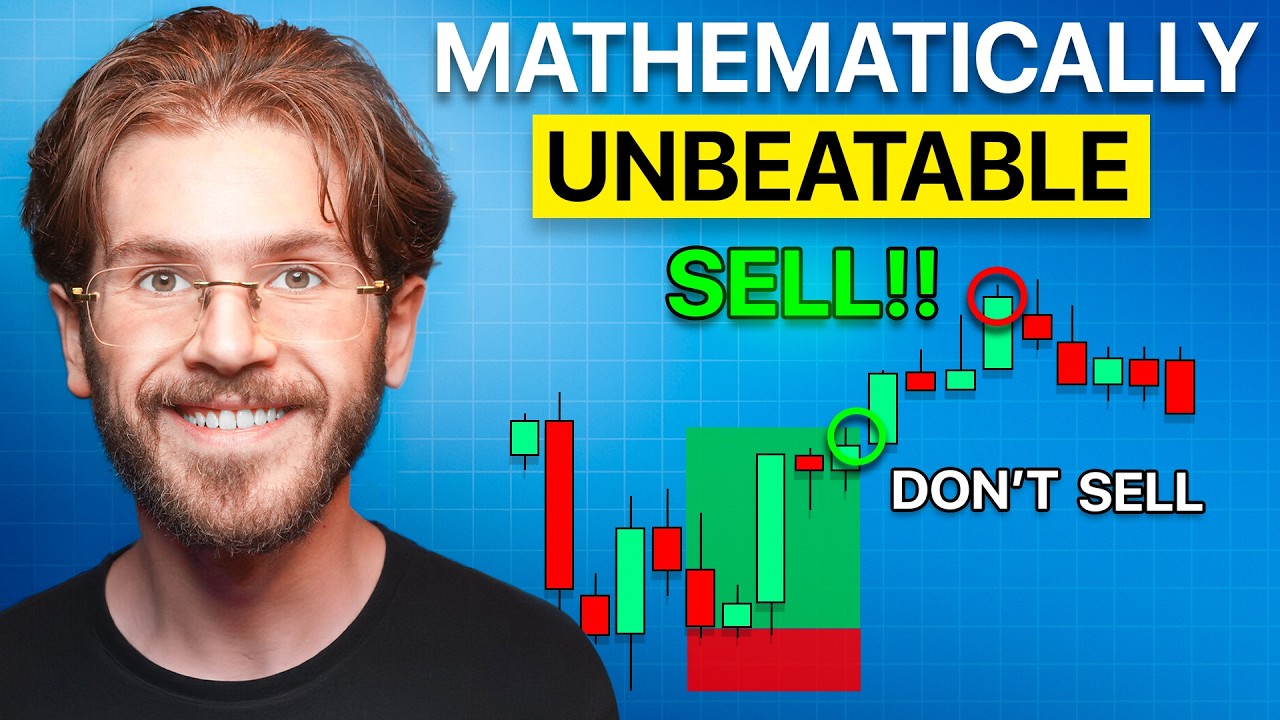
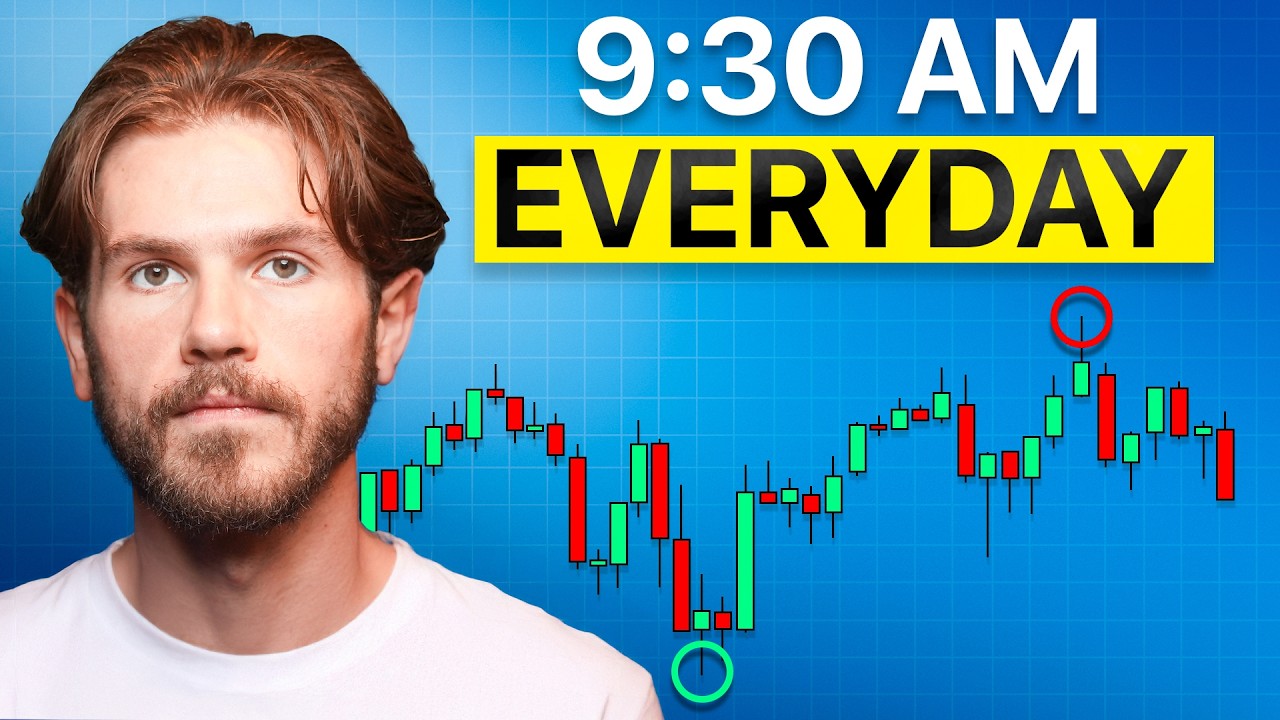
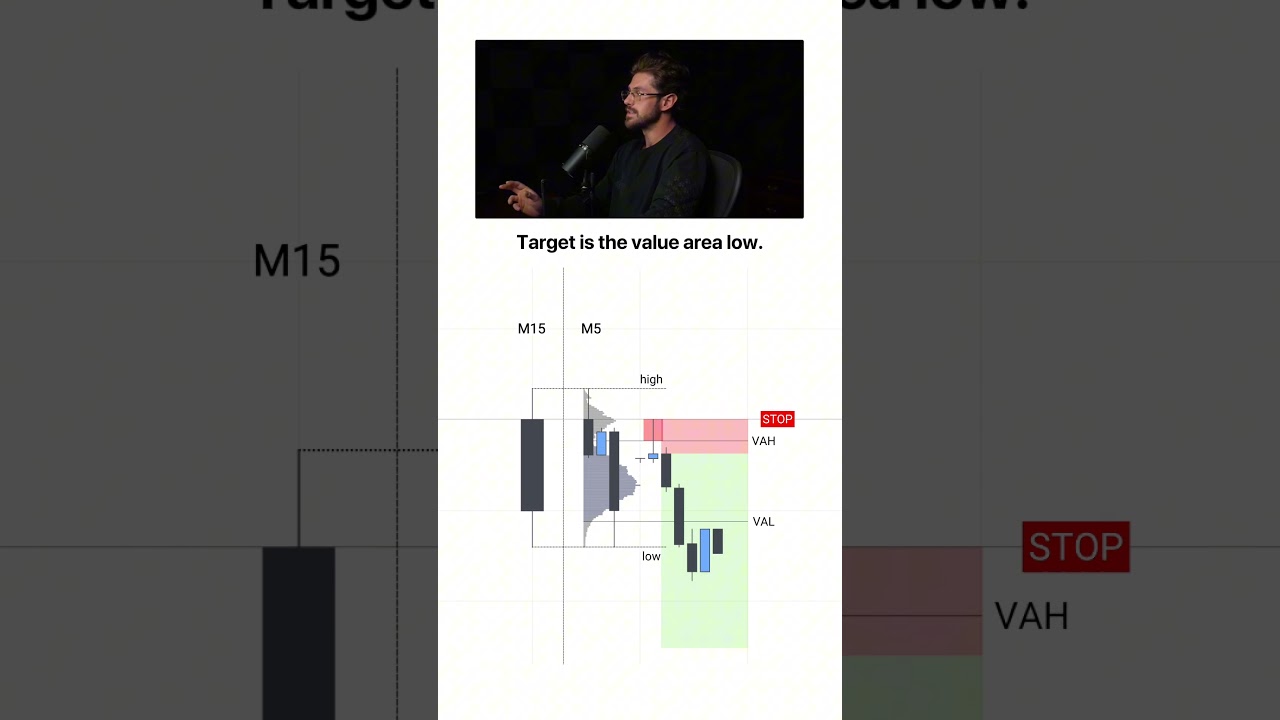
All right, so I just entered this trade and I want to break down why I am in this trade. So as I posted this morning in the free discord with Outlook, I was looking at this area in the volume profile to be responsive. And I was anticipating if we dip down into this that we would get a little bit of clarity on the market. Now I want to give you guys a lesson on when models fail, how you can leverage that in your advantage. This morning we have this first 15 minute candle which is a part of our first candle rule. But as I said in the Outlook, this is a setup you want to be a little weary of given the market conditions. Right. We have a very, very large displacement to the upside. We've got all time highs where we know a lot of resting liquidity lies. And whenever we have price this close to a big level like that and you've got support right below typically sell setups are going to be something you want to pay a little less attention to. Now, whenever we go down into this area, what happens in price? Well, we come under that first 15 minute low. And you did even get a fair value gap at some point right over here through it. But these are the kind of setups that you want to sit out when it comes to the first candle rule. So I want you to pay close attention because I'm going to show you why. Number one, like I've already said, you've got an obvious area where the market is likely to go towards above you. That alone is one reason. Number two, you have an obvious area of support just below you. Number three, the market didn't really give a decisive push on this first break. As you can see, we kind of wick down under it. Wick down under it. Market's fighting, it's not really giving any clear direction. And yes, we did get this fair value gap down. So technically, if you took the setup trading it mechanically, you didn't do anything wrong. And to be clear, you can trade like this and be profitable as long as you stick to it. However, if you want to reach a higher level of trading, there will always be a little bit of discretion involved. Okay. Now when we stack up reasons of why the market might end up not being in our favor for a setup. And it's logical, it's not based on emotion. You can sit here and write out, we are this close to all time high, we are in a level of support the market isn't really giving a clean setup. Like these are all things that it's not emotional trading, it's Logic, right? You're plotting yourself with logic to know when to sit out on certain setups. So once we get these setups failing, and on top of that we've got this five minute IFPG now that failed. We've got bullish structure coming out of this area of support and we also know we have a clear target and great risk to reward. That is where I look to get into the market. Now the reason that I put my stop right here at this level is because it's just a little under this first candle right here that started to pivot away from this wick, or I'm sorry, from this sell off right here. And with this wick, I don't want to have my stop down an extra, let's see, an extra 12 points whenever I. If the market goes right here, it's very likely to go down here. Okay? Okay. Very, very likely. So that's the overall logic behind the trade. And I'll give you guys an update here in a minute. Once it starts playing out. I don't really picture myself managing this one too aggressively. I'll kind of just let it do its thing and we'll see how it turns out, whether it's a win or a loss. Now I wanted to make a quick little update here because look how close we got to the stop right here and look how close we still are to it. And I want to ask you, in these situations, how do you conduct yourself?
In these situations, how do you as a trader conduct yourself? Do you make the decision to say, oh, I'm going to move my stop loss or oh, I'm just going to cut the trade early because I don't want to take a loss like that. Right there is what defines how good you are as a trader. More so than spotting an inverted fair value gap or, or any of this other stuff that you can do. Those decisions are what will make or break you. 100. No doubt in my mind that learning how to act under stress is the most important skill that not only you need as a trader, but as you need as anyone who wants to be successful in pretty much anything. Because you know, wars aren't won in the easy battles, right? Wars are one of the difficult battles. So just wanted to pop in and just draw some attention to that because notice how close we got and maybe it does hit my stop. I don't know. That's the beauty of trading, right, is that we don't know there is no such thing as certainty. So we have to just trust in our edge and trust in the system to play out and we're going to take losses, we're also going to have wins. But what you remove is the possibility of consistency. If you make emotional decisions and move your stops or remove them or just cut trades early because you can't bear to see the red, you have to understand that this number until it's back in your bank account or until it's coming out of your bank account to go in your trading account, it's not like you can't think of it the same way as like, oh, today I lost this much or you know, I get, I get asked a lot, how much can I make a day as a trader? Come on, you know, like I don't, I mean you could average it out and say, okay, cool. Like you know, if you want to make $1 million a year as a trader, I think it's around $4,000 if I'm not mistaken, because of all the trading days you have, it's probably a little more, a little less. Somebody's going to comment and say, I, you know my math wrong. Cool. But the point I'm trying to make here is that whatever your average is like, you're not going to make that every day. Like some days you'll probably have way bigger days and some days you'll have worse days. The, the goal as traders is we want to control that downside and not ever let us have a bad day. But you know, some days we're have break even, some days we're going to have a very small win, some days we'll have those big wins, but oftentimes it doesn't come around that often. And you have to understand this, that that is why trading is hard. Trading isn't hard because, oh, I gotta figure out how a strategy works. Like you guys literally have a strategy that is proven to work over the long term and it's stupid simple. Like literally stupid simple as it gets. So it's not necessarily the strategy as much as the decision making as much as it is the emotional control, the self awareness, the accountability and all the things that actually go into making you a good trader.
So we'll see how this trade pans out. I'm going to be sitting here doing some work, so I'm going to check off of the video, go knock some stuff out. That's another lesson for you. Whenever you're in a trade and you've done your work, you want to sit back and let the market do the lifting for you. You don't want to just aggressively watch the Chart, especially if you're a newer trader. The longer you watch that chart, the longer you're sitting here putting yourself in the position to possibly make a mistake, the higher the probability you make mistakes. Right? So what I like to do is if I look at a trade and say, okay, cool, like, I've got what I need. I'm going to just give myself some time to go do something else. Like, I don't need to do anything else with this trade. Then I'll purposefully remove the chart from my screen. Sometimes I'll get up and leave the rooms. Good, go do something else. Most of the time I just working on one of my other projects or my other businesses. But that's the way I like to balance the emotion. Because even me, where I'm at now, nine years into my journey, I'm not going to be a saint and sit here and tell you that, like, I'm perfect and I never make mistakes or I never have emotions or that I never have the urge to make the wrong decision, because I definitely do. And I do make mistakes sometimes. But it's not so much about being perfect as it is about making it easy on yourself, right? Like, don't give yourself. It's kind of like if you're. If you're trying to get fit, you don't want to have a bunch of Oreos and stuff sitting on your counter. Actually, my fiance is like the best baker ever. Like, she makes the best homemade banana bread. She does it all from scratch. She does. Makes just amazing food overall, as you guys probably see in my stories. But I have to tell her sometimes. I'm like, please, like, just don't put the muffins and shit out. Because I'll have the discipline not to eat them most of the time. But every once in a while, if I'm trying to cut, I might put my hand in the muffin jar. So more of the story, guys, don't, don't be. Don't have the muffin jar out in plain sight if you don't want to eat muffins. All right, so now we've got some good movement. Thank God I didn't close right When I was recording this, I was like, subconsciously, like, man, I really hope that my stop loss doesn't get hit or I'm gonna look like a dummy to people, but I really wouldn't give a. Anyways, there's still a lot of value in what I was saying, but obviously let's go that we are moving the right direction. So at this time now that we've got a nice displacement. What I want to do is since. And this is a good method for trailing stops. If you watch my videos last week, you'll see what I'm doing here. But essentially, once we pop out of a clear range, like so, like we're starting to pop to the upside. And as you can see, this is that first 15 minute range. We now have a reason to move our stop up, right? I'm going to move my stop up just under this candle right here. Because with the first 15 minute, the first candle rule, if we get a fair value gap through here, the model would be as such, it would be an entry right here and a stop right here and then just a fixed to R. And I know data behind this, that this has a high edge in the market. So if I'm already in a trade for other reasons, I might as well go ahead and move my stop up if I know that there is a setup that has an edge, right? So that's a way you can move your stop up without being emotion. Again, it's, it's about logic and being able to, to build a case, right? You should almost look at it like you are the judge, the jury and the lawyer, right? And you have to kind of make a case to yourself of why you should make decisions. And you have to be able to put yourself in that jury position and understand like, okay, is this, is this a logical case? Like when you're in the. Because the lawyer version of you is always going to want to build a case as to why you should trade, right? Or for some people it's the opposite because they hesitate. But typically it's going to build the case first off and emotionally based on the mistakes that you're usually going to make. But if you have somebody there for you that can bring reason to and say, okay, like, why do you think that? You know, a lot of times people will say like, is this a good trade? And I'll just be a picture of a trade. And it's like, I don't know, like, did you follow your plan?
What was the logic behind this? And people will say, I don't really know. I don't have a plan. Okay, well, there's your answer, right? Even if you won, it wouldn't be a good trade because there is no trade, it's gambling. So you have to ask yourself these questions because you know, you can have a mentor to do this. But I firmly believe that a mentor that is a good mentor, like what I try to do with people is I always try to do this, but I do it in a way that reinforces them to learn the thought process of what I'm doing. Right. Because that's how you really make an impact. It's like they say, you know, feeds. Teach somebody to fish, you feed them for a lifetime. So hopefully I can do the same for you guys here that are watching these videos. I know these are a little bit more boring, right, than the typical tutorials. But honestly, guys, I think that there's probably just as much, if not more value in these. Because you have two types of education I want you to think of like, let's say a welding classroom. I took welding in high school. And in welding and any other skills you had, the classroom where you look at the books, you go over your safety tests, you learn a little bit. But then where do you actually learn? In the. In the actual field of doing things. And executing. And trading is the same way, because I look at trading like a craft. And in any craft, you need to understand the foundations, the fundamentals, and how you do things. But then, guess what? You got to go and do them. If you read a book on how to swim or how to play a guitar, does that teach you really how to play a guitar? No, it doesn't. You're not going to be able to successfully execute without executing. And that's why these videos, I think, are very helpful, because they take you down that mental thought path of what to do and how to think and what not to do and then the nuance of things, because that's where trading gets difficult. So we'll see how this trade plans out or pans out. My plan right now is to see how we react to this fair value gap. I'd like to get a displacement from it or maybe the market just doesn't revisit it. I will watch as we get up in this area for any, you know, trims or maybe moving a stop up, depending on how much force we get. Because whenever we look at the market from this view right here, as you can see, we do have this high volume node the market's kind of trying to get over right now. So if we can get above this area right here, like you can see, this is where it starts to kind of be on the downside, which is that 20. We'll just call it 25, 3, 25, right around this area right here. If we can get above that, that's where I'll start prime, moving up my stop to just under this level or to break even. And then seeing if we can get some legs under this market. Because one thing to remember is that while we do have a lot of liquidity here at all time high a lot of times too, you know, we got to remember there's a lot of people that were positioned here. There's probably a lot of people that are, you know, selling from this area that don't want the market to go above it. So these are the areas you'll have that chop at, right? And that's kind of like what you saw right here. This is why, you know, if you're learning from ict. In ICT there's market maker models where it's essentially just this pattern right here, but there's always those pauses on the way up. So like, if this is your target, there's going to be a pause. There's going to be a pause and usually a little shakeout of traders, right? And that's the market hitting into these higher volume nodes, kind of like what you have here. So whenever we know that this is likely and then if we go down to like a five minute, as you can see, kind of like what I was talking about as we approach these higher volume areas, then we expect the market to maybe, you know, kind of pause, maybe shake out. And what happens or what matters is what happens right here. So as you can see, you can tie in the volume profile to uncover what you're really looking for when it comes to ICT and understanding where the smart money or all these things, right, like getting the actual value and the action steps out of it. And in my opinion is much easier when you have clear data on it rather than just trying to, you know, guess and, you know, overthink things and have the ego of like not using anything at all. Like, you know, this is an indicator like to call. And that's another thing too, I've seen. Like an indicator to me is more so like RSI or some kind of like, you know, that's built on lagging data and stuff like that. But if we have something where it's literally based on the market data, it's based on volume, that's not the same to me as, you know, like trading some like, you know, buy and sell indicator or something. So anyways, trade's looking good right now. We're floating about $2,500 and we'll see how this unfolds. All right, guys, so we've got a nice pop in our direction. This is what I was talking about in terms of waiting for, you know, the push above this high volume node. So What I want to do here at this time just to cut down the risk is, is move our stops at least to break even. I'll probably put it a couple points above. I'll just put it up here at this290 right here at the base of this Fair value gap 292.5 and leave it there because at this point the market should, if we're right, should keep moving in our direction. We shouldn't have this big pullback because if we do we could look at it like the market wasn't getting accepted here. I don't know what notification that is in my fucking computer. I don't know about you guys but, but you have a bunch of windows open sometimes and you have this rogue little notification and it's like a new sound and I cannot figure it out and it's been terrorizing me. My autism flares up whenever I get random noises like that. Anyways.
Trade looks good. I want to keep our stops here under this. Actually you know, looking at this, looking at this profile, you know, this is a, this is a tricky one because you could put your stops up just a little bit more like under this area right here.
Which actually I'm going to go ahead and do that because you know, I'm basing it on the fair value gap right here, this getting filled. But realistically like I don't want to see the market come back under here. Another thing to pay attention to as well is you have that 300 level right above you, right? Because this is 2985 if you look over on the right hand side. So at this time I think that it is rational and this is what I was talking about again to kind of build a case to put our stops up a little bit right there. That way we are securing fees, securing a small little gain, right? Like 10 points. Nothing crazy but the one thing we don't want to see if this market's going to go to all time high is the market to get rejected here and really come back down. Because if that happens, sure, maybe it can go, maybe it can go. If that happens and I'm still around, I could probably re enter. But typically what'll happen if you fall back in? You're not getting accepted, right? Like this is where there's a lot of volume. If you're not getting accepted here, guess what's going to happen. Market kind of moves down and then it might take a while to make its mind up and that's where all lot of traders blow their account is in that Chop. So we'll see how this pans out. Either way, we've secured a small win, probably like 800 bucks, which is, hey, I mean, at the end of the day. Another thing too is that one thing I've always taught myself, and this is something you guys should teach yourself as well, is not to forget the value of money. Now there's a fine line between doing this right and then being fearful. But the point of what I'm trying to say is I don't know about you guys, but there was a time in my life where $800 would have changed my entire reality. And sometimes it's really easy to get detached from those times and forget where you came from to where like you're almost mad at making $800 in some weird fucked up way. So one thing I always like to remind myself is think about like a lawyer. Like a lot of people will say that trading is the hardest job in the world. I think that's not true. Like we'll use a lawyer or a doctor, for example. So a lawyer, what do they have to do to even get started? Well, they have to spend six figures in education, fees in school, spend, you know, six to 10 years before they even start or make any money. Most traders don't go down that extreme of both a time and financial, you know, detriment. Yet a lawyer, what do they end up making? A really good lawyer will make like 700 to $1,000 an hour. And that's like the good, good lawyers, right? So who are we as traders if we get to a point where you're probably one, two, maybe three years into this? I mean, I'm into it nine years, but a lot of people are trading these accounts and these funded accounts and stuff or new to trade, and they came in, in covet or they came in after, right? And then they'll almost get like upset if a trade ends up, you know, not get making this huge profit that they wanted, even if they make some money. And then when that happens, you shift yourself into this negative mindset where you're literally operating from scarcity because you're looking at it like, oh, this opportunity's gone. I coulda, shoulda, what a. But I didn't. And then in reality, you're literally making in a very short amount of time what somebody else makes, that they dedicated 10 years of their life to get to that point. And it's just an important way to reframe things because I think that a lot of times the way that your mindset is about everything not just like your trading psychology, but just the way you operate as a human being is going to be the potential of how successful you can be in trading or in anything else in life. So little TED talk there for you guys. Now let's see the market rush to my stop loss after I've given you that motivational speech because that's the SOP here. I'm just kidding. But we'll see if this thing pans out. I still like where it's at. Like another thing too is watching. You're seeing like we're still holding above this not really strength. Like we got above it, started to get a wick to the downside and the market does seem like it's hitting into a little bit of pressure here. So we've got our stops up but, but overall, you know, we're still holding against the or above the most high volume of this little new area we've, we've formed. So you want to look at it kind of like the higher volume areas are like a line on the sand. Just like we have the point of control way down here which has higher volume, you have these little kind of high volume nodes that are formed outside of the value area and you can look and just see what is the point of control essentially in this new established price area. And you don't really want to see the market get too far under that. So we'll leave our stops where they're at right now, kind of let the market do its thing and come back and check up on how this trade pans out. So what I'm also going to do here, just because we do have a pretty big range and the market is kind of stalling, I'm going to take my stop and I'm going to now move it just under this candle right there up to that 311 and two ticks. The reason I picked that candle is it's just the candle that has a wick low under this high volume area. So I'm being a little bit more aggressive now. I've secured what is this like 23 points on four contracts. So I've secured a little bit of profits here for the day. If this market does decide to chop back down, worst case scenario is, I mean, you know, maybe it just hits and just rockets without me. It is what it is. If that happens, maybe we pop back down, maybe I find another entry, maybe the market pops back down and doesn't plan out. Or we all ride off in the sunset in our Lamborghini Aventador SVJs and the market rushes to all time high in the next five minute candle. Stay tuned to find out. All right, so we got a nice pop down into this high volume node. And then as you see, we got an engulfing candle here. Personally, I don't want to see us come under this candle again. So I'm going to move my stop up there after we hit into this level. Like, you see, we hit into it once, kind of dancing around to it. We swept a low right here. Like, if you zoom in, you swept a low right there. This candle is low because we have a higher low on either side of it. And then we swept that and engulfed. So at the end of the day, I don't want to just be holding onto this forever and opening myself up to extra risk if I don't have to. Yes, it's only four points, but hey, four points adds up over time if you're able to secure an extra four points on average. So just wanted to make this update. I do have a zoom call with my assistant at 12:30. It's 12:26 right now, so I'll try my best to make updates during that. I might end up. It's pretty quick call, but just kind of like round up on all the projects we're working on. But.
Yeah, so I'm gonna try to make as many updates as possible with the given circumstances. But I just wanted to make that really quick as I was moving my stops up. All right, so I got trailed out on that move for around $2,400 in profits. Now we have hit into that initial first candle rule breakout, fair value gap. So I want to see how the market reacts here. I don't want to see this candle hang out here for very long. Like, ideally, you'd want to see this candle pop right back above all of this. Otherwise I'll probably be done for the day. But I will come back and update you guys regardless. I just wanted to give an update because I did get stopped out in profit on that trade. And I think this has been a really valuable recap so far. Let's see if we can find another trade or we'll just close out the day. All right, so no dice. And this is kind of what I was talking about. If we lost this level, I anticipated us to either fall back into the range and consolidate or fall down further. So I'm going to call it on that for today. What I would expect is most likely we'll probably pop down into this range or maybe consolidate a little bit around here. But it doesn't look like this market's ready, but you see how using those levels and having a logical rationale to trade management can help tremendously. So if you guys want to get outlooks on the market, I have my free community. I'll leave the link in the description. Make sure to subscribe to the video. I'll leave a playlist on the video as well. That way you can go watch some more in depth tutorials. I wonder if you're new to the channel comment because like, I feel like most of you that see these are like people that have been watching the channel for a while. But yeah, guys, hope you guys had a good day trading today and I'll see you guys in the next one. Peace.