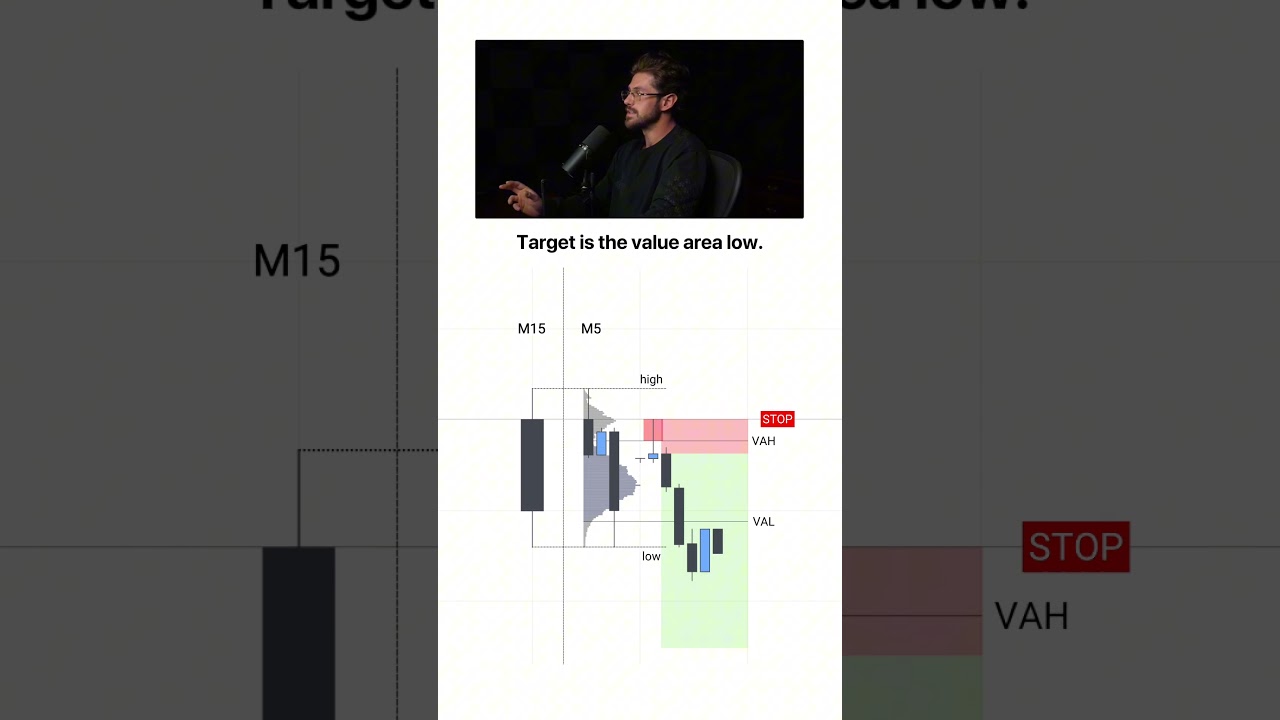
This is how real people get good at trading (FAST).
Jesse Rogers argues traders improve by fixing execution and mindset, not hunting perfect strategies. His one-week protocol: trade one rule-based system on one market with tiny risk, journal every emotional reaction, and use trailing stops instead of hard take-profit orders to let winners run.
Chapters
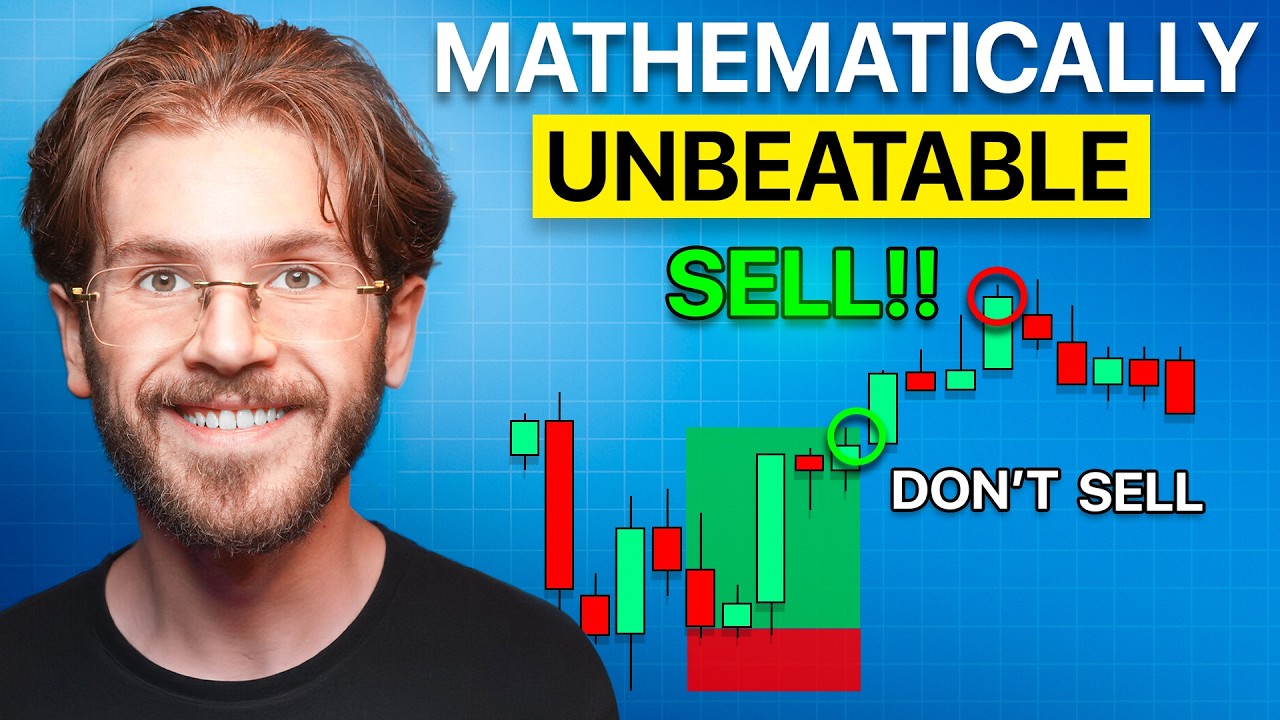
Most trading content is not going to admit this, but getting good at trading really doesn't have anything to do with your strategy. And if you believe that, then you are going to waste a lot of time. And this is exactly what I did whenever I started trading back in 2016. I kept searching for some perfect setup because honestly, endless studying felt like progress, but in reality it was just my way of protecting myself from having to actually execute. And eventually, after years of failure, I went from DoorDashing to becoming a 7-figure trader And what finally did it wasn't some new indicator or better analysis or a new strategy. It was a complete shift in my approach to trading, which is exactly what I'm going to teach you today. But before I show you that, we have to have a talk about why you're actually stuck. Now, chances are you're stressed out about trading and wondering why it hasn't worked for you, even though you've worked so hard. I mean, you've watched every YouTube video, you've read the books, you know all these strategies, and on paper You know so much about trading that anyone who doesn't trade would think that you were an expert. But whenever it's time to execute and there's actually money on the line, you choke. Or worse, you throw away your plan, overtrade, and this is how you end up getting stuck in a cycle of blowing accounts. Now, every other trading video on YouTube just says that you need to be disciplined, you need to fix your emotions. But telling a struggling trader to just control their emotions is like telling a drowning person to swim better. It's just useless advice. You can't just fix your emotions. You have to understand exactly why you are drowning in the first place if you want to overcome them. Now, let me tell you exactly why this is happening, and I promise you it is not because you need another strategy video or some motivational talk. It is because of a psychological law that I call the Law of Importance, which states the more importance you place on a specific outcome, the harder it will be to achieve. And because you want to succeed so badly, because you want to provide for your family or quit your job or whatever it was that got you into this in the first place, you have put trading on a massive pedestal. And when you attach that much importance to outcomes, the pressure to be perfect makes you overthink everything. Your brain literally can't handle the stress of making a mistake, so your subconscious looks for a way out of it, and it's going to push you into something that I call productive procrastination. And frankly, you're not entirely to blame because everything you were taught in the school system programmed you to be this way. You're taught that you need to study and figure out all this information so you can then go and take a test and pass it and become a good student. Now, remember that the same system that designed this to program your brain to think that that's what success is, is the same one that you're trying to escape from by learning how to trade. But because of the way that you learned in school, You look at the live market like some exam that you have to study for. But here is the harsh reality. Trading is not a game of studying or information. Trading is a game of learning how to think properly and make decisions under emotional pressure. And right now you're trapped in this endless cycle of studying because there is a version of studying that feels like progress, but it actually just functions as protection. I mean, think about it. As long as you're in the still learning phase, you can't really officially fail, right? And this is exactly how the Law of Importance directly destroys the number one metric for anyone who is trying to get good at trading fast, which is the rate of learning. Rate of learning is what separates people who take 6 months to get good at trading from those who take 5 or 10 years, or those who never really make it at all. Now, the ones who do make it in 6 months, they kept their rate of learning extremely high. By not overplanning. And the ones that take years and years and build up so much bad habits and trauma, this is where you hear these crazy horror stories of people losing their house or their lives to trading, and it's because they drastically reduce their rate of learning by overthinking and overplanning everything, and they basically just shut off their brains. Because, I mean, what is learning anyways? Most people think that learning is gathering information. It's not, okay? Learning is experiencing the same situation and executing a new behavior. When you are studying, when you are planning, you are not learning anything. No, you're just preparing to learn, because in order to learn, you have to actually go out in the real world. So by investing all of this time and energy into planning, you are ultimately just telling yourself a big lie, which is, if I study hard enough, if I prepare long enough, I won't fail. But who With trading, it does not matter how much you know. You are still going to make mistakes, and when you do finally start, you will struggle. Okay, I can guarantee you that. And because you've spent so much time preparing in order to avoid this struggle, you're going to get shaken up 10 times harder than if you hadn't prepared at all. Why? Well, because you just spent 6 months convincing yourself that you did things right. You were responsible, you learned so much, and you've reduced your chances of failure. It's like obsessively rehearsing what you're going to say to somebody that you're nervous to talk to. The more that you play out this conversation in your head, the more awkward and paralyzed you're going to be when you actually have to have the conversation. Now, whenever I was still DoorDashing and trying to trade on the side, I was terrified of losing this little bit of money I had, and I fell into the same exact cycle. I would stay up all night after work watching trading videos, filling up notebooks, trying to learn everything I could because I thought that if I knew everything there was to know, there would be no way I'd fail. And I didn't realize it, but I was just hiding from doing the real work. I thought that I had a knowledge problem. I didn't. I had an execution problem. And the difference between a trader who fails and the trader who is successful isn't talent, it's not intelligence, it is the ability to take action before you're certain. So stop using research as a safety net and start actually trading. Because remember, real learning only happens in the live market when you take a loss, when you feel the urge to revenge trade, when you feel the urge to make a mistake, but you physically force yourself to execute a new behavior instead. If you are presented with the same situation and you just do the exact same thing that you did yesterday, you could have watched 100 videos, but you didn't learn anything. So how do you actually break this cycle? Well, I want to give you a practical exercise that you can start tomorrow morning that will build more real trading skills than you'll gain in an entire year of watching trading videos alone. So for the next week, you are on a strict, and I mean strict, information diet. No new trading content. And the only exception to this is if you genuinely don't have any strategy at all. You cannot do this if you don't have a rule-based system because you do need to go out and actually trade with rules. If you don't have a trading strategy, I'll leave a link in the description to a video you can watch. But once you have a strategy, you're going to pick one market. One setup, and you're going to execute it every time it appears. You're going to keep risk microscopic, literally the smallest amount of risk that you can possibly risk. That way you just feel something and there is some tension in a trade, but you're not going to go out and hurt yourself. But here's the real secret to this exercise. The edge isn't going to come from just trading by itself. It's going to come from what you do the moment the trade closes. Every single time that you execute you are going to journal your emotions deeply. How did you feel when price hit your key level? What exact thought went through your head right before you broke your rules, right before you took a random trade? How did you feel whenever you took a winning trade? How did you feel whenever you wanted to adjust your stop loss or your take profit? You see, your goal for this is to do this the next 7 days, and you're not going to become profitable in the next 7 days. But what you are going to do is identify your emotional triggers. Because once you find them, you can build a mechanical system to take away their power over you. And the moment that you face those exact same emotional triggers in the live market, but you don't make that poor decision, that is when you can finally say you are actually learning. So we're going to break down exactly how to build those systems later on. But if the thought of stepping into the market tomorrow and doing this makes you anxious, there's only one reason why. You don't have 100% confidence in a system, so your brain panics. You start overthinking everything and you fall straight back into a trap that I call the black box. Now, before we get into this, I need to make something very clear. If you've been struggling, if you can't stay disciplined, if you feel like something's wrong with you, I need you to hear this loud and clear. You are not broken. Okay? Right now, I know it feels like that, And when you lose a trade, it's not really just about the money. It feels like you're a failure. So then you get mad at yourself and you assume that since you can't follow your plan, there must be something wrong with your brain. And this is exactly when you fall into the black box. Now, the black box is this trap of believing that your lack of profitability is some deep-rooted psychological issue. You dive into this and convince yourself that you're self-sabotaging or that you have demons, that are keeping you from becoming profitable. So what do you do? You go down rabbit holes of trading psychology, you read books, you watch podcasts and motivational videos, and you end up convincing yourself that you have these crazy mental issues. And before you know it, trading has just became one big therapy session. But your real problem is not any of that, okay? It's that you're trying to solve a mechanical problem, which is a lack of experience, with a behavioral solution. Which is psychology. Warren Buffett once said, it's not about how hard you row, it's about what boat you're in. Right now, you may be rowing as hard as you can inside the black box, trying to fix your mindset before you've even taken 100 journal trades on a single strategy. So not only are you focusing on the wrong thing, but you're actually making yourself a much worse trader because you're creating all of these limiting beliefs about yourself telling yourself that you have all these problems. And if you believe those are problems, then eventually they will actually become those problems. You also remove accountability to focus on the actual work, because if you have some mental problem, you're always going to be searching for some secret magic pill to fix it. And I see this all the time with people that ask the question, what was the biggest breakthrough? What was the number one biggest thing that changed? Look, there is none of that, okay? There is no big breakthrough. It is many small breakthroughs that occur over time. Guess what has to be happening in order for you to be aware that any of these little light bulbs are even going off? You have to actually be learning and changing your behavior. But by focusing on the wrong thing, you end up doing the opposite. You lower your rate of learning tremendously because now you're creating even more friction and ignoring what actually matters. And if you're not careful, you could spend 3 years of doing this to make less progress than someone else who spends 3 months focused on the right things. Ouch, right? Now, the good news is you do not have demons. You just have a severe lack of concrete skills on how to behave under pressure. You don't need to spend years journaling about the deep emotional reason of why you revenge trade. You just need real rational confidence in your strategy so that way you don't have the desire to revenge trade as much. Because in reality, trading is actually incredibly simple. Now, I want to be clear, simple does not mean easy. However, by complicating it, you make it a lot harder than it needs to be. At its core, any trading strategy is the exact same thing: 1, finding a way to map key levels, and 2, plotting your reaction from those key levels. Anything past that is the black box making things more complicated than they need to be. I mean, think about it, if you have a clear a simple system that you knew with certainty gave you an edge, would you really have that much of a problem sticking to your rules? No, you wouldn't. Trading psychology problems would be magically solved if you just had full confidence in your edge, and you're not going to get that from overthinking about trauma or beating yourself up. It comes from staying intensely focused and doing the boring and mechanical work first. It comes from controlling your inputs, trading the exact same market during the exact same session with the exact same risk every single day. Test your strategy over 100 trades and just look at the data. What times of day was it the most profitable? What times of day was it the least profitable? What days of the week did it perform best and the worst? Having this kind of proof will instantly fix many of your trading psychology problems. So stop looking for demons that don't exist. Ignore all this crap entirely because it is going to put you in the wrong state of mind. Instead, just focus on putting in the reps. But if trading is actually this simple, all you have to do is map key levels and plot your reaction. Well, how do you actually find those key levels and how do you trade them consistently? Well, it comes down to a concept that almost every beginner gets completely wrong. Most traders tell themselves that they are going to trade responsibly. They're going to wait for A+ setups. I mean, who wouldn't want that, right? So naturally you build out your trading plan. You need market structure aligned on all timeframes. You need it to happen at a certain time of day, and at least 3 confluences need to suggest that this is a good entry. And before you know it, you've got this page-long list of requirements to get into a trade. So you've ended up so obsessed with being patient and finding the best trades that you become completely blind to everything else that the market is doing. But here's the truth. Being rigid isn't disciplined. Being rigid will kill you. And if you make your criteria so specific and rigid that it boxes you in, you're just going to overthink everything and freeze. You don't need some 50-step checklist to protect you from ever losing a trade. You need to simplify your entire system into 3 basic basic questions. One, where exactly do I want to do business? Meaning, what key levels do you trade from? Two, what confirmation do I need to see to do business? Meaning, what pattern or behavior do you look for in the market at a key level to confirm a breakout or a reversal? Three, how do I do business? Meaning, what is your exact risk management and trade management? That's it. You mark the levels, wait for price to hit them, and then execute. But that third step, how do I do business? How do you actually manage trades once you enter? Now, this is where almost everyone leaves a lot of money on the table and literally nobody talks about this. But once I realized it, this was one of, if not the biggest impact to my entire trading career in all the 10 years that I've been doing this. And it all goes back to whenever I first started trading. Whenever I first started trading, I read a book called Market Wizards. And if you didn't know already, this is an extremely popular trading book where a guy named Jack Schwager interviews tons of different millionaire and billionaire traders, and all of them had different strategies, yet they all had one thing that they all gave the same advice on: cut your losers short and let your winners run. But they never actually tell you how to do this. Like most beginner traders, I let this go completely over my head and wrote it off because I thought it was just surface-level copy-paste slop advice. But recently I reread the book as a veteran trader who's been doing this for many years, and it was so obvious to me. It was almost like this intuitive thought just came into my head and I knew that there was something massive there. So I went back and looked over all my trades and I started to just calculate how much more money would I have made had it just held past my take profit. And this brought up an obvious problem. If I never took profit, what would happen about the trades that didn't go further? Because I noticed that while a lot of them went way further, there were some that reversed. And this put me on a mission because I knew that I had to devise a system that allowed me to get more of these trades. Because as the greats say, you got to let your winners run. But I needed to do this without exposing myself to risk. So Here is what I'm going to share with you is the technical way that I did this, which is very highly effective. It's so simple and so obvious, and it's just that you need to stop using take profit orders. If you have a hard take profit set, you are literally putting a cap on how much money you can make on a single trade. Instead, you have to get comfortable with letting a trade run. Now, a lot of people are saying, Oh, that's gambling. You're being a degenerate. Look, I really don't care what you think. I know what has worked for me. And the truth is, a lot of the advice that you guys are going to get on this app from other traders is repackaged, regurgitated slop that they say to sound smart and sound like a guru. It's not actually to make you money. Now, I could care less what you think of me. I'm just going to tell you what has actually worked for me and has made such a big impact on my trading. And if you guys have been following me for a while, you've seen me grow this small account from under $10,000 to now over $200,000. And this is exactly how I did it. So what you do is as price approaches the target where you originally would have taken profit, don't close the position, but instead using the entry timeframe, meaning the timeframe you found your entry on, you're going to move your stop loss up to the candle that printed right before the one that hit your target, and you're going to trail your stop loss behind the move. If the market reverses, you still secure your profit. But if the market decides to rip higher like it often does, then you're going to be ready to take that trade much higher and capture gains that you would have not caught if you had that rigid take profit order. And it's not going to expose you to much extra risk. It's almost like you're taking a new trade where your entry was your original take profit. Your stop loss is that one candle and the take profit is going to be much, much higher than the original risk to reward you took on the first trade. So when you start shifting your brain to think like this, you start to realize how actual veteran traders think. It's not always about this fixed thing where you have this comfort of knowing exactly. No, it's not going to— that's not going to make you very wealthy as a trader. It's not going to make you very good at trading. So once you realize this, you unlock an entire new world of being able to make more money in trading, because for a lot of you guys, you're actually closer to profitability than you think. Like if you were to just go and say, okay, if I increase my average risk to reward by 50%, or by 30%. Odds are that alone would instantly make you a profitable trader. Not only that, it would make you more confident and it would put you in a better state of mind. That does what? It increases your rate of learning. Now, once the market expands, every time it puts in a new point of structure, then that is where you trail up your stop again. So you're going to be able to ride out these trades for as long as that trend keeps going. And this is what all of those billionaire traders did. They said trade with the trend, let your winners run, all this stuff that doesn't really make sense when you first hear it. So I wanted to put together an actual system around how you can do this. Now, once you strip away all of the rigid rules and simplify your trading into those 3 things that I told you, how do you actually know if it's working and if you're doing it right? Well, when you start executing these trades, you're going to realize something very quickly. Trading is not just one skill. It is a full business. And learning to trade is a lot like running a factory. In a factory, you have different departments. In trading, your departments are your strategy, your risk management, and your emotional management. Now, in factories, the manager of the factory has one job. If the factory isn't producing enough product, he has to find something called a bottleneck, or the one specific machine or process that is slowing everything else down, and then optimize everything around that. Now, if you're not profitable right now, it is simply because you have a bottleneck in one of the three departments. Maybe your risk management is perfect, but your strategy is flawed. Or maybe your strategy is actually profitable, but your emotional management is a disaster and you keep trading outside of it. So you have to identify your specific bottleneck. And there is really only one way that you can do that accurately. Journaling. Journaling is the highest leverage activity that you can do outside of actually trading itself. And I don't mean just like hooking up to some automated journaling software and looking at your negative P&L, right? I mean, actually taking time to dive deep into every single trade that you take right after you take it. That way you can start to identify more emotional triggers and you will notice that patterns surface that you just don't see otherwise. Like when you force yourself to document what you did how you felt, you start to realize stuff that you never would have remembered otherwise. And it's very important you do this quickly after trading, not at the end of the week. And you'll suddenly realize like, oh, I actually have an 80% win rate in the morning during this time window, but I lose all my money whenever I try to trade in the afternoon. And then you start to think, well, why is this? Maybe I'm bored, maybe I'm trying to force setups, or maybe you realize something like any time that a trade takes a long time, to hit my stop loss and ends up losing, I almost always enter a second trade that is another loss. That is a great example of a bottleneck. It's like a machine in a factory that's broken and nobody's paying attention to it because no one's auditing the process. And this is exactly what you do when you go out and just try to watch a bunch of trading videos and randomly trade and don't analyze like what you're doing because you're going to have your own unique bottlenecks. Every trader is different. And this is just a fact of what it takes to get good at trading. And a lot of times you almost like want to like shy away from doing this for some reason. Like us humans are funny. We're so smart, but we're so stupid. We always want to procrastinate the most important things. And one thing that I want to put in your mind is a thought that helped me a lot throughout my life. Any work that you have resistance to do is the exact work that is going to change your life the most, because humans hate change. Subconsciously, we will avoid doing really hard things because we know that it will force us to change who we are. And this is something that no matter how advanced you become, it will always be present, and you'll never fully be able to remove this, but you can overcome it by being aware of this and forcing yourself to do that boring work. But after you've done this boring work and you identify your bottleneck, What are you actually going to do to fix it? What are you going to do when you're in the live market and you feel one of these emotional triggers set in? What do you do whenever you have this weird urge to just take random trades to try to make back money that you lost? Well, I have a really easy exercise that has helped me a lot, and it may sound silly, but this is called a circuit breaker. And I promise you, just keep an open mind. Doing this will save you tens of thousands of dollars over your career as a trader. If you can stay consistent with this. Now, when your emotional trigger hits, you have to physically get away from your screen. Stand up, walk away, and you're going to do some basic breathwork to reset your nervous system. You can do this by simply box breathing, which is inhaling for 4 seconds, holding for 4, exhaling for 4, holding for 4, and repeat. Or what I actually have found to be better is something I learned from Andrew Huberman, which is like the podcaster, the psychologist guy. And he calls this the physiological sigh. So you take one deep breath in through your nose, very deep, and then right at the top of it, you go take a sharp inhale and this is going to fill your lungs up completely and then just let out a very long, deep exhale through your mouth. This is literally scientifically proven to lower your heart rate and lower your cortisol levels, which is the hormone that is associated with fight or flight, a.k.a. when you start doing dumb shit and start overtrading. Okay, so what you want to do is after you're in the other room away from your desk, you want to do this 3 times. And this is going to be such a simple but profound thing that will reduce the amount of times you go on these killing sprees of your accounts, right? Because that's really the thing you have to get over is once you have that trigger, it's almost like something switches in your mind and now you can't make rational decisions because your nervous system is literally in a state of panic. So step away, break the circuit, breathe, and then come back to the screen operating like a professional. And this brings us back to the most important concept in your trading journey, which is your rate of learning. You see, intelligence in trading is not measured by how many hours that you've spent on trading, but instead it's just your rate of learning. How fast are you able to change your behavior to improve as a trader? And as your rate of learning increases, this becomes exponential. You too will have your own ideas, just like I did with removing take profit orders. You'll start to tap into your own intelligence and become an amazing trader. And if you can ignore all of the noise, stop endlessly studying, and start actually executing intentionally, you will finally step out of the black box and build a life-changing skill with trading. Now, the framework that we just built together, it's not some secret indicator or holy grail of all strategies. It's just the brutal reality of how anybody can get good at trading fast. But as we established earlier, true learning isn't just gathering information and watching endless videos. Learning is actually going out and doing. You cannot study your way to profitability. And this is exactly why whenever I work with traders, I don't offer some course where you're just left alone to watch a bunch of videos. Instead, we actually sit down and trade together. Instead of you just guessing what your bottleneck is, every single trade that you take is reviewed by a coach. And we actually look at your data to find your constraints and ensure that you're taking the right approach and solving the right problems. Now, I'm so confident in this exact process that I will guarantee you become a funded trader, or we will personally trade with you for free until you are. I even buy your first prop firm challenge for you because we are literally in the trenches trading alongside you. Due to all this, we only work with a limited number of people, so you do have to apply and to protect the quality of the mentorship, enrollments close often. So if the link in the description below still works, that means enrollments are currently open. If not, you will be directed to join the waitlist. Now, I truly believe that any of you guys can do just as well as me, or even better than me, and I hope that some of you watching this video go on to do so. Whenever I first started making this video, I was putting together all these cookie-cutter beginner trading concepts, and then I realized that None of that was what actually made the difference for me. So I hope this video makes a massive impact on your trading. And remember that whenever trading gets hard, I'm rooting for you to win and you didn't just start this to give up. Thank you guys for watching. Make sure to subscribe and I'll see you in the next video.