A trader explains how to use volume profile, order flow, and market structure to identify high-probability short-term trades. He reads support and resistance through point of control and value areas, spots trapped traders to set stops, and trails profits instead of using fixed targets. Volume profile was his breakthrough for avoiding choppy markets and building a repeatable system.
Chapters
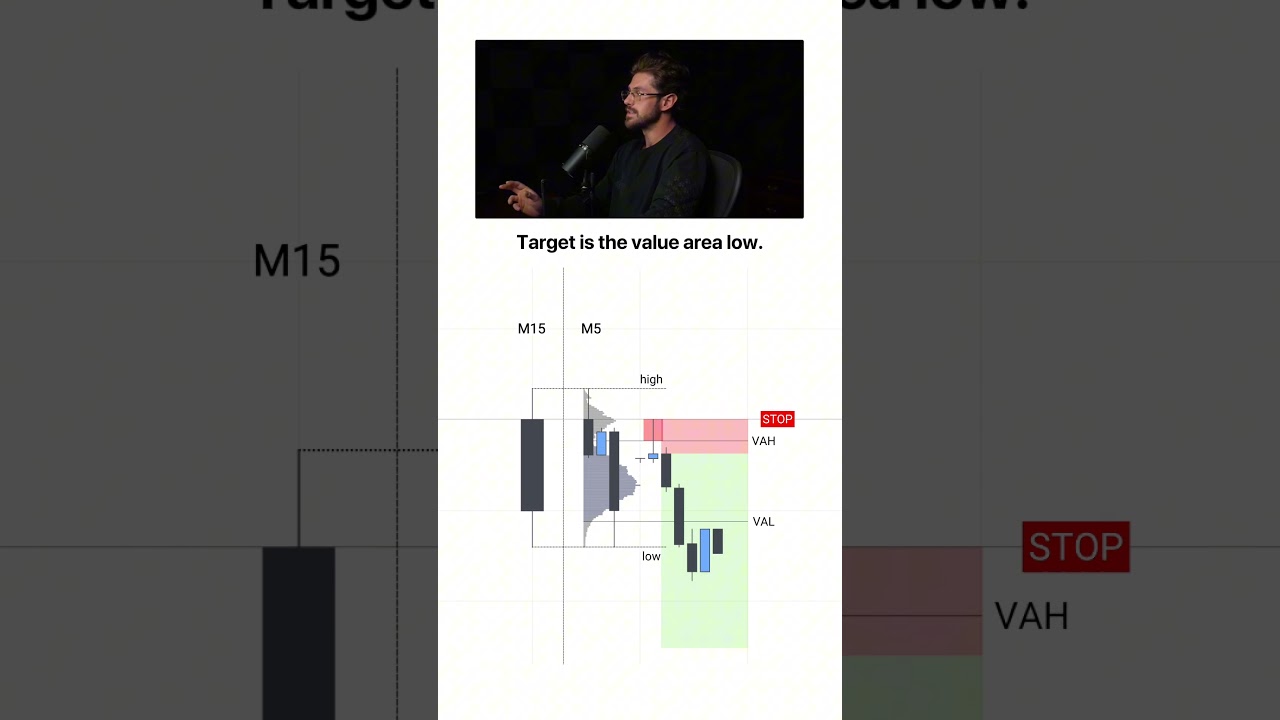
Finding support and resistance. Volume profile, specifically using value area levels like the point of control, value area high and low, and then high and low volume nodes. Entering trades. Order flow at these key levels. You either want to see aggression or absorption. Reading bias using the previous day's profile. So if we opened up today's session above the previous day's profile, that would be bullish. And also the way the previous day's profile closed. That can tell you a lot as well. Stop loss placement. You can use structure, but you'll get better risk to reward using trapped traders. Now you can spot this by using order flow. Knowing where the big moves happen. Absolutely. Volume profile. I mean, it literally gives you a roadmap. In low volume nodes, you're expecting volatility, and in high volume nodes, you're expecting chop. Where to take profit. Well, I don't really set take profit levels. Instead, I try to determine whether or not I'm still in a winning trade. So if I'm bullish and I believe the market is still bullish, I just trail my stop up and let the market run. This was one of the biggest breakthroughs I ever had in Avoiding chop? Volume profile, hands down, because you can literally have a mechanical process for knowing when the market is likely to chop.