Trading Was Hard Until I Understood These 3 Concepts
Jesse Rogers breaks down three trading concepts: context (mark the first 15-minute candle's high and low, skip range-bound markets), displacement (find energetic moves confirmed by fair value gaps on the 5-minute chart), and entry triggers (use fair value gaps as limit orders with a 2:1 risk-reward ratio).
Questions this video answers
Nine years.
The first five years.
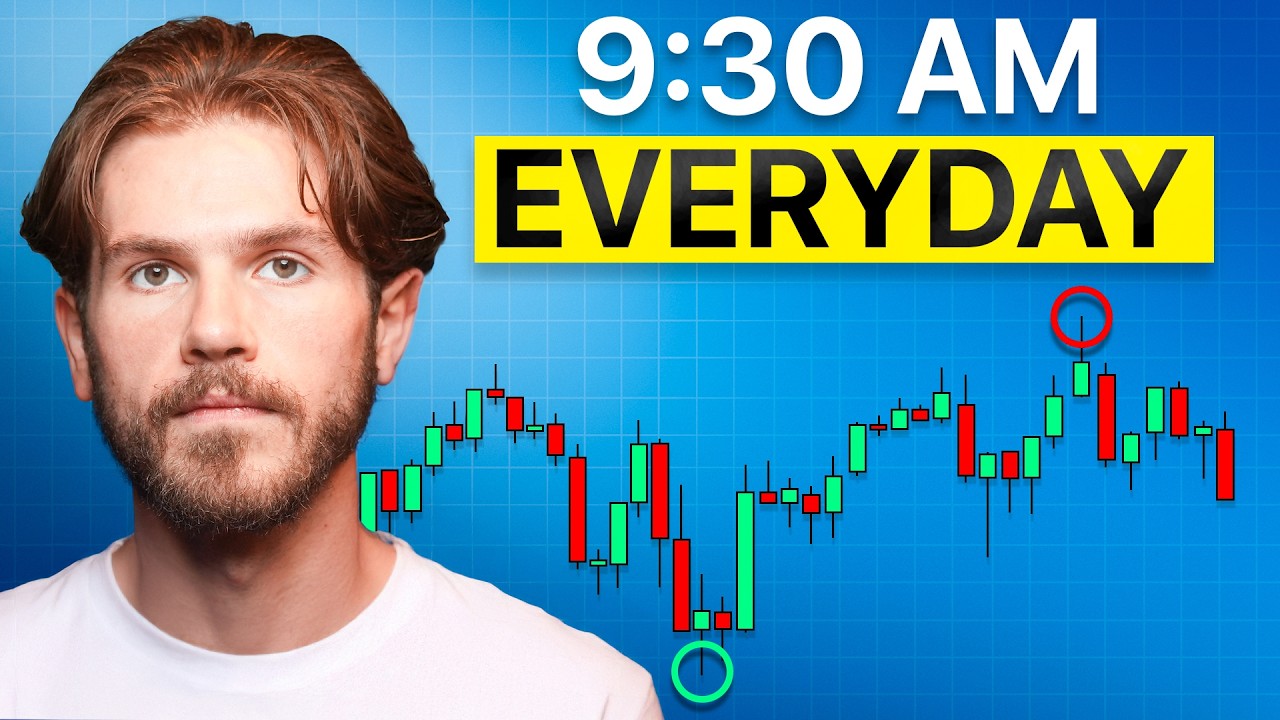
The first 15 minutes of the trading day (the 9:30am candle).
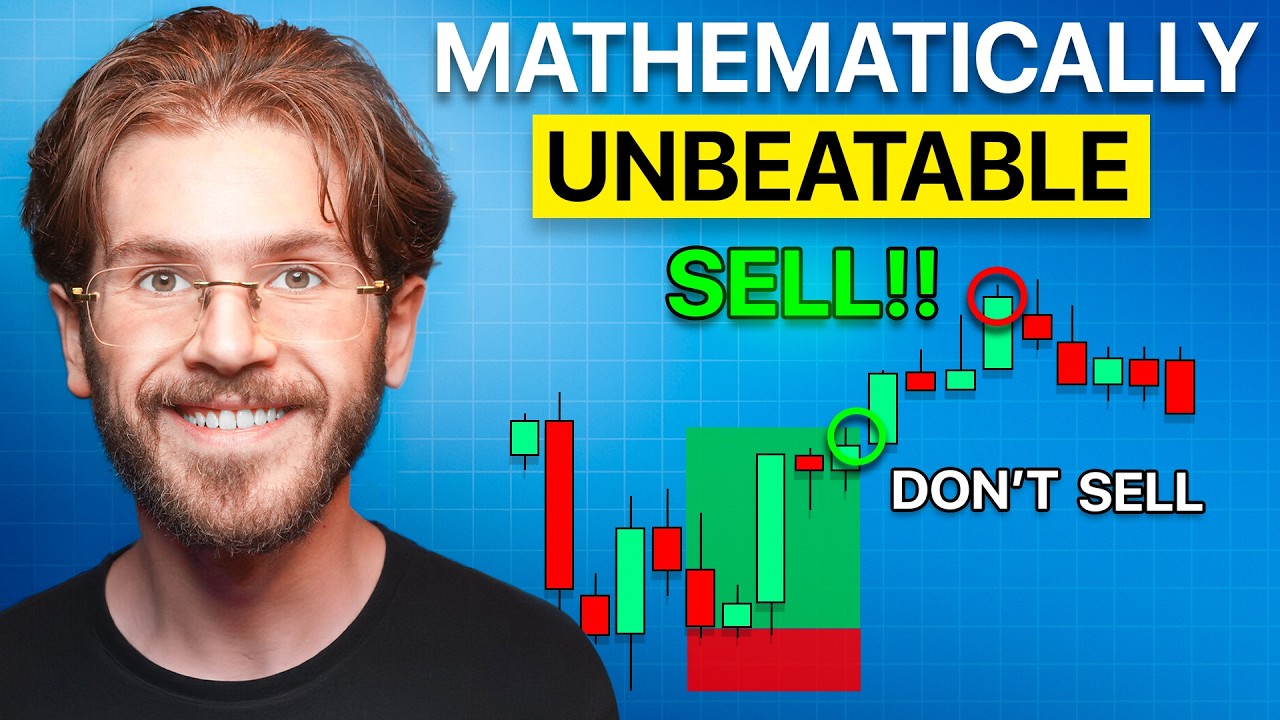
A three-candle pattern with an expansive middle candle that leaves a gap between the wicks of the surrounding candles.
$770 at risk to make $1,540 (2:1 risk-to-reward).
Chapters
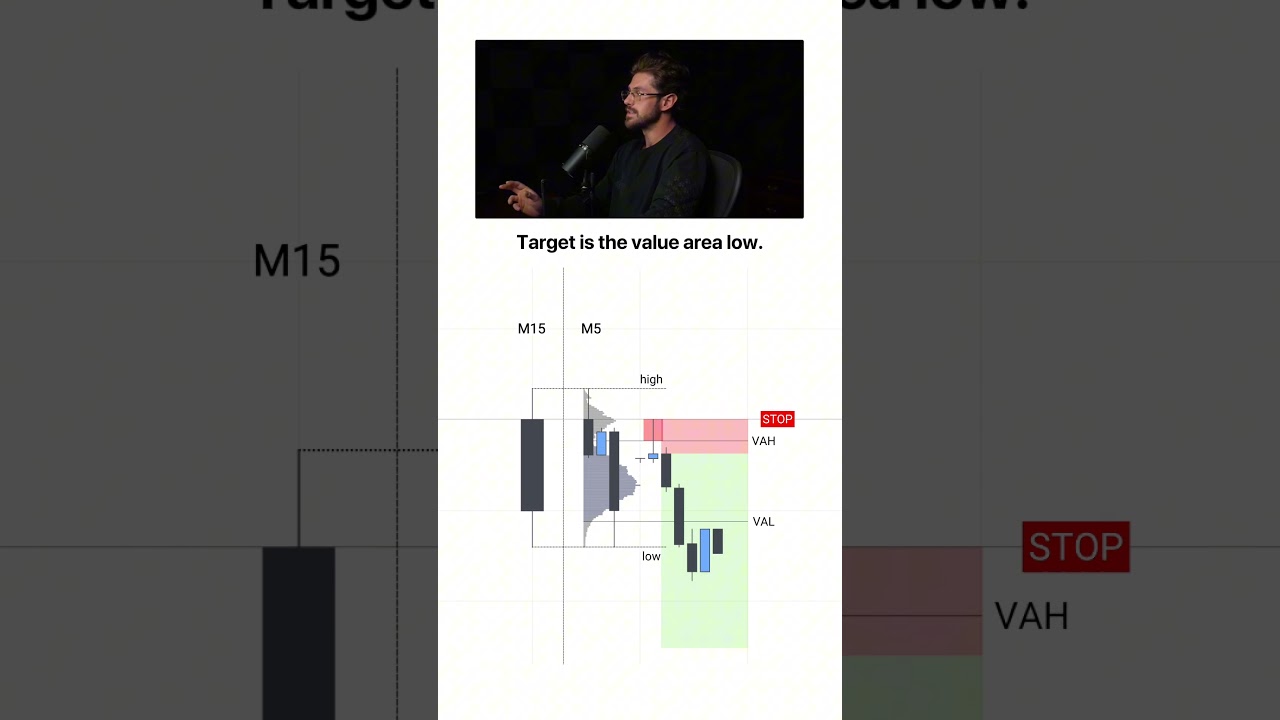
I have been trading for nine years, and for the first five trading was pretty hard. But once I understood the three concepts that I'm going to teach you today, having days like this, this and this became so much easier. Now, some of what I show you today will make you feel uncomfortable, but by the end of this video, you will never look at trading the same way again. Let's hop right into concept number one, which is context. And failing to understand this causes traders to take losing trades without even realizing why. So what is context? Well, simply put, context just means knowing where the action is and where the best trades are likely to happen. An easy way to understand this is to think like you are a fisherman and if you go fishing where a lot of fish are, well, you're probably going to come back a happy camper. But if you go to an area where there are no fish, well, then you probably won't catch anything. Now this sounds really obvious and simple, but a lot of traders will go out continuously to areas where there are no fish and then wonder why they're not making money. And I know that it took me almost five years to realize this because I didn't understand context and I would always get caught in choppy markets and I was just simply trading a pattern rather than looking for good trades and I didn't even realize it. But when you have context, you know exactly where the high probability trades are going to happen. And more importantly, you know when to sit out and protect yourself from the bad ones. Let's go over an example to give you a better look at what I mean. Now, how many of you guys come to your desk right at 9:30am Ready to take trades and whenever the market opens, often times you're going to see some pretty big moves and you start to think, well, I've got this set up, I'm going to continue and I'm going to catch a big move today. I'm going to get a big, big day in profits. And then what ends up happening? A lot of those days the market ends up kind of just chopping back and forth. You might even have a small move in your own direction. But then the market starts to die off and you start to wonder, why is this trade not working? This is the same pattern that showed up the other day and it worked. But why not today? Why am I getting caught in these choppy trades? And then finally, at some point, the market will end up actually expanding. But oftentimes by this point, you've already chopped yourself up, you've already taken a Lot of losses, maybe you're not even trading anymore. And a lot of traders think this is random. But there is actually a very simple way that you can understand where the big moves are going to happen and sit out when the markets are going to chop. Now let's rewind and I can show you exactly how to avoid the choppy markets and to position yourself in the expanding ones. That way you can find consistent winning trades and sit out on the bad ones. First things first, you need to understand why markets chop in the first place. Now there's a really simple explanation for this and it's that markets chop because one side isn't clearly in control and there may even be a lot of volume that's being traded, but people are just exchanging. What I mean by that is in these range bound environments, nobody is truly in control of the market, not sellers, not buyers. And the trades are just exchanging hands and we're not getting any kind of clear direction. And in order for you to finally get bigger big moves in the market and find the best trades, you need an imbalance between buyers and sellers and you want one side clearly in control of the market, otherwise it's likely going to chop. So how do we find context and avoid the choppy markets and trade the best ones? Now to do this in a very simple, clear cut way, you just need to know which levels you are likely to expect volatility at in order to establish context. There are really only two levels that you need and to find these levels we want to zoom out to a 15 minute chart. So we're going to click this button to get there and to find these two levels. I want to come back to this first candle of the day that opened at 9:30am this is before all of the chop. And a story is being told in this candle that could have helped you avoid all of it. And not only that, it could have also helped you find the good trade that happened after all the chop. And the reason for this is that the first 15 minutes has more volume than any other period all day long. And when all of these traders enter the market, they're going to put their stop loss at two levels. I mean, think about it. If you are a seller, meaning you wanted the market to go down, well, where would your stop loss be? If you entered in this first 15 minutes, it's going to be right at the high. Or if you are a buyer in this candle, then where is your stop loss going to be? Since you want the market to go up, your invalidation point is going to be down here at the low. So until the market moves to one of these levels, a lot of times it's just going to chop around. And this is what we want to avoid. Because remember, context comes from knowing who is in control of the market. And once we know who's in control of the market, you're likely to have big moves. But until then, the market's still making up its mind. And it's not as simple as just the high or the low being hit into, because the market can hit into these levels and fall right back into the range. But then finally, you'll get a big energetic push at some point in the day. Now, in order to confirm when this is likely to happen, we need to use a very specific pattern. And this brings us to concept number two. Before we hop into concept number two, I wanted to let you guys know that I'm hosting a free all day long live event this week where I'll walk you through these concepts in real time and teach you my full trading strategy. Now, there are limited spots available, so make sure to claim your ticket using the top link in the description before they're gone. Now, concepts, concept number two is what I like to call displacement. Displacement is really simple, and it's how we go from having context to finding good setups. Consistently. The easiest way to think of displacement is when the market moves so violently that it leaves skid marks. Think of it like a car peeling out. You can see exactly where it happened and which direction that it went. And once you have displacement and context, you can be extremely confident that a big move is likely to happen. Now, once we've marked out the high and the low of the first 15 minute candle where we know the most volume has occurred, we now have context of where to look for good setups, which is going to be at this high and at this low. But back to what I said in concept number one. We need a specific pattern to confirm who is in control if we hit these levels. Now, I like to go on the five minute to look for this pattern. And what we want to wait for is the market moving back and forth. Now, right here, a lot of you probably think, okay, cool, we've got a break. But this right here is not what we consider a break. And you may have been taught by some guru that a candle closure or a big move outside of this range is just going to instantly make money rain from the sky. And it's just not true, if you haven't figured that out already. And that's because displacement doesn't just mean big candles. We need a specific pattern to have a clear cut way of identifying when we're likely to continue or when we're likely to just chop around and give a bunch of low probability opportunities. And in order to do this, it's very, very simple. Now I want to rewind just a little bit here and go back to where this move started. Notice the difference between these different breaks because as you can see, the market is breaking this level twice right here. We close above it and price trades above it. But look at these candles, they're pretty lackluster. You have a lot of sellers still trying to take control. And if you entered any scalps, especially on a lower time frame here, the market probably came down and took you out. But as you can see right here, we have a very clear, energetic push. Now, if you didn't realize it, what is different about this is what is called a fair value gap. And this is the pattern we're going to use to identify displacement. So if we look right here, this candle, its wick right there has a gap between this candle's wick. Now, a fair value gap is a three candle pattern with a very expansive middle candle like this that leaves a gap between the candle after its wick and the candle before it's wick. This is the skid mark that I was telling you when the car is peeling out. Now, I want to be crystal clear on something that is vitally important. Fair value gaps alone are just useless. But when they happen with the right context, they are extremely powerful. Because if you look right here, there can be a ton of fair value gaps in the market, not keep moving in the right direction. But that's because these fair value gaps happened without any context. It doesn't matter if a pattern happens alone. It matters when a pattern happens at a very key level, much less a key level where we can know that one side of the market is taking control. Because remember, if everyone who sold within this first 15 minutes has their stop loss at this level, once buyers really take control, it's going to be like a dam breaking. Because if you're in a cell in this first 15 minutes and the market goes against you through the high, well, when somebody who's selling closes their position, it's the equivalent of a buy on the market. So if we can see that buyers are viciously taking control, what are these sellers likely to do? Well, they're likely to exit their trades and these buys act like rocket fuel. Because remember, for those sellers to be wrong in the first Place, there had to be an imbalance of buyers pushing the market against them. So now it's like a double force on the market. And these are the moves that you want to be a part of. So simply put, guys, this displacement or a fair value gap plus context or a key level is going to give you high probability moves. And having clear ways to mark out these levels where we have context in a clear pattern to identify when we're likely to get a big move. This alone eliminates 90% of the losing trades that you would have taken otherwise. And once you have this, you're not going to just get these little sideways markets. You're going to get big moves where you can make big money. But you're probably wondering, okay, that's great. I can now spot when big moves are likely to happen, but how am I actually going to get into these trades? Now all you need to find good trades is what I like to call a trigger. And this brings us right into the third and most important concept. And the reason I say this is the most important concept is because when I was learning to trade, I felt like I had learned dozens and dozens of different ways to analyze a chart. But I still wasn't even clear on when to do the most important thing that we're all here to do, which is execute trades. And this is a turning point that all traders come through sometime in their career, which is that analysis alone does not mean you're going to make money. You can have these guys on Twitter that mark up the charts and they have a million different ideas, and they might even always be right on these ideas, yet you never see them actually making any consistent money. Why is that? It's because being able to do this is fairly easy. I mean, let's be honest, guys, what I just taught you is drawing a line at the same time every day and then looking for a box. If that's how easy trading was, then why are so many people unprofitable? Well, the reason that I was stuck in this stage for so long was because I didn't have a simple way to look for trades. I was always looking at different things and different confluences and clues in order to enter the market. But in order to trade profitably, you need a simple and clear way to enter trades. Shocking, right? But most traders will completely overlook this and get stuck in these complicated systems that have them looking at 50 different conflicting signals. Or at least I know that I did. And it wasn't until I had a simple and repeatable method that I was able to make consistent profits. Because once you have a simple and repeatable method, either you have a trade or you don't. And if the trade pops up, you take it, and if it doesn't, you walk away. There's no stress, there's no guessing. You just have a clear cut system of exactly what to do and the system makes the decisions for you. So let's go over the most powerful entry trade trigger you could have used to catch this trade. So what we're going to do is we're going to go back here to whenever the market was first breaking outside of the range. And on a day like this where you've marked out your high and your low of that first 15 minute candle, what you want to do is just sit back and wait and don't fall into the noise. Even if you get big moves, don't just FOMO into a trade and I'm not going to hold you guys. Sometimes the market will just close a candle and it'll go without you. That's fine. You're not here to try to catch every single move. You're here to have a system that can catch consistent moves. So what we want to always wait for is that fair value gap. And once you have this fair value gap, this acts as your trigger. And what we want to do is we want to place a limit order on this fair value gap. Now what this means is once the market trades back into it, we want to be entered in a trade so we can catch the big move. In order to do this, we're going to go over here to the left hand side of the screen. And since this is a buy position, we're going to select the long position tool. Now if it was a short and we had broken through the low and you had a fair value gap to the downside, well, you could have taken a sell as well. But on this day we had a buy. So we're going to go and select that long position tool and you want to place it right here on that fair value gap. Then you want to take your stop loss and you want to place it at fair value gap candle number one. So remember, the fair value gap is a three candle pattern like this right here. So you put your stop at this candle and for our take profit on the trade, you're just going to go for a fixed 2 to 1 risk to reward. So what we're going to do to execute this is we're going to right click Create limit order and at this time you can just go ahead and press buy and what this is going to do is it's going to set a limit, meaning this is, you're telling the market, this is the limit I want to pay. So if the market comes under your limit, it's going to enter you into the market. And as you can see on the very next candle right here, it entered you into the market. And on this trade, you would have had $770 at risk to make $1,540. Now at this time, you can just sit back and let the market do the heavy lifting for you and be confident that the trade is likely to hit its target, which it did. So not a bad day if you ask me, especially with such a simple system, because in under an hour you were able to make over $1500. Now, most gurus over complicate trading, but context plus displacement plus your entry trigger is literally all you need. And everything else that you can learn about trading will come into one of these things. Whether you're trading support and resistance or ICT or any other way of trading, you're just looking for a different way of finding context, AKA a different way of finding key levels. And then once the market hits into these key levels, you're looking for some kind of reaction to confirm your trade. And then you need a very specific way to place your entry, your stop loss and your target. Everything in trading comes back to these three concepts. And once I realized this, trading became much easier. Now, it took me years to realize this and years of chasing complicated systems. But I hope after you guys have watched this video today that it opened your eyes up to how simple trading can really be. Now remember guys, I'm doing a live class this weekend, so make sure to grab your free ticket. The link is in the top of the description. Also, if you're new, make sure to subscribe to the channel because I post tons of videos just like this. Subscribe. And if you want to learn more about mechanical strategies, I've got a ton of videos you can watch here on YouTube. Thanks for watching guys, and I'll see you in the next video.