Finding Genius: Celine Halioua, Loyal Dog
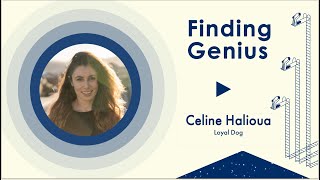
Celine Halioua left art for neuroscience after meeting terminal cancer patients, then founded Loyal to develop aging drugs tested in dogs first. Dogs age faster and face fewer regulatory hurdles than humans. Loyal raised $11 million by betting that the first longevity drugs will prevent age-related diseases, not grant immortality.
Chapters
Good afternoon, everyone. Welcome back to the Finding Genius video series. I'm joined with Celine Halioua, the founder and CEO of Loyal. Thank you so much for joining us.
Yeah, glad to be here.
Loyal is a biotech startup developing drugs to extend, extend dog lifespan, and then you're going to go into humans after that, from what I've learned. But Celine was formerly the chief of staff to Laura Deming at Longevity Fund. Loyal recently raised about over $10 million in seed funds from First Round Capital, Box Group, Bedrock Capital, and Collaborative Fund. So, this is a topic that's extremely interesting to me, especially when you're thinking about longevity, but I would like to go further back. I know you've written about the topic and have a deep expertise in this. So, as we're thinking about it, could you talk a bit about your background and kind of where your interest in aging and the entire space started coming from?
Yeah, so I actually got into undergrad for art school. I had a full ride to go do painting, and then for some reason that I don't— I honestly have no idea why— I decided to do an internship at a neuro-oncology clinic in Germany the summer before I started. I'm half German, hence the German thing, uh, and I met a bunch of patients with terminal brain cancer. And I don't know, it's just something I hadn't realized before that point in my life. Like, I had a very specific moment where I met a patient where I I remember asking a doctor, "Okay, can we do chemotherapy? Can we do radiotherapy? Can we do surgical resection? Can we do a therapeutic?" It was just, "No, no, no, no, no." And that this person, I realized that this person in front of me was gonna die and there was nothing anybody could do. And it didn't matter how much money or time or effort or care you put into it, they were just done. And I just had always thought of medicine as magic and there was no kind of inescapable fate. And I just like, in a second realized that wasn't true. In my opinion, like almost don't have free will because of these diseases. So I totally freaked out. I had like an existential crisis and I switched from art school to neuroscience. I picked neuro because neuro has a lot of open questions. It's like in the first class they're telling you, yeah, we don't know X, Y, and Z, but like here's a broad scope. I thought that was an interesting problem to work on. So I spent 4 years doing research and I got into aging because I got really interested in addition to neuro-oncology in Parkinson's disease, which is a neurodegenerative disorder. Basically, it's age-related. It's a loss of a certain subset of neurons in your brain. They just degenerate and die over time, and it causes this eventually terminal disease that takes a long time to kind of ride out, and it's very terrible for the patient. And we were thinking about the lab I was working with, Cell Therapeutics, but they were just, I just kind of, so the way neurons work is basically the neurons that you were born with are generally speaking the ones that you have for your entire life. Big asterisk there, but let's just take that assumption. And then they're not just cells that sit next to each other. They're all interacting with each other. They all kind of touch each other. Synapse is the actual word, with each other. And so it's kind of like overlapping. It's like wiring overlapping. So when a neuron dies, you can't just go and put the neuron back or replace the neuron because that's one half the problem. The other half of the problem is how do you replace the wiring? And I just kind of came to the conclusion while I was working in that lab that replacing the wiring, I'm sure one day will be possible. But it was just such a hard biological problem. And I was like, okay, well, how do we just prevent this from occurring in the first place? So long story short, I learned about the aging thesis, which I'm happy to go into in a sec, and the fact that it seemed to me the most plausible way to develop a preventive mechanism and medicine for diseases like this. So I totally switched to that and have been working on aging in various ways ever since. My whole thing has always been how to help accelerate the first ever aging drug approval. And it was first on like the healthcare side, and then it was on the venture side, and then got the idea for Loyal, and I thought that made most sense. So now it's on the company building side.
Interesting. And so when you think about it, given there's been large pharmacy companies, doctors, um, kind of a lot of money thrown at this problem in the past, how were you when you were building that thesis of what you were— what you're saying? Where did that begin to form of saying, okay, I have a new approach to this problem that everybody else either has gotten wrong or there hasn't been enough energy or money thrown towards the problem? Or how do you think about it in terms of you're starting a company now in a white space?
Yeah, so I think there's two things. One is just like the general aging space. Like, the aging space should be broader than the oncology drug development space, right? Because it, uh, in theory encompasses the majority of oncology, doesn't encompass, you know, pediatric, uh, other like non-age-related cancers. But Majority of cancers are age-related, so it encompasses all of that plus neurodegenerative disorders, osteoarthritis, pain, sarcopenia, memory loss, like all these things, right? So in theory, the aging field should be absolutely massive. In practice, there's probably like 25 legit companies working on aging in general. And there's a lot of reasons for that that I'm happy to go into. It might take 5 years, but Basically, there's just not a lot of people who are like really cognizant of the thesis of aging. And even me, like when I heard about the aging thesis, it took me 2 years to actually have conviction. This is a field I wanted to work on. And I think it's because a lot of it, people conflate the idea of aging drugs and aging mechanism preventative medicines with like immortality and 1,000-year-old humans and we're going to live to 150 and like, right, all these things that like you're like, oh, like I don't know if I want to live to 1,000. I don't know if it's ethical for rich people in America to live to 150. Well, like, that's realistically like cart way before the damn horse. Like, the cart is like in another country with all of those arguments, right? Realistically, what an aging drug actually is right now, at least the first-gen aging drugs, is an all-cause preventative medicine or multi-cause preventative medicine for age-related diseases, which is totally non-controversial, like completely non-controversial, right? But, um, I think just a lot of people haven't dove into aging because of that, and the field has a bit of a sketchy reputation in general because of all of those narratives. So that's one half. The other half is the dog thing, which, by the way, I did not come up with the whole dogs are a good model of aging thing. For example, University of Washington, Matt Kaeberlein and his collaborators have been running a dog aging project for quite a few years now. The idea that I basically had is that I wanted to figure out how to set a, um, I basically was like trying to figure out how can we get the first ever aging drug approved but also get the general public excited about aging drugs and like maybe some like public pressure. The thesis being that like if we had aging drugs for dogs, would that like make easier the path of having aging drugs for people? First from like a scientific standpoint, from a regulatory standpoint, also just from like a social standpoint, right? Like if you socialize an idea in an animal where it's like less controversial where nobody really questions whether it's a good thing if your dog lives a longer, healthier life, right? Like, dogs are just like pure goodness on four legs. Could that help teach people about the concept of aging, of aging drugs, of preventative medicine, drugs for age-related diseases, which would then— that's actually very influential in impacting policy and what a government prioritizes in funding and in development. Interesting. So, yeah, that was kind of— there's two ways. If I was billionaire, I would have just gone straight to human, but not a billionaire.
And what was— so before we get to it and how it's taking shape in dogs and kind of what you're working with on the policy side and the scientific side, what was your experience at Longevity Fund and thinking about the problem and the thesis formation, or what you were seeing the 20 or so handful companies that you mentioned of where they may have been going wrong or what they were focused on? Were they focused on humans right away? And that's why you said, okay, no, dogs is actually the right place to start.
Yes. I mean, to be clear, I think all these companies are very complementary. I'm, for example, not developing novel chemical matter, which means there's not going to be a commercial incentive to develop any of the drugs that we're working on for humans. So nobody is going to develop those for people. You might do like a POC, like human study.
Right.
But what we might do is like, A, like build a business that's like VC scale, whatever, for dogs, facilitate us developing new molecules, but also hopefully facilitate these other companies who are developing new chemical matter from day one into actually getting their drugs, if they're efficacious, approved for aging itself and not just some random indication, which is what the majority of these companies have to do right now. I see it as very collaborative, and I think a lot of the aging field does too because It's like, it's still really fragile, the field, right? Like, if so, if there's a bunch of big failures in the aging companies, I think the entire field will go dormant for another 10, 15 years.
Interesting. And so can you give us a sense of what is your— maybe we should start with when you did go out to fundraise, what was that process like? Because you've had some really interesting thoughts on that that you've shared publicly. But even like, what does your day-to-day look like? What was promised communicated in this seed round of what you wanted to accomplish or what the big objectives look like for you? How did people perceive that? And then is that when you're working on it on your own, or I don't know if you have a team now, but what does that look like on a day-to-day of when you're solving this big problem? This isn't just an enterprise SaaS company.
Yeah.
Um, so it'd be interesting to hear.
Yeah. So I guess to give a little bit of context, I raised the— so we raised $11 million in total and I raised the first like $5.5 million whatever, 4, 3, something like that in January 2020. And it was just me and a pitch deck and literally nothing else. And then we did another 5 after COVID hit because everybody thought the economy was going to go like that. And I was like, great, I don't want my company to die because of COVID So I took another 5 million.
Yeah, right, right.
And then we've been going since then. So actually, basically the company, the directionality of the company has been the exact same since day one. So what I basically pitched was first ever drugs for aging. Bridging to people, consumer-friendly pharma, which is the other half of this, right? So like the idea that you can build like a D2C brand, you know, dog owner-friendly brand, etc., around a pharmaceutical product. So that actually is why we have a lot of consumer investors, because that's the thing that I transparently need the most help with. Like the biology, like I can handle that, or I can hire people who can handle that.
Yeah.
But the consumer side is a lot more, for me, kind of opaque. And I've learned a lot more since then. So my original decks were were so terribly ugly. But yeah, the direction has like never changed. And that's because I thought about the thesis a lot. Like I thought about this like a year and a half, like almost full-time, longevity fund, before like actually starting the company. However, the minutia and the details of how I was gonna do it, how I talked and all the things, that's all changed a ton. Like the initial concept was gene therapy for aging in dogs, which like doesn't, at least for our specific use case, doesn't make any sense. But I didn't know that, right? I honestly was just a bias because the lab I came from in Oxford was a gene therapy lab. So I was prone to think about the problem that way. But then I hired a team and they're like, that's stupid for X, Y, and Z reasons. I was like, great, well, thank you for telling me. And then we did other things. So basically the execution has been very— the execution has, I guess, crystallized into what it should be. But the thesis never changed. And I think it's a really interesting problem actually, because it's like there would have been 1,000 reasons to pass on us in the seed because of me having the technical minutia at that point wrong.
Right.
But at least, I don't know, I feel confident saying this, we've executed very well so far. It could all fall apart tomorrow, but to time now, we've executed very well. And so it was really more of like a bet on the general thesis and then I guess me. And so Maybe my like seed investors are just geniuses and like, we're like, well, I think Celine will figure it out. Or maybe they just didn't realize that my initial thesis is wrong. Like I have no idea. It was probably some mix of the two.
Can you share a bit about that execution? If you are saying you execute, well, without sharing too many secrets, but what does execution look like on a day-to-day basis for you? Or what sort of milestones are you trying to hit?
Yeah. So we're basically, the way to think about bio is you just try to, oh, this is my, Wolfie, you want to say hi? This is my dog Wolfie.
It's all for her.
Yeah. So execution in bio is often just like de-risking variables. So what we're trying to do is just de-risk various aspects of our drug program. So again, when we started, it was a general idea but didn't really have anything specific. I knew one of the things I wanted to work on was the large dog, small lifespan dimorphism. So the bigger a dog is, the shorter the lifespan is. And from a Chihuahua to a Great Dane, you have a 2x lifespan differential. Which is super intense and you don't see that in any other species. And it's a consequence of inbreeding and it's genetic in nature, which generally means it's druggable or it's a little bit easier to drug than some random heterogeneous disease phenotype where you have no idea what started it from day one. Right. So I knew I wanted to work on that, but what execution really looked like for us was first building a really good team. So I'm actually a pretty hands-off leader. Strict's the wrong word. I'm intense about how we think about problems and how fast we execute. And we're definitely working on longevity, not working anything else but longevity and interesting ideas and smart people. But I'm not intense on the actual mechanism. So we have people who lead the science, we have people who lead the manufacturing, computational bio, reg, things like that. And they really have carte blanche to do whatever they think is best. They obviously have to talk to me about it, right?
Right.
Like our Michael, our VP of R&D, like he could kill our lead drug program tomorrow. And if he thought that was like a scientifically viable decision and like the best decision, I'm not gonna counter him on it because he has decades more scientific experience than I do. And that's actually been a really good, at least at this stage of the company, like really good like execution strategy because we've moved faster and like made better decisions. And I just like am not emotionally attached to literally anything in the company. Besides good thinking and developing a drug that extends dog lifespan. And I think like, it's pretty obvious to me that like, there is a drug out there that will extend dog lifespan. So really it's more of like us finding it before we die. That's fascinating. And then turning it into a product.
That's really interesting. Could you talk a bit about the bio IT culture in the Bay Area or kind of what you've experienced while you're building this?
It's, so it's funny, it's a majority, of biotech companies are built in the East Coast. It's often— so you don't want to have a— you don't usually have a CEO like me. The whole like dropout, young, like early 20s, like that, like is not a thing in biotech, right? The anti-signal, the negative signal. Um, I get Elizabeth Holmes jokes all the time because of that, daily. Um, they might not actually be jokes. Just kidding, just kidding. Um, they And it's because like most of biotech is kind of done in these like incubator models. So you have these venture funds where they invest huge amounts of money, like $50 million, $100 million plus. They take majority ownership. They usually like, if there's not like professional CEO in, a professional CEO gets involved, a professional team gets involved. It's usually not the founders of the company who end up actually like leading the company. And of course, this is broad brush, there's exceptions to everything, but it's not really, they don't really have this like cult of the founder. You know, youth wonderkind culture in bio as much as they do in tech. So it's actually been a massively good recruiting strategy for us because there's a lot of people— it's also just like more conservative in general. There's a lot of people who work at these big pharmas and/or like bio companies in general, and they're just like tired of the culture. Like they're tired of the bureaucracy, they're tired of the politicking, they're tired of like they're not ever going to move up because their CV is never going to have that Harvard MBA on it. So they're never going to be an exec. And then I come and I'm like, hey, I explicitly and implicitly make it very clear that I'm not thinking about building a biotech in any of the ways that it's been thought about previously. And of course, there's some West Coast-style biotechs in SF, but there's way less. Right. Not that many.
Right.
So there's a few of us. We all tell this story, and it's actually very compelling to a certain subset of person who wants to work on ambitious problems and doesn't want to deal with the corporate.
Interesting. Yeah, yeah, interesting. And could you talk about a bit about your— you shared some thoughts on it on Twitter, but your process of fundraising, your conversations with Greg Rosen early on, kind of activating investors behind this mission, and kind of what that process has been like?
Yeah, so I, um, something I think is really important And I am, by the way, everybody, when they give like advice on what they think patterns or doesn't pattern to like being a good founder, they're always just patterning to themselves. So like giant, giant asterisk, like everything I'm about to say. But I think it's really important. And like one thing I look for when I talk to other founders is like being like mission motivated first and then trying like being agnostic to the tool by which they do it almost. And not being just like driven to build a company for the sake of building a company. Like I've met a lot of people who are just like, I want to start a company, I want to be a founder. And like, there are definitely examples of that working, but I've not seen nearly as many. And I was definitely the latter where I knew I wanted to work on aging. I didn't actually think I wanted to leave BC. So I was like, the funny story with like the incipience of Loyal at that point called Célebi was I was at a camping trip and I was just like kind of drunk because I didn't know anybody. It was like my, like, I don't know, I was like pretty early on in SF. I just moved, and I was joking about how I need to make dogs live longer and like, come to me, like, I'll make your dog live longer, like all this BS, right? And there was an investor there who told an investor who told an investor. That was Greg. And Greg was like, oh, I want to talk to this person, and then asked to meet me. So we just grabbed coffees over the summer, and, you know, it solidified. He helped me think through the story, but like, don't tell him. Well, I guess now he can know I've gone far enough. I didn't actually decide to start Loyal until I basically signed a term sheet that he gave me a few months after we started meeting. I remember I met Laura and I was sitting in a coffee shop and I was like, am I going to commit to doing this right now? This is like a 15-year or more. I am deciding this is how I'm going to work on this problem. And honestly, again, pattern matching to myself, like, asterisk. I think that's a good thing to think about, right? It's better. Like, if you don't have some hesitation into, like, committing to building a company for, like, 15 years, you've probably even thought it through. So, yeah, that's, like, my big anti-pattern match that I think, like, served me well.
Interesting.
But, yeah, after that, then I just went out and raised. And, like, the other big thing was just, like, complete naive optimism. Like, looking back, I'm like, it's fucking ridiculous that I raised, like, $5 million in terms I did for an idea. But I was just so optimistic. I was like, of course everybody wants to invest in this. It's doggone W. Like, how could you not?
And I'm like, you're a terrible person if you say no to that, right?
I know there's so many things that look like hiring our VP, who's like this amazing guy, who's like this pochem out of Regeneron. And like, he joined as like employee number 3 or 4. And like, looking back, I'm like, wow, if you told me today that I had to go hire like a VP who knows his shit out of a giant pharma with like 4 people and $5 million, I would literally puke. Like, I would puke at that knowledge. But I just didn't care. Like, I was just so— and like, then that naive optimism is like, and you have to rein it in, like, in certain places, right? Scientifically. But it was really helpful, honestly.
And could you talk a bit— I know we're almost running out of time, but like, the broad neuroscience space, given that's where your foundational knowledge is in, of what you're seeing, what you're excited about when you were looking at Longevity Fund, Biogen's drug on Alzheimer's, like, anything that you want to focus on, but where— where else beyond Loyal are you seeing the market move or where other opportunities are right now?
Yeah, I mean, I think a lot about reg and clinical, and I think less about like the early stage stuff as much. Honestly, I do think there's a number of companies to be built in aging right now. I think you just have to like, but it's not like, it's not like I could like list them out. It's more of like an instinct that like the aging field should be a lot larger. And if you assume that there's like, I don't know, x number of billion-dollar cancer companies, like, or billion-dollar cancer acquisitions, there should be at least that number of billion-dollar aging acquisitions. So I think the instinct I have is that big pharma is going to get really interested in aging in 5 to 10 years. They're going to want to buy up companies that want to have an aging team already because there's going to be a race mechanism, right? And building a team, focusing on it, like having a competency, having an exact— can lead it, that's way harder then Biogen is a great example. Biogen does make like, what, billions per year on this?
Yeah, right. I think it was like $55,000, right?
Yeah, they're gonna make a shit ton of money if they want to get into aging next. They could build a team, or they could just buy a team for $500 million to $1 billion and a drug that like may or may not work. Um, so I'm— to be clear, this is not an acquisition play. I want to build a pharma, but I think there's going to be a big market more of these types of companies in 5 years and trying to build like a really good like translational aging team or like train people in aging. So a lot of our team comes from neuroscience backgrounds because I really like the training that gives you. But, um, then we like give them context for aging, give them a space to think about aging every day, all day. And now they are aging people, right?
Interesting.
Yeah, they never were that before. So I think there's like a bunch of more companies to be built in that way, and they should be around some like central thesis, but like transparently, I don't think it actually like As long as you move forward and build something somewhat of value, I don't think it actually matters.
Right. And are you seeing the brewings of those ideas at Loyal as well? Like small incubations of folks on your team want to start as part of the Loyal brand, or is it still very hyper-focused?
I have so many ideas.
Okay.
Oh my God. No, no, no. I am like the opposite of hyper-focused. I am like text my investors on the weekend, super anxious because I'm like, oh, there's definitely a billion-dollar agent company to be built in like X, Y, and Z. And oh my God, I want to work on this so bad. And then like, No, like seed stage company, like narrow it down, Celine. Um, so, and yeah, the team has ideas too. Like we, we have more ideas than we have money and people, honestly. Um, interesting. So yes, please, more, more competent people in aging would be fantastic because if we don't start working on this problem now, we're not gonna solve it by the time that we need.
Right, right, right. Well, Celine, this is really interesting, really helpful. Um, and I'm looking forward to following along. I'm sure everybody else is, but I appreciate you taking the time.
Yep, yep, thank you.
More from Celine
Life Extension Innovations, Moonshots & Snake Oil (with Celine Halioua & James Peyer)