5 Manipulative Tactics People Use To Screw You Over In Negotiations
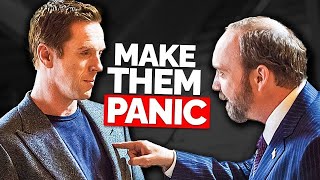
Learn five negotiation tactics used to manipulate you, illustrated through scenes from Billions. The video covers researching your needs, reading body language, using exploding offers, and knowing when to walk away, with practical advice for protecting yourself in deals.
Bobby Axelrod from Billions has more money and power than most of us can imagine. And it's not just because he's a good investor. Bobby is a brilliant negotiator, capable of getting people to give him almost anything he wants.
Buy them all. Every single last one of them.
That'll be expensive.
Well, then it's a good thing I'm a rich man.
So, in this video, we're going to cover five tactics Bobby uses in almost every negotiation and how you can use them to negotiate better, whether it's at work in your romantic relationships or with friends. The first secret to Bobby's success is he nails down what people need before he negotiates with them. For example, watch how Axe negotiates after initially agreeing to pay this family $25 million for their building.
Which is why I am presenting you with a check. $25 million minus 16, which leaves you with 9 million.
This is bullshit.
We will walk out of here if you don't honor the full amount. No, you won't.
How is Axe so confident that he can chop almost two thirds of his initial offer and still get what he wants?
After reviewing your holdings, your business interests, your debts, I know that this check is the only thing standing between your family and bankruptcy.
Axe sets himself up for success by doing his research. And when he can't find out on his own what someone needs, he'll just ask. Like here.
What do you want? I want back in.
It's a simple thing to do, but most people don't do it. Instead, most people assume that the person we're negotiating with wants what we would want in their shoes. This is a major mistake and one Bobby's rival, Chuck, makes often. Watch Chuck try to blackmail one of Bobby's employees by threatening to reveal that he's cheating on his wife.
Getting the photo stream in her inbox. All those happy pictures of you and Carson and Anna. I might just break her.
Unfortunately for Chuck, he starts negotiating before fully understanding what Bill values, and it blows up in his face.
I knew you'd come with that. I wrote a letter to my wife. The whole story. I just sent it.
So, in your own life, rather than guessing what the other person wants, take the time to find out for sure. First, for example, let's say you want more money. Instead of just guessing what your employer wants and silently working at those assumptions, set up a meeting with your boss to let him or her know you're interested in earning a raise. Then ask them, what is a reasonable time frame to earn a raise? And what would I have to do to earn it. You can even start by asking, what is a reasonable time frame to get a raise? And then ask, what would I have to do to earn a raise faster than that? Now you have clear targets to hit, and when you hit them, you'll be in great shape to negotiate for more money. Once Axe knows what the other person wants from a negotiation, he'll use his body language to manipulate your emotions. If Axe wants to capture the attention of a room and convey that he's the one with the power, he'll stand while others sit. This literally forces people to look up to him.
But there's one number that really matters to me. 16. You've been brought back to life as promised, but it's not free.
He does this because we tend to respect and fear people who tower over us. It's no coincidence that Fortune 500 CEOs are on average 2 1/2 inches is taller than the average man. So if you're going to give a presentation to people who outrank you, stand. When people physically look up to you, they will subconsciously feel your position is stronger and take you more seriously. This does not mean to stand all the time. In fact, if Axe is certain that he'll have everyone's attention without needing a height advantage, he will set himself up to be splayed out sitting while others are forced to stand. This splayed out sitting position makes you think he's confident and that he feels unthreatened.
Going forward, you might want to consider vetting your information a little better.
Splaying out over the couch works for Bobby because he has a captive and desperate audience, so he can sit there comfortably and make them come to him to hear his pitch. Positioning yourself like this at a networking event or party wouldn't be nearly as effective, because without a captive audience, the person sitting while others stand is likely to be ignored. Now, while both of these strategies have their place, they're inherently a bit adversarial. So Axe has a third position he uses when he wants to make someone feel like they're on the same team or working towards the same goal together. And this is the one you'll want to use most often. He sets them up at eye level and side by side with him. Like here with Wendy.
I drew a boundary and you respected it.
Are you ready to trust me again?
It's a start.
This is called same side, same team. And it's the best way to handle a one on one negotiation. So if you notice someone is looming over you and you start to Feel uncomfortable. Invite them to sit next to you or stand to be at their level, and especially with team members or even on dates. Position yourself to be sitting next to each other or on adjacent sides of the table. Once Axe has done his research and set the tone of the negotiation with his body language, it's time to strike a deal. Axe tries to get the most he possibly can from people by using exploding offers to create panic in the other person. Axe loves these now or Never traps.
Offer 63 million. Cash. Take it or leave it on the call. No negotiation. I'm counting to five, and then it's off the table.
One. We'll do it.
If Axe gave people time to consider his proposals, they might be able to go out and find better options. Instead, he limits your focus to just two choices. Get what you want, or miss out and regret it forever.
When I walk out that door today, we are friends for life. Or you don't exist to me ever again.
This style of negotiation is incredibly effective. You see it often from companies giving job offers that explode after 24 hours. So you don't have a chance to find another job job. Or even in romantic relationships, when someone says they'll stop seeing you unless they get a commitment that they want. But this tactic comes with a cost. The other person may end up resenting you for placing time pressure on them. As tempting as it is, you should avoid using this tactic. You'll get yeses from people who wouldn't have agreed if they weren't under time pressure. And those aren't the business agreements or relationships you want in your life. And you may scare off good people because they don't like your aggressive style. On the flip side, Axe never allows someone to time pressure him into a deal. No matter how bad his situation seems, he's always willing to walk away from the table, especially when someone tries to change the terms at the last minute because they think they have leverage on him. Watch what happens when an investor tries to sneak something in at the last minute.
I need total transparency, and you're going.
To give it to me because you got nothing else.
I can't do it. I won't do it. Go. I pass.
Axe is willing to kill the only offer he has and bet on himself to find a better option. Here's another example where Chuck tries to change the terms on Axe's settlement.
Put the money in a trust. Fine. But you never trade securities again. Not for institutions, not for individual investors, not even for yourself.
In both instances, the other person thinks they have Axe in a bad Spot and they try to add a last minute term after having already agreed to a deal. This is a huge red flag and one that should trigger you to immediately walk away from a negotiation. If the new deal ends up being the best you can do, you can almost always come back to the table again after you've had time to assess things now in your own life, it can be extremely tough to do what Axe does and walk away with nothing. So whenever possible, try to line up multiple options before you enter a negotiation. That said, one huge mindset that will help you a lot in business and in your personal life is realizing there are infinite options available to you at all times. So if you ever feel stuck taking an offer you aren't truly excited about, remember that just because you haven't seen the better offer doesn't mean it's not right around the corner. One year from now is much more likely that you regret agreeing to a bad deal than that you regret saying no to a deal. The last thing Bobby brings to every negotiation is this mindset. Bobby wants to win, and he wants to win by giving as little as possible. Like when he cut his offer from 25 million to 9. Or this funny example negotiating employee compensation.
I should not throw out the first number because I have a tendency to undervalue myself.
I'd like to make you a pm.
Portfolio manager.
I would have gone Prime Minister, but there you go, undervaluing and the money. Meet the new salary, same as the old salary.
I'm a pm.
It's worth noting that in the long run, this tactic actually hurts Axe more than it helps him. It may maximize what you get in the short term, but life is long and you run the risk of offending the other person. Like he does here with Taylor.
$50 million.
You aren't going to start with a.
Performance review or hell of a year 15.
I was thinking 50.
I'm thinking that the final number will be something just shy of half of what you're looking for.
I don't agree.
This isn't heavy betting on the Oberlin campus. We don't both have to agree. I say what it is. You take.
Taylor just ran Axe Capital for a year and made Axe $700 million. Given that, would it really matter if he gave them 50 instead of 25? Axe's mistake here is thinking of this as a one time game. Yes, for this one day, he makes himself an extra 25 million by disappointing them. But he also sets himself up to eventually be betrayed by his most important employee. Unfortunately, this is how many people think about negotiations, they try to get the best possible terms for themselves on any particular deal without considering if it will make the person want to work with them again and instead think of any negotiation as an iterative game. There will be future rounds, so if you can get yourself more in the long run by giving someone more in the short run, do it. If you want to learn more about negotiation, I highly recommend Chris Voss's Never Split the Difference. Chris is a former international Hostage negotiator for the FBI and he shares his field tested approach to high stakes negotiations which you can use at home and at work. And if you want to listen to the book for free, you can. Thanks to our sponsor for this video, Audible. When you sign up for your free 30 day trial of Audible today, you get one free audiobook. I recommend Never Split the Difference and also unlimited Audible originals. You can do that@audible.com charisma or by texting charisma to 500 500. It's a great way to take your dead time like commuting to work or doing house chores and use that time to better yourself. So again, you can get Never Split the Difference for free with an audible trial@audible.com charisma or by texting charisma to 500 500. Either way, I really appreciate you watching this video and I look forward to seeing you in the next one.





