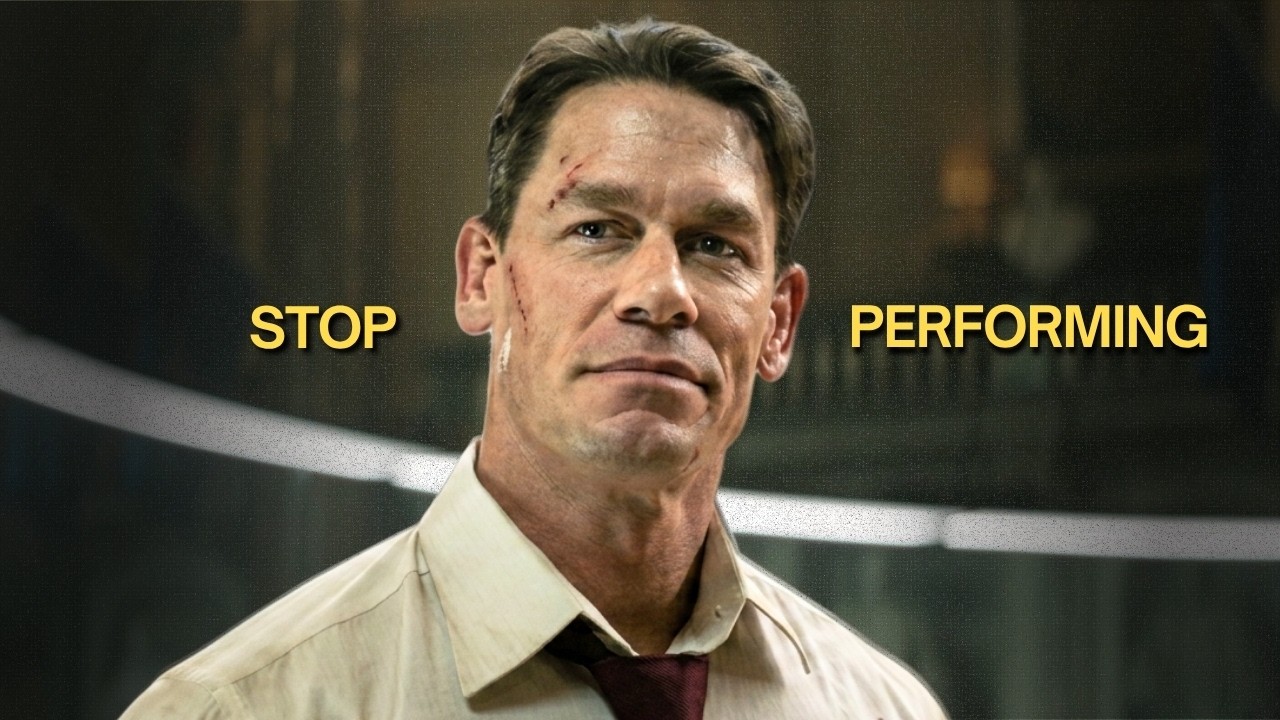
The Psychology That Disarms Emotional Games

In this YouTube video, Charlie Houpert uses scenes and dialogue from the film Good Will Hunting to illustrate a newly identified sixth type of charisma he calls “grounded charisma.” Grounded charisma is defined as the capacity to stay calm, centered, and self‑aware enough to understand others’ motives, choose one’s response deliberately, and avoid being pulled into emotional games. Houpert walks through several psychological mechanisms that enable this quality: theory of mind (recognizing why someone behaves a certain way), attachment theory (identifying secure vs. insecure attachment patterns that drive conflict), and the practice of post‑event processing to prevent reactive impulses. He demonstrates each mechanism with specific exchanges between therapist Sean Maguire and patient Will Hunting, highlighting how Sean refrains from taking provocation personally, uses strategic silence, and models vulnerable openness without seeking validation. The video also contrasts two other confidence foundations—achievement‑based confidence (exemplified by Professor Lambeau) versus self‑understanding‑based confidence (embodied by Sean). Houpert extracts three practical questions for improving theory of mind, outlines how to set and enforce boundaries, and offers a feedback‑filtering framework (“what’s for me?”) to separate useful criticism from noise. Throughout, he intersperses instructional tone, actionable exercises, and a call‑to‑action for his Charisma University course. The overall takeaway is that by cultivating grounded charisma, viewers can stay calm under pressure, handle difficult people, and maintain authentic influence without resorting to dominance or superficial charm.
Chapters
What do you want to do? You and your bullshit.
Sean Maguire in Good Will Hunting isn't someone that we normally think of as charismatic. He's not suave like Don Draper or dominant like Jack Reacher but he's one of my all-time favorite characters in film or television because he's proof that charisma can take many different forms. When I started codifying charisma so many years ago, I originally only had 5 types Conviction, authentic, funny, empathetic, and energetic. And Sean definitely skews empathetic of those 5 but there's a 6th type that I'm only realizing as I get older which is grounded charisma. That's the ability to stay calm and centered enough to understand what's happening and choose your response instead of getting pulled into someone else's emotional game. So in this video, I'm going to break down how Sean embodies grounded charisma so you can stay calm under pressure, handle difficult people, and Stay in control even in the face of chaos.
Let's get started. Yeah, let's do it. I'm pumped. Let's let the healing begin.
One of the key elements of grounded charisma is the ability to not react to provocation.
Do you buy all these books retail or do you send away for like a shrink kit that comes with all these volumes included?
Do you like books?
People normally think charisma is about being confident and obviously that is a big part of it but a mistake that people make is that they spend all of their time thinking about themselves. How do I look? How do I sound? What are people thinking of me? But an important part of grounded charisma is the ability to understand what is going on with the other person because if you don't understand why someone behaves a certain way, it can be very difficult to not react and take things personally.
Jerry, listen to me. Listen. Why is he hiding? Why doesn't he trust anybody? Because the first thing that happened to him, he was abandoned by the people who were supposed to love him the most.
Psychologists call this theory of mind and it's the reason that Sean is able to maintain calm under pressure here. He understands why Will is saying what he's saying so he doesn't need to take it personally. Now, obviously, Sean is a therapist with over 2 decades of experience but there are 2 things that you can do to drastically improve your theory of mind which we'll get into later on. Eventually though, Will does succeed in rattling Sean.
Why'd she leave you? Was she, you know, banging some other guy?
If you ever disrespect my wife again, I will end you.
But what's important is how Sean takes back control. Now, we don't and shouldn't all react as strongly as Sean does here but we do sometimes react and say things that we wish we hadn't. And what's key here is that after Will gets under Sean's skin, he goes home and he processes what just happened.
I thought about what you said to me the other day about my painting. I stayed up half the night thinking about it. Something occurred to me, fell into a deep peaceful sleep, and I haven't thought about you since.
When someone like Will provokes you, it's nearly impossible to not react in the moment It's outside of your control even for someone like Sean who has decades of experience but what is in your control is taking time to process things after the fact.
You presume to know everything about me because you saw a painting of mine and you ripped my fucking life apart. Do you think I know the first thing about how hard your life has been, how you feel, who you are because I read Oliver Twist?
Grounded charisma comes from slowing down and looking for the underlying pattern and then figuring out what the actual conflict is instead of just reacting to what seemed to happen on the surface. If you find yourself in a situation like this, there's actually 3 questions that you can ask to develop a better theory of mind. What is this behavior doing for them? Why do they need to do that? And what response are they trying to pull out of me? Those questions will help you look past what someone is doing and understand why they're doing it. So not only does Sean's processing allow him to make sense of what's happened, it also increases his empathy for Will. Speaking of Will, before we get into the 3rd point, I want to give some context for his behavior because grounded charisma is particularly useful when you're dealing with someone like Will.
So, you know, what is it like? Will has an attachment disorder? Is it all that stuff?
On the highest level, attachment basically falls into 2 categories. You've got secure attachment where closeness feels safe and insecure attachment where closeness activates some kind of threat response which is what is going on with Will.
Look at you, you fucking burnout. What winds your clock?
Working with you.
Where's your soulmate?
You want to talk about soulmates?
Where is she?
Dead.
Now, the point of attachment theory isn't to explain away someone's entire personality or experience but when you understand the context for someone's behavior, it is so much easier to process what happened. Now, earlier I mentioned how important theory of mind is for developing grounded charisma and that is what makes frameworks like attachment theory so valuable because instead of just ruminating on why someone treated you a certain way, you actually have a code to work from.
He pushes people away before they have a chance to leave him. It's a defense mechanism!
People with insecure attachment often send conflicting signals because on the one hand, they want closeness.
I'm Will.
Skylar.
Skylar.
But on the other hand, closeness threatens them.
I don't love you.
People with attachment wounds often develop a whole arsenal of tools to push people away which typically creates a very chaotic relationship and so far, we've seen Will directly attack people But he also uses sarcasm.
So what do you really want to do?
I want to be a shepherd. Really?
Redirection.
What do you bench?
285. What do you bench?
You paint that?
And then in the third session with Sean, we see Will freezing him out. Now, the natural thing to do here when someone withdraws is to try to get them to open up. If someone actually wants to connect but is just being shy, that can work. But Sean understands that this is not the case with Will. He's not being shy; he's playing an attachment-style power game here.
What do you mean he didn't talk? You were in there for an hour.
He just sat there counting the seconds until the session was over. Pretty impressive, actually.
Why would he do that?
To prove to me he doesn't have to talk to me if he doesn't want to.
Now, if Sean tried to draw Will out by asking him questions, Will would learn that withdrawal gives him control over the relationship. If Sean got angry, again, Will would learn that this tactic gives him power. And so instead, Sean just does nothing— literally. The fact that he falls asleep is kind of treated as a joke but it shows how in command Sean is here. We normally think of someone who's in control as someone who's laying down the law or making everyone else do what they want but the ultimate form of control is someone who is so relaxed that they don't have to do anything. And when Will finally feels that Sean isn't going to chase him, that is when he finally re-engages.
You know, I was on this plane once and I'm sitting there and, uh—
And because Sean was genuinely relaxed during this entire power game that Will was playing, he's not at the end of his rope. He's able to show up without resentment.
You ever been on a plane?
No, but it's a fucking joke. It works better if I tell it in the first person.
Yeah, it does.
I've had to learn this in my own life because my girlfriend has adopted several rescue animals that I live with and if you sit there and you need them to heal and transform, By the time they finally open up to you, you're at your wit's end and they feel that pressure. But when you just relax in the room with them, when they're ready to engage, there's no lingering frustration because you haven't overextended yourself trying to force a connection. But grounded charisma isn't always about just being passive. When someone violates a boundary, it requires you to be more assertive or to actually walk away from the interaction altogether.
You know, if you're gonna jerk off, why don't you just do it at home with a moist towel?
You chucking me?
Yeah, get the fuck out.
But people with grounded charisma also have the ability to lean forward in a relationship, even with someone challenging like Will. The reason people like Will act the way they do is because they are terrified of being vulnerable, usually because their lived experiences taught them that being vulnerable is dangerous.
Yeah, but this girl's like, you know, beautiful. She's smart, she's fun.
So call her up, Romeo.
Why, so I can realize she's not that smart, that she's fucking boring? This girl's like fucking perfect right now. I don't want—
And that's why the way that Sean builds rapport with Will is through sharing vulnerability himself.
My wife used to fart when she was nervous.
When we share something vulnerable with someone, we're usually looking for a particular response whether it's validation or reassurance or empathy but that isn't why Sean said this and this is a key because even though modeling positive vulnerability for someone like Will is one of the most generous things you can do in a relationship, it's also dangerous.
You ever think about getting remarried?
My wife's dead.
Well, I think that's a super philosophy, Sean. I mean, that way you could actually go through the rest of your life without ever really knowing anybody.
Will's response here is brutally insensitive but the reason Sean can respond so calmly is that he didn't start talking about his wife because he was looking for something from Will. So if you want to practice this, share something that you're comfortable getting nothing back from. If you need someone else to reassure you or open up in return or respond a certain way, you're putting your emotional state in their hands which can make it much harder to stay grounded. And what's surprising is what happens as a result of this conversation. When you get a mean comment in life or even on the internet, it's very difficult to distinguish, okay, is this someone working out their own issues by attacking me or is there a grain of truth here? And the way that most people deal with this is to collapse the complexity. They either go, screw the haters, they don't matter, I don't care, or they go, oh my god, this person thinks I'm a bad person, I'm going to fully take on their criticism. But a grounded person is able to actually decipher and discern feedback. When Sean first meets Will and he tries to get under his skin about the painting, Sean knows that it has nothing to do with him. But later on, when Will criticizes him for being closed off to remarrying—
I mean, that way you could actually go through the rest of your life without ever really knowing anybody.
Sean realizes that Will is right. He has stopped living and ultimately, he takes his advice and allows himself to be changed.
Yeah, you know, I figured I— I'm just gonna put my money back on the table and see what kind of cards I get.
That is the difference between being grounded and just being stubborn. You are secure enough to ignore what isn't for you but open enough to actually change when there's something true in feedback or even criticism from another person. One thing that I have found is useful in these situations is asking myself, what part of this is actually for me? Because when someone criticizes you, there's a tendency to either reject the whole thing or take it all on. Being grounded means that you can take what is useful and just leave the rest. But we still haven't gotten to the foundation of grounded charisma and it's the reason why Sean is able to form a relationship with Will whereas almost all of the other people Will encounters fail to do that. Even the math professor, Jerry Lambeau, who discovers Will and desperately wants to mentor him eventually becomes completely decimated by Will.
Most days I wish I never met you because then I could sleep at night.
And the difference between Lambeau and Sean is that their confidence comes from very different foundations. One type of confidence is The kind that comes from achievement. The more you accomplish, the more evidence you have that you're actually someone who is worth feeling confident about.
Ladies and gentlemen, we are in the presence of greatness— Professor Gerald Lambeau, Fields Medal winner for combinatorial mathematics. That's like the Nobel Prize for math except they only give it out once every 4 years.
And even though achievement can lead to confidence, it also becomes a vicious cycle. In Lambeau's case, that's exactly what happens.
You and your kiss-ass chorus following you around going, the Fields Medal! The Fields Medal! Why are you still so fucking afraid of failure?
He only feels okay with himself when he's number one, when he's surrounded by people who adore him. So when Will outshines him, he can't help but feel destroyed by that because Will threatens the very foundation of his entire identity and self-worth. Shawn's confidence is different. He's achieved a lot but his confidence doesn't only come from his accomplishments; it also comes from self-understanding and acceptance.
You think I'm a failure. I know who I am and I'm proud of what I do. It was a conscious choice. I didn't fuck up.
Sean doesn't need to be better than anyone else in order to be okay with himself and that's why he's able to respond to Will like this.
You're just pissing your pants, you're crying for the harbor so maybe you do what you got to do to get out. You know, maybe you became a psychologist.
Bingo.
That's it.
Let me do my job now. You start with me. Come on.
When you understand yourself, it opens up your capacity to understand others. That's what grounded charisma is all about. Which personally didn't come so naturally to me. Because Sean accepts himself, he doesn't have to protect his ego and that frees up his attention to understand Will and avoid getting sucked into every attempt that he makes to provoke him and to be vulnerable without needing anything back. That is what grounded charisma is all about. Now, obviously, that kind of self-acceptance takes time but you don't have to wait until you're completely secure in yourself to start doing this. One thing that you can change immediately is where you put your focus. So a friend and I used to have a rule for exactly this whenever we were out in a social situation. When we would feel uncomfortable in that situation, it was very easy to start looking around the room, starting to check our phones, or waiting for someone or something to rescue us from that feeling. So we made a rule: the most interesting place in the entire room when we were talking was the space between our noses. And it didn't matter what we were talking about. We could literally say, I'm terrified. I'm so uncomfortable and I just want to go home, but the point was that we had to actually engage with one another. It was remarkable how much easier it became to connect with other people once we stopped scanning the entire environment and started being fully where we already were. That is the kind of thing that we work on in Charisma University. Over 30 days, it gives you a clear action every day so that when you go into a conversation, you have an arsenal of tools to draw from. And if you want to see if Charisma University can do the same for you, click the link below to learn more. Either way, I hope you enjoyed today's video. And I look forward to seeing you in the next one.