5 Things You Say That Make People Hate You
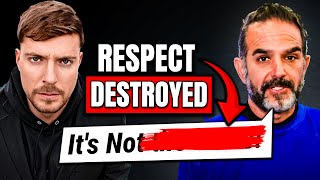
This is a YouTube video titled "5 Things You Say That Make People Hate You" created in February 2025. The content features a Charisma University instructor analyzing communication behaviors using examples from a reality TV show called Beast Games. The instructor explains how certain phrases and actions can damage respect and trust in social interactions, illustrating points with dialogue from a player identified as Player 566. The video also promotes the Charisma University program aimed at improving charisma and communication skills.
It's usually the moments where we're trying to make people like us that actually wind up making them hate us instead. And that's sometimes because we want to show that we're cool or smart. There's a time when you snuck into the room to see what the.
I sneaked into the room?
Snuck isn't a word, Conan. And you went to Harvard, and you should know that.
What the hell? Look right here.
Snuck past and past part of sneak. And other times, it's because we're trying to cover up for a previous mistake. So in this video, I want to use Beast Games to reveal five rage ducking behaviors that can turn a recoverable blunder into people totally losing respect for you. But before we go any further, don't be mean to this guy. Reality TV is not the real world. We don't know what's cut, so give him some grace. First off, one phrase that can destroy your respect if it's used improperly is I had to. And obviously not every time, since it's a super common phrase. So let me give you some context. In Beast games, the final 10 contestants have an opportunity to divide $1 million between them. The catch is that they each go one by one with with each person taking as much from the prize pool as they want. And no one is watching them as they do this. The first person goes and takes 1/10, which is an even share of the million dollars. But the next two take much more than an even share. Everyone else is left with almost nothing. And what's crazy is that only one of the guys who took more than his share gets most of the group's anger. And it's in part because of how he handles the aftermath. Check out how he starts with the phrase, I. I had to.
I'm sorry, guys. I had to put my family first. But at the end of the day, I had to do what I had to do. I don't know when else that opportunity was going to come knocking on my door, and I had to take it.
I had to. Along with the other four phrases in this video, kills his respect for the rest of his time on the show. And now, obviously, this is an extreme situation with a lot of money on the line, but it is a guarantee in normal life that you are going to do things that upset other people. Maybe something small, like skipping a group hangout, or maybe you're critiquing someone or even firing them for not performing at work. Even though it might feel like pretending not to have a choice will help a much stronger way to command respect is by saying, I decided to. Like, I would have loved to see you, but I decided to spend time with my family or I decided to let you go. This can bring out more upset feelings in the moment, but even when people are disappointed, they respect those who communicate difficult things with this kind of clarity. Now, our next phrase is extremely tempting to use, and it's every derivative of it's not the same or what I did is different. In this case, players are pointing out that player 566 criticized another player for a move that he felt was selfish and low integrity.
You should have chosen someone that you knew and that you confide in. I'm sorry, Dino, that's just the way I feel. You chose her to save yourself. That was a shitty thing to do.
When other players bring this up, though, 566 tries to argue that his situation is totally different.
It's a different scenario. Oh, it is? Yes, it's a very different scenario.
That's called rationale.
He plotted someone for his benefit. He used someone as a pawn.
Notice there that if you immediately jump to defend yourself, people tend to shut you out. So instead of immediately denying an accusation of hypocrisy, it's often better to ask yourself if there are similarities and reply with, yeah, I see how those things are similar, before pointing to the ways that you feel they're different. That will actually make the other person more open to seeing your point of view rather than just writing you off as defensive. Now the next group of phrases that drives people crazy and kills your respect is everything to do with redirecting blame with phrases like what about you? Or what about them? For instance, after everyone is furious with him, Player 566 gathers everyone together to share that other players have a secret alliance.
I may seem like the enemy because of the decision I made, and I'm not the enemy. I was told by someone in this room that they are plotting against me, and my suspicion was confirmed. And when I say they, I'm going to introduce you to they. Now.
It is sometimes the case that while people are upset with you, there's another big issue that needs to be raised. In these cases, the best way forward is to wait until the conversation about you has ended and then say, okay, do you feel complete here? Because there's another topic I'd like to bring up. When you do this, it feels like you're not bringing up someone else's issues to escape from your own, and people are much more likely to listen. But rushing to a deflection usually gets you none of what you want, which is exactly what happens. Here you are feeding your family by stealing food from the community.
I hear you, but do I understand you? No.
Another sneaky group of phrases that you need to avoid are insincere disclaimers. An insincere disclaimer is when someone says that they're not doing something like I'm not doing X or I'm not doing Y, like this.
I'm not sharing this information to get the target off of my back because it's there. I'm not trying to justify why I made my decision. You know I'm not here to convince you.
And if this is insincere, they'll then proceed to do the exact same thing they just said they're not doing. All without owning it.
I'm not in this for material things. I'm 50 years old. I have a 3 year old and a 6 year old. You know that I want time. And that'll afford me the opportunity to build more memories with them. Love you, JC. Love you, JC.
We see an undeniable version of this when 566 tries to bribe another player to vote for him and then immediately backtracks when she doesn't bite at his offer.
What is my vote to you worth? If it's all that, all that you're voting for is for money, then I don't want the vote. Of course. No. And. And that's exactly what I wanted to hear. I wanted to just make sure that we're still on the same page.
And this is especially obvious since right before this, he's trying to bribe other players with no mention of this being some sort of same page test.
Hey Mike, it's JC. If I throw 10k your way, are you willing to vote for me? Yeah. Let me make some phone calls and then I'll call you back. Okay.
This style of boundary poking where you ask for something and then immediately, immediately disown it when it's not well received is one of the fastest way to lose people's respect. So instead of denying it when we do things that others might not like or agree to, a much better strategy is just to say, I want and own our desire. I want you to keep me on the show. I want your guys forgiveness. I want you to get this target off my back. I want to pay for you to vote for me. You're not forcing the other person. You're just saying what you want. And if you try to deny what you're doing instead, you might Trick someone once and seem impartial, which can, yes, help you persuade them. But over time, they will see through this game and they will lose respect and trust. Once you've lost that respect, doing any kind of deal, having any kind of relationship, gets very expensive, as 566 finds out.
So in the event that you wanted me to vote for you, you'd have to give me $150,000.
Now, there is a big caveat here, because while clearly stating what you want is important to building respect, it doesn't guarantee you're going to get it. So when you're doing it, it's. It generally helps if you pair it with this next point, which is to not ask for empathy before offering it, especially in situations where you've acted selfishly. So the phrase that you're going to want to avoid here is you have to understand or I want you to understand.
I'm not trying to justify why I made my decision. I just want you guys to understand and I want you to know that I may seem like the enemy because of the decision I made. And I'm not the enemy.
Now. We can't see everything that happened in the edit, but it is telling that we don't see any questions from 566 to the others after the betrayal. Like, how are you guys feeling right now? Or is there something that you'd like me to know? Or do you think that there's something I'm not understanding about what I did? You don't have to give everyone what they ask for, but if you don't open up to understand them, your attempts to explain yourself and get understood will usually fall on deaf ears.
I don't want to be out here. People won't even look at me. And I get it. You can't be negative. You had your choice to make.
Now you might be thinking this guy was doomed when he took the money and that's fair. But actually we see people in the same day make selfish decisions that get others eliminated and they do it without losing respect. For instance, when one player lies to get to the final round, he's immediately asked about it.
Nine, seven, four. Why'd you lie? You?
He doesn't put it on his family. He answers the question briefly, owns that yes, he did lie and expresses remorse without minimizing what he did.
I did this purely for strategy to move on to the next round. And I'm sorry that I lied.
And watch how quickly he is forgiven and respected.
Listen, I forgive you, but I don't play like that. I can respect it. That was tough. Old stumps.
This is what happens when you take responsibility. And this whole video illustrates a sad confusion that so many have. So often. We think that if we can just avoid other people thinking that we're bad, things will go better for us. But the sneaky things that we do to try to make people see us as good only work to make those people dislike and distrust us. So taking responsibility and allowing people to be angry, upset, or hurt by you while listening to them without trying to talk them out of it actually winds up being one of the strongest ways to move through life and command respect. And the cool thing here is that someone demonstrates a version of this on the show. He shows how to actually win back respect if you've done something that upsets people. For context, although it wasn't as much. Player 831 took more than his fair share of the remainder of the money.
I want to take 7272.
The first thing that he did was own what he'd done quickly.
And I need to tell you guys, I took more than 43 or 30. I took 7200. Okay? You know, we all took 3600.
And he didn't deny his decision throughout the day.
I'm not too dissimilar from you guys. I chose more than I should have.
Then when it came time to play the game, which allowed people to make bribes and transfer money, he stopped with what he felt was underhanded behavior, refusing to pay off another player for a vote to get through to the next round.
You get my vote if you give me everything you got. I think it's a little dirty.
Then he made a move to make exact amends, including rectifying the amount that was damaged, speaking to his remorse, and owning his mistake.
I took more than I should have, and now I'm making my penance. I just sent you guys 757.50. That was the excess amount. I took over what I should have taken. It'll even everything out, and it'll make me feel much better. It was eating me up last night. It was stupid. I'll earn it the right way. That was really nice of you. Oh, dude, thank you. Thank you.
And what happened after he did all this? All but two people, including everyone he apologized to, voted for him, and he moved on to the next round to win $5 million. So even though it seems like it might cost you, taking responsibility for the things that you've done that are out of alignment and owning them is actually a much cheaper way to succeed in life than by ducking responsibility. And even if it wasn't, it just feels better to let other people have their reactions to you without trying to control them. Now, if you're wanting to command respect in any room you walk into, you might be interested in our program, Charisma University. It's a step by step guided program designed to unleash your natural charisma in just 30 days and it comes with a daily action guide so that you know exactly what to do each day to take what you're learning and turn it into a habit that you do every day effortlessly. You might find that a bit hard to believe, but you don't have to take my word for it. The program comes with a 60 day money back guarantee so you can take the entire course, see if it changes your life and if not, give yourself a refund right from inside the program. If you want to learn more, you can click the link on screen now or below in the description. We have had thousands of people improve their lives with Charisma University and we would love for you to do the same. Either way, I hope this video has helped you and I look forward to seeing you in the next one.
I.





