Bored Eyes: A Social Mistake That Make People Dislike You
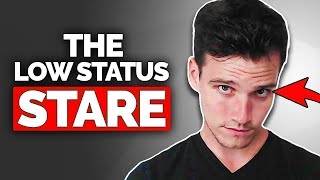
Sam breaks down seven body language mistakes that make people dislike you, starting with bored eyes. The video teaches how to fix your nonverbal communication to improve confidence and presence in social situations.
You probably know that your body language says a lot about you, but what you might not know is exactly what it is saying all the time. And that's why in this video, I thought it'd be fun to cover seven things that your body language is likely at some point, telling other people, or at the very least, that you can read in others. Now, some of these you're not going to want to mess with. They're happening subconsciously. But other ones, if you do a simple tweak, you can come across as more confident and more likable, which is absolutely worthwhile. The first one is one of those, and it has to do with where you put your attention when you're out and in public. Now, at networking events, you're out at a bar, you're talking to someone, and maybe for whatever reason you'd like to explore, you want to talk to another person. Weirdly enough, the worst thing that you could do in that situation is start to scan the room. Because if you're in conversation with someone, you're scanning. Other people have their peripheral vision going on. And when they see someone that isn't interested and intrigued in the conversation they're having, they don't think, oh, the person they're talking to is boring. They think, oh, that person is boring. They're both boring. Because you're not making that interaction interesting and fun. It is incredibly hard to get other people to join you when you don't look engaged yourself. So paradoxically, if you want to look like the person that other people want to get to know when you're in conversation, be in it. The most interesting point in the whole room is right in between you two. If you want to go out and explore, totally, totally cool. But make sure that you keep your attention focused on the person you're talking to. Makes other people approach you, makes it easier to rope them into conversation other than looking around. And if you absolutely have to look around the room, you can just peer over the person's shoulder. But none of this not going to help. Second thing also has to do with attention, but it's for groups that you know a little bit better. And I realized this because I had a friend who did this really well. And it's to not let someone interrupt you while someone else is talking to you. Now, I did this. I was on the flip side of this. We were all hanging out, me and my buddy and another buddy. I was on the periphery, but we'd all said hello to each other. They were having a conversation. I came in to talk to one friend, and he just ignored me. And at first I was a little bit miffed. I went, what is he doing? But after the conversation they were having, I kind of just stood there quietly, tried to join in, and a minute or two later said, hey, sorry, you had said something. What was that? And then he put his attention completely on me. And what I realized in that moment was two things. One, every time that I had his intention, even before that, I always felt like he was doing something really right, and that's that he was focused on me. But if even when I was a person who was miffed, I respected him in that moment, even that I didn't totally like it, the fact that he was so centered as to focus on where he was was worthwhile. Now, this is something that's worth incorporating. Of course, there's times where you don't want to do this. If you're in a big group, conversation flows freely. You don't have to ignore everybody else, but particularly when someone's shy or quiet, to give them that attention really, really, really singles you out as the leader. One other time you don't want to do this is when you're in a group of people and someone new enters. Whenever someone new enters, it's actually good to pause the conversation, be the one that incorporates them, and then get things back on track. Very powerful leadership. Things to do. Third thing, this has to do with your body and what you lean against. Now, I've covered trapping in videos on flirting. Trapping is the idea that you could be somewhere, maybe you're on a booth, maybe someone is against a wall. And. And especially if you're a bigger presence than them, if you don't know them and you kind of close them in, it feels very uncomfortable. The flip side of this, though, is in any situation, you know the people. Not when you're not in that group of people and they see, or someone is not in that group, they see you leaned against the wall, leaned against the bar, sitting in the chair while other people talk to you. It makes people that aren't even in that group think that you are the leader of that group. The person who is leaning, the person becomes the. They become the center point. Everyone is on them, if that makes any sense. So this is not something that you're going to have to do often. You don't need to keep it in mind always. But one situation where it's useful is when you're out at a bar. It's been a while since I've been there. But lean against the Bar. When you're talking to someone, it makes that person feel at ease, and it makes everyone else in the room think, oh, those people, A, probably know each other fairly well, and B, if that other person wanders off, that's someone that I can comfortably talk to. So this takes us to the fourth thing, which is your hands. This one is very basic. I see it done wrong, though, so I have to say it. Hands in pockets. They make you look nervous. They make you look like you're untrustworthy. It's just not worth doing if your hands are cold or you absolutely don't know what to do with them. And you have to. You can cross your arms at least. This looks like you're a little bit tough. I don't even know. It's not the best either, but hands in pockets, really bad. So once you take your hands out, there's a number of things that you can do with them. Two broad categories to think about for the purpose of this video, though. The first is precise gestures. That's going to be where your fingers come together. Maybe they come together like this. Maybe they come together as you do. You have to do this and then this and then this. These are precise gestures. Then there's expansive gestures. They have different things. Precision actually gets people to focus closely on what you are saying, and it's really good if it matches your words. Expansive makes you come across as more confident, generous, likable. You're more open. This is true with every aspect of your body. Generally, the more expansive you are up to a point. You don't need to invade other people's space. Totally. This is going to be very useful for you if you want to come across as more confident. So that was 1, 2, 3, 4, 5, 6. We're up to right now. 6. Has to do with shame. When you communicate shame to someone, it's generally not a powerful thing, especially if what you did was not a big deal. Now, this actually happened to my brother. He told me a story, and I realized this happens all the time, so it's worth covering. And the shame is you hang your head in shame, right? And he told me that someone did this. It's something that happens all the time. People got our names mixed up. So this person called him by my name and afterwards went, oh, sorry, sorry. And then looked back up, and in that moment, he felt, oh, man. I guess he did something pretty bad. The weird thing is, literally today someone else did the same thing, but went, oh, no, you're Henry, you're Charlie. Sorry. And smiled and Said sorry just like he did. But. But it was this sense that nothing had happened that was wrong. So if you've made a mistake, particularly a social one, that wasn't on purpose, do not hang your head. Right? That's just going to communicate that this mistake is more grievous than it actually is. Instead, make eye contact, smile, apologize. You can give them a little shoulder. Hey, sorry about that. That's going to be much, much stronger. And make it. It's going to. I don't want to say minimize. Well, it is going to minimize it. What you did wasn't a big deal, at least in the context of what we're talking about. If you've really messed up, go see one of our other videos on how to deal with a tough conversation. The last thing that we're going to be touching on. 7. Do not try to do this one yourself. Don't try to override your subconscious beliefs. This is just one that is happening and I learned about it, so I wanted to share with you. It's the eyebrow flash. The eyebrow flash is when your eyebrows go up roughly for 1/5 of a second. And what it means when it happens is that you generally know this person and like this person. So if you think, if you're meeting someone new for the first time, you might say, hey, how are you? Not a lot happening with your eyebrows. You could still smile. But say you're seeing a friend and you haven't seen him in a minute, or just a friend that you know, hey, what's going on? Your voice goes up. The mouth sometimes gets a little bit wider. He. As opposed to the smile. Right. And those eyebrows lift. Just an interesting thing. I wanted to include it because I thought it was cool. If you try to do this like I have been for the last 30 minutes in the mirror, you're going to be a weirdo. I cannot recommend putting this one on purposely. So don't. So hopefully that has been interesting. Those are the seven things that you might not realize that you're communicating with your body language. If you are interested in things that communicate confidence from a body language perspective, that communicate presence and magnetism when you go out, you might be interested in our course, Charisma University, which is actually week five, is Presence and Magnetism, where we dive deep into body language. Now, in that week and in the course, you're going to learn how to carry yourself so that people immediately respect you and of course, what to do with your eyes, your hands and body positioning so that you're exuding confidence. But Most importantly, the entire course is set up with a step by step daily action guide. And that is so that you can make great body language a habit without having to overthink it, come across as robotic. And that is huge because body language is notoriously hard to fix. A lot of what you do is happening unconsciously without really meaning to. So you might be able to pull off great body language for a moment, but as soon as you stop actively thinking about it, you, you can go back to your old habits. And that's why in Charisma University, I lay everything out with a daily action guide. The point of that is that all you have to do is watch 20 minute videos each day, do the action guide and body language plus charisma becomes an unthinking habit for you. The course is supposed to take all of the guesswork out of becoming more charismatic so that you know with certainty as long as you're following the program, you're going to see amazing results. And if you're not into the course for whatever reason, there's a 60 day money back guarantee. You hit the refund button, you get every single dime that you've invested back with. We've had thousands of people go through the course at this point. They've gotten promotions, raises, new friends, dates, romantic encounters, all sorts of stuff. So if you want to learn more about that and potentially join, go ahead, click the link on screen now or below in the description. Sam.





