How To Dominate A Debate
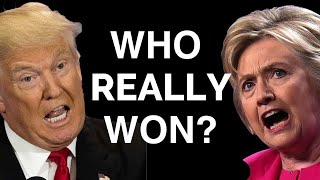
Charlie Houpert breaks down the first presidential debate between Trump and Clinton, analyzing their body language, speech patterns, and charisma tactics. Learn what made their communication styles work or fail, and how to apply those lessons to your own presence.
The first presidential debate is over and everybody is weighing in on who won. But I have a different how did each candidate perform from a charisma perspective? This is critically important because when people don't know who to trust, we oftentimes just choose the person that we have a better feeling about. You might not like it, but it's the truth of how humans work. So if you want to know how undecided voters are likely to vote, you cannot ignore the charisma angle. Let's begin by examining Trump. He started the debate strong, making one consistent point in his first answer.
Our jobs are fleeing the country, so we're losing our good jobs. So many of them. So Ford is leaving. You see that? Their small car division, leaving thousands of jobs, leaving Michigan, leaving Ohio. They're all leaving.
If you've seen our other videos on Trump, you know that this habit of repetition makes the point stick better in the brains of the audience. Days later, people are only going to remember a few snippets from the hour and a half long debate. A month later, on Election Day, they'll only remember how the debate made them feel about each candidate. So the repetition of a single point gives it the best chance of being what lasts. Trump even acknowledged that he agreed with Hillary on one point, and it was a strong moment for him compared to his more extreme positions of the past, because it made him seem more reasonable and nuanced as far as childcare is.
Concerned and so many other things. I think Hillary and I agree on that. We probably disagree a little bit as to numbers and amounts and what we're going to do, but perhaps we'll be talking about that later.
As the debate wore on, though, Trump's repeated, often unsuccessful interruptions began to make him look like a jerk.
I was against it once it was finally negotiated and the terms were laid out. I wrote about that in.
You called it the gold standard.
Well, I hope you called it the.
Gold standard of trade deals. You said it's the finest deal you've ever seen.
No.
And then you heard what I said about it and all of a sudden you were against.
What's most interesting here is that Donald Trump's interruptions were one of his winning take tactics in the first debates. So why did they come off as obnoxious this time around? First off, in the first debate, with so many candidates, they each had to fight one another for airtime. Interrupting was the only way to ensure that you didn't lose your chance to speak.
It's their own ties and their own suits that's right.
All right, you know why?
Because why don't you make them in.
America devalue their currencies? They devalue their currencies.
Well, then make them in America.
Makes it imp. Well, you don't know anything about business.
You lose money.
Make them in America.
We know anything about it because you're lousy.
Well, I don't know anything about bankrupting four companies. You bankrupt. I don't know anything about starting a university. Fake university. A fake university that's called There are people to borrow $36,000.
Contrast this with a two person debate where the moderator, for the most part, protected Hillary's chance to speak.
Now, let me say there's nothing crazy about not letting our companies bring their money back into their country. This is Secretary Clinton's Two minutes, please.
You and the business you do. You've proposed an approach millions of deaths benefit.
Secondly, and more importantly in this debate, the audience was specifically instructed not to speak up, cheer or laugh. And with a few exceptions, at the end they kept quiet. So whereas Trump's brash interruptions in the first debates created arousing applause.
But the Islamic terrorism that exists, this is a tough business to run for president. You're a tough guy, Jeff, and we need to have a leader that is real tough. You're never going to be president. Your way to. Let's see, I'm at 42 and you're at 3. So so far I'm doing better.
So far I'm doing better.
The audience's silence when Trump cut in this time just made him sound like a jerk. And this is hugely important. It comes from a psychological concept called social proof that states we all get cues on how to respond to situations by seeing how other people respond first. So when we hear a room full of laughter, we're more likely to laugh, ignoring the fact that that statement could have been perceived as rude. But when that laughter isn't there, we get the sense that what was said is not funny and in this case is just rude. It's the reason that laugh tracks exist on sitcoms, even though people insist that they don't like them. And in my opinion, it's why a witty show like Arrested Development struggled. Without a laugh track and cues to laugh, many people just felt awkward. Well, excuuuse me. Excuse me. Anyway, enough with the side note. The next point is that Trump also had some body language that flat out hurt him, specifically nodding. While Hillary made her points, it gave the impression that he was begrudgingly acknowledging the truth of what she had to.
Say we need to do more to make the contributions we should be making to rebuild the middle class. I don't think top down works in America. Broad based inclusive growth is what we need. In Americ, that means zero for troops, zero for vets, zero for schools or health. And I think probably he's not all that enthusiastic about having the rest of our country see.
So Trump was a mixed bag and I would say that he got worse as the debate wore on. But let's move to Hillary now. She got off to a rough start. Her opening remarks, which were obviously prepared, felt scripted. That sense of being overly scripted often comes through in a couple of hitches when people accidentally vary from their word for word script and then struggle to get back on track. And as we saw, some of the words got stuck in Hillary's throat as she tried to recite that word for.
Word script starts with raising the national minimum wage and also guarantee finally equal pay.
There was also a very slight but palpable sense of searching, as it felt like Hillary scanned her brain to see what her next point was.
We're going to do it by having the wealthy pay their fair share and close the corporate loopholes. Finally, we tonight are on.
This was a problem for Hillary because one of the big things that she wanted to do in this debate was come across as less robotic and more personable, which is why she kept referencing her family. Now, the reason that Hillary likely had those hiccups was because she memorized her talking points word for word. Now, I cannot emphasize this enough, unless you are a talented actor, memorizing word for word is a bad idea. It is very difficult to make those word for word memorizations feel normal. We have a separate video on how to memorize a script or speech in a way that feels more fluid to an audience, which I'm going to link to in the description if you are interested. But things just got more uncomfortable with Hillary's smile, which looked forced. The lack of tension around her eyes made it come across as fake. Again, we have another video dissecting the anatomy of a genuine smile. But just notice the difference in the eyes between her typical smile and one of the smiles where she seemed to genuinely be laughing.
Woo.
Okay. As the debate continued though, Hillary definitely loosened up, lost some of the nerves, and even shot back with some unstuck scripted zingers that match the flow of the debate.
And we don't have the money because it's been squandered on so many of your ideas.
But you respond because you haven't paid any federal income tax for a lot of years.
This was one of the charisma high points of the debate. For Hillary, it was a direct, spontaneous remark that perfectly matched what they had just been talking about. Unfortunately for her, there were far more prepackaged lines like trumped up, trickle down that just didn't hit as hard. And she was unable to get the full benefit of this moment because rather than hammering that point home, she silenced the audience so that she could continue with her talking points.
And the other thing I think is important.
In sum, I saw major charisma issues with both candidates. Neither hit a home run, but who won? I wrote down my reaction immediately, having finished the debate so it wouldn't be swayed by the day after news cycle, which is where the real battle for who won the debate is fought. Keep in mind I'm coming at this from just a charisma perspective, not commenting on the merit of what anyone had to say or the quality of the proposed policies. Not saying that you shouldn't consider those things, but there are of course tons of other places where you can go for commentary on that. So from just the charisma perspective, it was close. But I would have to say that Trump edged out Hillary. Hillary had the opportunity for some really strong moments, but rather than hammer them home, she stuck tightly to her talking points, which often came across as very scripted. Trump struggled to restrain himself and probably alienated some voters by shouting over Hillary, but in my mind, he generally spoke with more ease and conviction, which translates to charisma. Still, it was close. I don't think that either party is going to pull away sharply from this, and I am excited to see how both candidates adjust for the next debate. If you want to see that next debate breakdown, make sure to subscribe to the channel. Not only are you gonna get that, but you'll also see weekly updates from all of our videos that are gonna help you take your charisma to the next level. We're in political season right now, but we've been known to break down everything from Game of Thrones to Kevin Hart's storytelling. So if you're interested in learning how to be more charismatic and confident, make sure to subscribe and you're if so, you never miss a new video. If you want to check out the other videos that I've mentioned, we've got links in the description. And of course, until next time, I hope that you've enjoyed this video and I'll see you in the next one.





