How To Effortlessly Defend Yourself In Any Argument
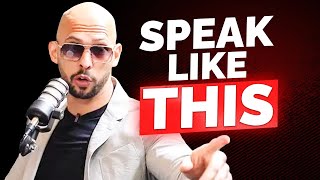
Analysis of an Andrew Tate and Piers Morgan argument that breaks down common tactics used in heated conversations and how to counter them. Learn specific rhetorical moves and responses to hold your ground when someone attacks your position.
We've all had conversations that started out friendly, then suddenly turned into an argument that made us feel attacked. The other person twists your words and uses little tricks to try to make you look dumb. So today we're going to break down a conversation just like that between Andrew Tate and Piers Morgan to show you how to defend yourself in any argument, even if the other person is determined to make you look bad.
I don't know why you're trying to come at me with one of his views and pretend that's something to do.
With it, because it's a pretty big view.
No, but it's a lame trick.
Piers, this video is not endorsing either of these people. It's simply an analysis to teach you the tactics some people use to assert dominance in an argument. The first step to defending yourself from a conversational bully is to spot when they enter fight mode. There's some obvious tells, like if someone starts shouting or repeatedly cutting you off. But there's a subtler tell as well. You can see an example of it in this next clip where Piers shows he's there to argue with Andrew, not to understand him.
I want to play you just a clip off the top. This is from Joe Rogan. He's somebody I absolutely love.
Sure.
And I think it explains to me what my. What I presume my issue with you is going to be right, correct, and you have absolutely got the right to try and persuade me otherwise.
Sure. There's actually two tells here. If someone labels you or an idea you stand by as an issue or problematic, that's a good indicator that they've switched into fight mode. Or if they want to argue with you before asking you to explain your point of view. If that happens, you should start being wary of conversational traps. One of the most common traps is misquoting you. Misquoting you makes it easier for the other person to feel like they're dominating you because they're attacking a strawman instead of your actual views. This sounds like it would be easy to catch, but sometimes it only takes a small tweak to your words that to make a big impact on their meeting. If you aren't paying attention, you may not notice the small tweak. For example, listen to Andrew respond when Piers asks him, what is your opinion of Alex Jones?
After meeting him, he was professional and courteous to me. When I meet somebody and they show me respect, I show them back respect. That's what I do, as I did.
With you, you respect him.
If somebody shows me respect, I show them respect. Back.
So if Alex. I don't know, if adult Hitler showed you respect, you'd respect him back.
There is a huge difference between showing someone respect by being polite versus having respect for them and their ideas. And Andrew even catches this at first, but Piers is persistent in establishing that strawman.
Well, I'm not. I'm taking your position that if somebody shows you respect, you respect them.
I think that.
I'm saying there are lots of people in the world I do not respect. If Vladimir Putin showed me respect, I would not respect him.
That's your opinion.
But, no, it's my view. What's the view?
Okay, that's your view. Well, you're saying your view is you would.
You can see Piers is trying to force a view upon Andrew that he doesn't actually believe, so you have to be careful not to let someone misquote you.
Or.
Or you may find yourself defending a belief that, upon reflection, you don't even have. Luckily, there is a simple solution for this, if you're aware of it. Re. Establish your own point of view before you defend it.
You talk about people don't want to see men dressed up in dress. Transgender.
That's not exactly what I said.
What did you say?
I said, the reason I am so popular and I'm so famous is that there's a large contingent of men who don't want to wear makeup, who still want to make money, go to the gym, be strong, drive a fast car, be traditionally masculine, and. And don't want to be shamed for that. And they don't want to be called toxic for that.
Now, if you do start to make good points in an argument, you'll have to watch out for this next trick. Derailing interruptions. This is when someone tries to interrupt you before you can establish your strongest points.
You're taking these sentences, and on repeat, you're using them to. You're weaponizing them against me.
I'm not weaponizing anything.
Okay, it's fine.
No, no, you're weaponizing the. Weaponizing. It doesn't exist.
No problem.
You said to me, come on, bring it on.
This can be frustrating. You see in that clip that the interruptions are starting to bother Andrew. Luckily, there's three ways you can handle being interrupted. The first trick is to pause, acknowledge the person, then return to the point you were making.
All I've done is literally read out all the things we identified from all the research that I thought were blatantly misogynist and given you the chance to respond. And the only time I've interrupted you is when you've tried to answer a completely different question.
Understood, Piers, but these things were said.
Andrew reclaims the conversation after he looks Piers in the eye and says understood Piers. You, you can even see a little smile in Piers eyes after. That's because most people in an argument crave to feel heard and understood. Here's another example. You can steal this line word for word if you want to acknowledge someone without agreeing with them. This time, Piers even makes a little positive noise after Andrew acknowledges him.
I don't think so.
And I think your view of that is that view is dangerous.
I respect that you think my view is dangerous and I respect you have the right to view that.
To think that that line is a nice way to remain connected with someone without giving ground you don't agree with. It makes the other person feel heard and that disarms their need to attack. Now once someone has established a pattern of interrupting you, the next thing you can do is preempt their interruption.
Here's an example and this is actually what's interesting. And please don't interrupt me on this point. Social media has changed in modern times.
You can even see Piers's body language change as he disengages to respect Andrew's request. If the person continues to interrupt you, you can call it out with a one finger stop gesture.
Now let's stop for a second. Please don't interrupt me. Here's why you're. I know why you're good at your job. First, you interrupt people a lot, which is good. It's a good skill. I believe in marriage more than anybody. In fact, I believe in marriage and. No, please, I believe in marriage in the traditional sense.
Now on the flip side, you also want to avoid the trap of being the interrupter, especially if someone is responding to a point you've made. Don't steamroll concessions. There were a few times where Piers actually made a good point, but he interrupts so much that Andrew can't even agree with him.
What you did say at the start of this little exchange, he said, you know, I wouldn't maybe say things the same way now that I did before I was famous.
And.
And yet actually you've doubled down and said exactly the same thing on certain points. So that is what you believe? That's my point, yes. I'm trying to work out. Look, I don't know you.
We've just met, right Team rolling concessions prevents you from reaching common ground with the person you're talking to. If there's anyone else listening, it Also makes it harder for them to register that you've made a good point. Here's one more example so you can see what not to do.
I think my sister is my her husband's property. Yes.
Because fundamentally, I don't believe a man owns a woman. You do?
Well, I don't think a man owns any sovereign individual. I don't think we live in the world of slavery. I don't own any man or any woman.
Right.
Nobody owns anything.
When you use phrases like property, that's what you imply. I understand. And so my point again is you're a smart guy.
We start to interrupt people when we are the ones that enter fight mode. If you can stay calm in an argument, you're much less likely to cut people off and steamroll concessions. One great trick for staying calm in an argument is to physically relax into the argument, purposefully release any tense muscles, and take deep belly breaths. This will signal to your brain that you are safe and you don't need to enter fight or flight. Staying calm also lets you think more clearly, so you're more likely to catch any logical gaps that the person tries to sneak by you. Like the name suggests, this is a moment where there is a gap in the logic of their argument. Here's the most obvious example from this conversation.
What is your view of Alex Jones?
I think that Alex Jones is a sovereign individual who, very much like the rabid left, deserves a chance to speak on his points of view. I think that the truth on issues is usually somewhere in the middle between two extremes.
And I think so you think Sandy Hook was staged?
The logical leap from the truth is somewhere in the middle to so youo think Sandy Hook was Staged is obvious, but not every logic app is as easy to pick up on in real time. The key is to remember the premise of someone's argument. This is easy to do if we break things down a little. For example, take a listen to Piers here.
There was also, I think, quite a disturbing piece that BuzzFeed did, and it talked about the negative impact of young, impressionable male minds when they've read or seen some of the more inflammatory things you've said.
What is the premise of Piers argument? It's that Andrew is dangerous because of his impact on impressionable young minds. Now listen to what Pierce says. Immediately after that.
They quoted, for example, Sandy 22 from Washington, my father's gone. From a man who minored in women's studies in college, who was kind and in touch with his emotions, treated all people, men and women, around him, in Kindness to a man who says that whenever he sees an effeminate male stranger, he gets an overwhelming urge to murder them.
Did you catch the gap in the argument?
Did you say that my father went. She said my father has.
My father.
That's a full grown man firstly. So we're talking about my impact on children. You just talked about full grown man here.
Now, so far we've discussed how to engage with someone who's being combative. But sometimes an argument goes into an area you're not comfortable with and you don't want to engage with them at all. When that happens, you have every right to draw a conversational boundary. For example, watch Piers try to get Andrew to share about his personal life.
Have you ever been in love?
Yeah.
How many times?
Plenty. I believe in love between men and women.
I mean real love, you know, Whereas I believe. How many times would you say enough?
Andrew tries to move on, but Pierce circles back a few seconds later.
How many women have you loved?
I don't know, Piers. A few.
Give me a ballpark. 5, 10? 20? Let's say you don't forget how many people you've been in love with.
It's a strange line of questioning and Piers just will not give it up. So finally, listen to Andrew draw a boundary.
I believe in family. I believe in children. I believe in.
If you believe in family and children and love, why are you single?
I'm not single.
Well, you're not married. That's what I mean.
Well, if I was married, the last thing I would do is advertise it to the feral psychopaths on the Internet.
Most people aren't comfortable being that direct, so they try to change the topic indirectly. It's much more effective to simply draw a boundary and let someone know that a topic is off limits. That doesn't mean you have to shout or get confrontational. It can be as simple as saying, I'm not comfortable talking about that. So now you know how to see and avoid some common conversational traps when things get heated. But how do you turn things around and get back to a friendly, positive conversation? One way is to purposefully acknowledge any common ground. For example, there was a moment in the conversation when Andrew is talking about getting deplatformed from social media and he starts to lose his cool. Listen to how Piers gets him out of fight mode by establishing common ground.
When they attacked me, they lump a whole bunch of things in together. They say, misogynistic, racist, transphobic. They just put them all together around. I'm mixed race by the way. I don't know where they get these. They just get these buzzwords and put them in a sentence.
By the way, I completely agree.
It's crazy.
And I've had the same thing done to me.
Okay.
And I'm not calling you anything. I'm asking you what you personally believe you are.
The important thing here is that you are genuine. And that comes not just in your words but in your tone of voice. Listen. Appears here for a good example.
A lot of what you say I agree with.
Yeah, right.
I do. Genuinely. I've read a lot. I've written a lot of stuff you said. A lot of the stuff you talk about, I think. Yeah, he's got a good point. Right? Something you agree about a lot of things. But when I read that kind of thing, I'm like, I just. How much of that is you? How much of that is some act? Do you regret saying stuff like this?
Now, our final advice today is actually something you won't see in the conversation with Piers and Andrew. And its absence is one of the biggest reasons that the conversation was so combative and. And so unproductive. Give yourself permission to change your mind. This is something Andrew seems to view as a bad thing. You can hear him talk about it here.
That's why I've repeatedly asked you about that line, to see if you've changed your position. But the reality is you haven't.
It's not about changing positions. I'm a full grown adult and I stick by the things I say and I'm responsible for them.
If you view changing your mind as a bad thing, a sign of weakness or being a flip flopper, then of course you'll never change your mind. Or even when you do, you'll do what Andrew does and try to make all the things you've said in the past fit your new beliefs. For building fame online, maybe that's what's required. Andrew is certainly world class at getting famous. But in your own life, give yourself the gift of permission to change your opinion. To say that you don't agree with everything your past self thought that freedom will allow you to be happier and to grow. Now, publicly changing your mind is much easier said than done. It takes confidence to change your opinion in front of other people. If confidence is something you struggle with, you may like our course, Charisma University. It's a step by step, 30 day video series that comes with a daily action guide to to show you exactly what to do each day to take your charisma and confidence to the next level. And if for whatever reason you don't, then you can get a full refund just by pushing a button inside the course Thousands of people have gone through Charisma University so far and had great results. Here's what just a few of them have said. My biggest breakthrough has been gaining more confidence. If you knew me a year ago, you'd see a socially awkward guy. But that same guy had hidden confidence and charisma that has now been unleashed. If you're reading this or listening right now, think about who you want to be in a year. This course will teach you how to be that person. I had confidence in some areas, but not in others. Then Charisma University changed that for me. Since beginning the program, I have seen noticeable changes in my life. It has helped me unlock the confidence that comes with knowing that I can go into any social situation and crush it. I never expected such remarkable outcomes from a simple online routine. This course completely changed my mindset on how to approach people and think about myself. It has undoubtedly made a significant impact on my life. If you're interested in a 30 day program to become more confident and more charismatic, you can click the link on screen now or in the description below. Either way, I hope you enjoyed today's video and I'll see you in the next one.





