How To Give Advice That People Actually Listen To
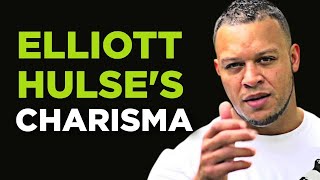
Charlie Houpert breaks down how Elliot Hulse gets people to actually hear his advice. He uses storytelling, pauses, direct eye contact, and absolute conviction when he speaks. These techniques make people listen instead of tune out.
What's up, everybody? This is Charlie from Charisma on Command. And today I'm going to be doing a charisma breakdown of Elliot Hulse. Now, if you're not familiar with Elliot Hulse, He's a famous YouTuber. There's a lot of things you could break down about the way that he is charismatic, his philosophy in being charismatic. But I want to focus on today how he gives advice in such a way that it's inspiring and motivational and moves people to change. Because we've all had the experience of having someone, maybe a friend or close relative, come up, ask for advice, and then just have our advice for fall on deaf ears. How can you speak to people such that they take your advice and they find it inspiring and motivational? That's what we're gonna focus on today. And we're gonna start with how Elliot begins his answers to these advice asking questions. Because you'll notice he does something very different from the rest of us. He doesn't dive immediately into the advice. He often starts with a metaphor or story. So let's check it out.
So you could see yourself and K as the powder keg, right? Like the. The bomb. And Cole is like the. The wick. So you guys. The amount of information that you guys have about the weird shit that's going on is very explosive.
So that was Elliot's answer to a question on what to do about a love triangle. Here he is talking about how to deal with negative thoughts.
Now, how do we control the thoughts coming in and out of our heads? Negative thoughts that. That you are now a victim of. Right, because the thoughts are victimizing you. They come in like a virus and they take over just like, you know, any other pathogen. Right?
So this is an often overlooked and incredibly important piece of giving advice. Because what we don't realize is that when people come to us asking for advice or looking to be inspired, they often are not 100% open. They have a preconceived notion of what they should do, and they oftentimes just want us to confirm that they should take the easy route. So your first job in giving advice to someone is not to launch into the most precise, specific plan of action that they need to take. It's to open them up and make them receptive to advice that they might not have been previously open to. And that is why the metaphor or the story is so powerful. It does it in two ways. One, when you go into direct advice, that person is checking for flaws or saying, does this make sense? Is this something I want to do? When you tell a story or go into metaphor, that person is simply trying to piece together what does this mean, how does this go? What could possibly happen in the future? So rather than working against you, they're actually working with you internally to figure out the meaning. The second piece is that when you tell someone this is what you should do, that advice feels like it is coming from without. It's coming from outside of them. But when you tell a story that has that nugget of wisdom inside of it, it feels to that person as if they're discovering it themselves. This is what the entire movie Inception is about. It's about making that person feel that that idea arose within them, because actually it did. They heard that story and they pieced it together rather than having you shove it down their throat. So once you've opened someone up, your next job is to give them the advice in a way that is compelling and captivating and creates confidence in you as a person, as someone to be trusted with that advice. So what I want you to notice in this next clip is how Elliot expresses himself through his voice, his body, his tonality. Check this out.
In your body, in your viscera. Trust it. Trust yourself.
Look at the intensity in his eyes, the way that he changes the volume with which he speaks.
People say, trust yourself. They think it means trust the stories, but it goes deeper. Trust what's going on down in here, brother. I trust my gut. I trust my heart.
If you hear the difference, he puts on different voices for different parts of what he's saying to communicate different feelings.
You see, sometimes my head doesn't even trust my heart and gut. And I do things. I do things in my head's like, oh, boy, don't do it. But you know who's more intelligent? My heart and my gut. I know they're more intelligent because they're tapped into something that the head didn't always see.
So that's a great example of a wide range of expressiveness. And expressiveness is so important because what it affords you the ability to do is to talk at length while maintaining people's attention. We often take for granted that when someone asks for advice, they're just gonna listen to what we say. But the truth of all communication is that if it's not entertaining, people are tuning out. Now, the other important thing that's going on here is congruence. I've talked about this in past videos, but the short of it is that Elliot's eye contact, his voice, tonality, the Way he moves matches the of what he's saying. He uses a different term for it, and I want to show you that now because I think it's really interesting.
But what you'll notice is that I'm moving all over the place when I make these videos, I'm rocking. Often people are like, why are you. Why do you rock so much when you're talking, Elliot? I embody everything that I say. Everything that I say like I'm saying it right now. I embody. Look at what I'm doing. I'm using my heart and my balls to bring forth the things that I want to share with you.
So Elliot uses the term in body, and I think it's very similar to what I have in the past called congruence. That the things that you are thinking, saying and doing, when they match, you come across much stronger, but you have to display it in all aspects of you. And what Elliot focuses on is in really getting into your body. That means the way that you breathe, the way that you look, the way that you move your arms and your legs as you speak, that is going to make you much, much more engaging when people are listening to you. Now, I want to dive into a couple of the specifics that Elliot does fantastically in this way. And the first one is going to be eye contact and the intellig intensity of that.
Become alpha, my friend, but don't look outside to compare yourself to what that possibly means, because the world's idea of alpha.
So what I want you to watch in this clip is just how long Elliot is able to hold consistent, intense eye contact with the camera, essentially with us on the other end of it, while still talking passionately. A lot of people struggle with this when they speak. They look in all kinds of different places. There is a time and a place. This is okay. But as an element of something that you can do to really, really hook people, holding eye contact while speaking and keeping that eye contact intense is huge.
It's completely neurotic. It's an abstraction. And in fact, those who have been calling themselves alpha are living in a sea of beta.
The next thing I want to touch on is Elliot's expert use of pauses. Now, this is actually a counterintuitive tool because when you pause while you're speaking, you can actually hook people in more. They notice the contrast that you're now not speaking, and they lighten up. Now, I will say I do not do this in these videos because I don't have my face on camera. And if I'm not speaking. I have very few ways to hook attention. What Elliot does brilliantly is he maintains attention with eye contact while he has these long pregnant pauses. So take a look in this clip.
That'S entertaining someone who comes into your home, a friendly person who you'd like to have around for a while and allow them to grow roots for a moment. There are certain thoughts.
So you saw that. Another really interesting thing, I'm gonna go back and play it just very, very quickly, is that Elliot doesn't into what he says. He has this pause and then he moves on. And that leaves people trying to catch up. How is this related to what he said before? And like I said previously with the metaphor, when people are working to figure out how what you're saying pieces together, they're not working against you, which means that they're more open to the advice that you have to give. Take a look again and allow them.
To grow roots for a moment. There are certain thoughts that make their way into the home of your consciousness. They knock on the door.
More embodying. Really, really good.
Let the thoughts in or close the door. Slam the door shut. Okay.
Those pauses with eye contact will keep people hooked. You don't have to worry about losing them as long as you have eye contact. Now, that's not the only ways that you can employ pauses because there are other ways to keep people hooked even when you're not speaking. And I want to touch on those now.
If there's something happening in you, there's a flowering in you.
So wait a second, what's going on in this clip? Elliot's not looking anywhere remotely near the camera. He's got this really long four or five second pause, yet it's still engaging, especially if you watch the whole video.
Why?
And the reason is because there are two ways to really hook people with pauses. One is by communicating with your eyes, body language that you are still speaking. And the other is by placing the pause in an area where people are really, really excited to hear comes next. In this case, he placed it in the middle of a sentence. If there is a flowering in you and his tonality and the fact that if normally precedes a then statement, we are committed to sticking with him. And because he's able to take more time saying what he says, we assume that what he says is more powerful for it. So go ahead and watch this clip back.
If there's something happening in you, there's a flowering in you. It is your responsibility to offer that flower to the world.
And again, the second pause he's got the eye contact because the thought has been completed. Now, those are two really easy ways. You don't necessarily need to think of these every time, but you might want to try inserting pauses into conversation and seeing how people respond to them. Can you hook people with your eyes or can you hook them with a well placed pause? So what all of this adds up to is conviction. Because at this point, Elliot has opened the person up, he's engaged them with expressiveness, with pauses, with intense eye contact, and now he hammers his advice home, his point home, with conviction. And interestingly enough, the way that that conviction is communicated is in the same way that Elliot hooked his audience. It's the eye contact, the expressiveness and the intensity. So take a look at this next clip. I'll talk in another video. This has already run very long about the fountain of conviction, where you can build those beliefs. And Elliot's philosophies are great for that. But for now, just notice how all those pieces add up to you feeling like Elliot believes 100% what he says, and probably that that belief is going to rub off on you as you watch it.
Success is not doing the right thing, and it definitely isn't doing the right thing the first time. Success is having the courage to move in the direction of your dreams, move in the direction that your heart is taking you. That is what success is as you are progressively realizing that thing people think success is. I've got a plan and I go and work out that plan. It's never, ever, ever, ever, ever works that way.
So you can check out the whole video if you want. I'll throw a link in the description. But the basic points for the purposes of this video is that the way to get people to listen to your advice and to motivate them is one, open them up. Metaphor is really great. Two, get them to believe in you as a person. Expressiveness, congruence, embodying what you say is critical for maintaining people's attention. And then third, at the end, once they're open, once they trust you as a person, then you hammer your point home with conviction. And that comes through in all the things we cover, the eye contact, the pa, all of that stuff. Now, if you are interested in developing the kind of competence that Elliot clearly demonstrates throughout this video, we've created another video with one technique that will help you turn your most confident self on inside of 60 seconds. This is a technique that you can use prior to an interview, a date, or just in front of somebody that maybe makes you a little bit nervous. So if you're interested in getting that, go ahead, click the link now. It'll take you to another page where you can drop your email and you can watch that video. Takes just a few minutes to watch and you can literally implement it inside of one minute. If you are interested and have other video ideas for me that I could do, I'm thinking one on Elliot's philosophies, how they underpin much of this. If you've got that or just would like to see some other ideas, go ahead, write them in the comments. If you want to get more of these videos, I'm doing one a week. All different kinds of stuff from being more charismatic, personal development, but a lot of these breakdown videos. So go ahead and subscribe if you'd like to see those. And as always, I'm excited and looking forward to seeing you in the next video.





