How To Instantly Become More Persuasive
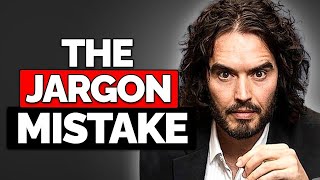
This is a YouTube video titled "How To Instantly Become More Persuasive" created in March 2016. The content features Charlie Houpert discussing communication styles, comparing the use of simple versus complex words for persuasion and clarity. The video includes clips from Donald Trump and Russell Brand to illustrate points about speech simplicity, emotional impact, and precision. Charlie offers practical advice on tailoring language to the audience to improve communication effectiveness.
Donald Trump speaks in very simple words. In fact, Nerdwriter did a fascinating piece on this, noting that he averages just one syllable per word and speaks at a fourth grade reading level. Now, I did a video discussing how this makes him much more memorable and persuasive because what he says sticks in your head like a jingle. This got me thinking that maybe I would benefit from adjusting my speech to match Trump's. But then I thought of someone else who I find incredibly charismatic and persuasive, yet who does the exact opposite of Trump.
I feel so jubilant after that racket. Yeah, people are pumped after the stuff got chucked off the roof. Well, that's also enchanting. Perhaps we could. If I hurl myself off the roof, we could peek. Dave 11 years ago, when I was still taking drugs, I was a whirling psychotic, a frequenter of crack houses, whorehouses. I was a lunatic. I was ever in jail cells, I was forever in all sorts of mischief and mirth, spraying blood everywhere, broken glass, crying women everywhere I went. But some nights I just stayed in.
So I wanted to explore which is better, big words or small? And should you learn to speak in one style or the other. So the first thing to think about that a word's meaning comes from all of the times that you've heard it before. So when I see a common word like big, you have thousands and thousands of references. But when I say a word that means the same thing, like capacious, you have fewer. Now, it's likely that the only way you're going to understand capacious at all is if you're an avid reader. Most people, myself included, will not be able to understand that word without Google. And what this usually means is that smaller, more common words are more easily understood by a wider audience, hence why they work for Donald.
I beat China all the time. It will change. We will win, and we will win, and we will win. Thank you.
This type of speaking has a second advantage, because when a sentence is easy to understand, people tend to believe it. It's called the cognitive fluency bias. And basically, easy equals true to people. And that's why plain speaking politicians tend to be liked by the masses. And you can contrast that with the worst style of speaking ever, which is jargon, because, look, the pod remains convinced there's a burning platform and we just don't have the bandwidth to go into a black factory and blow up the.
Paradigms with white paper.
We don't have it. That's consulting jargon from House of Lies. And jargon generally is just puffed up speech that is tough to understand but says very little. Now, jargon is meant to hide meaning, and it's used in many professions to keep outsiders out and make the insider seem smarter than they are. So you see it in consulting, you'll see it in law, medicine, and just about every white collar profession. And while, yes, you might have to go along to get along at the workplace, do not let this slip into your normal speech. It will bore people to death anyway. Small common words increase cognitive fluency, which basically makes people trust you more. But there's still another benefit, which is the immediate emotional impact to these small, punchy words. And Donald says it himself.
I'm telling you, I used to use the word incompetent. Now I just call them stupid. I went to an Ivy League school. I'm very highly educated. I know words. I have the best words. I have the. But there's no better word than stupid, right? There is none.
And he uses that word repeatedly to make a point. Imagine how much of an impact this next clip would have if he had said incompetent here instead.
Because our leaders are stupid, our politicians are stupid. When the stupid leaders of the United.
States, which means small words, have three things going for them. Small words can be understood by a wider audience. They're believable because of the cognitive fluency bias, and they tend to have a stronger immediate emotional impact. But don't throw the big words out yet, because there's an element that we've left out, which is precision. Short words are typically imprecise. Using bigger ones allows you to paint a picture. And Russell Brand demonstrates this as he talks about his criminal past in this next clip.
When I was younger and a drug addict, and that was sort of part of my world, that kind of nocturnal, crimson lit back alley fantasy echo thing.
Nocturnal, crimson lit back alley. These are all uncommon words which force us to work a little bit harder. But assuming that we understand them, they paint a much more vivid and precise picture. And that's really the main advantage of longer, more uncommon words. You can communicate much more precisely. Check out Russell Brand, improv in for his role in the Tempest, the king almost nodded off.
And as he went into his slumber, a little bit of saliva fell from his lips. I leapt forward, snatched it so as I did from his jowly chops. Everyone there terrified. They were all eyes agape, mouths agog, peering onward. Suddenly the king did look at me, raised his fist as if to punch me, but then slapped his fire and let forth an almighty Bellow and I have ridden on the tidal wave of that laugh ever since.
You see how that paints a picture, using words that even seem to transport us to the time period of the story. But everything that I've said up until now is all about understanding. And the truth is, we don't use words just to be understood. We use words to convey something about ourselves and our identity. Big words signal intelligence. And if you like Russell's vocabulary, chances are that you understood most of the words that he uses, or at least you would like to understand those words. But to people who do not understand those words, they just seem pretentious. So here's the rule of thumbs up. Use the most precise word that your audience will understand. Now, the problem comes in in that some of us were trained against this from a very young age. We were encouraged to show off the big words that we had learned, and we were encouraged to see anyone who didn't understand those words as dumb. Which brings me to the inspiration for this video. And that was the comment section of the last video that I did on Donald Trump. I saw there a lot of, quote, unquote, smart and educated people saying how obvious Trump's empty rhetoric is. But if you insist on communicating with YouTube Commenters using words like rhetoric and sophistry, you're probably that great of a communicator, and you sure as hell aren't going to influence anyone to think that you're anything but stuck up. So the point of this video is not to use big words or to use small words. It's to speak in a way that moves your audience. It's to consider your audience. So you need to be able to adjust. And it's lazy to blame it on the other person and call names just because you can't get through to them. So something that I've been doing that I encourage you to try is to practice switching. Go ahead, have one conversation, aiming for precision, and use the perfect word, even if it's longer. And then have the next using words that are understandable by anyone. And if you do this, you'll become a better communicator because you're learning to tailor what you say to the audience. So I hope that you've enjoyed this video. It was very interesting for me to think about. I've been doing this exercise as well. If you're interested in learning more about ways to make an amazing first impression, we've set up something for you. It's a video that you can get that has the four emotions that if you make them in this order, you are guaranteed to make an amazing first impression. Doesn't matter where, doesn't matter on who. Superior at work, in social life, anything. These are human things that drive behavior. So if you're curious about those four emotions and the order in which to make them, go ahead. Ahead. Click the link now. It'll take you to another page where you can drop your email and then get that video immediately. If you've enjoyed this, go ahead and subscribe to the channel. We have new ones of this every single Monday. We have videos on charisma breakdowns, we have talking head videos with advice, all those kinds of things. And those come out every single Monday. If you want to guide where the next video goes, go ahead in the comments. Let me know what you're thinking. If there's somebody specifically that you'd like me to do a breakdown of, or a topic like this, big words, small words, whatever it is, go ahead and write that in the comments. Either way, I look forward to seeing you again next Monday in the next next video.





