How To Take Control Of Any Conversation Without Trying
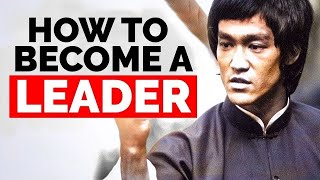
Charlie Houpert explains frame control using Bruce Lee as an example. Instead of answering limiting questions, Lee shared his personal philosophy to steer conversations deeper. The technique lets you guide talks toward what matters without seeming like you're taking over.
What's up, everybody? This is Charlie from Charisma on Command. And today I want to talk about how to lead a conversation. So if you've ever found yourself in conversation and you're kind of trapped in small talk, the weather, where people are from, what's going on with the local sports team, and you're really hoping for a chance to connect on a bit of a deeper level, but don't know how this is going to help. It's just one small piece. There's lots of ways to do it, but this one has to do with something called frame control. And if you're not familiar with frame control, don't sweat it. I'm going to show you live. So let's get started.
You set up a school in Hollywood, didn't you, for people like James garner and Steve McQueen and the others? Yes. Why would they want to learn Chinese martial art? Because of a movie role.
So this is the question. It's not a totally surface level question, but he's asking him, why do your students want to learn martial arts? Now, Bruce could answer, because they want to be good fighters, whatever, but watch what he does.
Not really most of them. You see, to me, at least the way that when I teach it all type of knowledge ultimately means self knowledge.
So wait a second, something is happening here. And this is what frame control is. In any given question, there's a frame, and that frame basically says the set of parameters that you're supposed to answer in. Now, some questions have a yes, no frame where you're expected to say yes or no. Some of them demand you just say the city that you're from, like where are you from? Or what do you do? You would say your title. What the charismatic person does is they change the frame of the question to be more fun, more interesting, and to allow people to connect more. So rather than simply answer why somebody might show up in the dojo, Bruce Lee takes this opportunity to share his philosophy on life and martial arts. And what this does is it moves that kind of boring question and boring answer out of the way so you're not just ping ponging back and forth and it allows you to go to the deeper level. So a lot of people think that, okay, if I want to steer the conversation somewhere interesting, I have to have the world's most interesting questions or I have to have the world's most interesting conversational partner. Not always true. In fact, the way that you tend to get to those more interesting topics is by taking a question and finding parts of it that you can connect to something more interesting and more in tune with your own life philosophy. So see how he elaborates here?
So therefore they are coming in to, I mean, and ask me to teach them not so much of how to defend themselves or how to do somebody in. Rather they want to learn to express themselves through some movement, be it anger, be it determination or whatsoever.
The important thing to realize here that the charismatic person, when asked the question, oftentimes values self expression over brevity. A lot of times we feel, when we're not feeling completely confident and charismatic, that we have to answer the question exactly as it is formulated. No, I'm not recommending that you be a politician to completely duck the question. What I'm recommending is that you actually go deeper and give that person something that's going to be more fascinating, more interesting, that allows you guys to connect. So I want to now jump to a different question and you'll see how Bruce Lee takes a new frame and kind of makes it different in this instance as well.
Of all your students, famous James Garner, Steve McQueen, Lee Marvin, James Coburn, Roman Polanski, which was the best, who adapted best to this oriental form of exercise and defense.
So right here you have a question that implicitly has a pick AI. Is this guy better? Is this guy better? This is kind of a, a prohibitive question. You might get. Yes, no questions. You might get somebody asking you, whose side are you on? What does the charismatic person do when they answer it? This is a great example.
Well, depending, okay, now as a fighter, Steve, Steve McQueen, now he is good in that department because that son of a gun got the toughness in him.
Yeah, I see it on the screen.
I mean, he would say, all right, baby, here I am, man, you know, and he'll do it. Now, James Coburn is a peace loving man.
I met him.
Right? I mean, you've met him. I mean, he's really, really nice. I mean, super mellow and all that, you know, I mean, now he appreciate the philosophical part of it. Therefore his understanding of it is deeper than Steve. So it's really hard to say. You see what I'm saying now?
I see.
I mean, it's different. So that's, I mean, depending on what you, what you see in it.
So what has happened here? The interesting part of this is that Bruce Lee answers this question by actually rejecting the form of the question. The guy asks him, which. Who is better? Right. And implicit in that is that there needs to be one way to be better in martial arts. And what Bruce Lee does In his answer, he says, no. There are a number of ways you can be a good fighter. You can appreciate the art. This is what charismatic people do constantly. If you look at the people that you admire, they do not take questions at face value when they conflict with the way that they see the world. Instead, they express themselves. They share their life philosophy when it conflicts with the frame of the question. And this is why this framing is so important. Because conversations, if you look at them in this way, can be seen almost as a contest of different frames. And when somebody puts out a frame that says, okay, who's better? And you implicitly disagree with that, but you answer their question anyway, you have given into a frame that subverts what you really believe about the world. So it's so important that you notice what's going on in conversation. Where are these frames? And not to be a jerk, but where is it appropriate and honest for you to reject the form of the question and assert a new frame? So one more of these that I'll show you very quickly.
Still think of yourself Chinese? Or do you ever think of yourself as North American?
You know what? I want to think of myself as a human being, because, I mean, I don't want. It sounds like, you know, as Confucius say, but under the sky, under the heaven, man, there is but one family. It just so happened, man, that people are different.
So there you go. That is just an example again of Bruce Lee. One, rejecting the form of the question. Those dichotomy questions where you expect to say one or the other, yes or no, whose side are you on? Oftentimes, you will want to reject the form of the question and say, I think a different way. Neither of those options. And second, he uses this as an opportunity to share his life philosophy about people. It's very brief and very quick, but he still gets it in there. So hopefully these two tips have helped. One, you're gonna see where the frames are, and then two, break the frame if they do not go across with your life values. So hopefully you found this helpful. The idea behind all of this, One, is to start to see the implicit frames that are in conversation, and when appropriate, don't accept the frames. The charismatic thing to do when your life experience or your values sort of conflict with the types of questions that you're getting, or you just wanna answer in a more fascinating way that's gonna allow you to connect with someone is to assert a new frame, share something that you're passionate about, tell them why the form of the question they have doesn't totally jive with the way that you see the world. That will lead to richer, more engaging conversation that allows you to connect with more people. And honestly, it might alienate some people, but those are the kinds that you're gonna want to alienate anyway. I hope you found this video helpful. If you're interested in learning more on the topic of charisma and specifically how to make an amazing first impression on anyone, I've created a video that details the four emotions that, if you create them in a human being, will lead to a guaranteed amazing first impression. It doesn't matter if they're a new boss or a date. This is human psychology. It will work on anyone. The trick? You have to create them in the right order. And what most people do is they leave one out or they get them in the wrong order. Honestly, that's a lot of what the advice that you might get in other places will tell you to do. So if you want to know what those are in the order to do them in, go ahead and click the link now. If you've enjoyed this video, please go ahead, give it a thumbs up. And of course you can subscribe for more like this all the time. And if you have any specific people you'd like me to do, go ahead and write them in the comments. This is a shout out to BNS Goku Great, who I think has asked for a Bruce Lee video no less than six times. I do read these comments and I take them seriously when you guys support the channel. So this one is for you and I hope to see you on the next video.





