How To Tell Stories That Make You Look Attractive
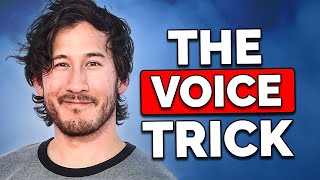
Learn how to tell stories that grip people by studying Markiplier's technique. Use vocal variety, emotional expression, and strong hooks to make even mundane stories captivating.
Today we're going to talk about how you can make any story more interesting. If you can tell your stories well, you'll find that people love having you around. It's also much easier to talk about yourself in attractive or interesting ways. We've already covered some aspects of storytelling in our videos on Scott Harrison and Kevin Hart. So what I wanted to show you today isn't how to tell a good meaty story well, but instead how to get people hooked even when your story isn't super interesting by itself. So I picked a well known YouTuber named Markiplier because because he's a great example of how to make anything more interesting. For those of you that don't know Markiplier, he got his fame as a let's Play youtuber where he recorded himself playing video games. There are tens of thousands of people trying to do this and Markiplier rose to the top because he can make any given moment seem interesting. The first lesson from watching Markiplier is pulled directly from when he tells stories. Before you tell a good story, bait the hook and get them to bite. Before he tells a story, he uses one to two sentences to create a sense of I need to hear this. Listen as he starts this story on the H3 podcast.
The only person I've met that I wish death upon I met in college.
I want to know about this person now. One of the fastest ways to create a sense of I need to get out of this conversation as soon as possible is to bludgeon people with stories they don't want to hear. So the first thing you want to do when you realize you have a story to share is create a teaser sentence like this one that gets people eager to hear what you have to say. The story itself isn't a crazy one. It's a story many of us have about someone being a jerk in a group project. If he had just started the story by saying, oh, that reminds me of something that happened to me in college, it wouldn't have nearly the same impact. This may seem obvious, but pay attention today and notice how many people start stories by saying something bland like oh, guess what happened to me today? I've even heard people start stories with you probably don't care about this, but why would you want to hear a story that starts that way? Compare that to Markiplier here.
So I went to the hospital last night because I got hit in the eye with pickle.
How could you not want to hear what happened? So start your story by baiting the hook with a teaser sentence that creates interest and curiosity. The second thing we can model from Markiplier has nothing to do with what you're saying and everything to do with how you say it.
I, you know, I've run the gambit of the emotions of like, oh, this is new and exciting to oh, I missed the old days to oh, you've changed, Markiplier. How could you do this to us?
I'm not suggesting you have to do it to the extreme that he does. Just take what you're currently doing when telling stories and and ramp it up a notch. You'll notice it's much easier to hold the attention of a group, specifically when you're talking for an extended period of time. Use your full vocal range and change up the speed you speak at.
And I'll never stop trying new things until I find the one thing that makes me really excited. And then the next day that might be gone and I'm onto something new.
Nothing crazy, just him using his voice to make something that would otherwise be boring more fun. That's why I really like this video, because this stuff is so easy for you to do. Here's another clip of him making people laugh, even though there's nothing funny about the words alone. Just so the clip makes sense. This is from a charity livestream Mark did where he was trying to put on as many shirts as possible.
You're really refining your dad bond here. It's getting warm.
If he just says, man, it's getting warm, it wouldn't be nearly as funny. You'll hear this in the next clip too. This idea of emphasizing one word by holding it out plus saying it slightly louder is a go to of Markiplier's. This may not feel like much because it isn't much. This is super easy for you to start doing today and you'll be surprised at how it keeps people happily engaged with your stories. Watch another quick example of Mark making something more interesting by changing his voice multiple times. Over 17 million people watched this video. Over 150,000 people liked it. And it's just a video of Mark clicking random options and commenting on the outcome.
Very clever with your dimensional joke there. Glue. What am I g. Why? Why? Oh, this is a terrible idea.
Now Markiplier is an entertainer in his regular life. He doesn't speak like this all the time and we shouldn't either. I just want to show you what he does to hold people's interest and make stuff interesting so you can adapt it and use it when you want to do the same. Pepper vocal variety and vocal emphasis into your stories. You'll notice people will find you more interesting and fun to listen to. If you don't believe me, just record yourself telling a monotone story and and then record yourself telling a story where you feel like you're overacting or over emphasizing. See which one you find more engaging to listen to. Listen to one more clip and notice how Markiplier uses pauses and a variety of voices to make it engaging to listen to.
Holy shit. Okay, so I made this video because I wanted to be creepy, and I wanted to make a creepy video and.
Just a hammer at home. Scientists at the University of Glasgow's Institute of Neuroscience and Psychology found that the more monotone you are when you speak, the more active your listener's inner voice will become. So you'll either lose their attention or they'll drown you out with a more interesting inner voice of their own creation. Another thing Markiplier does a lot is convey emotion. Charlie talked about this in detail in our video on PewDiePie. So rather than repeat those points, I'll link to that video now and also at the end of this video. But here's a great example of Markiplier doing that. This video that's on screen right now has over 4 million views and 50,000 likes. And as you can see, when there's no Markiplier involved, it's a fairly boring video. But the top comment of this video is, I've never laughed so hard in my life. Thank you, Markiplier. Your pain brings me much laughter and joy. Here's why.
Okay. All right, here we go. Okay. Checkpoint. Okay. Okay.
All right.
Jump on the first one. I'm done. Okay, so thank you so much for watching. Never suggest me another game to play over again. So take this video, shove it up the creators.
Here's another example. And notice how it's way more gripping because of how much emotion he puts behind his words.
Oh, my God. Oh, yeah. Rer. Deadite. Oh, ir. Deadeye was one of the first people to, like, really get into the darkiplier fan art. And oh my God. Yeah, I've seen so much of this stuff. Oh, they do such good work.
The human brain is wired to pay attention to emotions, so conveying strong emotions captures attention. Apply a toned down version of this to your storytelling and your stories will immediately become more interesting. So how do you convey more emotion when you tell stories? The three main things are your tone of voice, your facial expressions, and your body language. But good news, you don't have to worry about trying to be an Oscar winning actor and faking specific facial expressions or body movements that will only trip you up. The awesome thing about this is that you already know exactly how to act when you're angry, sad, happy, confused, or any other emotion you want to show. All you have to do to make this happen is think about the emotion you want to convey and make the decision to show it. So it's not about acting, it's just about allowing yourself to feel emotions as you tell your story and express them. Now, different emotions will create different reactions. Anger when directed towards someone often leads to anger, but as you just saw, frustration can actually create laughter when it's not directed at you. Another example would be sadness, which can create sadness in other people, but it can also create a feeling of empathy and closeness. Watch Markiplier get emotional here.
That's not it. This is it. It's just that things like this put things in perspective for me, for how many people are really out there.
And you can tell that for many people, watching Markiplier's willingness to show his emotions here made them feel closer and more connected to him. Now, I'll admit you probably don't want to do this within the first five minutes of meeting someone, but I saw an amazing example of this in my improv class a few weeks ago. This guy Jay was making up a monologue on the spot about the time his family dog passed away. He started to choke up as he spoke and got tears in his eyes. And when he finished, the teacher, who's a notorious hard ass, gave him a big hug and I immediately felt a lot of respect for him for being that vulnerable and I liked him more for it. Now that said, more often than not, the emotion you'll want to create is happiness or excitement, which is great news because the easiest way to do that is just convey happiness and excitement. Watch this last clip and notice how much more engaging it is because of Markiplier's emotional reactions in the corner.
This is. I wanted to. Oh geez. I wanted to have like a sense of professionalism in my videos, which I don't know why I wanted. I didn't want that at all. I was so nervous. Oh God, I was so nervous. Quality on my V log. So they're not just whoa.
For most people, it's hard not to smile or laugh when someone is showing that much positive emotion. No matter what your story is about, it will benefit from you putting emotion in it and sharing the emotions you felt as you went through it. And that's it. I found so many more things that make markiplier likable. I could do a whole nother video, but just in terms of storytelling. The three best things you can take from him today are to bait the hook before diving in, use your entire range of voice and volume and convey emotion in your story. If you do all three of those things, you will keep people hooked with even a mildly interesting story. And if you want to know more about storytelling, we have an entire hour's worth of material, plus a five day action guide plus on how to master storytelling inside Charisma University. So I'll link to that here. That's all for today. If you made it this far, you're a legend. Thank you so so much for watching and I will see you in the next video.





