If A Rude Person Disrespects You, Say This To Make Them Regret It
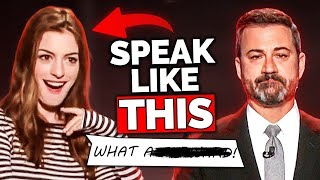
This is a YouTube video titled "If A Rude Person Disrespects You, Say This To Make Them Regret It" created in April 2021. The content is a detailed instructional talk focused on strategies for handling insults and disrespectful behavior, using examples from celebrities like Jonah Hill, Jimmy Kimmel, and Julian Assange. It covers techniques such as ignoring insults, setting soft and hard boundaries, and playful banter, aiming to help viewers build confidence and social charisma. The video also promotes a confidence-building program called Charisma University, including testimonials from past members.
We've all had a friend say something we don't like. Whether it's a passive aggressive comment or a playful insult that goes too far, it can be tough to know how to respond. So in this video, we're going to cover three ways to handle it When a friend crosses the line and you want to stand up for yourself without starting a fight. We'll start by breaking down a few examples with Jonah Hill. In this first clip, he's reacting to insults made by a paparazzi. It's an example of how not to react. He's publicly apologized for this one. A common reaction to being hurt by an insult is to fire back an insult yourself. This works if you're both both joking, but it's a mistake. If your intention is to be hurtful. Especially with friends, retaliating because your feelings are hurt sets you up to hurt the relationship. And to the other friends around you, you might end up looking like the rude one even if you didn't start it. It may feel good in the moment, but you'll almost always regret it. Unfortunately for Jonah, he's been publicly insulted a lot. The good news is that over time, he's gotten better at handling it. Here's an example from later in life. But are you still considered the fat guy when you go to a party or anything? Now watch Jonah's response. This isn't the best response we'll cover today, but you can see the improvement. Are you the fat guy in Hollywood still? Or does everybody look at you and they're like, oh, wow, you know, this is great. Now you're healthy. Do you have any other questions that are smart? I have a question. Because you're in Atlanta, most people insulting you are seeking something, whether it's attention, a laugh, or an emotional overreaction. To punish the behavior he doesn't like, Jonah denies the guy what he wants. Attention and an answer to his question. Sometimes with friends, this is the only strategy you need. Ignore the person and actively shift the focus to someone else in the group. Your goal is to remove any positive reinforcement of the behavior you don't like. And as Kobe once showed with Matt Barnes, sometimes not reacting is all it takes to look confident. If that doesn't work, the next step is to draw a boundary. There's two types of soft lines and hard lines. This next set of clips is an example of a soft line. First, check out how Jimmy Kimmel starts this interview. First of all, you smell good, which is surprising. Why is that surprising? I don't know. I just wouldn't think of you, a guy who would have a nice scent on Pretty strange start to an interview. Jimmy tries to get a laugh with a backhanded compliment. Jonah doesn't like it, so watch how he responds. I'm gonna really work hard to not take that as a shot. You know what I mean? Like, because I think you would smell nice. No, but I don't. I don't have. No, no, no. Let's go back. Okay, let's go back. Jonah calmly and kindly calls out that he doesn't like Jimmy's comment. Then when Jimmy starts to get uncomfortable and walk back his insult, Jonah fakes like he's going to drag this uncomfortable moment out, but then releases the tension and lets them move on. This is great because even if you're in the right conflict makes people uncomfortable. So other friends in the group will feel a desire to move past conflict just to escape their own discomfort. As an observer, that's why you calmly call out the behavior you don't like. And once it's clear that the message has been received, you move past it. You've established your boundary and you've done it without alienating anyone else in the conversation. If a soft line doesn't work, then you may need to put down a hard line. A hard line is one with explicit consequences. Here's a great example with Julian Assange. This is for more serious situations where someone does something you find truly unacceptable. He's been told he's there to talk about documents that WikiLeaks released showing potential war crimes by the US. Instead, the interviewer asks about a personal investigation against him. He starts by calmly and firmly cutting her off and drawing a soft boundary. One aspect of that has been the legal situation for yourself in Sweden. You're now facing charges. I'm not going to talk about that in relation to this. Now watch what he does when she doesn't respect his soft line. But it does affect WikiLeaks. Yeah, but this interview is about something else. I will have to walk if you're. Do you still. If you're going to contaminate this extremely serious interview with questions about my personal life. Three things make this a good example of a hard line. He speaks calmly. He draws a clear boundary, and he explains why the boundary is important to him. Now watch as she crosses his boundary. He stays firm in standing up for himself, but his calmness makes sure this doesn't escalate into a fight. It's completely disgusting. I take that I'm asking whether or not you. I'm going to walk if you're going to contaminate us. Revealing the deaths of 104,000 people. When she still refuses to move on, he actually walks out. It's that simple. No need to yell or say anything negative about the other person. If someone does something you find unacceptable, calmly let them know. Let them know why it's a boundary for you, and let them know what the consequence will be if they do it again. If they cross your hard line, simply follow through on your word. Now, with friend groups specifically, there tends to be a social hierarchy. The higher up you are, the more likely it is that people will respect the boundaries you draw. If you don't feel like your friends would respect your boundaries, you may benefit from our video. Six psychological tricks to command respect instantly. You can find it in the description and at the end of this video. Now, what about situations where you aren't actually offended and you want to turn a potentially offensive comment into some friendly banter? There's three quick things you can do. The first is banter back to highlight some tips on how to do this. Well, here's a quick example with Jay Leno and Louis ck. I hope I can say this without insulting you. Yes, you are. You're the weirdest looking person on the planet Earth. Thank you. Thank you. That doesn't. That doesn't stop me at all. That's very kind. A laugh and a thank you is a great way to show your confidence and that you aren't rattled by an insult. Now watch how Jay follows up. I don't mean that as a. No, not at all. It's just nobody. I can't describe. Just the fact that I have a full head of hair. That's what's going on. Well, yeah, sure, sure. I don't mean that in a. Don't think that the wrong way. You want to match their insult level. Louis started with a negative comment on Jay's looks, so Jay matches it. If Louis had insulted Jay's shirt and Jay had insulted Louis weight, that's much more likely to go poorly. When you match their insult level, it's more likely they'll react well. And even if they decide they like to dish it but they can't take it, it makes it very unlikely that anyone else in the group will consider you rude. Listen for this as they go back and forth again here. It's just that I just don't have to cover my chin because I'm proud of it. Jay. No, no, but go ahead. If you weren't famous and you robbed a bank and the dude was describing you to like a police sketch artist. Yeah. He'd be like, no, seriously, what did he look like? They're two for two on teases. They matched each other's insult level. Both laughed and neither got upset. That's what you're aiming for now. What if someone says something potentially offensive and you want to be playful and fun, but you don't feel comfortable saying something potentially offensive back? Or you just can't think of anything clever to say, there's a second thing you can do. Fake offense. As an example, here's a clip with Anne Hathaway. How much weight have you lost to get into this shape right now? You did not just ask me that question. What a forward young man you are. My goodness, how much weight? I'm not saying you needed to lose weight. She fakes offense but signals it's not real. With a big smile and the over the top facial expressions. This shows you have confidence to not be easily offended and it doesn't require the same quick wit as Jay Leno's comebacks. When he doesn't pick up on the non verbals, she even spells it out for him. I'm just saying that you. Look, I've worked very hard to become Selina Kyle. I know you have. All right. Thank you very much. I'm sorry if I offended you. You didn't at all. I'm just messing with you. Thanks, dad. If you find yourself completely blanking on anything to say, just being able to genuinely laugh when someone tries to insult you is enough to convey confidence. Some people don't like them, but Brendan Schaub is someone who does this very well. Dude, I don't think a lot of Indian kids look at you and be like, I want and, you know, look like a French Paul Bunyan when I get older. You know what I'm saying? French Paul Bunyan. Why you look like Paul Bunyan if he just drank champagne all day and never did any forestry, his ability to laugh when people take shots at him is probably why he hits it off so well with comedians like Theo Vaughn and Joe Rogan and. And it's a part of why he was able to make a successful career for himself after mma. Being able to laugh at yourself projects confidence and makes it fun to be around you. All three of these are super simple, which illustrates how much easier it can be to handle an insult when you aren't actually offended. The hard part is developing the self confidence to stay unrattled no matter what anyone says about you. If that's something you'd like more help with I think the fastest way to become confident in social situations is with our program Charisma University. It's a step by step guided program guaranteed to give you more charisma and confidence in 30 days. And it's structured with a Daily Action guide so there's no guesswork when it comes to learning these habits. You just follow the guide and you get the results. To get a sense of what the program can do for you, here's a few things that past members have written in I had confidence in some areas, but not in others. Then Charisma University changed that for me. Since beginning the program, I have seen noticeable changes in my life. It has helped me unlock the confidence that comes with knowing that I can go into any social situation and crush it. It costs less than half the price of one course at my college, but it has had a far bigger impact on me than than any traditional class I've enrolled in. Another member wrote in I've always been bad at expressing myself in situations that weren't one on one. In conversations, I'd find myself hesitant to speak or I'd get caught in my own head overthinking things. After cu, I am now way more confident in saying what I think and how I feel. Even in bigger group settings, I feel much more happy all the time. I was even able to talk to a woman I've had a crush on for about a year and made a great first impression. Overall, I love this course and I keep going back to it when I need a refresher on the Daily Action modules. And lastly, one member writes, thank you so much for this program. After going through Charisma, I've made more friends, have higher self esteem and can more easily talk to people I don't know. I've solidified my values and I know who I am. You'll see more success stories like these in the comments if you do decide to join the course. If you do join, it comes with a 60 day money back guarantee which is 100% for any reason at all. And that 60 days, even though the course is only 30 days. Just to make sure that every single member truly feels like they're getting a ton of value from the course. So you either love it or you get your money back. If you want to check out the course, go ahead and click the link on screen now or below in the description. We've had thousands of members go through this course and get a ton out of it and I'd love for you to do the same either way. I hope you enjoyed this video and I look forward to seeing you in the next one. Also, special thanks to our editing team of Andre, Therese and Ivan for all the hard work on this video.





