This Is Not Confidence
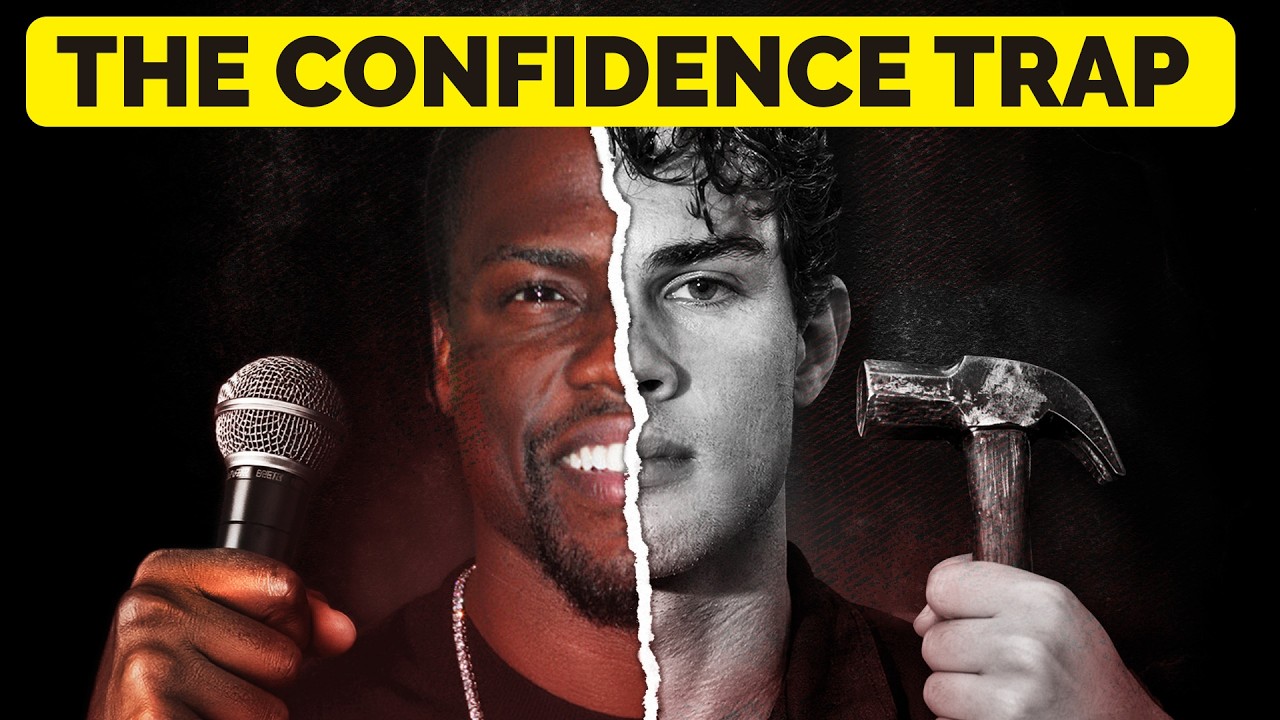
Kevin Hart and influencer Brayden Peters discuss how people chase endless cosmetic fixes for insecurity instead of owning their flaws. Hart hid his height early in his career until mentors like Chris Rock told him to drop the act and use it as comedy material. The real shift comes from naming the vulnerability first, not fixing it.
Chapters
What if your biggest insecurity—
What are these for? Oh, that's to sit on.
Oh.
—became the thing— You really got to hand it to Kevin Hart because he can't reach.
—people always made fun of you for? I wish I was this tall, but I'll never get this tall.
What makes him not your type?
Probably the height. It's the height. It's solely just height for me.
It's because you're short. These days, everyone seems obsessed with improving their appearance. Some want to be thinner. Others want to be stronger. And some guys just want hair. I'm going bald! The truth is that insecurities are normal. What's changed is how far some people are willing to go to fix them. Looksmaxing.
The trend can range from superficial practices like hairstyle and skin health to serious measures like breaking bones in your face.
We live in a deeply image-conscious society with enormous pressure from dating apps and online influencers to look a certain way. Online personalities like Clavicular have built massive followings on the idea that confidence, status, and success purely comes down to how you look.
I am getting a double jaw surgery. Why are you spending $100,000 on surgery to go from 6'2" to 6'6"? That is more about presence.
Now, I don't mean this as an insult, but it is worth noting. Clavicular is already a foot taller than Kevin Hart, and yet Kevin has more presence and charisma in just about every room that he walks into.
Dwayne, you also just recently bought your mom a house.
I think the whole room right now is thinking the same thing. It's about what the fuck.
So what's his secret? Well, I think it's that Kevin fully owns who he is without shame. Or as one of my favorite characters of all time says, "Never forget what you are.
The rest of the world will not.
Wear it like armor, and it can never be used to hurt you." We all have something we're self-conscious about, but for Kevin, it just so happened to be the first thing people noticed about him. "Are you 5'2"?
"Absolutely not. 5'4"." "GQ said you're 5'5".
"The LA Times says you're 5'4".
Another place said you were 5'2". 5'5". Like, what does she want? Kevin. 5'2½". I'm 5'2". 5'2". Let's try to tell the truth.
Yeah, 5'2". Are you self-conscious about your height?
Come on. Yes. Yes. You think you have a complex about it. I can't even say "think." I can't be dishonest. I know I do. We were at a restaurant one time, right? And I snapped on her. We were at the table. We were ordering food. And the waiter leaves. A man waiter came back.
And I was talking to her.
She, like, followed me. With him and he was tall and I snapped.
I was like, "Is that what you want?" You see, when you're insecure about something, it consumes way more of your time than you probably realize. It's the 30 minutes that you spend looking into the mirror before a date or it's the photo that you have to retake 6 times to get it perfect, the 5 minutes that you spend looking for that hat that you can't leave the house without. Most of the time, no one else is even thinking about these things but you are. For Kevin, that thing was impossible to hide And his first instinct, like many of ours, wasn't to own it with pride. It was to build a persona that masked it.
I seen a guy named Kevin Hart, but he called himself that at that time. Lil Kev the Bastard. Lil Kev the Bastard. It was my first stage name. My early days of comedy, it wasn't fueled and filled with a lot of confidence. One of my friends gave me a stage name. He was like, yo, you got to go by the Bastard. Lil Kev the Bastard. That's what your name should be. When the host said Lil Kev the Bastard, I felt like I was someone else. And I could be someone else on stage. They would say, "Give it up for Lil' Kevin the Bastard!" And I would just run through the doors and I would grab the stool and I'd, "Yeah, what's up, man?" I was talking a mile a minute. But at the time, I wasn't Kevin Hart. I wasn't being myself. I was being a version of what I thought I should be to get laughs.
What strikes me is that this persona, this character, functions like a shield. If a joke bombed, it wasn't It wasn't really Kevin that was bombing; it was Lil Kev the Bastard. And that level of protection gave him the courage to go on stage and risk humiliation. Now, I felt a similar impulse when I started Charisma on Command. I actually debated using a moniker instead of my real name so that if people judged me, Charlie wasn't the one that they'd be judging. Maybe you felt this way too. Maybe you've become the funny one because making people laugh feels safer than letting them see that you're nervous. Maybe you've become the person who doesn't need anybody because rejection hurts less when you never put yourself out there. Different masks, same purpose. The problem is that the character doesn't always work.
I tried to tell some jokes, man. They weren't having it. That's when I got hit with a buffalo wing. Some of the sauce went in my eye. I remember telling this joke and a phone book comes flying on the stage. All you heard was— and you sit back. The joke doesn't work.
And I remember this lady just going, "Oh no." Kevin could get laughs, but even then, nobody knew who he actually was, and it wasn't just the audiences. One of the biggest comedy bookers in New York named Lucien Hold had some discouraging words for Kevin as well. There's a part in the book where you talk about being told no a lot.
Lucien was a guy who ran a comic strip comedy club in New York. The eyes that Lucien had for comedy were supposed to be the ultimate eyes for talent. I'm in New York, I'm trying to get into these comedy clubs. I land an audition, they set up a time for Lucien to go and see me. I kill. Lucien calls me off the stage, calls me to come in his office. Without any pause, hesitation, he goes, "I don't think comedy is for you. I think that you should find something else." Had to get up, go out his office. Keith Robinson, who was a mentor, I go out there, he's like, "What'd he say?" And I was like, "He told me that I shouldn't be doing comedy, that basically I'm not funny, this isn't for me, I need to find something else." My boy Keith, I was like, fuck lotion.
But Keith wasn't done.
Get rid of Lil' Kev the bastard. I don't want that. What's your full name?
And even Chris Rock gave the same advice.
Your problem is you're competing with these other comedians. They are not your peers. You're better than all of them, but you need to get out of their circle and develop your own voice.
So two people who had gone through it themselves told Kevin that the character was the problem, not the solution. And because Kevin knew that advice was coming from a place of love, he listened.
So it wasn't until I started to figure out that I didn't have to be a character that I got really funny.
Whether we are aware of it or not, we all have characters that we play in different social settings— the quiet one, the funny one, the one who has it together. Now, most of these characters exist for just one reason— and that's to manage how other people see us. Deep down, a lot of us are terrified of what will happen if we aren't liked. Kevin finally stopped playing that game and it wasn't because he stopped caring but because he decided that whatever happened, he would be okay. And when nothing terrible is at stake, you can just stop managing other people. You show up, you can afford to be honest and name the vulnerable thing first before anyone else can use it to insult you. For example, say you're on a first date and you're feeling nervous. Now, you could spend the whole dinner performing or you could just start it off by saying, You know, I'll be honest, I always find the first few minutes of these incredibly awkward. She'll probably laugh because she's feeling the same thing and you are the one that was brave enough to say it. The whole dinner can change from that point onward. Or say you're in a meeting, somebody asks you about something that you're not sure about. You could bluff your way through and just hope that nobody notices, or you could say, "I actually haven't done this before. Could somebody walk me through?" Say somebody does, you learn how to do it properly and you do it well. 6 months later, you're going to be the one that is actually being asked to help others. That is charismatic mindset number 6: I go first, and it makes you a natural leader. But there is a catch, and that's that people can tell the difference between someone who names the thing first because they've made peace with it and someone who's just trying to beat everyone else to the punch. The first one disarms the room, and the other just signals that there's something to protect. Kevin truly owned his insecurity, and that gave him the confidence to start leading with it and having fun with it. She's like, "Alright, well get out.
Come talk to me." Now I can't get out my truck, you know. I gotta jump out, right? I'm small. I get scared fast. My food comes out. He says, "Enjoy your meal." I said, "Thank you, sir." I take my napkin, fwap, put it on my lap. The reason why I go fwap is big to me because I'm small. It takes up a lot of space.
By putting that insecurity front and center in his comedy, he made it impossible for anyone else to undermine him. Because he'd already said the uncomfortable thing. There was nothing left to reveal, nothing to protect, and nothing that anyone could take from him. When someone has something to defend, other people can feel it and the world starts to notice that thing.
You sold out Madison Square Garden, which is something that very few comics have ever done.
Is that when you knew you'd made it?
It was around this time that a Kevin Hart show became a must-see event, and without that weight, Kevin becomes one of the most magnetic personalities alive. He's not afraid to interrupt interviews, or to take over a Leno couch to roast Shaq.
"Remember when you had your jammed toe that time? You remember, right? You were fine, someone was like, 'Shaq, you jammed your toe!' You was like, 'Ahhhh!'" And that thing that he used to brace for?
He's now genuinely able to laugh at it, even when other people poke fun. "Well, what happens if you're 3-foot-2?
Like, how does that— how do you do it?" Tall people are stupid. It's— we rock. Little guys, little women rock.
Yeah, we rock. Oprah noticed it too.
How did you get so comfortable with your height?
Generally, you know, people who are not 6 feet tall have a complex about it.
I'm beyond confident. I'm not cocky, I'm so confident.
That's not someone managing an insecurity. That is someone who has genuinely made peace with themselves. And when you're that comfortable with yourself, the people around you will naturally feel a sense of relaxation in your presence.
I don't believe in doing things to manufacture my body to appeal to what I think people might like.
Put that together and it's the whole game. That's you unlocking the version of yourself that actually shows up around your close friends when you're relaxed and present and not worried about being judged. Then you learn how to bring that person into every room even when you don't know people. But not everyone responds to insecurity in that healthy way. There's a new generation that is led by influencers like Brayden Peters, and they're making the opposite choice. And I think this is where Brayden deserves compassion, because he is still operating inside the mindset of those early shame-filled years.
On the face of it, looksmaxing is just that— maximizing appearance, a kind of self-improvement that makes them irresistible to others. The trend can range from superficial practices like hairstyle and skin health drugs, surgery, and even self-harm, using a hammer to smash their faces to try to realign bone structures.
Braden looked at his problem and solved it the way that an engineer would. He identified what he believed to be his flaws and then set about fixing them. While doing so, he took on the name Clavicular. Were you a loner growing up?
Yeah. You were online a lot during lockdown. I was definitely, uh, on the internet probably 14 hours a day. I would've been 13. I was in 8th grade, and March of, of 2020 is when they sent us all home virtually. And that was the last time I interacted with people normally for another 2 or 3 years.
Now, most of us figure out some part of who we are through relationships with other people, our friends, our classmates, all sorts of social interactions. Now, Braden did that almost entirely online. And what he found in those online forums would end up defining how he saw himself.
I was extremely subhuman. I would say that those were my worst 2 years looks-wise. Then I realized, you know, my looks percentile was, and that it really wasn't even worth an effort. What does subhuman mean? It's just a term that we use. It was just part of the rating scale. It's just calling them ugly.
Kevin had Keith Robinson as a mentor. Braden had the internet, a place that told him that if you become attractive enough, all your problems will be solved. Nobody's born with shame. The child can believe there's something wrong with me, and maybe if I can work hard enough or look good enough, I can fix it.
I knew I would ascend eventually.
And here's the thing: once you really believe this type of self-improvement is necessary, every experience becomes proof.
Back when I was working as a server, I knew that if I was better looking, that that would pay itself off because I knew that, you know, your looks play into a role of are you gonna get hired, right? How people treat you, just in terms of how I was getting tipped.
Like Kevin Hart, Brayden built a persona to defend his insecurity, but Kevin had people that told him that the character wasn't the right choice forever. Brayden had the internet, and the internet doesn't just tolerate personas, It's built on them— usernames, handles, avatars. Most people are already wearing a mask. And the internet doesn't usually reward the version of you that's thoughtful or honest or working through something in real time. It rewards the version that is extreme, that's controversial, and oftentimes superficial. So the question that people are asking themselves isn't, "Is this persona helping me reveal more of myself?" The question becomes, "How do I make this character more noticeable?" So you fix your jaw angle, fix your frame, fix your height-to-shoulder-width ratio, and it takes that feeling that is deep inside of "I'm not enough" and it turns it into a to-do list. So you fix this, then this, then this, and eventually, you will ascend. Most people don't take it as far as Brayden but the pattern is familiar. We have this belief that once I get promoted or once I lose 20 pounds or once I feel confident, then I will finally be okay. But the problem is that that checklist never ends because The shame that you're feeling isn't actually about your jaw angle. Every to-do list item quiets that feeling for a moment, but then it comes back in the form of another thing that you have to get right or change.
When did you start taking testosterone? When I was 14 years old. What about bone smashing? That's where you induce microfractures, and this principle follows Wolff's Law that a bone is gonna grow back stronger. Now, after you induce these localized microtraumas, you're gonna lay in your bed to brace your head for CT and you're gonna bone smash. Just to clarify, you take a blunt instrument to your face and repeatedly hit it?
I'll typically use my fist. Now, Braden didn't wake up one day and just decide to hit himself in the face with a hammer. It was that checklist, that to-do list that got him there one tick at a time. And here's the thing, all that cosmetic work that he's done hasn't fixed the core. Problem. Now, I don't mean this to pick on him, but notice how off he is in this interview. He looks very uncomfortable, he's unable to make eye contact, and he's blinking very quickly. The presence, the charisma, that feeling good that looksmaxing promised isn't there. Now see how Kevin reacts in a similar situation.
Everybody tell me what y'all are saying about me. What are these for? Oh, that's to sit on. I hate that Chris is dressed like a pallbearer.
Notice what Kevin actually does when they make fun of his height. He doesn't deflect, he doesn't shut it down, he sits in the joke completely and then turns it around. That's what integrated confidence looks like at least some of the time. He sees this as a game and he's happy to play it because he knows his self-worth isn't on the line and because he's playing from that place, he absolutely crushes the social interaction. Notice he's being playful, not shame-filled here. Now, here's Clavicular's version of a similar thing.
Isabella, I'm gonna give her a— Around a 4.75 out of 10.
What Klaviklyar is doing to other people is the thing that was done to him. He was taught early on that he was a number, so he learned to see himself as a number and therefore other people as numbers too. And it appears as if this shame got systematized into his worldview. Kevin's height was never what held him back. What held him back was believing that it was something that he needed to feel ashamed of. The moment that he stopped believing that, everything in his life changed because confidence isn't just the absence of insecurity or the absence of flaws. It's being okay with people seeing your apparent flaws. So here's what I found helps. You identify one insecurity that you have been quietly managing, and you know that because you spend a lot of time trying to hide it from other people. And then instead of managing it right now, just say it out loud. Then if you feel comfortable, share it with one person you're close to. Now, I'll go first and you guys aren't necessarily the person I'm closest to but I've worked on this in the past. One thing that has been beautifully challenging about being Charlie from Charisma on Command is that people will come up to me in public and just expect me to like perform charisma. I actually remember one time being out at a bar and feeling like I had to go talk to strangers just to prove to the people that had surrounded me that I could do it, right? It was to reinforce the person that I was online. Now, the truth is much more nuanced than in that because sometimes I do love being extroverted, I do all of the things that I talk about on the channel, and that can be genuinely great. But other times, I don't feel like performing. I just want to be the introverted kid that actually started this channel. So one thing that I want to do a better job of, especially having sat with this video, is to bring more of my whole self to the internet so I'm not living as much behind this persona. Now, I started a Dungeons Dragons YouTube channel a few years back, and I'm going to start a Charlie Houpert channel to talk about the things that matter to me but maybe aren't on brand for Charisma on Command. And the point is not to ask you to subscribe to these; it's just that I stop hiding the parts of myself that I've been managing thinking about what other people will feel about them. You'll probably find that the same feeling is true for whatever you've been quietly hiding and more importantly, you'll stop spending so much time judging yourself. And by the way, if you do start to share more of your authentic self with more people, it doesn't mean that you totally drop any concern for performance or how you're coming across. Everything that I have learned as I became Charlie from Charisma on Command is still extremely valuable to me. So if you are interested in those skills about how to feel more confident in groups, how to be more charismatic when communicating, how to give a speech that people respond to, you might be interested in checking out Charisma University. It's had tens of thousands of students go through it, 30 days long, fully guaranteed, and here's what one student had to say about the course. "Charisma University helped me to turn on my charismatic side like a button. I started to talk with this girl that is today my girlfriend." Another member wrote, I was always a party killer. After completing the course, I'm already called the life of the party and old school mates tell me I'm a completely different person. I received a job offer and when I asked why they wanted me, this was their answer: Your charisma and your ability to connect with everyone are rare and are of great value to the company. Because we offer a full 60-day money-back guarantee, you can try the course completely risk-free. So I hope you're interested. Either way, I hope you get something from this video and I look forward to seeing you in the next one.





