Wharton Business School: Entrepreneurship Speech (former private equity Associate)
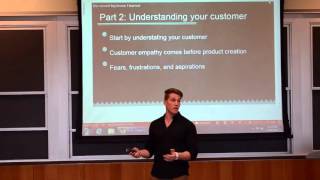
This is a YouTube video titled "Wharton Business School: Entrepreneurship Speech (former private equity Associate)" featuring Ben Altman delivering a detailed talk on starting a lifestyle business, including idea generation, customer understanding, and funding strategies like co-creation and pre-selling. The content includes practical advice drawn from Ben's personal experience transitioning from private equity to entrepreneurship. The video concludes with Charlie Houpert promoting the Charisma on Command YouTube channel and related free content, indicating a conversational exchange between Ben Altman and Charlie Houpert.
Okay, so the topic I'm going to cover is one, is this type of business for you, the kind of business that I run, is that something that you would even want to do? Two, how do you know what a good idea is for starting a business? And three, how do you make money without risking money? That, to me, is a really big part of what I do. I didn't want to take on investors. I didn't want to have a boss. And so, you know, this is for how do you make money without having to put up a lot of capital or raise funding? And at the end it's how do you do it faster? Right. So how do you get off the ground and not spend a year like I did, not making as much money as you're spending and watching your bank account go down, trying to figure out how long of a Runway you have before you have to go back and get a real job? So that's what we're going to talk about. And I don't know if I said this out loud or if I was just talking to a friend about this, but this is going to be about a lifestyle business. I don't know how many people have heard of that term or read the four Hour Workweek, but this is gonna be for people who want to really control their time, have freedom of location, freedom to wake up when you want, work when you want. So I'm gonna say some things like, you should do this. That's not true for every successful business, but that's the answer if you're interested in this kind of business. The alternative would be kind of what I call a moonshot. Erase funding. You try to get a billion users, you start a website that doesn't generate revenue, you pay your employees with money that other people gave you. That's not going to be this at all. So if that's the kind of business that you're interested in, grab a free sandwich and tune out. Because I don't know how to run that business. I've never done it, so it would be silly of me to talk about it. But this is for bootstrapping a lifestyle business. And it's for you if you don't like being told what to do or didn't like having a boss. It's for you if you don't want to wake up to an alarm or you want to be able to move multiple countries. And it's for you if you find that maybe sitting in a cubicle, your prior job, before your mba, you were a little bit bored staring at the Clock, at least for me. That's what my life was like before starting this business. The option is out there. I didn't know that. I went to Wharton undergrad. I don't know how much of my bio they sent out, but I went to Wharton undergrad. After that, I went to Blackstone. I did M and A there. Didn't like that. I thought that was going to be a dream come true when I was 21 and didn't love it. So I decided I'd shake things up and go into private equity, because that's, you know, that's the dream they sell you. And so after four years of doing a lot of math and working a lot of hours, I decided that there's more to life for me than that because I didn't enjoy the work. I didn't find myself fulfilled. I personally didn't feel like I was contributing much. No knock. I have a ton of friends that do that stuff. This is not how I'm wired, right? So I was living a dream come true, and I wasn't happy. And so I decided that's not good enough. You know, I'm in my 20s. Being unhappy for the next 40 years till I retire didn't sound great. So then I decided, what's my ideal lifestyle, right? And for me, it was traveling the world, being able to live on the beach, being able to learn other languages. I'd studied abroad, and I had backpacked Asia. And that, to me, was really exciting. So I didn't know that was an option until I was 23. No one told me that when I was in undergrad that, hey, if you want, start a business, make money, you can do it without putting any money up, without business experience, and you can live wherever you want, wake up whenever you want. So the biggest thing for me was that the option was out there. That's the first big lesson I learned. I started a parkour company. I don't know if you guys know what that is. It's like running up walls and jumping over cars and that kind of stuff. I know nothing about parkour, but I was like, yeah, that seems like that'd be fun. I'll do that. And that was my first intro into automation and outsourcing. I don't want to spend a ton of time on that because I honestly don't know where the interest level is in the room. But at the end, if you guys want to talk more about that, like, how did I get my website designed for under $100? How did I make it so that when People bought a dvd, they put their credit card in, and then with me doing nothing, the money went to my bank account. It also went to pay a supplier. It got packaged, it got shipped to them. It was physical DVDs. We hadn't entered the digital space yet. And it was amazing. It blew my mind. I sunk maybe 15 grand in this business and we made back 10. And it was a loss, a failed business. But I learned a ton, especially about that and just the fact that that was an option and possible. So that's my quick background, if you want to know more about the lifestyle design. Everything I know and everything I'll say is basically credit to this guy, Tim Ferriss. I wrote a book called the Four Hour Work Week. So if you're like, yeah, that sounds pretty good, living on the beach, doing what I want, starting a business I care about, highly recommend reading that book next. Big lesson I learned was, how do you come up with an idea? So BCX Parkour failed. It was a failure, right? Probably the biggest failure I'd had in my life to that point. And I was like, okay, what do I want to do next? I wasn't going to stop. I wasn't going to go back to business or to a job. So I was like, okay, I need a better framework for my business ideas than that. Sounds cool. Let's go do that. So I came up with these four questions, and I think they're very useful brainstorming tools. It's not going to immediately lead you to, like, your genius business idea, but here are the four questions that I find really helpful for me and some clients I've helped to do the same thing that I do. So one is, what would you do with $100 million? Forget for a second that you need money and just imagine I give you $100 million. What do your days look like when you wake up? Where do you live? Do you travel? How often? I think that's really helpful for kind of figuring out what kind of business you want to run. Because, for instance, if that answer for you is like mine, which is the beaches of Rio and then Medellin and then Vegas for three months and then Vancouver, you're not going to want to start a business that has factories you have to watch and manage right now, maybe for a time, for a year, you can get off the ground, but you don't want to build a system that traps you in place. Because now you went from a job that you felt was trapping you to a business you own that feels like it's trapping You. So it's really helpful to be like, what is my ideal life? And then build a system that allows that. Second one is, what would you do if you could not fail? Really useful question. Just pretend for a second. I guarantee you success. What would you do? And a lot of times that gives you permission to think about jobs that you might not otherwise want to pursue. Third thing, what are you already doing for free or even paying for? So for me, when I was making this list, I was like, oh, I love basketball, I love to play paintball, I love to listen to music. Maybe there's an area in one of those industries. For me, it turned out I thought the answer was no, because I'm not good at any of those things. But it's a good, useful thing to think about. What do I already do for free or even pay to do? Fourth thing, this one you don't actually really need unless you want to do a service. But in the entrepreneurship world, I've met a lot of pretenders who are business coaches that don't make money or basketball coaches that can't play basketball. So this is just my plea to you is if you are inspired to go start a business and you're a service based business, please make it something you're good at or something that will be helpful to people and that doesn't apply if it's a product business. You don't have to know how to shoot a paintball to create a new type of paintball. But if you're going to do a paintball tutorial company, please, for the love of God, be an above average paintball player. That's my one request. And yeah. So where is there overlap? And this isn't the end all be all of the brainstorming, but it's where it should begin. Then part two for what should my business idea be is how does your customer think? Basically understanding your customer. And this comes down to three things. What are their biggest frustrations, their biggest fears and their biggest dreams? Okay, so if you are thinking about starting a business and you go, okay, I really like music. Right. Maybe you're not a musician, you can't be a producer of music, but you love music. Don't just go, oh, I really want to have better headphones, I'm gonna go create headphones. Go find 20 music heads and ask them, when it comes to listening to music or when it comes to producing music, what is the most frustrating thing? What are your biggest fears and what would your biggest dream come true be? So just like very quickly, the business I ended up starting that fills this number one. And number two for me is called Charisma on command. I do executive coaching. I make videos on how to be a better presenter, how to interview better, how to manage your employees, anything that's person to person or has to do with confidence or charisma. And I came to that because I love people. I was going out all the time for fun. I was always scooping off in class, hanging out with people. And that to me, made life fun. My favorite part of work was when I wasn't working and I got to eat dinner in the kitchen of my office with my co workers. Like, highlight of my day. And that's because I love that human interaction. And then I started going, okay, well, what should I make, right? And instead of just saying, here's what I would love as Ben Altman, the customer, I went to 20 people who are on forums looking for personal development or who had bought books like how to Win Friends and Influence People or Robert Cialdini's Influence. And I went to them, I said, when it comes to people, what would your dream come true be? Right? And so if I were going to hypothetically Target you guys MBAs, this is the perfect room for me to ask the question. I wouldn't go ask my mom and dad what they think MBAs want. I'd go to you and I'd go, what frustrates you about your mba? And you tell me, maybe it's the classes aren't very good, or maybe it's that it's cost too much money. I'd say, what are your fears? Maybe your fear is that you don't get the job of your dreams. Or maybe your fear, if you're like me, is that you have to go get a job after you graduate. And then the third thing is, what is your dream come true? And for some people, it's going to be, I'd love to ace every interview that I get. I want to walk into the room and go, you know what? I'm going to get this offer. As long as I want it, it's mine. And for other people, it'd be, I want to learn how to pitch investors. I want to know how to raise money so that as soon as I have a good idea, I will be like, you are going to walk into the room and you're going to raise as much money as you want on whatever terms you want. I don't know what the words are. I'm not an MBA student. I honestly have no idea what you guys want. So I'd ask you guys, fears, frustrations, aspirations, incredibly helpful way to make sure you don't do what I did with BCX Parkour, which is go into a hole, create a product, hire a professional parkour guy, a professional camera crew, professional video editor, release it in the world and then go, you know what? This isn't how people want to learn parkour. They want to coach there in person. It's not videos. So anyway, once you've come up with an idea, if you want to learn more, go to marketing, step by step. I'm not an affiliate. I don't get money for this. But this taught me more than my four years at Wharton undergrad, for sure, when it comes to business marketing, understanding a customer, creating a product, it's a really incredible, helpful course. I get no money, but I wish someone had given it to me two years earlier. Then the third thing, how do you make money without spending money? I don't know. Maybe you guys have a lot of bankroll rolled up. Maybe you had a lot of bankroll rolled up, you spent it on this education. Either way, there's an option where you go out and you create a business without having a huge rich family piggy bank or without having to go give your business away to someone else and now you have a boss because they're the money, right? So how do you make money without spending money? It's co creation and pre selling. Those are the two magic words. And co creation is just let your customers tell you what they want. So it's once you go past the fears, frustrations and aspirations, you literally create a group of people that are your customers and with them create your product. And there's two great tools for this. Oh, by the way, not all your businesses follow this plan. You don't have to do this. It's just the easiest way to guarantee sales. The big person that I always get quoted at when I say this is, well, you know, when Ford invented the car, he said if he had asked his customers what they wanted, they would have said a faster horse. That's totally true. I'm not trying to create the flying car or the, you know, what is that tube, the hypertube or whatever it is. What I'm trying to do is do something I love that actually helps people that makes me money while I'm asleep on the beach. So that is what co creation is for. And it's not for every business, and I know that. So I just want to make that clear. But if you like what I just said and you Would like that lifestyle for yourself. This is a really helpful way because it's not just understanding your customer, but when you tie it with pre selling, it's literally generating money before you spend any time, effort or money on your business. So next thing is pre selling, which is getting paid to do what you're doing before you do it. And there's two really good tools for this I put in etc, because there might be more, but the two I know is building an email list or an audience or Kickstarter. So the way I went build an email audience, I started writing about charisma for free on my blog, started making YouTube videos with my buddy Charlie, who owns a business with me. We started just creating stuff. We go, hey, if you like this, sign up, we'll give you more free stuff. So we give them free stuff and then we say, if you want more free stuff, give us your email. They give us our email, we give them more free stuff and we just try to make it so they love us. We build a relationship and they get to know us as people. We tell them our backstory and then when there's this real person to person connection because we're using email, then after a couple thousand people sign up, we email them and say, hey, we're thinking about starting a video course. It's going to be a paid product, not like all the free stuff we've created. It's going to be the best thing we've ever done. So if you like our free stuff, this is going to blow your mind. But there's 30 topics we could do. We could do how to make a great first impression. We could do how to interview. We could go how to talk to your bosses, how to get mentors. How do you tell us a story that's captivating? What do you want? What do you want to learn? Pick six or eight things in this survey we send you and tell us. And unbelievably, we were only going to do five courses, but there were six out of the 20 that got all the love. And then other people were like, we don't care about anything else. So that became Charisma University. So. So before we made it, they told us exactly what to make and then we pre sold it. We literally said, here are the six topics. We've done nothing. We haven't created any videos, we haven't scripted the videos. I literally don't know what I'm going to say, but it's going to be on these six things. Would you be willing to pay me $500 to get access to that. If more than 10 people say yes, we'll do it, because that's worth my time. And we're going to cap it at 25 people because. Special bonus. Special bonus. Special bonus because you're part of the founding class and we made it so that if you bought that, you got a better deal than anyone ever will from Charisma on Command. And 25 people bought it. So just like that, we made 12 grand. We didn't have to do anything. It's not a million dollars. It's not a billion dollars. We're not the next Uber. But it did mean that I didn't have to worry about food or rent for a little while. And I could create this thing. And I knew that if those people wanted it, other people would want it. So that's co creation and that's pre selling. I got one more example. Kickstarter. The other option from my friend, he created an ergonomic coffee grinder. I've literally never ground coffee. It sounds like a dumb idea to me. If you said, hey, I'm going to start this business after Wharton, I would have told you that you should probably get a job. His first, I think I forget it was a week or a month, but he made $300,000. He had never made an ergonomic coffee maker. He didn't know where the parts were going to come from. He didn't know what it was going to look like. He made a video. He said, well, so sorry. First he created an Instagram account, took a lot of pictures of coffee beans, got followers. Literally just built an audience once a day. Coffee beans, coffee cup, something coffee related. I think it's stupid. You can tell from my tone. But 300,000 before he ever did any work because he built a following. And then he said, hey, we're thinking about making something in the coffee world. What's the most annoying thing in the coffee world? People go, coffee grinders. I wouldn't have known that. And then he goes, what do you want in a coffee grinder? You got to grind it like this. It's annoying. I want it to be more like your body. You know that when you hold it, I want it to feel a certain way. They have, you know, preset sizes. I want to be able to do any size, infinite size, whatever I want. Okay, Made a video. He goes, I'm going to make you a coffee grinder. And he used their exact words. It's going to have a handle like this because this one's annoying. It's Going to have holes that go to any size you want and when you hold it, it's going to feel hefty. I literally don't know if he knows anything about coffee. He just used their words back at them. But when you use somebody else's words to describe their frustrations and their fears and their aspirations, you use the exact words that they use. They assume you have the solution to whatever the problem is because you verbalize the problem better than they could. So launched this Kickstarter, created a video, made $300,000, then went to China and went, alright, I gotta find a factory, found a factory, found the parts. If you are interested in this kind of physical product stuff, I can tell you more about that. But the punchline for me here is he made 300 grand and now he had some money to play with and he didn't owe anyone equity, he didn't take out a loan from the bank, he just had customers waiting for his product as soon as it launched. So that is lesson three. Lesson four is just find someone who's done it before. I gave you the abridged version of my story. It doesn't talk about the videos that took me two months to create that nobody ever liked. It didn't tell you about the manifesto poster that we tried to launch that turns out was way too expensive because people would just illegally download the image and then go to Kinko's and make their own posters instead of buying it from us. Including my former employers who have a several billion dollar fund decided that it was too much to buy my poster, so they just went and printed 10 from Kinko's. I can't get mad because it is pretty cool that they have the poster up. So my point is I wasted a lot of time. I didn't go and get mentors at first. And that cost me and I think more than money. That cost me time, that cost me hours of my life. And that's what I value the most. So I would just say business coaching has probably been the number one thing that has helped Chris Monkman the most and the highest roi. So to the extent that you have something you want to create, find someone who's done something similar, who is financially successful and who lives the lifestyle you want. Just ask them what you should do, what were your biggest breakthroughs, what were your biggest mistakes, and save yourself the time. And I say those three things because there's a lot of shitty business coaches out there. So make sure it's someone who has a business that you like, has financial success, and lives the lifestyle you want, it's super important to find the right business coach. But that was my fourth takeaway. And with that, pretty sure I'm done. So we can go into Q and A if you guys have any questions about how to start a business, my lifestyle, whatever it is. And then if for whatever reason you have questions that are private, you can email me@BenarismaonCommand.com all right, well, hopefully that.
Was helpful to you. If you like this video, you can always get more by subscribing to our YouTube channel. Just click subscribe. It's called Charisma on Command. You'll get more videos like this.
And if you want to learn more.
About the actual Charisma related videos we make, there's a great free one on how to make an unforgettable first impression. You just click the link in the description of this video and you'll get it. It's five minutes long, and again, it's totally free. So that's it and I hope you enjoyed it.





