$2M/yr, 3 last businesses acquired, revgenius cofounder
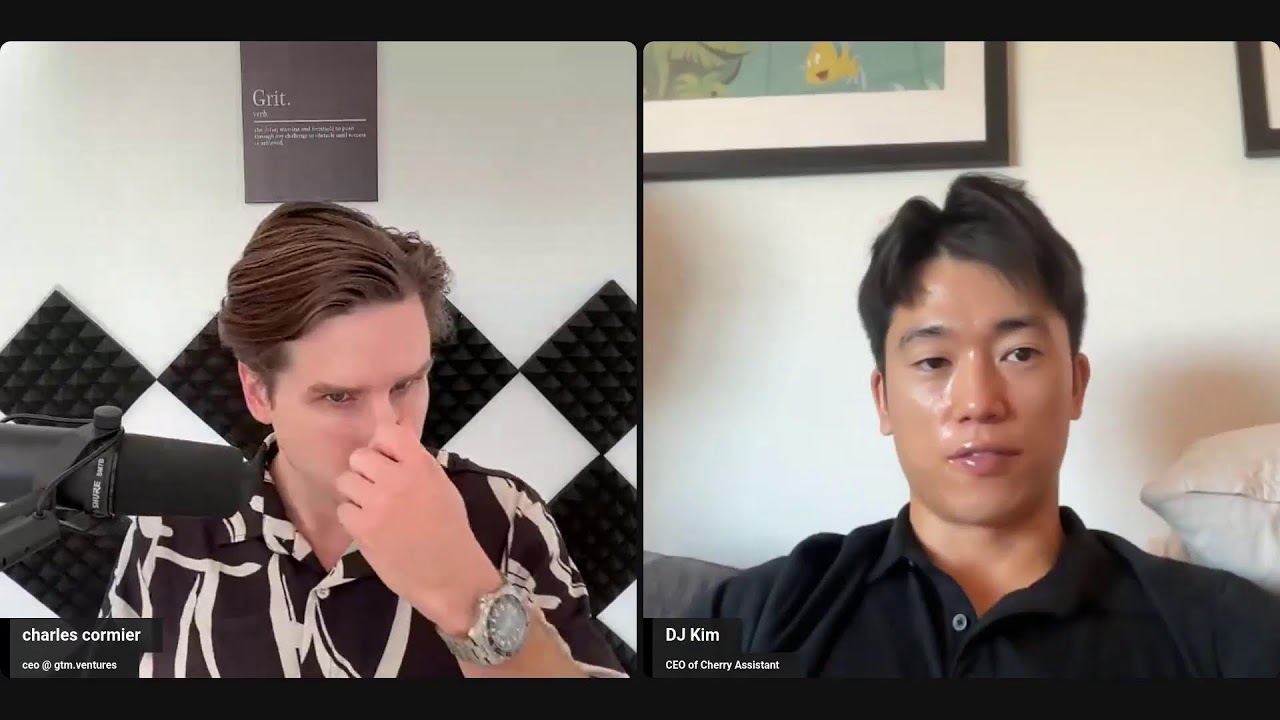
In this Founder Wisdom episode, host Charles Cormier interviews DJ Kim, the serial entrepreneur behind RevGenius, DataGhost, and the offshore staffing firm Cherry Assistant. DJ explains why South Africa is his preferred hiring destination, citing its high proportion of English‑fluent talent with a neutral accent. He describes Cherry Assistant’s business model: a managed staffing subscription with a thin margin and a direct‑placement service, supported by a team of 14 recruiters who earn base plus commission. The company has grown to a few hundred staff and generates roughly $2 million in annual revenue within three years, primarily through programmatic SEO that drives 80 % of client acquisition, with the remaining 20 % from referrals and a nascent paid‑ads channel. DJ details the internal use of AI agents for operational tasks, the creation of multiple sub‑brands (Hire Saba, Docket Hire, ScrubOps, Lava Staff, Hire Nile) to serve different markets, and the strategic decision to keep the business bootstrapped and founder‑controlled. He reflects on the broader AI/agentic revolution, arguing that high‑touch roles (office managers, SDRs) still require human nuance, but acknowledges that future AI agents could replace them if performance matches. DJ also shares past exits (DataGhost, Spuddies & Friends, Marvel Maids) and a side venture—a golf‑simulator co‑working space—positioned as a physical community hub in a world where remote work may dominate. Throughout, both hosts discuss hiring for entrepreneurship, the importance of self‑starting staff, and the potential for AI‑driven agents in their service offering.
Chapters
Welcome to another Founder Wisdom pod. We have DJ Kim with us today. DJ originally reached out to me or one of his assistants to have me on his podcast. I thought, oh, that's a very smart system. It's the system I've been promoting the last 3 years. And I looked up his LinkedIn and I saw a bunch of familiar companies. So Rev Genius, I had Jared on my pod a couple years ago. I saw DataGhost as well. I'm pretty sure I heard about DataGhost before and a bunch of other companies. and Friends and Cherry Assistant, which is his latest one, which is an interesting play, by the way, DJ, because I had like 1,000 employees overseas and I've A/B tested extensively that system. So hopefully we can talk about that today. Welcome to the pod and tell us a bit more about yourself, what you're up to.
Yeah, thanks for having me here, Charles. Yeah, so my background is pretty extensive, everything ranging from creating a community business like RevGenius to e-commerce to creating a software company that was acquired by LeadMagic. which Jesse Ouellette runs. And now we've been running Cherry Assistant for the last 3 to 4 years. It's an offshore staffing company that we hire primarily in South Africa. If you've never hired in South Africa, it is probably the best offshore country to hire English-fluent people that you can put in front of clients.
Why South Africa versus regions like Serbia? I used to hire a lot of Serbia because Higher education, top Wi-Fi. I know that South Africa back then had blackouts. Maybe that has been fixed, but why compared to other regions?
So if you just look at, let's say, percentage of the population that is English fluent and has like a, let's say, passable accent that you can put in front of your customers, South Africa has the highest percentage out of every offshore country, whether that's Eastern Europe, whether that's, you know, in Serbia, whether that's in Southeast Asia, in the Philippines, whether that's in Latin America. Let's say on the average, you could probably find 1 in 1,000 in those countries where it's like a passable accent. And South Africa is probably like 1 in 10 or 1 in 20.
Got it. And why start an assistant business? I mean, in 2023, I let go most of my team. I had up to 1,000 employees at its summit, and I replaced them most with AI and AI agents nowadays, which do their jobs. I still take partners like high performers like you on my cap table, and I do rev share with them. But why? Why would I start hiring again from that part of the world?
Well, I think it depends on the type of business that you run, but most of our clients are, let's say, dental offices, medical facilities, med spas, construction companies, local home service businesses. And we have some big clients too that have like, you know, 100 people with us. I think there's just some things that the AI can't do right now, and maybe it'll do it eventually, but I think at that point where an AI can do what, let's say, you know, these jobs that it can replace, you know, we're all gonna be out of jobs, right? Like there's no distinction between the jobs that they're really doing versus someone that can do it in the US, right? So I think the way that we think about it isn't, you know, like a typical virtual assistant, right? I think a lot of people associate like hiring offshore with like low quality remote labor. Um, but what we think of it as, you can get someone that you would hire anyways locally in the US, you're just getting it for cheaper, right? So there's some jobs, like let's say you're gonna hire an office manager. There's a lot of elements of being an office manager that you can't really replace with AI 'cause you have to communicate with clients. There's a lot of like nuances. Like we've tried everything, right? Like we have AI integrated in every part of our system. So instead of hiring someone locally in the US for like an office manager, you can hire someone, you know, for a fraction of the cost in South Africa. So there's like these like high-touch roles that AI still can't do yet.
Interesting. I think founders and entrepreneurs will survive the AI revolution, the agentic revolution to be precise, right? One, because I think they're more on the risk-taking side of things. They also constantly innovate and create. And 3, because they're humans. I think there'll be laws around, yeah, like AIs, what they can do and what they can't do. But I don't think 9-to-5ers, like people that follow orders, will survive that. I think these guys need to pivot or ultimately be on welfare or something like that. Do you think that is the case? And do you also hire for entrepreneurship or intrapreneurship in your employee/assistant?
Yeah, I think at some point there'll probably be some sort of like UBI or something, right? Like if AI gets good enough where it can replace every job, like what are we all doing? It's going to be like WALL-E where it's going to be sitting in the floating chairs. Like just getting everything fed to us. In terms of, do we hire for entrepreneurship? What do you mean? Like, do we hire entrepreneurs or do we hire for entrepreneurs?
Well, you know, assistants that are self-starters, you know, like, and that are recursive, you know, my agents, I tell them like, automatically run this every day. My humans used to forget that. And then approve, improve on that, right? Like analyze the data of what you did yesterday and last week and come up with something better. And my employees back then certainly did not do that.
Yeah. So yeah, and I think this kind of also goes back to the question of why hire someone in South Africa versus setting up an AI. We hired, who's now our head of recruitment, Shalane, about 3 to 4 years ago when we first started Cherry Assistant. She has now gone from being a recruiter to an operations manager to head of recruitment and now has equity in our company. Because she pretty much runs the entire day-to-day. Like, I would not have been able to place an AI in the same position that runs our company, right? Like, I can now go and I could go on vacation for 3 weeks and come back and she will have efficiently run but also grow the business without me. And that's not something that an AI can do.
Right, right. And okay, so what's the scale of Cherry Assistant? You told me about your ICP, right? So dental offices and so forth. Like, how much Clients are you taking? When is it capping off, right? Like when does it require for you to hire more employees because you're full cap?
So we've been constantly hiring more employees for the past, I would say about 2 years. So we've probably hired a new recruiter every other month for the last 2 years.
Okay, a new recruiter.
Our entire business has never stagnated for 2 years. So every month we've been growing.
Okay. And a new recruiter, meaning someone that will hire even more assistants in your business. So how much recruiters do you have now? Like 10?
Um, I think we have 14. Okay.
Are they paid, uh, hourly or commissions? Like once they land someone?
We have 11 recruiters. Um, they have a base and a commission. And we used to be based only for like 3 years. We just started doing commissions last year.
And you only do assistants, right? You don't do other roles right now?
No, I think that's like the misconception, right? When we say assistants, right? I think people associate that again with like low-quality virtual work. We hire for any job if they just happen to live in South Africa.
Okay, yeah, I see sales reps even on your website. I see a bunch of roles, automations, and so forth. How much quote-unquote cherry assistants do you hire? Like how big, how much assistance do you have?
So we split, no, we have a couple hundred on staff and then we've done probably similar amounts in direct placements.
Okay. That's pretty crazy.
Yeah. So there's 2 different models. There's like the monthly subscription where we manage the staffing and we just get a margin on their salary.
Yeah.
Then there's a direct placement where people just pay us one time to then go recruit these people, but then they just get added to the client's payroll.
Okay. And the margins, is it like you pay $15, the client pays $15 and you pay the assistant quote unquote $10?
Yeah. It's probably a little bit higher than that. I would say out of the industry, we probably take the smallest margin just because we have a pretty efficient system, I would say. Like I said, we built our entire system with AI other than like what is client-facing. Right? Like that's why we have recruiters, but that's pretty much the only role that we have internally is because they have to talk to clients and manage the process. But everything is like AI. So we take the smallest margin out of like what the clients pay us out of every company in the industry.
Got it. How much hours they do on a weekly basis on average? Is it 30?
I would say most people hire full-time just because I think people come to us and say like, oh, I want to hire someone part-time, but it just never works out in the long run. Like, it's either you need someone or you don't need someone, right? And there's people that are like, oh, like, I can't afford someone full-time. Or they're like, oh, I don't know if I have enough work. I'm like, well, you either need to grow your business before you like come talk to us, or you have to like find more work to delegate because it's not an efficient use of your time to be doing other stuff anyways.
Yeah. Yeah. Let's do some, some math here. So 40 hours a week and the average is like, what, $20 an hour, right? So that's $800. A week times 4, that's $3,200 times 12. So on average it's $40 grand a year that they get, right? Like an average, an assistant versus what would cost them $80 grand a year in the US.
Yeah, I would say it ranges anywhere from $18,000 to $30,000 a year.
Okay. Okay. Okay.
And it depends on the role, right? Like there's some that are, You know, less expensive. There's some that are more expensive. Like you can do a chief of staff for like $3K a month versus let's say a general kind of data entry person for $1,500 a month. We do the full range. Like I said, it's not just like an assistant.
Right. So let's say you make $10 grand a year per head. You have 200, so $2 million business a year approx. And you built that in less than 3 years.
Yeah, something like that.
Nice. Around that range. How did you scale that fast? Like, I know you're good at GTM, right? 'Cause you did the podcast stuff. Like, do you attribute your GTM skills? I know that you've obviously been at Rev Genius, which is a great org. Do you attribute that to your success so far?
I would say the biggest thing was SEO actually. Um, yeah, well, I mean, I have this belief and people disagree that AEO is just SEO. I think it's all just— they're all just pulling from the same directories at the end of the day.
Okay.
Right, like if you look at— if you ask anything to ChatGPT and you look at like the links or the resources that they're pulling from, it's just basically the top 10 on Google. Um, so anyways, we can get into that whole thing, but SEO is where we've gotten probably 80% of our clients. The other 20% is just referrals. So this past month is the first time that we've ever run ads. So we're trying to get ads going just to get another funnel going, but we've done SEO, we've done referrals. And as you know, about 3 to 4 months ago, we started doing the podcast funnel, which has been working pretty well. But yeah, every client pretty much has been coming from SEO.
Right. And who's Hire Saba and Duckit Hire? Are these partners that refer clients or?
So Hire Saba is the job board that we started in South Africa because we were hiring so many people in South Africa.
Nice.
Um, and we're probably the only agency that has that system,
uh,
where we own the job board and the recruiting agency, but they're separate brands. So other people, like if you want to go hire in South Africa without going through us as an agency, you can just post on this job board and it still gets marketed in South Africa.
Yeah, I think Ocean's Talent have something like that. I've had their CPO on my podcast not so long ago, Matt Wallert. Uh, great company as well. They hire from Sri Lanka of all places. I was,
yeah.
South Africa makes more sense, my brain. Like, I was like, why Sri Lanka, right? Because I did all these regions in the world and I stayed away from Philippines, by the way, for the very question I asked you, like how entrepreneurial they are. And in Philippines, they didn't have entrepreneurial bones. You know, they would always say yes to everything. Okay, your AEO, your SEO, I see like in the footer of the website, you have like, Each and every single job post, is that like your main AEO move, SEO? Is that how you attract most people? Do you have a blog as well? What's your SEO secret?
No, I would say, so it's called programmatic SEO. It's what I would say a lot of the bigger companies use, but programmatic SEO is basically you create like a valuable dataset and then you turn pages out of that dataset. Right? So that it's actual valuable information on each page. I think a lot of people have the tendency to say like, oh, I'm gonna spam a bunch of blogs. And the blogs can be valuable, right? But if you have a dataset, and let's just give an example. Like let's say, let's say you have a home cleaning business, right? And you want to target your entire like city, right? A typical SEO strategy would be like, oh, I'm gonna go create a blog for my home cleaning business and create a blog every day. A better strategy that we found is using programmatic SEO where you aggregate a dataset. So a dataset for programmatic SEO for a local home cleaning business would be something like aggregating every zip code in your area, finding useful and, you know, like fun stats about each zip code, like maybe population, age, demographic, number of homes. Even things like income, things like that. Aggregate that dataset and then you can create targeted pages for each of those zip codes and say, home cleaning in blank zip code. Here's the population, here's fun stats, here's maybe some images that you've gathered. Here's a gallery showing nice aesthetic pages about that zip code. And now you have a page that people actually wanna look at with useful information on it.
First time I sort of hear about that. Yeah, no, it's, it's pretty cool what you've built. Your co-founder, uh, what does he do versus what you do?
So my co-founder is, um, I would say more technical than I am. So he was a, uh, he has a master's from Brown in comp sci. We met when we're both doing a lot of like crypto software development stuff, um, when I had first moved to LA. Um, so initially it was kind of like I was doing a lot of the sales and marketing, he was doing a lot of the engineering. But now that AI's gotten so good, we're both just doing the engineering, both doing the sales and marketing. It's kind of just evolved to us both doing a lot of the same things. So it's kind of like having a parallel version of me and we can just scale what we're both doing.
Right. How does Cherry compare to your last victories? Because Rev Genius was a good one. Data Girls was acquired. Spuddies and Friends was another good one. Do you design these with an exit in mind?
No, I would say Cherry Assistant is probably— I feel like Cherry Assistant is probably the first real business that I've had. I mean, I say that just because one, the scale that we're at, the cash flow that we get, and because it's a recurring business. Spideys and Friends was a really small exit that I sold through, I think, MicroAcquire. I don't know what they're called anymore. I think they're called acquisition.com or MicroAcquire. DataGo, same thing. I started that with, again, my co-founder Ben. We sold it to LeadMagic after like 3 to 6 months to Jesse Houlette. RevGenius, I would say, was probably not as big as Cherry Assistant when I was running it, but it wasn't— it also wasn't a recurring model. It was like you had to go out and get all these sponsors, set up all these conferences and events and—
Painful.
Do all this whole thing, create this community business. It was really, I would say, Like founder-intensive to do the work. Um, so this for Charity Assistant feels like it's the biggest. Um, it's recurring. Um, and I've gotten it to like an operational capacity where I don't have to be involved.
Got it. Interesting. Um, what about Marvel Maze? That was like a remote cleaning business and it also got acquired. It seems like all of your businesses have Like been designed with acquisition in mind. So you're saying like Cherry, you'll just keep it for a while for cash flowing purposes and then you'll hatch a couple of more high-risk businesses on the side or?
Yeah. So Marvel Maids is a cleaning business that we started right around the time that we started Cherry Assistant just because we wanted to understand that niche. Because I just knew that niche was going to blow up, which, and it did. We started it for a year. Home cleaning businesses suck, by the way. Like, if you're ever thinking about starting a home cleaning business, it's like the worst business to ever run. But we started that and we wanted to get out of it. So we found a buyer that was based in the city that we were running it, right? Like, we were running that home cleaning business in Phoenix, Arizona. We live in Los Angeles. I've never been to Phoenix. And if you're going to do a home cleaning business again, I don't think you should. But if you do do one, it's probably better if you live in that city. Just there's a lot of operational reasons for why, but So we sold it to someone in that city just to get out of the business. But I never think of these in mind of like, oh, I'm going to sell this in a year when I started. It's more like I'm running it, it generated some cash, I've tried out what I wanted to try, I want to get out of it, let's just get some value out of it and sell it. Yeah, what was your other question?
Yeah, if you're going to start some other side hustles that are more high risk, right? Like a guy like you, I'm pretty sure you're looking at the agentic businesses nowadays.
No, it's actually the opposite. So we just opened a golf simulator in Los Angeles. So it's a 4-bay golf simulator. And I'm actually going the opposite way. And there's a couple of reasons. But I think, let's say, let's say we get to a world where AI gets really good and replaces all the jobs, right? I think there's a world where people become so isolated that they have to like flock to communities, whether that's digital communities, whether it's physical communities. And I think people are gonna crave that more and more. So we wanted a space where people can come, they can cowork, throw events, golf, and have an activity-focused thing. And I think we're seeing that a lot more. And we saw that back in COVID. COVID was, I think in my mind, like a demo or a trial of what's gonna happen when AI gets really good, where people are just sitting at home, they don't have jobs, they're just trying to get involved. So we started a golf simulator in Culver City in Los Angeles that we're actually having our launch party on Sunday. So we've basically taken digital money and trying to put it into physical money.
Interesting. It's very interesting thesis from a guy like you that's running a bunch of digital businesses. I mean, yeah, community, sure. And you've built communities, right? With Rev Genius, some part of it was physical, but I mean, my community is online, right? Like, I deal with my co-founders online. Yeah, sure, sometimes we do like physical stuff, masterminds and so forth, but I don't know. So you use like zero agents? Let me get that clear. Like, you're not leveraging—
We have a ton of agents. We have, everything about our business and every So just for some context, we have Cherry Assistant as like our main brand where we say, come hire in South Africa. Under Cherry Assistant, we have a bunch of sub-brands. So we have Docket Hire, which is our legal-facing brand. We have ScrubOps, which is our med spa-focused brand. We have Lava Staff, which is like our Latin America-focused brand. We have Hire Nile, which is our Egypt-focused brand. We have a bunch of these sub-brands that all runs because we have not only our amazing people from South Africa, but we also have a bunch of agents that run things in the background. So like our business operationally has a ton of agents. Do I want to get into the business of agents? I don't think so. I think at the end of the day, a lot of the agents are going to get dominated by the biggest tech companies anyways. Like you look at like OpenCLAW, right? Like OpenCLAW was sweet for like a month, then they just got eaten up by OpenAI and every single person that came out with their own agent that was a big company, right? Like GrokBot, Muse. Like Muse had like, what, 10 million installs in the first week? I think getting into the business of agents can be cool if that's what I wanted to do, where like I wanted to go raise, you know, VC money and do X, Y, and Z. But I think for the current being, like having a cash-flowing business that's bootstrapped where I own the whole thing, or I run half of it with my co-founder, so far has been just a lot more fun. Like I don't have to, I don't have to report to a board. I don't have to report to investors. Like I, Like the whole point of me running a business is that I can report to myself.
Right. Yeah, I was thinking more like take one specific position, I don't know, SDR for med spas, right? And build the best damn SDR for med spas agentically, right? So it's sort of proprietary. You have the harness, the prompt, whatever, and you resell that. So you wouldn't necessarily need to hyper-race for that. And you could be known as the number one for that specific niche. And the business model sounds like 95% margins and they learn faster and they're like way better than most humans. So that's what I was thinking about.
Yeah, we've thought about it. And like I mentioned, we have a client that has about, I don't know, 80 to 100 people with us and they have other agencies that they work with that has similar amount of people, right? So we have the 80 to 100 people with us from South Africa. They have another 80 from, let's say, Latin America. They have another 80 people in the Philippines, and then they're also testing AI. So far, our South African people are outperforming in every metric, right? I think at a certain point, sure, if I say— if I see like, okay, AI is either comparable or better than our South African people, I will fully be like, okay, we have to launch an agent, right? But at that point, I don't think it's going to be super hard for me to start an agent and sell it to our customers. Interesting. I can be like, hey, look, this client of ours has 100 people. The AI is better, right? And it's a really easy sell if I say like, hey, and you can save half the cost of what you're already paying.
Yeah, I get what you're saying. I value it as well because I know you've been places. Dude, thanks for being on. It's interesting what you've built. You have such a crazy background. Where can people find out more about you?
They can find me on LinkedIn, linkedin.com/in/dongjukim. On Instagram as well, @dongju. We can send— shoot me an email.
There it goes. I was DJing Charles for another
More from Charles




Elizabeth Holmes and You Can See Everything: The Real Theranos Story Behind the A24 Documentary