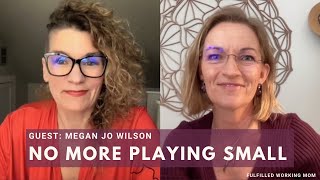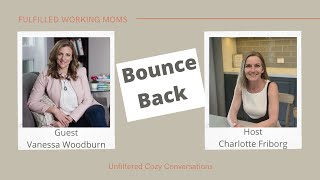
In this inaugural interview, master certified life coach Charlotte welcomes health‑coach, educator, and author Vanessa Woodburn to discuss her bestseller Bounce Back: Reclaim Your Life After Concussion. Vanessa recounts the cycling accident in Italy that led to a severe concussion and months of post‑concussion syndrome, describing the physical and emotional toll of an invisible injury. She explains that the book was written for people stuck in the “gap” where outward signs of recovery mask lingering loneliness, fatigue, and self‑doubt. The conversation expands to broader setbacks—whiplash, chronic illness, and other hidden traumas—highlighting how they can shatter identity and confidence. Vanessa emphasizes the importance of being truly heard, rather than fixed, and shares practical tools she learned: asking oneself daily “What do I need?” to set and honor personal boundaries, and encouraging listeners to practice compassionate listening for others. Charlotte relates these ideas to her own experience with her son’s Lyme disease, underscoring the value of support for families. Vanessa also defines a fulfilled mother as someone who feels connected to herself, her family, and community, and she offers a free PDF of her book via vanessawoodburn.ca. The interview closes with gratitude and a promise of future conversations about motherhood, health, and resilience.
Chapters
Good afternoon, good evening, wherever or whenever you are watching this live or recording. Today is a special day. This is my very first interview, and as you can see, I have a special guest with me, Vanessa Woodburn. Hello everybody! Hello! And, um, yeah, so this— we're going today to talk about Vanessa, what she's doing, the book she has been writing. And I just want to welcome you to this, to just let you know why I'm doing this. I am a master certified life coach, teacher, speaker, and I help moms to kind of create, design a life where they can both work and also enjoy life outside work with kids and family and, you know, navigate and live life with everything it takes. I often say perfectly imperfect because life is not perfect and it never will be, and it's not supposed to be. And I think it's important for us to learn to relax with that. And that's why—
just to hear you say that—
and, and that's what I wanted to say, because today we definitely will talk about moments in life when life is not perfect, when it's not just the small stuff, but serious setbacks in life that can seem like not just a little bump in the road, but like a wall going down. I think that's at least what I thought about when I read Vanessa's book. So before we get into the conversation, let me just share a little bit more about Vanessa. So I have her bio and I'll read it for you. So Vanessa Woodburn is a certified IIN health coach, educator, and author. Her first book, Bounce Back: Reclaim Your Life After Concussion, was published in 2020 and is a number one Amazon bestseller. Vanessa's passion for healing shines through in her work centered around resilience, self-compassion, and helping people bounce back after a setback— mind, body, and spirit. I love it. She weaves her years of experience in education, wellness, health, resilience, and compassion into her programs, workshops, coaching, and talks. Which we're going to do today. And Nisa lives in Mississauga. Mississauga, I thought I said it right.
Close enough. It's called Mississauga.
Yeah, Mississauga. We just talked about it an hour ago. It's about Mississauga, Ontario, with her husband Oliver and 3 teens.
Teen moms.
Yeah. So welcome.
Vanessa. Thank you so much, Charlotte. Thank you. I'm so happy to be here with you and everybody else this morning.
Likewise. So much looked forward to this conversation here. So I want to ask you first, you wrote this book, Bounce Back. And I want to say that I read it. And maybe I'll share a little bit later some things I took away from it. Start, tell us what is your book about?
Yeah, well, I feel like you gave me a good segue a little earlier when you said that you help people through those moments in life to feel fulfilled when there's, you know, we all have those little bumps in the road, but then also those big moments that really shake you and rattle you to your core. And so I wrote Bounce Back about 4 years after a concussion that I experienced while on a cycling vacation in Italy. I'm Canadian, I live near Toronto. My husband and I had gone on this beautiful dream vacation, and just a couple days into it, I had a really bad crash on my bike, and it led to a, you know, a brain injury and some internal injury, being hospitalized in Italy for a couple of weeks away from my family. So that was certainly part of the big bump in the road for me. And then a diagnosis of post-concussion syndrome, which is for most people who have a concussion, they do get better within a couple of weeks, but there's a smaller population that really can struggle for weeks and months. And some people even years with lingering symptoms. Symptoms, and that's where I found myself. I did, with my experience as a, as a health coach and just determination and lots of support, I have recovered. And I wrote Bounce Back to really help people realize that they're— they can get back on their feet and they can put back the pieces of their life together to feel empowered and that they can reclaim their life again.
I just love that. I mean, and you actually more or less answered my next question, but what I really like about this is that I think that this book and the work you do really will, first of all, give people hope, that there's hope and there's a way to come back, but also like a guide how to navigate it and with support. Yeah. And I want, you know, at this point, I just want to say that I'm having a hard time seeing if anybody are here live. So if you are live, feel free to give us any likes or hearts or comments. Say hi, tell us where you're coming from. And if we can't see it now or respond right now on the live, we definitely will after when the recording is up. So let us know if you are here. And yes, so what I want to share is that when I read your book, that— and we talked about this— that it's like this, you had a concussion, but it can be many different kinds. We have these setbacks in life. And when I read it, I was suddenly— I was brought back to the time in my life when I had a pretty bad whiplash. And literally almost couldn't walk. And when I walked, I had to walk, support my head like that. When I did laundry, I had to sit down on my knees, take one sock at a time, and literally turn my entire body. And I thought about that when I read your book, and I just, um, I said like, wow, if I, if I had you by my side this time, I think I would feel so much more like Supported and not alone with that problem.
Yeah, one thing that I've, um, I've realized is that, um, you know, my experience was with a concussion. Yours was, you said, whiplash. For other people, and it might be, it's any kind of setback that feels like that abrupt shock kind of experience that changes how you are living your day-to-day life and the things that used to be easy or that you used to do effortlessly now require so much energy and effort and attention, and it's fatiguing. And it also really makes you question inside. This was my experience, at least, is like, okay, well, who am I now? I can't— I'm not able to do right now the things that I used to be able to do, the things that made me feel like me. And that was— that's definitely part of the, the journey and the healing and the recovery is learning to feel capable and, and confident again. And I can imagine that that applies to any kind of these life events, right, that are sort of shocking and that rattle you to your core.
And I think especially, I mean, what I like about your— what you do and the book is that This relates a lot to when we have setbacks that are not kind of visible. We don't have like that physical evidence. It's not like we— broken a bone. This is like an invisible thing we carry with us. No one can see it. And it can be so easy from the outside to— and I mean, to judge or think, why is she not getting herself together and just do the things? Yeah, it's not like we walk around with a big bandage and it's visible that, oh, she's suffering, there's something wrong here.
I think these invisible injuries, like a brain injury or anything else, like you said, that you can't see the physical evidence of on the outside, are particularly— can be particularly challenging too, because it was my experience that I often felt misunderstood and sort of minimized. How I was actually feeling on the inside was minimized when other people said, oh, well, you look fine. Like, good for you. Look at you. Off you go. And because I looked normal. But I certainly didn't feel that way on the inside.
And thank you for sharing that, because that was one of the things I would like to talk to you about. Because another thing that came up in my memory when I read your book was when my son was diagnosed with— my youngest son, when he was diagnosed with Lyme disease. Because many of the things we just talk about here and you share in your book is all that— how he expressed it to me, I could understand how frustrating it was for him. He lived in his own— he felt like lived in his own little bubble. And no one understands me, mom. Yeah, I don't feel— and even though I see myself as a pretty, like, aware, conscious, like, attentive parent, I mean, sometimes you can say, Mom, it's like you don't get it, you don't understand it. Like, he felt so alone. So do you have any— so I mean, I think your book can— is valuable for not just someone who goes through this, some crisis, some setback, herself, but also if you have maybe a child, a family member, friend, someone else who's going through it, to understand how to be the best support. So is that something you could talk a little bit about?
I can, um, yeah, I can. And I think this was something that my family and I, my husband and my children too, to a great extent as well, and even our extended family had to learn to navigate and I think the most valuable things were when people were really good listeners for me. I didn't want them to try and fix me, right, but it was really, really helpful to be able to just say how I was feeling, have a cry if I needed to, and it took me a while to get there, to be able to open up like that. That was also part of part of the journey. And what I had to learn was my responsibility for healing was actually letting people know how I was feeling. And then with bumps in the road and trial and error, we learned to navigate that. I just needed them to listen and maybe not always even relate it to their own experience. Like, if I was having trouble with my memory, for instance, there were some people who would say, "Oh, it's okay, don't worry about it. I forget things all the time." But it's not the same. It's not the same when you're talking to someone whose brain has been rattled like that. So yeah, it's been this big circle because I think it's taught me to be a better listener when other people share things with me rather than jumping to say, "Oh, I know how you feel. I felt this and this and this." I just try to listen to where they are at and acknowledge and like witness. I hear you. This is hard. I'm sorry. I'll give you a hug. I think sometimes that's the very best thing and what we need most.
Yes. Amen to that. I love that so much. And actually, I want to share with you that this morning when I was walking my dog, I ran into a mom who lives here in the complex that I'm living in, in the area I'm living, the community I'm living in. And she was sharing with me how one of her kids right now— she has young kids— like, is throwing these tantrums, and there's something going on. And we talked about this, and the exact thing we talked about was how sometimes we, we just need to, as humans, to learn to just kind of put ourselves to the side and just sit and be at the level with the other person and be fully present, truly just listen, and then know it will be our time to talk. But just— but really, I don't know, that I find out that's, that's really when we can do that. Um, and sometimes just need to be reminded to do it, but that's when we make the best relationships and help each other most. Yeah, yeah. So I love that advice. To just listen, yeah, when someone— and the other thing I heard that you learned from this was to set boundaries, right, and express what you need.
Yeah, to those boundaries for what's okay for me and what was not okay, and to also realize that that might change from day to day, even throughout the day, that might change, right? So sort of to take a step back from that, I think a really important question that I had to learn, and I kind of had to give myself permission to ask this because it didn't— it wasn't something that was a practice for me, but to ask myself like, what, what do I need today to feel like I'm taking those baby steps and moving forward? I was really good at asking that of the people around me. I even joke, I ask that of the dog all the time. What do you need today? When I'm giving him a little snuggle in the morning. And I was used to saying that to my husband and my children, and it was when someone, a therapist actually I was working with, she said, okay, can we turn that around and can you ask that of yourself? And then it was the learning to listen. What do I need? Do I need, do I need to slow down? Do I need a little bit of a push today? Is today the day that I feel a little bit more motivated? Do I need music? Do I need to move? Do I need fresh air? Do I— what do I need? And then honoring those boundaries around that, and that's when we get into the boundaries. It's, it's being able to hold that for myself and stand in, here's what I need today, and here's what my family needs, but also here's what I need today, and my needs are as important— everybody's needs are important, as are mine. That was a learning for me. And, and then being able to, yeah, communicate that to other people. And sometimes, um, if you've had a, like, a, an illness or a setback— in my case, the concussion— it was sometimes boundaries of saying what wasn't okay. Like, you know, someone invited me or asked me to help out in a certain way. Can you do this for for me today is like, you know what, I'd love to help, but I can't today. I'll check in with you tomorrow. Maybe I'll be feeling better tomorrow.
So I love that. I love that. So we have a surprise because— surprise for me? No, for those who listen. Well, I really like this and I know that this book can help So many. Do you want to share? I mean, I honestly encourage whoever is listening to this who take nuggets of information to this to get the book. And in a moment, Vanessa will share. And this is a surprise that she actually has an offer to get a free copy of it, like a PDF copy. That's— yeah. So I can see that both, we talked about that earlier, both like a mom who is going through these challenges herself can benefit from the book, or in my case, I thought, you know, if I had read this book when my son was first diagnosed, I'm sure I would take a lot of good nuggets of information here. But yeah, what do you want, who, when you wrote the book, you wanted to share, who were you thinking about when you wrote it? Yeah. Did you write it?
Thank you for asking. Yeah, so I, I wrote this book, I think, specifically for people who— I call it the gap, this gap that you find when you've gone through, uh, for me, going through the concussion, post-concussion syndrome. I did have doctors and specialists who were helping me and helping me feel better, and we were making progress. And it gets to the point where you, you kind of— they start to let you go off into the world, and there is this gap where, okay, my physical symptoms may be feeling better, and from what everybody can see on the outside, things look fine, but I am not fine. I felt like I was in this place of feeling very lost, feeling very lonely. I didn't, I didn't know, would I ever feel like myself again? Would I ever be able to feel capable and confident to really like move forward in the world and, and do the things I wanted to do and be able to try new things again. So I wrote this book for people who find themselves in that gap and are looking for someone to kind of take their hand and say, okay, I see you, I hear you, I know how to move away from this place and to be able to walk away from it on your standing solidly on your own two feet. And the book is really meant to be like the tracks for people to follow to, to do that.
I love that. I love that. Okay, so let's share where, where the listeners can go and find your book.
Yeah, so, um, they can go to my website, which is vanessawoodburn.ca. Make note of the .ca. And I have a free digital download. So a PDF copy of the book available there for you, and you can download it for your tablet or print it out, whatever you like. So it's vanessawoodburn.ca.
I love it. And we will put that link in wherever we share the recording of this. Yeah, we put it in the comments so it's easy for people to go and find it. Yeah. Well, thank you so much. If you— I just want to— before we end here, I want to ask you one question. So I talk about mothers feeling fulfilled in their life. So do you have— and I'm sorry, I didn't prepare you to ask this, but that's okay. I'm curious to know. So when you— what do you— when you think about a fulfilled mom, what, what do you think about?
Uh, for me, that means a mom who feels I'll say the word connected, connected to herself and what's on the inside and connected to the people around her and even connected to a broader community. That to me, when I'm able to feel that connection and listen to that connection, it leads me to a fulfillment of and, and moving towards a purpose of knowing how I, how I can put myself out there, right? And how I can serve myself and the people around me. So that's what I would say. It's, it's growing and nurturing and nourishing and figuring out what you need to do to feel connected to yourself and the people around you.
I love it. Well, thank you so much.
Oh, it's my pleasure, my honor, Charlotte. Thank you.
Yeah, so thank you so much, Vanessa. I know we will talk much more, and we could talk much more.
I think we're kindred spirits.
I'm so grateful for having met you. Yeah. And, um, so I just— before I stop the recording here, before we jump off, I just want to share with everybody that this was my very first interview, and I'm intending to have many more. So thank you, Vanessa, for being the first one here. And my plan is to have conversation about everything that we as mothers are dealing with and sometimes want to know more about when we want to have a fulfilled life, when we want to create a life where we kind of live it all, the good and the bad.
Yeah.
And there can be money, career, business, kids, health, relationships. So Look out for more. I will share when, yeah, when more content is coming up. But for now, I want to, with Vanessa, wish everybody an amazing day or night, wherever, whenever you are watching. Yeah, and thanks for being here, and see you next time.
Thank you.
Bye-bye.
More from Charlotte

You are not stuck.You are being asked to listen.#innerauthority #selfawareness #growthmindset