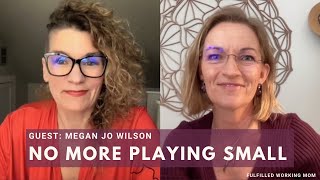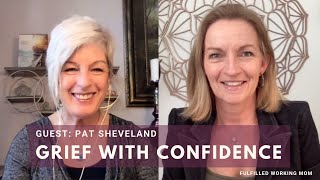
Grief coach Pat Shevlin talks to working moms about balancing loss and work. She built her BREATHE-based coaching program after growing up with grieving parents and later caring for her mother. Small purposeful steps, a supportive tribe, and serving others help moms move through grief with confidence.
Chapters
Hello everyone who is watching this conversation. We usually record this live in the Facebook group Profil Working Moms. This one is recorded due to technical glitches, so welcome whatever time, wherever from you are watching, because we share this on audio other platforms as well. I am your host Charlotte Freeborg in the Facebook group Profil Working Moms And I am the coach for moms who are stepping onto a new career path or have the dream, maybe is afraid, don't know how to do it, need someone to hold their hand. And we wake— make money in a way that feels fulfilling so that we also have time, energy for our kids, family, and not the least ourselves. In this Facebook group, Fulfill Working Moms, we teach, talk, and inspire on a lot of topics we as moms like to know about to help us to create and have this fulfilled life. And sometimes I invite guests in here, other experts, and today I have a very special guest. She's a friend of mine, she's a colleague of mine, She's a fellow author, friend, colleague of mine. Her name is Patricia, but we all always call her Pat, Pat Shevlin. So I'll just read her bio and then we'll dive into the conversation. So Pat is a professional certified coach through the International Coach Federation, a Qigong teacher and mentor coach providing grief coaching certification for coaches, and other professionals. Born to grieving parents, she brings a unique perspective to supporting her grieving clients in finding peace and purpose after deep loss. She's a certified funeral celebrant and the 3-time Amazon bestselling author of How Do I Survive? 7 Steps to Living After Child Loss. Living Life in the Middle: The Caregiver's Guide to Healing, Hope, and Harmony Through Multigenerational Living, and The Confident Grief Coach: A Guide for Helping Clients Process Loss. She and her family lives in Minnesota. Welcome, Pat.
Thank you, Charlotte. Excited to be here, glitchy or not. We're here together, so it's wonderful.
Yes, we are. And the beauty of being able to record— we can either go live or we can record.
We make it happen.
Flexibility.
As moms, as moms, flexibility, right?
Yeah, perfectly imperfect, right? So I want to start just with, um, like the broader question of why did you choose to become a life coach and how did you specialize in grief coaching?
Um, back in the 1990s— excuse me— I worked for an individual who was well beyond— he was such a visionary. And I was working in a case management firm, and I was a general manager out in Colorado, and we always used coaches. We never had managers, we never had supervisors, we always had coaches, and we used a coaching model. So I remember back in the '90s, late '90s, I started searching coaching and how to become a certified coach. I was just so fascinated by this model of, in corporate business, you know, how to coach people versus manage. And I wanted to help people like get their desires fulfilled build in life. So I ordered some information. I had a little pamphlet, and I carried that around through many, many moves in my life. And it wasn't until 2012 where I decided— and I just had this earning, yearning to become a certified coach. So I just started researching the best coaching places and found one that was based on positive psychology and just jumped right in.
So I was a corporate executive at the time, but I decided I'm going to do this and get my coaching certification.
And then you asked about how did I become a grief coach. Excuse me, I'm an hour ahead behind you, I think, so I'm clearing my throat yet. Morning, morning throat.
I should get someone to come and serve you an extra cup of coffee.
Oh yes, yes. Um, but I didn't become a grief coach. Grief coaching sought me out. People. I started working with my mom, who was a grieving mother who had never talked about it for 60 years. So there's a big long history about that. When my brother would have turned 60, he died as an infant. She started sharing her deep buried grief, and all of the emotions that went around that. And I was in my 50s. My mom was in her late 80s at the time. And so that started me on the path of being curious and asking questions and holding the space for someone who's grieving and help to find healing and some peace at that late date. It had been, you know, 60 years. And then when I— when we become a certified grief coach, we need to have coaching hours. So I had to hang my shingle out and say, okay, I'm a life coach, in order to get my coaching hours to be certified. And the first 2 clients who came to me were grieving moms. And it was like, okay, that's, that's something is going on here. And then it just so happened that people that were grieving were the ones that would come to me and look for coaching support. And many of them had been grieving for decades.
Mm-hmm.
And to just really get that support to be able to move forward and unwrap and give their grief air. And now over the last decade, that's kind of what I've been doing.
Yeah, and I know because we spend a lot of time together in the Miracle Mind and Mastery where we both support the coaches in training, so we have a lot of conversations about that. And I— so we will come into later what you have created, um, but we have spent a lot of time, so I know you are deep, deep profound experience and passion for this. So I like to talk about, because here we talk with moms who desire to have a fulfilling career, do you have any advice you can give to moms who go through grief, how they can, like, some people have, some moms have to go to work and some want to, but that conflict and maybe those waves of emotions. But what, what could be some tips or advice you can give to moms who have to get up and go to work, or like have to function in the day while they go through grief?
Right, right. And it is so very difficult, and everybody grieves differently. Some of us are action-oriented, and we, as we're grieving, being in action, so going to work and doing those things, is very helpful for us because it gets our mind kind of on something a little bit differently for a while. But other people just really need to be cocooned and being taken care of at the initial stages. But what I have found through all my work and studies is this: when we can step into our life purpose, and whatever that purpose is, whatever— because typically that's our job, you know, that's part of our life purpose is serving others. And that's what our careers do. That's what our jobs do. So finding that ability to serve others helps us to move from that internal focus of our deep despair and sadness to being able to help others. And it's just this beautiful flow, because as we help others, it actually flows back to us and helps us to feel more contentment, to find peace. And so it's, it's just so important to be able to kind of move some of that grief outwards, because especially grieving moms— and I've worked with a lot of grieving moms— that what they say is their hearts are so filled with this love that they don't know where to give it. They don't know where to give it now. And so when they can go out and go back into their careers, go back to their work, regardless of what the work is. Yeah, just by serving others in whatever capacity. If it's working at Starbucks and serving a latte to someone and making their day, can be that. It's helping others, it's making others feel good.
Yeah, yeah, I can almost see that kind of infinity sign, uh, waves coming up on the shore and pulling back, that give and receive energy, that's— that's— we can step naturally into that. We're not supposed to sit by ourselves, but by being with other people also. Yeah. Um, yeah.
Okay. Yeah, we're so— we're social animals. And so, um, but when we're grieving, we tend to retreat like an animal and, and want to lick our wounds silently by ourselves. But in all honesty, when we can go out there and just take those tiny steps, that's where tremendous healing occurs. Yeah.
But I can still imagine that that can be— I mean, we know that these phases in the grief, but they can still be that time where just getting our mind around, like, that, that can help, that, that we can still feel so vulnerable in our grief that just taking that step and even believe maybe we have something to give to others— there must be like a phase where we have to get to where, okay, maybe I can give something to others, right?
Right. So, and I just want to— I work with people generally who are grieving the death, the loss of someone, but we know that grief occurs so many ways. I was divorced. That was like a death. That was just— I went through just as much deep grief through that as through other things. I've lost my job after a 25-year career. So just know that these things that we're talking about can be utilized. It's not necessarily after the death of a loved one. It just so happens that that's my specialty. Yeah. But yes, getting into that space of It's getting, you know, kind of empowering ourselves. And a lot of times we need other people to help us do that. We need other people to help us. And so one of the things that I talk about in my program is finding your tribe, finding a couple of people that you can lean into for support who can help take you by the hand and make you really find those empowerment pieces within you, the goodness that you have, and be there so that when you are scary and you're on shaky ground, they'll help steady you. Yeah. So there's, there's a lot of different things, and I give a lot of tools in my books as far as how to really create that community and the empowerment.
Yeah, I know that. And I think it's so important. I mean, I can share that I did not grow up with parents who knew how to support or maybe naturally go through the grief. It was kind of more— and not to blame them or anything, they just didn't know better. But I felt like there were times in my childhood where there definitely were some grief, and it was kind of like, we don't talk about it, let's shovel it on. But it was, it was They didn't know, they didn't have the tools how to approach it or support me as a kid with my questions. And so I had to learn that later on, like, okay, how to navigate those big emotions instead of being scared of them also. And by having someone who is confident in holding our hand, I can I can totally see how it's easier to continue to go through the process and navigate in life. Right.
Yeah. And I encourage people to not lean into their family members, their, their immediate family members as their support. Find a couple of people who are just totally available for you. And sometimes it's scary to ask for help. Like, you know, I want to go back out into the workforce, whatever that may be. I want to you know, I, I want to go out and do this, but I'm scared. Sometimes our families, even though there's much love there, they don't understand, or they may get hooked into our own fear or be so overly supportive that it may actually halt us. So find, you know, a couple of people that will be your cheerleader and your accountability partner.
Yeah, but also I think in our family we have so many other things going on, then we gotta get ready for dinner, to get out of the door, and— but if you find someone where when in that relationship the space is to process, to talk, to share, there's no other agenda, right? It's, it's easier to— that's why coaching is so powerful. That's really— we have an alarm going on here now.
Oh, we're just having lots of good energy here. That's like a really cute little ding. Yeah, like that was an exclamation point there, you know, for what you were talking about.
Yeah, yeah, I know. Okay, so we are not letting that stop us. I think we are good. I just want to make sure there isn't actually a fire, but yes, yes. Okay, so I want to— I want to ask before we go into your— I want you to talk about your program if anybody are interested. But I want to ask you just a few questions, mom to mom. And as a professional mom, I know you were a breadwinner for many years.
What— still am.
And still am.
Still am.
Well bragged. Well bragged. Yeah. You're such a powerful mom. And woman and grandma. And what are things, if you have any advice to moms who want to step more into that role of bringing in money, like be like, just own your power, own that ability to show up professionally and be a mom the best way possible. Do you have any— what would be an advice you could give for any moms out there listening who would like to be more that person who—
I think number one is, and I always tell people this, just really be kind to yourself and don't set up expectations that, you know, you need to be someone because other people are doing it, or, you know, comparison syndrome and all of that. Just sit with who you are. And I would recommend— this is what I recommend to my clients a lot of times— is what is it I should be doing? What, what am I— what would I really be fulfilled doing? What am I good at? And so take a look back in your life when you were just like so turned on just, just beaming and just felt so energetic? What were you doing? Really take some time to write it down, journal it. What was I doing at that time that just gave me so much joy and energy? And then go out and ask some of your friends and your family, when have you seen me just like totally lit up? What do you see about me? And actually get their feedback. And when you start getting that, you can start taking a look at what might be a great stepping stone for me to get out there and use these talents. We all have strengths, we all have talents. You are filled with strengths, women. You have so many strengths. So it's just understanding what are yours, what are the things that just really fill you up, because then it's not going out and finding a job. It's going out and serving the world with your beautiful gifts. Yeah, yeah, and making money for it because we deserve to make money. Money is a perfect thing to be making because it helps us support our families, it helps us support ourselves, it helps us support our communities and be able to send to others and support and contribute.
Yeah, yeah.
Thank you for that.
And I think also, but you and I both know about Human Design, that it's okay that we don't find the one thing right away. It's okay to make changes. You did that, right? I've done that. It's okay. We don't find the one thing and that's what we do the rest of our lives. There's a way to gradually, like, transition into other things.
Right, right.
Okay, so I want to ask you another question because I know a lot of people stop pursuing their dreams, pursuing that, like, stay on the path to more fulfillment because of fear. So I would like to ask if you can think about a time in your life, in your career, where you were really maybe terrified or afraid of making a decision, but you did it anyways, and how it maybe turned out.
That is so interesting. One thing popped into my mind. I was, um, working as a nurse in a hospital, and I was interviewing for a job that was a nurse case manager. So it wasn't like work— I was a straight night work worker, all of that kind of thing. And I had a small child at home. I, you know, I had my family and I thought I want to get into normal hours. So I worked during the day and have weekends off and holidays off. And I was sitting in an interview with about 12 people interviewing me, had never done case management work. So I was just kind of going by the seat of my pants and connecting with them on that level. But then they said, you need to be able to go out. And one of the requirements is to be able to be a strong public speaker. Well, when I was in college and I took speaking courses, I froze. I almost vomited. I was so scared. I would just shake getting up and publicly speaking. So I had to go home and decide, can I do this? If I have to get up and present in front of people, which was a requirement of the job, am I able to do this? And it made me so scared. I just like, in the pit of my stomach. And then finally I gave myself a little talking to and said, listen, you can do this. This job is like a perfect fit, and if it's a perfect fit for you, then that one piece is not going to get in your way, and it's time to overcome that fear of speaking. And I did. Yeah, I took the job, and it literally That was my first step into a 25-year career where I started as a nurse case manager. I ended up being one of the top executives and the vice president of the whole case and claims management. So it's like it propelled me, and now look at what I do. I go out and speaking all the time, right?
Yeah, I love that so much. I love that so much. I I had that fear as well, but just, you know, did the little steps, like, and even there we can get support, right? I've been a member of Toastmasters for several years, just to that. I decided to do that when I wanted to speak more in English to practice, because until that time I had only done speeches in Danish. So I thought, okay, that's a great way to get some support and learn more structure and get some networking done. So there are many ways we can get support.
I love Toastmasters. I love Toastmasters. Um, I actually started a Toastmasters club in the organization I was in, and I was still scared. I mean, when you get up in front of people that you know, you can feel a little bit naked. But then the more that we practice it and being around people that just want us to succeed changes it dramatically.
Yeah, yeah. Beautiful. Thank you for sharing that, Pat. I think that's important for many to know. And what you just talked about, like, you got the invitation to do this, and that was part of the pace, to trust that. Trust. It's like we often see, like, trust the signs, trust the breadcrumbs. Like, this is like a practical example of what that means. Yeah, part of the pace. Beautiful. So I would love for you to share a little bit about this beautiful, confident grief coaching kind of program or model you have created. I know you have an acronym, BREEZE, the letters in the word breathe. Could you walk us through that and tell us what that stands for and Yes, maybe why you chose that name.
I chose the name because, well, we were writing books. You and I were in this book writing program, and I just want to say I have a little throat, so I'll just take a sip of— that's okay, we both have— we're really connected, we're in a cozy conversation. So, um, I knew that I just had like this— there was things that I could share with others about grief.. And so I was focusing— my first book was about helping grieving moms. It was really targeted to grieving moms. And I had all these steps from my career as a nurse. Um, I had done training in mind-body medicine. I'm a Qigong trainer, which has a lot to do with emotions and, and how to balance our energy. All of my coaching through positive psychology, but really working with these moms. And they were my wisdom keepers. So they shared, and I could see what were the things that we could be doing in the coaching model that helped them to move from just frozen in place and hardly able to get out of bed to actually having energy and, and feeling a little more confident to be able to get out there and start living life again, feeling a little bit more fulfilled. And so the BREATHE acronym just kind of showed up because when we're grieving, we our breath gets caught and we forget how to exhale. And so each one of the letters in BREATHE are some steps. Grief is not linear. There's not a step-by-step-by-step process. You don't start and then never get over it. It's always a part of our beingness, but it's like, how do we get the grief to coexist with purpose and some peace? And even joy. And so these are all just various steps that we go through. And I don't have time to go through all of the steps here, but just know that it's understanding ourselves and some exercises to really understand who we are and kind of create a baseline of where we're at in terms of our life engagement and where we are in our emotionals. There's health and wellness, kind of creating our own toolbox of that, creating that tribe, the, the support system, um, just really diving in. And if we have issues like with other people or perceptions about ourselves, how do we reframe those so that they're powerful and we feel more empowered? And then the final thing is really engaging into a life of purpose, which we've already talked about. So what does that look like? So there's all these steps. And so my Confident Grief Coaching program really was born from that, that I have a vision. It came to me the month after my mom died last year. And it just was like a little voice that just said, you're not done with grief. Because I was doing some things with caregivers. And it's like, you're not done with grief, girlfriend. You need to still be working in the grief space. It was just a voice in my head. And this vision came. That I want to be able to provide accessible and transformative healing for grieving families throughout the world. And that just came to me. And I thought, oh, and I believe in God, I believe in source. And it was like, okay, I'm getting a message here, this is important. And I realized that I can't do this coaching one person at a time. So I started a grief coaching school. And so I certified people, then they're not always professionals, They're people who have had lived experiences of grief, and now they're passionate about helping others because they know that the support is needed. And so they come in, and I have a program where I actually certify people into becoming grief coaches, and then they get my Breathe program and take it out. And so that's where we get the accessibility throughout the world and the transformation, so that there's greater numbers of us doing this work out in the world.
And I know you had it approved by International Coach Federation, which is a huge thing.
So congrats for that.
I just got goosebumps, like really from top to toe, by you sharing like how that just came to you. And it's so beautiful. Thank you for following that guidance, because I think so many times we don't trust it. Guidance. So, Kaddous, I'm so happy for you.
Thank you.
Yeah. And how it's going. So before we share where those who want to connect with you, learn more from you, where they can contact you, I have— and I know you have a gift for them. I want to send them somewhere where you have a gift, maybe one of your books. Um, I have one more question for you.
Yes.
And it's one I ask everybody. Okay, and it is, what is your definition of fulfillment?
Oh, fulfillment is feeling so good in my own skin, being able to give as much and receive it back. It's like the whole package. It's very hard for me to define it as just like one little sentence. Fulfillment is just— it's, it's all of it. It's just feeling great, feeling accomplished, serving others, um, being surrounded in love. Yeah, beautiful.
Yeah, let's just sit with that.
Yeah, beautiful.
Because I know you live that. I mean, we can't— yeah, but just by expressing it, for people out there, just reflecting what is fulfillment can bring us more fulfillment, I find. Yes, right.
Yes, yes. I'm feeling very fulfilled by just talking about it.
Yeah, yeah. Beautiful. All right, my dear friend, can you please share if for those who wants to know more from you? What do you have to— where do you want them to go? Where do you want them to buy? I know you have, you have your website, Healing Family Grief. I know the access to your books there. Is that where you want them to?
Yep, just go to healingfamilygrief.com. Yeah, any one of my 3 books, you can order them and they are free. You will get the ebook version Um, so you can get one or all of them, and please do. If you would ever want to connect with me, um, you can connect with me through that website, and, um, I'd be glad to hear from anybody. I love talking about this stuff, as you can see.
I know, I know. And I know you are also a member of the Facebook group Fulfill Working Moms. Yes, I am. So if you watch this in the group, just tag Pat, ask her questions, have a conversation with her. If you watch outside, please come and join us. And, um, yeah, I so appreciate you took the time to join me here in a cozy conversation, perfectly imperfect, with a lot of technical glitches, alarms, barking dogs.
Isn't that what lives are as like fulfilled working moms or Yeah, you know, this is momhood. We have to be flexible, and sometimes alarms are going off. It could be our kids screaming, or for me, grandkids screaming, and all of that kind of stuff.
So we do it anyways. We do it anyways. Well, thank you. Thank you so much. So wherever you are watching, please leave us a comment. What did you like? What did you take away? What's some new thoughts? Anything. We would love to hear from you, and My last word is just: I believe in you, and see you next time. Bye for now.
Bye-bye.
More from Charlotte

You are not stuck.You are being asked to listen.#innerauthority #selfawareness #growthmindset